
How Tire Choice Affects Honda Accord Fuel Efficiency

Choosing the right tires for your Honda Accord directly impacts your fuel efficiency. Low-rolling resistance tires reduce friction, optimizing gas mileage. Heavier tires can lower your MPG, while proper tire pressure guarantees minimal rolling resistance. Seasonal changes between summer, winter, and all-season tires enhance performance and safety. Regular maintenance, like tire rotation and alignment, is essential for maintaining efficiency. Stick around to explore more about how tire selection can keep your Accord running smoothly and economically.
How Tire Selection Impacts Fuel Efficiency in Your Honda Accord

When you select tires for your Honda Accord, you might not realize just how much that choice can impact your fuel efficiency. Opting for low-rolling resistance tires, especially all-season options, can greatly enhance your gas mileage by reducing friction. A study showed that switching from heavier tires, like Hankook to Firestone, resulted in noticeable MPG drops.
Maintaining proper tire pressure is equally essential; keeping your tires at the recommended PSI prevents increased rolling resistance. Seasonal tire changes can also boost both safety and efficiency, but remember to switch back to summer or all-season tires to avoid excessive rolling resistance in warmer weather. Additionally, regular alignment checks help prevent uneven tire wear, further optimizing your fuel consumption. With the right selection and maintenance, you can enjoy better performance and noise reduction, liberating yourself from unnecessary fuel costs. Furthermore, proper tire pressure can enhance fuel efficiency by up to 5%.
Exploring Summer, Winter, and All-Season Tire Types
Choosing the right tire type can greatly influence your Honda Accord’s performance and fuel efficiency. Each type—summer, winter, and all-season—offers unique benefits and drawbacks related to tire tread and tire compounds.
| Tire Type | Pros | Cons |
|---|---|---|
| Summer | Ideal grip, lower rolling resistance | Poor performance in cold weather |
| Winter | Superior traction in snow and ice | Increased rolling resistance in warmth |
| All-Season | Balanced performance year-round | May lack grip in extreme conditions |
Summer tires excel in warm conditions, enhancing fuel efficiency, while winter tires, designed for snow, can reduce mileage due to their softer compounds. All-season tires provide a practical middle ground with lower rolling resistance, making them ideal for moderate climates. Remember, maintaining proper tire pressure and regular rotations is key to maximizing your Accord’s fuel efficiency. Additionally, selecting high-performance summer tires can further optimize your vehicle’s handling and efficiency during warmer months.
How Tire Weight Affects Fuel Efficiency in Your Honda Accord
Although you might not think about it often, tire weight plays an essential role in your Honda Accord’s fuel efficiency. Heavier tires, like the Firestone Firehawk AS, can greatly reduce your miles per gallon (MPG) compared to lighter alternatives such as Hankook Kinergy tires, which consistently achieve around 40 MPG. The Firestone tires are about 3.5 lbs heavier, illustrating how even minor weight differences can impact fuel consumption.
Increased tire weight contributes to higher rolling resistance, making your engine work harder, especially during daily commutes. This means you’ll be burning more fuel than necessary. Additionally, maintaining proper tire pressure—around 32 PSI—is critical for optimizing efficiency, regardless of the tire material you choose. Remember, proper alignment also plays a significant role; correcting misalignment after a blowout can lead to noticeable MPG improvements. Choosing lighter tires can liberate you from unnecessary fuel costs and keep your Honda Accord running efficiently.
Why Regular Tire Maintenance Keeps Your Accord Efficient
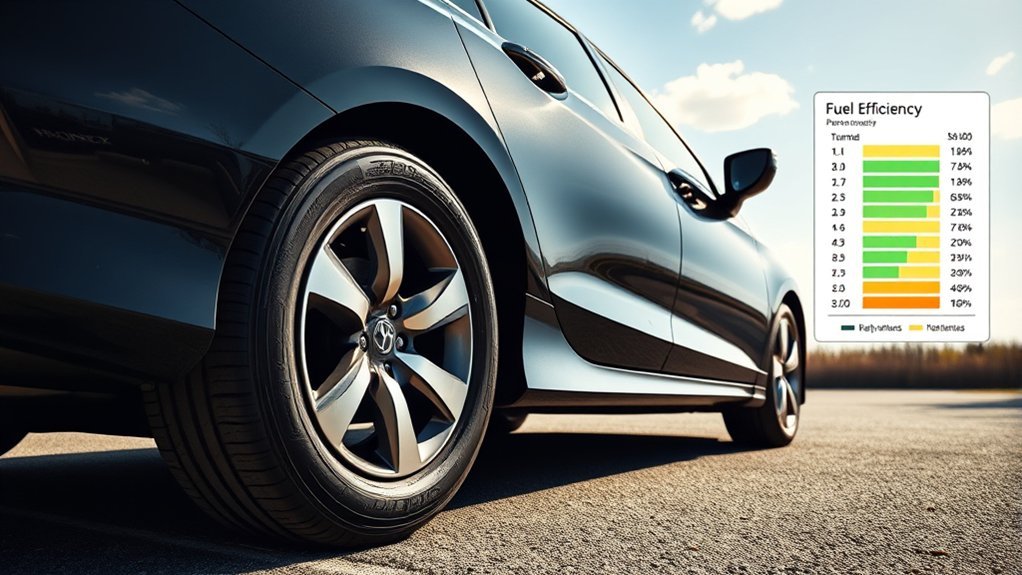
Regular tire maintenance is essential for keeping your Honda Accord running efficiently. By checking tire pressure monthly and ensuring even wear through rotation, you can enhance fuel economy and prolong tire life. Staying proactive with these practices not only saves you money but also boosts your overall driving experience. Additionally, maintaining recommended tire pressure helps improve traction and ensures optimal handling.
Regular Pressure Checks
Staying on top of your tire pressure can greatly influence your Honda Accord’s fuel efficiency. When your tires are inflated to the recommended levels, rolling resistance decreases, leading to improved fuel savings. On the flip side, under-inflated tires can cut your fuel economy by up to 3%, which adds up as fuel prices rise. Checking your tire pressure monthly not only boosts your MPG by about 1-2 but also enhances vehicle handling and safety. Additionally, maintaining the correct pressure promotes even tire wear, extending their lifespan and reducing replacement costs. Fundamentally, regular pressure checks are a simple yet effective strategy to maximize your Accord’s efficiency and keep your driving experience liberating and economical.
Tire Rotation Importance
When you prioritize tire rotation, your Honda Accord runs more efficiently and effectively. Regular rotation promotes even wear, reducing rolling resistance and enhancing traction. This means better fuel economy and less strain on your engine. If you ignore tire rotation, uneven wear can lead to decreased efficiency, as misalignment and improper rotation negatively impact your Accord’s performance. Experts recommend rotating tires every 5,000 to 7,500 miles to maintain optimal performance and extend tire lifespan. Proper tire pressure complements rotation, ensuring your tires maintain the right tread depth and maximize mileage. Ultimately, a well-maintained set of tires can boost fuel economy by up to 10%, considerably lowering your fuel costs and empowering your driving experience.
The Importance of Tire Pressure for Fuel Economy

Maintaining the correct tire pressure is essential for maximizing your Honda Accord’s fuel efficiency. Under-inflated tires increase rolling resistance, leading to higher fuel costs. Just a drop of 1 PSI can cut your fuel efficiency by about 0.2%, which adds up over time. Regular monthly checks of tire inflation can help you stick to the manufacturer’s recommended levels, enhancing both safety and efficiency.
When tires are properly inflated, you could see mileage improvements of up to 3%, translating to significant fuel savings, especially on long commutes. Remember to check tire pressure when tires are cold; heat from driving can skew your readings and lead to incorrect inflation. By prioritizing proper tire pressure, you empower yourself to optimize your Accord’s performance and enjoy the freedom that comes with lower fuel expenses. Additionally, maintaining the correct tire pressure can prevent significant driving issues and enhance overall safety.
How to Choose a Reliable Tire Dealer for Your Accord
When choosing a tire dealer for your Honda Accord, focus on their expertise and knowledgeability. A dealer with a solid reputation will not only guide you in selecting the right tires but also offer a diverse range of options tailored to enhance your vehicle’s fuel efficiency. This guarantees you make an informed choice that aligns with both your budget and performance needs, especially considering how tire choice can significantly impact safety and performance in varying weather conditions.
Expertise and Knowledgeability
Choosing a reliable tire dealer for your Honda Accord can greatly impact both your vehicle’s performance and your wallet. You want access to knowledgeable staff who understand tire technology and can offer expert advice tailored to your specific needs. Look for a dealer with a wide selection of tire brands so you can compare options and choose those with ideal rolling resistance for better fuel efficiency. Researching dealer reputation through customer reviews can guide you to professionals who prioritize quality. After-sales services, like tire rotation and balancing, are also essential in maintaining performance and prolonging tire lifespan, ultimately contributing to fuel savings. With the right dealer expertise, you’ll enhance your Accord’s fuel economy while ensuring safety and handling.
Range of Tire Options
A diverse range of tire options is vital for enhancing your Honda Accord’s performance and fuel efficiency. When choosing a reliable tire dealer, look for one that offers various tires from reputable manufacturers. Knowledgeable staff can guide you in selecting tires with low rolling resistance and ideal tread patterns, essential for maximizing fuel economy. Don’t overlook after-sales services like tire rotation, balancing, and alignment; these maintain tire performance and extend lifespan, further boosting your Accord’s efficiency. Before making a decision, check online reviews and customer feedback to guarantee quality. Professional recommendations from experienced dealers can also help you find the right seasonal tires, maximizing both safety and efficiency year-round. Your choice in tires directly impacts your driving experience.
Seasonal Tire Changes for Safety and Efficiency
Seasonal tire changes play an essential role in maximizing both safety and efficiency for your Honda Accord. By selecting the right tires for each season, you can enhance tire performance and take advantage of seasonal benefits.
- Winter Tires: They provide superior grip in cold conditions, boosting safety and handling.
- All-Season Tires: Ideal for moderate climates, they balance performance and fuel efficiency.
- Summer Tires: With lower rolling resistance, they improve fuel economy during warmer months.
- Proper Shift: Switching tires according to the season reduces accident risks from inadequate traction.
Investing in quality seasonal tires not only improves your vehicle’s performance but also contributes to environmental sustainability. By minimizing rolling resistance, you lower carbon emissions and enhance fuel savings. Additionally, maintaining tire pressure is crucial for optimal efficiency. So, embrace seasonal tire changes and experience the benefits in both safety and efficiency for your Honda Accord.
Eco-Friendly Benefits of Fuel-Efficient Tires for Your Accord
Investing in fuel-efficient tires for your Honda Accord not only enhances your driving experience but also supports eco-friendly initiatives. By choosing tires like the YOKOHAMA® AVID ASCEND GT or CONTINENTAL TIRES® CONTIPROCONTACT, you can greatly reduce rolling resistance, improving fuel economy and cutting down on fuel costs. These tires utilize advanced tire technology to enhance grip while minimizing energy loss, making your ride smoother and more efficient.
Opting for all-season tires often boosts fuel efficiency due to their lower rolling resistance, making them ideal for various weather conditions. Regular maintenance, such as checking tire pressure and rotations, guarantees these tires perform at their best, aligning with sustainable driving practices. Ultimately, investing in low-rolling resistance tires not only saves you money at the pump but also reduces carbon emissions, helping you embrace a more environmentally conscious lifestyle. Additionally, maintaining proper tire inflation can further enhance fuel efficiency and extend the lifespan of your tires.
Frequently Asked Questions
How to Reduce Fuel Consumption in Honda Accord?
To reduce fuel consumption in your Honda Accord, maintain proper tire pressure and adopt efficient driving habits. Keep tires inflated around 32 PSI, and avoid rapid acceleration or excessive idling for better mileage.
Conclusion
In summary, your tire choice plays an essential role in your Honda Accord’s fuel efficiency. By selecting the right tires, maintaining them properly, and keeping an eye on tire pressure, you can save money at the pump and enhance your driving experience. Think of your tires as the unsung heroes of your vehicle—just like the trusty sidekick in a classic detective film, they help you navigate the road ahead efficiently. So, make informed choices and drive smarter!

Related Articles

Honda Accord Winter Tire Performance on Ice Explained
Join us as we explore how winter tires transform your Honda Accord's icy performance, keeping you safe and in control throughout the season.
Read More
How All-Season Tires Perform in Rain on the Honda Accord
Learn how all-season tires enhance your Honda Accord's wet performance, but discover what factors can make all the difference in safety and handling.
Read More
How Honda Accord Tires Handle Snow and Icy Roads
How do Honda Accord tires excel on snow and icy roads? Discover the secrets behind their performance and ensure your safety this winter!
Read More