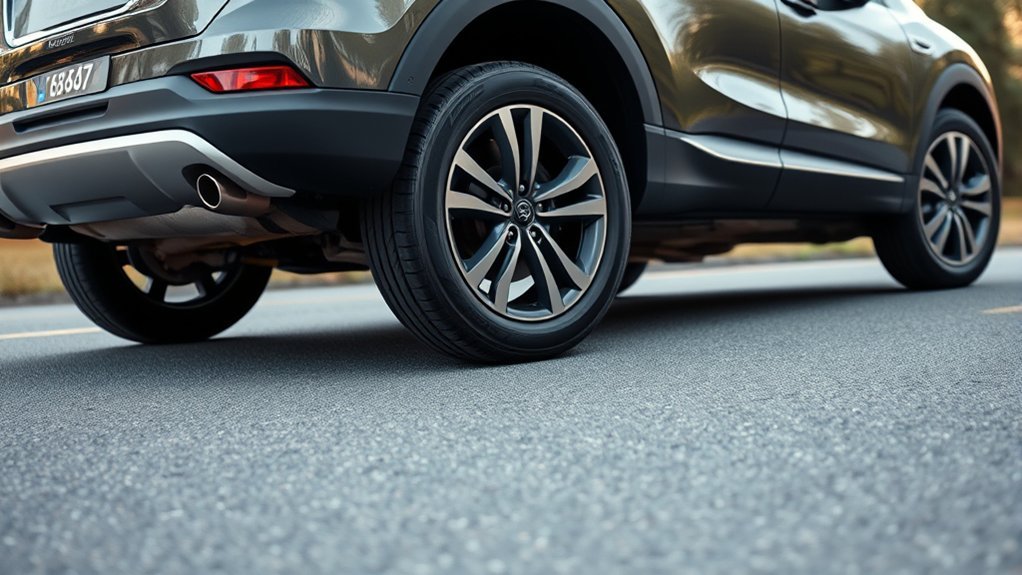
No tire stays completely still when you turn right. All four tires keep rolling, but they do not cover the same distance. In a typical right turn, the right rear tire moves the least because it follows the smallest arc around the turn. The left front tire usually travels the farthest, while the differential and steering geometry help the tires roll at different speeds without scrubbing across the road.
Quick Answer
In a normal right turn, the right rear tire moves the least because it is on the inside of the turn and follows the shortest path. The left front tire usually moves the most because it is on the outside and traces the widest arc. All four tires still roll.
Key Takeaways
- No tire stays still during a right turn; each tire follows its own curved path.
- The right rear tire usually travels the shortest distance because it is the inner rear wheel.
- The left front tire usually travels the longest distance because it is the outside front wheel.
- The right front tire usually steers at the sharper angle, but that is not the same as traveling the farthest.
- The differential lets driven wheels rotate at different speeds so the car can corner smoothly.
Which Tire Moves the Least in a Right Turn?
In a typical right turn, the right rear tire moves the least. It sits on the inside of the turn and follows the smallest radius around the turning center. A smaller radius means a shorter arc, so that tire covers less ground than the other three tires.
The important point is that least movement does not mean no movement. The right rear tire still rolls, supports weight, and grips the road. It simply travels a shorter path than the outside tires.
Note: “Moves least,” “turns sharper,” and “works hardest” are different ideas. The right rear tire usually travels the shortest distance, the right front tire usually steers at the sharper angle, and the outside tires usually carry more cornering load.
Why Right Turns Change Tire Distance
A car does not move through a turn as one single point. Each tire contact patch traces its own curved path. The farther a tire is from the center of the turn, the longer its path becomes.
That is basic circular motion: arc length depends on the radius of the path. OpenStax explains that arc length is the distance traveled along a circular path and that wheel speed is tied to linear speed through the relationship v = rω. In plain English, a tire covering a longer path in the same amount of time must roll faster.
| Tire in a Right Turn | Typical Distance Traveled | What It Means |
|---|---|---|
| Left front | Usually highest | Outside front wheel; usually covers the widest arc. |
| Left rear | High | Outside rear wheel; travels farther than the inside tires. |
| Right front | Low to moderate | Inside front wheel; usually steers at the sharper angle. |
| Right rear | Lowest | Inner rear wheel; follows the shortest path in a typical right turn. |
How the Differential Lets Tires Spin Unevenly
When a vehicle turns, the inside and outside wheels on a driven axle need to rotate at different speeds. The outside wheel has farther to travel, so it must roll faster. The differential makes that possible while still sending power through the drivetrain. MIT’s differential explanation describes how the mechanism transfers rotation from the driveline to the axle shafts that turn the wheels: How a Differential Works.
[Products Worth Considering]

The Continental Grand Prix 5000 is an allround road bike tire engineered for faster rolling, improved ride comfort, and enhanced puncture protection. It features a Vectran Breaker cut-protection layer, Lazer Grip micro-profile tread for confident cornering control, and Active Comfort Technology to damp vibration for smoother rides. BlackChili compound optimizes grip and speed for everyday performance and long-lasting confidence.

Measure tire tread depth quickly and accurately with this LUMITECO dial gauge that reads in 1/32" increments up to 14/32". The color-coded green/yellow/red zones make it easy to judge tire wear and know when replacement is needed. A rugged, compact design with a protective pouch helps keep the gauge ready for use on cars, trucks, motorcycles, and more.

Milton S-921 pencil tire pressure gauge helps you maintain optimal tire pressure for passenger cars with accurate readings in PSI and kPa. It features a built-in deflator valve for convenient pressure adjustments, plus a single chuck head and nylon indicator bar for easy use on the go. Built from durable plated brass and designed for reliable performance, it’s a practical road trip and cold-weather maintenance tool.
Differential Speed Difference
During a right turn, the left-side driven wheel on an axle generally needs to rotate faster than the right-side driven wheel because it covers a longer path. Without a differential, one tire would have to scrub, hop, or slip to make up the distance difference.
This is why a smooth turn depends on more than steering. The tires, steering geometry, suspension, and differential all help the vehicle follow the curve without binding.
Inside Vs Outside Tires
In a right turn, the right-side tires are the inside tires, and the left-side tires are the outside tires. The outside tires travel farther because their path radius is larger.
- Outside tires: longer path and usually higher rolling speed.
- Inside tires: shorter path and usually lower rolling speed.
- Right front tire: inside steering tire, usually sharper steering angle.
- Right rear tire: inside rear tire, usually shortest path.
- All tires: still moving, gripping, and supporting the vehicle.
Turning Radius Explained
The turning radius is the size of the circular path the vehicle follows. A tighter right turn creates a bigger difference between the inside and outside tire paths. That is why parking-lot turns show the effect more clearly than gentle highway curves.
Ackermann steering geometry exists because the inside and outside front wheels need different steering angles at low speed. Racecar Engineering explains that a tighter turn radius requires a larger difference between the front-wheel steer angles, and that tire slip and load transfer make the real-world picture more complex at speed: Ackermann Steering Geometry.
The tire that steers at the sharper angle is not always the tire that travels the farthest. In a right turn, the right front tire usually steers sharper, while the left front tire usually covers the longest distance.
Why All Four Tires Stay in Motion

All four tires stay in motion because the vehicle is still moving forward through the curve. Even the tire with the shortest path must roll to keep up with the body of the car.
All Tires Keep Rolling
Think of the car from above. During a right turn, each tire traces part of a circle around the same general turning center. The circles are not the same size, so the path lengths are not the same.
- The left front tire usually travels the longest arc.
- The left rear tire also travels a longer outside path.
- The right front tire travels a shorter inside path but steers more sharply.
- The right rear tire usually travels the shortest path.
- No tire should drag sideways in a normal smooth turn.
Different Paths, Same Motion
The difference in tire paths is normal. It is not a sign that one tire is stuck or doing nothing. If a tire really does stop, skid, hop, or scrub hard during a normal turn, that points to a traction, brake, drivetrain, suspension, or tire problem that should be inspected.
Warning: If the vehicle pulls hard, vibrates, hops, or makes grinding noises while turning, do not assume it is normal tire geometry. Check tire pressure and tread condition first, then have the alignment, suspension, brakes, and drivetrain inspected by a qualified technician.
Which Tire Works Hardest in a Right Turn?
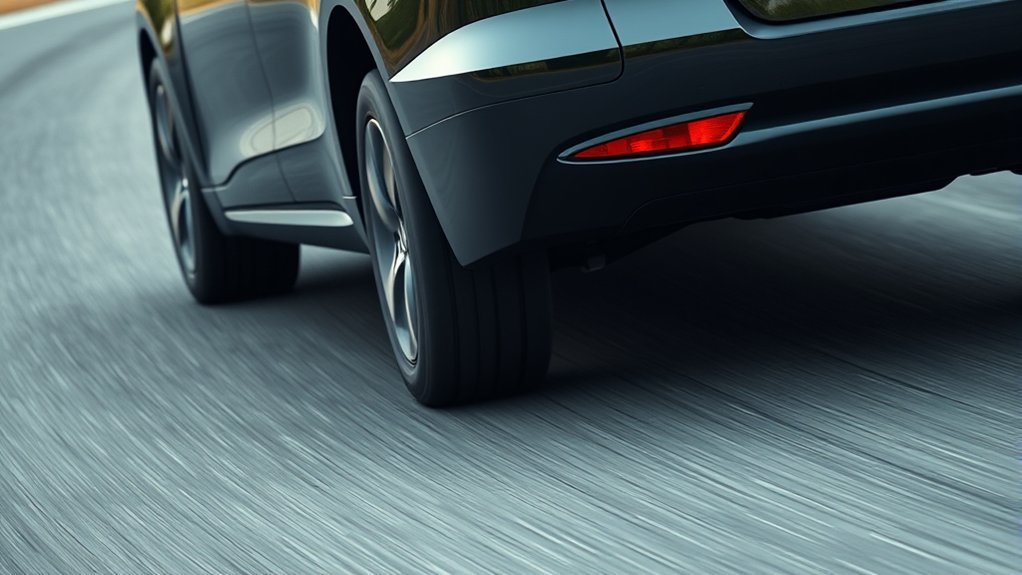
In many right turns, the outside tires—especially the left front tire on many passenger vehicles—do a lot of work. They travel a longer path and often carry more lateral load as the vehicle’s weight shifts toward the outside of the curve.
Still, “works hardest” depends on the situation. Speed, braking, acceleration, suspension design, tire condition, road surface, and vehicle weight balance all affect how much load each tire carries. A slow parking-lot turn is mostly about geometry. A faster corner adds tire slip angle and lateral load transfer.
- Left front: often travels farthest and may carry heavy cornering load.
- Left rear: outside rear tire, also carries added load in a right turn.
- Right front: inside steering tire, usually sharper steering angle.
- Right rear: shortest path, but still supports weight and must maintain grip.
What Tire Movement Means for Safer Driving
Understanding tire movement helps you spot problems earlier. A smooth right turn should feel controlled, with no harsh tire scrub, pulling, vibration, or sudden loss of grip.
Tire condition matters because every turn depends on the contact patch between the tire and the road. The National Highway Traffic Safety Administration advises drivers to check cold tire pressure at least once a month, inspect tread, replace tires worn to 2/32 inch, and follow the owner’s manual for rotation guidance.
Pro Tip: Check tire pressure before driving, not after a long trip. Heat raises pressure, so a hot reading can make an underinflated tire look closer to normal than it really is.
[Products Worth Considering]

MORNYRAY universal tire covers help protect RV, truck, SUV, trailer, and camper tires from sun, rain, and snow with waterproof, anti-UV fabric and a soft inner lining. Elasticized bands and windproof buckle design help keep covers securely in place for easy on and off use. The set includes a storage bag for convenient handling when not in use.
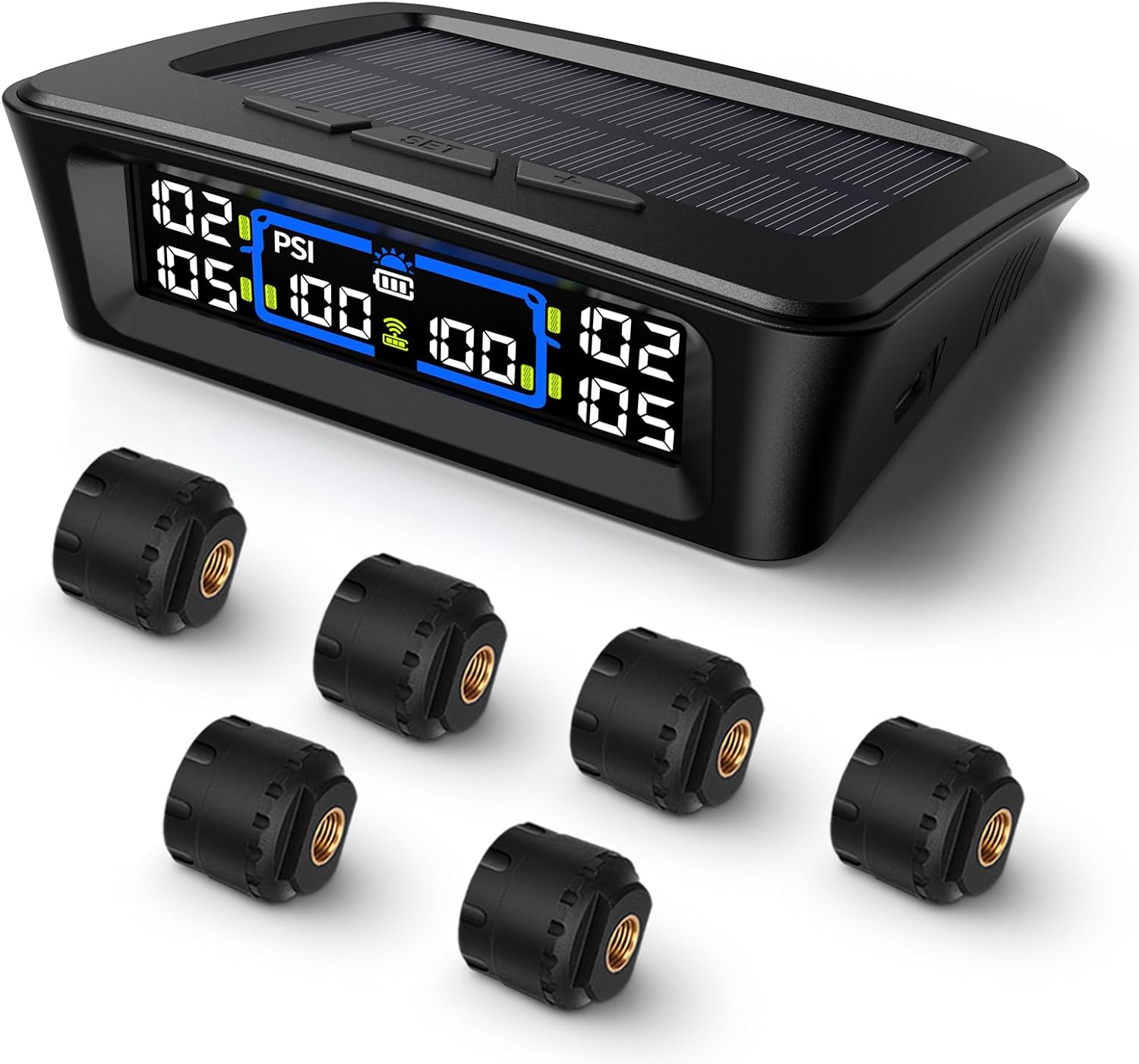
The Tymate TM12 RV TPMS delivers real-time tire pressure and temperature monitoring with a stable 433Hz display for safer long-distance driving. It supports simultaneous monitoring across vehicle and trailer zones, includes six alarm modes for pressure, temperature, leakage, battery, and signal loss, and features easy DIY installation with auto calibration. Power is supplied via USB-C charging or solar recharging, with a wide 0–144 PSI range and up to 50 ft signal coverage for RVs and towable trailers.

The TYAMATE TM8 solar-powered wireless TPMS delivers real-time tire pressure and temperature monitoring with six alarm modes for safer driving. A vibrant color LCD display shows readings clearly while windshield mounting keeps it hands-free and easy to read. With a wide 0–87 PSI range, strong 433.92 MHz signal transmission, and quick sensor pairing, it’s ideal for RV, sedan, SUV, MPV, and truck use.
Tire Rotation and Turning Wear
Turning, braking, acceleration, and steering loads do not wear all four tires evenly. Regular tire rotation helps spread wear across the set, but the correct pattern depends on drivetrain, tire type, tire size, and the vehicle manufacturer’s instructions.
Michelin recommends rotating tires every 5,000 to 7,000 miles as a standard guideline while following the vehicle manufacturer’s schedule first: Michelin Tire Rotation Guide. NHTSA gives a similar owner’s-manual-first recommendation and says that, when recommended by the manufacturer, tires are often rotated every 5,000 to 8,000 miles or sooner if uneven wear appears.
Directional tires are a special case. Michelin notes that directional tires are designed to rotate in only one direction, so they normally stay on the same side of the vehicle and move front to rear only. Tire Rack also lists front-to-rear rotation as the pattern for vehicles with same-size directional tires: Tire Rack Tire Rotation Instructions.
[Products Worth Considering]

AstroAI AIRUN H is a compact 12V tire inflator designed for fast, convenient inflation with an easy-to-read digital pressure gauge. Set your target pressure with programmable controls and let the auto shut-off turn off the pump when the preset is reached. It also includes a backlit screen and LED flashlight for nighttime use, with a ToughUltra durability design for longer service life.

Cristal Products Untouchable Tire Shine Spray delivers a deep, wet-look gloss that enhances your vehicle’s tires. It’s quick-drying and spreads smoothly for consistent, streak-free coverage, while forming a protective coating against UV rays, road grime, and weather. Suitable for all tire types, it helps restore dull, faded tires to a showroom-quality finish.

Upgrade your vehicle’s style with sparkling rhinestone valve caps that add a unique luxury look. Built with an O-ring seal and rotating thread design, they help prevent air leakage while keeping dust and road grime out. The universal fit works on standard American tire valves for cars, trucks, SUVs, and motorcycles, and installs easily without special tools.
When the Rule Might Change
The right rear tire is the best general answer for a normal right turn, but real vehicles can vary. Here are the main exceptions and edge cases:
- Very high-speed cornering: Tire slip angles and load transfer become more important than simple parking-lot geometry.
- Locked differential or off-road modes: A locked axle can force wheels to rotate together, causing tire scrub on high-grip pavement.
- Unusual steering or suspension geometry: Some performance vehicles use geometry that does not match simple low-speed Ackermann behavior.
- Different tire sizes: Staggered wheel setups can change rotation and wear patterns.
- Low traction: Snow, mud, ice, or gravel can make a tire slip instead of cleanly rolling through its path.
Frequently Asked Questions
Which tire is bad if the car pulls to the right?
A car that pulls right may have low pressure, uneven tread wear, tire damage, brake drag, suspension wear, or poor alignment. Do not blame one tire automatically. Start by checking cold tire pressure on all four tires, then inspect tread and sidewall condition. If the pull remains, have the alignment and suspension checked.
Which tires cannot easily be rotated from the left to right sides of the vehicle?
Directional tires usually cannot be crossed left to right unless they are dismounted and remounted correctly. Look for a rotation arrow on the sidewall. Some staggered setups, where front and rear tires are different sizes, may also limit or prevent normal rotation.
Which wheel turns faster when turning right?
The outside wheels turn faster than the inside wheels because they travel a longer path. In a typical right turn, the left front tire usually covers the longest path and therefore usually has the highest rolling speed among the four tires.
Which tire turns the sharpest in a right turn?
The right front tire usually steers at the sharpest angle in a right turn because it is the inside front wheel. That does not mean it travels the farthest. The outside front tire, usually the left front, typically travels the longest distance.
Which tires go where when rotating?
Follow the vehicle owner’s manual first. As a general rule, many front-wheel-drive vehicles use a forward-cross pattern, many rear-wheel-drive vehicles use a rearward-cross pattern, and same-size directional tires usually move front to rear on the same side. If your tires are staggered, directional, or unevenly worn, ask a tire professional before rotating them.
Conclusion
When you turn right, every tire still moves, but each tire follows a different path. The right rear tire usually moves the least because it follows the smallest inside arc. The left front tire usually moves the most because it follows the widest outside arc. The right front tire usually steers at the sharper angle, and the differential lets driven wheels rotate at different speeds so the vehicle can turn smoothly.
The simple takeaway is this: inside tires travel less, outside tires travel more, and no tire should stay still in a normal right turn. If turning feels rough, noisy, or unstable, check tire pressure and tread condition, then have the vehicle inspected.
Sources
- OpenStax College Physics: Rotation Angle and Angular Velocity — supports arc length, circular motion, and wheel-speed relationships.
- MIT: How a Differential Works — supports the role of the differential in transferring rotation to the axle shafts.
- Racecar Engineering: Ackermann Steering Geometry — supports inside/outside steering-angle differences and load-transfer context.
- NHTSA TireWise Tire Safety — supports tire pressure, tread, alignment, rotation, and tire-safety guidance.
- Michelin Tire Rotation Guide — supports tire rotation intervals, patterns, and directional tire guidance.
- Tire Rack Tire Rotation Instructions — supports rotation patterns for directional and non-directional tires.