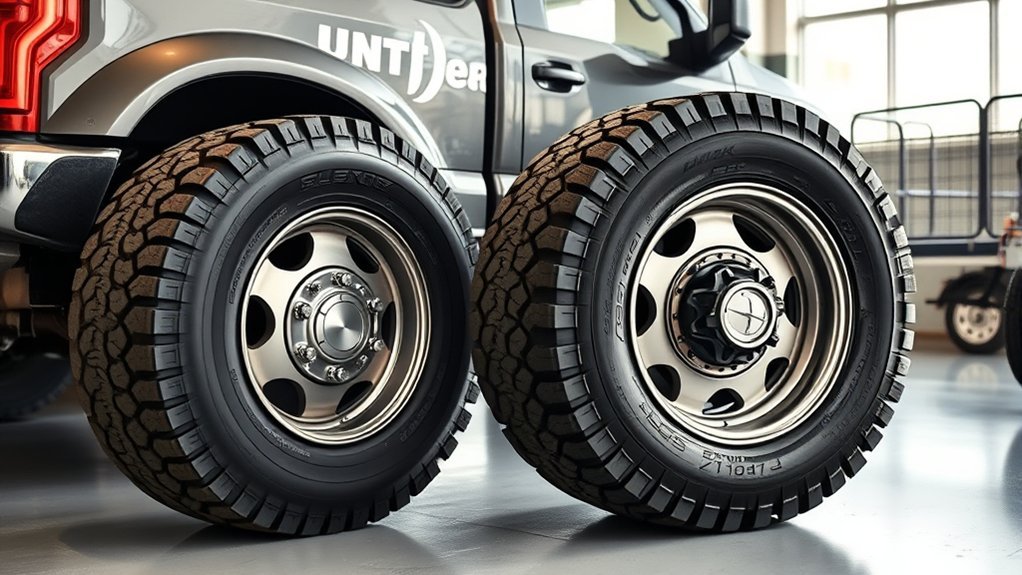
Choosing between 10-ply vs 14-ply tires can look simple until load range, load index, pressure, and wheel ratings enter the picture. The numbers do not mean the tire literally contains 10 or 14 fabric layers. What matters is how those ratings translate into usable load capacity on your truck or trailer.
Quick Answer
10-ply and 14-ply are strength ratings, not literal layer counts. A 10-ply tire is traditionally Load Range E, while a 14-ply tire is Load Range G. The 14-ply option can support higher loads when the size, pressure, wheel, and application allow it, but it does not increase your vehicle’s rated payload or towing capacity.
Key Takeaways
- Actual load capacity comes from the tire size, load range, load index, pressure, and manufacturer specifications, not the ply number alone.
- Traditional ratings associate 10-ply with Load Range E and 14-ply with Load Range G, but the tire sidewall remains the controlling specification.
- A higher-rated tire cannot raise the vehicle’s GVWR, GAWR, payload, hitch, or towing limits.
- Ride comfort, fuel economy, puncture resistance, and tread life depend on the complete tire design rather than ply rating alone.
- Before upgrading, verify tire size, wheel load and pressure limits, clearance, axle loads, and the vehicle or trailer manufacturer’s requirements.
What Do 10-Ply and 14-Ply Tires Mean?
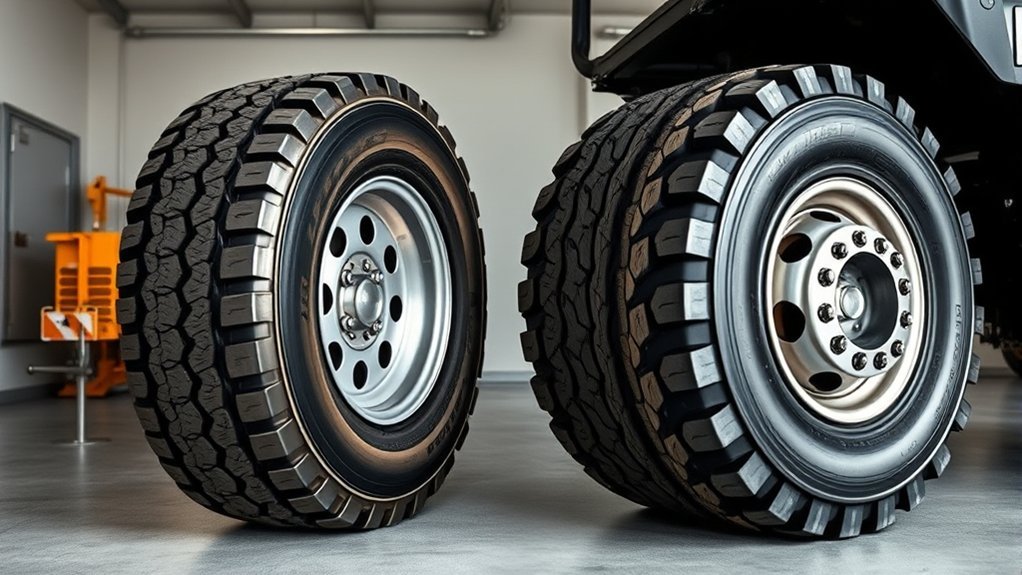
A ply rating is a strength classification that comes from older tire construction methods. Modern radial tires normally use fewer actual body plies made from stronger materials, so a “10-ply” or “14-ply” label should not be read as a literal layer count.
In the traditional load-range system, a 10-ply rating corresponds to Load Range E, while a 14-ply rating corresponds to Load Range G. Purdue Extension’s load-range guidance lists E as 10-ply equivalent and G as 14-ply equivalent.
| Comparison | 10-Ply Rating | 14-Ply Rating |
|---|---|---|
| Traditional load range | E | G |
| Traditional pressure reference | 80 psi | 110 psi |
| Load capability | Lower than a comparable G-rated tire | Higher when size and application are comparable |
| Ride tendency | Usually more compliant | Often firmer |
| Typical reason to choose it | It already meets the required load and vehicle specifications | The application requires greater tire load capacity |
The 80-psi and 110-psi figures are rating references, not instructions to inflate every E- or G-rated tire to those pressures. Tire size and construction can change the applicable limits, so always use the markings and load/inflation information for the exact tire.
How Do Load Ranges Compare?
Load range describes a tire’s load-and-inflation capability, while load index gives a numerical indication of maximum carrying capacity under specified conditions. A higher letter normally represents a stronger load category, but you still need the exact tire specifications before deciding how much weight it can support.
The U.S. Tire Manufacturers Association truck tire manual identifies Load Range G as a 14-ply rating and explains that ply ratings do not necessarily equal the physical number of plies. It also states that actual tire load capacity at different pressures should come from the tire manufacturer’s load/inflation data.
Load Range Ratings
A load-range letter is more useful than the old ply terminology because it connects the tire to an approved load-and-pressure envelope. For two otherwise comparable tires, moving from E to G can provide greater capacity, but it does not tell you the exact pounds by itself.
Read the complete sidewall. Check the tire size, load range, load index or single/dual load markings where applicable, maximum load, and corresponding cold inflation pressure.
Ply Strength Differences
A higher ply rating means a higher strength classification, not simply “more rubber” or a guaranteed number of extra layers. Actual casing materials, belt package, sidewall design, bead construction, and intended service can differ greatly between tire models.
- A 14-ply-rated tire can operate in a higher load category when its specifications allow it.
- Its construction may feel firmer under the same vehicle and road conditions.
- It is not automatically more puncture-proof or longer lasting.
- Its higher pressure capability is useful only when the tire, wheel, and application are designed to use it.
That distinction matters because two tires carrying the same old-style ply rating can still differ in weight, tread design, speed rating, and exact maximum load.
Weight Capacity Limits
The most important number is the maximum load the exact tire can carry at its specified pressure. Do not estimate capacity from “10-ply” or “14-ply” alone.
Higher inflation can support more load only according to the approved load/inflation relationship for that tire. You cannot exceed the tire’s stated maximum, and additional tire capacity does not override the axle, wheel, suspension, vehicle, or trailer limits.
How Much Weight Can Each Tire Carry?
There is no single pound rating that applies to every 10-ply or every 14-ply tire. Capacity varies with tire size, load index, load range, pressure, and whether the tire is rated for single or dual service.
NHTSA TireWise advises drivers to use the vehicle’s Tire and Loading Information label or owner’s manual for the proper cold inflation pressure. The tire sidewall provides the tire’s own load and pressure limits.
For a useful comparison, put the two candidate tires side by side and check:
- Exact tire size
- Load range
- Load index or single/dual load rating
- Maximum load at the stated cold pressure
- Speed rating
- Approved rim width and wheel requirements
Underinflation reduces the tire’s ability to carry its intended load and increases flex and heat. Overloading can also create excessive heat and tire damage.
Warning: Do not inflate a tire to 80 or 110 psi simply because its load range permits that pressure. Use the pressure specified for the vehicle and load, and never exceed the tire, rim, wheel, or valve hardware limits.
Products Worth Considering

The SAFELIFE dial tire tread depth gauge measures tread depth in 1/32 inch increments with clear, easy-to-read 2-inch dial face. Color zones using a traffic light system help you quickly judge whether tread is low, marginal, or ample for safer driving. Built with a durable zinc cast body and a metal detect probe for precise, comfortable use across cars, motorcycles, trucks, and buses.
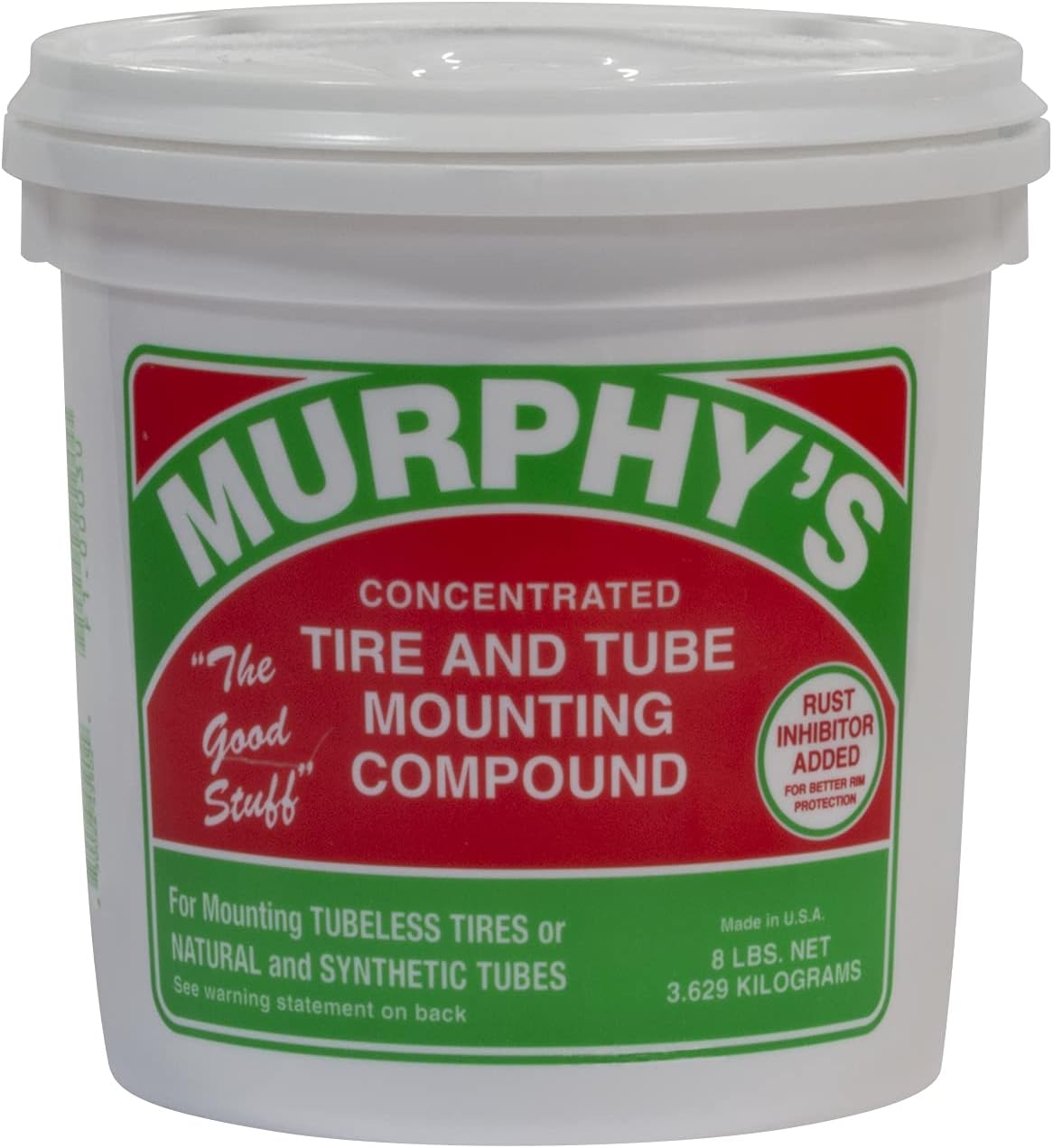
A concentrated tire and tube mounting compound designed to help simplify mounting rubber tires and tubes on passenger, semi truck, construction, and OTR applications. Its ultra-thick formula packs beads effectively and includes rust inhibitors to help protect against corrosion during use.
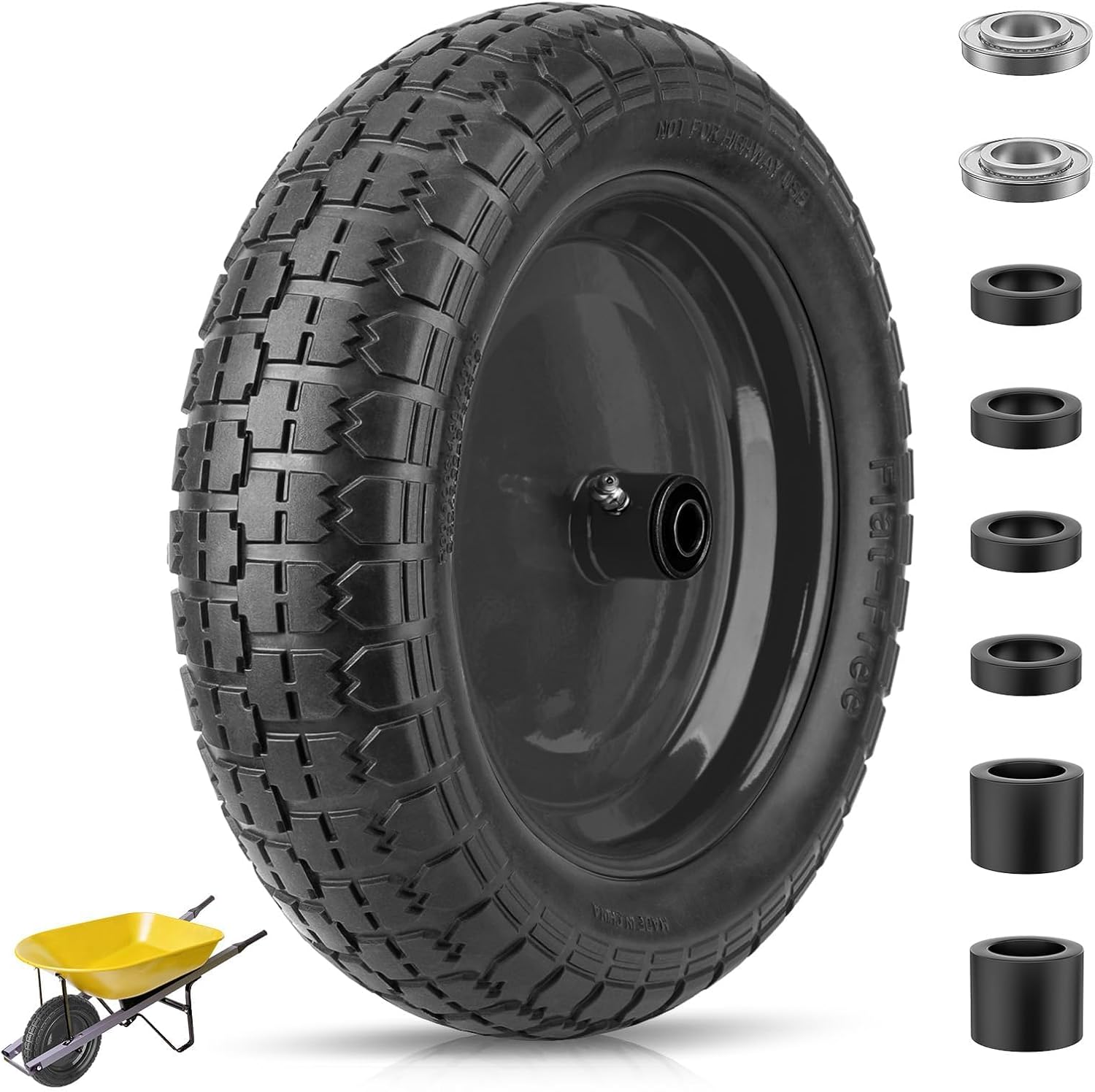
This flat-free TICONN wheelbarrow tire features durable polyurethane foam construction that never needs inflation, helping prevent punctures and reducing maintenance on rough outdoor terrain. With a 300 lb max load capacity and stable steel rim design, it supports safer transport for yard work and hauling tasks. An adapter kit with ball bearings and nylon spacers is included for easier fit and customization across common wheelbarrow and cart axle setups.
Which Is Better for Towing Heavy Loads?
A 14-ply tire is useful for towing only when your application needs the additional tire capacity. If a correctly sized 10-ply tire already supports the loaded axle within the manufacturer’s requirements, moving to 14-ply does not automatically make the vehicle capable of towing more.
The higher load range can provide additional tire capacity for heavy trailers, commercial service, or frequent hauling. However, the vehicle’s Gross Axle Weight Rating (GAWR), Gross Vehicle Weight Rating (GVWR), payload rating, hitch rating, and towing rating remain unchanged.
A higher-load-range tire adds tire capacity; it does not raise the vehicle’s GVWR, GAWR, hitch rating, or towing limit.
This also means a stronger tire cannot correct an overloaded axle. Your actual loaded axle weight must remain within both the tire capacity and every applicable vehicle or trailer limit.
Pro Tip: For frequent towing or hauling, use actual loaded axle weights rather than guessing from empty weight. Then compare those loads with the tire, wheel, axle, and vehicle ratings before choosing a higher load range.
Products Worth Considering

TP-M13W combination repair unit kit includes wrapped stems with matching patches for fast, reliable tire repairs. It’s suitable for both radial and bias ply tires and is designed for chemical or heat vulcanization. Gray vulcanizing gum with blue backing helps create a strong bond, with the stem portion wrapped for added effectiveness.

The Big Rig Defense Tire Thumper is a truck tire pressure checker that lets you quickly check multiple tires by giving them a firm whack. Listen for a reassuring thump and feel the stick bounce when a tire is fully inflated, helping you get back on the road safely. It features a comfortable, glove-friendly handle and a secure wrist strap for confident use on busy routes.

Measure tire tread depth quickly and accurately with this LUMITECO dial gauge that reads in 1/32" increments up to 14/32". The color-coded green/yellow/red zones make it easy to judge tire wear and know when replacement is needed. A rugged, compact design with a protective pouch helps keep the gauge ready for use on cars, trucks, motorcycles, and more.
How Comfortable Are 10-Ply and 14-Ply Tires?
A 14-ply-rated tire will often feel firmer than a comparable 10-ply tire, especially when the truck is empty or lightly loaded. The difference comes from the complete casing design and operating pressure rather than the ply number by itself.
A more compliant tire can absorb some small bumps through controlled sidewall flex. A heavier-duty tire built for greater loads and pressures may transmit more impact into the suspension and cabin.
- A 10-ply option can make more sense when its capacity is sufficient and everyday ride comfort matters.
- A 14-ply option may feel more appropriate when substantial load capacity is actually needed.
- Inflation pressure strongly affects ride feel, so do not compare tires while ignoring pressure.
- Tread design, tire size, wheel size, suspension, and vehicle load also affect comfort.
If your vehicle spends most of its time unloaded, extra load capacity that you never use may bring a firmer ride without providing a practical benefit.
Which Lasts Longer and Resists Punctures Better?
A 14-ply rating does not guarantee longer tread life or better puncture resistance. Higher-load-range tires are engineered for more demanding load service, but punctures and wear depend on the tire’s actual materials, tread and sidewall construction, pressure, alignment, road surface, and operating load.
| Tire type | Typical result |
|---|---|
| 10-ply | Can provide long life when correctly loaded, inflated, and maintained |
| 14-ply | Higher load capability; puncture resistance and tread life still depend on tire design |
A heavy-duty tire may tolerate demanding service better when a lighter-rated tire would otherwise operate near its limits. That does not make every Load Range G tire more resistant to nails, sharp rocks, sidewall cuts, or tread damage than every Load Range E tire.
Likewise, a correctly specified 10-ply tire can outlast a poorly inflated or overloaded 14-ply tire. Proper pressure, alignment, rotation where applicable, and regular inspection remain more dependable ways to protect tire life.
How Do You Choose the Right Tire?
Choose the tire by working from the vehicle or trailer requirements outward, not by selecting the highest ply number first. The correct tire must provide enough capacity while remaining compatible with the wheel, available clearance, speed requirements, and intended service.
Michelin’s tire replacement guidance recommends using the manufacturer-approved tire size and not choosing a replacement with less load-carrying capacity than specified for the vehicle.
Vehicle Use Needs
Your operating pattern determines whether extra load range is useful. A daily-driven pickup, a work truck carrying tools every day, and a fifth-wheel trailer can place very different demands on tires even if some tire sizes overlap.
- Check the vehicle or trailer tire placard, certification label, and owner’s manual.
- Confirm the required tire size and minimum load capability.
- Determine the real loaded axle weights if you tow or haul heavily.
- Compare the exact tire’s load rating and required pressure with those loads.
- Verify wheel load and pressure capability before moving to a higher load range.
- Confirm clearance, speed rating, and application before installation.
A 10-ply tire is appropriate when it satisfies those requirements. A 14-ply tire becomes worthwhile when the application genuinely requires the greater load capability and every related component is compatible.
Load And Terrain
Load comes first because an overloaded or underinflated tire can overheat and fail regardless of its tread pattern. Terrain then helps you choose the appropriate tread and casing design for pavement, gravel, mud, construction sites, or other rough surfaces.
Do not assume the higher ply number alone makes a tire an off-road upgrade. Sidewall protection, tread depth, tread compound, belt construction, and the manufacturer’s intended service matter more when comparing puncture and impact resistance.
Also remember that higher tire capacity cannot make an underrated wheel safe. USTMA guidance states that tire load, pressure, and construction forces must remain within the rim or wheel manufacturer’s limits.
When Are 14-Ply Tires Worth It?
14-ply tires are worth considering when a compatible Load Range G tire provides capacity your current tire specification cannot adequately supply. That situation is most relevant to heavy trailers, high axle loads, commercial service, and frequent heavy hauling.
They are less compelling when a properly specified Load Range E tire already provides all the capacity the vehicle requires. In that case, a higher rating may add weight, stiffness, cost, or pressure capability without allowing you to legally or mechanically carry more vehicle weight.
- Choose the higher rating for a verified load requirement, not simply for the larger number.
- Make sure the wheel and valve hardware can handle the required load and pressure.
- Do not exceed the vehicle or trailer GAWR or GVWR.
- Keep the same approved size, construction, and related specifications unless the manufacturer permits a change.
The best margin is sufficient rated capacity throughout the entire system. Tires are only one part of that system.
Products Worth Considering

RVMATE dual-axle RV tire covers help shield your tires from sunlight, snow, rust, and dirt to keep them in better condition in harsh weather. Made with heavy-duty waterproof, UV-resistant 420D Oxford fabric, they provide strong shading and help reduce wear. They install easily by placing the cover on the wheel and fastening the rope for a stable fit.

Keep your tires properly inflated with this analog VONDIOR tire pressure gauge, designed for fast, easy readings without batteries. The swiveling, two-axis hose and large glow dial help you measure at any tire angle with instant visibility. Built with a protective rubber shield, it supports durable, low-maintenance use for cars and trucks.

Accurately measure tire tread depth with a calibrated gauge marked from 0 to 1 inch in 1/32 inch increments. The color-coded bar helps you quickly identify tread condition ranges, supporting safe driving for trucks, motorcycles, automobiles, and passenger vehicles.
Frequently Asked Questions
Do 14-Ply Tires Affect Fuel Economy?
They can, but a 14-ply rating does not automatically reduce fuel economy. Tire weight, tread design, compound, dimensions, load, and inflation all affect rolling resistance. A heavier-duty replacement may use more energy in some applications, while proper inflation and an efficient tire design can reduce that difference.
Can I Mix 10-Ply and 14-Ply Tires?
Avoid mixing tires unless the vehicle or trailer manufacturer specifically approves the combination. Continental’s tire-mixing guidance recommends matching key specifications such as size, load index, speed rating, and tire type. Tires on the same axle should provide predictable, compatible performance.
Are 14-Ply Tires Noisier on Highways?
Not necessarily. Load range alone does not determine tire noise. Tread pattern, tread block design, compound, tire pressure, road surface, wear, and vehicle insulation can matter more, although a heavier-duty casing may transmit road vibration differently from a more compliant tire.
Do I Need Different Wheels for 14-Ply Tires?
Not always, but you must verify the existing wheel before upgrading. The wheel must match the tire diameter, width and contour and be rated for the required load and pressure. A tire capable of 110 psi does not make an existing wheel safe at that pressure.
Are 14-Ply Tires Harder to Install?
They can be harder to handle or mount because many heavy-duty tires are stiffer and heavier, but installation difficulty varies by tire construction, size, wheel, and service equipment. High-pressure or heavy commercial tire assemblies should be mounted and inflated using the correct professional procedures and equipment.
Conclusion
With 10-ply vs 14-ply tires, the safest choice is the rating that matches the real job. Use 10-ply when an approved Load Range E tire meets the required capacity; move to a compatible 14-ply option when the load genuinely calls for more tire capacity. Always verify the tire, wheel, axle, and vehicle limits together.
Sources
- Purdue Extension: Load-range, ply-rating, and pressure equivalencies.
- U.S. Tire Manufacturers Association: Load Range G, load/inflation guidance, vehicle loading, and rim/wheel limits.
- National Highway Traffic Safety Administration TireWise: Proper tire pressure, placard guidance, maintenance, and rolling resistance.
- Michelin USA: Replacement tire size and load-capacity guidance.
- Continental Tires: Tire-mixing, load-index, size, and speed-rating guidance.