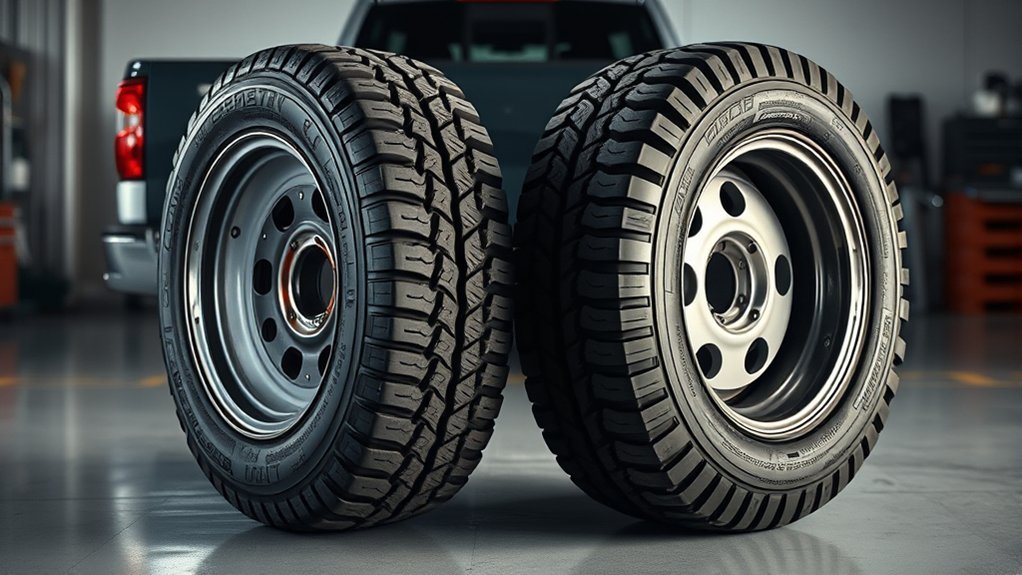
The difference in 6 ply vs 8 ply tires is mainly their strength and load-range classification, not the literal number of fabric layers inside a modern tire. A higher ply rating can support a more demanding load-and-inflation range, but it is not automatically the better tire for every truck, trailer, or road. Your safest choice starts with the vehicle placard, tire size, load capacity, inflation requirements, and how you actually use the vehicle.
Quick Answer
Choose a 6-ply-rated tire when it meets your vehicle’s required load capacity and you mainly drive with moderate loads. Choose an 8-ply-rated tire when the specific tire’s higher load range is needed for heavier towing or hauling. Do not choose by ply number alone; compare size, load index, pressure requirements, and vehicle limits.
Key Takeaways
- Modern 6-ply and 8-ply ratings describe tire strength classes, not the actual number of body plies inside the tire.
- On many North American light-truck and trailer tires, 6-ply rating is associated with Load Range C and 8-ply rating with Load Range D.
- A higher load range may allow greater load capacity or inflation pressure, but the exact capacity depends on the tire size and specification.
- Higher load range does not increase your vehicle’s GVWR, GAWR, payload rating, or tow rating.
- Ride comfort, puncture resistance, tread life, noise, and fuel economy depend on the complete tire design, not ply rating alone.
What Do 6 Ply and 8 Ply Tires Mean?
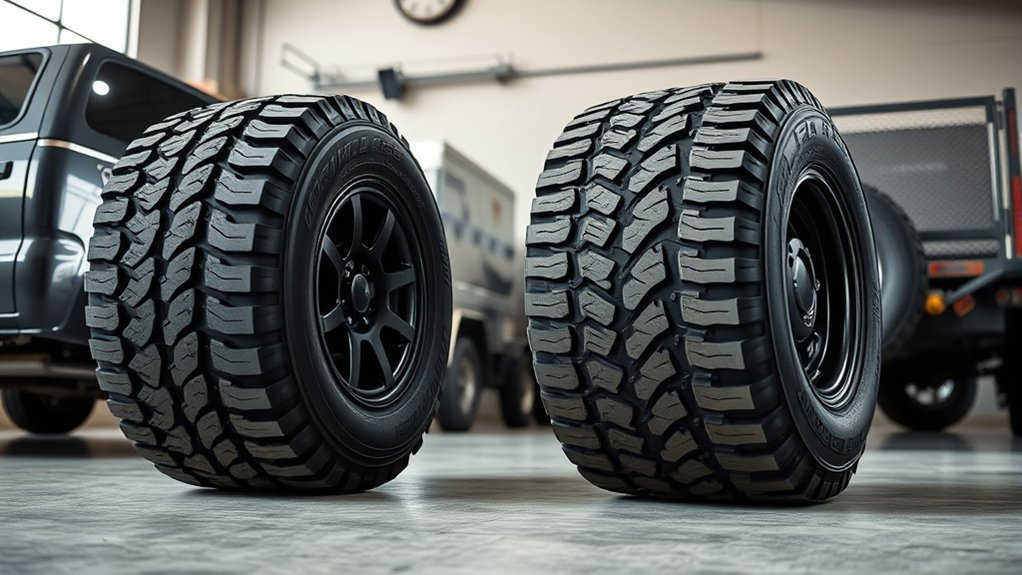
A 6-ply or 8-ply label is a ply rating, a legacy way of describing tire strength. Modern radial tires usually use stronger materials and may have far fewer physical body plies than the rating suggests.
Continental’s tire sidewall guide explains that load range corresponds to a tire’s ply rating. The U.S. Tire Manufacturers Association also shows that modern tire construction commonly uses only one or two body plies, plus belts and other reinforcing components.
For many LT and ST tires sold in North America, Load Range C is commonly described as a 6-ply rating and Load Range D as an 8-ply rating. However, you should still read the full sidewall specification because the letter or ply shorthand does not tell you the exact number of pounds a particular tire can carry.
The more useful numbers are the tire’s load index, maximum load, size, and required inflation pressure. Michelin defines load index as the number corresponding to a tire’s load-carrying capacity and load range as a range of loads carried at a defined pressure in its tire terminology guide.
How 6 Ply and 8 Ply Tires Differ in Strength
An 8-ply-rated tire belongs to a higher strength class than a comparable 6-ply-rated tire. In the same tire size or product family, that can mean a greater allowable load, a higher inflation range, or both.
| Comparison | 6-ply rating | 8-ply rating |
|---|---|---|
| Common load-range shorthand | Load Range C | Load Range D |
| Strength class | Lower | Higher |
| Typical reason to choose it | Required capacity is already sufficient | More load capacity or pressure capability is required |
| Ride | May be more compliant | May feel firmer, depending on tire and pressure |
Do not treat the higher number as a universal measure of puncture resistance. Cuts and punctures also depend on tread thickness, sidewall reinforcement, belt design, rubber compounds, road hazards, and where the object strikes the tire.
Likewise, an 8-ply-rated tire does not automatically last longer. Tread compound, alignment, inflation, rotation, load, heat, terrain, and driving style can have a much larger effect on service life.
Which Tire Handles More Weight and Pressure?
When two otherwise comparable tires are offered in 6-ply-rated and 8-ply-rated versions, the 8-ply-rated version will generally have the higher load-and-inflation capability. However, there is no single universal weight or pressure figure that applies to every 6-ply or 8-ply tire.
The USTMA tire care and replacement manual explains that a light-truck tire’s load range identifies its load and inflation limits. It also shows that the tire sidewall lists maximum load and maximum cold inflation information.
That is why you should compare the actual specifications of the tires you are considering. Two tires with different sizes can have very different capacities even when they carry the same load-range letter.
Warning: Never exceed the vehicle’s GVWR, GAWR, payload limit, tow rating, wheel rating, or tire load capacity. Installing a higher-load-range tire does not raise any of those vehicle limits.
Also, do not inflate a tire to its sidewall maximum simply because the number is available. For original-size tires, follow the vehicle manufacturer’s specified pressure unless an approved replacement setup requires a different calculated pressure.
How 6 Ply and 8 Ply Tires Affect Ride Comfort
A higher-load-range tire can produce a firmer ride, but ply rating alone does not determine comfort. Tire pressure, casing design, tread pattern, sidewall construction, tire size, vehicle weight, and suspension tuning all affect what you feel from the driver’s seat.
A 6-ply-rated tire may flex more under the same conditions, so it can feel less harsh on a lightly loaded truck. An 8-ply-rated alternative may feel more controlled when carrying a heavier load, especially if that higher capacity is what the vehicle application requires.
Pressure makes a major difference. Michelin’s tire-pressure guidance says the vehicle placard pressure is the operating recommendation, while the pressure molded on the tire sidewall is the tire’s maximum rather than the normal target for every vehicle.
Toyo’s load-and-inflation application guide also shows why changing from a passenger tire to an LT tire can require a different pressure to maintain equivalent load capacity. That change can affect ride harshness.
So, if comfort matters, compare the complete tire specification instead of assuming every 6-ply-rated tire rides softly or every 8-ply-rated tire rides harshly.
When to Choose 6 Ply Tires
Choose a 6-ply-rated tire when its size, load capacity, speed rating, and inflation requirements meet the vehicle manufacturer’s specifications and your maximum expected load. You do not gain a safety benefit by buying more load capacity than the application needs if the lower rating already satisfies every requirement.
| Use case | Why 6 ply may fit | What to confirm |
|---|---|---|
| Daily commuting | Required load capacity may already be sufficient | OE size and load specification |
| Light hauling | Can handle the job when rated for the actual axle load | Payload and tire capacity |
| Mixed-road driving | May offer a more compliant ride | Tread type and traction needs |
| Occasional trail use | Can work when the tire is designed for that terrain | Sidewall design and manufacturer guidance |
A 6-ply rating is not automatically a fuel-economy tire. Rolling resistance depends on the tire’s complete construction, compound, tread design, inflation, and operating conditions.
It is also not suitable simply because the vehicle usually runs empty. The replacement tire still needs enough load-carrying capacity for the vehicle’s approved fully loaded condition.
When 8 Ply Tires Make More Sense
An 8-ply-rated tire makes sense when the specific tire’s higher load range is needed to meet the vehicle, trailer, towing, or hauling requirements. It can also be appropriate when the manufacturer offers that load range for the application and you want the added load-and-pressure capability.
This is especially relevant when your loaded axle weight would exceed the capacity of the 6-ply-rated tire you are considering. In that case, the answer is not to overinflate the lower-rated tire. You need a tire with adequate rated capacity.
A higher load range may also reduce casing deflection under a heavy load. However, do not assume it automatically provides better braking, wet grip, puncture resistance, tread life, or heat resistance than every lower-rated tire. Those characteristics depend on the individual tire design.
Pro Tip: If possible, compare 6-ply-rated and 8-ply-rated versions in the same tire family and size. That makes it easier to see the real differences in load index, maximum load, approved pressure, weight, tread construction, and warranty without confusing them with an entirely different tire design.
The goal is not to buy the strongest tire available. It is to choose a tire that meets the required capacity while preserving the handling, ride, and fitment characteristics your vehicle needs.
Products Worth Considering

Secure your vehicle during transport with this 4-pack of heavy-duty tire tie down straps designed for trailers and hauling. The ratchet system with flat hooks and D-rings helps you tension the straps quickly, while the wheel-friendly design protects tires. With high break strength and corrosion-resistant hardware, these straps provide reliable, confidence-inspiring tie-down security for cars, trucks, and UTVs.

The 22800 wheel stud installer makes replacing wheel studs quick and secure, saving time and effort during tire service. It uses a ratchet or impact wrench to pull new studs firmly into place, helping when existing studs are too long. Compatible with most automotive wheels and light-duty truck wheel studs, it’s designed for easy, tool-assisted installation.

Secure your load with this 4-pack reflective ratchet tie down strap set designed for towing and transporting cars, trucks, and UTVs. The reflective polyester webbing helps improve nighttime visibility, while the ratchet with chain anchors and D-rings provides dependable tensioning. Heavy-duty build offers a high break strength for added confidence, and the included storage bag makes it easy to organize and carry.
Are 6 Ply or 8 Ply Tires Better for Trucks, Trailers, and Off-Road Use?
Neither rating is automatically better for every truck, trailer, or trail. The correct choice depends on tire type, actual loaded weight, manufacturer requirements, terrain, and the specifications of the individual tire.
For trucks: start with the tire placard and owner’s manual. If the truck requires the capacity of a higher load range, use a tire that meets or exceeds it. Do not downgrade below the original equipment load-carrying requirement just because the truck is usually driven lightly loaded.
For trailers: use the tire type and capacity specified for the trailer. A higher-load-range trailer tire may carry more weight in the same size, but it does not increase the trailer’s axle rating, GVWR, wheel capacity, or legal carrying capacity.
For off-road driving: look beyond ply rating. Sidewall reinforcement, tread construction, cut resistance, tread pattern, tire diameter, and the manufacturer’s intended terrain are all important. A higher load range may feel stiffer, while a tire specifically built with stronger sidewall protection may resist trail damage better regardless of the shorthand ply number.
If you air tires down for off-road use, remember that reducing pressure also reduces load-carrying capability. Follow the tire and vehicle manufacturer’s guidance before returning to road speed.
Products Worth Considering

TP-M13W combination repair unit kit includes wrapped stems with matching patches for fast, reliable tire repairs. It’s suitable for both radial and bias ply tires and is designed for chemical or heat vulcanization. Gray vulcanizing gum with blue backing helps create a strong bond, with the stem portion wrapped for added effectiveness.
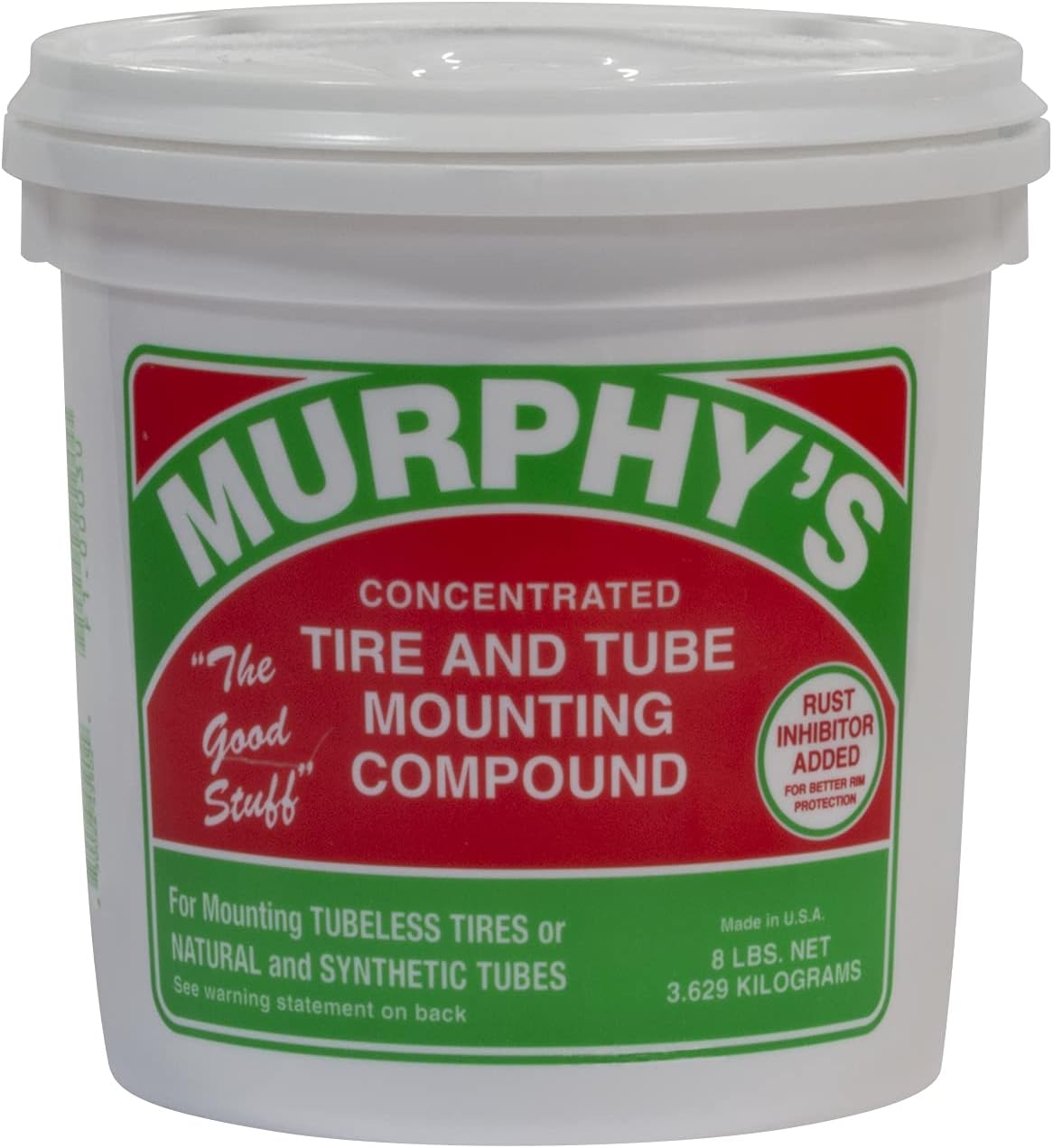
A concentrated tire and tube mounting compound designed to help simplify mounting rubber tires and tubes on passenger, semi truck, construction, and OTR applications. Its ultra-thick formula packs beads effectively and includes rust inhibitors to help protect against corrosion during use.

Check tire pressure with the Milton S-925 pencil gauge built for trucks, RVs, and bicycles. It features a single-head chuck with a built-in deflator valve, and it displays readings in both PSI and kPa for convenient use. The gauge is designed for accurate, repeatable pressure checks within its working range.
How to Choose Between 6 Ply and 8 Ply Tires
Choose between 6-ply and 8-ply tires by matching the replacement tire to the vehicle first, then to your heaviest real-world use. The ply number should be one specification in the decision, not the starting point.
Match the tire’s size, load capacity, pressure requirements, and construction to the vehicle before comparing ply ratings.
- Read the vehicle placard and owner’s manual. Note the original tire size, recommended cold pressure, and any load or speed requirements.
- Identify the tire type. Do not treat P-metric, LT-metric, commercial, and ST trailer tires as interchangeable just because their dimensions look similar.
- Compare actual load capacity. Check load index, maximum load, and the tire manufacturer’s load-and-inflation information rather than relying only on “6 ply” or “8 ply.”
- Account for your heaviest normal load. Include passengers, cargo, hitch weight, tools, accessories, and other weight carried by the vehicle.
- Consider ride and terrain. If both tires meet the required capacity, compare tread, sidewall design, tire weight, road noise, ride characteristics, and intended service.
- Keep tire specifications consistent. Matching tires provide more predictable handling, braking, and stability.
The USTMA recommends that replacement tires have at least the original equipment tire’s load-carrying capacity at the specified vehicle placard pressure. It also recommends keeping all four tires the same size, load index, speed rating, and construction unless the vehicle manufacturer specifies otherwise.
Note: If you are changing tire size, switching between passenger and LT tires, or changing load range substantially, ask a qualified tire professional to confirm wheel compatibility and the required inflation pressure for the replacement setup.
Products Worth Considering

Keep your tires properly inflated with this analog VONDIOR tire pressure gauge, designed for fast, easy readings without batteries. The swiveling, two-axis hose and large glow dial help you measure at any tire angle with instant visibility. Built with a protective rubber shield, it supports durable, low-maintenance use for cars and trucks.

Black Magic Tire Wet delivers a deep wet-look shine that makes tires appear dark, rich, and freshly detailed. Its long-lasting formula helps resist rain, dust, and road grime for weeks of glossy protection, not days. Apply by spraying onto clean, dry tires—no buffing or wiping required—with a low-sling design to reduce splatter on paint and wheels.

Vigorder rubber cement glue delivers superior adhesion and cures quickly within about 30 seconds for seamless rubber bonding. Once cured, it helps provide a strong, durable, waterproof seal that holds up to vehicle weight, pressure, and heat. Suitable for cars, motorcycles, trucks, bicycles, and off-road tires, it’s designed for emergency patch and maintenance repairs.
Frequently Asked Questions
How Do Ply Ratings Affect Tire Puncture Resistance?
A higher ply rating does not by itself guarantee better puncture resistance. It indicates a higher strength or load range, while puncture and cut resistance also depend on tread thickness, sidewall reinforcement, belt construction, rubber compounds, and the location and type of impact.
Are 6 Ply Tires Better for Fuel Economy?
Not necessarily. Ply rating alone does not determine rolling resistance or fuel economy. Tire construction, tread compound, tread design, weight, size, inflation pressure, vehicle load, and driving conditions all affect energy use.
Do 8 Ply Tires Increase Road Noise?
Not automatically. An 8-ply-rated tire may feel firmer, but road noise depends heavily on tread pattern, compound, tire design, road surface, pressure, and vehicle insulation. Compare specific tire models instead of using ply rating as a noise rating.
Can I Mix 6 Ply and 8 Ply Tires on One Vehicle?
Avoid mixing tire specifications unless the vehicle manufacturer permits the combination. For predictable handling, Michelin recommends matching tire size, type, load capacity, and construction, with manufacturer-approved exceptions for vehicles designed with different front and rear specifications.
How Long Do 6 Ply Versus 8 Ply Tires Typically Last?
There is no dependable service-life advantage based on ply rating alone. Tread compound, tire design, inflation, alignment, rotation, load, heat, road conditions, and driving style have a major effect on how quickly either tire wears.
Is a 6 Ply Tire Always Load Range C and an 8 Ply Tire Load Range D?
Load Range C and D are commonly associated with 6-ply and 8-ply ratings on North American light-truck and trailer tires. Still, use the markings and specifications on the exact tire you are buying because tire type, size, load index, and inflation limits determine its real capacity.
Does an 8 Ply Tire Increase My Truck’s Towing Capacity?
No. A higher-capacity tire may be necessary to safely support a permitted towing load, but it does not increase the truck manufacturer’s tow rating, payload limit, GVWR, GAWR, receiver rating, or wheel capacity. The lowest applicable limit still controls.
Conclusion
Choose between 6 ply and 8 ply tires by capacity, fitment, and real use rather than assuming the bigger number is always better. If a 6-ply-rated tire meets the vehicle’s requirements, it may be all you need. If your approved towing or hauling load requires more tire capacity, an 8-ply-rated option may be appropriate. Confirm the exact load index, pressure requirement, tire type, and vehicle limits before buying.
Sources
- Continental Tires: How to Read a Tire Sidewall: Supports the relationship between load range, ply rating, load ratings, and sidewall markings.
- Michelin Tire Glossary: Supports the definitions of load index, load range, load-carrying capacity, and maximum inflation pressure.
- U.S. Tire Manufacturers Association: Care and Service of Passenger and Light Truck Tires: Supports tire construction, sidewall information, inflation, replacement load capacity, tire mixing, and vehicle-loading guidance.
- Michelin: What Is the Right Tire Pressure?: Supports using the vehicle placard rather than the tire sidewall maximum as the normal operating-pressure reference.
- Toyo Tires: Application of Load Inflation Tables: Supports load-and-inflation calculations when changing tire types and the potential ride effect of higher LT-tire pressure requirements.
- Michelin: Mixing Tires: Supports matching tire specifications for predictable handling, braking, and stability.