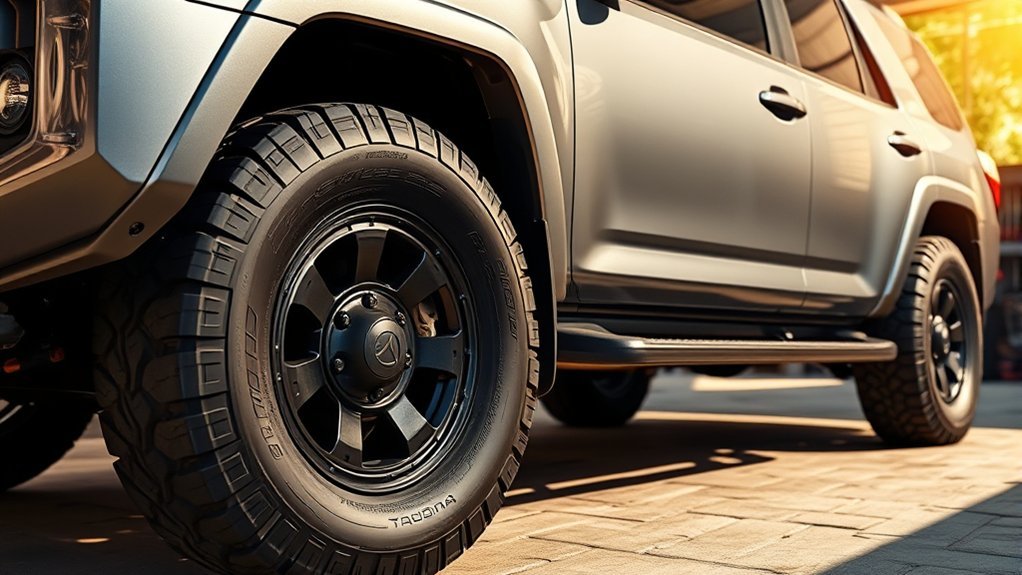
Yes, Tacoma tires can fit a Toyota 4Runner in many cases, but only when the tire size, wheel diameter, load rating, overall diameter, and clearance match your 4Runner. If you mean Tacoma wheels with tires already mounted, you must also check bolt pattern, center bore, offset, brake clearance, lug nut seat style, and TPMS compatibility before driving.
Quick Answer
Tacoma tires can fit a 4Runner when they match the 4Runner’s approved tire size range, load rating, wheel diameter, and clearance needs. Tacoma wheels are a separate fitment question because wheels also need the correct bolt pattern, hub bore, offset, brake clearance, lug hardware, and sensors.
Key Takeaways
- Tires and wheels are not the same fitment check. A tire can fit the 4Runner even when the Tacoma wheel it came on does not.
- 265/70R17 is a common candidate size for many Tacoma and 4Runner setups, but you still need to confirm your year, trim, load rating, and clearance.
- Do not assume wheel spacers are required. Use them only when the wheel offset, hub fit, and brake clearance call for them.
- Use the 4Runner’s door placard and owner’s manual for tire pressure, approved tire sizing, rotation guidance, and wheel torque specs.
At a Glance
| Time Required | 20 to 45 minutes for a basic test fit; longer if you need spacer, alignment, or rubbing checks |
| Difficulty | Moderate, because safety depends on correct sizing, torque, clearance, and load capacity |
| Tools Needed | Tire size calculator, flashlight, torque wrench, jack stands, tire pressure gauge, and your Toyota owner’s manual |
| Cost | Free for a simple test fit; extra cost if you need TPMS work, mounting, balancing, alignment, or approved hardware |
Key Specifications for Tacoma and 4Runner Tire Compatibility
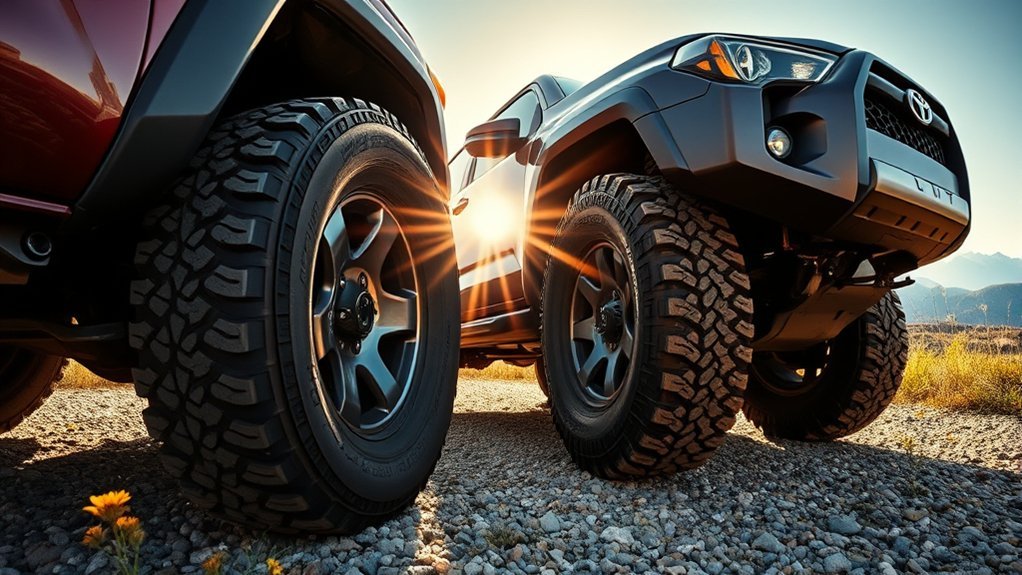
Start by deciding what you are swapping. If you are moving only the tire onto a 4Runner wheel, the most important checks are tire size, rim diameter, load index, speed rating, and overall diameter. A tire marked 265/70R17, for example, must go on a 17-inch wheel. It also needs enough load capacity for your 4Runner.
If you are swapping Tacoma wheels with the tires still mounted, you have more work to do. The wheel must match the 4Runner’s bolt pattern, hub bore, offset, backspacing, brake clearance, lug nut seat style, and TPMS setup. That is why a Tacoma tire may be usable even when the Tacoma wheel is not the right match.
For safety, check the tire size on your 4Runner’s Tire and Loading Information Label or in the Toyota owner’s manual before buying or installing anything. The National Highway Traffic Safety Administration recommends using the owner’s manual or driver-side tire label to confirm the correct tire size for your vehicle.
Warning: Do not drive on Tacoma wheels or tires just because they bolt on. A poor fit can affect braking, steering, tire wear, wheel bearings, and stability. Test-fit first, then have a qualified tire shop inspect the setup if you are unsure.
[Products Worth Considering]

Upgrade your wheels with MIKKUPPA closed-end lug nuts designed for reliable fit and corrosion resistance. The one-piece, cold-forged and heat-treated steel construction helps resist rust and stripping, while the integrated finish delivers a durable black appearance. Built to OEM standards with a conical 60-degree seat, these nuts provide a secure solution for compatible Ford, Honda, Jeep, and Chevrolet models.

These M14x1.5 closed-end chrome lug nuts are a one-piece replacement designed for secure fitment on compatible GM, Ford, and select Chrysler/Dodge models. Featuring a 60-degree conical seat and anti-rust chrome plating, they help resist corrosion and maintain a bright look for everyday driving. Built for long-term durability, they include OEM-style part references and are backed by 12 months of support.

Keep your tires properly inflated with this analog VONDIOR tire pressure gauge, designed for fast, easy readings without batteries. The swiveling, two-axis hose and large glow dial help you measure at any tire angle with instant visibility. Built with a protective rubber shield, it supports durable, low-maintenance use for cars and trucks.
Tacoma Tires vs. Tacoma Wheels: Why the Difference Matters
A tire swap and a wheel swap use different rules. Tires do not have bolt patterns or center bores. Wheels do. This distinction prevents most fitment mistakes.
| What You Are Swapping | Main Specs to Check | Main Risk |
|---|---|---|
| Tacoma tire only | Tire size, wheel diameter, load index, speed rating, overall diameter, section width, and clearance | Rubbing, wrong load rating, inaccurate speedometer, or poor handling |
| Tacoma wheel with tire mounted | Everything above, plus bolt pattern, center bore, offset, brake clearance, lug nut seat, and TPMS | Wheel not seating correctly, brake contact, vibration, stud stress, or unsafe hardware fit |
Offset and backspacing affect where the tire sits inside the wheel well. Too much inward movement can cause the tire or wheel to touch suspension parts. Too much outward movement can create fender rub and extra stress on wheel bearings. That is why a wheel that fits one Toyota truck can still sit poorly on another Toyota SUV.
Best Tire Sizes for Compatibility
Many Tacoma and 4Runner owners look at sizes such as 265/70R17 because that size is common on Toyota off-road setups. Still, “common” does not mean “automatic.” Your best tire size depends on your 4Runner year, trim, suspension height, wheel width, offset, and how much rubbing you can accept.
[Products Worth Considering]

Upgrade your wheels with MIKKUPPA M12x1.5 mag seat lug nuts built for secure, corrosion-resistant performance. These closed-end chrome lug nuts are a direct replacement for select Toyota models, including Camry, Corolla, RAV4, Sienna, Avalon, Highlander, Matrix, Venza, and Prius. Triple-chromium plating and cold-forged, heat-treated steel help deliver strength for daily driving and replacement needs.

These aluminum alloy tire valve stem caps with an O-ring seal help protect valve stems from corrosion while adding a clean, stylish look to your vehicle. The universal fit works across cars, trucks, motorcycles, bicycles, and more, making them an easy upgrade for everyday driving and off-road use. Installation is quick, and the included four-pack keeps all your tires dressed and protected.

The Trivd Frol 1/2" air impact wrench delivers high performance torque up to 1500 ft-lbs with a twin hammer impact mechanism for strong, balanced blows. It features an ergonomic grip, compact lightweight design, and quick-stop control with 3 forward speeds up to 8000 RPM plus a reverse speed. Built for demanding automotive repair and tire shop work, the rear exhaust helps keep debris away from the surface.
Standard Tire Sizes
Use the 4Runner’s factory tire size as your baseline. If the Tacoma tire has the same rim diameter and a close overall diameter, it has a better chance of fitting without problems. If the new tire is much taller or wider, expect more checks before driving.
- Same-size swaps: Best chance of a clean fit when load rating and speed rating also match or exceed the 4Runner requirement.
- 265/70R17: A common candidate for many Tacoma and 4Runner builds, but it still needs clearance checks.
- 275/70R17: Wider and taller than 265/70R17, so rubbing becomes more likely on stock suspension or low-offset wheels.
- 16-inch Tacoma wheels: Do not assume they will clear 4Runner brakes. Test-fit before mounting all four.
Note: The number after the “R” is the wheel diameter. A 265/70R17 tire fits a 17-inch wheel only. It will not fit a 16-inch or 18-inch wheel.
Off-Road Tire Options
Off-road tires can improve traction, but they can also add weight, road noise, and rubbing risk. Toyota’s newer off-road models show how much sizing has changed: the 2024 Tacoma Trailhunter and TRD Pro use 33-inch Goodyear Territory R/T tires, while the 2025 4Runner Trailhunter uses 33-inch Toyo Open Country A/T tires. That current-generation context is useful, but it does not automatically apply to older 4Runners or Tacomas.
| Tire Size | Fitment Outlook | What to Check |
|---|---|---|
| 265/65R17 | Often close to stock on many 4Runner setups | Load rating, pressure placard, tread type |
| 265/70R17 | Common Tacoma-to-4Runner candidate | Front mud flap, fender liner, body mount, and speedometer effect |
| 275/70R17 | Possible on some builds, but more likely to rub | Suspension height, wheel offset, full-lock turning, and compression clearance |
| 33-inch off-road tire | Usually needs more careful setup on older stock 4Runners | Lift, trimming, alignment, spare fit, and gearing expectations |
When Wheel Spacers Help Tacoma and 4Runner Fitment
Wheel spacers can help in some fitment cases, but they should not be your first assumption. A spacer moves the wheel outward. That can help clear upper control arms or improve stance, but it can also increase fender rub and add leverage to the hub and bearings.
Use spacers only after you confirm the wheel’s offset, hub fit, brake clearance, and lug engagement. If you use them, choose quality hub-centric spacers made for the exact vehicle and wheel setup, then follow the spacer manufacturer’s torque and recheck instructions.
- Use spacers when: the wheel sits too far inward and contacts suspension parts, and a measured spacer solves the clearance problem.
- Avoid spacers when: the wheel already sits far outward, the hardware does not provide safe thread engagement, or the spacer is not hub-centric for the setup.
- Check legality: spacer rules and inspection standards can vary by location.
- Retorque carefully: recheck torque after the first short drive and again after the hardware has settled, following the hardware maker’s instructions.
[Products Worth Considering]

This 1/2-inch drive breaker bar delivers powerful leverage for loosening and tightening stubborn lug nuts and automotive fasteners. The 180-degree flex head helps you reach tight spaces at the angle you need, making tire and brake jobs easier. A spring-loaded ball detent design holds 1/2-inch sockets securely while the chrome-moly head provides durable strength for everyday use.

Vigorder rubber cement glue delivers superior adhesion and cures quickly within about 30 seconds for seamless rubber bonding. Once cured, it helps provide a strong, durable, waterproof seal that holds up to vehicle weight, pressure, and heat. Suitable for cars, motorcycles, trucks, bicycles, and off-road tires, it’s designed for emergency patch and maintenance repairs.

Monitor tire tread wear with a smart, color-coded depth gauge that shows clear condition ranges at a glance. The bar is range marked for fast, easy readings, helping you maintain safer traction and performance. Each gauge is portable with a pocket clip, and the set includes 20 units for daily use and sharing.
Real-World Tacoma Tire Fitment Lessons
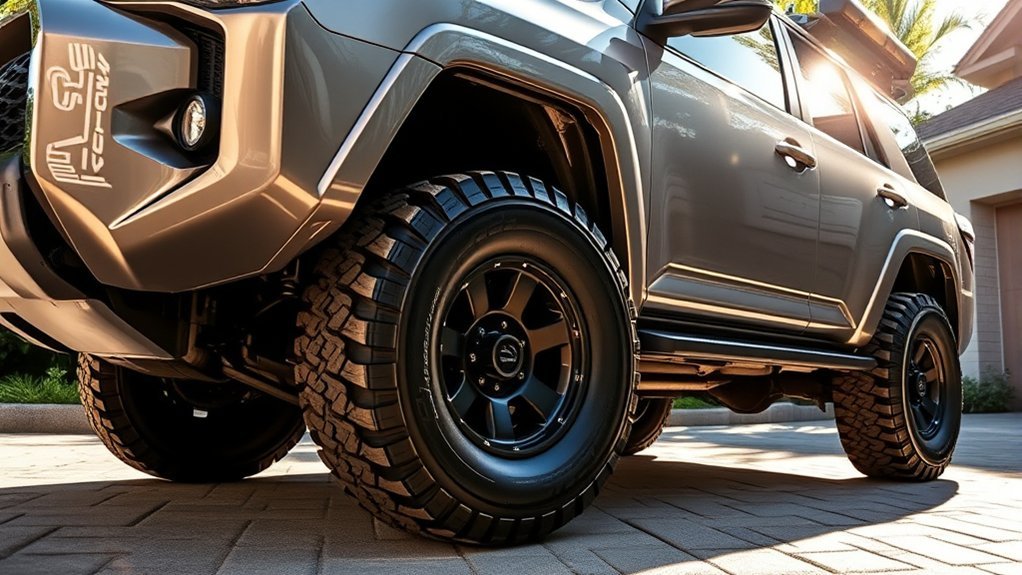
Owner reports can help you spot common patterns, but they cannot replace your own fitment check. Two vehicles with the same tire size can behave differently if one has aftermarket wheels, a leveling kit, worn suspension, different alignment settings, or heavier accessories.
What Successful Swaps Usually Have in Common
Successful Tacoma-to-4Runner tire swaps usually share a few traits. The tire diameter stays close to the 4Runner’s original size, the load rating is suitable for the SUV, the wheel offset keeps the tire away from the suspension, and the installer checks clearance before daily driving.
- The tire fits the wheel diameter exactly.
- The load index meets or exceeds the 4Runner’s requirement.
- The tire clears the front fender liner, mud flap, body mount area, and upper control arm.
- The wheels clear the brake calipers on both front and rear axles.
- The lug nuts match the wheel seat type and torque specification.
Recommended Tire Size Approach
Instead of copying another owner’s setup, compare the Tacoma tire against your 4Runner’s factory size. A small overall-diameter change is usually easier to manage than a large jump. A wider tire can also rub even when the height looks acceptable, especially with aggressive all-terrain or mud-terrain tread shoulders.
Pro Tip: Test-fit one front wheel first. The front axle is usually where rubbing and brake clearance problems show up earliest because the tire turns and moves through steering angles.
Common Installation Challenges
The most common problems are rubbing, brake caliper contact, wheel vibration, TPMS mismatch, and incorrect lug hardware. You can avoid most of them with a slow test-fit process before mounting the full set.
- Brake clearance: Some wheel designs clear the caliper better than others, even if the diameter is the same.
- Rubbing at full lock: Turn the steering wheel fully left and right, then check the fender liner, mud flap, and body mount area.
- Suspension contact: Inspect the upper control arm and inner wheel well.
- TPMS issues: Tacoma sensors may not automatically pair with your 4Runner.
- Lug nut mismatch: Factory and aftermarket wheels may use different seat styles.
Modifications You Might Need for Better Performance
You may not need any modifications if the Tacoma tires are close to your 4Runner’s original size. Larger or wider tires can require more work. Common changes include removing or reshaping mud flaps, adjusting the fender liner, correcting alignment, using wheels with a better offset, or upgrading suspension components.
Lift kits and leveling kits can add clearance, but they do not solve every rubbing problem. A taller tire can still hit the body mount or fender liner during turning and suspension compression. A wider tire can also hit the upper control arm if the wheel offset pulls it too far inward.
Changing tire diameter can affect your speedometer, shift behavior, braking feel, and fuel economy. If the tire is much taller than stock, ask a shop whether calibration is needed for your specific 4Runner.
The safest Tacoma-to-4Runner swap is not the biggest tire that can be forced into the wheel well. It is the tire that clears properly, carries the right load, and keeps the vehicle predictable on the road.
Tips for Safe Installation and Maintenance After Swapping Tires
Use a step-by-step process before you drive on Tacoma tires or Tacoma takeoff wheels. This helps you catch problems while the vehicle is still in the driveway or shop bay.
- Confirm your exact vehicles. Write down the Tacoma year and trim the tires came from, plus your 4Runner year, trim, drivetrain, and current tire size.
- Check the 4Runner’s approved size. Use the Tire and Loading Information Label or your Toyota owner’s manual. You can access Toyota manuals through the Toyota Manuals and Warranties page.
- Compare tire diameter and width. A large diameter change can affect clearance and speedometer accuracy.
- Confirm the load index. Do not install a tire with a lower load capacity than your 4Runner requires.
- Test-fit one front wheel. Check caliper clearance, hub seating, and lug nut engagement before installing all four.
- Turn lock to lock. Look for rubbing on the fender liner, mud flap, body mount area, sway bar, and upper control arm.
- Set cold tire pressure correctly. NHTSA says the proper pressure comes from the vehicle placard or owner’s manual, not the pressure molded into the tire sidewall.
- Torque with a calibrated torque wrench. Use your Toyota manual or the wheel and lug hardware manufacturer’s spec. Do not guess.
- Recheck after driving. Inspect for rubbing marks, vibration, uneven steering pull, and loose hardware after the first short drive.
Frequently Asked Questions
Can I use Tacoma wheels on my 4Runner?
Sometimes, but you need to verify more than the tire size. Tacoma wheels must match the 4Runner’s bolt pattern, center bore needs, offset range, brake clearance, lug nut seat style, and TPMS setup. Test-fit before driving.
What are the risks of mismatched tire sizes?
Mismatched tire sizes can cause rubbing, uneven tire wear, inaccurate speed readings, traction-control issues, reduced braking performance, and drivetrain stress. Four-wheel-drive systems work best when all four tires match in size, wear, and type.
Do I need to recalibrate my speedometer?
You may need calibration if the Tacoma tires are much taller or shorter than your 4Runner’s original tires. A larger overall diameter usually makes the speedometer read lower than your actual road speed.
Will tire pressure recommendations differ between vehicles?
Yes. Use the 4Runner’s tire pressure placard or owner’s manual, not the Tacoma’s placard and not the maximum pressure printed on the tire sidewall. Check pressure when the tires are cold.
How do I know if my tires are compatible?
Check the tire size, wheel diameter, load index, speed rating, overall diameter, tread width, and clearance. If the tires are mounted on Tacoma wheels, also check bolt pattern, center bore, offset, brake clearance, lug hardware, and TPMS.
Are wheel spacers required for Tacoma wheels on a 4Runner?
No, not always. Spacers are only needed when measurements show they solve a specific clearance or offset problem. If you use spacers, choose the correct hub-centric design and follow the manufacturer’s installation and torque instructions.
Conclusion
Tacoma tires can fit a 4Runner when the specs line up, but you should treat every swap as a fitment check, not a guarantee. Tire-only swaps depend on size, load rating, diameter, and clearance. Tacoma wheel-and-tire takeoffs also require wheel fitment checks such as hub fit, offset, brake clearance, lug hardware, and TPMS.
Before you drive, compare the tire to your 4Runner’s placard, test-fit the front wheel, check for rubbing, torque the hardware correctly, and set cold tire pressure to the 4Runner specification. That careful approach gives you a safer setup on the road and better confidence off-road.
Sources
- NHTSA TireWise Tire Safety — tire sizing, pressure, maintenance, tread, and safety guidance
- Toyota Manuals and Warranties — official Toyota owner manual lookup for model-specific tire and wheel information
- Toyota USA Newsroom: 2024 Tacoma — current-generation Tacoma platform and off-road tire context
- Toyota USA Newsroom: 2025 4Runner — current-generation 4Runner platform and Trailhunter tire context