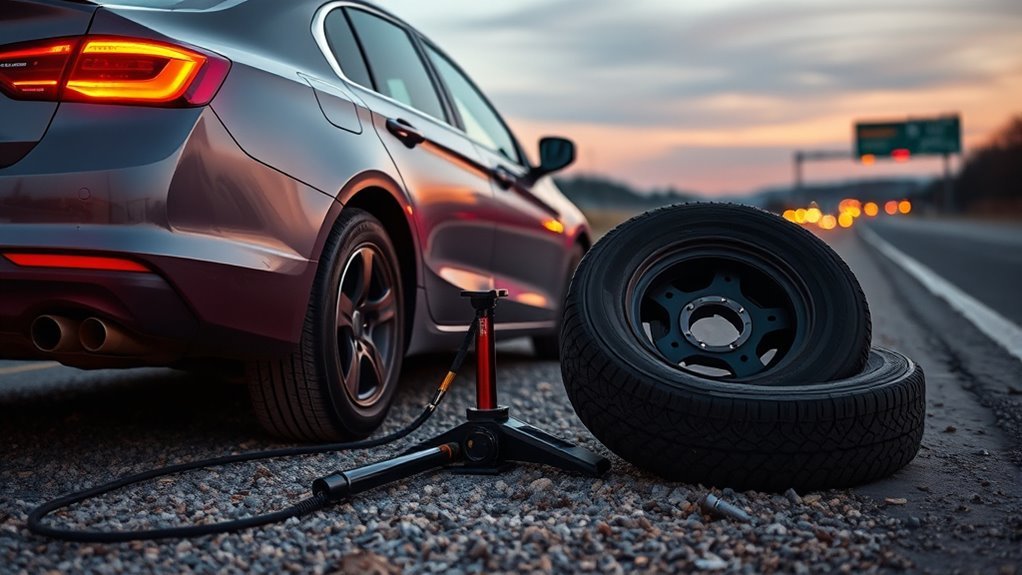
When Should You Use a Spare Tire?
Last updated: August 18, 2026
Use a spare tire when a flat, blowout, rapid air loss, or visible tire damage makes your regular tire unsafe to drive on, provided the spare itself is properly inflated, undamaged, compatible with your vehicle, and you can change the tire in a safe location. A compact temporary spare is an emergency solution, not a normal replacement tire, so drive cautiously and follow the speed, distance, pressure, and placement limits printed on the spare and listed in your owner’s manual.
What’s in This Article
- Quick Answer: When to Use a Spare Tire
- Types of Spare Tires and Their Limits
- When Not to Use a Spare Tire
- Immediate Situations That Call for a Spare Tire
- Safety Checklist Before Using a Spare Tire
- How Far and How Fast You Can Drive on a Spare Tire
- After Using a Spare: Inspection, Repair, and When to See a Pro
- Frequently Asked Questions
This guide explains when a spare is the right response, when roadside assistance or a tire mobility kit may be safer, and how to limit the risks until you can repair or replace the damaged tire.
Quick Answer: When to Use a Spare Tire

Quick Answer
Use a spare tire after a flat, blowout, major leak, or visible tire damage makes the regular tire unsafe. Use it only if the spare is properly inflated, undamaged, compatible with your vehicle, and you can install it safely. Compact spare tires are for temporary emergency travel, so follow the limits printed on the tire and in your owner’s manual and go to a repair facility as soon as practical.
Key Takeaways
- Use a spare tire when the regular tire is no longer safe to drive on.
- Check the spare’s pressure, tread, sidewalls, valve, wheel, and age before mounting it.
- Many compact spares have a 50 mph maximum, but the tire label and owner’s manual control.
- Do not assume every compact spare has the same mileage limit or wheel-position rules.
- Repair or replace the damaged tire as soon as possible after using the spare.
When you get a flat, install your spare if the regular tire cannot hold air or has damage that makes continued driving unsafe. The goal is controlled travel to a repair shop, tire store, home, or another safe location rather than finishing your normal trip.
Treat a temporary spare as an emergency vehicle component. Confirm its inflation pressure and secure mounting before you drive. Many compact temporary spares specify about 60 PSI, but use the pressure required for your specific spare and vehicle rather than assuming one number applies to every car.
Road and traffic conditions matter too. A compact spare has less tread and different dimensions than a regular tire, which can affect traction, braking, and handling. If heavy rain, snow, ice, fast traffic, or the location of the vehicle makes a tire change or continued driving unsafe, use roadside assistance or towing instead.
| Situation | Best Immediate Option | Why |
|---|---|---|
| Tire cannot hold air, but the wheel and spare are usable | Install the spare | The regular tire is no longer suitable for continued driving. |
| Small tread puncture that fits your mobility-kit instructions | Mobility kit may be an option | A sealant and inflator can provide temporary mobility for certain punctures. |
| Damaged, flat, missing, or incompatible spare | Roadside assistance or towing | An unsafe spare should not replace one tire problem with another. |
| Vehicle is stopped where changing a tire exposes you to traffic | Roadside assistance or towing | Personal safety comes before changing the wheel. |
Types of Spare Tires and Their Limits
Spare tires can restore mobility after a flat, but their operating limits depend on their design. Know the type of spare your vehicle carries before you need it.
- Compact temporary spares: These smaller, lighter tires are for emergency use. Many specify higher inflation pressure and a maximum speed around 50 mph, but follow the exact label and owner’s-manual restrictions for your vehicle.
- Full-size matching spares: A matching fifth wheel and tire can behave more like the other tires when its size, model, load rating, tread depth, pressure, and condition are appropriate. Include it in tire rotation only when the vehicle and tire manufacturer permit it.
- Full-size non-matching spares: A full-size spare may still differ in tire size, tread, wheel, or other characteristics. Do not assume it has the same long-term use capability as a matching fifth tire.
- Folding temporary spares: Some vehicles use an inflatable or collapsible spare. Follow the vehicle manufacturer’s inflation and use procedure before driving.
Some vehicles do not carry a spare at all. They may use run-flat tires or a tire mobility kit with sealant and an inflator. These systems also have limitations. A mobility kit may help with certain small tread punctures, but it is not a solution for a shredded tire, major sidewall damage, a severely damaged wheel, or every type of air loss.
Compact and non-matching spares can change braking, steering, traction, ground clearance, and drivetrain behavior. The difference matters even more on vehicles with manufacturer-specific wheel-position or drivetrain restrictions.
[Products Worth Considering]

This car D-wheel lock nut key provides an anti-theft solution for D-shaped wheel lock bolts, helping keep your wheels secure. It features a flower-shaped internal pattern that resists micro-adjustment theft while allowing removal and mounting of compatible locking nuts. Made for reliable performance under high torque, it’s easy to use with standard socket wrench turning for quick tire maintenance and emergency repairs.

This spare tire tool kit is designed for the 2004 to 2018 Ford F-150 to help you loosen and tighten wheel lug nuts and manage the spare tire and provided jack functions from underneath the vehicle. It includes the lug nut wrench and extension pieces plus a convenient storage carrying case for organized transport. The jack itself is not included.

The Dr.Roc spare tire tool kit helps you release, lower, or raise your spare tire with reliable extension tools and a lug nut wrench. It is made from rustproof automotive-grade steel and includes an organized carry case for convenient storage. Designed for compatibility with select GM models from the late 1990s through 2019, it uses upgraded extension components to install and remove spare tires with less hassle.
When Not to Use a Spare Tire
Do not use a spare tire when its condition raises safety concerns. Leave it off the vehicle if you see significant cracks, bulges, dry rot, exposed cords, severe tread wear, rim damage, valve damage, or obvious air loss. NHTSA notes that tires become more prone to failure as they age and that some vehicle and tire manufacturers recommend replacement at six to 10 years regardless of treadwear.
Warning: Do not exceed the speed, distance, load, placement, or other restrictions printed on a compact spare or listed in your owner’s manual.
Avoid unnecessary travel on a compact spare in heavy rain, snow, ice, or other conditions where its reduced traction or different dimensions could make control difficult. Call for roadside help or towing if weather, traffic, distance, spare condition, or the location of the vehicle makes the trip unsafe.
Do not treat any temporary spare as a permanent tire. Even a full-size spare should not automatically become the replacement for a worn tire unless it is a proper match for the vehicle and the remaining tire set.
Immediate Situations That Call for a Spare Tire
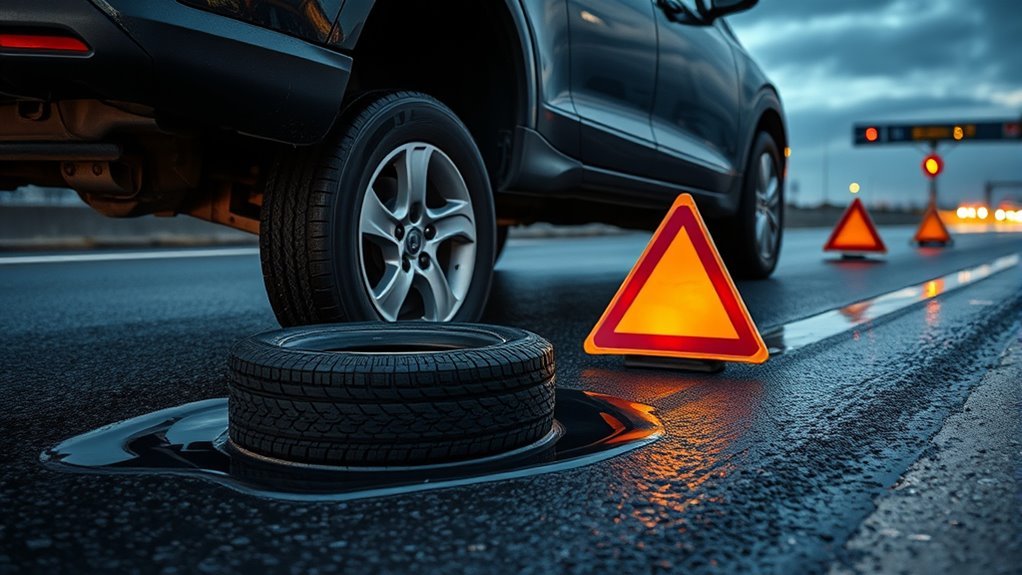
Use a spare when your tire can no longer support safe driving and the spare gives you a safe temporary way to reach help. Pull over to a safe, level place away from traffic before inspecting or changing the tire.
[Products Worth Considering]

Secure a full-size spare on your trailer with this powder-coated steel spare tire mount bracket. It fits most 4-, 5-, and 6-lug wheel bolt patterns and mounts to trailer tongues up to 4 in wide and 5 in tall. Built for reliable carry with a max 150 lb load rating and includes zinc-plated hardware for straightforward installation.

Measure tire tread depth quickly and accurately with this LUMITECO dial gauge that reads in 1/32" increments up to 14/32". The color-coded green/yellow/red zones make it easy to judge tire wear and know when replacement is needed. A rugged, compact design with a protective pouch helps keep the gauge ready for use on cars, trucks, motorcycles, and more.

The Trivd Frol 1/2" air impact wrench delivers high performance torque up to 1500 ft-lbs with a twin hammer impact mechanism for strong, balanced blows. It features an ergonomic grip, compact lightweight design, and quick-stop control with 3 forward speeds up to 8000 RPM plus a reverse speed. Built for demanding automotive repair and tire shop work, the rear exhaust helps keep debris away from the surface.
Safe Pull-Over Locations
If you get a flat, steer toward a secure, well-lit spot. A parking lot, rest area, or other firm, level location away from moving traffic is preferable to a narrow roadside shoulder. Signal early, slow down carefully, and turn on your hazard lights.
- Choose a parking lot, rest area, or other area with room to work and a clear exit path.
- Use a roadside shoulder only when you can remain safely separated from traffic.
- Set the parking brake and use wheel chocks when available.
Do not stop in an active traffic lane to attempt a wheel change. If you cannot reach a safe place, call roadside help instead of trying to change the tire beside fast traffic.
Visible Tire Damage
Visible structural damage means you should stop relying on that tire for normal driving. Look for cuts, bulges, deep punctures, cracks, exposed cords, severe air loss, or signs that the tire has separated from or contacted the rim. A tire that has been driven while flat can have hidden internal damage even if the outside does not look severe.
Check tread depth if you can do it safely. NHTSA says tires should be replaced when tread is worn to 2/32 inch. After a crash, hard curb strike, or pothole impact, install the spare only if the spare, wheel mounting area, and vehicle appear suitable for a safe wheel change.
Immediate Travel Needs
After confirming the regular tire is unsafe, decide whether the spare is the safest way to reach help. Consider traffic, weather, distance, the spare’s condition, and whether the vehicle manufacturer restricts where the temporary spare may be installed.
- Install the spare when the regular tire cannot safely support continued driving and the spare is usable.
- Use a tire mobility kit only when the damage and conditions fit that kit’s instructions.
- Call roadside assistance if the spare is damaged, underinflated beyond safe use, incompatible, or unsafe to install where the vehicle is stopped.
- Follow the compact spare’s exact speed and distance limits before driving.
Safety Checklist Before Using a Spare Tire
Before mounting a spare, check its pressure, condition, type, and required tools. Many compact spares specify about 60 PSI, but use the pressure required for your specific spare and vehicle. Inspect the tread, sidewalls, valve stem, and wheel for cuts, bulges, cracks, leaks, or age-related damage.
Set up the vehicle before lifting it. Park on firm, level ground away from traffic, turn on the hazard lights, shift into Park or the appropriate gear, set the parking brake, and place wheel chocks opposite the flat tire when possible.
Jack safety: Never place any part of your body underneath a vehicle that is supported only by its emergency jack. Use only the jacking points and procedure specified by the vehicle manufacturer.
- Gather the jack, lug wrench, wheel lock key, gloves, flashlight, and pressure gauge.
- Find the correct jacking point in your owner’s manual.
- Loosen the lug nuts slightly before you lift the vehicle.
- Raise the vehicle only high enough to remove the flat tire.
- Install the spare and hand-start each lug nut.
- Tighten the lug nuts in the sequence specified by the vehicle manufacturer as the wheel is secured.
- Use the correct manufacturer torque specification and have the lug-nut torque checked with a torque wrench as soon as practical if you could not torque them correctly during the change.
Pro tip: NHTSA recommends checking the pressure of all tires, including the spare, at least once a month when the tires are cold.
How Far and How Fast You Can Drive on a Spare Tire
For a compact “donut” spare, 50 mph is a common maximum, but there is no single mileage limit that applies to every temporary spare. Read the warning label on the spare and follow the vehicle owner’s manual. If either gives a lower speed or shorter distance, use the lower limit.
A full-size matching spare can provide more normal driving capability when it truly matches the vehicle’s other tires and is in suitable condition. A full-size non-matching spare may still have temporary-use restrictions, particularly when its tire size, tread depth, wheel, or other characteristics differ from the tires already on the vehicle.
- Check the spare’s inflation and condition before use.
- Keep compact-spare trips as short as practical.
- Stay within the speed shown on the spare or in the owner’s manual.
- Increase following distance and avoid abrupt acceleration, braking, and steering.
- Avoid unnecessary heavy loads and high-speed highway travel.
- Drive to a repair shop, tire store, or safe location rather than resuming the normal trip.
Reduced traction becomes more important in rain, snow, and ice. Stop and seek assistance if the vehicle pulls strongly, shakes, produces unusual noise, or feels unstable after the spare is installed.
After Using a Spare: Inspection, Repair, and When to See a Pro
After using a spare, inspect it before returning it to storage. Look for cuts, cracks, sidewall bulges, unusual wear, wheel damage, or air loss. Restore it to the inflation pressure specified for that spare before the next emergency.
Have a tire professional inspect the damaged tire and wheel as soon as possible, especially if the tire was driven while flat, struck a pothole or curb, or has damage near the shoulder or sidewall.
For passenger and light-truck tires, U.S. Tire Manufacturers Association guidance limits a standard puncture repair to damage in the repairable tread area with an injury no greater than 1/4 inch (6 mm). The tire must be removed from the wheel for internal inspection, and the repair must fill the injury with a rubber stem or plug and seal the inner liner with a patch. A plug by itself is not an acceptable industry repair, and shoulder or sidewall injuries fall outside the standard repair area.
Replace the spare if it has structural damage, severe deterioration, or another condition that makes it unsuitable for emergency use. Store the jack, lug wrench, wheel lock key, and other tools securely so the complete kit is ready for the next problem.
[Products Worth Considering]

The SAFELIFE dial tire tread depth gauge measures tread depth in 1/32 inch increments with clear, easy-to-read 2-inch dial face. Color zones using a traffic light system help you quickly judge whether tread is low, marginal, or ample for safer driving. Built with a durable zinc cast body and a metal detect probe for precise, comfortable use across cars, motorcycles, trucks, and buses.

This ecocstm ratchet wrench is designed to make emergency and routine tire changes faster with a 360° rotating head and quick forward/reverse switching. The extended handle provides extra leverage to reduce effort and hand fatigue, while the adapter helps fit many scissor jacks on cars, SUVs, trucks, and vans. Built for reliable performance with durable construction, it’s a practical travel essential for on-the-road preparedness.

This compact capsule-style tire repair kit helps you quickly fix punctures and plug flats with minimal effort. The rugged stainless steel shell protects the contents for reliable roadside use, while the simple plug assembly makes repairs fast and tool-free. Suitable for motorcycles, cars, ATVs, UTVs, and even mountain bikes.
Frequently Asked Questions
What Are the Limitations of a Spare Tire?
A spare tire can limit speed, distance, traction, handling, and load capacity, especially when it is a compact temporary spare. A full-size matching spare can behave more like a regular tire, while a full-size non-matching spare may still have restrictions. Follow the spare label and your vehicle owner’s manual.
Can I Drive on a Spare Tire for 2 Weeks?
Do not plan to use a compact spare as a normal tire for two weeks. It is designed for temporary emergency mobility and can change handling, braking, traction, and drivetrain behavior. Repair or replace the damaged regular tire as soon as practical.
Can You Put a Spare Tire on the Front Wheel?
There is no universal front-wheel rule for every temporary spare. Some vehicle manufacturers explicitly restrict a compact spare from certain wheel positions, including the front driving wheels on some models. Other vehicles have different instructions. Follow your owner’s manual rather than assuming a spare can be installed on any wheel position.
Why Do Compact Spare Tires Need Higher Pressure?
Compact temporary spares are smaller and built differently from normal road tires, so many specify a higher inflation pressure, commonly around 60 PSI. Use the pressure required for your actual spare and vehicle instead of copying the pressure used by the regular tires.
Can I Drive on the Highway With a Spare Tire?
Avoid high-speed highway travel on a compact spare when a safer lower-speed route is available. Many compact spares have a maximum speed around 50 mph, which may be below normal highway traffic speeds. If highway travel is unavoidable, stay within the spare’s specified limit, drive smoothly, increase following distance, and leave the highway as soon as practical to reach service.
Should You Repair the Flat or Replace the Tire?
A puncture may be repairable when it is confined to the repairable tread area, is no greater than 1/4 inch (6 mm), and the tire has not suffered other disqualifying damage. Industry repair procedures require removing the tire from the wheel for inspection and using a repair that fills the puncture and patches the inner liner. Shoulder damage, sidewall damage, exposed cords, severe wear, or damage caused by driving flat normally requires the tire to be removed from service.
Conclusion
A spare tire is the right choice when a flat, blowout, rapid leak, or visible damage makes the regular tire unsafe and the spare itself is suitable for use. Check its condition and pressure first, install it only in a safe location, and follow every speed, distance, load, and wheel-position restriction specified for your vehicle.
After the trip, inspect the spare and have the damaged tire professionally evaluated. A ready spare, a basic tool kit, and a clear roadside plan can keep a tire failure from becoming a larger emergency.
References
- TireWise: Tire Safety Ratings and Awareness — National Highway Traffic Safety Administration
- Tire Repair Basics — U.S. Tire Manufacturers Association
- The Ultimate Guide to Spare Tires — Goodyear
- Driving on a Spare Tire — Michelin
- 2020 Mazda6 Owner’s Manual: Flat Tire — Mazda USA