
How to Repair a Flat Tire on a Toyota RAV4: A Step-by-Step Guide
Last updated: July 8, 2026
To fix a flat tire on a Toyota RAV4, first stop on a hard, level shoulder or parking area, turn on the hazard lights, shift to P, set the parking brake, and keep passengers away from traffic. If your RAV4 has a spare, use the factory jack and lug wrench to install it at the correct jacking point. If it has an emergency puncture repair kit instead, use it only for a small tread puncture, then drive to a tire professional. Never keep driving on a flat because it can ruin the tire and wheel and make the vehicle harder to control. Equipment varies by model year and trim, so confirm your setup in the Toyota owner’s manual.
Quick Answer
To fix a flat tire on a Toyota RAV4, stop on a hard, level surface, set the parking brake, turn on the hazard lights, loosen the lug nuts slightly, jack up the vehicle at the correct lift point, install the spare, tighten the nuts in a crisscross pattern, and drive carefully to a tire shop.
Key Takeaways
- Never keep driving on a flat tire; even a short distance can damage the tire, wheel, and control of the vehicle.
- Some RAV4 models have a spare tire, while others use an emergency tire puncture repair kit, so check your cargo area and owner’s manual before you need it.
- A roadside tire plug or sealant is temporary. A safe permanent repair usually requires removing the tire and using a plug-patch repair from inside the tire.
- A compact spare is for short, careful driving only. Follow the speed and distance limits printed on the spare tire and in your owner’s manual.
At a Glance
| Time Required | 15–30 minutes for a spare tire change; longer if roadside conditions are unsafe |
| Difficulty | Beginner to moderate |
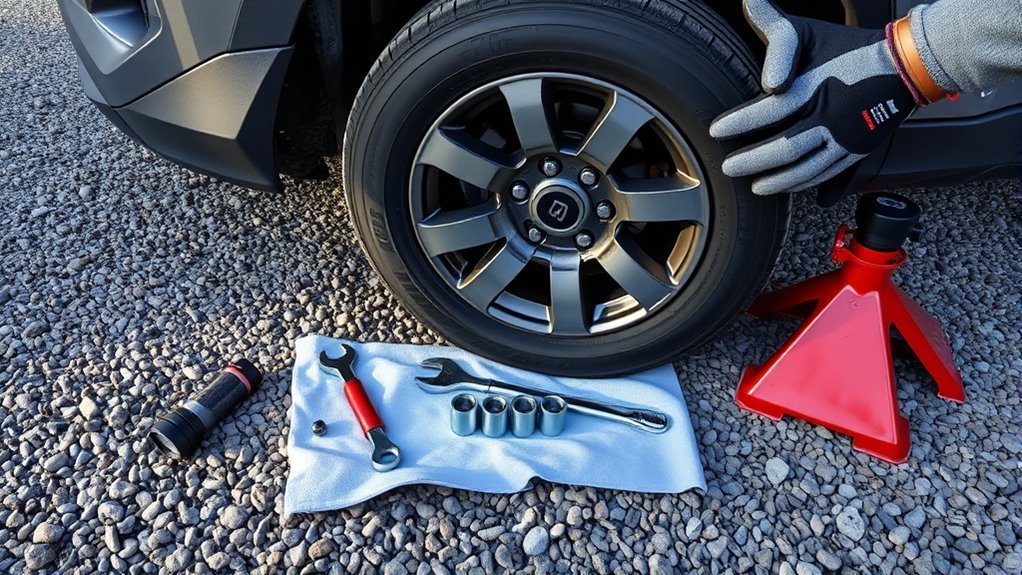
| Tools Needed | Spare tire or repair kit, jack, jack handle, lug wrench, wheel chock, tire pressure gauge, gloves, flashlight |
| Cost | Usually free with factory tools; professional tire repair or replacement cost varies |
Which RAV4 Flat Tire Fix Should You Use?
Choose the repair method based on the damage, your equipment, and the roadside conditions. A spare tire is usually the safest temporary solution when the tire has a sidewall cut, blowout damage, a large leak, or visible wheel damage. A sealant kit or plug kit should only be treated as a short-term way to reach a tire shop when the puncture is small and in the tread area.
| Situation | Best Next Step | Do Not Use |
|---|---|---|
| Small nail or screw in the tread | Use the spare, factory repair kit, or a temporary plug if roadside conditions are safe | Do not treat the plug or sealant as permanent |
| Sidewall damage, shoulder damage, blowout, or exposed cords | Install the spare if safe, or call roadside assistance | Do not plug, seal, or keep driving on the tire |
| No spare tire in the cargo area | Use the emergency puncture repair kit only if the damage matches the kit instructions | Do not use sealant on large holes, sidewall cuts, separated tires, or damaged wheels |
| Unsafe shoulder, soft ground, bad weather, or heavy traffic | Stay in a safe place and call roadside assistance | Do not jack up the RAV4 where it could roll, sink, or be hit |
[Products Worth Considering]

This AUTOWN flat tire repair kit is designed for quick, reliable puncture repairs using a plug kit and spiral probe tool to simplify installation. Built for durability and safe handling, it offers strong adhesion and flexibility to help maintain tire air tightness. With a portable storage case and a multi-vehicle approach, it’s suitable for cars, motorcycles, ATVs, tractors, lawn mowers, RVs, jeeps, and trucks.

This compact capsule-style tire repair kit helps you quickly fix punctures and plug flats with minimal effort. The rugged stainless steel shell protects the contents for reliable roadside use, while the simple plug assembly makes repairs fast and tool-free. Suitable for motorcycles, cars, ATVs, UTVs, and even mountain bikes.

This portable cordless tire inflator delivers up to 160 PSI with fast 17 L/min airflow to help you quickly top up tires and get back on the road. It features dual power mode, running on a 21V rechargeable battery or a 12V DC adapter for convenient roadside use. An automatic shut-off with digital pressure gauge helps prevent overinflation, and a built-in LED light improves visibility in low-light conditions.
How to Identify a Flat Tire

You may have a flat tire if the RAV4 pulls to one side, the steering feels heavy, you hear flapping or thumping, the tire looks saggy, or the tire pressure warning light comes on. If you feel a sudden blowout while driving, keep both hands on the wheel, ease off the accelerator, avoid hard braking, and move to a safe place when the vehicle is stable.
Once stopped, do a quick visual check. Look for a nail, screw, cut, sidewall bulge, cracked valve stem, or a tire sitting noticeably lower than the others. A tire pressure gauge gives the clearest answer. The correct cold tire pressure is listed on the driver-side door placard, not on the tire sidewall. The National Highway Traffic Safety Administration recommends checking pressure when tires are cold, including the spare if your vehicle has one.
Warning: Do not continue driving on a flat tire. Toyota warns that driving even a short distance on a flat can damage the tire and wheel beyond repair and may lead to an accident.
Before You Start: Safety Checks
Changing a tire on the shoulder of a busy road can be more dangerous than the flat itself. If the shoulder is narrow, the ground is soft, traffic is close, visibility is poor, or you feel unsafe, call roadside assistance instead of attempting the repair.
- Pull over to a safe, hard, flat surface away from traffic.
- Turn on your emergency flashers.
- Shift to P and set the parking brake.
- Turn off the engine.
- Ask passengers to stand away from traffic, not behind or beside the vehicle.
- Place a wheel chock, large rock, or sturdy block in front of and behind the tire diagonally opposite the flat.
Note: Toyota RAV4 equipment varies. Some models have a spare tire and jack; some newer or electrified versions may use an emergency tire puncture repair kit instead. Check the cargo floor, side compartments, and owner’s manual for your exact model.
What Not to Do With a RAV4 Flat Tire
- Do not drive to the next exit on a fully flat tire. Stop as soon as you can do so safely.
- Do not crawl under the RAV4 while it is supported only by the factory jack.
- Do not place the jack under suspension arms, plastic trim, or any point not listed in the owner’s manual.
- Do not remove the lug nuts before the vehicle is lifted and stable.
- Do not use sealant or a plug on sidewall damage, shoulder damage, a blowout, exposed cords, or a tire that was driven flat.
Gathering Tools for Flat Tire Repair
Before you start repairing a flat tire on your Toyota RAV4, gather everything you need. The factory jack, tool bag, spare tire, or repair kit may be stored under the cargo floor or in a designated tool compartment depending on the model year and trim.
| Tool | Purpose | Where to Check |
|---|---|---|
| Spare Tire | Temporary replacement for the flat tire | Usually under the rear cargo floor if equipped |
| Jack | Lifts the vehicle for tire removal | Factory tool storage area |
| Jack Handle | Operates the jack safely | Factory tool storage area |
| Lug Wrench | Loosens and tightens wheel nuts | Factory tool storage area |
| Tire Pressure Gauge | Checks tire and spare inflation | Emergency kit |
| Wheel Chock | Helps prevent the RAV4 from rolling | Emergency kit |
| Portable Inflator | Adds air after a minor pressure loss | Emergency kit or factory repair kit |
| Tire Plug Repair Kit | Temporary roadside repair for small tread punctures | Emergency kit |
| Blade | Trims excess plug material | Emergency kit |
| Tire Sealant | Temporary seal for certain small tread punctures | Factory repair kit, if equipped |
Do not use a jack that is damaged, missing parts, sitting on soft ground, or not positioned at the correct jacking point. If you are unsure where the RAV4 jack points are, check the vehicle’s owner’s manual before lifting the vehicle.
How to Change a Flat Tire on a Toyota RAV4: Step-by-Step Guide
If your RAV4 has a spare tire, follow this safe roadside process. These steps are based on Toyota’s flat-tire guidance, but your exact model year may have small differences, so use your owner’s manual as the final reference.
1. Secure the RAV4
Park on a hard, level surface, set the parking brake, shift to P, turn off the engine, and turn on the emergency flashers. Chock the tire diagonally opposite the flat tire so the vehicle is less likely to move.
2. Remove the Tools and Spare
Open the cargo area and remove the tool bag, jack, lug wrench, and spare tire. If the spare is held by a center fastener, loosen it and lift the spare out carefully. Keep fingers clear when removing or storing the tire.
3. Loosen the Lug Nuts Before Lifting
While the flat tire is still touching the ground, use the lug wrench to loosen each lug nut about one turn. Do not remove the nuts yet. Loosening them before jacking keeps the wheel from spinning and makes the job safer.
4. Jack Up the Vehicle at the Correct Point
Place the jack only at the correct jacking point for the flat tire’s position. Raise the RAV4 until the flat tire is just off the ground. Never put any part of your body under the vehicle while it is supported only by the factory jack.
5. Remove the Flat Tire
Remove the loosened lug nuts and place them somewhere clean where they will not roll away. Pull the flat tire straight toward you. If it sticks, do not crawl under the vehicle; gently rock the wheel from the sides until it comes free.
6. Install the Spare Tire
Line up the spare tire with the wheel studs and slide it onto the hub. Start each lug nut by hand to avoid cross-threading. Tighten the lug nuts by hand in a crisscross pattern so the wheel seats evenly.
7. Lower the RAV4 and Tighten the Lug Nuts
Lower the vehicle until the tire touches the ground, then tighten the lug nuts firmly in a crisscross pattern. Fully lower the vehicle and remove the jack. Use a torque wrench to tighten the lug nuts to the specification in your owner’s manual or have a tire shop check the torque as soon as possible.
Pro Tip: After installing the spare, drive slowly for the first few hundred feet and listen for wobbling, clicking, or vibration. If anything feels wrong, stop safely and recheck the wheel before continuing.
Flat Tire Repair: How to Plug a Puncture

A punctured tire can sometimes be sealed temporarily with a roadside plug kit, but only when the damage is small, straight through the tread area, and caused by an object such as a nail or screw. Industry tire-repair guidance limits repairable punctures to the tread area and to injuries no greater than 1/4 inch (6 mm) in diameter. Do not plug sidewall damage, shoulder damage, large cuts, blowouts, cracked tires, or tires driven while flat.
Industry tire-repair guidance says a plug alone is not a permanent repair. A proper repair usually requires removing the tire, inspecting the inside, filling the injury, and sealing the inner liner with a patch.
To use a plug kit for a temporary roadside repair, first locate the puncture by inspecting the tire visually or using soapy water to spot escaping air bubbles. If the object is still in the tread, remove it with pliers. Use the rasp tool to clean and roughen the hole, then thread the rubber plug through the insertion tool. Push the plug into the puncture until only a short amount remains outside the tire, twist if the kit instructions call for it, and pull the tool out. Trim the extra plug material close to the tread.
Reinflate the tire to the pressure shown on the driver-side door placard, then check again with soapy water. If bubbles still appear, the tire loses pressure, the puncture is near the sidewall, or the vehicle shakes while driving, stop using the tire and call for help. Even if the plug holds, drive to a tire professional for a proper internal inspection and repair.
Warning: The U.S. Tire Manufacturers Association states that a plug by itself is not an acceptable permanent repair. Treat roadside plugs and sealants as temporary ways to reach a repair shop.
[Products Worth Considering]

This tire repair kit provides fast emergency puncture repair without removing the tire from the rim, helping you get back on the road quickly. Its screw plug system is designed for punctures in both tread and sidewall and includes a complete patch plug tool set with essential accessories. A portable storage bag makes it easy to carry for cars, trucks, SUVs, motorcycles, and heavy-duty applications.

The JACO FlowPro Tire Inflator measures, inflates, and airs down tires up to 100 PSI with battery-free operation and ±2% accuracy after calibration. It features a glowing pressure dial for night visibility, a heavy-duty steel build with a hybrid hose, and a precision push-to-inflate thumb trigger. The patented Lightning Air Chuck locks on for a secure seal, and the kit includes quick-connect hardware for easy inline use with your air compressor.
If Your RAV4 Has an Emergency Tire Puncture Repair Kit
Some Toyota RAV4 models do not include a spare tire and instead come with an emergency tire puncture repair kit. Toyota describes this kit as a temporary repair method for certain nail or screw punctures through the tread. It is not meant for sidewall damage, large holes, a separated tire, a damaged wheel, or a tire that has been driven flat.
If your RAV4 has the factory kit, read the instructions on the compressor and sealant bottle before using it. In general, you connect the kit to the tire valve, inject sealant if the kit requires it, inflate the tire, and drive only as directed by the kit instructions so the sealant can spread. Then recheck pressure. If the tire will not hold air, do not keep driving.
Note: Tell the tire shop if you used sealant. Sealant can affect tire service, and the shop may need to clean the tire and inspect the TPMS sensor before deciding whether the tire can be repaired.
Final Checks: Ensuring Safety and Proper Tire Pressure
After changing the tire, plugging a puncture, or using a repair kit, take a few minutes for final checks. These checks reduce the chance of a second roadside stop and help protect the wheel, tire, and drivetrain.
| Task | Why It Matters |
|---|---|
| Pressure Check | Confirms the tire or spare is safe enough for temporary driving |
| Valve Stem Inspection | Helps catch leaks from a damaged valve stem |
| Lug Nut Check | Confirms the wheel is seated and tightened in a crisscross pattern |
| Visual Damage Check | Catches cuts, bulges, cracks, exposed cords, or wheel damage |
| TPMS Light Check | Reminds you to recheck tire pressure and sensor status after repair |
If you are using a compact spare, follow the speed and distance limits printed on the spare tire and in the owner’s manual. Many compact spares are limited to 50 mph, and they are meant only to get you to a service location. Avoid hard braking, fast cornering, sudden acceleration, and long highway trips.
When to Call Roadside Assistance Instead
Do not try to repair or change the tire yourself if the RAV4 is on a steep shoulder, soft dirt, ice, mud, or close to fast traffic. Call for help if the lug nuts will not loosen, the jack feels unstable, the spare is flat, the wheel is damaged, the tire has sidewall damage, or you do not have the correct tools.
You should also call for professional help if more than one tire is flat, the tire blew out violently, the vehicle has visible suspension damage, or the tire pressure drops again shortly after inflation. A safe tow is cheaper than damaging the wheel, losing control, or getting injured during a roadside repair.
How to Prevent Flat Tires on Your RAV4
You cannot prevent every nail or road hazard, but basic tire care lowers the risk. Check tire pressure at least monthly and before long trips. Inspect tread depth and look for uneven wear, cracks, bulges, and embedded objects. Rotate tires according to the schedule in your Toyota maintenance guide, and have alignment checked if the RAV4 pulls, vibrates, or wears tires unevenly.
Keep your spare tire or repair kit ready. Check the spare’s pressure, inspect its sidewall for aging cracks, and confirm that the jack and lug wrench are still in the vehicle. If your RAV4 uses a sealant kit, check the sealant expiration date and replace it before it expires.
Frequently Asked Questions
How do you fix a flat tire on a Toyota RAV4 step by step?
Park on a hard, level surface, set the parking brake, turn on the hazard lights, chock the opposite wheel, loosen the lug nuts one turn, lift the RAV4 with the jack at the correct lift point, remove the flat tire, install the spare, hand-tighten the nuts, lower the vehicle, and tighten the nuts in a crisscross pattern.
What should I do if I have a flat tire on my Toyota?
Slow down gradually, pull over safely, turn on the emergency flashers, and do not keep driving on the flat. If your Toyota has a spare, install it only on safe, level ground. If it has a repair kit, use it only for small tread punctures. If the location is unsafe or the damage is severe, call roadside assistance.
Does every Toyota RAV4 come with a spare tire?
No. RAV4 equipment can vary by model year, trim, drivetrain, and market. Some RAV4 models include a spare tire and tools, while others may include an emergency tire puncture repair kit instead. Check your cargo area and your Toyota owner’s manual for the exact equipment in your vehicle.
Can I permanently fix a RAV4 tire with a plug kit?
No. A plug kit can be a temporary roadside fix for a small tread puncture, but tire-industry guidance says a plug alone is not a proper permanent repair. A tire professional should remove the tire, inspect the inside, and use an approved plug-patch repair when the tire is repairable.
How fast can I drive on a Toyota RAV4 spare tire?
Follow the limit printed on the spare tire and listed in your owner’s manual. Many compact spare tires are limited to 50 mph and are intended only for temporary use until the original tire is repaired or replaced.
Where is the spare tire and jack on a Toyota RAV4?
On many RAV4 models with a spare, the spare tire sits under the rear cargo floor, and the jack and lug wrench sit in the factory tool storage area. Some trims and markets may use an emergency tire puncture repair kit instead, so check the cargo floor, side compartments, and owner’s manual for your exact vehicle.
Can I use a RAV4 tire repair kit on sidewall damage?
No. Do not use sealant, a plug kit, or a factory puncture repair kit on sidewall damage, shoulder damage, a blowout, exposed cords, large cuts, or a tire that has been driven flat. Use the spare if safe, or call roadside assistance.
Conclusion
Fixing a flat tire on your Toyota RAV4 is manageable when you stop early, use the right equipment, and put roadside safety ahead of speed. Use the spare tire when the damage is severe or the repair kit does not apply. Use a plug or sealant only as a temporary tread-puncture fix. Before you drive away, check pressure, listen for vibration, and go to a tire professional for an internal inspection, proper repair, or replacement.
Sources
- Toyota Owners Manuals and Warranties — official source for model-specific RAV4 flat-tire procedures, tool locations, and safety warnings
- Toyota 2021 RAV4 Owner’s Manual: If You Have a Flat Tire — Toyota guidance on stopping safely, using emergency flashers, jacking, and replacing a flat tire with the spare
- Toyota 2025 RAV4 Owner’s Manual: Vehicles Without Spare Tire — Toyota guidance on emergency tire puncture repair kits
- NHTSA Tire Safety — tire pressure, tread, TPMS, tire aging, blowout, and spare tire safety information
- U.S. Tire Manufacturers Association Tire Repair Basics — industry guidance on repairable punctures and why plug-only repairs are not permanent
- Michelin: Driving on a Spare Tire — compact spare tire limits, pressure checks, and temporary-use guidance

Related Articles

Toyota RAV4 TPMS Reset: Easy Steps That Work
Unlock the secrets to resetting your Toyota RAV4's TPMS effortlessly—discover the essential steps to ensure your tires are always safe.
Read More
Toyota RAV4 Tire Rotation: DIY Steps & Pattern
Take control of your Toyota RAV4's tire maintenance with our simple DIY rotation guide—discover the best steps for optimal performance and longevity!
Read More
Mix Tire Brands on a Toyota RAV4? Expert Guide
Keeping your RAV4 safe? Learn when mixing tire brands risks traction, ABS/TCS and AWD damage — and what exact matches you must insist on.
Read More