

Replace summer tires when the tread reaches about 4/32 of an inch, and no later than the legal minimum of 2/32 of an inch. Summer tires are built for grip on warm wet and dry roads, and most of their wet-weather advantage disappears as the grooves get shallow. You should also replace them sooner if you find cracks, bulges, cuts, a puncture that can’t be repaired, uneven wear you can’t correct, or if the tires have aged to the point your vehicle or tire maker recommends replacement.
Last updated: November 23, 2026
Quick Answer
Plan to replace summer tires at 4/32 inch of tread for safe wet braking and hydroplaning resistance. 2/32 inch is the legal limit in most places, and the tread wear bars sit at that depth. Replace them immediately if they show sidewall cracks, bulges, cords or damage, and check the DOT date code: many vehicle makers advise replacing tires around six years old, and tire makers commonly set ten years as the outer limit.
Key Takeaways
- 4/32 inch is the practical replacement point for summer tires because wet grip falls off quickly below it.
- 2/32 inch is the legal minimum in most of the US and much of the world. Tread wear bars become flush with the tread at this depth.
- Summer tires are meant for temperatures above roughly 45°F (7°C). Using them in cold weather does not just reduce grip; it can also damage some performance compounds.
- High-performance summer tires usually wear faster than all-season tires, so check tread depth at least once a month during the driving season.
- Age, storage and damage can end a summer tire’s life before the tread does.
How Long Do Summer Tires Last?
There is no single mileage number, because summer tires range from comfortable touring designs to soft ultra-high-performance (UHP) tires made for track days. As a general rule, the stickier the compound, the shorter the life. Consumer Reports notes that UHP summer tires deliver the best road holding but have an even shorter tread life than other categories, and that higher-performance tires usually cost more per mile.
In practice, these are the factors that decide how long your set lasts:
- Compound and category: max-performance and track-oriented summer tires wear fastest; grand-touring summer tires last longer.
- Vehicle: powerful rear-drive cars and heavy EVs wear tires faster, especially on the drive axle.
- Driving style: hard launches, fast cornering and track days can use up a set in a fraction of normal street mileage.
- Alignment and pressure: aggressive camber settings and under-inflation both cause rapid shoulder wear.
- Climate: very hot roads speed up wear, and cold weather can damage the compound.
Because summer tires often carry short treadwear warranties or none at all, it is better to judge replacement by measurement than by miles.
Products Worth Considering

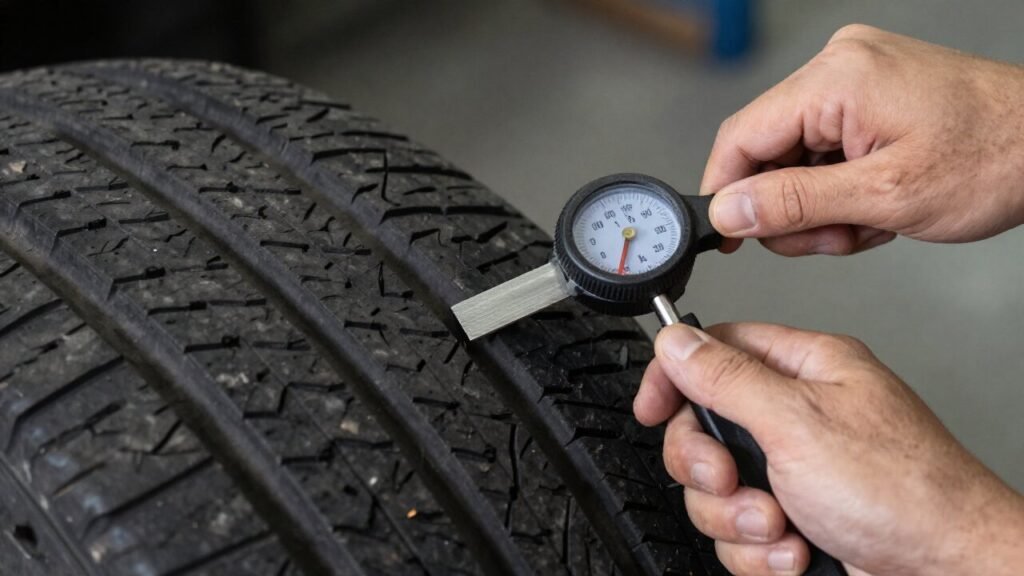
Monitor tire tread wear with a smart, color-coded depth gauge that shows clear condition ranges at a glance. The bar is range marked for fast, easy readings, helping you maintain safer traction and performance. Each gauge is portable with a pocket clip, and the set includes 20 units for daily use and sharing.

Measure tire tread depth quickly and accurately with this LUMITECO dial gauge that reads in 1/32" increments up to 14/32". The color-coded green/yellow/red zones make it easy to judge tire wear and know when replacement is needed. A rugged, compact design with a protective pouch helps keep the gauge ready for use on cars, trucks, motorcycles, and more.

The SAFELIFE dial tire tread depth gauge measures tread depth in 1/32 inch increments with clear, easy-to-read 2-inch dial face. Color zones using a traffic light system help you quickly judge whether tread is low, marginal, or ample for safer driving. Built with a durable zinc cast body and a metal detect probe for precise, comfortable use across cars, motorcycles, trucks, and buses.
What Tread Depth Should Summer Tires Be Replaced At?
Most passenger tires start with roughly 9/32 to 14/32 inch of tread, and summer performance tires are usually toward the shallow end of that range. The tread grooves are what carry water away from the contact patch, so the remaining depth directly controls how well the tire resists hydroplaning and how quickly it stops on a wet road.
| Tread depth | What it means | Action |
|---|---|---|
| 6/32 inch or more | Healthy tread with good wet performance | Keep driving, check monthly |
| 5/32 inch | Wet grip starting to decline | Start comparing replacement tires |
| 4/32 inch | Noticeably longer wet braking and earlier hydroplaning | Replace, especially if you drive in rain |
| 3/32 inch | Limited water evacuation | Replace as soon as possible |
| 2/32 inch | Legal minimum, wear bars flush with tread | Replace immediately |
Tire Rack recommends replacing tires at about 4/32 inch for driving on wet roads and at 2/32 inch for driving on dry roads only. Since nobody can guarantee dry weather, 4/32 inch is the sensible target for a summer tire used on public roads. AAA describes 4/32 to 5/32 inch as acceptable but a sign you should replace tires soon, and 2/32 inch or less as an immediate replacement.
How to Check the Tread on Summer Tires
- Use a tread depth gauge. It costs a few dollars and gives a precise reading in 32nds of an inch. Measure the inner, center and outer grooves of each tire.
- Try the quarter test. Insert a quarter into a main groove with Washington’s head pointing down. If the top of his head is always covered, you have at least 4/32 inch.
- Look at the wear bars. Small raised bridges sit across the main grooves. When the tread is flush with them, the tire is at 2/32 inch and worn out. See our guide to tire wear indicator bars.
- Check several spots. Performance cars with negative camber often wear the inner shoulder first, which you cannot see from outside the car.
- Note the pattern. Center wear points to over-inflation, edge wear to under-inflation, and one-sided wear to alignment. Our guide to reading tire wear patterns explains each one.
For a full walkthrough of measuring depth, see what tire tread depth means.
Signs Your Summer Tires Need Replacing (Even With Tread Left)
Tread depth is only one test. Replace summer tires regardless of remaining tread if you see any of the following:
- Cracks in the sidewall or between tread blocks, from age, ozone, UV exposure or cold-weather flexing.
- Bulges or bubbles in the sidewall, which signal internal damage from an impact.
- Exposed cords or belts anywhere on the tire.
- Punctures in the sidewall or shoulder, or holes too large to repair properly.
- Severe uneven wear or cupping that causes vibration or noise.
- Persistent vibration that balancing does not fix, which can indicate a separated belt.
- Repeated air loss with no visible cause.
- Hardened, glassy tread that no longer grips like it did, often a result of age or heat cycles.
Does Age Matter for Summer Tires?
Yes. Rubber compounds change over time even when a tire sits unused. Many vehicle manufacturers advise replacing tires at about six years old, while tire makers commonly set ten years from the date of manufacture as an upper limit, with regular professional inspections after year five. A summer tire stored badly, for example in a hot shed or next to an electric motor that produces ozone, can age faster than these guidelines suggest.
To check age, find the DOT code on the sidewall. The last four digits show the week and year of manufacture: 2321 means the 23rd week of 2021. Our guide to finding the date on a tire shows where to look, and tire age limits explained covers when an old tire becomes unsafe.
Can Cold Weather Ruin Summer Tires?
Summer tires are designed to work above roughly 45°F (7°C). Below that, the compound stiffens, grip drops sharply and the tires offer almost no traction on snow or ice. AAA recommends switching to winter tires when temperatures consistently fall below 45°F.
There is a second risk: some high-performance summer compounds can develop small cracks if they are driven, flexed or even handled at very low temperatures, roughly below 20°F (−7°C), according to guidance from several tire makers. If summer tires have been driven or mounted in freezing conditions and you see fine cracks in the tread blocks, have them inspected before using them again. Cracked summer tires should be replaced.
Do not drive summer tires in winter
If temperatures regularly drop below about 45°F (7°C) where you live, swap to all-season or winter tires. Summer tires on snow or ice are unsafe, and very cold temperatures can permanently damage some performance compounds.
Products Worth Considering

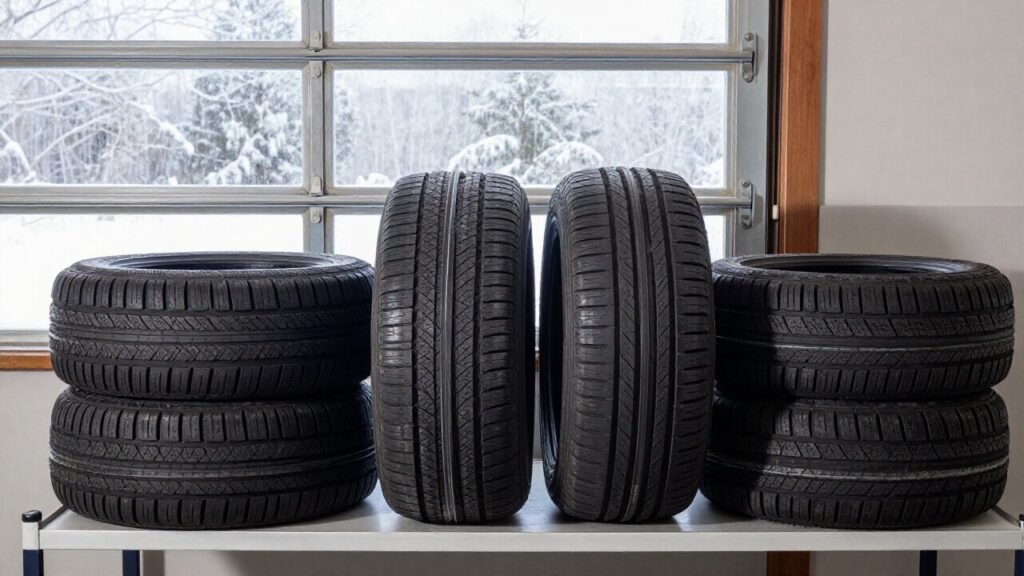
Accurately measure tire tread depth with a calibrated gauge marked from 0 to 1 inch in 1/32 inch increments. The color-coded bar helps you quickly identify tread condition ranges, supporting safe driving for trucks, motorcycles, automobiles, and passenger vehicles.

Measure tyre tread depth precisely with a digital gauge that reads in both MM and inches, helping you monitor safe driving conditions. The large LCD screen is easy to operate, and the compact tool fits for cars, trucks, and motorcycles. It provides high accuracy with a 0-25.4mm range and includes a 1-year warranty for added peace of mind.

Milton S-921 pencil tire pressure gauge helps you maintain optimal tire pressure for passenger cars with accurate readings in PSI and kPa. It features a built-in deflator valve for convenient pressure adjustments, plus a single chuck head and nylon indicator bar for easy use on the go. Built from durable plated brass and designed for reliable performance, it’s a practical road trip and cold-weather maintenance tool.
How to Make Summer Tires Last Longer
- Check pressure monthly when the tires are cold, using the placard pressure.
- Rotate on your vehicle maker’s schedule if the front and rear sizes are the same. Staggered setups usually can’t be rotated front to rear.
- Keep the alignment in spec, especially after hitting a pothole or curb.
- Drive smoothly. Wheel spin and hard cornering use up soft compounds quickly.
- Store them correctly in the off-season: clean, dry, cool and out of sunlight, away from fuel, solvents and ozone sources. See tire storage tips.
- Swap on time. Changing to winter tires before the cold arrives protects both your safety and the summer set.
Should You Replace Summer Tires in Pairs or as a Set?
A full set gives the most balanced handling, but pairs are common on cars with staggered fitments because the rear tires usually wear out first. If you replace only two tires on a vehicle with the same size all around, the newer pair normally goes on the rear axle to reduce the risk of oversteer on wet roads. All-wheel-drive vehicles have stricter rules about tread depth differences between tires, so check your owner’s manual before replacing fewer than four.
When to Switch Seasons vs. When to Replace
These are two different decisions. Switching is about temperature: put summer tires on when temperatures stay above about 45°F and take them off when they fall below it. Replacing is about condition: tread depth, damage and age. A summer tire might be switched off in October with 5/32 inch of tread, stored all winter and then need replacing early the next season. For timing the seasonal swap, read when to switch winter tires to summer tires, and for the pros and cons of running a summer set, see the benefits of summer tires.
Frequently Asked Questions
At what tread depth should summer tires be replaced?
Replace summer tires at about 4/32 inch if you drive on wet roads, which is nearly everyone. The absolute limit is 2/32 inch, where the tread wear bars are flush with the tread.
How many miles do summer tires last?
It varies widely by compound, vehicle and driving style. Ultra-high-performance summer tires generally wear faster than touring or all-season tires, so measure tread depth rather than relying on mileage.
Can summer tires be used for more than one season?
Yes. A good set often lasts several seasons if it is stored correctly and swapped out before cold weather. Check tread, cracks and date code each time you reinstall them.
Is it bad to drive summer tires in the cold?
Yes. Below about 45°F (7°C) summer tires lose much of their grip, and in very cold conditions some compounds can crack. They are not designed for snow or ice at all.
Should I replace summer tires that are seven years old with good tread?
Have them inspected. Many vehicle makers recommend replacement around six years, and older rubber can harden and crack even with deep tread. If there are cracks or the tire feels hard and slippery, replace it.
Do summer tires wear faster than all-season tires?
Usually, yes. Their softer, grippier compounds trade tread life for traction and handling, which is why most carry shorter treadwear warranties.
Conclusion
The simple rule for summer tires is to start shopping at 5/32 inch, replace at 4/32 inch and never drive below 2/32 inch. Combine that with a visual check for cracks, bulges and uneven wear, a look at the DOT date code, and a seasonal swap before temperatures drop below about 45°F. Doing these checks monthly during the driving season keeps the grip you paid for and tells you exactly when it is time for a new set.
Sources
- Tire Rack: When should tires be replaced?
- Tire Rack: Tread depth and wet/snow performance
- AAA: When to replace tires based on tread depth
- AAA: When to switch from summer to winter tires
- Consumer Reports: When to replace your tires
- Nokian Tyres: How do I know when to replace tires?
Products Worth Considering

This tire inflator with pressure gauge delivers long-lasting performance with a durable rubber-protected gauge and sturdy build. The longer hose and 360 swivel air chuck help you seal the valve securely and keep your hands free while measuring, inflating, or deflating. It’s battery-free for reliable use and provides ±2 PSI accuracy in the mid-range for most typical tires, with universal compatibility for 1/4 NPT compressor outputs.

Steelman white tire marking crayons provide high-contrast, semi-permanent marks for repairing and inspecting tires and equipment. They write on wet or dry, smooth or coarse surfaces including rubber, metal, glass, and wood, making them ideal for puncture location and damage outlining. The lead- and zinc-free crayons resist weather and fading yet wipe away when you no longer need the marks.
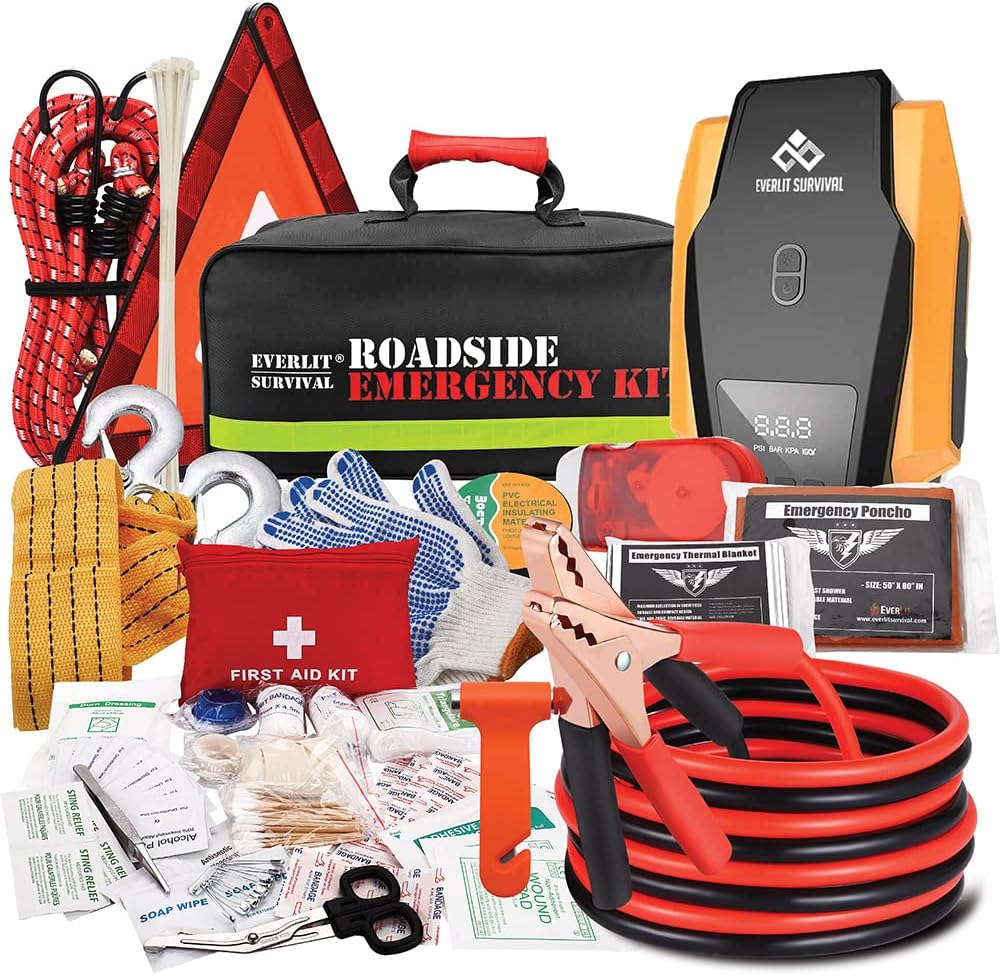
The Everlit Road Guardian emergency kit is designed for roadside breakdowns, combining essential safety gear and roadside tools in one compact bag. It includes a digital 12V auto tire inflator with preset and auto shutoff, plus 12-foot 8-gauge jumper cables to get you moving again. You also get a full 108-piece first aid kit, reflective warning tools, safety gloves, and emergency convenience items for safer travel.