
What Is Tire Feathering? How to Identify and Prevent Feathered Tire Wear
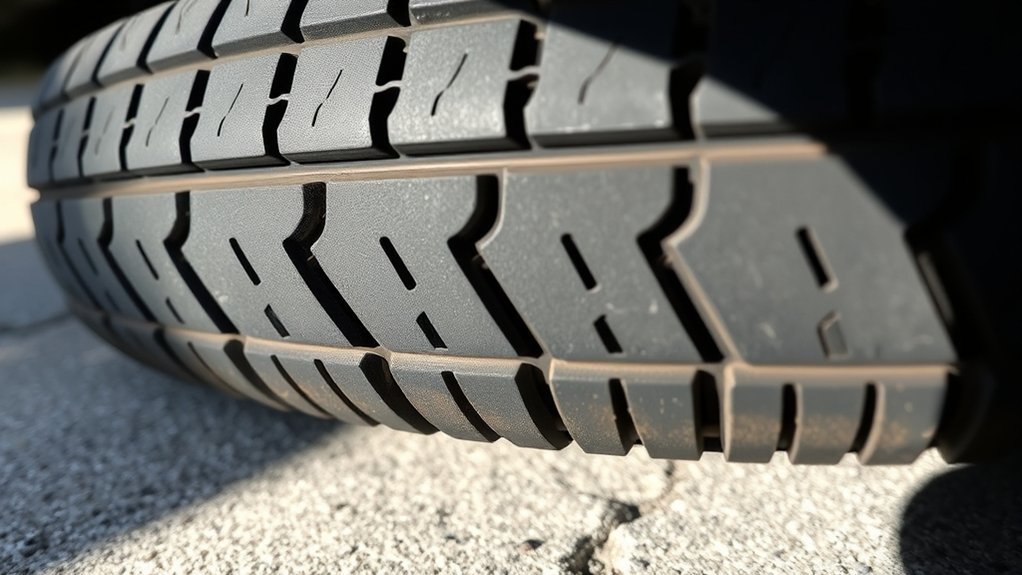
Tire feathering is an uneven tire wear pattern where each tread rib or block feels smooth on one edge and sharp on the other. It often points to a wheel alignment problem, especially toe angle, but worn steering or suspension parts can also be involved. Catching it early helps protect tire life, reduce road noise, and keep your vehicle handling predictably.
Quick Answer
Tire feathering means the tread is wearing at an angle, leaving one side of each tread block rounded and the other side sharp. The most common cause is incorrect toe alignment, but worn suspension parts, poor rotation habits, pressure problems, or rough impacts can contribute. Have the tires, alignment, and suspension checked before the wear gets worse.
Key Takeaways
- Feathered tires feel smooth when you rub the tread one way and sharp or ridged when you rub it the other way.
- Toe misalignment is the most common alignment-related cause, but worn tie rods, bushings, ball joints, shocks, or struts can also create repeat wear.
- Feathering may not fully disappear from a tire that is already worn, so the goal is to fix the cause before replacing or rotating tires.
- Check tire pressure cold, rotate tires on schedule, and get alignment checked after curb hits, pothole impacts, new tires, suspension work, or unusual wear.
At a Glance
| Time Required | 5–10 minutes for a basic driveway tire check; a shop alignment or suspension inspection usually takes longer. |
| Difficulty | Easy to inspect at home; alignment and steering or suspension repairs require a qualified technician. |
| Tools Needed | Tire pressure gauge, flashlight, tread depth gauge or penny, gloves, and your vehicle owner’s manual. |
| Cost | A basic inspection is usually free if you already have a gauge; alignment, balancing, tire replacement, or suspension repair costs vary by vehicle and shop. |
What Is Tire Feathering and Why Does It Matter?
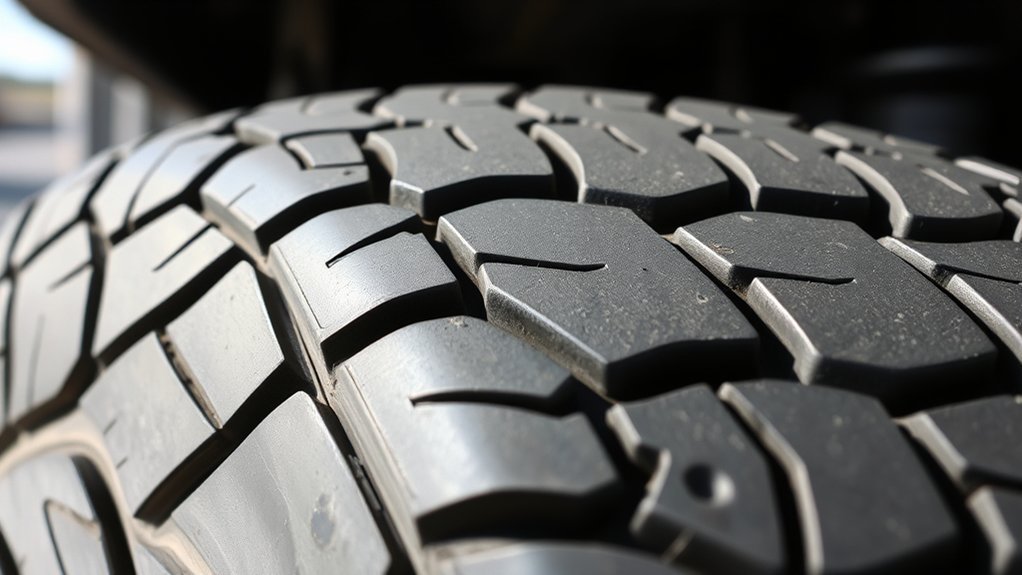
Tire feathering happens when tread blocks wear unevenly across their front and back edges. Instead of feeling flat, each rib feels like a tiny ramp: rounded or smooth in one direction and sharp in the other. Goodyear explains that feathering is commonly connected to toe alignment that is outside the vehicle manufacturer’s specifications, though worn suspension parts can also be part of the problem.
Feathering matters because tire tread is one of the few parts of your vehicle that directly touches the road. Uneven tread can increase road noise, shorten tire life, and reduce predictable handling. It can also be a clue that the vehicle needs an alignment or steering and suspension service before the same wear pattern damages another set of tires.
According to NHTSA TireWise, tire care matters because tires affect safety, fuel use, durability, and vehicle performance.
[Products Worth Considering]

EVOULTES heavy duty tire inflator with an integrated gauge delivers accurate pressure readings from 10–120 PSI, helping you inflate, deflate, and check tires in one tool. The 16.5-inch extended dual-head air chuck with swivel base reaches hard-to-access dual wheel valves on trucks and RVs. A brass trigger core and side-mounted air release valve make operation smooth, with standard 1/4" NPT threading and quick-connect compatibility for easy setup.

This VEVOR tire bead breaker uses a slide-hammer impact and wedge tip to separate tire beads from rims quickly and efficiently without damaging hub surfaces. The long handle and sturdy steel construction help reduce user strain while providing reliable, portable tire changing for cars, trucks, and more. Ideal for home mechanics and repair shops handling multiple vehicle tire sizes.

Universal magnetic jack pad with aluminum grooved design to protect vehicle pinch welds during lifting. Durable nylon pad inserts are upgraded and secured with screws to resist damage and keep in place. Designed to fit most single vehicle pinpoint welds for safer, stable jacking when changing tires, repairs, or performing oil changes.
How to Spot Feathered Tire Wear on Your Car
The easiest way to check for tire feathering is to use both your eyes and your hand. Do this when the vehicle is parked on a level surface, the parking brake is set, and the tires are cool enough to touch.
Warning: Do not continue normal driving on a tire with exposed cords, a bulge, a deep cut, rapid pressure loss, severe vibration, or tread worn to the legal minimum. NHTSA says tires are not safe and should be replaced when tread is worn down to 2/32 inch.
- Run your hand both directions across the tread. A feathered tire usually feels smooth one way and sharp, saw-toothed, or ridged the other way.
- Look across the tread ribs. Wavy, angled, or uneven edges on repeated tread blocks can point to feathering.
- Compare all four tires. Feathering on only one tire or one axle can help a technician narrow down alignment or suspension causes.
- Check the inner and outer shoulders. Some feathering is easier to feel near the tread edges than in the center.
- Measure tread depth. Use a tread depth gauge or penny test, and compare the same grooves across each tire.
- Listen while driving. Feathered tires may create a humming, roaring, or growling road noise that changes with speed.
- Notice steering symptoms. Pulling to one side, an off-center steering wheel, or vibration can point to alignment or balance issues. Continental lists uneven tire wear, pulling, off-center steering, and unusual vibrations as common signs of misalignment.
Pro Tip: Wear gloves or use a light touch when checking tread by hand. Sharp tread edges, embedded glass, metal, or stones can cut your fingers.
Top Strategies to Prevent Tire Feathering
Preventing tire feathering starts with keeping the tire, wheel, and suspension working together. These steps reduce the chance of repeat uneven wear:
- Check tire pressure monthly when tires are cold. Use the pressure listed on the driver-side door placard or in the owner’s manual, not the maximum pressure printed on the tire sidewall. NHTSA recommends monthly pressure and tread checks.
- Rotate tires on schedule. Follow your owner’s manual. As a general guideline, Michelin recommends regular tire rotation to promote even tread wear, and many vehicles fall around the 5,000–8,000 mile range.
- Get alignment checked when symptoms appear. Do not wait if the vehicle pulls, the steering wheel is off-center, or the tread starts wearing unevenly.
- Inspect after hard impacts. Potholes, curbs, road debris, and rough shoulders can knock alignment out of specification or damage suspension parts.
- Repair worn steering and suspension parts first. A fresh alignment will not hold if tie rods, ball joints, bushings, shocks, or struts are worn.
- Keep tires balanced. Balance problems are more often linked to vibration and cupping, but they still contribute to uneven tire stress.
- Avoid overloading the vehicle. Stay within the tire and vehicle load limits listed on the Tire and Loading Information Label.
- Drive smoothly. Hard cornering, quick acceleration, harsh braking, and frequent curb strikes can speed up irregular wear.
Identifying Common Causes of Tire Feathering
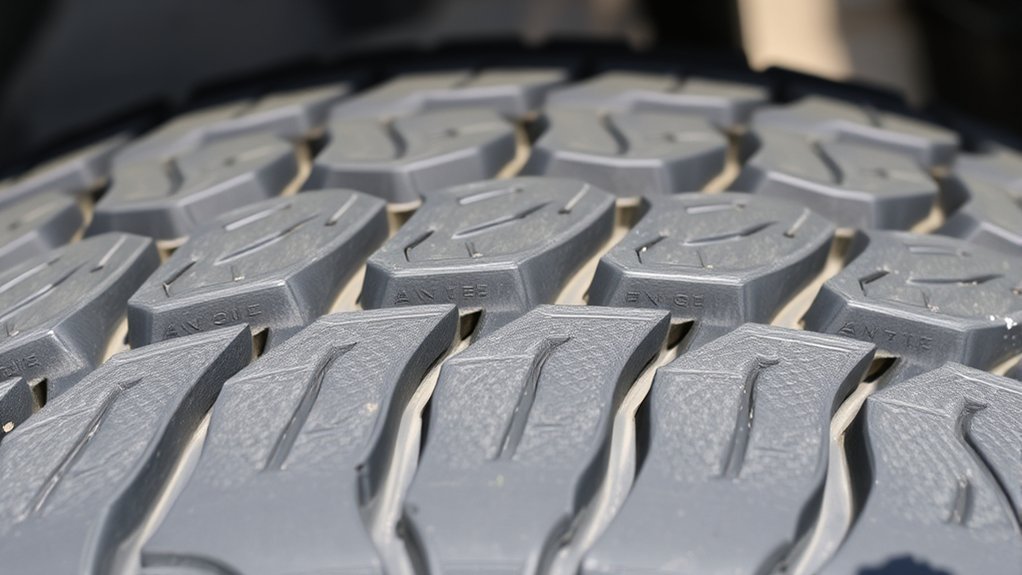
Several problems can lead to feathered tire wear. The tire pattern is the symptom; the real cause is usually in alignment, suspension, steering, inflation, or maintenance.
- Incorrect toe angle: Toe describes whether the tires point slightly inward or outward when viewed from above. Tire Rack explains that toe is one of the most critical alignment settings for tire wear, and even a small error can make a large difference.
- Worn steering parts: Loose tie rods, worn ball joints, or damaged bushings can let alignment change while driving, even if the vehicle looked acceptable during a static check.
- Worn shocks or struts: Weak damping can reduce steady tire contact with the road and contribute to irregular wear patterns.
- Road impacts: Potholes, curbs, and debris can bend components or shift alignment.
- Incorrect tire pressure: Underinflation and overinflation usually create different wear patterns, but pressure problems can make any alignment-related wear worse.
- Missed rotations: Rotation helps spread normal tire wear across positions. Skipping rotations can make small irregular wear patterns more obvious.
- Vehicle loading or ride-height changes: Heavy loads, sagging springs, lift kits, lowering kits, and worn suspension can change tire angles.
Tire Feathering vs. Other Tire Wear Patterns
Feathering is easy to confuse with other uneven wear patterns. Use this table as a quick guide, but let a tire professional inspect the vehicle before replacing parts.
| Wear Pattern | What It Looks or Feels Like | Common Causes |
| Feathering | Smooth one direction, sharp or saw-toothed the other direction | Toe misalignment, worn steering or suspension parts |
| Cupping or scalloping | Dips or scooped patches around the tread | Weak shocks or struts, imbalance, loose suspension parts |
| One-sided shoulder wear | Inner or outer edge wears faster than the rest | Camber issue, worn suspension, hard cornering, ride-height changes |
| Center wear | Middle of tread wears faster | Often overinflation or incorrect pressure for the load |
| Both-edge wear | Both shoulders wear faster than the center | Often underinflation, heavy loads, or aggressive cornering |
Can Feathered Tires Be Fixed?
The cause of feathering can often be fixed, but the worn tread itself may not return to perfectly even shape. Light feathering may smooth out somewhat after correcting alignment, repairing worn parts, balancing if needed, and rotating tires correctly. Severe feathering, loud noise, vibration, very low tread, exposed belts, or tire damage usually means the tire should be replaced.
Note: Replacing feathered tires without fixing the cause can waste money. If toe alignment or a worn suspension part caused the wear, the new tire can develop the same pattern.
[Products Worth Considering]

The JACO FlowPro Tire Inflator measures, inflates, and airs down tires up to 100 PSI with battery-free operation and ±2% accuracy after calibration. It features a glowing pressure dial for night visibility, a heavy-duty steel build with a hybrid hose, and a precision push-to-inflate thumb trigger. The patented Lightning Air Chuck locks on for a secure seal, and the kit includes quick-connect hardware for easy inline use with your air compressor.

This tire repair kit provides fast emergency puncture repair without removing the tire from the rim, helping you get back on the road quickly. Its screw plug system is designed for punctures in both tread and sidewall and includes a complete patch plug tool set with essential accessories. A portable storage bag makes it easy to carry for cars, trucks, SUVs, motorcycles, and heavy-duty applications.
How to Fix Feathered Tires
Use this order so you fix the root cause before spending money on tires:
- Inspect all tires. Check tread depth, pressure, visible damage, uneven wear, and whether the pattern appears on one tire, one axle, or all four tires.
- Check pressure cold. Inflate to the vehicle manufacturer’s recommended pressure listed on the door placard or owner’s manual.
- Have steering and suspension inspected. Ask the technician to check tie rods, ball joints, bushings, shocks, struts, wheel bearings, and any bent parts.
- Repair worn or damaged parts first. Alignment should come after the parts that hold alignment are in good condition.
- Get a four-wheel alignment when appropriate. Many modern vehicles need all four wheels measured, not just the front axle.
- Balance the tires if vibration is present. Balance does not usually explain classic feathering by itself, but vibration can point to another problem.
- Rotate or replace tires based on condition. If tread is still safe and the tire is not damaged, rotation may help even out mild wear. If the tire is noisy, badly feathered, damaged, or near the tread limit, replacement is safer.
- Recheck after a short interval. Inspect the tread again after a few hundred miles. New feathering means the root cause was not fully corrected.
Knowing When to Seek Professional Help for Tire Issues
Seek professional help when feathering is obvious, the vehicle pulls to one side, the steering wheel is off-center, or the tires make a new humming or roaring noise. You should also schedule service after a hard curb or pothole impact, after replacing steering or suspension parts, or before installing new tires if the old set wore unevenly.
A good tire or alignment shop should inspect the tires, check pressure, look for loose steering and suspension components, measure alignment angles, and explain the before-and-after alignment readings. Ask for a printout so you can see whether toe, camber, caster, and thrust angle were corrected to the vehicle manufacturer’s specifications.
Frequently Asked Questions
How do you tell if tires are feathering?
Run your hand lightly across the tread in both directions. If the tread feels smooth one way and sharp, ridged, or saw-toothed the other way, the tire may be feathered. Also look for angled tread edges, uneven wear, new road noise, or pulling while driving.
What alignment angle causes tire feathering?
Toe angle is the alignment setting most commonly linked to tire feathering. Toe-in or toe-out that is outside the vehicle’s specification can scrub the tread as the tire rolls. Camber, caster, ride height, and worn suspension parts can also affect toe and contribute to uneven wear.
Is it safe to drive on feathered tires?
Mild feathering does not always mean the tire will fail immediately, but it should not be ignored. Drive cautiously and schedule an inspection. Do not continue normal driving if the tire has cords showing, bulges, deep cuts, rapid pressure loss, severe vibration, or tread worn to 2/32 inch.
Will rotating tires fix feathering?
Rotation can help slow uneven wear and may reduce mild noise over time, but it does not fix the cause. If misalignment or worn suspension parts caused the feathering, those issues must be corrected first or the wear pattern will return.
Can bad shocks or struts cause feathered tires?
Yes. Worn shocks or struts can reduce steady tire contact with the road and contribute to irregular wear. They are more commonly associated with cupping or scalloping, but they can also make alignment-related feathering worse.
Do feathered tires make noise?
They can. Feathered tread often creates a humming, growling, or roaring sound that changes with road speed. However, wheel bearings, cupped tires, and other tire problems can make similar noises, so diagnosis should include a tire and suspension inspection.
Conclusion
Tire feathering is a warning sign, not just a cosmetic tire issue. If the tread feels sharp in one direction and smooth in the other, check pressure and tread depth, then have the alignment, steering, and suspension inspected. Fixing the root cause early can reduce noise, protect tire life, and help your vehicle stay safer and easier to control.
Sources
- Goodyear — Tire Feathering: Causes of Feathered Tire Wear Patterns — supports the definition of feathering and the role of toe alignment and suspension issues.
- NHTSA TireWise — supports tire safety, pressure, tread, rotation, balance, alignment, and tire maintenance guidance.
- NHTSA Tire Safety Brochure — supports tread depth, pressure checks, load limits, and inspection guidance.
- Michelin — Tire Rotation Guide — supports tire rotation and even-wear maintenance guidance.
- Tire Rack — What Are the Different Alignment Settings? — supports toe, camber, caster, thrust angle, and alignment-wear explanations.
- Continental — Wheel Alignment — supports signs of misalignment such as uneven wear, pulling, off-center steering, and vibration.

Related Articles
Toyota Tundra Tire and Wheel Package: What to Consider Before Buying
Unlock the secrets to choosing the perfect tire and wheel package for your Toyota Tundra—essential tips await to enhance your ride.
Read More
Do Bigger Tires Void a Toyota Tundra Warranty? Magnuson-Moss Act Explained
Bigger tires might not void your Toyota Tundra warranty, but understanding the Magnuson-Moss Act is crucial—discover how to protect your investment effectively.
Read More
Toyota Tundra Tire Rack Setup: Garage Storage Ideas for Seasonal Sets
Better tire storage for your Toyota Tundra awaits—discover essential tips to maximize space and protect your seasonal sets in the garage!
Read More