Feathered tire wear is an uneven tread pattern where each tread rib feels smoother or rounded on one edge and sharper on the opposite edge. The classic cause is toe misalignment, which makes the tire scrub slightly sideways as it rolls. The wear itself cannot grow back, but correcting the alignment or mechanical problem can stop it from getting worse.
Quick Answer
Feathered tire wear feels like tiny saw teeth across the tread: smooth or rounded in one direction and sharp in the other. Excessive toe alignment is the most common cause. Check alignment and steering or suspension parts, correct the cause first, then rotate or replace the tire as its condition requires.
Key Takeaways
- Feathering creates a directional saw-tooth feel across tread ribs, with one edge sharper than the other.
- Toe misalignment is the main cause; worn bushings or steering parts can contribute if they allow alignment to change.
- Cupping or scalloping is a different wear pattern and is more commonly associated with imbalance or worn suspension components such as shocks.
- Rotation can promote more even future wear, but it cannot restore tread rubber that has already worn away.
- Check cold tire pressure monthly and use the vehicle manufacturer’s pressure listed on the door-jamb placard or in the owner’s manual.
- If tread is at the legal wear limit, cords are visible, or the tire has structural damage, replace it rather than trying to correct the wear with rotation.
At a Glance
| Time Required | About 5 minutes for a basic home tread and pressure check; professional diagnosis and repair time varies. |
| Difficulty | Easy to inspect; alignment and suspension repairs require professional equipment. |
| Tools Needed | Tire-pressure gauge, flashlight, tread-depth gauge or wear bars; an alignment rack is needed for precise wheel-angle diagnosis. |
| Cost | A home inspection may cost nothing if you already own a gauge; alignment, suspension repairs, and replacement tires vary by vehicle and shop. |
What Is Feathered Tire Wear?

Feathered tire wear is an irregular tread pattern in which the edge of each tread rib becomes slightly rounded on one side and sharper on the other. When you move your hand gently across the tread in opposite directions, the surface can feel smooth one way and rougher the other.
The classic feathered pattern is directional: one side of a tread rib feels sharp while the opposite edge feels rounded.
Michelin identifies saw-tooth or feathered tread edges as a sign of misalignment and says a toe-in or toe-out correction is the likely solution.
Feathering is different from a tire that simply has less tread on one shoulder. It is also different from cupping or scalloping, which produces repeating high and low spots around the tire.
Because abnormal tread wear may point to an alignment or mechanical problem, finding feathering is a reason to inspect the vehicle rather than simply ignoring the texture until the tire wears out.
What Causes Feathered Tire Wear?
The most common cause of feathered tire wear is incorrect toe alignment. Toe describes whether the fronts of a pair of wheels point slightly toward each other or slightly away from each other when viewed from above.
A small amount of toe may be part of the vehicle manufacturer’s alignment specification. The problem occurs when the angle is outside specification. The tire then rolls while also being dragged slightly sideways across the pavement. Repeated lateral scrubbing gradually rounds one edge of each tread rib and leaves the opposite edge sharper.
- Incorrect toe: Excessive toe-in or toe-out is the clearest cause of classic feathering.
- Worn bushings or steering parts: Deteriorated components can allow toe to shift while the vehicle is moving.
- Pothole or curb impacts: A hard impact may disturb alignment or damage a component, indirectly starting an irregular-wear problem.
- Other mechanical faults: Loose or damaged steering and suspension parts can produce changing wheel geometry and should be checked when the wear keeps returning.
Note: Incorrect tire pressure matters for tire life and safety, but it usually creates different wear patterns. Chronic underinflation often wears both shoulders, while overinflation can increase center wear. Pressure should still be checked whenever you diagnose abnormal tread wear.
How to Spot Feathered Tire Wear
You can usually identify feathering by combining a visual inspection with a gentle hand check. The key is a directional sharp-and-rounded pattern across the tread ribs—not a series of deep dips or scallops.
Warning: Park on a level surface, apply the parking brake, switch the vehicle off, and let the tires cool before inspecting them. Do not run your bare hand over exposed cords, embedded metal, sharp debris, or severely damaged tread.
Visual Wear Patterns
Start by examining each tire under good light.
- Look across the full width of the tread rather than checking only the outside shoulder.
- Examine the edges of the individual tread ribs or blocks.
- Look for a repeated pattern in which one edge appears more rounded and the opposite edge looks sharper.
- Compare the same tread area on all four tires.
- Check tread depth and look for cracks, bulges, cuts, exposed cords, or other damage at the same time.
Then move your palm lightly across the tread in one direction and back in the other. A feathered tire may feel noticeably smoother in one direction and rougher in the opposite direction.
Driving Symptoms
Feathered tread can increase road noise as the irregular edges contact the pavement. Some drivers describe the sound as humming or droning that changes with road speed.
However, strong vibration should not automatically be blamed on feathering. Wheel imbalance, a bent wheel, tire damage, or another mechanical fault can also create speed-related vibration. If you feel shaking through the steering wheel or seat, ask the technician to check balance and the rest of the wheel-and-tire assembly as well as alignment.
A vehicle that pulls to one side, requires frequent steering correction, or feels different after a pothole or curb strike should also have its alignment checked.
Feathering vs. Cupping and Other Tire Wear
Correctly identifying the pattern matters because different wear types point to different problems.
| Wear Pattern | What It Looks or Feels Like | Common Diagnostic Direction |
|---|---|---|
| Feathering | Sharp edge on one side of a tread rib and rounded edge on the other | Toe/alignment condition |
| Cupping or scalloping | Repeating high and low spots or dips around the tread | Wheel balance, shocks, suspension, or wheel-end condition |
| One-sided wear | Inside or outside shoulder consistently wears faster | Alignment, including camber or toe |
| Center wear | Center tread wears faster than the shoulders | Check inflation and application |
| Both-shoulder wear | Both outer edges wear faster than the center | Check for chronic underinflation or loading issues |
Michelin’s abnormal tire-wear guidance makes the same distinction between feathering, cupping, center wear, shoulder wear, and alignment-related wear.
How Feathered Tires Affect Driving
The effect depends on how advanced the wear is and whether the underlying alignment or mechanical problem is still present.
Mild feathering may first show up as additional tire noise or a rough feel across the tread. More severe irregular wear can reduce the amount of useful tread available and may accompany steering or handling problems caused by the underlying misalignment.
Steering Control Changes
Feathering itself is evidence that the tread has not been rolling evenly. If the alignment fault that caused it remains, the vehicle may also pull, wander, or require more steering correction.
Do not assume the tire is the only problem. Incorrect alignment, loose steering parts, worn bushings, or other mechanical faults can all affect how the vehicle tracks.
If the vehicle suddenly pulls, the steering wheel is no longer centered, or handling changed after an impact, have the alignment and steering or suspension system inspected.
Vibration And Noise
Feathered edges may create a hum or drone that becomes more noticeable as road speed increases. The sound occurs because the tread is no longer contacting the pavement as uniformly as it did when new.
Noticeable vibration deserves a broader check. An out-of-balance tire and wheel assembly, bent wheel, damaged tire, worn wheel-end component, or other mechanical problem can produce similar symptoms.
Michelin’s alignment and balancing guidance notes that imbalance is associated with vibration and can produce cupped or scalloped wear rather than the classic feathered edge pattern.
Safety And Tire Life
Feathering matters because it wastes usable tread and may signal that the vehicle’s wheel alignment or steering geometry is no longer correct.
As the irregular wear becomes more severe, some parts of the tread can approach the wear limit while other areas still look deeper. That is why you should measure the lowest usable tread area rather than judging the tire by its best-looking groove.
The National Highway Traffic Safety Administration advises replacing tires when tread reaches 2/32 inch and recommends professional attention for irregular wear, tire damage, noise, or vibration.
How Misalignment Causes Feathering
Misalignment causes feathering when a wheel is pointed slightly away from its intended rolling direction. Instead of rolling straight ahead with minimal scrub, the tread experiences a small sideways force during every revolution.
| Condition | What Happens |
|---|---|
| Excessive toe-in or toe-out | Tread scrubs laterally as the tire rolls |
| Pothole impact | Alignment or a steering/suspension part may shift |
| Curb strike | Wheel angles or components may move out of specification |
| Worn bushings or steering parts | Toe can change as the vehicle moves |
| Delayed correction | The directional feathered pattern becomes more pronounced |
This is why alignment should be measured rather than judged only by whether the vehicle appears to drive straight. A vehicle can sometimes have enough toe error to wear tires even before the driver notices a dramatic pull.
Pro Tip: If feathering returns after an alignment, ask the technician to inspect bushings, tie-rod ends, ball joints, wheel bearings, and other relevant steering or suspension components. An alignment setting may not stay correct if a worn part allows the wheel to move under load.
Can Tire Rotation Fix Feathering?
No. Tire rotation cannot repair tread that has already worn into a feathered shape. Rubber that has been scrubbed away does not grow back.
Tire rotation can help manage future wear, but it does not cure the alignment or mechanical problem that created feathering.
The correct order is to diagnose and correct the cause first. After that, rotation may help distribute future wear if the tire still has safe tread depth, no structural damage, and the vehicle or tire manufacturer permits the rotation pattern.
- Check and correct alignment or mechanical faults first.
- Inspect remaining tread depth and tire condition.
- Follow the rotation pattern and interval in the owner’s manual or tire manufacturer’s instructions.
- If no interval is specified, the U.S. Tire Manufacturers Association recommends rotation about every 5,000 to 8,000 miles.
If the feathering is severe, the tire may remain noisy even after the alignment is corrected. A tire professional can determine whether continued service is appropriate or replacement makes more sense.
[Products Worth Considering]
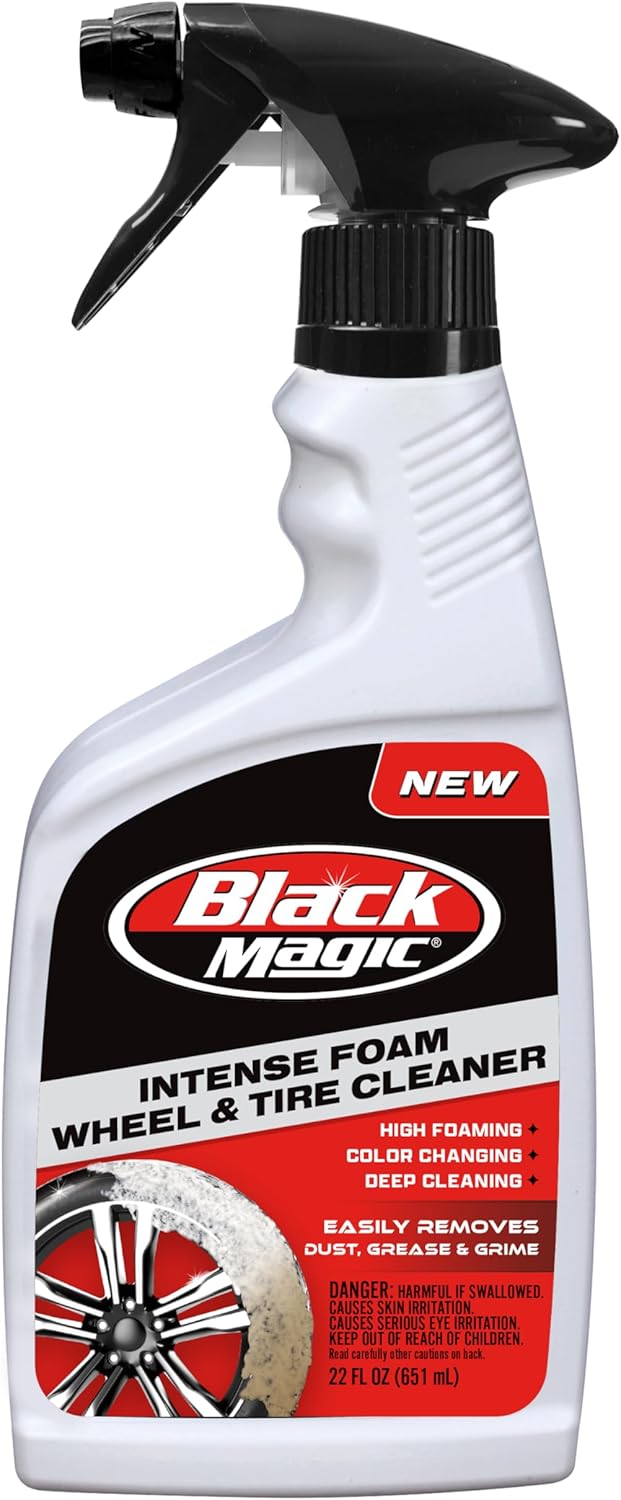
Black Magic Intense Foam Wheel & Tire Cleaner uses a high-foaming action to lift away dirt, grime, and brake dust without scrubbing. The color-changing formula helps show contaminants being dissolved as foam turns from white to brown. Safe for all wheel types and even wheel wells, it leaves a like-new, slick finish with a fresh cherry scent.

Measure tire tread depth quickly and accurately with this LUMITECO dial gauge that reads in 1/32" increments up to 14/32". The color-coded green/yellow/red zones make it easy to judge tire wear and know when replacement is needed. A rugged, compact design with a protective pouch helps keep the gauge ready for use on cars, trucks, motorcycles, and more.

Monitor tire tread wear with a smart, color-coded depth gauge that shows clear condition ranges at a glance. The bar is range marked for fast, easy readings, helping you maintain safer traction and performance. Each gauge is portable with a pocket clip, and the set includes 20 units for daily use and sharing.
How Suspension Problems Cause Feathering
Suspension and steering problems can contribute to feathering when they allow the wheel’s alignment—especially toe—to change while the vehicle is moving.
For example, deteriorated bushings, loose steering linkage, or other worn joints can let a wheel shift from its intended position under braking, acceleration, or cornering. Michelin specifically lists deteriorated front-suspension bushings among common contributors to feathered tread.
Worn shocks and struts deserve inspection too, but their classic irregular-wear symptom is more often cupping or scalloping rather than the sharp-and-rounded tread-rib pattern that defines feathering.
If a shop corrects toe without identifying a worn component that lets the wheel move, the alignment may drift again and the new or existing tires can begin wearing unevenly.
[Products Worth Considering]

Steelman white tire marking crayons provide high-contrast, semi-permanent marks for repairing and inspecting tires and equipment. They write on wet or dry, smooth or coarse surfaces including rubber, metal, glass, and wood, making them ideal for puncture location and damage outlining. The lead- and zinc-free crayons resist weather and fading yet wipe away when you no longer need the marks.

The Ziopetru adjustable magnetic wheel alignment tool helps you check and restore camber and caster positioning after removing and reinstalling undercarriage components. With a clear leveling/bubble measurement system and an easy zeroing adjustment knob, it supports precise horizontal angle checking. The strong magnetic base mounts to metal surfaces for convenient use at home on cars, motorcycles, trucks, vans, and SUVs.

This universal wheel alignment tool helps you accurately restore tire tilt angles after tire or suspension repairs using an adjustable camber gauge. It features a powerful magnetic base that firmly attaches to brake rotors for stationary, slip-free readings, improving consistency during measurement. Built from durable PC plastic, it resists wear and corrosion and is compact enough for car, truck, RV, and motorcycle alignment tasks.
How to Fix Feathered Tire Wear
Fix feathered tire wear by correcting the condition that makes the tread scrub sideways. The existing wear cannot be reversed, so the goal is to stop additional abnormal wear and decide whether the affected tire can remain in service.
[Products Worth Considering]

Accurately measure tire tread depth with a calibrated gauge marked from 0 to 1 inch in 1/32 inch increments. The color-coded bar helps you quickly identify tread condition ranges, supporting safe driving for trucks, motorcycles, automobiles, and passenger vehicles.

The SAFELIFE dial tire tread depth gauge measures tread depth in 1/32 inch increments with clear, easy-to-read 2-inch dial face. Color zones using a traffic light system help you quickly judge whether tread is low, marginal, or ample for safer driving. Built with a durable zinc cast body and a metal detect probe for precise, comfortable use across cars, motorcycles, trucks, and buses.

The Topeak SmartGauge D2 delivers precise digital tire pressure readings for bikes, motorcycles, and sports equipment up to 250 psi (17 bar). Its rotating SmartHead works with both Presta and Schrader valves, so you can check pressure quickly without adapters. The LCD display makes it easy to read results in psi, bar, or kg/cm² with an included CR2032 battery for immediate use.
1. Check the Tire Condition
Inspect all four tires for the sharp-and-rounded rib pattern. Check tread depth across several locations and look for cuts, cracks, bulges, exposed cords, punctures, or other damage.
2. Check Cold Tire Pressure
Measure pressure when the tires are cold. Use the vehicle manufacturer’s recommended pressure on the driver’s door-jamb tire placard or in the owner’s manual—not the maximum pressure molded into the tire sidewall.
NHTSA recommends checking tire pressure at least once a month.
3. Get an Alignment Check
Ask for an alignment measurement, preferably covering all adjustable wheels on the vehicle. The technician should compare toe, camber, and caster where applicable with the manufacturer’s specifications.
Because classic feathering is strongly associated with toe, the toe readings deserve particular attention.
4. Inspect Steering and Suspension Parts
If the alignment is far out of specification, keeps changing, or the vehicle has looseness or handling symptoms, inspect the parts that locate and steer the wheel. Worn bushings, tie-rod ends, ball joints, bearings, or other relevant components should be corrected before the final alignment.
5. Check Balance if Vibration Is Present
Do not assume every vibration comes from feathering. Ask for the wheel-and-tire balance and assembly condition to be checked when noticeable shaking accompanies the abnormal wear.
6. Rotate or Replace as Appropriate
After the underlying problem is corrected, rotate the tires according to the approved pattern if their design and condition allow it. Replace a tire when tread depth or damage makes continued service inappropriate.
When Should a Feathered Tire Be Replaced?
Not every mildly feathered tire automatically requires immediate replacement. Whether it can remain in service depends on remaining tread, severity, structural condition, noise, handling, and the tire manufacturer’s recommendations.
Replacement or immediate professional evaluation is warranted when:
- Tread has reached 2/32 inch in a main groove.
- Cord or under-tread material is visible.
- The tire has a bulge, deep cut, severe cracking, or other structural damage.
- The irregular wear is severe enough that part of the tread is effectively worn out.
- The vehicle has significant vibration, instability, or another symptom that could indicate tire or mechanical damage.
- A tire professional determines the tire is no longer serviceable after the cause of the wear is corrected.
If feathering is mild, adequate tread remains, and no structural damage is present, the tire may sometimes remain in service after the root cause has been corrected. Expect the existing texture—and sometimes some noise—to remain because the lost tread cannot be restored.
How to Prevent Feathering Later
Preventing feathering is mainly about keeping the wheels aligned and catching mechanical problems before they destroy the tread.
- Check tire pressure monthly: Measure when cold and use the vehicle manufacturer’s door-placard specification.
- Inspect tread regularly: Look and feel for directional roughness before it becomes severe.
- Follow the correct rotation schedule: Use the owner’s manual or tire manufacturer’s interval and pattern. If neither gives an interval, USTMA recommends roughly 5,000 to 8,000 miles.
- Check alignment after a significant impact: A pothole, curb strike, or collision can disturb wheel alignment or damage components.
- Respond to pulling or steering changes: Do not wait for a tire to become badly feathered before checking alignment.
- Repair worn steering or suspension parts: Correct loose components before completing the final alignment.
- Use smooth driving habits: Hard cornering and impacts can accelerate tire wear even though they are not the defining cause of classic toe-related feathering.
Consistent pressure, rotation, inspection, and alignment maintenance will help the tread wear more evenly and extend useful tire life.
Frequently Asked Questions
Can Tire Feathering Be Fixed?
You can fix the alignment or mechanical problem that caused feathering, but you cannot restore tread rubber that has already worn away. If the tire still has safe tread and no damage, it may sometimes remain in service after the root cause is corrected.
How Do You Prevent Feathering on Tires?
Keep wheel alignment within the vehicle manufacturer’s specification, inspect steering and suspension parts when abnormal wear appears, check cold tire pressure monthly, and follow the correct rotation schedule. Have alignment checked after a significant pothole or curb impact or when the vehicle begins pulling.
Can Tire Feathering Be Reversed?
No. The uneven tread shape that already exists cannot be reversed because the missing rubber cannot grow back. Correcting toe alignment or a worn component can stop additional abnormal wear.
Is It Okay to Drive on Feathered Tires?
Mild feathering does not automatically make a tire immediately undrivable, but it should be inspected because the underlying alignment problem may continue damaging the tread. Do not continue normal driving if tread is worn out, cords are visible, the tire has structural damage, or the vehicle has severe vibration or instability.
Is Feathering the Same as Cupping?
No. Feathering produces sharp and rounded edges across tread ribs and usually points toward toe alignment. Cupping or scalloping creates repeating dips or high-and-low spots around the tread and is more commonly associated with imbalance, shocks, or other suspension and wheel-end problems.
Does a Feathered Tire Always Need to Be Replaced?
Not always. A mildly feathered tire with adequate tread and no structural damage may sometimes stay in service after the cause is corrected. Replace it if tread has reached its wear limit, cords are exposed, structural damage is present, or a qualified tire professional determines that the irregular wear is too severe.
Conclusion
Feathered tire wear is a warning that the tread is being scrubbed unevenly, most often because the vehicle’s toe alignment is outside specification. The sharp-and-rounded tread edges are different from the dips of cupping or the center and shoulder patterns associated with inflation problems.
Correct the alignment or worn mechanical part first, then decide whether the tire can remain in service based on tread depth and condition. Keep cold tire pressure at the vehicle manufacturer’s specification, inspect the tread regularly, rotate according to the approved schedule, and check alignment after major impacts or noticeable steering changes. These steps help stop feathering before it consumes useful tread.
Sources
- Michelin — Sawtooth or Feathered Edges — supports the definition of feathering and the connection with toe misalignment.
- Michelin — Tire Wear Problems — supports the distinction between feathering, cupping, center wear, and shoulder wear.
- National Highway Traffic Safety Administration — TireWise — supports monthly cold-pressure checks, vehicle-placard pressure guidance, tread inspection, and the 2/32-inch replacement threshold.
- U.S. Tire Manufacturers Association — Tire Care Essentials — supports rotation, alignment, pothole-impact, and regular inspection guidance.