
You can lower your gas bill without buying a new car. The biggest wins usually come from driving fewer miles, accelerating and braking smoothly, keeping highway speeds reasonable and legal, maintaining correct tire pressure, avoiding unnecessary idling and cargo, using the fuel grade your vehicle actually calls for, and comparing your real cost before you fill up.
Quick Answer
To save money on gas, combine trips, drive smoothly, slow down when safe, keep tires at the vehicle maker’s recommended cold pressure, avoid unnecessary idling and cargo, maintain the car, use the required or recommended fuel grade, and compare nearby pump prices without driving far out of your way.
Key Takeaways
- Drive fewer miles by combining errands, carpooling, using transit, walking, biking, or working from home when practical.
- Smooth acceleration, early braking, and steady speeds can reduce the fuel penalty from aggressive driving.
- Fuel economy generally drops as highway speed rises, especially above about 50 mph, so follow speed limits and avoid unnecessary speeding.
- Check tire pressure when the tires are cold and use the pressure on the vehicle placard or owner’s manual, not the tire sidewall maximum.
- Use the octane grade your owner’s manual specifies; premium is not automatically better for an engine designed for regular.
- Compare pump prices, payment discounts, and rewards by net cost, then track MPG and fuel spending so you know which habits actually save you money.
At a Glance
| Time Required | About 5–10 minutes to check tire pressure, compare prices, and plan a route; driving habits are ongoing |
| Difficulty | Easy |
| Tools Needed | Tire-pressure gauge; vehicle placard or owner’s manual; optional fuel-price app |
| Cost | Usually little to none if you already have a pressure gauge; optional tools or maintenance vary by vehicle |
Save on Gas by Driving Less
You can save gas immediately by reducing the number of miles you drive. The U.S. Environmental Protection Agency recommends walking, biking, public transit, carpooling, trip chaining, and working from home when practical.
Plan errands before you leave. Group stops that are close together so you avoid repeated out-and-back trips. Combining trips also gives the engine more time to operate warm instead of repeating several short cold-start trips.
Carpooling can reduce your share of fuel costs when riders split expenses, but the exact savings depend on the route, number of people, and how costs are divided. Working from home can eliminate commute fuel for the days you do not drive, but there is no reliable one-size-fits-all annual dollar figure.
Pro Tip: Build a short “errand loop” that starts with the farthest stop and works back toward home. Check traffic before leaving so you do not save a few cents at the pump while wasting fuel in avoidable congestion.
Accelerate Gently and Brake Less
How you use the accelerator and brakes can make a meaningful difference. The U.S. Department of Energy says aggressive driving—speeding, rapid acceleration, and hard braking—can lower gas mileage by roughly 15%–30% at highway speeds and 10%–40% in stop-and-go traffic.
Smooth Starts Save Fuel
Build speed progressively instead of flooring the accelerator. You do not need to crawl away from every light; the goal is a smooth, controlled start that reaches traffic speed without an unnecessary burst of throttle.
Look ahead so you can react early to traffic lights, merging vehicles, and slowing traffic. That keeps your speed changes smaller and reduces the cycle of accelerating hard, braking hard, and accelerating again.
Brake Early, Coast More
When traffic conditions allow, ease off the accelerator early and let the car slow gradually before you brake. Leave a safe following distance so you have room to adjust smoothly instead of making abrupt stops.
Coasting is not a magic 30% fuel-saving trick by itself. The benefit comes from reducing unnecessary acceleration and braking as part of calmer overall driving.
Keep Speed Changes Small
On a clear, steady highway, cruise control can help some drivers hold a consistent speed and reduce small throttle changes. It does not provide a guaranteed percentage savings for every vehicle or route, and you should use it only when traffic, weather, and road conditions are appropriate.
| Habit | What you do | Why it helps |
|---|---|---|
| Gentle starts | Accelerate progressively | Avoids fuel-wasting bursts of throttle |
| Steady speed | Hold a consistent legal pace | Reduces repeated speed changes |
| Safe spacing | Leave room ahead | Allows earlier coasting and fewer hard stops |
Slow Down to Save More Gas
Higher road speed increases aerodynamic drag, so fuel economy generally falls as highway speed rises. DOE guidance says average gas mileage typically decreases rapidly above about 50 mph. The exact loss depends on the vehicle, gearing, wind, grade, temperature, and traffic.
There is no universal “5 mph equals X cents per gallon” rule. The real dollar effect changes with your vehicle’s MPG and the current price of fuel.
Do not drive unusually slowly just to chase mileage. Follow posted speed limits, stay with safe traffic flow, and avoid unnecessary speeding. On long highway trips, a modest reduction from a high cruising speed can save fuel without adding much complexity to your drive.
Keep Your Tires Properly Inflated
Correct tire pressure reduces rolling resistance, supports predictable handling, and helps tires wear properly. DOE says properly inflated tires can improve gas mileage by about 0.6% on average and up to 3% in some cases. A 1 psi drop in the average pressure of all four tires is associated with about a 0.2% drop in fuel economy.
[Products Worth Considering]
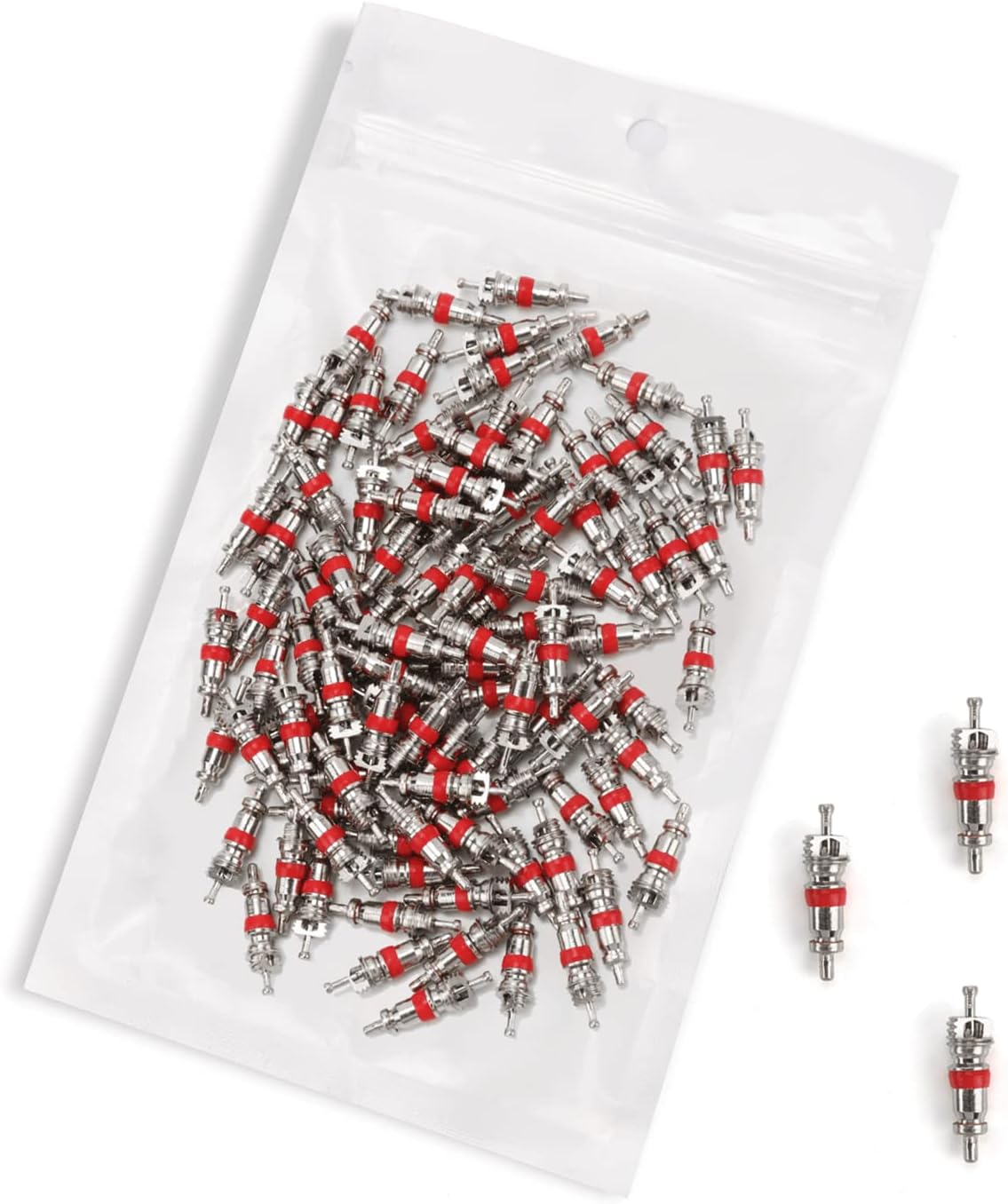
Replace worn Schrader valve cores with durable, nickel-plated replacements designed to resist rust and corrosion for a longer service life. Each core is 100% leakage tested and rated for up to 300 PSI, helping maintain a safe, reliable tire pressure system. Universal fit makes them suitable for cars, RVs, ATVs, motorcycles, bicycles, and many refrigeration/air conditioning applications.

Keep your tires properly inflated with this analog VONDIOR tire pressure gauge, designed for fast, easy readings without batteries. The swiveling, two-axis hose and large glow dial help you measure at any tire angle with instant visibility. Built with a protective rubber shield, it supports durable, low-maintenance use for cars and trucks.

Milton S-921 pencil tire pressure gauge helps you maintain optimal tire pressure for passenger cars with accurate readings in PSI and kPa. It features a built-in deflator valve for convenient pressure adjustments, plus a single chuck head and nylon indicator bar for easy use on the go. Built from durable plated brass and designed for reliable performance, it’s a practical road trip and cold-weather maintenance tool.
Check Tire Pressure Monthly and Before Long Trips
NHTSA recommends checking tire pressure when the tires are cold. A cold tire is one that has not been driven on for at least three hours. Monthly checks and checks before long trips are a practical baseline, and you may want to check more often during large temperature swings.
A tire can lose air without a puncture, so do not rely only on the tire-pressure warning light. Use a reliable gauge and inspect the tread and sidewalls for obvious damage while you are there.
Inflate to the Recommended PSI
Use the cold inflation pressure listed on the driver-side door placard, door frame, or owner’s manual. Front and rear pressures may differ, so check the label instead of assuming all four tires use the same number.
Warning: Do not inflate a tire to the maximum pressure printed on the tire sidewall unless that is specifically the vehicle maker’s required pressure. The sidewall number is not the normal target pressure for your vehicle.
Reduce Rolling Resistance
Underinflation increases rolling resistance and makes the vehicle use more energy to move. Correct pressure is the first step. When you eventually need replacement tires, low-rolling-resistance designs may help efficiency, but choose tires that also meet your vehicle’s size, load, speed, climate, and traction requirements.
If a tire repeatedly loses pressure, check for a puncture, valve leak, wheel issue, or other cause rather than repeatedly adding air and ignoring the problem.
Maintain Your Car to Avoid Wasting Fuel
Fuel-saving driving habits work best when the vehicle is operating correctly. Follow the maintenance schedule in the owner’s manual and address warning lights instead of letting a known engine or emissions problem continue.
Fix Engine and Emissions Problems
DOE notes that repairing a vehicle that is noticeably out of tune can improve fuel economy, although the gain depends on the problem and repair. A serious fault can waste much more fuel than a small driving-style change.
Use the manufacturer-recommended motor-oil viscosity and specification. The correct oil helps the engine operate as designed; using a heavier or otherwise incorrect oil can increase friction.
Remove Unnecessary Weight and Drag
Take out cargo you do not need, especially heavy items that live in the trunk or cargo area. Remove unused roof racks, rooftop boxes, or carriers when practical because extra weight and aerodynamic drag can reduce fuel economy, particularly at highway speeds.
Avoid Unnecessary Idling
Idling uses fuel while moving you zero miles. DOE says idling can consume roughly a quarter to a half gallon of fuel per hour, depending on the engine and accessory load. If you are safely parked and expect a long wait, shutting the engine off can save fuel; do not shut it off while stopped in active traffic.
Use air conditioning and other accessories as needed for safety and comfort, but avoid running them harder than necessary. Never compromise windshield defogging, visibility, or occupant safety just to save a small amount of fuel.
Choose the Right Fuel Grade
Check the owner’s manual or fuel-door label before choosing regular, midgrade, or premium. If the vehicle is designed for regular gasoline, higher octane usually provides little or no benefit. If premium is required, use it. If premium is only recommended, the manual may allow regular with some change in performance or efficiency.
The old idea that only 10%–15% of vehicles need or recommend premium is outdated. DOE data for model year 2023 show that 26.7% of listed light-duty vehicle configurations required premium and another 26.3% recommended it.
Premium also costs substantially more than regular on average. The U.S. Energy Information Administration reports that in 2025 the national annual average price for premium gasoline was about 93 cents per gallon higher than regular. That makes the owner’s-manual requirement—not the word “premium” on the pump—the right guide.
Compare Gas Prices Before You Fill Up
Gas prices can vary by station and neighborhood, so compare nearby options before you are nearly empty. GasBuddy, AAA price tools, station apps, and map apps can help you check prices along your normal route.
Do not drive several extra miles to save only a few cents per gallon. Compare the likely savings with the fuel and time required for the detour. A slightly higher-priced station on your existing route can be cheaper overall than a distant station with a lower sign price.
Day-of-week price patterns are not reliable enough to treat as a rule everywhere. Local supply, taxes, wholesale prices, weather, events, and competition can matter more, so use current local prices instead of assuming Friday or the weekend will always cost more.
[Products Worth Considering]

This tire inflator with pressure gauge delivers long-lasting performance with a durable rubber-protected gauge and sturdy build. The longer hose and 360 swivel air chuck help you seal the valve securely and keep your hands free while measuring, inflating, or deflating. It’s battery-free for reliable use and provides ±2 PSI accuracy in the mid-range for most typical tires, with universal compatibility for 1/4 NPT compressor outputs.

ETENWOLF T300 is a calibrated digital tire pressure gauge designed for reliable readings across low and high pressure ranges. It includes thermal compensation for stable performance in extreme cold or heat, an LED light for visibility, and an auto shut-off to help preserve battery life. Ideal for pickups, RVs, and heavy-duty vehicles, it delivers accurate PSI measurements with sturdy durability.

ETENWOLF’s calibrated tire pressure gauge delivers accurate readings for cars, trucks, motorcycles, bikes, SUVs, RVs, and ATVs across a 0–75 PSI range. The large glow dial improves visibility in low light, while the 360° swivel chuck makes it easy to check valve pressure from any angle. It’s designed to stay accurate even in extreme hot or cold weather.
Compare Cash, Card, and Rewards Before You Pay
Some stations post a lower cash price, while others offer loyalty discounts, app discounts, or credit-card rewards. There is no universal payment method that is always cheapest.
- Compare the posted cash and credit prices before choosing a pump.
- Subtract any loyalty discount or legitimate cash-back reward from the card price.
- Do not let interest charges or annual fees erase a small fuel reward.
- Track the final price per gallon and total fill-up cost so you can compare stations fairly.
Note: A cash discount can be worthwhile, but convenience, security, rewards, and card fees vary. Choose the payment method with the lowest real cost for you rather than assuming cash always wins.
[Products Worth Considering]

AstroAI’s heavy-duty digital tire pressure gauge delivers quick, accurate readings with 0.1 increments and a secure valve-stem seal. It features a green backlit LCD and built-in flashlight for easy use in low light, plus an ergonomic non-slip stainless-steel design. The wide 0–230 PSI range works across common vehicle tires, with unit selection and an auto shut-off to save battery.

This 39-piece AC valve core accessories kit helps technicians efficiently remove and install Schrader valve cores for R12 and R134a automotive air conditioning and HVAC systems. It includes multiple single and dual-head removal tools for versatile service, plus replacement valve cores and seal caps to maintain a reliable seal and reduce leakage. Built for durable, secure handling, the kit is suitable for home and commercial maintenance and repair.

The Topeak SmartGauge D2 delivers precise digital tire pressure readings for bikes, motorcycles, and sports equipment up to 250 psi (17 bar). Its rotating SmartHead works with both Presta and Schrader valves, so you can check pressure quickly without adapters. The LCD display makes it easy to read results in psi, bar, or kg/cm² with an included CR2032 battery for immediate use.
Track Your MPG and Fuel Spending
The best way to know whether a change is working is to measure it. At each fill-up, record miles driven, gallons purchased, price per gallon, and total cost. Divide miles driven by gallons added to estimate MPG for that tank.
Compare several tanks instead of judging one fill-up. Weather, traffic, short trips, towing, tire changes, and seasonal fuel blends can move MPG up or down. A multi-tank average gives you a better view of whether your new habits are saving fuel.
You can also estimate trip fuel cost with a simple formula: miles ÷ MPG × price per gallon. That makes it easier to decide whether a detour for cheaper gas, a carpool, or a combined errand route is actually worth it.
Frequently Asked Questions
What runs up a gas bill the most?
The biggest drivers are how many miles you travel, your vehicle’s fuel economy, and the price you pay per gallon. Aggressive driving, high speeds, idling, underinflated tires, extra drag, and mechanical problems can increase fuel use on top of that.
Can these tips cut my gas bill by 90%?
Usually not by themselves. A 90% reduction would normally require a dramatic drop in miles driven, a major change in transportation, or a much more efficient vehicle. Driving and maintenance tips can reduce waste, but realistic savings vary by vehicle and driving pattern.
What are 10 ways to save fuel?
Combine trips, carpool when practical, accelerate smoothly, brake early, follow speed limits, keep tires properly inflated, avoid unnecessary idling, remove unneeded cargo and roof carriers, maintain the vehicle, and use the fuel grade specified by the manufacturer.
What are the best ways to reduce my gas bill?
Start with fewer miles, smoother driving, lower unnecessary highway speed, correct tire pressure, less idling, and current local price comparisons. Then track MPG over several tanks so you can see which changes make the biggest difference for your vehicle.
How often should I check tire pressure?
Check it about once a month and before long trips, using a cold-tire reading. Large temperature changes can justify more frequent checks because tire pressure changes with temperature.
Should I use premium gas to get better mileage?
Use the octane grade your manufacturer specifies. Premium usually offers little or no benefit in a vehicle engineered for regular. If premium is required, use it; if it is only recommended, check the manual to see what the manufacturer permits.
Does cruise control always save gas?
No. It can help maintain a steady speed on suitable highways, which may reduce unnecessary throttle changes, but the benefit varies. Do not use it when traffic, weather, road conditions, or your owner’s manual make cruise control inappropriate.
Is it worth driving farther for cheaper gas?
Only if the savings exceed the fuel and time used for the detour. Compare the cents-per-gallon difference, how many gallons you will buy, and the extra round-trip miles before leaving your normal route.
Conclusion
You do not need a gimmick to lower your gas bill. Drive fewer unnecessary miles, accelerate and brake smoothly, avoid needless high-speed cruising, keep tires at the correct cold pressure, maintain the vehicle, reduce idling and drag, use the fuel grade your vehicle calls for, and compare your real pump cost. Track several tanks, keep the habits that work, and let small fuel savings add up over time.
Sources
- U.S. Department of Energy — Tips for Your Tank — aggressive driving, speed, idling, tire pressure, maintenance, and cargo effects.
- U.S. Environmental Protection Agency — Your Mileage May Vary — driving behaviors and vehicle factors that affect MPG.
- National Highway Traffic Safety Administration — Tire Safety — cold tire-pressure checks and vehicle-recommended inflation pressure.
- U.S. Department of Energy — Premium Gasoline Recommendations — model-year data on regular versus premium fuel recommendations and requirements.
- U.S. Energy Information Administration — Factors Affecting Gasoline Prices — gasoline grades, octane, and the regular-to-premium price difference.
- AAA — Fuel Saving Tips — current practical guidance on maintenance, driving speed, idling, and tire pressure.

