
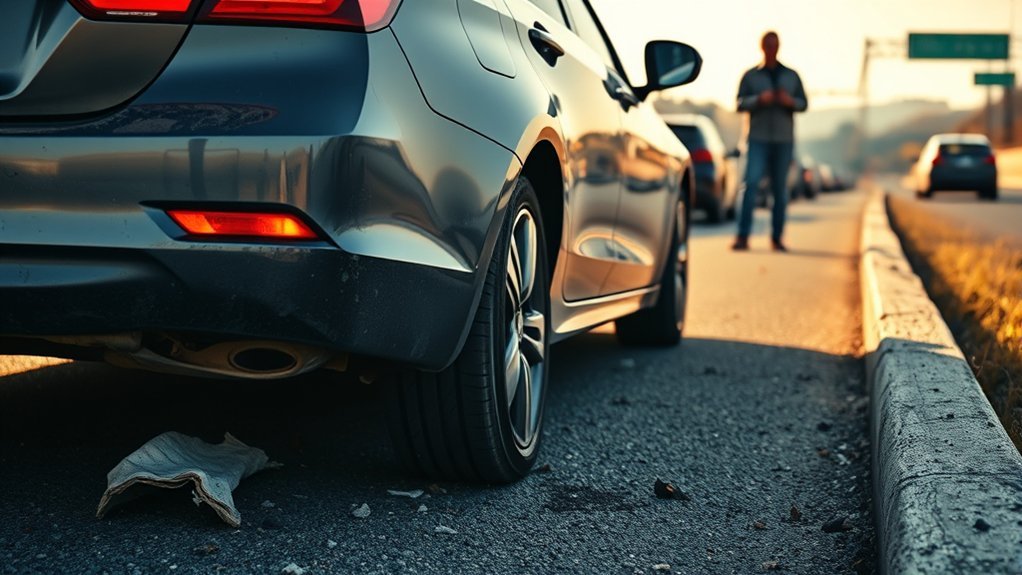
A tire blowout is a rapid loss of air pressure caused by a tire failure, often while the vehicle is moving. It may happen after underinflation, impact damage, overloading, heat buildup, aging, or another structural problem. Knowing how to react matters because sudden braking or steering can make an already unstable vehicle harder to control.
Quick Answer
If a tire blows out, hold the steering wheel firmly, keep the vehicle stable, avoid hard braking, and do not suddenly lift off the accelerator. Maintain speed briefly if necessary for control, then release the accelerator gradually. Slow smoothly, signal, and move to a safe place away from traffic.
Key Takeaways
- Underinflation is a major tire-failure risk because extra sidewall flex creates heat and internal stress.
- Bulges, repeated pressure loss, new vibration, unusual noise, and visible damage deserve prompt inspection.
- Check tire pressure monthly when the tires are cold and use the vehicle placard pressure, not the maximum pressure molded into the tire.
- A true blowout usually involves more damage than an ordinary repairable tread puncture.
- Replacing one damaged tire may require special consideration on AWD or 4WD vehicles because tire dimensions and tread depth need to remain compatible.
What Is a Tire Blowout?
)
A tire blowout is a rapid loss of tire air pressure that can immediately change how your vehicle steers and handles. Unlike a slow leak, the pressure loss happens quickly and may be accompanied by a loud bang, strong vibration, pulling, or the sound of damaged rubber striking the vehicle.
The failure may involve the tread, sidewall, internal belts, cords, or another part of the tire structure. According to NHTSA tire-safety guidance, a blowout can cause a driver to lose control, which is why the first priority is stabilizing the vehicle rather than trying to stop immediately.
A blowout is also different from an ordinary puncture. A nail in the tread may cause a slow leak and, in some cases, can be professionally repaired. A blowout usually indicates much more serious structural damage.
What to Do During a Tire Blowout?
If a tire blows out while you are driving, focus first on keeping the vehicle balanced and pointed where you want it to go. Do not slam on the brakes, jerk the steering wheel, or abruptly remove your foot from the accelerator.
Warning: Hard braking or a sudden steering correction immediately after a blowout can further upset the vehicle. Stabilize it first, then reduce speed gradually.
- Hold the steering wheel firmly with both hands. Expect the vehicle to pull or feel different, especially if a front tire failed.
- Keep your eyes where you want the vehicle to go. Make small steering corrections and stay in your lane while you regain control.
- Maintain speed briefly if necessary for stability. NHTSA advises against abruptly removing your foot from the accelerator during the initial reaction.
- Release the accelerator gradually. Let the damaged tire and normal rolling resistance help reduce your speed.
- Avoid hard braking. Once the vehicle is stable and moving more slowly, use gentle braking if needed.
- Signal and move off the roadway. Choose a level, secure shoulder, parking area, or other location away from moving traffic.
- Turn on your hazard lights. Stop fully before deciding whether it is safe to exit the vehicle.
Does It Matter Whether the Front or Rear Tire Blows Out?
The basic response is the same for either axle: keep the steering controlled, avoid sudden braking, and slow gradually. However, the failure can feel different.
NHTSA notes that a front-tire blowout is usually felt more strongly through the steering, while a rear-tire blowout may be felt more through the vehicle body or seat. Do not make a sharp correction toward the shoulder just because the vehicle suddenly pulls.
What Should You Do After You Stop?
Once you are safely clear of traffic, turn on the hazard lights and assess your surroundings before getting out. If the shoulder is narrow, visibility is poor, or traffic makes a tire change unsafe, call roadside assistance instead of working beside moving vehicles.
Do not keep driving normally on a destroyed conventional tire. Continuing on it can damage the wheel and can make vehicle control worse.
Warning Signs Before a Tire Blowout
Not every blowout gives advance warning, but many tire problems produce symptoms before complete failure. New vibration, unusual noise, recurring air loss, pulling, or visible sidewall damage should not be dismissed.
Persistent vibration, pressure loss, pulling, bulges, or unusual tire noise can signal damage that needs professional inspection.
Watch for these conditions:
- A sidewall bulge or bubble: This can indicate damaged internal cords and requires immediate attention.
- Cuts, cracks, or exposed cords: Visible structural damage can make a tire unsafe to continue using.
- Repeated pressure loss: A tire that repeatedly needs air may have a puncture, valve problem, bead leak, or internal damage.
- New vibration: Persistent vibration may come from tire damage, imbalance, alignment trouble, or suspension problems.
- Rhythmic thumping or unusual road noise: A change in tire noise can be associated with irregular wear or internal problems.
- Vehicle pulling: Unequal tire pressure or tire damage can change how the vehicle tracks.
Michelin’s tire-damage guidance also identifies bulges, vibration, pulling, recurring pressure loss, unusual road noise, and TPMS warnings as reasons to have the tires checked.
Remember that vibration and pulling do not prove a blowout is about to happen. They can also result from wheel balance, alignment, or suspension problems. The important point is that a new or worsening symptom deserves inspection rather than guesswork.
[Products Worth Considering]

TireJect Off-Road Tire Sealant Kit provides 5-in-1 sealing to help fix tread punctures up to 3/8", sidewall punctures up to 3/8", bead leaks, slow leaks, and minor dry rot on low-speed tires. It permanently seals with liquid rubber, recycled tire particles, and Aramid fibers, making it ideal for flats caused by thorns, nails, and screws. The included dispensing cap attaches to the valve stem for a no-mess installation, along with a metal valve core remover tool and valve stem cap. This kit is for off-road use only.

Monitor tire tread wear with a smart, color-coded depth gauge that shows clear condition ranges at a glance. The bar is range marked for fast, easy readings, helping you maintain safer traction and performance. Each gauge is portable with a pocket clip, and the set includes 20 units for daily use and sharing.

Steelman white tire marking crayons provide high-contrast, semi-permanent marks for repairing and inspecting tires and equipment. They write on wet or dry, smooth or coarse surfaces including rubber, metal, glass, and wood, making them ideal for puncture location and damage outlining. The lead- and zinc-free crayons resist weather and fading yet wipe away when you no longer need the marks.
What Causes Tire Blowouts?
Tire blowouts usually result from excessive heat, loss of inflation pressure, physical damage, excessive load, aging, or structural failure. Several of these problems can occur together, making a weakened tire more likely to fail during sustained driving.
| Cause | Why It Matters | What to Do |
|---|---|---|
| Underinflation | Extra sidewall flex creates heat and stress inside the tire. | Check cold pressure monthly and before long trips. |
| Overloading | Too much weight places additional stress on the tire and can increase heat buildup. | Stay within the vehicle’s stated load limits. |
| Pothole or curb impact | A hard impact can damage internal cords even when exterior damage is limited. | Inspect the tire after a significant impact and get persistent symptoms checked. |
| Cuts, punctures, or structural damage | Damage can allow pressure loss or weaken the casing. | Have questionable damage professionally inspected. |
| Heat | Sustained high temperature can accelerate tire deterioration and contribute to separation or failure. | Keep tires correctly inflated and avoid exceeding load or speed limits. |
| Aging | Rubber and other tire components change as they age, even when tread remains. | Check the DOT date code and follow the vehicle and tire manufacturers’ replacement guidance. |
Why Is Low Tire Pressure Such a Blowout Risk?
An underinflated tire bends more as it rolls. That repeated flex creates heat and mechanical stress inside the tire, which can damage the structure over time.
Do not judge pressure by appearance alone. A tire can be significantly underinflated without looking obviously flat, and the TPMS warning system is not a substitute for routine gauge checks.
Can Heat Cause a Tire Blowout?
Yes. Sustained high tire temperatures can contribute to deterioration, tread separation, and failure, especially when underinflation, heavy loads, high speeds, or existing damage are also present.
Hot weather itself does not mean a properly maintained tire will fail. The greater concern is heat combined with another stress that the tire cannot safely handle.
How to Prevent Tire Blowouts
You cannot prevent every sudden tire failure, but regular inspections and correct inflation can reduce many common risks. The most useful routine is simple: monitor pressure, tread, physical condition, load, and tire age.
[Products Worth Considering]

Measure tyre tread depth precisely with a digital gauge that reads in both MM and inches, helping you monitor safe driving conditions. The large LCD screen is easy to operate, and the compact tool fits for cars, trucks, and motorcycles. It provides high accuracy with a 0-25.4mm range and includes a 1-year warranty for added peace of mind.

The Airmoto portable tire inflator quickly and accurately fills car, truck, SUV, motorcycle, and bicycle tires up to 120 PSI with auto shut-off when your target pressure is reached. Its large LCD, multi-unit pressure display, and digital gauge make it easy to dial in settings and verify readings, while the built-in LED flashlight helps in low light. The included polyurethane hard carrying case and storage mesh pocket keep the inflator and accessories protected and organized.

The SAFELIFE dial tire tread depth gauge measures tread depth in 1/32 inch increments with clear, easy-to-read 2-inch dial face. Color zones using a traffic light system help you quickly judge whether tread is low, marginal, or ample for safer driving. Built with a durable zinc cast body and a metal detect probe for precise, comfortable use across cars, motorcycles, trucks, and buses.
1. Check Tire Pressure Monthly
Measure all tires, including the spare, when they are cold. NHTSA defines cold for this purpose as a vehicle that has not been driven for at least three hours.
Use the recommended pressure on the driver-door Tire and Loading Information label or in the owner’s manual. Do not use the maximum pressure molded into the tire sidewall as the normal inflation target. These points are also covered in NHTSA’s summer-driving tire guidance.
2. Inspect the Tread and Sidewalls
Look for cuts, punctures, bulges, cracking, exposed cords, abnormal wear, and embedded objects. NHTSA says tires should be replaced when tread is worn to 2/32 inch.
If you find a sidewall bulge, exposed cords, major damage, or another structural problem, do not treat it as normal wear.
3. Do Not Overload the Vehicle
Extra weight increases the work each tire must do. Check the Tire and Loading Information label and stay within the vehicle manufacturer’s stated limits for occupants and cargo.
Loading becomes especially important during road trips, towing, or when a vehicle is carrying several passengers and heavy luggage.
4. Pay Attention After a Hard Impact
A deep pothole, curb strike, or road debris can damage internal tire components. Sometimes the exterior looks acceptable even though damage exists inside.
If vibration, pulling, air loss, a bulge, or another new symptom starts after an impact, reduce speed and arrange an inspection.
5. Check Tire Age, Not Just Tread
A tire can age even when it still has usable tread. The final four digits of the DOT Tire Identification Number show its manufacturing week and year.
NHTSA notes that some vehicle and tire manufacturers recommend replacement when tires reach roughly six to 10 years of age, regardless of tread. There is no single universal age limit for every tire, so follow the recommendations for your vehicle and tire model.
6. Do Not Ignore the Spare Tire
Spare tires also lose pressure and age. Include the spare in your pressure and condition checks so it is usable if a roadside failure occurs.
Can a Tire Be Repaired After a Blowout?
A true blowout usually involves structural damage and commonly requires replacement rather than repair. A small, ordinary tread puncture is different and may qualify for professional repair if the tire has not suffered additional damage.
The USTMA tire-repair guidance limits repairable punctures to the tread area and a maximum injury diameter of 1/4 inch, or 6 mm. The tire must be removed from the wheel for inspection, and an approved repair includes both filling the injury and sealing the inner liner.
Sidewall and shoulder injuries are not covered by those repair criteria. A tire that was driven while completely deflated may also have hidden internal damage that makes repair unsafe.
[Products Worth Considering]

Accurately measure tire tread depth with a calibrated gauge marked from 0 to 1 inch in 1/32 inch increments. The color-coded bar helps you quickly identify tread condition ranges, supporting safe driving for trucks, motorcycles, automobiles, and passenger vehicles.

Measure tire tread depth quickly and accurately with this LUMITECO dial gauge that reads in 1/32" increments up to 14/32". The color-coded green/yellow/red zones make it easy to judge tire wear and know when replacement is needed. A rugged, compact design with a protective pouch helps keep the gauge ready for use on cars, trucks, motorcycles, and more.

Yieokei Tesla jack pads are molded rubber lifting pucks designed for 2016-2026 Model 3/Y/S/X, including Juniper, to fit securely in the jack hole. They cushion the underframe and help position the jack precisely at the factory jack points to reduce risk of battery, paint, or chassis damage. The set also includes a tire repair tool kit for emergency roadside fixes and comes with a portable storage case to keep everything organized.
Frequently Asked Questions
Can a Tire Blowout Happen on a New Tire?
Yes. A new tire can still fail after severe road-impact damage, incorrect inflation, overloading, a puncture, or a manufacturing defect. New tread does not protect a tire from every type of structural damage, so pressure and condition still need regular checks.
How Loud Is a Tire Blowout?
A tire blowout can produce a sudden loud bang or pop, followed by flapping, rumbling, or thumping from the damaged tire. The exact sound varies with the type of failure, vehicle speed, tire construction, and how much of the tire separates.
Are Run-Flat Tires Safer During a Blowout?
Run-flat tires can provide useful support and limited mobility after pressure loss, but they should not be treated as immune to tire failure. Driving limits depend on the tire and vehicle. Michelin, for example, states that its run-flat tires may permit up to 50 miles at a maximum of 50 mph, depending on road and driving conditions.
Does Weather Affect Tire Blowout Risk?
Yes. Sustained high temperatures can add heat stress to tires, while colder temperatures reduce measured tire pressure and may expose an already underinflated condition. Check pressure when tires are cold and pay closer attention during major temperature changes or long hot-weather drives.
Should I Replace All Tires After One Blowout?
Not automatically. The correct replacement depends on the remaining tires, tread depth, tire type, and vehicle requirements. AWD and 4WD vehicles can be sensitive to differences in tire circumference, so follow the owner’s manual or manufacturer specifications before replacing only one tire.
Can a Blown-Out Tire Be Repaired?
Usually not if the tire suffered structural failure. Repair may be possible only when the problem is a qualifying tread puncture and the tire passes an internal inspection. Sidewall damage, shoulder damage, or serious damage from being driven flat normally requires replacement.
Does a Front-Tire Blowout Require a Different Response?
No. The basic response is the same for front and rear blowouts: stabilize the vehicle, avoid sudden braking or steering, release the accelerator gradually, and pull over when control and speed allow. A front failure is usually felt more strongly through the steering wheel.
Conclusion
A tire blowout demands smooth, controlled actions. Hold the wheel firmly, avoid sudden braking or steering, stabilize the vehicle, release the accelerator gradually, and move off the road only when you can do so safely.
You can reduce the risk by checking cold tire pressure monthly, watching for damage and unusual vibration, staying within load limits, monitoring tread and age, and getting questionable tires inspected before another highway trip.
Sources
- National Highway Traffic Safety Administration — TireWise: Blowout response, tire pressure, tread depth, TPMS, aging, heat, and maintenance guidance.
- National Highway Traffic Safety Administration — Summer Driving Tips: Cold tire-pressure checks, recommended vehicle pressure, underinflation, and tire inspection guidance.
- Michelin — Tire Damage Guide: Warning signs including bulges, vibration, pulling, recurring pressure loss, and unusual noise.
- U.S. Tire Manufacturers Association — Tire Repair Basics: Repairable tread-area puncture limits and proper inspection and repair procedures.
- U.S. Tire Manufacturers Association — Replacing Tires: Guidance for replacing one, two, or four tires and matching replacement specifications.
- Michelin USA — Tire FAQs: Run-flat operating guidance and tire-pressure information.

