
What Happens if Tire Pressure Is Too Low?
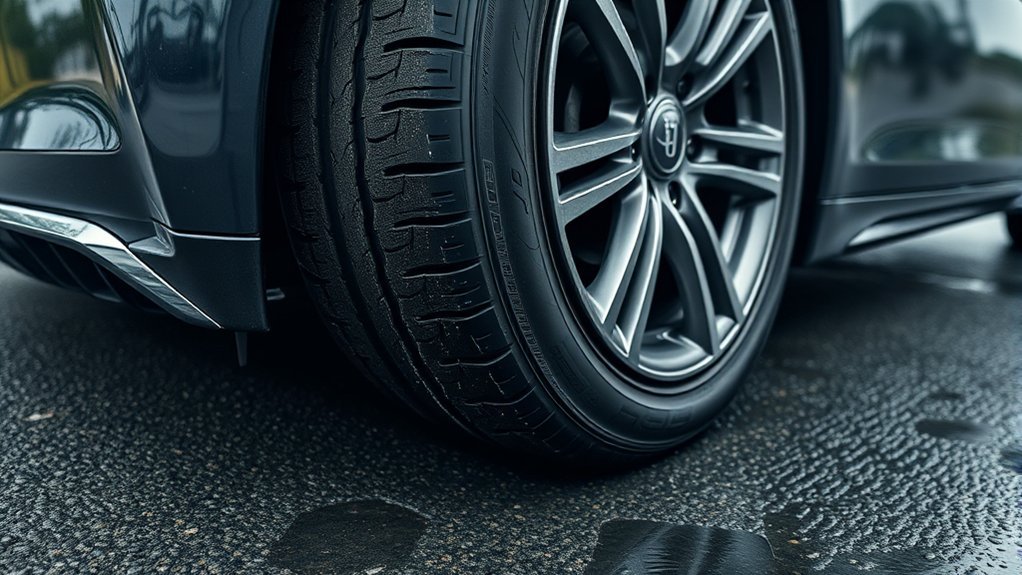
If your tire pressure is too low, the tire flexes more than it should. That extra movement creates heat, increases rolling resistance, speeds up tread and internal wear, and can change how the vehicle steers and stops. Mild underinflation may be hard to see, so the safest way to catch it is with an accurate pressure gauge rather than by appearance alone.
Quick Answer
Low tire pressure increases tire flex, heat, rolling resistance, and wear while reducing load-carrying capability and changing handling. Inflate each tire to the vehicle manufacturer’s cold-pressure specification on the door placard or in the owner’s manual. Do not wait for the TPMS light; check pressures monthly and before long trips.
Key Takeaways
- Underinflated tires flex more, build additional heat, and can suffer internal damage if driven that way for too long.
- Low pressure raises rolling resistance, which can reduce fuel economy and increase energy use.
- Handling can feel softer or slower, and braking performance can be affected, especially under demanding road conditions.
- Underinflation commonly accelerates wear on both tread shoulders.
- Use the vehicle’s cold-pressure specification on the door placard or in the owner’s manual, not the maximum pressure molded on the tire sidewall.
- TPMS is a warning system, not a replacement for monthly checks with an accurate gauge.
What Low Tire Pressure Does to Your Tires?
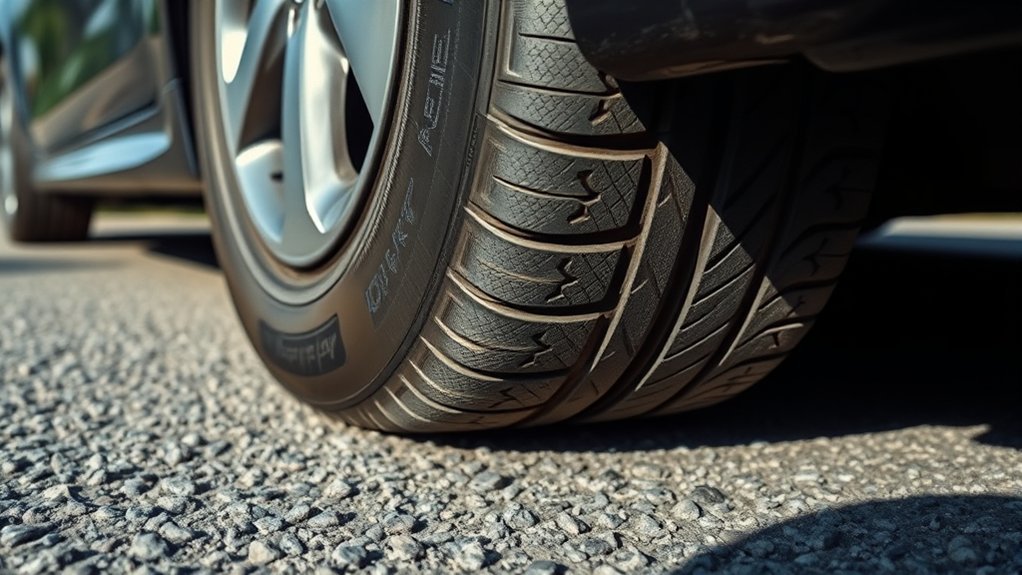
Low tire pressure does more than trigger a warning light. Inflation pressure helps the tire support the vehicle’s load and maintain its intended shape. When pressure drops, the sidewall and casing deflect more with every rotation.
That repeated flexing creates additional heat. According to the National Highway Traffic Safety Administration (NHTSA), proper tire pressure affects safety, tire durability, and fuel consumption. Sustained underinflation can contribute to internal damage and, in severe cases, tire failure.
The tread footprint also changes. Underinflated tires commonly place more stress on the outer portions of the tread, which can accelerate wear on both shoulders. Michelin identifies excess wear on both edges of the tread as a typical underinflation pattern.
Rolling resistance rises as well because more energy is lost through tire deformation. The result can be higher fuel consumption in gasoline vehicles and greater energy use in electrified vehicles.
[Products Worth Considering]

Keep your tires properly inflated with this analog VONDIOR tire pressure gauge, designed for fast, easy readings without batteries. The swiveling, two-axis hose and large glow dial help you measure at any tire angle with instant visibility. Built with a protective rubber shield, it supports durable, low-maintenance use for cars and trucks.

Milton S-921 pencil tire pressure gauge helps you maintain optimal tire pressure for passenger cars with accurate readings in PSI and kPa. It features a built-in deflator valve for convenient pressure adjustments, plus a single chuck head and nylon indicator bar for easy use on the go. Built from durable plated brass and designed for reliable performance, it’s a practical road trip and cold-weather maintenance tool.
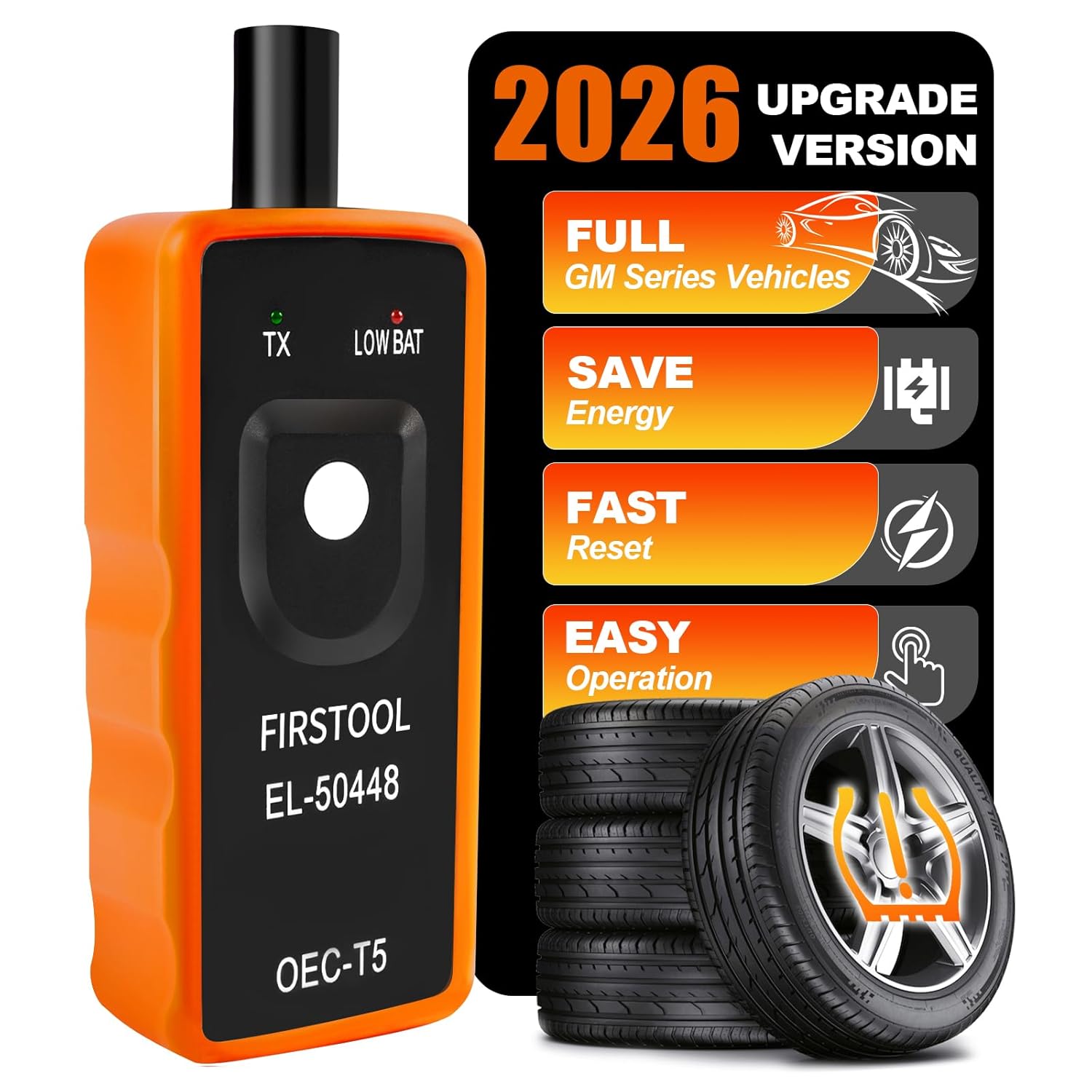
This TPMS relearn tool helps you quickly activate, match, and reset GM tire pressure sensors to keep the vehicle monitoring system working properly. It clears tire pressure alarms and dashboard warning lights after sensor replacement or tire rotation, and supports learning for common 315/433 MHz TPMS sensors. Designed for simple one-button operation, it can help you avoid unnecessary trips to repair shops.
How to Tell Your Tires Need Air?
The most reliable way to tell whether your tires need air is to measure their pressure with an accurate gauge. A tire can be significantly underinflated without looking obviously flat. NHTSA therefore recommends checking pressures rather than relying on appearance alone.
Possible warning signs include:
- A TPMS warning light.
- A tire that looks noticeably lower or more compressed than the others.
- Slower or softer steering response.
- Pulling, wandering, or an unusual change in handling.
- Wear on both tread shoulders.
- Repeated need to add air to the same tire.
- New vibration, thumping, or unusual tire noise.
A strong wear pattern on only one shoulder is not automatically caused by low pressure. One-sided wear can also point to wheel-alignment, suspension, or other mechanical problems.
Note: TPMS should not be your normal pressure gauge. In the United States, the system is designed to warn when a tire becomes significantly underinflated, so pressure can already be well below the vehicle’s specification before the warning appears.
Common Causes of Low Tire Pressure
Tires can lose pressure even when there is no obvious flat. Common causes include:
- Normal air loss: The U.S. Tire Manufacturers Association says passenger and light-truck tires may naturally lose roughly 1–2 psi per month under normal conditions.
- Cold weather: Inflation pressure typically falls as ambient temperature drops. USTMA notes a change of about 1–2 psi for each 10°F change in temperature.
- Punctures: Nails, screws, sharp road debris, and small tread penetrations can create slow leaks.
- Valve problems: A leaking valve core or damaged valve stem can allow gradual air loss.
- Wheel or bead leaks: Corrosion, impact damage, or sealing problems where the tire meets the wheel can cause persistent leakage.
- Road impacts: Potholes and curb strikes can damage the tire, wheel, or bead area.
If one tire repeatedly loses noticeably more pressure than the others, have the tire and wheel inspected rather than continually topping it up.
How Low Tire Pressure Hurts Fuel Economy?
When tire pressure drops below the manufacturer’s specification, the tire deforms more as it rolls. This increases rolling resistance, so the vehicle must use more energy to maintain speed.
The U.S. Department of Energy says keeping tires properly inflated can improve gasoline mileage by about 0.6% on average and up to 3%. DOE also reports that fuel economy can fall by roughly 0.2% for every 1 psi drop in the average pressure of all four tires.
Proper tire inflation can improve gasoline mileage by about 0.6% on average and up to 3%, according to the U.S. Department of Energy.
The exact effect varies with the vehicle, tire, pressure deficit, speed, temperature, and driving conditions. The practical point is simple: keeping tires at the specified cold pressure reduces unnecessary tire deformation and energy loss.
How Low Pressure Affects Handling, Braking, and Wear?
As tire pressure drops, the sidewalls flex more and the tread moves more under load. Steering can feel softer or slower, and the vehicle may require more correction during lane changes, cornering, or straight-line driving.
Underinflation can also affect braking, but the effect is more complicated than saying every low tire always produces a longer stop. NHTSA testing has shown that pavement type, water depth, inflation level, and other conditions all influence stopping performance. The safest conclusion is that incorrect pressure changes the tire’s behavior and can reduce the braking and handling performance the vehicle was designed to provide.
Wear is easier to recognize over time. Underinflation commonly accelerates tread wear on both outer shoulders. Continued flexing also raises tire temperature and can damage internal components even before the outside of the tire looks seriously damaged.
Correct inflation helps the tire maintain its intended shape, tread contact, load capacity, steering response, and service life.
[Products Worth Considering]

This tire inflator with pressure gauge delivers long-lasting performance with a durable rubber-protected gauge and sturdy build. The longer hose and 360 swivel air chuck help you seal the valve securely and keep your hands free while measuring, inflating, or deflating. It’s battery-free for reliable use and provides ±2 PSI accuracy in the mid-range for most typical tires, with universal compatibility for 1/4 NPT compressor outputs.

Monitor tire tread wear with a smart, color-coded depth gauge that shows clear condition ranges at a glance. The bar is range marked for fast, easy readings, helping you maintain safer traction and performance. Each gauge is portable with a pocket clip, and the set includes 20 units for daily use and sharing.

AstroAI’s digital tire pressure gauge with inflator helps you quickly check, inflate, and deflate tires with an easy lock-on chuck and integrated bleed valve. It delivers calibrated accuracy within 1% for a clear PSI readout from 3 to 250 PSI, supporting dependable tire maintenance. Designed for many vehicle types, it connects to common compressor outputs and standard Schrader valves.
When Low Tire Pressure Becomes Dangerous?
There is no single PSI number that is dangerous for every vehicle because recommended pressures and tire load requirements differ. A reading below your vehicle manufacturer’s specified cold pressure means the tire is underinflated and should be corrected.
The risk becomes more serious as pressure falls further, particularly during highway driving, hot weather, heavy loading, towing, or long-distance travel. Severe underinflation increases sidewall flex and heat and can contribute to internal damage, tread or belt separation, loss of vehicle control, or sudden tire failure.
Warning: Do not keep driving normally on a tire that is visibly flat or severely underinflated, is rapidly losing pressure, has a bulge or other damage, or causes strong vibration or handling problems. Move to a safe location, use the appropriate spare or roadside-assistance procedure, and have a tire professional inspect it. A tire driven while severely underinflated can suffer hidden internal damage even if it later holds air.
If the TPMS light comes on, check all applicable tires as soon as it is safe to do so. Do not assume the light is merely a sensor problem, and do not wait for the tire to look flat before checking it.
How to Check and Correct Tire Pressure
- Find the correct pressure. Use the Tire and Loading Information label on the driver’s door area or the vehicle owner’s manual. Front and rear pressures may differ on some vehicles.
- Check the tires cold. NHTSA defines a cold reading as one taken after the vehicle has been parked for at least three hours.
- Remove the valve cap. Press an accurate tire-pressure gauge firmly onto the valve stem and read the pressure.
- Compare the reading with the placard. Add air if the pressure is low. If it is high while the tire is genuinely cold, release a small amount and measure again.
- Recheck after adjusting. Confirm the final reading with the gauge and reinstall the valve cap.
- Check every tire. Include the spare if your vehicle has one and follow its specified pressure requirements.
Pro Tip: Check tire pressure first thing in the morning or after the vehicle has been parked for at least three hours. This makes it easier to compare the reading directly with the manufacturer’s cold-pressure specification.
Do not use the pressure printed on the tire sidewall as your routine inflation target. That marking relates to the tire itself; your vehicle manufacturer’s recommended operating pressure is listed on the placard or in the owner’s manual.
Frequently Asked Questions
How Often Should Tire Pressure Be Checked?
Check tire pressure at least once a month and before long trips. NHTSA recommends checking when the tires are cold and using an accurate gauge. Check sooner after a major temperature change or whenever a tire appears to be losing air.
Can Temperature Changes Affect Tire Pressure?
Yes. Tire pressure falls as ambient temperature drops and rises as temperature increases. USTMA says a change of about 1–2 psi for every 10°F of temperature change is common, so seasonal temperature swings are a good reason to recheck your tires.
What PSI Should My Tires Have?
Use the cold PSI specified on the vehicle’s Tire and Loading Information label, usually near the driver’s door, or in the owner’s manual. There is no universal PSI for all cars, and the maximum pressure molded on the tire sidewall is not the normal vehicle pressure recommendation.
Do All Tires Lose Air at the Same Rate?
No. Tires naturally lose some pressure over time, but the rate can differ because of temperature, valve condition, small punctures, bead or wheel leaks, and other damage. If one tire repeatedly loses substantially more pressure than the others, have it inspected.
Can a TPMS Sensor Detect Slow Leaks?
A slow leak may eventually trigger the TPMS once pressure drops far enough, but TPMS should not be treated as a leak-monitoring substitute for manual checks. Direct systems measure tire pressure, while indirect systems use wheel-speed and other vehicle data to identify underinflation. Check pressure yourself if you suspect a leak.
Why Does the TPMS Light Come On During a Cold Morning?
Cold weather lowers tire pressure, so a tire that was already near the TPMS warning threshold may trigger the light overnight. The light can disappear after driving as the tires warm, but you should still check and adjust the cold pressure rather than assuming the problem has fixed itself.
How Low Is Too Low to Drive On?
Any pressure below the vehicle’s specified cold pressure should be corrected. If a tire is visibly flat, severely underinflated, rapidly losing air, damaged, or causing abnormal handling or vibration, do not continue normal driving. Use the appropriate spare or roadside assistance and have the tire inspected.
Should I Inflate My Tires to the PSI Printed on the Sidewall?
No. For normal operation, follow the vehicle manufacturer’s recommended cold pressure on the door placard or in the owner’s manual. The number molded on the tire sidewall is not the vehicle’s normal operating-pressure recommendation.
Conclusion
If your tire pressure drops too low, the effects go beyond fuel economy. Underinflated tires flex more, run hotter, wear faster, and can make steering and braking behavior less predictable. The U.S. Department of Energy says proper inflation can improve gasoline mileage by about 0.6% on average and as much as 3% in some cases.
Check your tires at least monthly and before long trips, measure them when cold, and use the pressure listed by the vehicle manufacturer rather than the maximum number on the tire sidewall. If a tire keeps losing air or has been driven severely underinflated, have it professionally inspected because damaging heat and flex can affect parts of the tire you cannot see from the outside.
Sources
- National Highway Traffic Safety Administration — TireWise — tire pressure, cold-pressure checks, TPMS, tire wear, safety, and vehicle placard guidance.
- U.S. Department of Energy — Tips for Your Tank — fuel-economy effects of proper and improper tire inflation.
- U.S. Tire Manufacturers Association — Tire Care and Safety Guide — pressure loss, temperature changes, gauges, and underinflation safety.
- Michelin — Wear on Both Edges — underinflation-related shoulder wear, heat, rolling resistance, and tire durability.
[Products Worth Considering]

Measure tire tread depth quickly and accurately with this LUMITECO dial gauge that reads in 1/32" increments up to 14/32". The color-coded green/yellow/red zones make it easy to judge tire wear and know when replacement is needed. A rugged, compact design with a protective pouch helps keep the gauge ready for use on cars, trucks, motorcycles, and more.

Steelman white tire marking crayons provide high-contrast, semi-permanent marks for repairing and inspecting tires and equipment. They write on wet or dry, smooth or coarse surfaces including rubber, metal, glass, and wood, making them ideal for puncture location and damage outlining. The lead- and zinc-free crayons resist weather and fading yet wipe away when you no longer need the marks.

This heavy-duty tire pressure gauge combines measurement, inflation, and deflation in one compact tool for quick roadside and garage use. Its dual-head chuck helps reach inner and outer dual-wheel positions, while the clear indicator bar makes readings easy to see. Built for durability, it supports a wide pressure range and works across cars, trucks, RVs, SUVs, and motorcycles.

Related Articles

What Is Hydroplaning? Causes and How to Prevent It
Glide into the surprising causes of hydroplaning and the simple ways to stop it before your tires lose grip.
Read More
Can You Drive on a Tire With a Bulge? Safety Risks
Can you drive on a tire with a bulge, or is a sudden blowout lurking around the corner?
Read More
Is Tire Siping Worth It? Benefits and Drawbacks
Better grip in wet and wintry driving might tempt you—but is tire siping actually worth the tradeoffs?
Read More