
Tymate TM2 RV Tire Pressure Monitoring System Review
Disclosure: As an Amazon Associate, we earn from qualifying purchases. If you click a link on this page and make a purchase, we may receive a small commission at no extra cost to you.
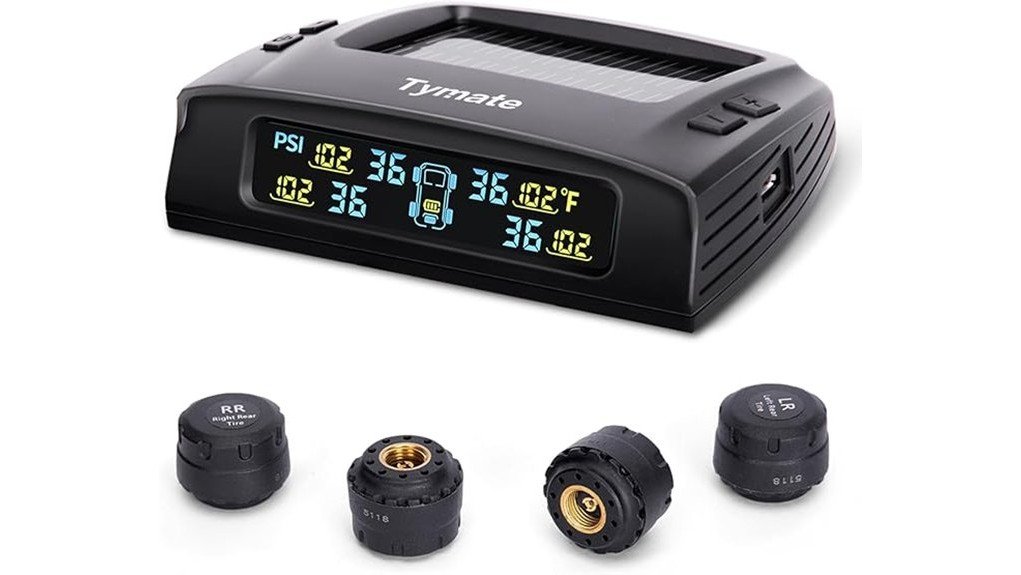
Watching tire pressure across an RV, trailer, and tow vehicle can become difficult when the dashboard only covers the vehicle’s factory sensors. The Tymate TM2 RV Tire Pressure Monitoring System adds a separate color display, four external sensors, pressure and temperature readings, and alerts for common tire problems. It is a practical choice for many lower-pressure RV and trailer setups, but its 0 to 87 PSI range and possible need for a repeater make fitment checks important. This review explains where the TM2 works well, what comes in the box, and who should choose a higher-capacity alternative.
Quick Verdict
Rating: 8.3/10, Recommended with caveats
Best For: RV, trailer, truck, and SUV owners who need up to 10 monitored tire positions below 87 PSI.
Bottom Line: The Tymate TM2 combines simple screw-on sensors, six warning types, a readable color display, and flexible charging at a sensible level of complexity. Its pressure ceiling, modest ±3 PSI accuracy specification, and potential signal limitations on long rigs mean it is not ideal for every motorhome or commercial tire setup.
| Specification | Detail |
|---|---|
| Brand | Tymate |
| Model | TM2 |
| Product type | Aftermarket tire pressure and temperature monitoring system |
| Included sensors | 4 pre-labeled, factory-paired external sensors |
| Maximum coverage | Up to 10 tire positions with added compatible sensors |
| Pressure range | 0 to 87 PSI |
| Listed sensor accuracy | ±3 PSI |
| Alarm types | Fast leak, high pressure, low pressure, high temperature, low sensor voltage, and signal loss |
| Wireless frequency | 433.92 MHz |
| Sensor battery | Replaceable CR1632, listed for up to about 6 months of use |
| Sensor weather rating | IP67 |
| Display power | Solar-assisted charging and USB charging |
| Approximate display package size | 4.13 x 3.54 x 2.95 inches; about 10 ounces listed product weight |
| Included setup items | Anti-slip pad, double-coated tape, USB cable, battery tool, hex wrench, spare O-rings, hex nuts, and manual |
Key Takeaways
- The base kit includes four paired sensors, while the monitor can support up to 10 tire positions with compatible add-on sensors.
- The 0 to 87 PSI range fits many travel trailers, tow vehicles, SUVs, and light trucks, but it excludes tires that require higher operating pressure.
- Six alarm types cover pressure, temperature, fast leaks, low sensor battery, and lost signals.
- Solar-assisted and USB charging reduce display power concerns during long trips.
- The sensors are rated IP67 and use replaceable CR1632 batteries, but they still require seal inspection and periodic maintenance.
[Products Worth Considering]
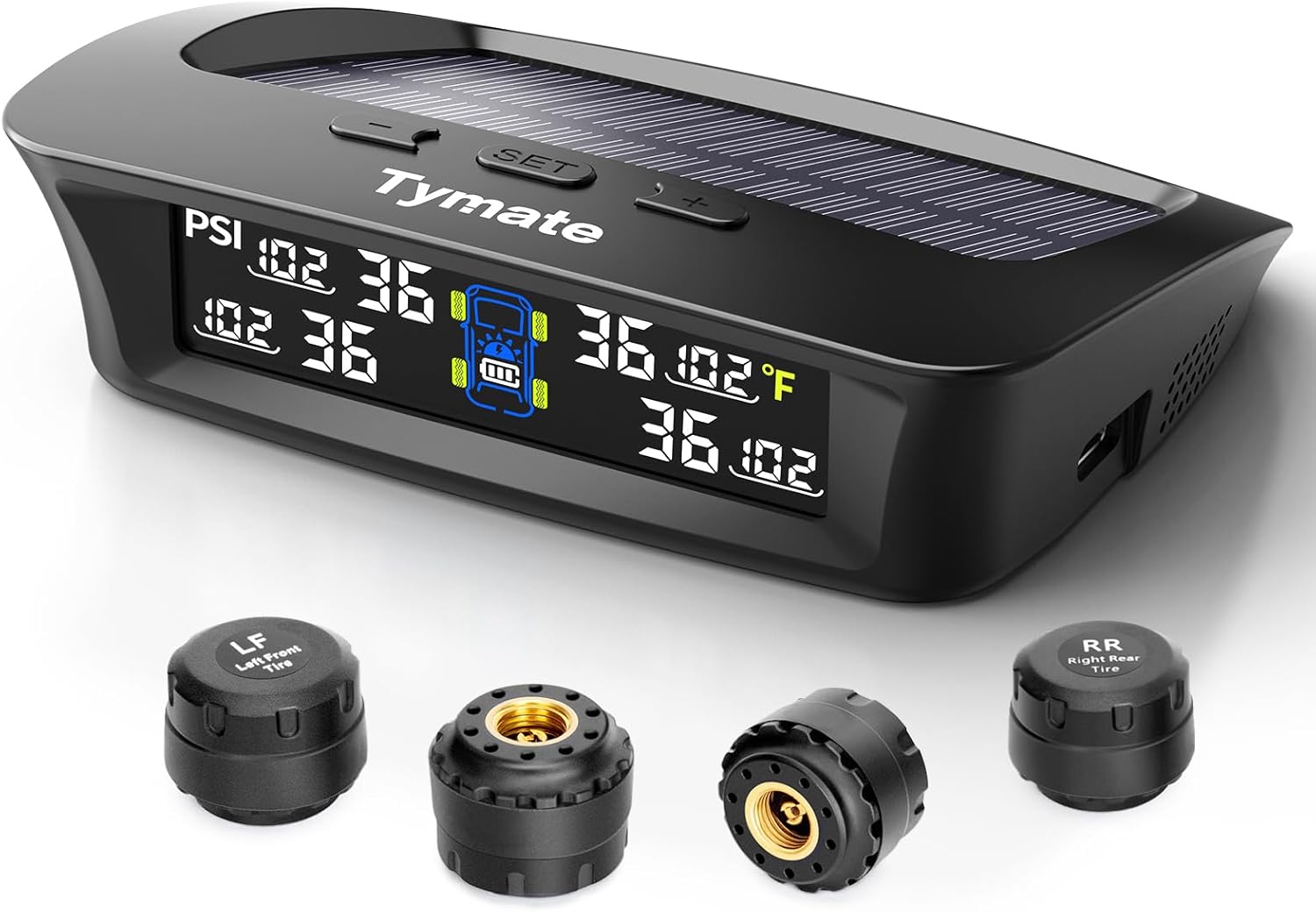
The Tymate TM3 RV TPMS delivers real-time tire pressure monitoring from 0 to 144 PSI with accurate readings and dependable wireless communication. It includes four external sensors with pre-pairing, six alarm modes for rapid leak, pressure extremes, temperature, and signal loss, plus an easy-reference setup for alert thresholds. Solar and USB-C charging help keep the display powered, while the color LCD and adaptive backlight improve visibility for safer driving and towing.
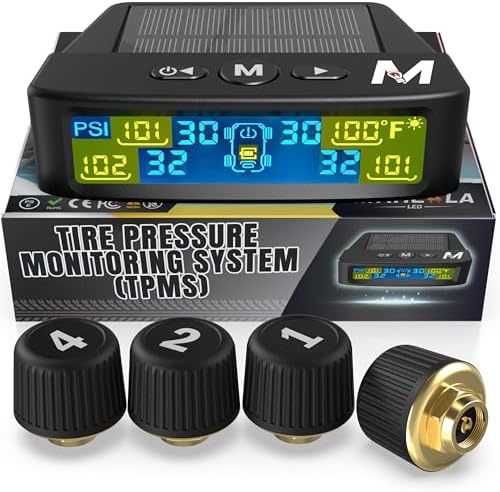
Marcala’s TPMS set of four sensors helps you monitor tire pressure and temperature in real time while driving, with updates every second. The bright color LCD uses auto-dimming for easy viewing, powered by dual solar and USB charging, and offers six alarm modes. Built for trailers, RVs, campers, trucks, and towing setups, the sensors support monitoring 1-4 wheels up to 98 PSI with IP67 waterproof protection.
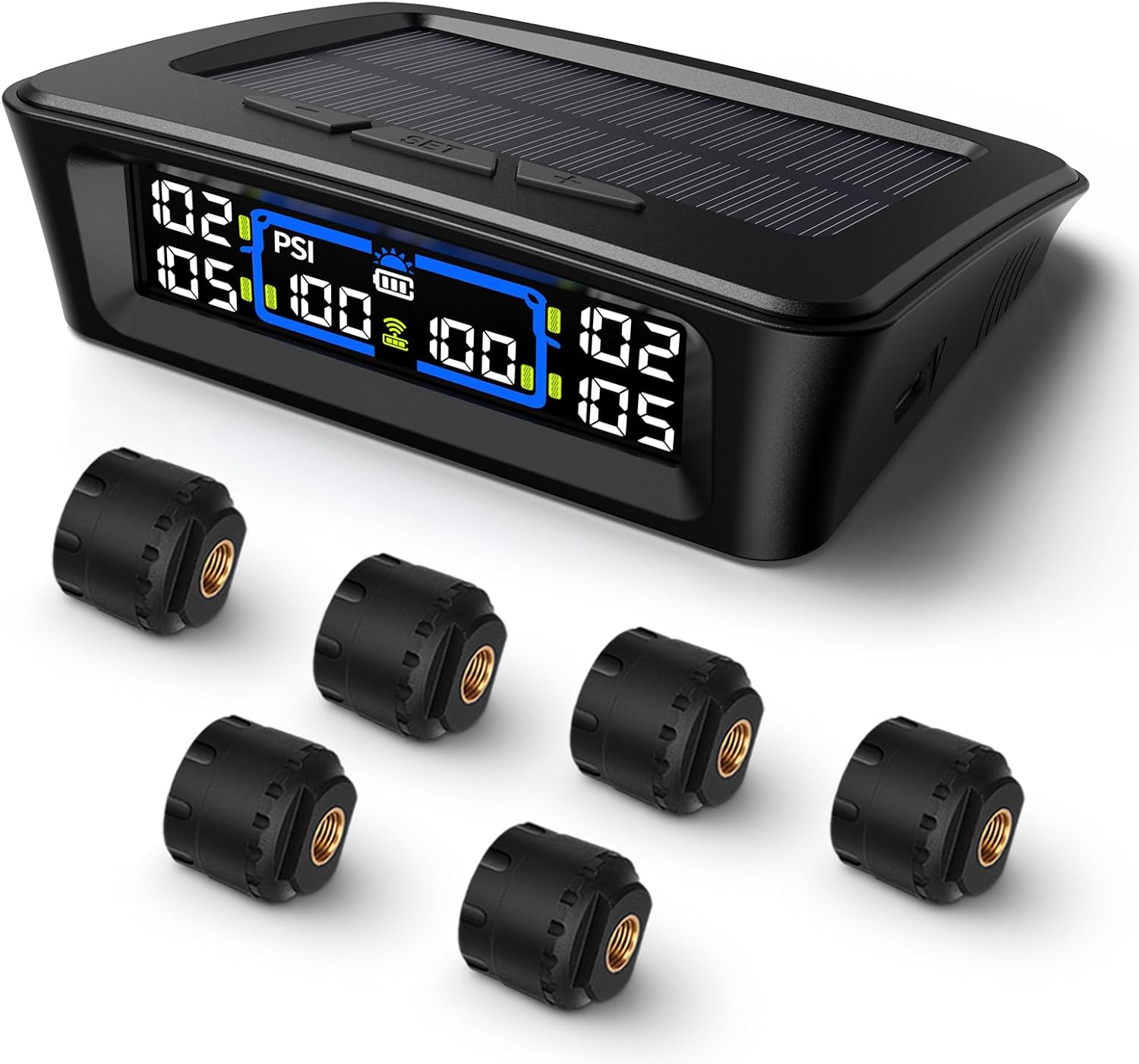
The Tymate TM12 RV TPMS delivers real-time tire pressure and temperature monitoring with a stable 433Hz display for safer long-distance driving. It supports simultaneous monitoring across vehicle and trailer zones, includes six alarm modes for pressure, temperature, leakage, battery, and signal loss, and features easy DIY installation with auto calibration. Power is supplied via USB-C charging or solar recharging, with a wide 0–144 PSI range and up to 50 ft signal coverage for RVs and towable trailers.
What Is the Tymate TM2?
The Tymate TM2 is an aftermarket TPMS built for vehicles and trailers that need more tire information than a basic factory warning light provides. Four external cap-style sensors screw onto the valve stems and send pressure and temperature data to a separate color LCD monitor inside the tow vehicle or cab.
The system can display up to 10 tire positions, which gives you room to cover a tow vehicle, trailer, spare, or another compatible configuration after adding sensors. The monitor can switch between front-vehicle and trailer groups, so you do not need to fit every reading on one crowded screen.
Its main selling point is straightforward coverage without an app or permanent wheel disassembly. You get a dedicated display, audible and visual alerts, and replaceable sensor batteries. The tradeoff is that external sensors add hardware to each valve stem and the 87 PSI upper limit is lower than the capacity of some premium RV systems.
Before You Buy: Check the cold inflation pressure required for every tire you plan to monitor. Do not use the TM2 on a tire that normally operates above its 87 PSI monitoring range, and plan for a separately sold repeater if your trailer is about 36 feet or longer or has recurring signal dropouts.
Who Should Buy It?
Best For
- Travel-trailer and fifth-wheel owners whose recommended tire pressures stay below 87 PSI
- Drivers who prefer a dedicated dashboard display instead of a phone app
- Buyers who want four ready-to-use sensors now and the option to expand later
Skip If
- Your motorhome, truck, or trailer tires require more than 87 PSI
- You need laboratory-grade pressure accuracy or use the display as your only inflation gauge
- You want a repeater included for a very long rig or a phone-based monitoring platform
Setup and Installation
The four included sensors arrive pre-labeled and paired, which removes most of the initial programming work. Charge the monitor, turn it on before installing the sensors, confirm the wheel labels, and then screw each sensor onto its assigned valve stem. Use the supplied anti-slip pad or mounting tape to place the display where it is visible without blocking your view.
The system uses the current pressure during pairing as a reference point. Its automatic alarm range is based around that reference, so install the sensors only after setting all tires to the correct cold pressure for the vehicle or trailer. Review the high-pressure, low-pressure, and high-temperature settings instead of assuming the defaults are right for every axle.
After installation, apply soapy water around each valve connection and look for bubbles that could indicate a leak. Confirm that every sensor reports before driving, then recheck the readings after a short test trip.
Pro Tip: Label each removed valve cap and sensor position during tire rotation or service. Keeping the wheel assignments organized prevents the display from showing the correct pressure under the wrong tire location.
Alarm Modes and Monitoring Performance
The TM2 tracks pressure and temperature and provides six warning conditions: fast leak, high pressure, low pressure, high temperature, low sensor voltage, and signal loss. This covers the problems most drivers need to notice quickly, including a puncture developing on the highway, pressure rising beyond the chosen limit, or a sensor that has stopped reporting.
The fast-leak alarm is useful, but no external TPMS can guarantee advance warning for every sudden tire failure. A severe puncture, impact damage, tread separation, or blowout can develop faster than the monitor can provide a meaningful reaction window. Treat the system as an early-warning aid, not as a substitute for tire inspection and proper load management.
The listed ±3 PSI accuracy is adequate for trend monitoring and alerts, but it is wider than many handheld gauges. Use a trusted tire gauge when setting cold pressure, then use the TM2 to watch for changes while traveling.
Color Display, Charging, and Sensor Batteries
The color LCD automatically adjusts its backlight, helping the display remain readable in changing light. A separate monitor also keeps tire data visible without opening an app, pairing a phone, or giving up navigation screen space.
The display uses solar-assisted charging and can also charge through USB. Solar support can reduce how often you plug it in, but dashboard angle, shade, weather, and seasonal sunlight affect charging. Keep the USB cable accessible so you have a reliable backup.
Each external sensor uses a replaceable CR1632 coin cell, with up to about six months of operation listed under normal use. Battery life varies with temperature, mileage, signal conditions, and alarm activity. When replacing a cell, inspect the O-ring, install the battery in the correct orientation, and tighten the cover evenly to preserve the sensor seal.
Fit, Compatibility, and Safety
The TM2 is intended for RVs, trailers, trucks, SUVs, and other compatible vehicles within its pressure range. Before installation, check that each valve stem has enough clearance for the cap sensor, especially on dual wheels, recessed stems, decorative covers, and tight trailer rims. The sensor should not contact the wheel, hubcap, or nearby hardware as the tire rotates.
The IP67 rating applies to the external sensors, not a promise that every component can be submerged or neglected. Keep the display dry, inspect sensor seals, and replace damaged O-rings. Remove sensors carefully during inflation and service so the valve threads are not cross-threaded.
Set pressure from the vehicle or trailer manufacturer’s cold-inflation guidance, not from the maximum number molded on the tire sidewall. A TPMS still requires monthly manual checks and visual inspections for cuts, bulges, uneven wear, and damaged stems. For additional tire-maintenance guidance, review the NHTSA TireWise safety guidance.
How It Performs in Real Use
For a Four-Tire Travel Trailer
The base kit is well matched to a single-axle or tandem-axle trailer with four monitored tires. The pre-paired sensors simplify setup, and the dedicated display lets you scan pressure and temperature without handling a phone. Add a sensor for the spare only if it is mounted and pressurized within the system’s range.
For a Tow Vehicle and Trailer
Expansion to 10 positions can cover a typical four-wheel tow vehicle and four-wheel trailer, with room for selected spares. This is useful when the tow vehicle’s factory TPMS does not show exact pressure or cannot monitor trailer tires. Extra compatible sensors are required beyond the four included units.
For Long Trailers
Signal reliability depends on total rig length, placement, metal structure, and electronic interference. Tymate recommends considering its RP05 repeater for trailers around 36 feet or longer, and a repeater may also help shorter rigs that experience repeated signal loss. Because it is sold separately, include that possible cost in your comparison.
For Seasonal Storage and Return to Service
External sensors make battery replacement and removal straightforward. Before the first trip after storage, inspect the tires, valve stems, sensor seals, and battery status, then confirm all readings while parked. Do not assume last season’s alarm thresholds still match current tire pressures or loading.
Common Setup Mistakes to Avoid
- Pairing at the wrong pressure: Set each tire to the correct cold pressure before the monitor records its reference value.
- Ignoring wheel labels: Install each pre-labeled sensor on its assigned tire so alerts point to the correct location.
- Skipping a leak check: Test the valve connection after installation and after every battery or O-ring change.
- Depending on solar power alone: Keep USB charging available when the monitor receives limited sunlight.
- Using the TPMS as an inflation gauge: Set pressure with a dependable handheld gauge and use the TM2 to monitor trends.
- Overlooking signal loss: Reposition the monitor or add a compatible repeater when sensors repeatedly disappear.
Pros and Cons
Pros
- Four factory-paired external sensors simplify first-time setup
- Expandable monitoring supports up to 10 tire positions
- Six warning types cover pressure, heat, leaks, battery, and signal status
- Color LCD works without a phone app and adjusts for day or night viewing
- Solar-assisted and USB charging provide flexible display power
Cons
- The 87 PSI maximum excludes many high-pressure motorhome and commercial tires
- Listed ±3 PSI accuracy makes a separate gauge important for exact inflation
- Long trailers may need a separately purchased repeater
Is It Worth the Price?
The Tymate TM2 is positioned as a value-focused RV TPMS rather than a premium fleet system. You get four sensors, a dedicated color monitor, expansion to 10 positions, and solar-assisted charging without paying for app integration or a large touchscreen.
It offers strong value for the price when your tires stay below 87 PSI and your rig does not require a repeater. The value becomes less clear if you need several extra sensors, guaranteed long-range hardware in the base kit, higher pressure capacity, or tighter gauge accuracy.
How It Compares to Alternatives
The TST 507 is a better comparison for buyers who need higher pressure capacity, an included repeater in many kits, or a larger multi-vehicle ecosystem, but it generally sits in a more premium class. EEZTire systems can monitor more tire positions and offer dedicated RV support, which suits larger or more complex rigs. Lippert Tire Linc PRO is worth comparing if you prefer app, Android Auto, or Apple CarPlay integration and your RV is already prepared for Lippert hardware.
The Tymate TM2 makes the most sense when you want a simpler dashboard monitor, four ready-to-use sensors, solar-assisted charging, and coverage for a conventional trailer or tow combination without premium-system complexity.
Frequently Asked Questions
Can the Tymate TM2 monitor more than four tires?
Yes. The base package includes four paired sensors, while the monitor supports up to 10 tire positions with compatible add-on sensors. Plan your wheel layout before ordering extras so the final system covers the tow vehicle, trailer, and any monitored spare tires.
Is the Tymate TM2 suitable for high-pressure motorhome tires?
Only when the required operating pressure remains within the TM2’s 0 to 87 PSI range. Many larger motorhome and commercial tires run above that ceiling, so check the vehicle placard, wheel documentation, and tire requirements before buying.
How accurate are the Tymate TM2 sensors?
The listed pressure accuracy is ±3 PSI. That is useful for detecting trends and abnormal changes, but you should set cold tire pressure with a dependable handheld gauge rather than relying on the monitor for fine adjustment.
Are the Tymate TM2 sensors waterproof?
The external sensors are rated IP67, which supports use in rain and road spray when the covers and O-rings are correctly installed. Inspect the seals during battery changes and keep the dashboard display protected from water.
What batteries do the sensors use?
Each sensor uses a replaceable CR1632 coin battery. Tymate lists up to about six months of use, but temperature, mileage, and signal conditions can shorten or extend that interval.
When should you add a repeater?
A compatible repeater is worth considering for trailers around 36 feet or longer and for any setup with persistent sensor dropouts. Rig length is not the only factor because metal construction and electrical interference can also reduce signal reliability.
Does the TM2 replace manual tire checks?
No. Use the TM2 for alerts and on-road trend monitoring, but continue checking cold pressure with a gauge and inspecting tread, sidewalls, stems, and wheel hardware. A TPMS cannot prevent every puncture, blowout, overload condition, or mechanical failure.
The Bottom Line
The Tymate TM2 is a sensible buy for RV and trailer owners who want four easy-to-install sensors, a dedicated color display, six warning types, and expansion up to 10 positions. Choose it when every monitored tire stays below 87 PSI and you accept that a separate gauge and possibly a repeater remain part of a complete setup. Skip it for high-pressure tires or when you need premium long-range hardware included from the start.
Ready to Buy?
Check the latest price, included sensor count, and current product details before you decide.

Related Articles

XtremepowerUS 5-Gallon Bead Seater Review: Tire Blaster Air Inflator for Trucks and Tractors
You work on big tires and you need a reliable way to seat stubborn beads quickly and safely. The XtremepowerUS 5-gallon bead seater puts…
Read More
X-Shaped RV Stabilizer Wheel Chock Review
Sway-cutting stability for dual-axle RVs sounds promising, but is the X-Shaped Wheel Chock worth the price?
Read More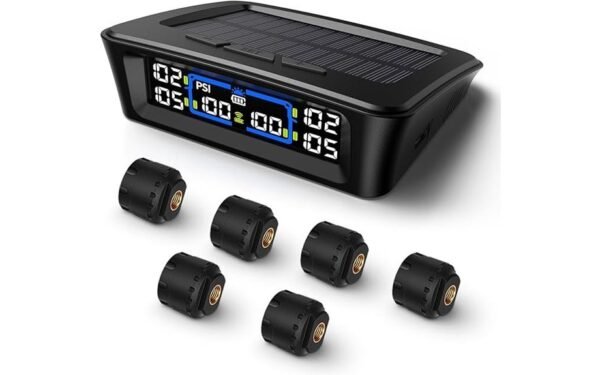
Tymate TM12 RV Tire Pressure Monitoring System Review
Learn if the Tymate TM12 RV Tire Pressure Monitoring System is worth it for road-trip peace of mind and simple setup.
Read More