

Disclosure: As an Amazon Associate, we earn from qualifying purchases. If you click a link on this page and make a purchase, we may receive a small commission at no extra cost to you.
A leaking valve core or cracked rubber stem can slowly flatten a tire, but the repair tools must match the wheel before you start. The DikTalk 22PCS Tire Valve Stem Tool Kit combines standard TR413 and TR414 snap-in stems with several removal and installation tools in one compact package. It is a practical choice for occasional DIY maintenance on compatible wheels, although it is not designed for TPMS valves, 5/8-inch valve holes, or repeated professional shop use. This review explains the fit limits, included parts, safe-use steps, and tradeoffs that matter before you buy.
Quick Verdict
Rating: 8/10, recommended with compatibility caveats
Best For: DIY drivers servicing standard non-TPMS TR413 or TR414 snap-in valve stems
Bottom Line: You get a broad set of basic valve tools, eight replacement stems, and eight spare cores in a portable kit. The value is strongest for occasional repairs, but you must verify the 0.453-inch rim hole and avoid TPMS-equipped valves.
Key Specifications
| Specification | Detail |
|---|---|
| Brand | DikTalk |
| Model | 1251517 |
| Product type | 22-piece tire valve stem service and replacement kit |
| Valve compatibility | Standard Schrader-style TR413 and TR414 rubber snap-in valve stems |
| Rim-hole compatibility | Most 11.3 mm (0.453-inch) valve holes |
| Not compatible with | TPMS-equipped valve stems and 5/8-inch valve holes |
| Replacement stems | 4 TR413 stems and 4 TR414 stems |
| Replacement cores | 8 standard valve cores |
| Included tools | Push rod, tapered positioning tube, T-handle puller, dual-head core remover, and 4-way valve tool |
| Other contents | One pair of gloves and one user manual |
| Materials | Metal and plastic tool components |
| Item weight | 14.9 ounces |
| Package dimensions | 8.74 × 3.46 × 1.77 inches |
| Best use | Occasional home-garage maintenance, ATV or trailer service, and compact emergency preparedness |
DikTalk 22PCS Tire Valve Stem Tool Kit
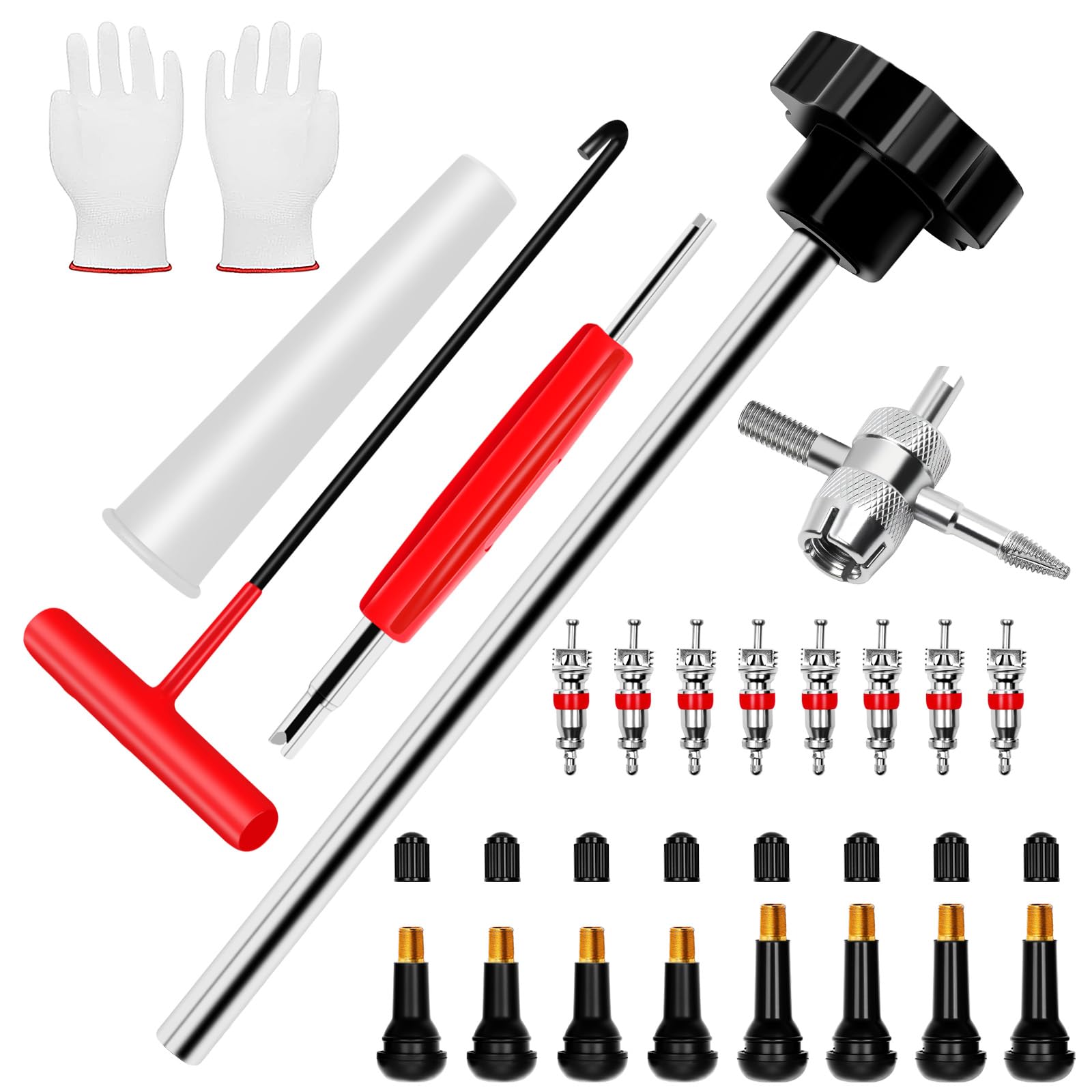
A compact kit for standard TR413 and TR414 snap-in valve stems, with installation, pulling, core-service, and thread-cleaning tools plus replacement parts.
Best for occasional DIY use
View Product on Amazon →What Is the DikTalk 22PCS Tire Valve Stem Tool Kit?
This is a compact automotive service kit for removing valve cores, pulling damaged rubber snap-in stems, and installing replacement TR413 or TR414 stems. The package includes four stems in each size, eight spare cores, five main tool pieces, gloves, and a manual. Its small 8.74 × 3.46 × 1.77-inch package is easy to store in a garage cabinet, trailer toolbox, or vehicle emergency bin.
The kit focuses on common 0.453-inch rim holes found on many passenger vehicles, SUVs, ATVs, trailers, and lawn equipment. It does not cover every wheel or valve design. Direct TPMS valves have an electronic sensor mounted at or near the valve, so they need TPMS-compatible service parts and procedures rather than this standard snap-in kit.
Before You Buy: Confirm that your wheel uses a standard 11.3 mm (0.453-inch) rubber snap-in valve. This kit is not compatible with 5/8-inch holes or TPMS-equipped valve stems, and it will not repair tread punctures, sidewall damage, bent wheels, or bead leaks.
Who Should Buy It?
Best For
- DIY drivers who already know their wheel uses TR413 or TR414 snap-in stems
- Owners maintaining non-TPMS ATVs, trailers, lawn equipment, or older vehicles
- Occasional users who want cores, stems, pullers, and installers in one portable set
Skip If
- Your vehicle has direct TPMS sensors integrated with the valve stem
- Your wheel uses a 5/8-inch hole, clamp-in valve, high-pressure stem, or commercial-truck valve
- You need heavy-duty tools for daily professional tire service
[Products Worth Considering]
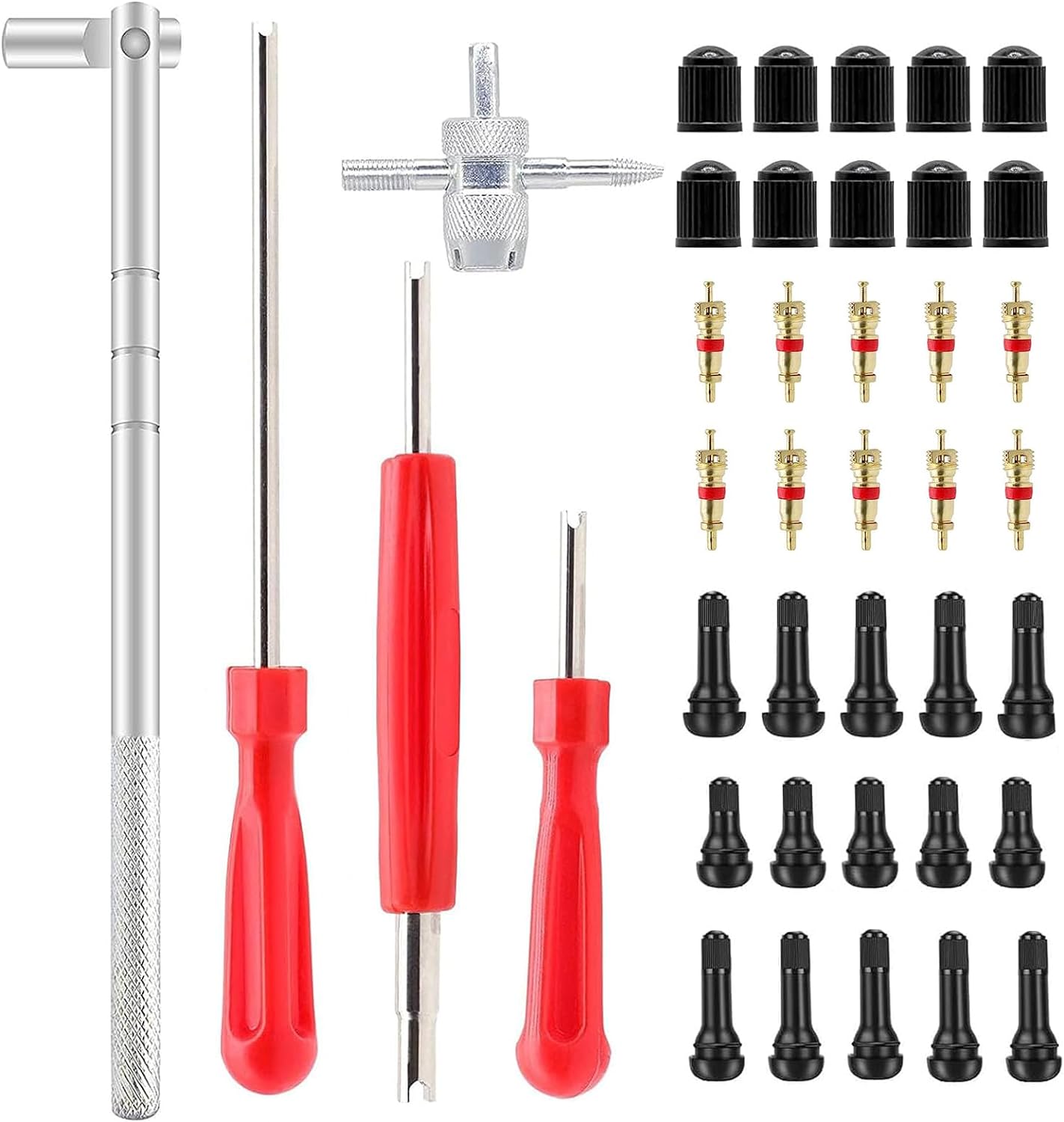
This ZHSMS valve stem puller and installer tool set makes it easy to remove and install tire valve stems without damaging wheels or valves. It uses a leverage design to save effort and includes valve stem tools plus removable valve core functionality for quick tire repairs. Compatible with tubeless tires for passenger cars, motorcycles, ATVs, off-road vehicles, and trucks.

This Dr.Roc tire valve stem puller tools set helps install or remove snap-in tubeless valve stems safely and efficiently. It includes ozone-resistant EPDM snap-in valve stems, a valve stem installer, and a valve core remover for quick core removal or installation during tire service. Designed for reliable tubeless tire repair on motorcycles, ATVs, lawn equipment, cars, and trucks.

This multi-function tire valve stem removal tool set makes it fast to remove, install, bleed, and clean valve cores for easier tire maintenance. It includes valve core removers, a 4-way spool tool, replacement valve caps, and spare cores to handle replacements and repairs with confidence. Universal compatibility suits cars, trucks, motorcycles, bicycles, and more for roadside convenience.
Fit and Compatibility
Fit is the most important buying factor. The Amazon listing identifies 11.3 mm (0.453-inch) rim holes and standard TR413/TR414 Schrader-style snap-in stems. An official Dill Air Controls valve chart lists TR413 and TR414 as 0.453-inch snap-in valves, with effective lengths of 1.25 inches and 1.50 inches. The length difference lets you choose the reach that suits your wheel, wheel cover, and access needs.
Do not choose by vehicle type alone. Cars, trucks, trailers, and ATVs can use different valve-hole diameters, pressure ratings, and TPMS designs. Check the existing stem, wheel specification, service manual, or a tire professional before removing anything.
Included Tools and Build Quality
T-Handle Puller and Removal Tool
The T-handle gives you leverage for drawing a rubber snap-in stem into the rim or removing a damaged stem, depending on the tool and method used. The larger handle is easier to control than gripping a stem with pliers, but it still requires steady force and correct alignment. Excessive pulling can damage the stem, scratch the wheel, or break a lighter-duty tool.
Push Rod and Tapered Positioning Tube
The push rod and plastic guide tube are designed to help align a replacement stem with the valve hole. This can make the process quicker when access is limited, but it does not remove the need to verify that the old stem and all loose rubber have been cleared. A small amount of approved tire-mounting lubricant helps the rubber seat without forcing it dry.
Dual-Head and 4-Way Valve Tools
The dual-head remover handles basic core removal and installation. The 4-way tool adds functions for cleaning or chasing internal and external valve threads. These tools are useful for diagnosis because a loose or damaged core can cause a slow leak even when the outer rubber stem looks fine.
Replacement Stems, Cores, Gloves, and Manual
You receive four TR413 stems, four TR414 stems, and eight standard cores, so the kit supports several small jobs rather than one repair. The seller also lists a pair of gloves and a user manual. The gloves are suitable as basic hand protection, but the original buyer-feedback summary notes that their grip may feel light for forceful pulling, so better-fitting mechanic gloves may be more practical.
How It Performs in Real Use
For a Leaking Valve Core
This is the simplest job in the kit. After safely releasing tire pressure as required for the repair, the dual-head or 4-way tool can remove the old core and install a replacement. If the leak stops after the new core is seated and tested, you may avoid replacing the entire rubber stem.
For a Cracked Rubber Snap-In Stem
The puller, push rod, and guide tube cover the main steps needed for a compatible TR413 or TR414 replacement. The job takes more care than a core swap because the old rubber must be removed and the new stem must seat evenly in the rim hole. If the wheel has corrosion, sharp edges, or an uncertain hole size, stop and use a tire shop.
For Trailer, ATV, and Lawn-Equipment Maintenance
The compact kit is useful for equipment that often uses standard non-TPMS Schrader valves. Keeping spare cores and both stem lengths nearby can reduce downtime during seasonal maintenance. Compatibility still depends on the actual rim hole and inflation requirements, not the equipment label alone.
For Roadside Preparedness
The kit is portable, but a full stem replacement is not always a safe roadside task. It is better suited to diagnosis, valve-core service, or a controlled repair after the vehicle is parked securely. For a damaged tire, bent rim, bead leak, or TPMS fault, use roadside assistance or a qualified tire technician.
What People Say
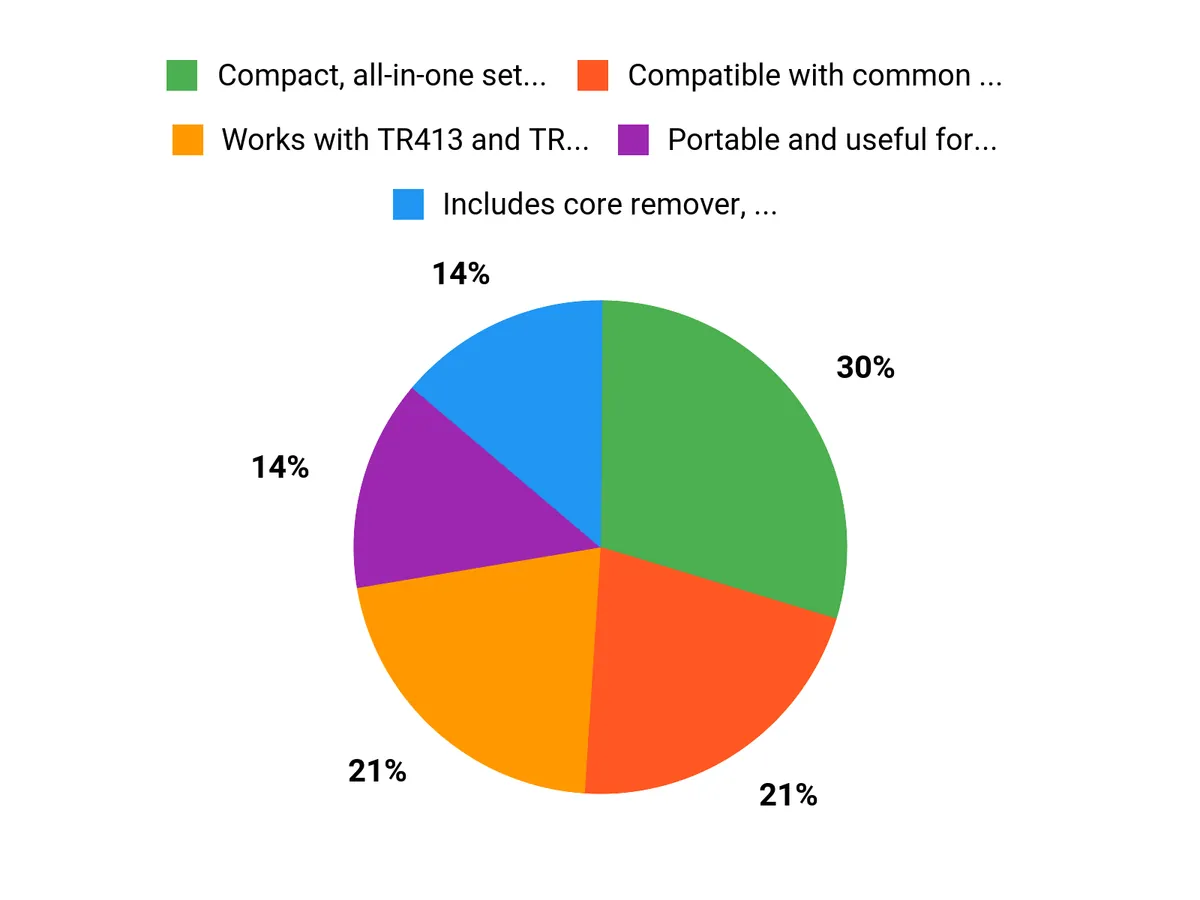
Buyer feedback summarized for this review trends positive on completeness, portability, and common TR413/TR414 coverage. Users tend to value having the core tools and replacement parts together instead of buying them separately. The main cautions are the learning curve, light-duty gloves, and reports that some pieces may not tolerate repeated heavy force.
Overall Sentiment: Positive, with durability and technique caveats

Pros and Cons
Pros
- Includes four TR413 stems, four TR414 stems, and eight replacement cores
- Combines pulling, installation, core-service, and thread-cleaning tools
- Compact 14.9-ounce kit is easy to store or carry
- Useful for several non-TPMS vehicle and equipment categories
- Seller lists both gloves and a user manual in the package
Cons
- Not compatible with direct TPMS valves or 5/8-inch valve holes
- Installation technique may take practice, especially with the puller and guide tube
- Better suited to occasional DIY work than repeated professional use
How to Use It Correctly
- Identify the valve: Confirm a standard non-TPMS rubber snap-in stem and a 0.453-inch rim hole before selecting TR413 or TR414.
- Secure the vehicle or wheel: Work on a flat surface, follow the vehicle manual, and use proper lifting and support equipment when wheel removal is required.
- Release pressure safely: Fully deflate the tire before removing a stem. Keep your face and hands away from the valve path as air escapes.
- Remove the failed part: Use controlled pressure with the core tool or puller. Clear any rubber left in the rim hole without gouging the wheel.
- Lubricate and align: Apply a small amount of approved rubber-safe tire-mounting lubricant to the new stem, align it through the guide, and pull or push it into place without twisting excessively.
- Test the repair: Reinstall the core, inflate to the vehicle placard pressure, and check the valve and rim area with leak-detection solution. Recheck pressure after the tire has sat.
Pro Tip: Compare the exposed length of the old valve with TR413 and TR414 before installation. The longer TR414 may improve access on some wheels, but extra length is not automatically better if it interferes with a wheel cover or sits where it can be struck.
Compatibility and Safety
Direct TPMS systems often place a battery-powered sensor inside the wheel and connect it to the valve. The product listing specifically excludes TPMS-equipped tires, so do not pull or cut a valve until you know what is behind it. You can review Continental’s TPMS overview for a clear explanation of direct wheel sensors.
Do not assume every rubber snap-in valve has the same pressure rating. Industry valve charts list standard TR413 and TR414 designs for defined hole sizes and pressure limits, but the Amazon listing does not state a pressure rating for the included stems. Confirm the stem rating against your tire pressure, load, wheel, and vehicle requirements, especially for trailers, heavy loads, or high-pressure applications.
Stop the repair if the rim hole is corroded, enlarged, cracked, sharp, or the tire will not hold pressure after the valve is serviced. A valve tool kit cannot correct structural wheel damage or an unsafe tire.
Why People Choose This Kit
The main reason to choose this set is convenience. It puts two common snap-in stem lengths, spare cores, a puller, guide tube, push rod, and core tools into one small package. That mix is more useful than a single valve-core screwdriver when the outer rubber stem is the part that has failed.
The tradeoff is specialization. You gain an organized kit for common 0.453-inch non-TPMS valves, but you do not get support for every valve diameter, high-pressure application, or electronic sensor design.
Is It Worth the Price?
This kit sits in the budget DIY category and offers strong value when you expect to service more than one compatible valve. Buying stems, cores, a puller, and a 4-way tool separately can be less convenient, while this package gives you multiple replacement parts in one place.
The best value goes to drivers and equipment owners who can verify TR413/TR414 fit and will use the tools occasionally. It is not the best fit for a commercial shop, a TPMS-heavy vehicle fleet, or anyone who would need to buy additional high-pressure or clamp-in stems immediately.
[Products Worth Considering]
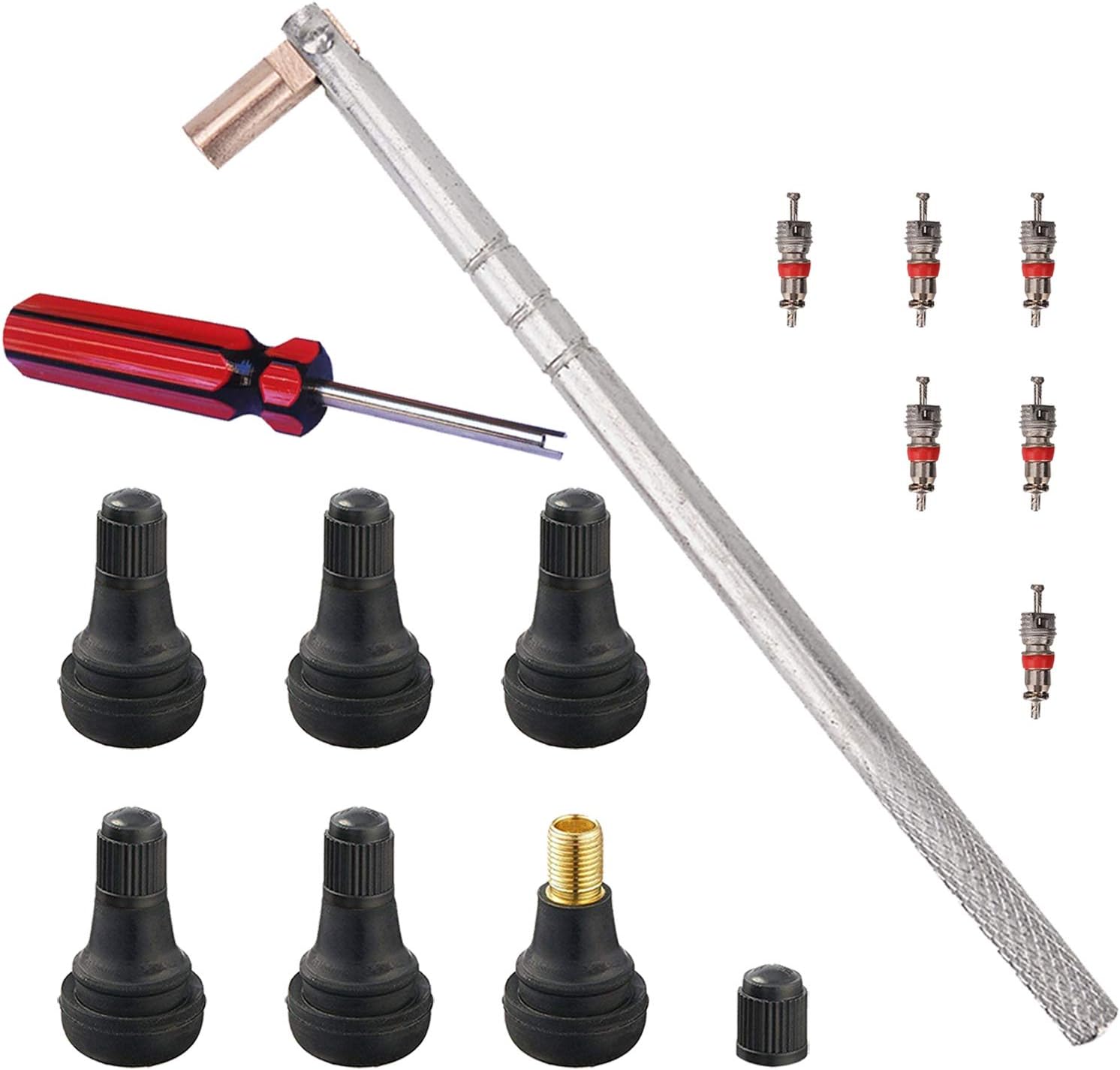
This FEBRYTOLD tire valve stem tool set makes it easy to remove and install standard 0.453 inch snap-in valve stems for tubeless tires. It includes valve stem cores and a single-head valve core remover/installer tool to help you complete repairs quickly. Designed to help avoid scratching wheels and damaging valve stems during service.

This 100-piece set of snap-in tubeless tire valve stems is designed for standard 0.453 in (11.5 mm) rim holes and helps maintain reliable, steady tire pressure. Made with ozone-resistant rubber and brass cores, the valves are built for durability and long-term use. Easy to install by hand, they support safe driving and are suitable for cars, light trucks, trailers, and more.
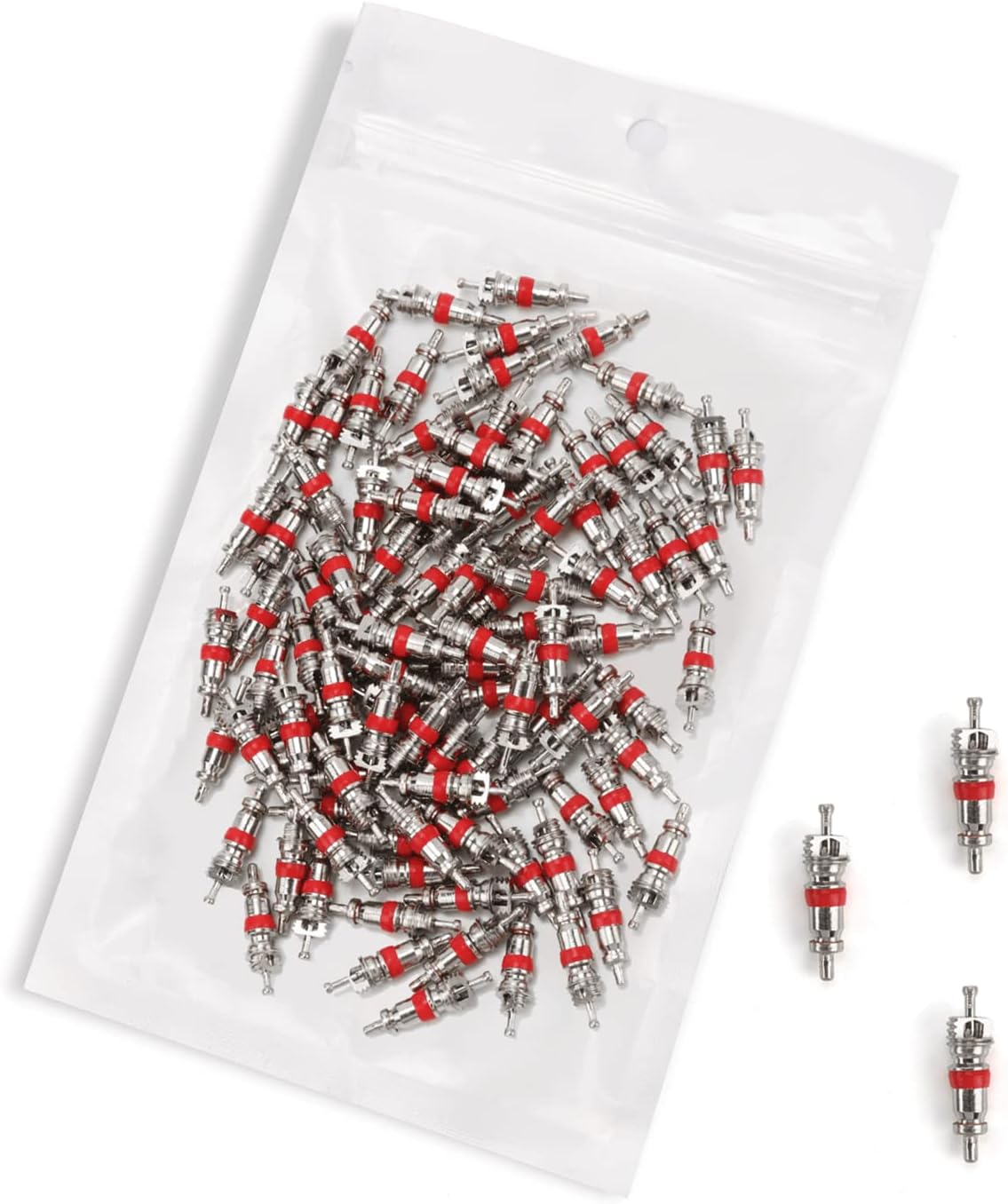
Replace worn Schrader valve cores with durable, nickel-plated replacements designed to resist rust and corrosion for a longer service life. Each core is 100% leakage tested and rated for up to 300 PSI, helping maintain a safe, reliable tire pressure system. Universal fit makes them suitable for cars, RVs, ATVs, motorcycles, bicycles, and many refrigeration/air conditioning applications.
How It Compares to Alternatives
Larger Riseuvo, FullMayPro, and Lettry kits are worth comparing if you want extra stem sizes such as TR412 or TR418, more replacement pieces, or a broader tool assortment. A dedicated professional stem puller may also provide better leverage and durability for repeated shop work.
The DikTalk kit makes the most sense when you want a lighter 22-piece package centered on TR413 and TR414 stems, not the largest possible collection. Its advantage is compact completeness, while its limitation is narrower compatibility.
[Products Worth Considering]

Keep your tires performing with these valve core removal tools designed to quickly disassemble and reinstall standard valve cores. The compact, portable design makes it easy to carry for bicycle, motorcycle, car, or truck repairs. Durable stainless steel construction helps you handle routine tire maintenance with less hassle.

This 4-in-1 tire valve core removal tool helps you deflate, unblock, and remove or install valve cores quickly for easier tire repair. The multifunction design also supports re-taping damaged threads and reaming inside the valve stem for smoother service. Included as a 2-pack, it’s compact for convenient carry and works for cars, bicycles, and motorcycles.

Protect tire valves from water, dust, and sand to help prevent leaks and support safe driving. These universal stem caps install quickly by hand and feature durable aluminum alloy construction with an inner sealing ring for better air retention. Compatible with cars, SUVs, trucks, motorcycles, and bicycles for everyday convenience.
Frequently Asked Questions
Will this kit fit my car, truck, trailer, or ATV?
It can fit many vehicles and pieces of equipment that use standard TR413 or TR414 rubber snap-in valves in an 11.3 mm (0.453-inch) rim hole. Verify the actual wheel and valve type because vehicle category alone does not confirm compatibility.
Can I use it on a TPMS valve stem?
No. The listing specifically states that the kit is not compatible with TPMS-equipped tires. A direct TPMS valve may be attached to an electronic sensor inside the wheel, and pulling it with a standard stem tool can damage the sensor.
What is the difference between TR413 and TR414?
Both are standard snap-in valve types for 0.453-inch holes. Industry charts list TR413 with a 1.25-inch effective length and TR414 with a 1.50-inch effective length, so the main difference is exposed reach.
Can this kit repair any slow tire leak?
No. It can help when the leak comes from a loose valve core or a failed compatible rubber stem. It cannot repair a tread puncture, sidewall damage, bead leak, cracked wheel, or corrosion around the rim hole.
Do I need to remove the tire from the wheel?
A valve-core replacement does not require tire removal. A full stem replacement depends on the tool method, access, tire condition, and wheel design, so follow the included manual and use a tire professional when you cannot inspect or seat the stem safely.
What lubricant should I use on a new valve stem?
Use a small amount of tire-mounting lubricant or another product specifically approved for rubber tire service. Avoid petroleum grease or harsh chemicals that may attack rubber or make controlled handling more difficult.
Does the kit include instructions?
Yes. The current Amazon product description lists one user manual in the package. Review it before using the puller or guide tube because correct alignment and controlled force matter more than speed.
Is this suitable for professional tire shops?
It is better positioned as an occasional DIY or backup kit. Shops that service many wheel types will likely need stronger pullers, torque-controlled TPMS tools, high-pressure stems, and a wider range of valve sizes.
The Bottom Line
The DikTalk 22PCS Tire Valve Stem Tool Kit is a practical buy for occasional DIY users who need a compact set for standard TR413 and TR414 snap-in valves. Its strength is the useful mix of stems, cores, and service tools, while its main limitation is strict compatibility with non-TPMS 0.453-inch applications. Skip it if you need a high-pressure, clamp-in, 5/8-inch, TPMS, or professional-duty solution.
Ready to Buy?
Check the latest price, package contents, and compatibility details before you decide.
