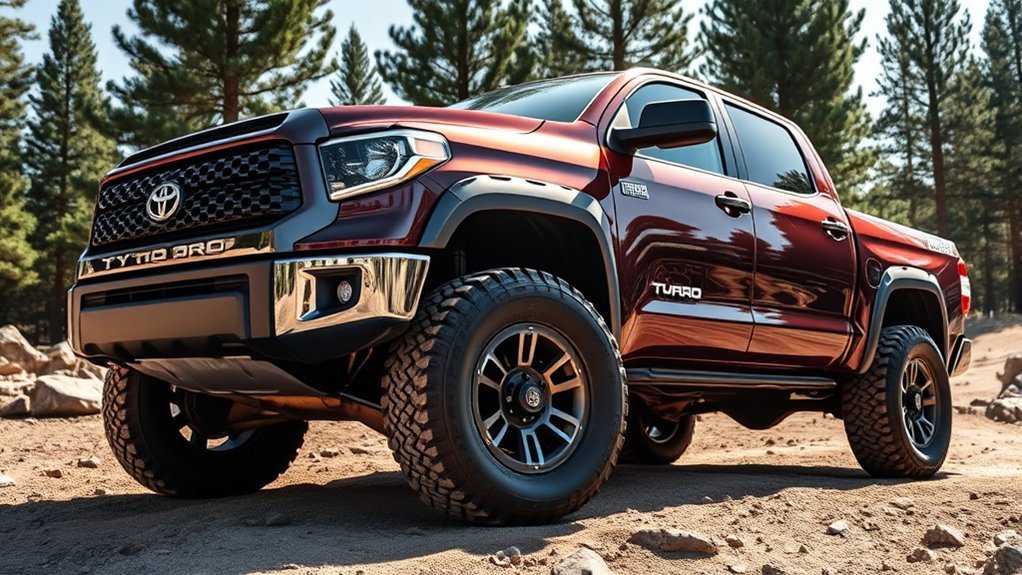
The stock tire size for a current Toyota Tundra TRD Pro is one of the first specs to confirm before buying replacement tires, upsizing for trail use, or changing wheels. For the 2026 Tundra TRD Pro, the factory-style fitment is 285/65R18 116T on 18-inch forged BBS wheels with Falken WILDPEAK all-terrain tires. Older TRD Pro model years can differ, so always confirm your exact truck by checking the driver-door tire placard, owner information, or VIN-based parts lookup.
Quick Answer
For a current third-generation Toyota Tundra TRD Pro, the stock tire size is 285/65R18 116T, which is about 32.6 inches tall. Mild 33-inch upgrades may work, but fitment depends on tire width, wheel offset, suspension height, mud flaps, alignment, and the load rating of the replacement tire.
Key Takeaways
- The current Tundra TRD Pro baseline is 285/65R18, not 275/65R18.
- Use the driver-door tire placard for cold tire pressure; do not use a universal 40 psi rule.
- Diameter is only one part of fitment. Width, wheel offset, brake clearance, and suspension travel decide whether a tire rubs.
- Keep the replacement tire’s load index and speed rating equal to or higher than the original specification whenever possible.
- After changing tire size, check clearance, alignment, TPMS registration, and speedometer error.
Understanding the Stock Tire Size for the TRD Pro
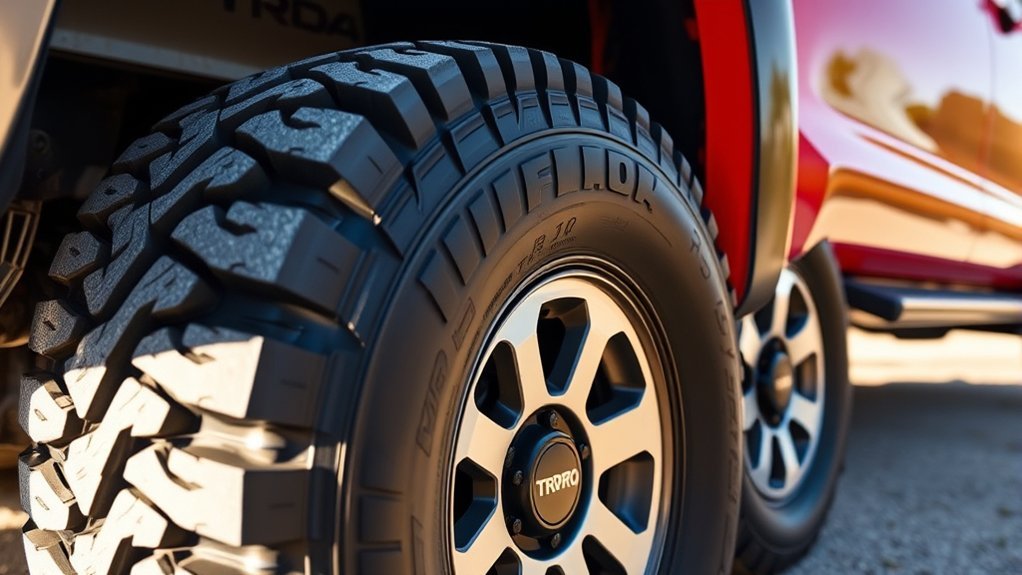
For the current Tundra TRD Pro, the key number to know is 285/65R18. In plain English, that means the tire is 285 millimeters wide, the sidewall height is 65% of the tire width, and it fits an 18-inch wheel. That size works out to roughly 32.6 inches in overall diameter.
Toyota lists the 2026 Tundra TRD Pro with 18-inch BBS forged-aluminum wheels with Falken WILDPEAK all-terrain tires. Tire selectors for the 2026 Tundra TRD Pro identify the matching replacement fitment as 285/65R18 116T.
Note: If your TRD Pro is an older generation, do not assume the 2026 size applies. Some earlier Tundra TRD Pro models used different factory sizes, including 275/65R18. Check the tire placard on your truck before ordering.
Why Tire Size Matters for Your Tundra’s Performance
Tire size affects more than looks. It changes ride height, gearing feel, steering weight, braking behavior, speedometer accuracy, fuel economy, and how much room the tire has inside the wheel well. A slightly taller tire can improve ground clearance, but a wider tire can rub even when the diameter looks reasonable on paper.
The most important fitment checks are:
- Overall diameter: Taller tires change speedometer readings and effective gearing.
- Section width: Wider tires are more likely to touch the upper control arm, mud flap, or fender liner.
- Wheel offset: More negative offset pushes the tire outward and can increase fender or mud-flap rubbing.
- Load rating: A truck tire should meet or exceed the original load capacity.
- Rim width range: The tire must be approved for the wheel width you plan to use.
Plus sizing can work well when the overall diameter stays close to original and the new tire/wheel package maintains the truck’s load-carrying capacity. Discount Tire’s plus-sizing guidance explains that keeping the overall diameter close to stock helps preserve gearing, speedometer accuracy, and proper fit.
Best Tire Sizes for TRD Pro: No Modifications Required?
The safest no-drama replacement is the stock size: 285/65R18. It keeps the truck close to Toyota’s intended ride, gearing, braking, and clearance. If you want a little more tire without jumping into heavy trimming or lift-kit territory, look at sizes near 33 inches first.
| Tire Size | Approx. Diameter | Fitment Notes |
|---|---|---|
| 285/65R18 | 32.6 in. | Best stock replacement size for current TRD Pro fitment. |
| 275/70R18 | 33.2 in. | Slightly taller and narrower than stock; usually easier than a wide 12.50-inch tire, but still check clearance. |
| 295/65R18 | 33.1 in. | Common mild upsize, but the extra width can rub depending on tire brand and wheel offset. |
| 285/70R18 | 33.7 in. | More likely to need mud-flap, liner, alignment, or suspension help. |
| 35×12.50R18 / 35×12.50R20 | 35.0 in. | Not a simple stock-size swap. Expect lift, trimming, offset planning, and possible body-mount or liner work. |
Warning: “Fits” does not only mean the tire bolts on while parked. Test clearance at full steering lock, during suspension compression, in reverse, and with mud flaps installed before assuming the setup is trail-ready.
[Products Worth Considering]

Adam’s Pro Tire Hex Grip applicators are molded foam sponges designed for precise, even tire dressing application. The ergonomic grip helps you spread product without overapplying, reducing sling that can splash onto paint and helping keep your hands clean during wheel and trim detailing. They’re durable, washable, and reusable for repeated detailing sessions.

These universal tire valve stem caps help protect valve cores from dust, debris, and moisture while helping maintain stable tire pressure. The corrosion-resistant metal construction and sealed design provide reliable protection in road grime, mud, and winter conditions. Twist-on installation makes them quick to fit on cars, SUVs, trucks, and motorcycles.

These aluminum alloy tire valve stem caps with an O-ring seal help protect valve stems from corrosion while adding a clean, stylish look to your vehicle. The universal fit works across cars, trucks, motorcycles, bicycles, and more, making them an easy upgrade for everyday driving and off-road use. Installation is quick, and the included four-pack keeps all your tires dressed and protected.
Lift Kits and Leveling: Enhancing Tire Size Compatibility
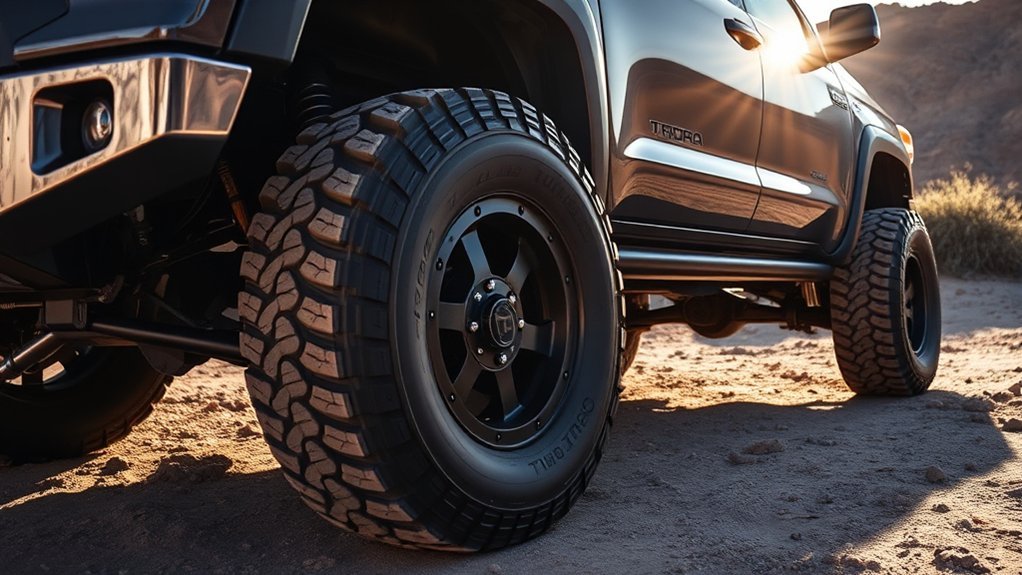
A leveling kit or lift kit can create more vertical clearance, but it does not automatically solve every rubbing issue. On the Tundra, wider tires often rub at the mud flaps, front fender liner, cab-side liner area, or upper control arm. Wheel offset can matter as much as lift height.
For mild 33-inch setups, many owners start with careful alignment and minor liner or mud-flap adjustments. For 35-inch tires, plan for more work: lift height, wheel offset, caster adjustment, trimming, and possibly aftermarket upper control arms. For 37-inch tires, the truck usually moves into custom-fitment territory with significant cutting and suspension planning.
Pro Tip: Choose the tire first, then confirm the wheel width, offset, and rim-width range. A tall, narrow tire often fits more easily than a shorter tire with a much wider section width.
[Products Worth Considering]

TIRESHIELD PRO RV tire covers in a set of four deliver year-round protection against UV rays, cracking, fading, water, and snow. The StormLock-System helps keep the covers securely fastened through high wind, while heavy-duty, double-stitched construction supports long-lasting performance. Designed for universal fit, they’re intended for RV, camper, truck, car, and trailer tires within the 26–28.75 inch diameter range, with easy wipe-clean care and storage in the included bag.

Keep your tires properly inflated with this analog VONDIOR tire pressure gauge, designed for fast, easy readings without batteries. The swiveling, two-axis hose and large glow dial help you measure at any tire angle with instant visibility. Built with a protective rubber shield, it supports durable, low-maintenance use for cars and trucks.

Vigorder rubber cement glue delivers superior adhesion and cures quickly within about 30 seconds for seamless rubber bonding. Once cured, it helps provide a strong, durable, waterproof seal that holds up to vehicle weight, pressure, and heat. Suitable for cars, motorcycles, trucks, bicycles, and off-road tires, it’s designed for emergency patch and maintenance repairs.
Addressing Rubbing Issues: Solutions and Best Tires
Rubbing is usually caused by a combination of tire width, tire diameter, wheel offset, caster, and suspension movement. Two tires with the same printed size can also measure differently by brand and model, so always check the manufacturer’s actual overall diameter, section width, and approved rim-width range.
Common Rubbing Areas
| Rubbing Area | Likely Cause | Common Fix |
|---|---|---|
| Front mud flaps | Taller or wider tire at steering lock | Remove, trim, or replace with low-profile flaps. |
| Fender liner | Diameter and caster position | Heat-form or trim liner; adjust caster during alignment. |
| Upper control arm | Tire too wide or wheel offset too high | Change offset carefully or use a narrower tire; avoid unsafe spacer shortcuts. |
| Cab/body mount area | Large 35-inch-plus setups | Professional trimming or body-mount modification where appropriate. |
Tire Size Recommendations
For a current TRD Pro owner who wants the least risk, stay with 285/65R18. For a modest upgrade, a roughly 33-inch tire such as 275/70R18 or 295/65R18 is usually a better starting point than a wide 12.50-inch tire. If you want 35s, budget for fitment work instead of assuming a bolt-on result.
If you are considering 33×12.50R17, remember that the stock TRD Pro wheel is 18 inches. A 17-inch wheel must clear the brakes, match the 6×139.7 bolt pattern, have the right hub bore or hub-centric rings, and use a safe offset and load rating. Do not buy 17-inch wheels until the seller confirms brake clearance for your exact Tundra.
Suspension Modifications Needed
Suspension changes become more important as you move beyond mild 33-inch tires. A level can help the front stance and clearance, but alignment is still critical. More caster can move the tire away from the rear of the fender liner, while the wrong wheel offset can create a new rubbing point.
After installing larger tires, schedule an alignment and inspect the truck after the first few drives. Look for polished plastic, shiny metal, sliced tire lugs, or loose liner clips. Those signs mean the tire is contacting something under real driving conditions.
Best Tires for Toyota Tundra TRD Pro: Off-Road vs. On-Road
The best tire for a Tundra TRD Pro depends on how you actually drive. A heavier, aggressive tire may look great, but it can reduce acceleration, braking feel, fuel economy, and ride comfort. A highway tire may ride quietly but give up trail grip and sidewall protection.
[Products Worth Considering]

Upgrade your Toyota’s wheels with durable aluminum alloy valve stem caps that help protect valve cores from corrosion and direct exposure to road grime, clay, water, and snow. Rubber rings improve sealing to help prevent air leakage and maintain stable tire pressure for safer driving. These caps are easy to install or remove without tools and add a unique, stylish look to your car.

Upgrade your 2024-2026 Tesla Model 3 Highland with REEVAA all-weather mud flaps designed for seamless fit along the original body lines. The set of four delivers strong splash protection against mud, gravel, and road debris while using OEM-grade durable materials. Installation is non-destructive with original hole positions and snap-in clips, and the aerodynamic design helps minimize impact on efficiency.
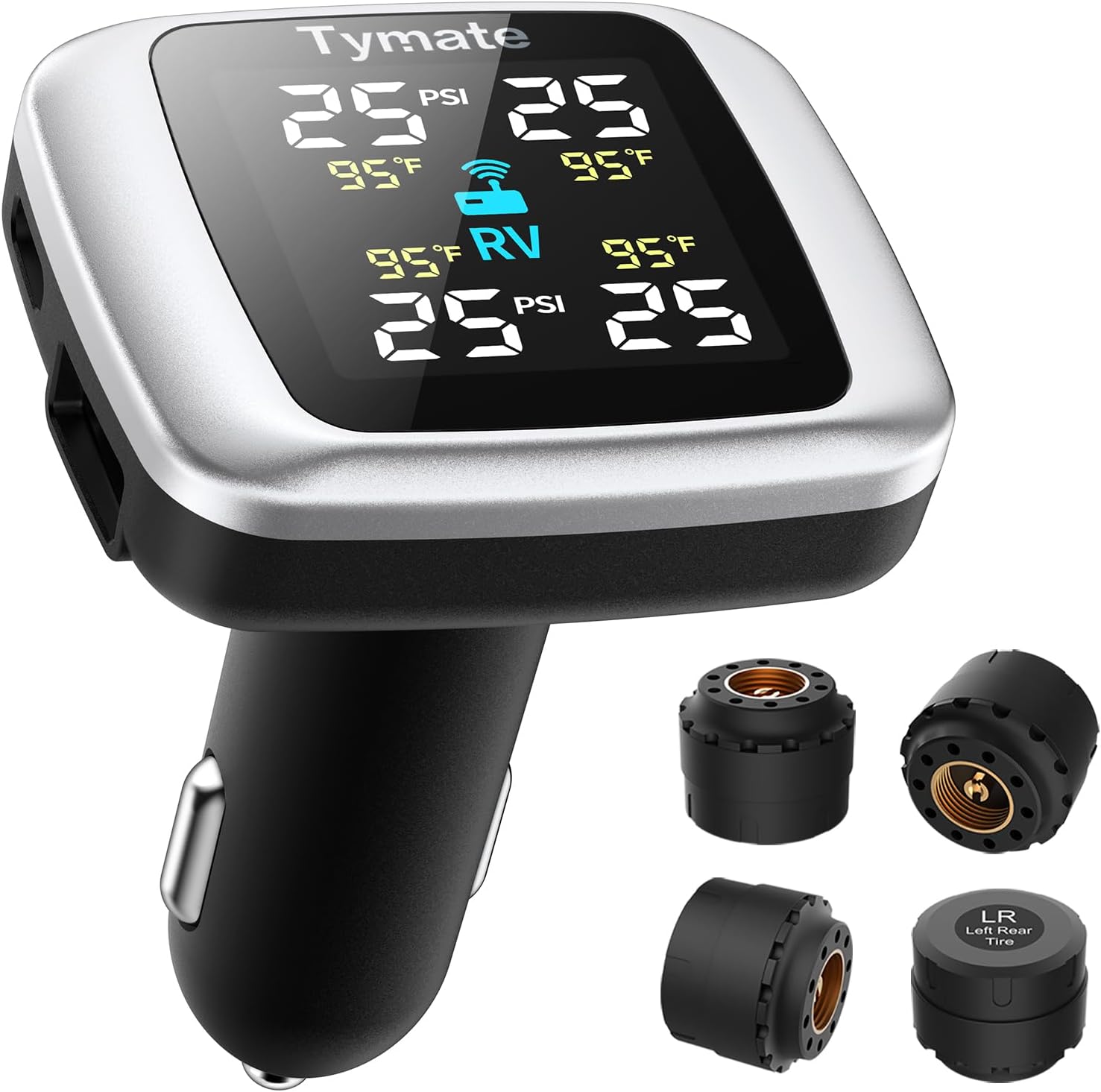
Tymate TM7 is a wireless tire pressure monitoring system that delivers real-time pressure and temperature readings for safer driving. It includes four external sensors, a bright color LCD display with adjustable backlight, and six alarm modes for high/low pressure, fast leakage, high temperature, and sensor signal or battery issues. The system covers a wide 0–144 PSI range and plugs into your vehicle’s cigarette lighter socket for quick DIY setup.
Off-Road Tire Performance
For mixed trail and daily driving, an all-terrain tire is the most balanced choice. The Falken Wildpeak A/T4W in 285/65R18 116T is one current example of an all-terrain/all-weather tire in the stock-style size. Its listing shows a 32.6-inch overall diameter, 8.0- to 10.0-inch approved rim-width range, and 116T service description.
For more rock, mud, or overland use, rugged-terrain tires such as Toyo Open Country R/T Trail, Nitto Recon Grappler A/T, or similar hybrid tires can add tread depth and sidewall toughness. The tradeoff is usually more weight, more road noise, and a firmer ride.
On-Road Comfort Factors
If your Tundra spends most of its time commuting, towing on pavement, or road-tripping, a highway all-season or lighter all-terrain can be the smarter choice. Look for a tire that matches the original load rating, has strong wet braking reviews, and does not add unnecessary unsprung weight.
LT tires can be useful for heavy loads, towing, and harsher terrain, but they are often heavier and may require different inflation guidance than the original SL-rated tire. When changing from SL to LT, ask a tire professional to set pressure using load-inflation data rather than guessing.
Size Compatibility Considerations
The current TRD Pro BBS replacement wheel for 2022–2026 Tundra is listed by a Toyota dealer parts catalog as an 18×8 forged BBS wheel with a 6×139.7 mm bolt pattern and 47.5 mm offset. That is very different from saying the truck has a zero-offset wheel. If you change wheels, verify the exact part number, offset, width, hub bore, and load rating before ordering.
Note: A tire that fits on one owner’s Tundra may rub on another because alignment, bumper weight, mud flaps, wheel offset, tire model, and suspension height can all differ.
Choosing the Right Tire Type for Your Needs
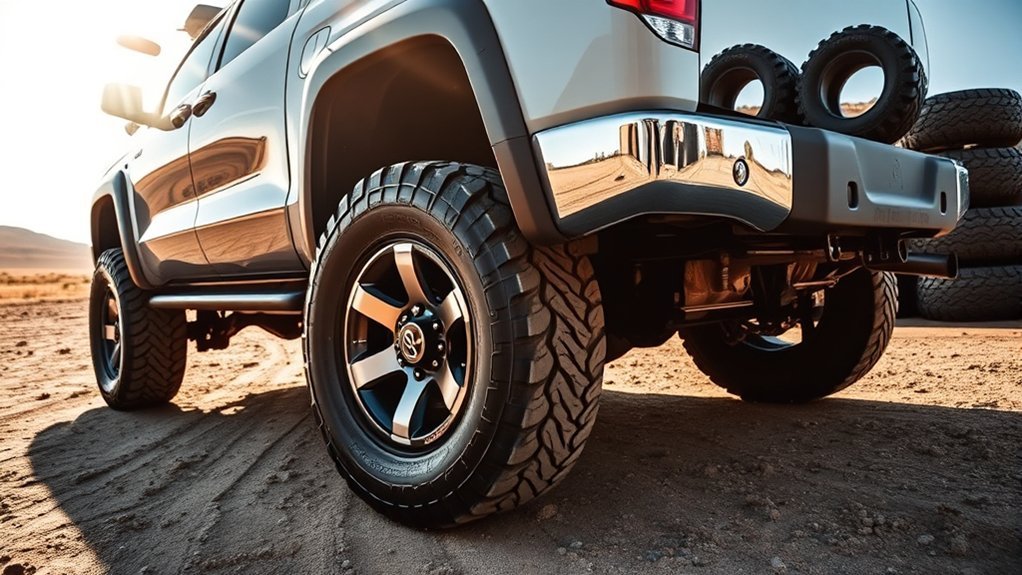
Choose the tire type before you choose the most aggressive size. A stock-size all-terrain can outperform an oversized tire if it better matches your driving, terrain, and load. Use this simple breakdown:
- All-terrain tires: Best for daily driving, gravel, camping, light snow, and moderate trails.
- Rugged-terrain tires: More aggressive tread and sidewalls for trail use, with more road noise than most all-terrains.
- Mud-terrain tires: Best for mud and rocks, but louder and less refined on highways.
- Highway all-season tires: Best for quiet ride, tread life, and pavement-focused towing.
- Dedicated winter tires: Best for severe snow and ice, even when an all-terrain carries a winter symbol.
If your goal is better off-road traction without hurting everyday comfort, start with a high-quality all-terrain in the stock 285/65R18 size. If your goal is maximum visual stance, understand that width and offset will create most of the fitment challenges.
Key Considerations for Choosing Aftermarket Tires for the Tundra
Before buying aftermarket tires for your Tundra TRD Pro, confirm these items:
- Size: Compare diameter, width, and revolutions per mile against 285/65R18.
- Load index: Match or exceed the OE 116 load index unless a qualified tire professional confirms otherwise.
- Speed rating: Match or exceed the OE rating when possible.
- Rim width range: Make sure the tire is approved for your wheel width.
- Wheel offset: Avoid extreme offset changes unless you are prepared for trimming and added wear on components.
- Weight: Heavier tires can reduce braking feel, ride quality, and fuel economy.
- TPMS: Confirm the sensors are compatible and properly registered after tire or wheel changes.
Tire Compatibility Factors
Compatibility means the tire fits the wheel, clears the truck, supports the load, and works with the vehicle systems. A tire-size calculator can help estimate diameter and speedometer change, but it cannot see your mud flaps, aftermarket bumper, suspension travel, or control-arm clearance.
Performance and Handling Impact
A larger tire usually adds rotating weight. That can make the truck feel slower off the line and can increase braking distance. A more aggressive tread can improve dirt traction but may reduce wet-road grip, increase road noise, and wear faster if not rotated regularly.
The best Tundra TRD Pro tire upgrade is not always the largest tire. It is the largest tire that clears safely, keeps proper load capacity, and still matches how you drive.
How to Keep Your Tire Pressure Just Right
Do not use the tire sidewall maximum as your daily pressure target. The correct starting point is the cold tire pressure on your driver-door placard or certification label. The National Highway Traffic Safety Administration recommends measuring tire pressure when tires are cold and inflating to the pressure specified by the vehicle manufacturer.
- Check pressure at least once a month and before long trips.
- Check when the truck has been parked for at least three hours, when possible.
- Use a quality gauge instead of relying only on TPMS.
- Recheck pressure when outside temperatures change sharply.
- If you change tire size or load range, ask a tire professional to confirm the correct pressure.
After rotating tires or changing sensors, follow the Tundra TPMS procedure in the owner information. The 2026 Tundra manual guidance describes initializing the tire pressure warning system after rotation and driving until the system completes registration.
User Experiences: What Sizes Are Others Running?
Many Tundra TRD Pro owners stay with the stock 285/65R18 size because it preserves ride quality and avoids fitment headaches. Owners who want a slightly fuller wheel well often look at 33-inch options such as 275/70R18, 295/65R18, or similar sizes. The mixed reports usually come from differences in tire brand, offset, mud flaps, and alignment.
Owners chasing 35-inch tires usually report a more involved path: leveling or lift kit, careful wheel offset, trimming, and alignment changes. That does not mean 35s are a bad idea; it means they should be treated as a planned build, not a simple replacement tire purchase.
Frequently Asked Questions
What size tires are on a Toyota Tundra TRD Pro?
For the current third-generation Toyota Tundra TRD Pro, the stock tire size is 285/65R18 116T. This is about 32.6 inches tall. Older TRD Pro model years can use different sizes, so confirm your truck’s door placard before ordering.
What is the 3% tire rule?
The 3% tire rule is a common guideline that keeps the new tire’s overall diameter within about 3% of the original tire diameter. It helps limit speedometer, gearing, ABS, and traction-control changes. It is not a guarantee of physical clearance, especially with wider tires.
What offset do stock Tundra TRD Pro wheels have in 2026?
A Toyota dealer parts listing for the 2022–2026 Tundra TRD Pro BBS wheel describes an 18×8 forged wheel with a 6×139.7 mm bolt pattern and 47.5 mm offset. Always verify by VIN or wheel part number because Tundra wheels vary by trim and package.
Can I fit 35-inch tires on a Tundra TRD Pro without a lift?
Usually, no. Some trucks may physically mount 35s, but real-world driving commonly brings rubbing at the mud flaps, liner, cab-side area, or control arms. A proper 35-inch setup usually needs lift or leveling, trimming, alignment work, and careful wheel offset.
Should I run 40 psi in Tundra TRD Pro tires?
Not automatically. Use the cold tire pressure on the driver-door placard for your exact truck and tire size. If you change to a different load range, such as an LT tire, have a tire professional confirm the correct pressure using load-inflation data.
Is 275/65R18 wrong for every Tundra TRD Pro?
No. It may apply to some older Tundra TRD Pro model years, but it is not the correct current baseline for a 2026 Tundra TRD Pro. For current third-generation TRD Pro fitment, use 285/65R18 as the stock-size reference.
Conclusion
The current Toyota Tundra TRD Pro stock tire size is 285/65R18 116T, giving the truck a roughly 32.6-inch all-terrain setup from the factory. Staying with that size is the easiest way to preserve clearance, ride quality, load rating, and speedometer behavior. If you want to upsize, start with modest 33-inch options and confirm wheel offset, load index, rim-width range, tire pressure, alignment, and TPMS setup before driving hard. For 35-inch tires and larger, plan the upgrade as a full fitment project rather than a simple tire swap.
Sources
- Toyota 2026 Tundra — TRD Pro wheel/tire trim information and official current model context.
- Michelin 2026 Toyota Tundra TRD Pro tire fitment — 285/65R18 116T replacement-size reference.
- Discount Tire Falken Wildpeak A/T4W 285/65R18 — size, diameter, rim-width range, load index, and tire specifications.
- NHTSA TireWise — cold tire pressure and tire-safety guidance.
- Discount Tire Plus Sizing Guide — plus-sizing principles, load capacity, and overall diameter guidance.
- Toyota TRD Pro BBS wheel listing — 2022–2026 Tundra TRD Pro BBS wheel size, bolt pattern, and offset reference.