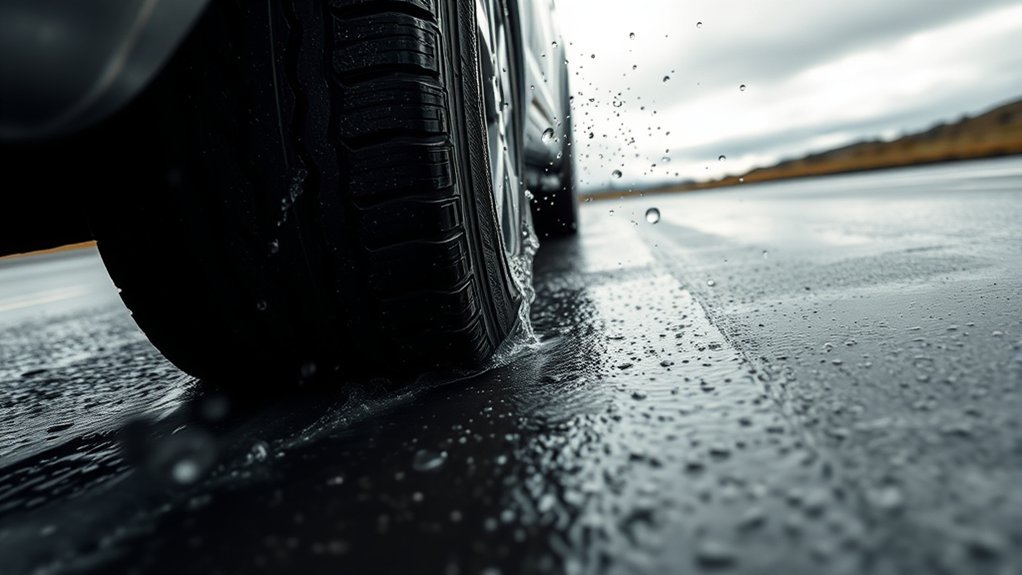
Your Toyota Tundra has plenty of weight and power, but wet-road grip still comes down to four basics: tire tread design, rubber compound, tread depth, and cold inflation pressure. The right tire helps move water out of the contact patch; the wrong, worn, or poorly inflated tire can make braking, cornering, and hydroplaning resistance much worse.
Quick Answer
Tires affect a Toyota Tundra’s wet-road grip by controlling how well the truck can bite into slick pavement and push water away. Deep grooves, useful siping, enough tread depth, wet-focused rubber compounds, and correct cold tire pressure all improve rain traction. Worn tread, poor inflation, overly wide tires, or aggressive mud-terrain patterns can reduce grip.
Key Takeaways
- For rain, tread depth and water evacuation matter as much as tire brand or tire size.
- Use the cold PSI listed on your Tundra’s tire information placard or Owner’s Manual, not a universal pressure number.
- Highway-terrain and wet-rated all-season tires often stop better on pavement than aggressive mud-terrain tires.
- A wider tire is not always safer in rain because it can be harder for the tread to clear water from the contact patch.
- Slow down, avoid cruise control, and leave extra room when roads are wet.
At a Glance
| Time Required | 5–10 minutes for a basic wet-weather tire check |
| Difficulty | Easy |
| Tools Needed | Tire pressure gauge, tread-depth gauge or quarter, flashlight, and your Tundra’s tire placard or Owner’s Manual |
| Cost | Usually $0–$15 if you already have basic tire-check tools |
How Tire Composition Affects Wet-Road Grip
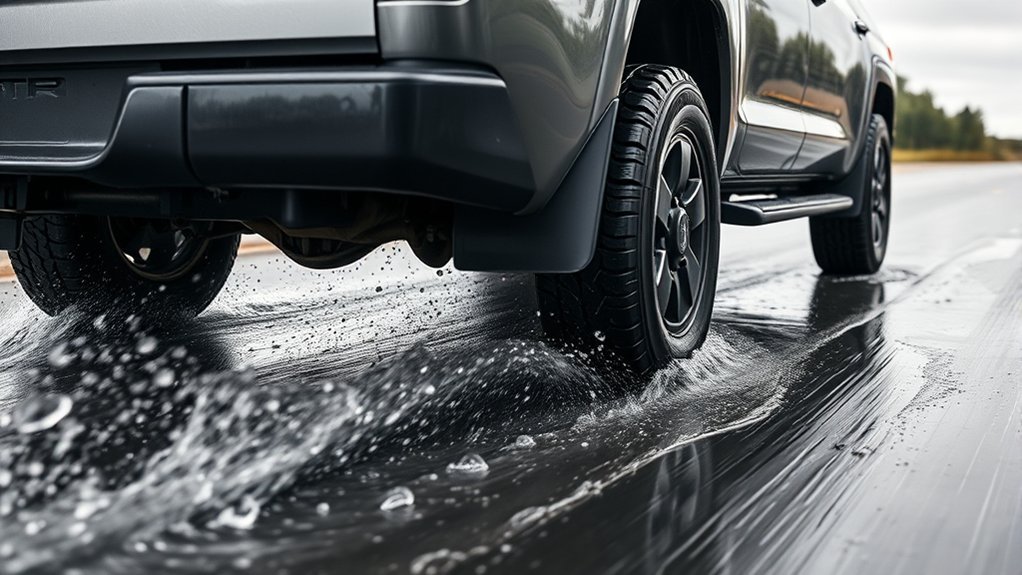
Tire composition affects how well your Toyota Tundra grips damp pavement, especially when the road is wet but not covered in deep standing water. A tire compound designed for strong wet traction can stay more flexible and bite into the road surface better than a hard, low-grip compound.
That does not mean “softest tire wins.” Wet performance is a balance. A tire also needs stable tread blocks, good heat control, proper load capacity, and enough tread depth. Tire Rack explains that tread compound has a major effect on wet traction in shallow water, while tread design has a bigger effect on hydroplaning resistance in deeper water and at higher speeds.
For a Tundra, this matters because the truck is heavy, powerful, and often used with different loads. A tire that feels acceptable on dry pavement can feel vague or slippery in rain if the compound is hard, the tread is worn, or the tire is designed mainly for mud and rock instead of wet pavement.
Note: “All-season” does not automatically mean excellent rain grip. Compare independent wet-braking tests, tread design, load rating, and user feedback from drivers with similar trucks before choosing a replacement tire.
The Impact of Tread Design on Wet Traction
Tread design controls how quickly a tire can move water out from under the contact patch. On wet pavement, the most helpful features are usually wide circumferential grooves, lateral channels, and sipes. These small cuts and channels help the tire keep rubber in contact with the road instead of riding on top of water.
For a Toyota Tundra, tread design becomes especially important because many owners choose all-terrain or larger aftermarket tires. Some all-terrain tires work well in rain, especially models with dense siping and strong wet-test results. Others use large, widely spaced tread blocks that are better for dirt, gravel, or mud than for wet pavement braking.
Mud-terrain tires are the biggest tradeoff. Their open tread can clear mud well, but the large tread voids and stiff blocks can reduce wet-road bite compared with a well-designed highway-terrain or all-season tire. If most of your driving is on pavement, wet braking and hydroplaning resistance should be higher priorities than an aggressive sidewall look.
Pro Tip: When comparing Tundra tires, do not judge wet grip by tread appearance alone. Look for wet-braking tests, siping density, circumferential grooves, load rating, and real-world rain reviews for the exact tire size you plan to buy.
[Products Worth Considering]

The SAFELIFE dial tire tread depth gauge measures tread depth in 1/32 inch increments with clear, easy-to-read 2-inch dial face. Color zones using a traffic light system help you quickly judge whether tread is low, marginal, or ample for safer driving. Built with a durable zinc cast body and a metal detect probe for precise, comfortable use across cars, motorcycles, trucks, and buses.

Monitor tire tread wear with a smart, color-coded depth gauge that shows clear condition ranges at a glance. The bar is range marked for fast, easy readings, helping you maintain safer traction and performance. Each gauge is portable with a pocket clip, and the set includes 20 units for daily use and sharing.

Measure tire tread depth quickly and accurately with this LUMITECO dial gauge that reads in 1/32" increments up to 14/32". The color-coded green/yellow/red zones make it easy to judge tire wear and know when replacement is needed. A rugged, compact design with a protective pouch helps keep the gauge ready for use on cars, trucks, motorcycles, and more.
How Tread Depth Changes Wet Braking and Hydroplaning Risk
Tread depth is one of the easiest wet-grip factors to overlook. A tire can still look usable in dry weather but lose a lot of rain performance as the grooves become shallow. Less groove depth means less room to move water away from the tread.
AAA testing found that tires worn to 4/32 inch increased wet stopping distance by 87 feet for a passenger car and 86 feet for a light truck compared with new tires. AAA also reported reduced handling ability with worn tires in wet conditions. That is why rain-focused tire replacement should happen before the tread reaches the legal minimum.
Worn tires can still roll, steer, and pass a quick glance test, but they may need much more room to stop on wet pavement.
A tread-depth gauge is the best tool. If you do not have one, the quarter test is a practical quick check: place a quarter upside down in the tread groove. If the top of Washington’s head is visible, start shopping for new tires for rainy driving. The penny test can help identify tires near 2/32 inch, but waiting until that point is a poor rain-safety strategy.
Warning: No tire can fully prevent hydroplaning. Deep water, worn tread, high speed, poor drainage, and sudden steering or braking can overwhelm even a high-quality tire.
[Products Worth Considering]

These universal tire valve stem caps help protect valve cores from dust, debris, and moisture while helping maintain stable tire pressure. The corrosion-resistant metal construction and sealed design provide reliable protection in road grime, mud, and winter conditions. Twist-on installation makes them quick to fit on cars, SUVs, trucks, and motorcycles.

Milton S-921 pencil tire pressure gauge helps you maintain optimal tire pressure for passenger cars with accurate readings in PSI and kPa. It features a built-in deflator valve for convenient pressure adjustments, plus a single chuck head and nylon indicator bar for easy use on the go. Built from durable plated brass and designed for reliable performance, it’s a practical road trip and cold-weather maintenance tool.

The 22800 wheel stud installer makes replacing wheel studs quick and secure, saving time and effort during tire service. It uses a ratchet or impact wrench to pull new studs firmly into place, helping when existing studs are too long. Compatible with most automotive wheels and light-duty truck wheel studs, it’s designed for easy, tool-assisted installation.
Choosing the Best Tires for Rainy Weather
The best rainy-weather tire for a Toyota Tundra depends on how you use the truck. Daily drivers usually benefit from highway-terrain or touring all-season tires with strong wet-braking results. Drivers who need gravel-road and trail capability can choose an all-terrain tire, but wet-road siping and test results should be part of the decision.
Use this simple guide:
- Mostly pavement and commuting: Choose a highway-terrain or all-season tire with strong wet braking, quiet road manners, and the correct load rating.
- Mixed pavement, gravel, and light trails: Choose an all-terrain tire with plenty of siping and proven wet-road reviews.
- Mud, deep ruts, and off-road use: A mud-terrain tire may be useful off-road, but expect a wet-pavement braking and noise tradeoff.
- Sporty street driving: A performance-oriented tire can work well in rain if it has enough tread depth and a wet-focused compound, but it may wear faster or perform poorly in cold weather depending on the model.
Also be careful with wider aftermarket tires. A wider tire can improve dry-road appearance and stance, but it can also make water evacuation harder in some conditions. Hydroplaning depends on water depth, speed, vehicle weight, tire width, tread depth, and tread design, so wider is not automatically safer in rain.
If you install LT tires, larger tires, or a different load range, do not simply copy another driver’s PSI. Keep the correct load capacity and ask a qualified tire professional to match tire pressure to the tire maker’s load/inflation data and your truck’s actual use.
[Products Worth Considering]

Accurately measure tire tread depth with a calibrated gauge marked from 0 to 1 inch in 1/32 inch increments. The color-coded bar helps you quickly identify tread condition ranges, supporting safe driving for trucks, motorcycles, automobiles, and passenger vehicles.

Measure tyre tread depth precisely with a digital gauge that reads in both MM and inches, helping you monitor safe driving conditions. The large LCD screen is easy to operate, and the compact tool fits for cars, trucks, and motorcycles. It provides high accuracy with a 0-25.4mm range and includes a 1-year warranty for added peace of mind.

The Continental Grand Prix 5000 is an allround road bike tire engineered for faster rolling, improved ride comfort, and enhanced puncture protection. It features a Vectran Breaker cut-protection layer, Lazer Grip micro-profile tread for confident cornering control, and Active Comfort Technology to damp vibration for smoother rides. BlackChili compound optimizes grip and speed for everyday performance and long-lasting confidence.
How Tire Pressure Affects Wet Performance
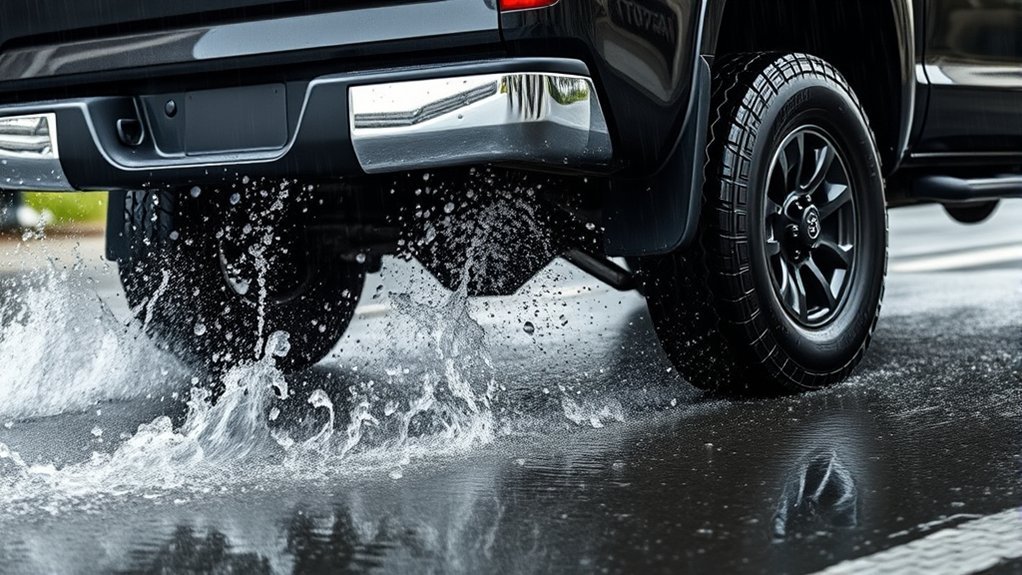
Tire pressure affects the shape of the contact patch, tread wear, heat buildup, braking, and steering response. Under-inflation can make the tire flex too much and wear unevenly. Over-inflation can reduce the tread’s ability to sit evenly on the road. Either condition can hurt wet handling.
For a Toyota Tundra, the safest baseline is the cold tire pressure listed on the tire information placard or in the Owner’s Manual. Toyota says to check the Specifications section of the Owner’s Manual or the tire information placard usually found on the driver-side door post. The 2025 Tundra Owner’s Manual also says tire pressure should be checked cold and adjusted to the recommended level.
Check pressure before driving, or after the truck has been parked long enough for the tires to cool. If you check immediately after highway driving, the reading will usually be higher because the tire has warmed up. Do not bleed pressure from a hot tire just because it reads above the cold placard number.
Driving Techniques for Improved Wet Handling
Even the best tire needs help from the driver. Rain reduces available grip, so your Tundra needs smoother inputs, more stopping room, and lower speed than it needs on dry pavement.
Adjust Speed Appropriately
Slow down before you reach standing water, sharp curves, painted lane markings, bridge decks, and intersections. Tires need time to move water out of the tread. At higher speeds, there is less time for that to happen.
Hydroplaning can happen at surprisingly moderate speeds when water is deep enough or tread is worn. AAA notes that with as little as 1/12 inch of water on the road, tires may need to displace a large amount of water, and even new tires can lose some road contact at speeds as low as about 35 mph in certain wet conditions.
Maintain Safe Following Distance
Increase your following distance in rain. A three-second gap is a minimum starting point in light rain, but a heavier truck, worn tires, towing, traffic, darkness, or standing water all call for more space. Begin slowing earlier for stops, turns, and traffic lights.
This is especially important in an unloaded pickup. A Tundra with little weight in the bed can feel light at the rear axle during abrupt throttle, braking, or steering. Smooth inputs help keep the truck settled.
Avoid Sudden Maneuvers
Avoid hard braking, sharp steering, and sudden throttle changes on wet roads. Smooth inputs let the tires stay closer to the limit of grip instead of breaking traction abruptly.
Do not use cruise control in heavy rain or standing water. AAA recommends avoiding cruise control in wet conditions because the driver may need to reduce speed quickly by lifting off the accelerator.
What to Do if Your Tundra Starts Hydroplaning
If the steering suddenly feels light or the truck begins to float, stay calm. Ease off the accelerator, keep the steering wheel steady, and avoid slamming the brakes. If your Tundra has anti-lock brakes and you must slow down, apply gentle, controlled brake pressure. Once the tires regain contact, continue smoothly and reduce speed.
Bridgestone’s hydroplaning guidance also stresses calm inputs, avoiding panic braking, and holding the steering wheel steady until traction returns.
Maintaining Tires for Optimal Wet Performance
Wet-road performance is not a one-time purchase decision. Even a good tire needs regular pressure checks, rotation, inspection, and replacement before the tread becomes too shallow for rain.
| Task | Recommended Check |
|---|---|
| Tire pressure | Check cold at least monthly and before long trips |
| Tread depth | Check monthly and before rainy seasons or towing |
| Tire rotation | Follow the Owner’s Manual or tire warranty schedule |
| Alignment | Check if the truck pulls, the steering wheel is off-center, or tread wear is uneven |
| Sidewall and tread damage | Inspect after potholes, curb hits, trail use, or heavy towing |
Look for uneven wear across the tread, cracking, bulges, cuts, missing tread chunks, vibration, or repeated air loss. These problems can reduce wet grip even when the tread depth still looks acceptable.
If your Tundra tows, hauls heavy payloads, or runs aftermarket wheels and tires, inspect more often. Extra weight and heat can accelerate tire wear, and different tire sizes or load ranges can change how the truck feels in rain.
Frequently Asked Questions
Are performance tires okay in the rain?
Performance tires can be good in rain if they have a wet-focused compound, enough tread depth, and a tread pattern that moves water well. However, some summer performance tires lose grip in cold weather, and worn performance tires can become risky quickly on wet roads. Always check the tire model’s wet-braking results and temperature range.
At what speed do tires lose traction in the rain?
There is no single speed. Hydroplaning depends on water depth, tread depth, tread design, tire width, vehicle weight, and speed. In some wet conditions, tires can begin losing road contact at around 35 mph, especially when water is standing on the road or tread is worn. Slow down whenever the road has visible water.
Are all-terrain tires bad in rain on a Toyota Tundra?
Not always. Some all-terrain tires have strong wet traction, especially those with good siping and modern compounds. The risk is choosing a tire mainly for aggressive looks or off-road bite without checking wet-braking performance. For mostly highway driving, a highway-terrain or wet-rated all-season tire may stop better in rain.
Should I lower tire pressure for better rain grip?
No, not as a general rule. Use the cold tire pressure listed on your Tundra’s tire information placard or Owner’s Manual. Randomly lowering pressure can increase heat, wear, and handling problems. If you changed tire size or load range, use professional load/inflation guidance rather than guessing.
What tread depth is best for wet roads?
More tread depth generally improves water evacuation. Do not wait until the tire reaches 2/32 inch if you drive in frequent rain. Start shopping when wet grip drops, tread is around 4/32 inch, or the quarter test shows the tread is getting shallow.
What should I do if my Tundra starts hydroplaning?
Ease off the accelerator, keep the steering wheel steady, and avoid sudden braking or sharp steering. Let the truck slow down until the tires regain contact. Afterward, reduce speed and avoid standing water.
Conclusion
Your Toyota Tundra’s wet-road grip depends on more than tire size or brand. Tread depth, tread design, compound, tire pressure, and driving habits all work together. Choose tires with proven wet performance, keep them inflated to the correct cold PSI, replace worn tread before rain grip fades, and slow down when water is on the road. Those simple habits make the truck feel steadier, stop shorter, and handle rain with more confidence.
Sources
- NHTSA TireWise — tire safety, tire maintenance, and consumer tire guidance
- Toyota Support: Recommended Tire Pressure — where to find the correct vehicle-specific tire pressure
- Toyota 2025 Tundra Owner’s Manual: Tire Inflation Pressure — cold tire-pressure checking and adjustment guidance
- Tire Rack: What Causes Tire Hydroplaning? — hydroplaning factors, tread design, and compound effects
- AAA: Worn Tires Put Drivers at Risk — wet stopping-distance and handling data for worn tires
- Bridgestone: Hydroplaning Preparation — hydroplaning causes and recovery tips