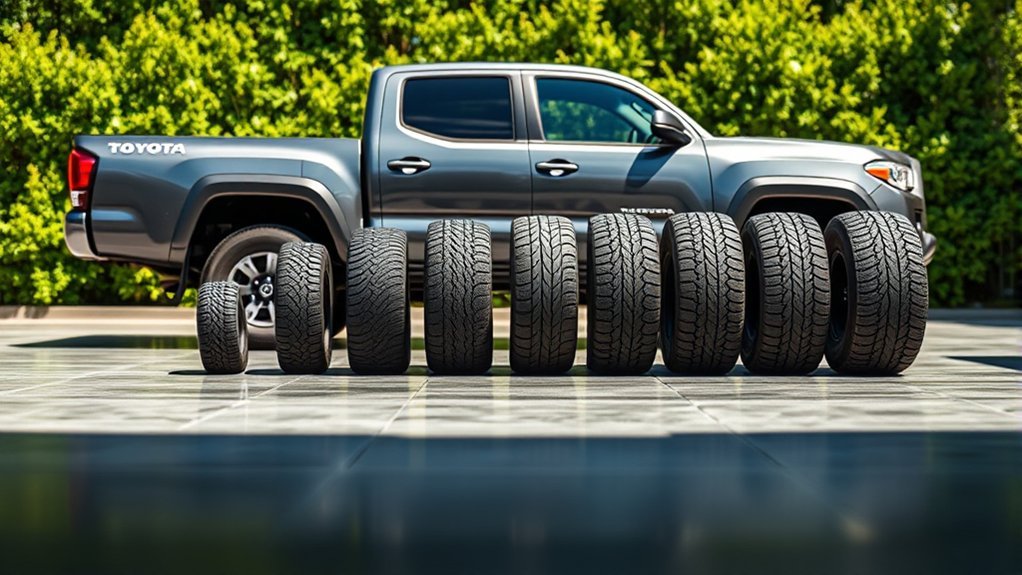
Choosing the right tire size for a Toyota Tacoma is not just about looks. Tire height changes ground clearance, speedometer accuracy, gearing feel, fuel economy, rubbing clearance, and how the truck behaves on pavement or trails. The best size depends on your Tacoma generation, trim, wheel offset, suspension setup, load rating, and how you actually drive.
Quick Answer
For the same tire width and wheel diameter, a 70-series tire is taller than a 65-series tire because the sidewall is 70% of the tire width instead of 65%. On a Tacoma, always compare overall diameter, not just rim size, and verify the final size against the driver-door tire placard.
Key Takeaways
- A higher aspect ratio usually means a taller tire when width and wheel diameter stay the same.
- Tacoma tire fitment changed by generation: 1995–2004, 2005–2015, 2016–2023, and 2024–2026 should be treated separately.
- The safest replacement size is the size shown on your Tacoma’s Tire and Loading Information Label or owner’s manual.
- Larger tires can improve ground clearance but may cause rubbing, slower acceleration, speedometer error, and spare-tire fitment issues.
- Replace tires when tread is worn, damage appears, age becomes a concern, or the tire no longer matches your driving conditions.
At a Glance
| Time Required | 10–20 minutes to check tire size, tread, pressure label, and upgrade options |
| Difficulty | Easy for reading markings; moderate if planning oversized tires |
| Tools Needed | Tread depth gauge, tire pressure gauge, owner’s manual or driver-door tire label, and a tire-size calculator |
| Cost | Free to inspect; replacement tire cost varies by size, load rating, tread type, and brand |
Understanding Tacoma Tire Sizes Across Generations
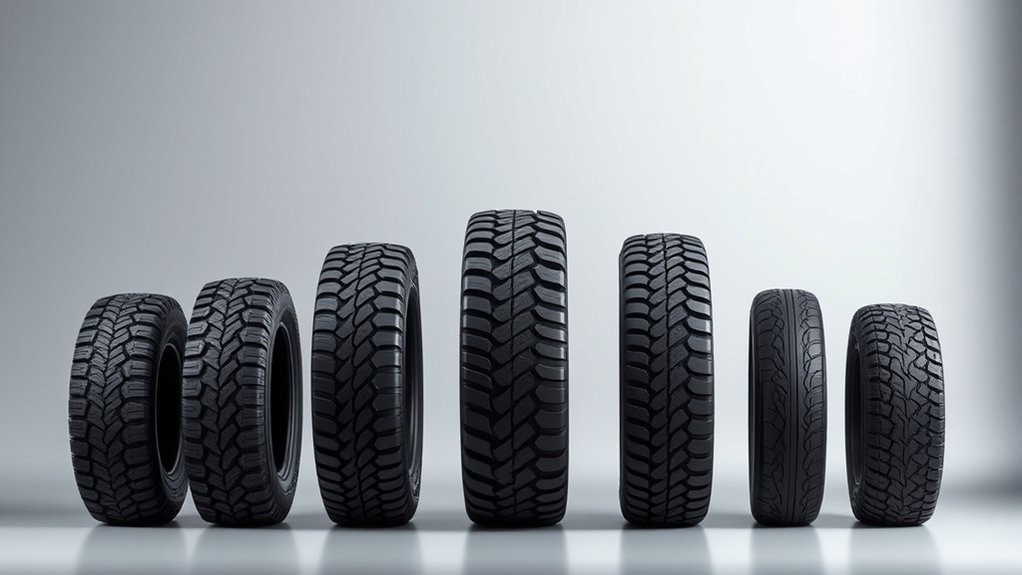
Toyota Tacoma tire sizes have changed as the truck has grown, gained capability, and moved into newer platforms. The biggest mistake is treating every Tacoma the same. A size that clears easily on a 2024 Trailhunter may be a rubbing problem on an older first-generation truck, and a tire that fits one wheel offset may not fit another.
| Tacoma Generation | Model Years | Common Factory Wheel Diameters | Common OE Tire Sizes |
| 1st Gen | 1995–2004 | 14, 15, and some 16 in. | P195/75R14, P205/75R14, P225/75R15, 31×10.50R15, P265/70R16 on select later trims |
| 2nd Gen | 2005–2015 | 15, 16, 17, and 18 in. | 215/70R15, 245/75R16, 265/70R16, 265/65R17, 255/45R18 on X-Runner-style applications |
| 3rd Gen | 2016–2023 | 16, 17, and 18 in. | 245/75R16, 265/70R16, 265/65R17, 265/60R18 |
| 4th Gen | 2024–2026 | 17 and 18 in. | 245/70R17, 265/70R17, 265/65R18, 265/70R18 depending on trim and package |
The fourth-generation Tacoma begins with the 2024 model year. Toyota describes the 2024 Tacoma as a fully redesigned truck built on the TNGA-F global truck platform, while 2023 models remain part of the previous generation. For current 2026 off-road trims, Toyota lists 33-inch Goodyear tires on TRD Pro and Trailhunter, so modern factory fitment can already be larger than many older stock Tacoma setups.
Key Differences in Tire Sizes for Tacoma Models
The number after the “R” is the wheel diameter, not the full tire height. A 17-inch tire can be taller than an 18-inch tire if it has more sidewall. That is why a 265/70R17 is taller than a 265/60R18 even though it uses a smaller wheel.
| Tire Size | Approx. Diameter | Common Tacoma Use |
| 245/75R16 | 30.5 in. | Base and SR-style 3rd-gen trims |
| 265/70R16 | 30.6 in. | Common 2nd- and 3rd-gen off-road size |
| 265/65R17 | 30.6 in. | Common TRD Sport / 17-inch wheel size |
| 265/70R17 | 31.6 in. | Popular mild upgrade and current 4th-gen size on some trims |
| 275/70R17 | 32.2 in. | Common larger all-terrain upgrade; clearance must be checked |
| 285/70R17 | 32.7 in. | Popular “33-inch class” upgrade; often needs lift, trimming, or wheel-offset changes |
Use this formula to compare tire height:
Overall diameter = wheel diameter + 2 × (section width × aspect ratio ÷ 25.4)
For example, a 265/65R17 is about 30.6 inches tall. A 265/70R17 is about 31.6 inches tall. The width is the same, but the 70-series sidewall is taller than the 65-series sidewall.
Note: Tire sizes vary slightly by manufacturer and tread design. A “33-inch” tire may measure closer to 32.5 inches when mounted and loaded on the truck.
When Should You Replace Tires for Your Tacoma?
Replace Tacoma tires when tread depth, visible damage, age, or performance says it is time. Do not rely on mileage alone. A tire that has plenty of tread but sidewall cracks, bulges, puncture damage, or age-related hardening may still be unsafe.
According to NHTSA TireWise, the correct tire size and inflation pressure should be checked in the owner’s manual or the Tire and Loading Information Label on the driver’s side door edge or post. NHTSA also advises checking tire pressure monthly when tires are cold, including the spare.
- Replace immediately at 2/32 inch: NHTSA states that treadwear indicators are molded at the 2/32-inch level because traction drops sharply when tread reaches that point.
- Plan earlier for rain or snow: If you drive in heavy rain, snow, or mountain weather, replacing before the legal minimum can improve braking and hydroplaning resistance.
- Watch tire age: NHTSA notes that some vehicle and tire manufacturers recommend replacing tires that are six to 10 years old, regardless of treadwear.
- Inspect damage: Replace tires with sidewall bulges, exposed cords, deep cracks, irregular wear, or unrepairable punctures.
- Check wear pattern: Feathering, cupping, or one-sided wear can point to alignment, balance, pressure, or suspension issues.
Warning: Never install a tire with a lower load rating than your Tacoma requires. Use the driver-door tire label, owner’s manual, and a qualified tire shop when changing size or load range.
How to Read Tire Markings on Tacoma Tires
A Tacoma tire size such as 265/70R17 115T gives you several pieces of information:
- 265: section width in millimeters.
- 70: aspect ratio, meaning the sidewall height is 70% of the tire width.
- R: radial construction.
- 17: wheel diameter in inches.
- 115: load index, which tells you the tire’s maximum rated load.
- T: speed rating, which tells you the tire’s rated speed capability under proper conditions.
- DOT/TIN code: the Tire Identification Number; the final four digits show the week and year of manufacture.
- UTQG: the Uniform Tire Quality Grading rating for treadwear, traction, and temperature on many passenger-vehicle tires.
NHTSA explains that the Uniform Tire Quality Grading system compares passenger tires for treadwear, traction, and temperature resistance. For truck owners, UTQG can help compare street and all-season tires, but it should not be the only factor when buying all-terrain, mud-terrain, winter, or LT-rated tires.
Top Tire Choices by Tacoma Generation: What You Need to Know
The best Tacoma tire size is the size that matches your generation, wheel, suspension, load needs, and driving style. Start with the factory size, then decide whether you need more sidewall, more width, a tougher load range, or a more aggressive tread.
[Products Worth Considering]

Monitor tire tread wear with a smart, color-coded depth gauge that shows clear condition ranges at a glance. The bar is range marked for fast, easy readings, helping you maintain safer traction and performance. Each gauge is portable with a pocket clip, and the set includes 20 units for daily use and sharing.

These aluminum alloy tire valve stem caps with an O-ring seal help protect valve stems from corrosion while adding a clean, stylish look to your vehicle. The universal fit works across cars, trucks, motorcycles, bicycles, and more, making them an easy upgrade for everyday driving and off-road use. Installation is quick, and the included four-pack keeps all your tires dressed and protected.
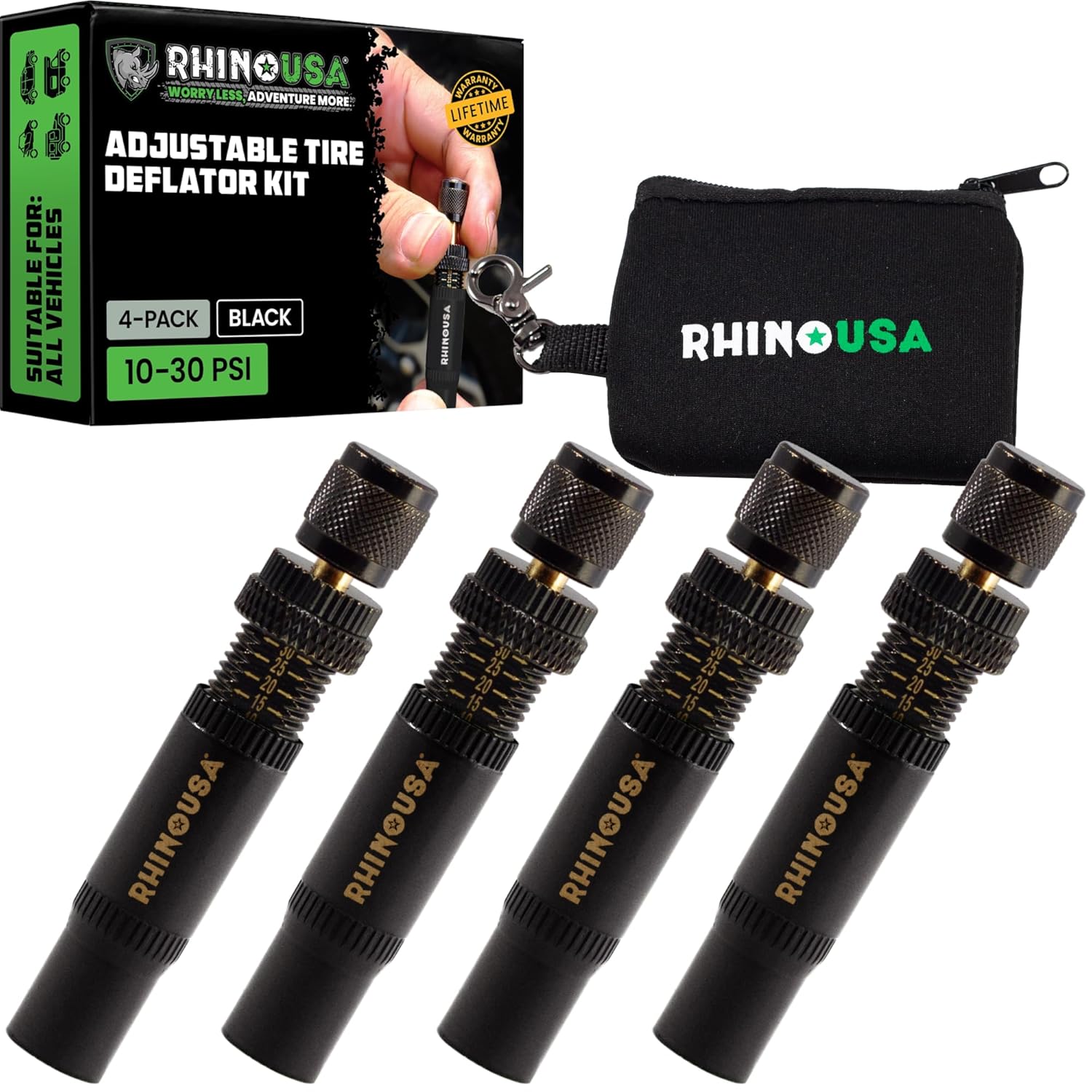
Use the Rhino USA adjustable tire deflators to air down all four tires at once by screwing one deflator onto each valve stem, letting you step away while the tires reach your preset pressure. Each deflator independently adjusts across a 10–30 PSI range with laser-etched indicators for quick setup and verification, making it ideal for beach, sand, and rocky off-road trails.
Best Sizes for Daily Driving
For commuting, highway trips, and light trail use, staying close to the factory diameter is usually the smartest choice. Sizes such as 245/75R16, 265/70R16, 265/65R17, 265/60R18, 245/70R17, and 265/65R18 keep the truck predictable and reduce the chance of rubbing or speedometer error.
Best Sizes for Mild Off-Roading
For light trails, forest roads, camping, and overlanding, many owners choose an all-terrain tire in the factory size or a mild increase such as 265/70R17. This can add sidewall and ground clearance without jumping straight into major trimming or suspension work.
Best Sizes for an Aggressive Look
Sizes such as 275/70R17 and 285/70R17 are popular because they fill the wheel wells and improve clearance. However, they are not a universal bolt-on fit. Clearance depends on the Tacoma generation, suspension height, wheel width, wheel offset, mud flap position, cab mount clearance, and actual tire model.
Pro Tip: Before buying oversized tires, test-fit one front tire and turn the steering wheel lock-to-lock. Check the front bumper, mud flaps, upper control arms, body mount area, and inner fender liner.
Key Factors to Consider When Choosing Tires for Your Tacoma
[Products Worth Considering]

The SAFELIFE dial tire tread depth gauge measures tread depth in 1/32 inch increments with clear, easy-to-read 2-inch dial face. Color zones using a traffic light system help you quickly judge whether tread is low, marginal, or ample for safer driving. Built with a durable zinc cast body and a metal detect probe for precise, comfortable use across cars, motorcycles, trucks, and buses.

These universal tire valve stem caps help protect valve cores from dust, debris, and moisture while helping maintain stable tire pressure. The corrosion-resistant metal construction and sealed design provide reliable protection in road grime, mud, and winter conditions. Twist-on installation makes them quick to fit on cars, SUVs, trucks, and motorcycles.

This ALL-TOP auto-stop tire deflator valve kit lets you air down off-road tires quickly without watching pressure, automatically stopping when your preset PSI is reached. Each valve is individually calibrated for reliable performance with an acceptable +/- 2 PSI tolerance. The adjustable deflator range covers 10 to 30 PSI and includes four valves plus valve caps and a zipper pouch for easy setup on trucks, SUVs, RVs, UTVs, and powersports.
Tire Size Compatibility
Use the driver-door placard as the starting point. Toyota selected that size to match the truck’s braking, steering, payload, speedometer calibration, and stability systems. Going larger can work, but it should be a planned upgrade instead of a guess.
- Overall diameter: Taller tires increase ground clearance but change speedometer and odometer readings.
- Width: Wider tires can improve flotation but may rub on control arms, fenders, or mud flaps.
- Wheel offset: Lower offset can push the tire outward, helping inner clearance but creating more fender poke and possible outer rubbing.
- Load rating: Replacement tires should meet or exceed the load requirement for your truck.
- Spare tire fit: A larger tire may not fit in the factory spare location.
- TPMS: If changing wheels, confirm tire-pressure sensors are compatible and programmed correctly.
Terrain and Usage
Choose tread based on the surface you drive most often:
- Highway/all-season: best for quiet ride, wet-road comfort, and fuel economy.
- All-terrain: best balance for daily driving, gravel, dirt, light mud, and camping routes.
- Mud-terrain: strongest off-road bite in mud and rocks, but usually louder and less efficient on pavement.
- Winter tire: best for snow, ice, and cold-weather braking when temperatures stay low.
Load Rating Requirements
Load rating matters on a Tacoma because many owners add campers, bed racks, bumpers, winches, rooftop tents, tools, or towing weight. A heavier-duty LT tire can add strength, but it may also ride firmer and weigh more. Match the tire to your payload needs, not just the look you want.
What Should You Know About Upgrading Tires?
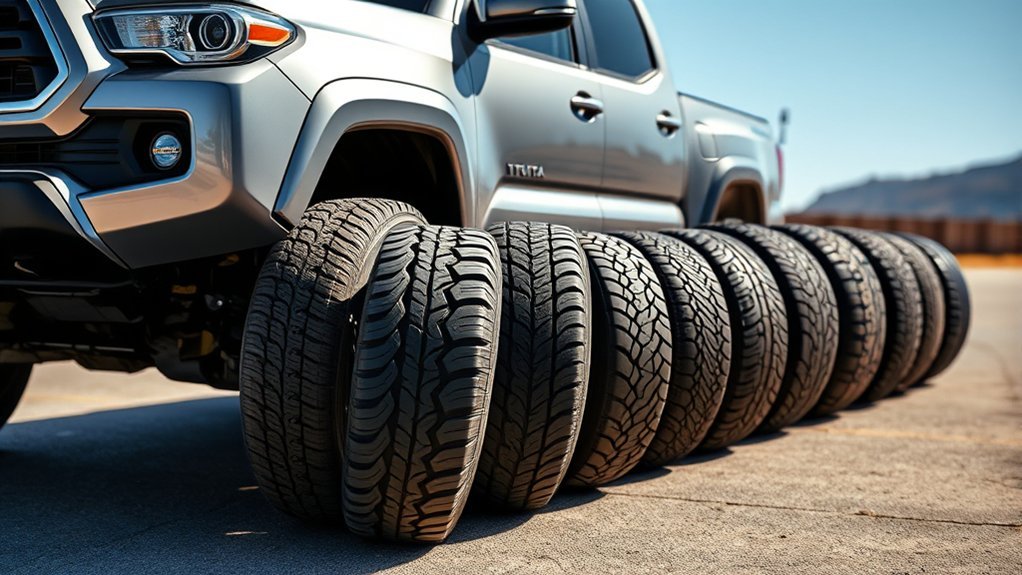
Upgrading Tacoma tires can improve trail capability, ground clearance, and appearance, but bigger is not always better. A heavier tire can reduce acceleration, braking response, steering feel, and fuel economy. It can also make the truck hunt between gears more often, especially when towing or climbing grades.
Before moving up in size, check these items:
- Clearance at full steering lock: rubbing often appears while turning, not while driving straight.
- Suspension compression: a tire that clears parked may rub when the suspension flexes.
- Wheel offset and backspacing: the same tire can fit differently on different wheels.
- Lift kit needs: a lift can add vertical clearance but does not automatically solve cab mount or bumper rubbing.
- Alignment: larger tires often benefit from a fresh alignment after installation.
- Spare location: confirm the spare matches your new diameter if you drive off-road.
- Recalibration: speedometer correction may be needed after a meaningful diameter change.
For a mild upgrade, many Tacoma owners look at sizes around 31.5 to 32.2 inches. For a 33-inch-class tire such as 285/70R17, expect to verify clearance carefully. On current fourth-generation off-road trims, Toyota offers factory 33-inch tires on certain models, but that does not mean the same setup automatically fits every older Tacoma.
Keeping Your Speedometer Accurate With New Tires
When you install a taller tire, the wheel makes fewer rotations per mile. That usually makes the speedometer read slower than your actual road speed. The bigger the diameter change, the larger the error.
Use this simple estimate:
Actual speed = indicated speed × new tire diameter ÷ old tire diameter
| Change | Approx. Diameter Change | When Speedometer Shows 60 mph |
| 265/70R16 to 265/70R17 | 30.6 in. to 31.6 in. | About 62 mph actual |
| 265/70R16 to 275/70R17 | 30.6 in. to 32.2 in. | About 63 mph actual |
| 265/70R16 to 285/70R17 | 30.6 in. to 32.7 in. | About 64 mph actual |
A small change may not bother you, but a larger change can affect speed limits, odometer mileage, transmission behavior, adaptive cruise behavior, and resale records. If accuracy matters, ask a qualified shop about recalibration options for your model year.
How to Choose Tires for Better Off-Roading
For off-roading, the best Tacoma tire is not always the widest tire. The right tire depends on terrain, wheel size, sidewall strength, air-down needs, and how far you drive on pavement.
- For gravel and forest roads: choose a quiet all-terrain tire in a stock or mild-upgrade size.
- For rocks: prioritize sidewall strength, tread durability, and enough sidewall to air down safely.
- For mud: choose larger voids and more aggressive lugs, understanding that highway noise will increase.
- For sand: flotation and air-down behavior matter more than an aggressive mud tread.
- For overlanding: balance load rating, puncture resistance, repairability, weight, and replacement availability.
Do not forget tire pressure. Lower pressure can improve off-road contact patch and comfort, but you need the right wheels, terrain judgment, and an air compressor to reinflate before highway driving. On-road pressure should follow the door label or a tire professional’s recommendation for your load and tire type.
[Products Worth Considering]

Accurately measure tire tread depth with a calibrated gauge marked from 0 to 1 inch in 1/32 inch increments. The color-coded bar helps you quickly identify tread condition ranges, supporting safe driving for trucks, motorcycles, automobiles, and passenger vehicles.

Measure tire tread depth quickly and accurately with this LUMITECO dial gauge that reads in 1/32" increments up to 14/32". The color-coded green/yellow/red zones make it easy to judge tire wear and know when replacement is needed. A rugged, compact design with a protective pouch helps keep the gauge ready for use on cars, trucks, motorcycles, and more.

Keep your tires properly inflated with this analog VONDIOR tire pressure gauge, designed for fast, easy readings without batteries. The swiveling, two-axis hose and large glow dial help you measure at any tire angle with instant visibility. Built with a protective rubber shield, it supports durable, low-maintenance use for cars and trucks.
Frequently Asked Questions
What tire is taller, 65 or 70?
A 70-series tire is taller than a 65-series tire when the tire width and wheel diameter are the same. For example, a 265/70R17 is taller than a 265/65R17 because the sidewall is 70% of 265 mm instead of 65%.
What is the best stock tire size for a Toyota Tacoma?
The best stock size is the size printed on your Tacoma’s driver-door Tire and Loading Information Label. Common factory sizes include 245/75R16, 265/70R16, 265/65R17, 265/60R18, 245/70R17, 265/70R17, 265/65R18, and 265/70R18 depending on year and trim.
Can I put 285/70R17 tires on a Tacoma?
Often yes, but not always without changes. A 285/70R17 is about 32.7 inches tall and may need a lift, trimming, different wheel offset, mud-flap changes, or alignment adjustments depending on the Tacoma generation and tire model.
Will larger tires make my Tacoma slower?
They can. Larger and heavier tires can reduce acceleration, increase braking distance, lower fuel economy, and make the transmission work harder. The effect is small with mild size changes and more noticeable with heavy 33-inch or larger tires.
Do I need to recalibrate my speedometer after changing tire size?
If the new tire diameter is meaningfully taller or shorter than stock, recalibration is a good idea. Taller tires usually make the speedometer read lower than your actual speed. A tire shop or Tacoma specialist can explain the best option for your model year.
Conclusion
The right Toyota Tacoma tire size depends on more than whether the tire looks bigger. Compare overall tire diameter, load rating, tread type, wheel offset, and generation-specific clearance before buying. A 70-series tire is taller than a 65-series tire when width and wheel size are equal, but final fitment still depends on your exact Tacoma. For the safest choice, start with the driver-door tire label, then choose upgrades based on how much clearance, traction, and on-road comfort you actually need.
Sources
- Toyota USA Newsroom: All-New 2024 Toyota Tacoma — backs up the 2024 redesign and fourth-generation platform context.
- Toyota USA Newsroom: 2026 Toyota Tacoma — backs up current Tacoma trim and off-road tire details.
- Toyota Tacoma Specifications — backs up current official Tacoma tire specification reference.
- NHTSA TireWise — backs up tire size label, pressure checks, rotation, aging, and safety guidance.
- NHTSA Treadwear Indicator Interpretation — backs up the 2/32-inch treadwear indicator threshold.
- NHTSA Consumer Guide to Uniform Tire Quality Grading — backs up UTQG treadwear, traction, and temperature grading.