Your Toyota Hilux tire-pressure warning light can help you catch a low tire, but it does not tell you the correct pressure for every Hilux. That value changes with the model year, market, tire size, and load. Use the cold-pressure label on your own vehicle first, then use the TPMS or TPWS as a warning system—not as a replacement for a gauge.
Quick Answer
There is no single correct tire pressure or reset sequence for every Toyota Hilux. Check the driver-door or door-pillar pressure label and set all tires when cold. A solid TPMS light usually means low pressure; a flashing light that stays on usually points to a system fault.
Key Takeaways
- Use the pressure label on your Hilux, not a universal online PSI figure and not the maximum pressure molded into the tire sidewall.
- Check all road tires and the spare at least monthly, before long trips, and after major temperature or load changes.
- Inspect for punctures or damage before adding air. Do not reset the warning system simply to turn off the light.
- Reset or initialize the system only after pressures are correct; the control may be a physical switch or a dashboard menu, depending on the Hilux.
At a Glance
| Time Required | About 5–10 minutes for a pressure check; longer if a tire needs repair or the system needs diagnosis |
| Difficulty | Easy for checking and inflation; professional help may be needed for sensor faults or punctures |
| Tools Needed | Accurate tire-pressure gauge, air source, and the Hilux owner’s manual or vehicle pressure label |
| Cost | Usually free to low cost for checking and inflation; repairs and sensor replacement cost more |
Why Tire Pressure Monitoring Matters for Your Safety
Correct tire pressure supports predictable steering, braking, load carrying, tire life, and fuel use. Underinflation increases heat and tire flex, while excessive pressure can reduce ride comfort and the size of the tire’s contact patch. Either condition can contribute to uneven wear.
The National Highway Traffic Safety Administration recommends checking every tire, including the spare, at least once a month when cold. It also warns that TPMS normally alerts only after a tire is already significantly underinflated, so the dashboard light cannot replace routine checks with an accurate gauge.
The correct pressure is the cold value specified by Toyota for your exact Hilux—not the maximum PSI printed on the tire sidewall.
How to Find and Check Your Toyota Hilux Tire Pressure
The correct Hilux pressure depends on the tire size, body style, market, model year, and load. Look first for the pressure label on the driver’s door opening, door pillar, or another location identified in the owner’s manual. Some labels show one setting for normal driving and another for a full load or sustained high-speed use.
Published examples show why a universal number is unsafe. Toyota UK’s tire-pressure guide lists 35 PSI front and rear for one Hilux tire size, but 29 PSI front and rear for other Hilux tire sizes. Those figures are UK examples only; the label on your vehicle takes priority.
| Toyota UK Hilux Example | Front | Rear |
|---|---|---|
| 225/70 R17 | 35 PSI | 35 PSI |
| 265/65 R17 | 29 PSI | 29 PSI |
| 265/60 R18 | 29 PSI | 29 PSI |
How to check the pressure:
- Park safely and let the tires cool. A reliable cold reading is taken before driving or after the vehicle has been parked for at least three hours.
- Read the cold-pressure label for the current tire size and load condition.
- Remove each valve cap and press the gauge squarely onto the valve stem.
- Add or release air until the reading matches the vehicle label.
- Repeat for all road tires and check the spare separately. The spare may require a different pressure and may not be monitored by TPMS.
- Refit the valve caps and check again if the gauge reading was unstable.
Pro Tip: Do not bleed air from a warm tire merely because its reading is above the cold specification. Driving heats the tire and naturally raises pressure. Recheck and make the final adjustment when the tire is cold.
[Products Worth Considering]

The TYAMATE TM8 solar-powered wireless TPMS delivers real-time tire pressure and temperature monitoring with six alarm modes for safer driving. A vibrant color LCD display shows readings clearly while windshield mounting keeps it hands-free and easy to read. With a wide 0–87 PSI range, strong 433.92 MHz signal transmission, and quick sensor pairing, it’s ideal for RV, sedan, SUV, MPV, and truck use.
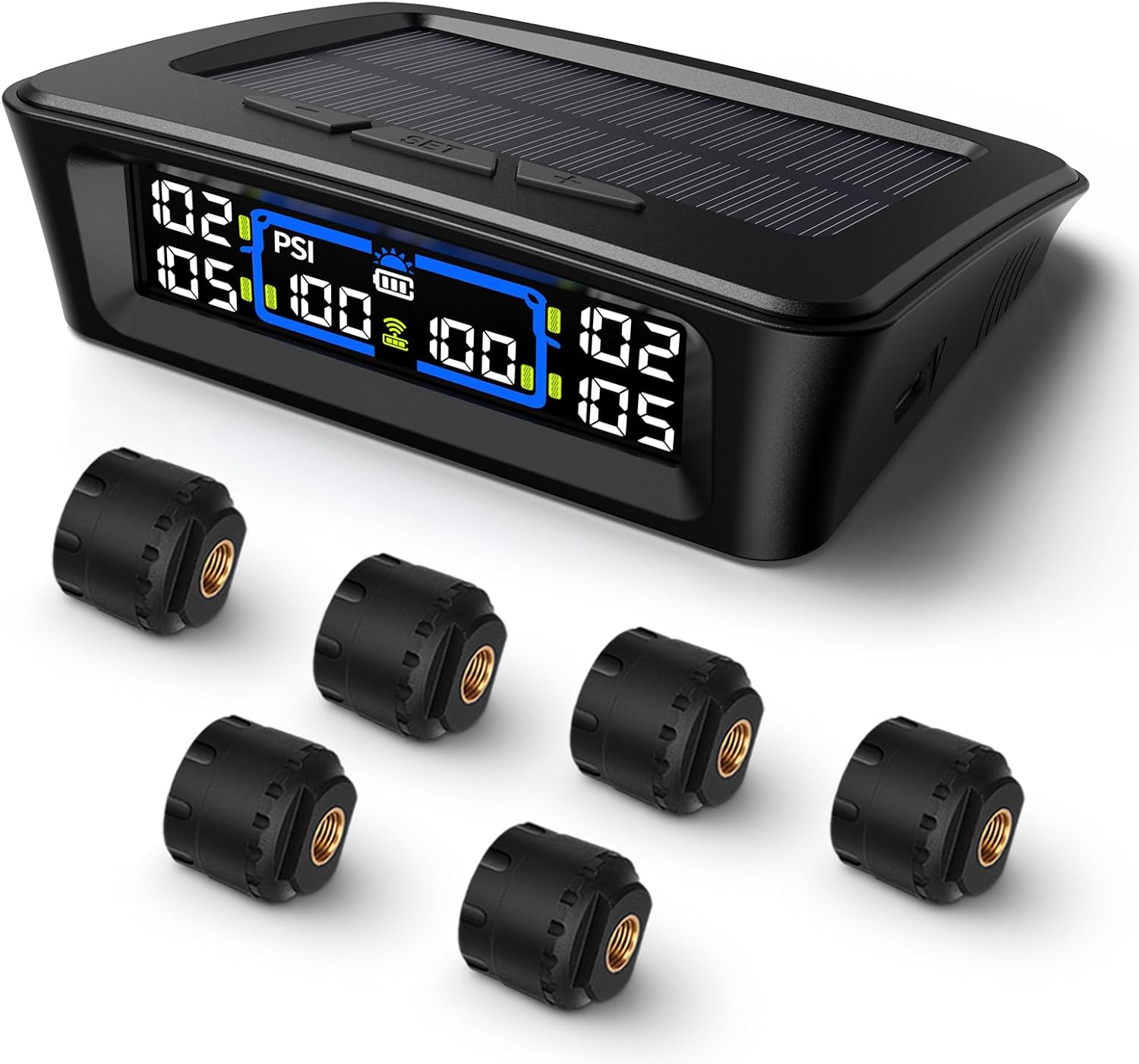
The Tymate TM12 RV TPMS delivers real-time tire pressure and temperature monitoring with a stable 433Hz display for safer long-distance driving. It supports simultaneous monitoring across vehicle and trailer zones, includes six alarm modes for pressure, temperature, leakage, battery, and signal loss, and features easy DIY installation with auto calibration. Power is supplied via USB-C charging or solar recharging, with a wide 0–144 PSI range and up to 50 ft signal coverage for RVs and towable trailers.

Replace your worn or missing TPMS sensors with pre-programmed, direct-fit sensors for compatible Ford, Lincoln, and select Mazda models. Each sensor comes ready to activate with a scan tool, helping restore accurate tire pressure monitoring and trouble-free installation. Built with a long-life CR2032 battery and tested before factory release, this set provides dependable performance with a one-year warranty.
Immediate Actions for Your Hilux TPMS Warning Light
If the light comes on while driving, reduce speed, avoid hard cornering or braking, and stop in a safe place as soon as practical. Inspect every tire for a visibly low condition, puncture, cut, bulge, damaged valve, or other obvious problem. Then measure the pressure with a gauge and compare it with your Hilux label.
Warning: Do not keep driving on a visibly flat tire, a damaged sidewall, or a tire that loses pressure again soon after inflation. Fit the spare only as directed by the manual or call roadside assistance. Driving on a damaged tire can ruin the tire and wheel and may cause loss of control.
After correcting a simple low-pressure condition, the light may turn off after a short drive. If it stays on, recheck all tires when cold. Initialize the system only if your manual says it is required after changing the target pressure, rotating or replacing wheels, or servicing sensors.
[Products Worth Considering]

Replace worn or malfunctioning GM TPMS sensors with this 433MHz pre-programmed sensor set designed for compatibility with many Chevrolet, Buick, GMC, and Cadillac models. It includes guidance for proper OBDII relearning/pairing after installation and supports reliable long-term operation with a high-performance CR2032 battery. Quality tested for durability and performance to help restore accurate tire pressure monitoring.

Marsflex brand TPMS replacement sensors help restore tire pressure monitoring for compatible Toyota, Lexus, Scion, and Pontiac models. Each sensor is pre-programmed for the vehicle application and includes a long-life battery for up to 8 years of normal use. Designed to replace common OE numbers and requires relearning using a TPMS scan tool after installation.
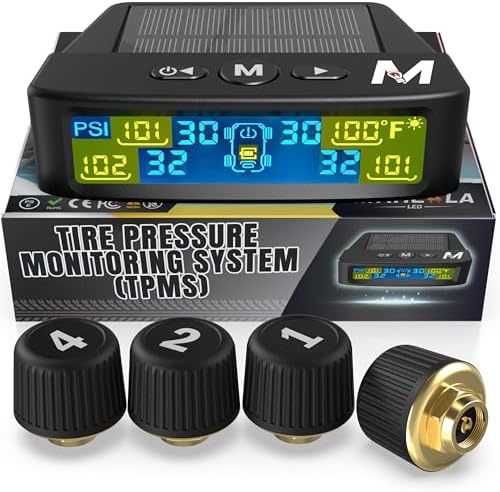
Marcala’s TPMS set of four sensors helps you monitor tire pressure and temperature in real time while driving, with updates every second. The bright color LCD uses auto-dimming for easy viewing, powered by dual solar and USB charging, and offers six alarm modes. Built for trailers, RVs, campers, trucks, and towing setups, the sensors support monitoring 1-4 wheels up to 98 PSI with IP67 waterproof protection.
Common Reasons Your TPMS Light Activates
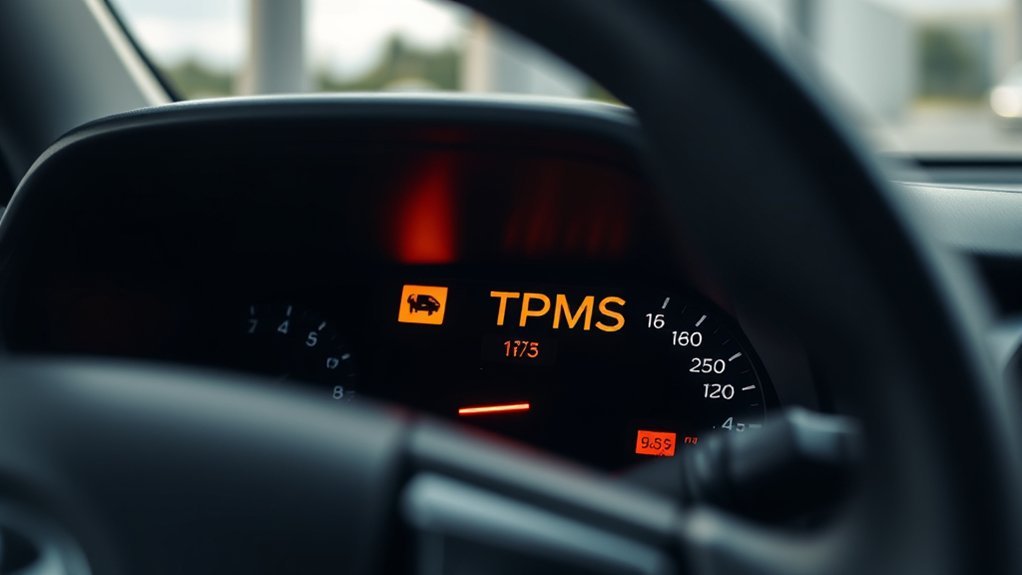
A Hilux tire-pressure warning can be caused by a slow leak, puncture, loose or damaged valve, seasonal temperature change, changed load setting, wheel or tire replacement, an unregistered sensor, or a failing sensor battery. Treat the light as a prompt to inspect and measure—not as proof that the sensor itself is faulty.
Seasonal Temperature Changes
Cold air lowers tire pressure. As a rule of thumb, pressure may change by about 1 PSI for each 10°F change in ambient temperature. A tire that was barely above the warning threshold on a warm afternoon may trigger the light the next cold morning.
Do not automatically add a fixed 2 PSI for winter. Instead, set each cold tire to the value on the Hilux label for the current load, then recheck after a major weather change. Tire manufacturers such as Continental also advise using the vehicle manufacturer’s recommended pressure rather than a sidewall maximum.
Load, Tire, and Wheel Changes
Heavy cargo, towing, replacement tire sizes, different wheel sets, tire rotation, and pressure-setting changes can require a different target pressure or TPMS initialization. Use the loaded-pressure values on the label or in the owner’s manual. Never guess an extra amount solely because the truck is carrying weight.
If you air down for approved off-road use, the warning light may remain on because the road-pressure target is no longer met. Reinflate to the correct road pressure before returning to normal-speed pavement driving, inspect the tires, and initialize the system only as directed for your Hilux.
Solid Light Versus Flashing Light
- Solid light: Usually means one or more monitored tires are significantly low. Check the tires promptly.
- Light that comes on in cold weather and later turns off: Often means the pressure is close to the threshold. Check it rather than ignoring the warning.
- Light that flashes for roughly a minute and then stays on: Commonly indicates a TPMS malfunction, sensor communication problem, or unregistered sensor. Arrange diagnosis if it repeats.
How Do You Reset or Initialize Your Toyota Hilux TPMS?
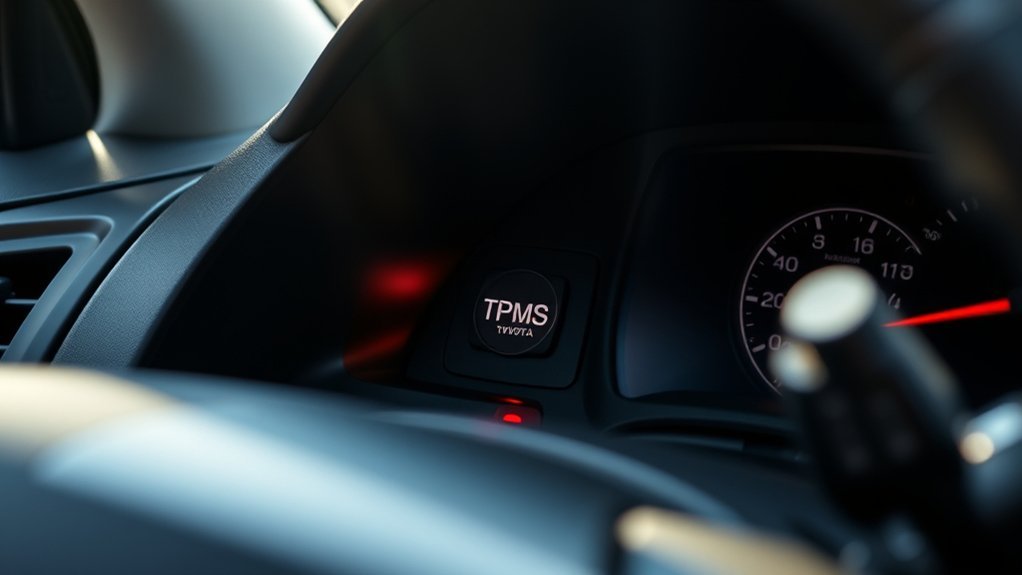
Toyota uses the term TPWS in some markets. Current equipment is not identical worldwide: Toyota lists a Tyre Pressure Warning System on current Ireland-spec Hilux models, while older vehicles or other markets and grades may differ. Check the owner’s manual and confirm that the warning icon illuminates briefly during startup.
The reset control may be a physical button under the dashboard or a setting in the multi-information display. Toyota’s TPMS guidance notes that reset access differs by model, so do not assume the button is always near the steering wheel.
- Park the Hilux safely and make sure the tires are cold.
- Inspect all tires and adjust them to the exact vehicle-label pressure for the current load.
- Switch the ignition to the ON mode specified in your manual.
- Use the physical TPMS reset switch or the dashboard TPWS/vehicle-settings menu described for your vehicle. On some earlier switch-equipped Hilux models, the indicator confirms initialization with three slow flashes; other versions use a different on-screen or lamp sequence.
- Keep the ignition on or drive for the period stated in the manual so the system can learn the setting.
- Recheck the pressure if the light remains solid. If it flashes and then stays on, or initialization repeatedly fails, have the system inspected.
Note: Initialization stores or learns the correct pressure threshold. Sensor ID registration is a separate task that may be required after fitting new TPMS valves, sensors, or a different wheel set. A tire shop or Toyota dealer may need a compatible scan tool.
[Products Worth Considering]
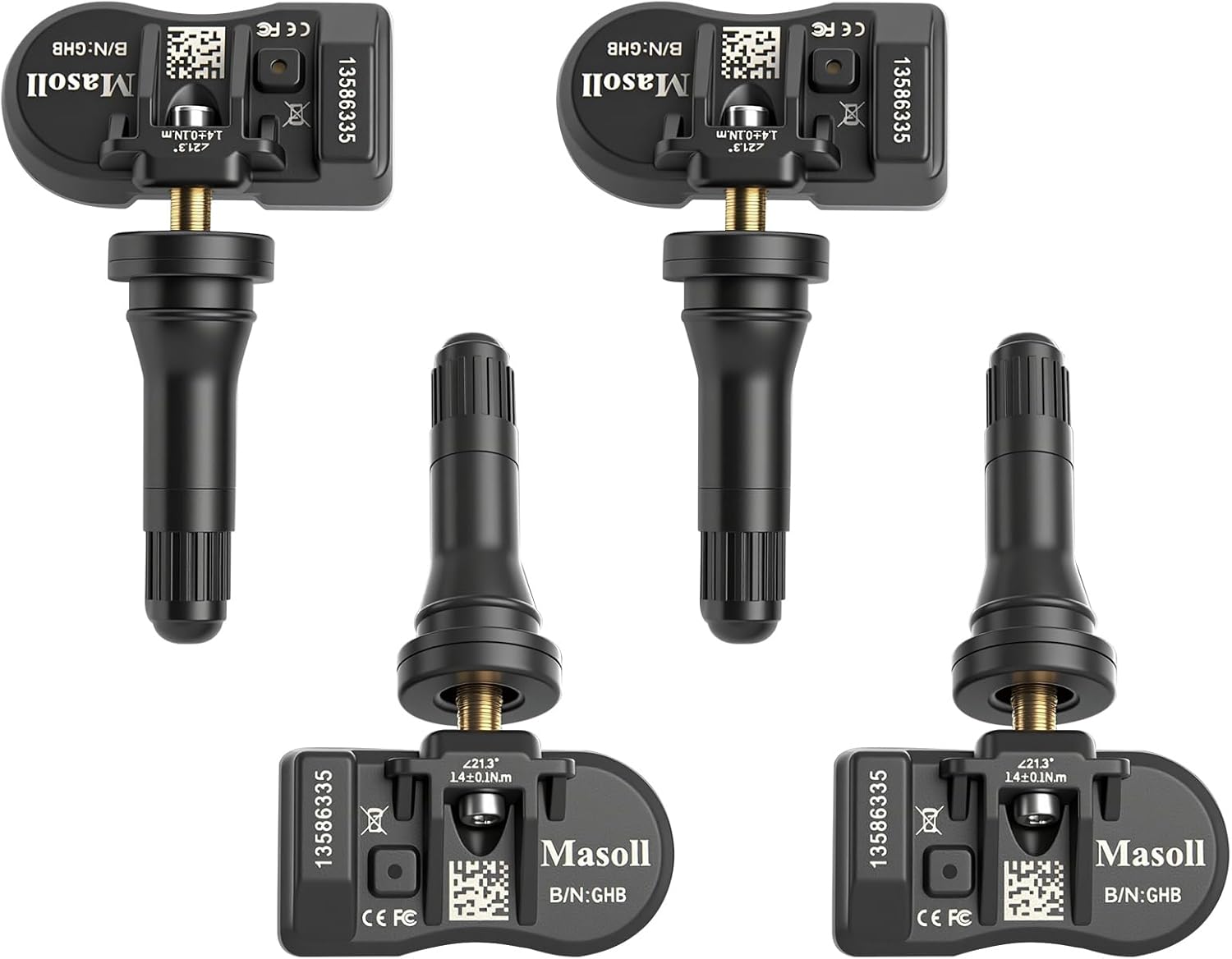
Masoll TPMS sensors are designed for most GM vehicles after 2006, helping you clear tire pressure warnings with OEM-level 315/433MHz compatibility. The 4-pack includes pre-programmed sensors, but re-learning is required after installation using a GM TPMS relearn tool or scan tool. Built with a dual-antenna design and a long-life CR2050 battery, these sensors deliver reliable performance in extreme temperatures with corrosion-resistant valve construction.
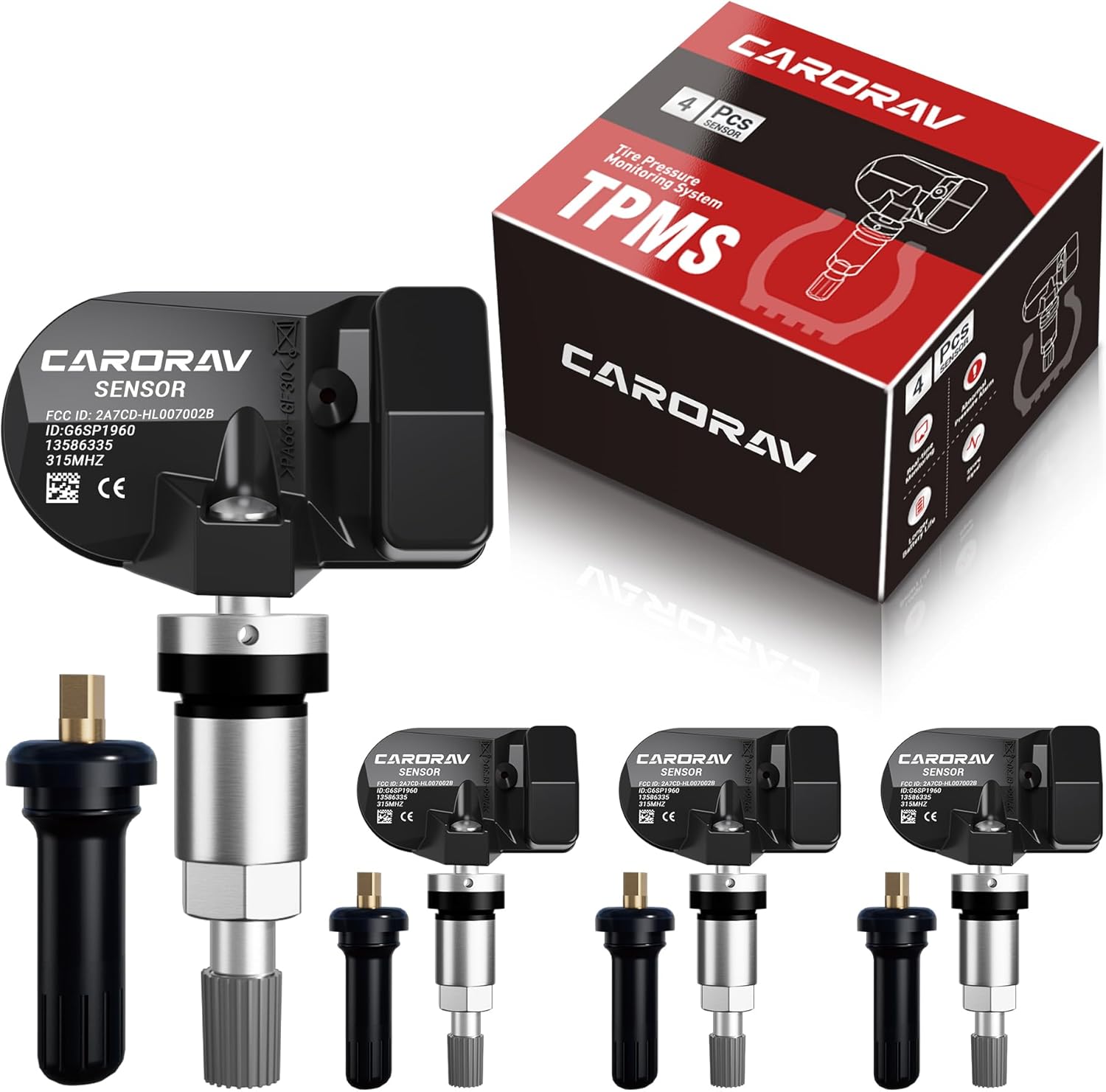
Replace worn or missing TPMS sensors with CARORAV pre-programmed GM-compatible sensors for a smoother installation experience. These 315MHz replacement sensors help monitor tire pressure in real time with long battery life, and they are designed to withstand harsh temperatures. Manual or OBDII relearn may be required to reset the system for proper recognition.
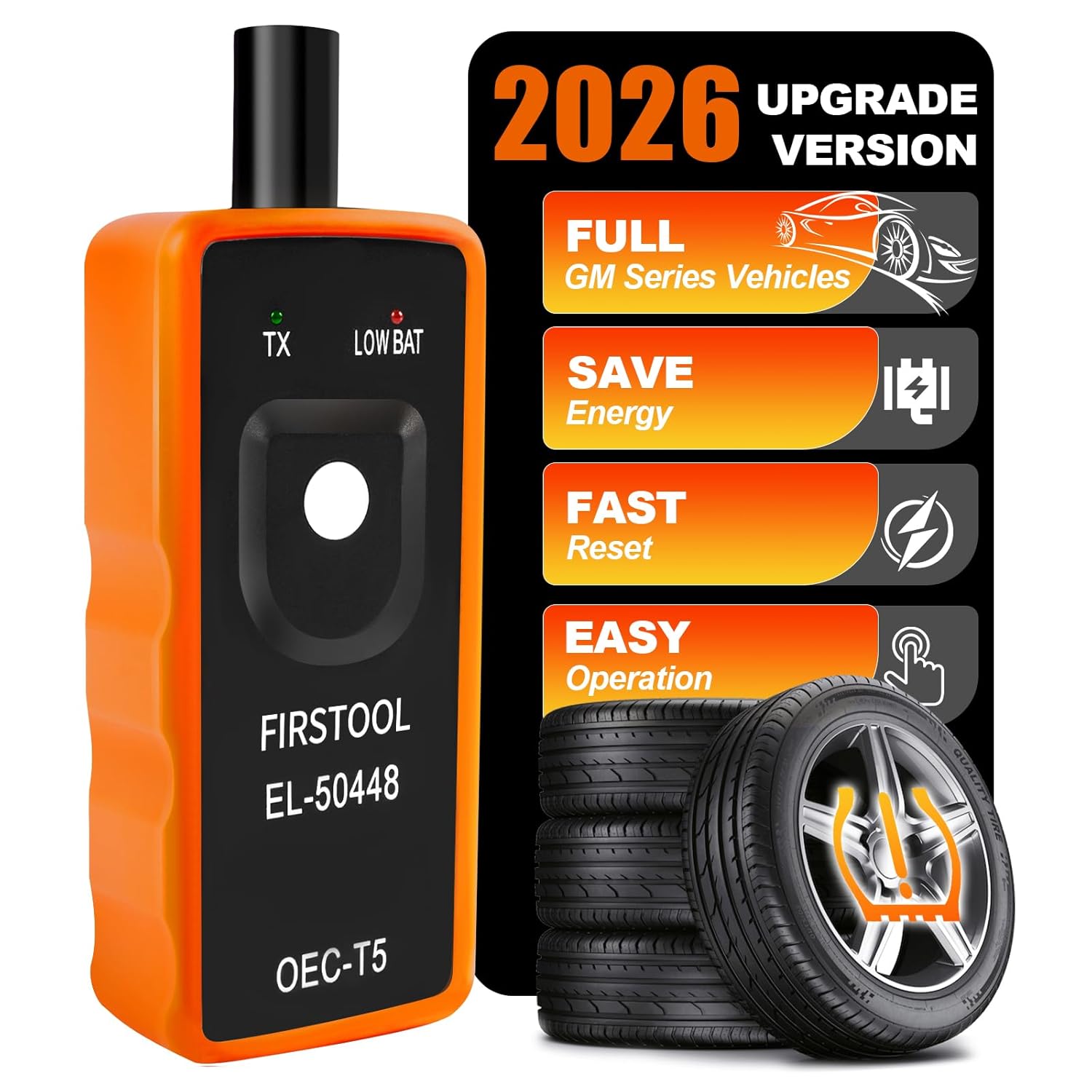
This TPMS relearn tool helps you quickly activate, match, and reset GM tire pressure sensors to keep the vehicle monitoring system working properly. It clears tire pressure alarms and dashboard warning lights after sensor replacement or tire rotation, and supports learning for common 315/433 MHz TPMS sensors. Designed for simple one-button operation, it can help you avoid unnecessary trips to repair shops.
Maintenance Tips for Optimal Tire Performance
Consistent checks help your Hilux carry loads safely, wear its tires evenly, and avoid unnecessary fuel use. The U.S. Department of Energy reports that keeping tires properly inflated can improve fuel economy by about 0.6% on average and by as much as 3% in some cases; it does not support adding an arbitrary 5 PSI above Toyota’s specification.
| Maintenance Task | Recommended Timing |
|---|---|
| Check cold tire pressure | At least monthly, before long trips, and after major temperature changes |
| Inspect tread and sidewalls | Monthly and whenever pressure drops unexpectedly |
| Check the spare | Monthly and before remote or long-distance travel |
| Rotate tires | Follow the Hilux maintenance schedule; around 10,000 km is common but not universal |
| Adjust for heavy loads or towing | Before the trip, using the vehicle label or owner’s manual |
| Service TPMS valve components | During tire replacement or when leaks, corrosion, or sensor faults are found |
When tires are changed, tell the technician that the wheels contain TPMS sensors. The metal or rubber valve assembly, seal, grommet, retaining nut, and valve core should be inspected and serviced with compatible parts as required. Do not apply a blanket rule that every complete sensor must be replaced whenever a tire is changed.
Sources
- NHTSA TireWise — cold-pressure checks, vehicle placards, monthly inspections, TPMS warning behavior, and tire safety.
- Toyota UK Tire Pressure and Size Guide — examples showing that Hilux pressure varies by tire size.
- Toyota UK TPMS Guide — direct and indirect systems, warning-light response, and reset-access differences.
- Toyota Ireland Hilux Specifications — current market listing for Hilux TPWS equipment.
- U.S. Department of Energy Fuel-Economy Guidance — properly inflated tires and fuel-economy estimates.
- Continental Tire Pressure Guide — temperature effects and manufacturer-recommended pressure.
Frequently Asked Questions
What is the correct tire pressure for a Toyota Hilux?
Use the cold-pressure label on your exact Hilux or the owner’s manual. There is no universal front-and-rear PSI for every year, tire size, market, and load. Published Toyota examples range from 29 PSI to 35 PSI for different UK-spec Hilux tire sizes.
Where is the Toyota Hilux TPMS reset button?
Some Hilux versions have a physical switch under the dashboard, while others use a TPWS or vehicle-settings menu in the instrument display. The exact location and sequence depend on the model year and market, so follow the owner’s manual.
Why is the TPMS light still on after adding air?
One tire may still be low, the pressure may have been checked while warm, the spare or another monitored wheel may need attention, or the system may require a short drive or initialization. A flashing light that stays on points more strongly to a system or sensor fault.
Can I drive with the Hilux tire-pressure warning light on?
Slow down and stop safely to inspect and measure the tires. Do not continue on a visibly flat or damaged tire. If all tires hold the correct pressure but the light flashes and remains on, arrange system diagnosis.
Does the Toyota Hilux TPMS monitor the spare tire?
That depends on the system and market. Never assume the spare is monitored. Check its pressure manually at least monthly and use the separate spare-tire specification in the owner’s manual or pressure label.
Conclusion
Your Toyota Hilux TPMS is a useful warning aid, but safe tire care starts with the correct cold pressure for your exact truck. Read the vehicle label, check every tire monthly, investigate any warning promptly, and reset or initialize the system only after the pressures are correct. That approach protects handling, tire life, load capacity, and fuel efficiency without relying on a misleading one-size-fits-all PSI figure.