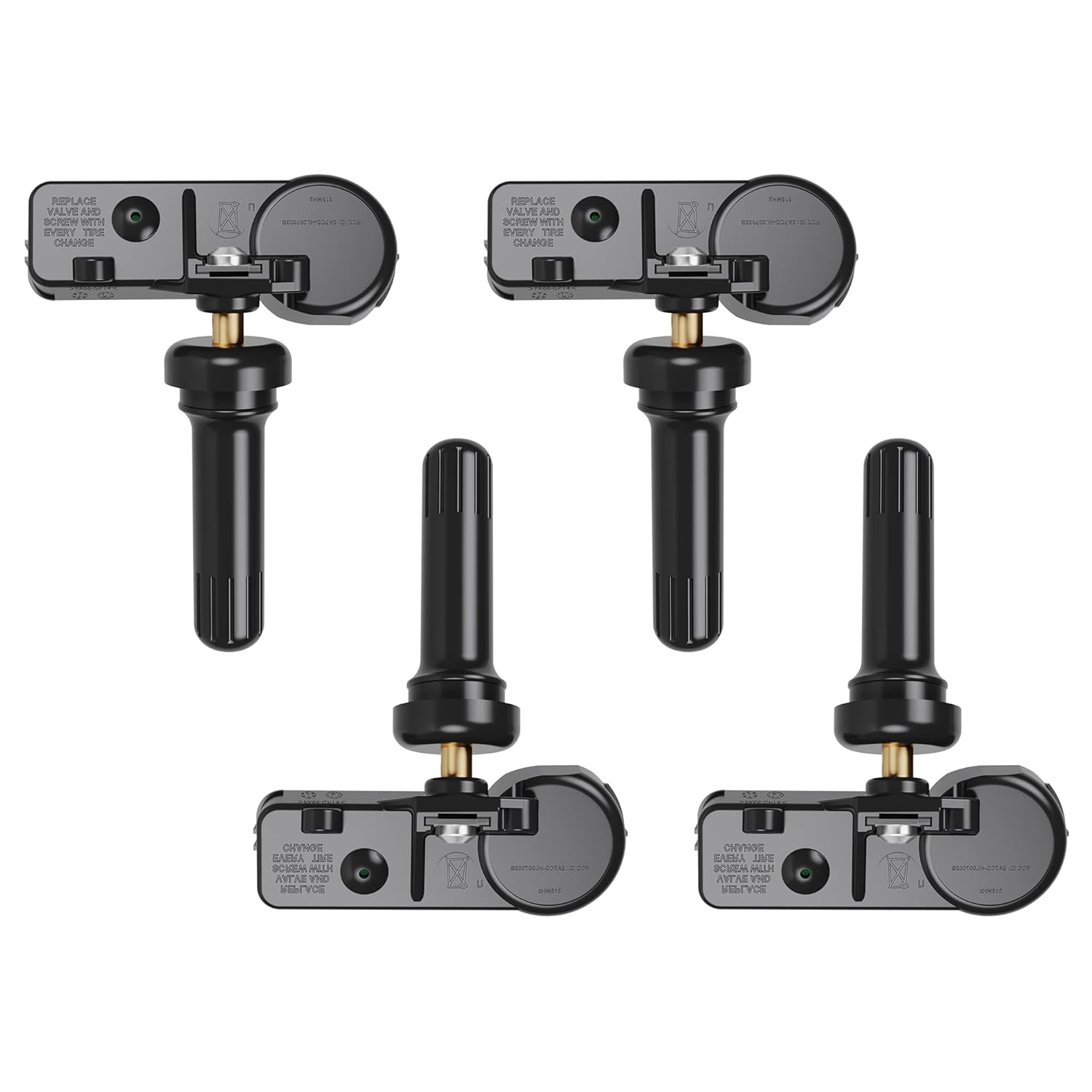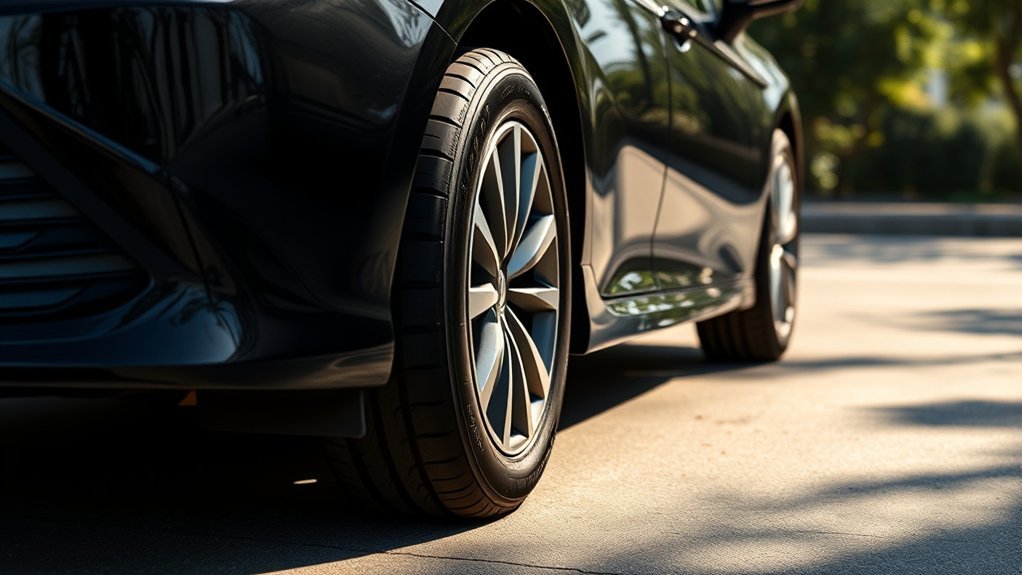
The eighth-generation Toyota Camry was sold for the 2018 through 2024 model years, and its factory tire size depends on the model year, trim, drivetrain, and wheel package. Common sizes range from 205/65R16 to 235/40R19. Because the same trim name may have different wheels across years or option packages, use this guide as a starting point and confirm every purchase against the tire-and-loading placard on your car.
Quick Answer
Common 2018–2024 Toyota Camry tire sizes include 205/65R16, 215/55R17, 235/45R18, and 235/40R19. The exact size depends on the year, trim, and factory wheel package. Before buying tires, match the driver-side placard’s size, load specification, and recommended cold pressure.
Key Takeaways
- This guide covers the eighth-generation 2018–2024 Camry; the redesigned 2025 Camry belongs to the ninth generation.
- Do not order by trim name alone because factory wheel packages vary by year and equipment.
- The driver-side tire-and-loading placard is the best source for the original tire size and cold inflation pressure.
- Replacement tires should meet the required size, load capacity, speed specification, and intended driving conditions.
- Aftermarket wheels require more than the correct bolt pattern; width, offset, center bore, load rating, lug hardware, brake clearance, and TPMS compatibility also matter.
Understanding Tire Sizes for the Eighth-Generation Camry
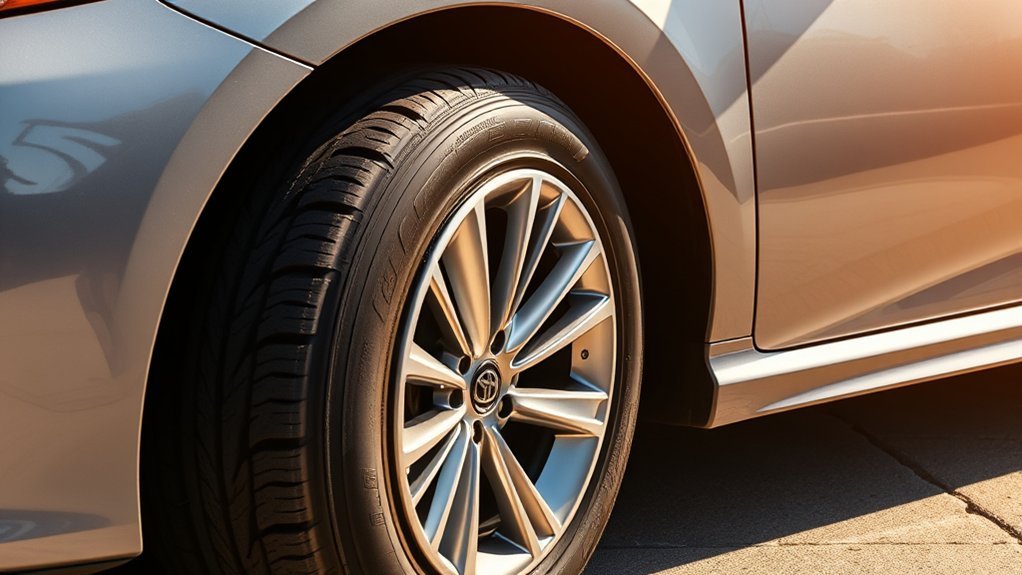
Toyota identifies the 2024 Camry as part of the eighth design generation. The company introduced the redesigned 2025 Camry as the next generation. Therefore, tire information for a 2025 or newer Camry should not be mixed with 2018–2024 fitment data.
A size such as 215/55R17 contains several pieces of information:
- 215: Approximate tire width in millimeters.
- 55: Sidewall height expressed as a percentage of the tire width.
- R: Radial construction.
- 17: Wheel diameter in inches.
The sidewall also shows a load index and speed symbol, such as 94V. Those markings are separate from the size and should not be ignored. A replacement tire must provide enough load capacity for the vehicle and should meet Toyota’s required speed specification unless Toyota or a qualified tire professional approves a different winter-tire arrangement.
Note: The pressure molded into a tire’s sidewall is not the Camry’s recommended operating pressure. It is related to the tire’s rated load. Use the cold-pressure value on the vehicle placard instead.
Common Toyota Camry Stock Tire Sizes
The following chart covers the most common tire-size and wheel-diameter combinations found on U.S.-market 2018–2024 Camry models. It is not a substitute for checking the individual vehicle because regional specifications, hybrid trims, accessory wheels, and option packages can differ.
| Wheel Diameter | Common Tire Size | Typical Applications | General Characteristics |
|---|---|---|---|
| 16 inch | 205/65R16 | The 2018 L and selected efficiency-focused or hybrid configurations, depending on year | Taller sidewall, softer impact response, and usually lower replacement cost |
| 17 inch | 215/55R17 | Many LE and hybrid configurations | Balanced ride comfort, efficiency, and everyday handling |
| 18 inch | 235/45R18 | Many SE, XLE, and higher hybrid configurations | Wider footprint and sharper response with less sidewall cushioning |
| 19 inch | 235/40R19 | Common on XSE, TRD, and selected SE Nightshade or optional sport packages | Quick steering response and sportier appearance, with a firmer ride and greater pothole sensitivity |
For example, Toyota lists 17-, 18-, and 19-inch wheel packages across the 2024 Camry range, while the TRD package uses 19-inch wheels and a 235/40R19 tire specification. Earlier model years also offered different combinations, which is why a trim-only lookup cannot guarantee an exact match.
How to Confirm Your Camry’s Exact Tire Size
- Read the driver-side placard. Open the driver’s door and look on the door jamb or door edge for the tire-and-loading label.
- Compare the current sidewalls. All four road tires should be checked, not just one. The installed size may have been changed by a previous owner.
- Review the owner’s manual and maintenance guide. Use the manual for the correct model year and drivetrain.
- Confirm the wheel diameter. A 17-inch tire cannot be installed on an 18-inch wheel, even when the outside tire diameter appears similar.
- Check the service description. Match the required load capacity and verify the speed specification with Toyota or a tire professional.
- Use the VIN when necessary. A Toyota dealer can use the VIN to help identify factory equipment, although the physical placard remains important if the car has been modified.
Warning: Do not order tires solely from a generic online trim chart. If the sidewall, placard, sales listing, and wheel diameter do not agree, have the vehicle inspected before purchasing replacements.
What If the Current Tire Size Differs From the Placard?
A different size may indicate an approved accessory package, a complete aftermarket wheel conversion, or an incorrect previous replacement. Do not assume the installed size is safe simply because it fits under the fender. A qualified tire or wheel professional should verify:
- Load capacity and speed specification
- Wheel width and tire-width compatibility
- Overall tire diameter and revolutions per mile
- Brake, strut, suspension, and body clearance
- Steering clearance at full lock
- TPMS compatibility
- Effects on the speedometer, odometer, ABS, traction control, and stability control
How to Choose Replacement Tires
Correct size is only the first step. Two tires with identical dimensions can behave differently in rain, cold weather, road noise, steering response, tread life, and braking. Choose a category that matches the climate and the way the Camry is used.
[Products Worth Considering]

Upgrade your wheels with MIKKUPPA M12x1.5 mag seat lug nuts built for secure, corrosion-resistant performance. These closed-end chrome lug nuts are a direct replacement for select Toyota models, including Camry, Corolla, RAV4, Sienna, Avalon, Highlander, Matrix, Venza, and Prius. Triple-chromium plating and cold-forged, heat-treated steel help deliver strength for daily driving and replacement needs.

These universal tire valve stem caps help protect valve cores from dust, debris, and moisture while helping maintain stable tire pressure. The corrosion-resistant metal construction and sealed design provide reliable protection in road grime, mud, and winter conditions. Twist-on installation makes them quick to fit on cars, SUVs, trucks, and motorcycles.

The Continental Grand Prix 5000 is an allround road bike tire engineered for faster rolling, improved ride comfort, and enhanced puncture protection. It features a Vectran Breaker cut-protection layer, Lazer Grip micro-profile tread for confident cornering control, and Active Comfort Technology to damp vibration for smoother rides. BlackChili compound optimizes grip and speed for everyday performance and long-lasting confidence.
Touring All-Season Tires
Touring all-season tires are a practical choice for commuting, highway use, ride comfort, low noise, and long tread life. They suit many LE, XLE, and hybrid owners who prioritize predictable everyday behavior over maximum cornering response.
Performance All-Season Tires
Performance all-season tires generally provide quicker steering response and stronger warm-weather grip than touring designs while retaining some cold-weather flexibility. They can suit SE and XSE drivers, but tread life and ride comfort may be lower than with a touring tire.
Summer Tires
Summer tires are designed for strong warm-weather dry and wet grip. They are not intended for snow, ice, or near-freezing temperatures. A Camry equipped with summer tires needs an appropriate cold-weather set when temperatures fall below the tire manufacturer’s operating range.
Winter Tires
Dedicated winter tires use tread compounds and patterns designed for cold temperatures, snow, and ice. Four matching winter tires are preferable to installing only two because mixed seasonal grip can make the vehicle unbalanced during braking or cornering.
Aftermarket Tire Brands and Product Families
Michelin, Continental, Bridgestone, and Pirelli are among the established manufacturers that offer Camry-compatible sizes. Examples of broad product families include Michelin Primacy and Pilot Sport, Continental ExtremeContact, Bridgestone Potenza, and Pirelli Cinturato. However, the brand or family name does not confirm that a particular tire is right for your car.
Compare exact models using these factors:
- The correct size and wheel diameter
- Load index and speed symbol
- All-season, summer, or winter classification
- Wet-braking and hydroplaning performance
- Cold-weather suitability
- Treadwear warranty terms and exclusions
- Road-noise and ride-comfort priorities
- Availability of a matching replacement if one tire is damaged
- Manufacturer date and storage condition
A less expensive tire that meets the required specifications may be suitable for moderate commuting, while a premium touring or performance tire may provide better refinement or wet-weather behavior. Compare the exact model rather than relying on the manufacturer name alone.
[Products Worth Considering]

These aluminum alloy tire valve stem caps with an O-ring seal help protect valve stems from corrosion while adding a clean, stylish look to your vehicle. The universal fit works across cars, trucks, motorcycles, bicycles, and more, making them an easy upgrade for everyday driving and off-road use. Installation is quick, and the included four-pack keeps all your tires dressed and protected.

Keep your tires properly inflated with this analog VONDIOR tire pressure gauge, designed for fast, easy readings without batteries. The swiveling, two-axis hose and large glow dial help you measure at any tire angle with instant visibility. Built with a protective rubber shield, it supports durable, low-maintenance use for cars and trucks.

These M14x1.5 closed-end chrome lug nuts are a one-piece replacement designed for secure fitment on compatible GM, Ford, and select Chrysler/Dodge models. Featuring a 60-degree conical seat and anti-rust chrome plating, they help resist corrosion and maintain a bright look for everyday driving. Built for long-term durability, they include OEM-style part references and are backed by 12 months of support.
How to Choose the Right Wheels for Your Camry
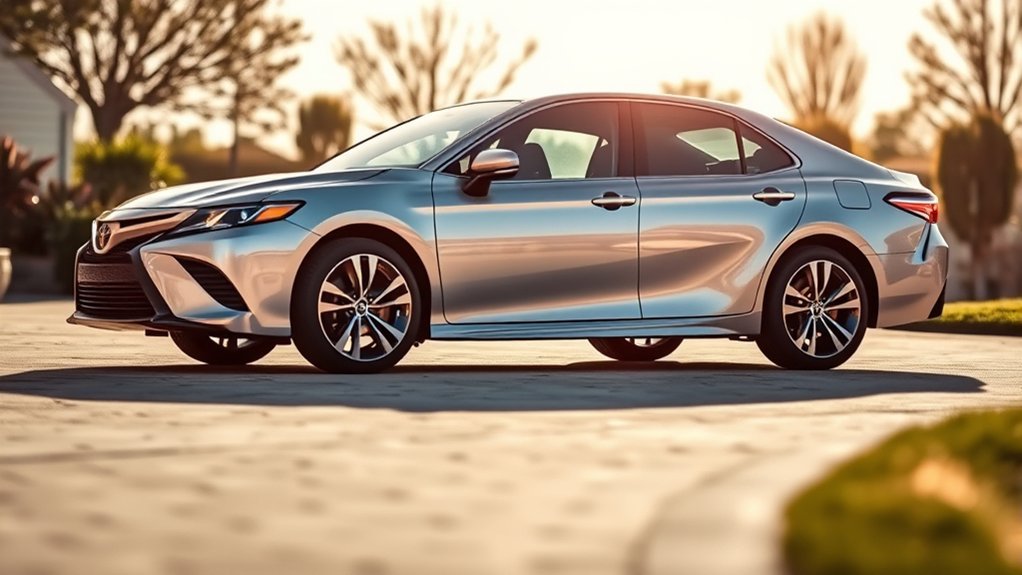
Eighth-generation Camry wheels are commonly listed with a 5×114.3 mm bolt pattern, also described as 5×4.5 inches. Matching that pattern is necessary, but it does not prove that a wheel is safe or compatible.
[Products Worth Considering]

Milton S-921 pencil tire pressure gauge helps you maintain optimal tire pressure for passenger cars with accurate readings in PSI and kPa. It features a built-in deflator valve for convenient pressure adjustments, plus a single chuck head and nylon indicator bar for easy use on the go. Built from durable plated brass and designed for reliable performance, it’s a practical road trip and cold-weather maintenance tool.

Upgrade your wheels with MIKKUPPA closed-end lug nuts designed for reliable fit and corrosion resistance. The one-piece, cold-forged and heat-treated steel construction helps resist rust and stripping, while the integrated finish delivers a durable black appearance. Built to OEM standards with a conical 60-degree seat, these nuts provide a secure solution for compatible Ford, Honda, Jeep, and Chevrolet models.

This professional wheel and rim brush kit makes it easy to lift brake dust, grime, and dirt from wheels and tires without scratching finishes. The brushes feature soft, metal-free wool heads and a flexible 360-degree rim brush design for reaching hard-to-clean areas. Includes multiple brush types plus accessories for thorough car, motorcycle, and general vehicle detailing.
Wheel Fitment Checklist
- Diameter and width: The tire must be approved for the wheel width, and the complete assembly must clear the car.
- Bolt pattern: All five mounting holes must match the Camry hub pattern precisely.
- Center bore: The wheel must fit the hub correctly, either directly or with an approved hub-centric solution.
- Offset and backspacing: These determine how far inward or outward the wheel sits. The correct range depends on wheel width and vehicle configuration.
- Lug-seat design and hardware: The wheel must use the correct seat shape, thread specification, lug engagement, and torque procedure.
- Load rating: Each wheel must be rated to carry the vehicle’s required load.
- Brake and suspension clearance: Check calipers, struts, control arms, bodywork, and full steering movement.
- TPMS: Confirm sensor type, mounting compatibility, and programming requirements.
- Overall tire diameter: A major diameter change can affect indicated speed and vehicle-control systems.
Pro Tip: Ask the wheel supplier to confirm fitment in writing for the exact year, trim, drivetrain, brake package, wheel size, and tire size—not merely for “a Toyota Camry.”
Plus-Sizing Wheels and Tires
Plus-sizing means installing a larger-diameter wheel with a lower-profile tire while keeping the complete tire diameter close to the approved specification. A properly engineered package can sharpen steering response, but it may also:
- Produce a firmer ride
- Increase tire and wheel cost
- Reduce protection against pothole damage
- Increase road noise
- Change wet-weather or winter performance
- Create clearance problems if width, offset, or diameter is wrong
Do not select a plus-size package from diameter calculations alone. Wheel load rating, tire load capacity, brake clearance, suspension travel, and full-lock steering clearance still require confirmation.
Downsizing for Winter
Some owners use a smaller approved wheel with a taller-sidewall winter tire. This can reduce replacement cost and add sidewall cushioning, but the smaller wheel must clear the brakes and have the correct load rating, offset, center bore, lug hardware, and TPMS provision. TRD and other large-brake configurations deserve particular attention before downsizing.
Troubleshooting Common Camry Tire Problems
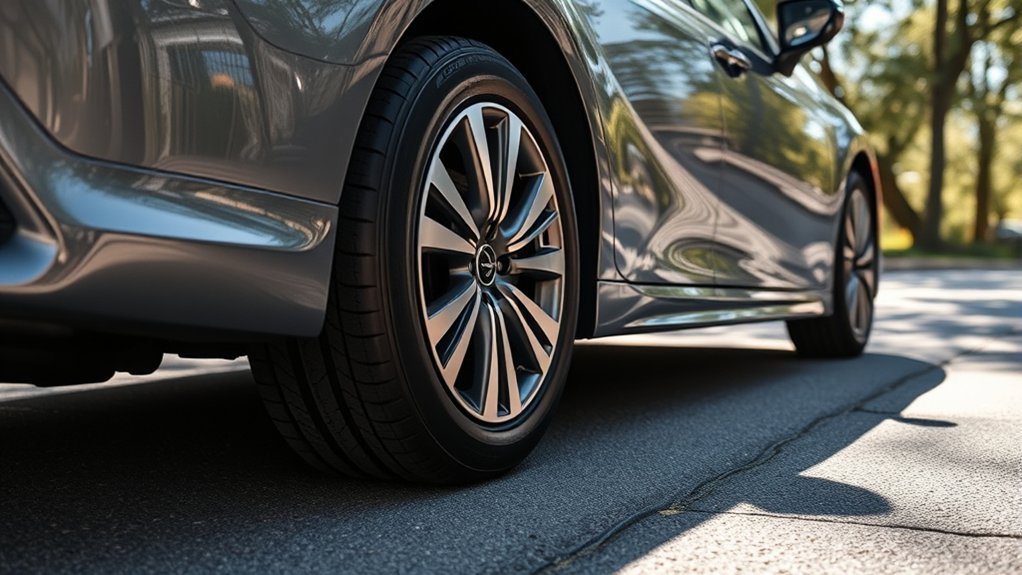
Unusual wear, vibration, pulling, or repeated pressure loss should be investigated promptly. The pattern can provide a clue, but several faults can produce similar symptoms, so a physical inspection is still necessary.
| Symptom | Possible Causes | Recommended Action |
|---|---|---|
| Wear on both shoulders | Persistent underinflation, overloading, or hard cornering | Set cold pressure to the placard value and inspect the tire for heat or structural damage. |
| Heavy center wear | Overinflation or an unsuitable wheel-and-tire combination | Verify pressure with an accurate gauge and confirm wheel-width compatibility. |
| Wear on one edge | Alignment, suspension, or damaged-component issue | Inspect the suspension and measure alignment instead of replacing the tire alone. |
| Cupped or scalloped tread | Wheel imbalance, worn dampers, loose suspension parts, or alignment error | Inspect the tire, balance, wheel condition, dampers, and suspension joints. |
| Vibration at road speed | Imbalance, bent wheel, out-of-round tire, separated tire, or packed debris | Reduce speed and have the assembly inspected and road-force balanced if appropriate. |
| Vehicle pulls to one side | Unequal pressure, alignment, tire construction, dragging brake, or road crown | Check cold pressure first, then inspect alignment, tires, and brakes. |
| Repeated pressure loss | Puncture, valve leak, bead leak, cracked wheel, or tire damage | Have the tire and wheel leak-tested; repeated refilling is not a repair. |
Warning: Do not continue driving on a tire with a sidewall bulge, exposed cords, severe cracking, rapid pressure loss, tread separation, or vibration that begins suddenly. Install the spare if it is safe to do so or arrange roadside assistance.
How Tire Size Can Affect Fuel Economy
Tire size can influence efficiency, but it is only one part of the result. Tire construction, tread compound, rolling resistance, pressure, alignment, vehicle speed, weather, and driving style also matter.
A wider or heavier replacement may increase aerodynamic drag, rotational mass, or rolling resistance. A larger wheel can also require a lower-profile tire that changes weight and deformation characteristics. However, there is no dependable rule that every larger tire will reduce economy by a fixed number of miles per gallon.
Underinflation increases tire flex and rolling resistance. Check pressure when the tires are cold and use the vehicle placard rather than the maximum pressure printed on the sidewall. NHTSA also notes that lower-rolling-resistance tires can improve efficiency, but traction, durability, ride quality, climate, and correct load capacity must still be considered.
An incorrect overall diameter can change the indicated speed and odometer reading, which may make a hand-calculated fuel-economy result appear better or worse than it really is. It can also affect systems that compare wheel speed, so tire-diameter changes should be professionally approved.
Maintenance Tips to Extend Camry Tire Life
Regular inspection helps tires wear more evenly and makes damage easier to catch before it becomes an emergency.
| When | What to Check |
|---|---|
| At least monthly | Measure cold pressure in all road tires and the spare if equipped. Inspect tread, sidewalls, valve stems, and embedded objects. |
| Before a long trip or heavy load | Recheck cold pressure and inspect for damage. Follow the placard and owner’s manual rather than adding pressure by guesswork. |
| At the Toyota maintenance interval | Rotate tires when specified and record their positions. NHTSA notes that 5,000 to 8,000 miles is a common interval when the manufacturer recommends rotation. |
| After a pothole, curb strike, or new symptom | Inspect the tire and wheel, then check balance or alignment if the car vibrates, pulls, or develops uneven wear. |
| When tread is low | Replace at or before 2/32 inch. Earlier replacement may be sensible when dependable wet or snow traction is required. |
| As tires age | Read the DOT date code and arrange professional inspection. Many vehicle and tire manufacturers recommend age-based replacement within roughly six to ten years, even when tread remains. |
The last four digits of the DOT tire identification code show the production week and year. For example, 2324 means the tire was manufactured in the 23rd week of 2024. The full code may appear on only one sidewall, so the inner side of the tire may need to be checked.
Cold weather can lower measured pressure even when no air has escaped, while warm driving raises pressure as the tire heats. Do not bleed a warm tire down to the cold placard value. Let it cool and measure it again.
Frequently Asked Questions
What size tires does a 2018 Toyota Camry have?
Common 2018 Camry sizes include 205/65R16, 215/55R17, 235/45R18, and 235/40R19, depending on the trim and factory wheel package. Check the driver-side tire-and-loading placard because the trim name alone does not guarantee the installed size.
What tire pressure should I use in my Camry?
Use the cold inflation pressure printed on the driver-side tire-and-loading placard. Do not use the tire sidewall’s maximum pressure as the vehicle setting, and do not assume one pressure applies to every Camry trim or wheel package.
Can I replace 19-inch Camry wheels with 18- or 17-inch wheels?
A smaller wheel may be possible only as a complete, verified wheel-and-tire package. It must clear the brakes, match the mounting system, provide enough load capacity, use a suitable tire diameter, and work with the TPMS. Large-brake configurations such as the TRD require extra clearance checks.
Can I mix tire brands or models on a Toyota Camry?
Four matching tires are preferred because different models can have different grip, construction, and response. At minimum, tires on the same axle should match in size, model, construction, and comparable wear. AWD models can be more sensitive to circumference differences, so follow Toyota’s replacement guidance.
What is the bolt pattern for an eighth-generation Camry?
It is commonly listed as 5×114.3 mm, also written as 5×4.5 inches. That measurement alone does not confirm wheel fitment. Center bore, width, offset, lug-seat design, load rating, brake clearance, tire size, and TPMS compatibility must also be checked.
When should Camry tires be replaced?
Replace a tire when tread reaches 2/32 inch, or sooner when wet or snow traction is no longer adequate. Replacement is also necessary for nonrepairable punctures, bulges, exposed cords, separation, severe cracking, or other structural damage. Tire age should be considered even when tread remains.
Conclusion
The common eighth-generation Toyota Camry tire sizes are 205/65R16, 215/55R17, 235/45R18, and 235/40R19, but the correct choice depends on the exact 2018–2024 model, trim, and wheel package. Confirm the driver-side placard before ordering, preserve the required load capacity and speed specification, and have any nonfactory wheel package checked for complete fitment. Correct cold pressure, regular rotation, damage inspections, and prompt attention to unusual wear or vibration will help protect handling, tire life, and safety.
Sources
- Toyota USA Newsroom: 2024 Toyota Camry — confirms that the 2024 model belongs to the eighth design generation.
- Toyota USA Newsroom: Next-Generation 2025 Camry — establishes the generation change after 2024.
- Toyota USA Newsroom: 2018 Camry Press Kit — provides official context for the eighth-generation launch and trim range.
- Toyota USA Newsroom: 2024 Camry Product Release — supports factory wheel-package and TRD tire information.
- National Highway Traffic Safety Administration: TireWise — supports pressure, tread-depth, tire-age, rotation, and replacement-safety guidance.
- Toyota: How to Check Tire Pressure — supports checking cold pressure and using the driver-side placard.