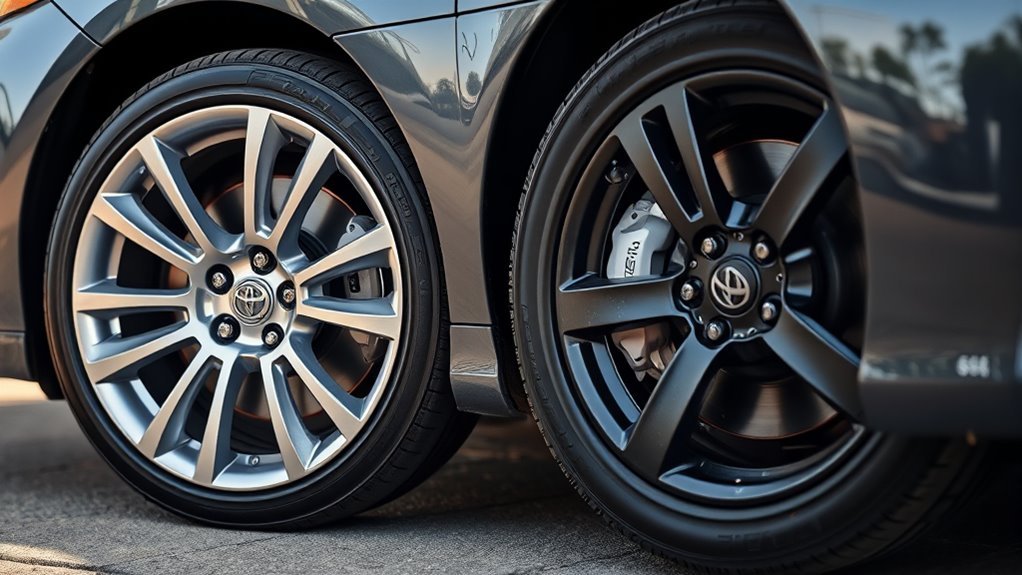
If you’re choosing replacement rims for a Toyota Camry, the material is only part of the decision. Aluminum alloy wheels are often lighter and offer more design choices, while steel wheels are usually simpler and less expensive. However, the best setup depends on the complete wheel-and-tire weight, tire sidewall, road conditions, budget, and—most importantly—correct fitment for your Camry’s exact model year and trim.
Quick Answer
Alloy wheels are usually the better choice for most Camry drivers because they combine lower weight, factory-style appearance, and broad availability. Steel wheels can still make sense for a lower-cost winter setup. Neither material guarantees better snow traction, fuel economy, or ride quality by itself; tire choice, wheel size, and correct fitment matter more.
Key Takeaways
- Compare the weight of the complete wheel-and-tire assembly, not material labels alone.
- Winter grip comes mainly from the tire’s tread, compound, condition, and inflation—not from a heavier steel rim.
- A smaller approved wheel with a taller tire sidewall may ride more comfortably than a larger low-profile setup.
- Verify diameter, width, offset, load capacity, brake clearance, lug-seat type, tire size, and TPMS compatibility before buying.
- Use the tire size and cold pressure listed for your exact Camry on the door placard or in the owner’s manual.
What’s the Difference Between Camry Steel and Alloy Wheels?
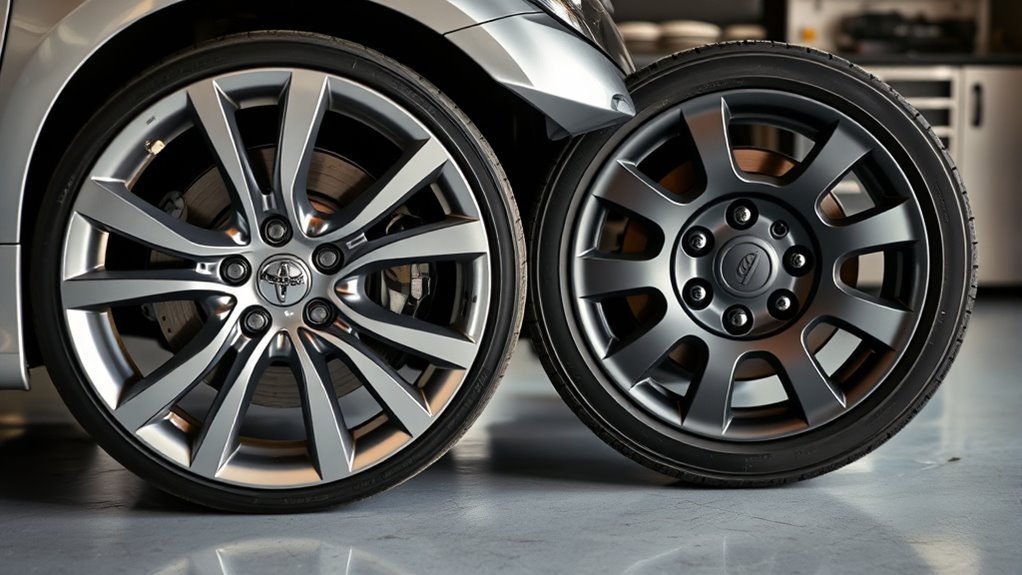
Steel and aluminum alloy wheels differ in construction, weight, appearance, price, and the way they may respond to damage. Steel wheels use a simple formed construction that is often inexpensive to replace. Alloy wheels are cast or forged into more varied shapes and finishes, so they are commonly used when appearance, brake ventilation, and weight control matter.
Do not assume every alloy wheel is lighter than every steel wheel. Diameter, width, spoke design, manufacturing method, and load rating all affect weight. A large aftermarket alloy wheel with a wide tire can weigh more than a smaller steel setup. For a fair comparison, weigh or check the listed weight of the complete wheel-and-tire assembly.
| Factor | Aluminum Alloy | Steel |
|---|---|---|
| Weight | Often lighter for a comparable size, but not always | Often heavier for a comparable size |
| Appearance | More spoke designs, colors, and machined finishes | Simple appearance; wheel covers may be used |
| Impact behavior | May bend or crack depending on design and impact | Often bends before cracking, but severe damage still requires replacement |
| Corrosion | Can oxidize or pit when coatings are damaged and salts remain | Can rust when paint or coating is chipped |
| Typical use | Factory daily driving, styling, and performance-oriented setups | Budget replacements and some winter wheel packages |
Equipment varies by year and trim. For example, Toyota lists the 2026 U.S. Camry LE with 16-inch alloy wheels, so the old rule that every base Camry uses steel wheels is not reliable. Check your exact model rather than buying from a general trim assumption.
[Products Worth Considering]

These aluminum alloy tire valve stem caps with an O-ring seal help protect valve stems from corrosion while adding a clean, stylish look to your vehicle. The universal fit works across cars, trucks, motorcycles, bicycles, and more, making them an easy upgrade for everyday driving and off-road use. Installation is quick, and the included four-pack keeps all your tires dressed and protected.

These universal tire valve stem caps help protect valve cores from dust, debris, and moisture while helping maintain stable tire pressure. The corrosion-resistant metal construction and sealed design provide reliable protection in road grime, mud, and winter conditions. Twist-on installation makes them quick to fit on cars, SUVs, trucks, and motorcycles.

Upgrade your wheels with MIKKUPPA M12x1.5 mag seat lug nuts built for secure, corrosion-resistant performance. These closed-end chrome lug nuts are a direct replacement for select Toyota models, including Camry, Corolla, RAV4, Sienna, Avalon, Highlander, Matrix, Venza, and Prius. Triple-chromium plating and cold-forged, heat-treated steel help deliver strength for daily driving and replacement needs.
How Alloy Wheels Can Affect Camry Performance
A lighter wheel-and-tire assembly can reduce unsprung and rotational mass. That may help the suspension follow road changes and may make acceleration or steering feel slightly more responsive. The result depends on the actual weight difference, tire construction, wheel diameter, and suspension tuning.
Lighter Weight Benefits
Reducing weight at each corner can lower the mass that the suspension must control and the inertia the drivetrain must accelerate. The benefit is usually most noticeable when the replacement assembly is meaningfully lighter than the original. A switch to a larger alloy wheel can cancel the advantage if the wider wheel and tire add weight.
- Acceleration: Less rotating mass can reduce the energy needed during repeated starts and speed changes.
- Suspension response: Lower unsprung mass can help the wheel follow small road changes more easily.
- Steering feel: A lighter assembly may feel more immediate, although tire sidewall stiffness and tread design also matter.
- Brake cooling: Open-spoke wheel designs may allow more airflow, but cooling depends on the complete wheel and brake design—not simply the metal used.
Better Handling Response
Alloy wheels do not automatically improve handling. A properly designed lighter wheel can help, but grip still comes from the tires, alignment, suspension, and road surface. Wider or lower-profile tires may sharpen turn-in while also increasing noise, impact harshness, tramlining, or pothole-damage risk.
Pro Tip: When comparing two Camry wheel options, record wheel weight, tire weight, tire size, and load rating. A lighter wheel paired with a much heavier tire may not reduce total rotating mass.
Why Steel Wheels Can Make Sense for Winter Driving
Steel wheels can be practical for winter because they are often less expensive, use simple finishes, and may be available in smaller approved sizes that leave more tire sidewall. That makes cosmetic damage from salt, slush, and road debris less painful financially. The wheel material itself does not create winter grip.
[Products Worth Considering]

Upgrade your Toyota’s wheels with durable aluminum alloy valve stem caps that help protect valve cores from corrosion and direct exposure to road grime, clay, water, and snow. Rubber rings improve sealing to help prevent air leakage and maintain stable tire pressure for safer driving. These caps are easy to install or remove without tools and add a unique, stylish look to your car.

Upgrade your vehicle’s look with glossy hubcap wheel covers designed for 16-inch steel wheels. These snap-on replacements help protect against scratches, rust, and brake dust while offering durable, impact-resistant ABS construction. Installation is quick with no special tools, and the covers are easy to clean with water. Note: they are not compatible with alloy rims or damaged/deformed steel wheels.

Measure tire tread depth quickly and accurately with this LUMITECO dial gauge that reads in 1/32" increments up to 14/32". The color-coded green/yellow/red zones make it easy to judge tire wear and know when replacement is needed. A rugged, compact design with a protective pouch helps keep the gauge ready for use on cars, trucks, motorcycles, and more.
Winter Impact Resistance
Steel wheels often deform by bending under an impact, while some alloy wheels may crack depending on their design and the force involved. This does not make every steel wheel stronger than every alloy wheel. Wheel quality, load rating, shape, size, manufacturing method, tire sidewall, speed, and pothole depth all affect the outcome.
- Inspect any wheel after a hard pothole or curb strike.
- Watch for vibration, steering pull, air-pressure loss, visible bends, cracks, or damaged lug holes.
- Replace a wheel that is cracked, severely deformed, heavily corroded, or unable to seal safely.
- Have structural wheel repairs evaluated by a qualified wheel or tire professional.
Lower Repair Costs
Basic steel wheels are often cheaper to replace than styled factory alloy wheels, and minor steel bends may sometimes be serviceable. However, a damaged wheel should not be straightened casually with home tools. The bead seat, lug holes, center section, and runout must remain within safe limits.
Both materials need winter care. Steel can rust where paint is chipped. Aluminum does not form red rust, but it can oxidize, pit, and corrode under damaged coatings or trapped deicing salts. Research on aluminum alloys confirms that deicing-salt chemistry can affect corrosion behavior, so rinsing and inspection matter for either material.
Do Steel Wheels Provide Better Snow Traction?
No. A heavier steel wheel does not meaningfully increase the vehicle’s weight at the tire contact patch; the Camry’s total load is already supported by all four tires. Snow and ice traction depends mainly on tire compound, tread pattern, tread depth, inflation, temperature, and driving technique.
NHTSA states that winter tires are more effective than all-season tires in deep snow. If you regularly drive in severe winter conditions, an approved smaller wheel paired with the correct-size winter tire can be a sensible package—but the tire is what delivers the traction advantage.
Note: Cold weather lowers tire pressure. Check all four tires when cold and use the pressure on the Camry’s driver-door placard, not the maximum pressure molded on the tire sidewall.
How Wheel Weight Affects Camry Fuel Economy
Wheel weight can affect the energy needed to accelerate, but there is no credible basis for promising a 10–15% fuel-economy gain from alloy wheels alone. At steady highway speed, aerodynamics and tire rolling resistance usually matter more than the small difference between two properly sized wheel sets.
NHTSA reports that a 10% reduction in tire rolling resistance is associated with roughly a 1–2% improvement in vehicle fuel economy. That helps put wheel-weight claims in perspective: tire design, inflation, alignment, wheel diameter, and driving conditions can outweigh the effect of wheel material.
Choose wheels by verified assembly weight and fitment—not by an advertised percentage attached to “steel” or “alloy.”
Which Wheels Improve Camry Ride Quality?
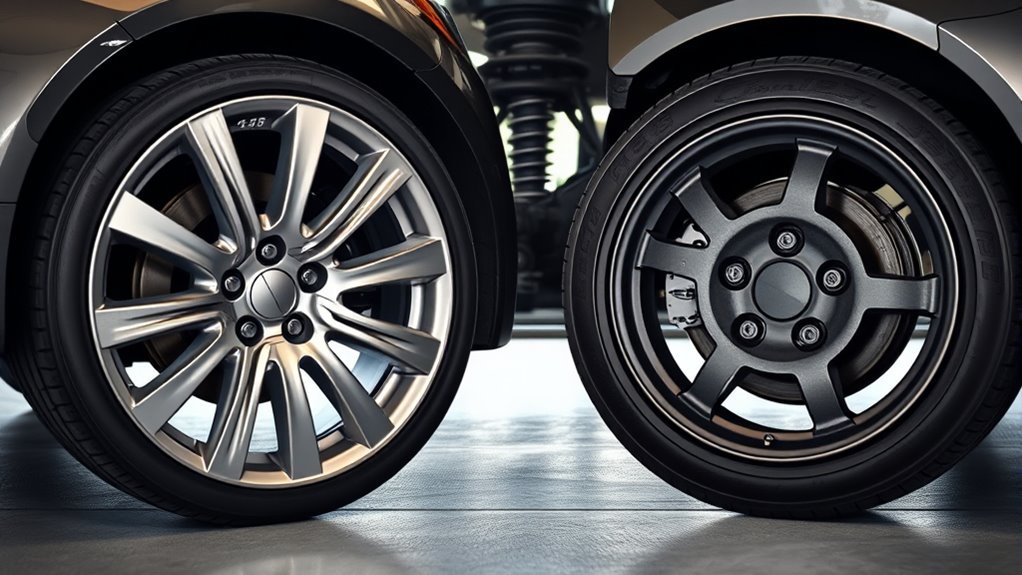
Ride quality is influenced more by wheel diameter, tire sidewall height, tire construction, inflation pressure, and assembly weight than by material alone. A smaller approved wheel generally allows a taller tire sidewall, which can absorb sharp bumps better. A larger wheel usually requires a lower-profile tire to keep overall tire diameter close to stock, and that can make potholes feel harsher.
- For comfort: Favor an approved smaller diameter with a taller sidewall and a comfort-focused tire.
- For sharper response: A larger approved wheel and lower-profile tire may feel more direct but can ride firmer.
- For pothole protection: More sidewall usually gives the tire more room to absorb impact before the wheel is hit.
- For low vibration: Use correctly centered wheels, proper lug hardware, accurate balancing, and undamaged tires.
A lighter assembly may help the suspension react, but an oversized alloy wheel with a stiff low-profile tire can ride worse than a smaller steel wheel. Compare the complete package and stay within Toyota-approved dimensions.
Which Wheel Type Handles Damage Better?
Steel wheels often bend rather than fracture, which can make damage easier to see and sometimes easier to service. Alloy wheels can also bend, and some impacts may cause cracks that are difficult to detect without a careful inspection. Neither material should be considered immune to structural failure.
Do not keep driving on a wheel that is cracked, leaking, badly bent, heavily corroded, or causing severe vibration. A cosmetic surface scrape is different from damage to a spoke, barrel, bead seat, lug hole, or hub-mounting surface. When in doubt, remove the wheel from service and have it inspected.
How Much Do Camry Wheel Repairs Cost?
Camry wheel-repair prices vary too much by region, wheel size, finish, damage, and labor to give one reliable national range. Steel-wheel straightening may cost less than alloy refinishing or structural repair, but replacement can be safer and more economical when damage is severe.
A complete estimate may include:
- Wheel inspection, runout measurement, and leak testing
- Tire removal and installation
- Wheel straightening or cosmetic refinishing
- New tire, valve stem, or TPMS sensor service
- Balancing, alignment, and replacement lug hardware
- A replacement wheel when repair is unsafe or uneconomical
Compare the repair quote with the price of a correct replacement wheel. A cheap repair is not a good value if the wheel cannot hold air, center correctly, accept proper lug torque, or meet its original structural requirements.
How to Choose Wheels That Fit Your Camry
Camry wheel specifications change by model year, trim, drivetrain, brake package, and market. Use your VIN, driver-door placard, and exact owner’s manual before ordering. NHTSA recommends using the original tire size or another size recommended by the vehicle manufacturer.
- Confirm wheel diameter and width. The tire must be approved for the rim width, and the complete assembly must clear the suspension and body.
- Match the bolt pattern and center fit. The wheel must seat correctly on the hub and use the correct mounting hardware.
- Verify offset. Incorrect offset can move the tire inward or outward, causing rubbing, altered steering feel, or added component stress.
- Meet or exceed load capacity. Never use a wheel or tire with an inadequate load rating.
- Check brake clearance. Diameter alone does not guarantee clearance around the caliper and rotor.
- Use the correct lug-seat type and nuts. Conical, ball, and flat seats are not interchangeable.
- Plan for TPMS. Confirm sensor compatibility, installation, and registration requirements for your model year.
- Keep overall tire diameter appropriate. A major change can affect clearance, speedometer accuracy, gearing, and driver-assistance behavior.
Warning: Do not buy Camry wheels by diameter and bolt pattern alone. Wrong width, offset, load rating, center fit, lug-seat design, tire size, or brake clearance can cause rubbing, vibration, loose hardware, tire damage, or loss of control. Have a qualified installer verify fitment and use the torque procedure for your exact model year.
You can access Toyota’s model-specific documentation through the Toyota Owners manuals and warranties portal. This is more reliable than applying one specification to every Camry generation.
Which Wheel Material Is Best for Your Camry?
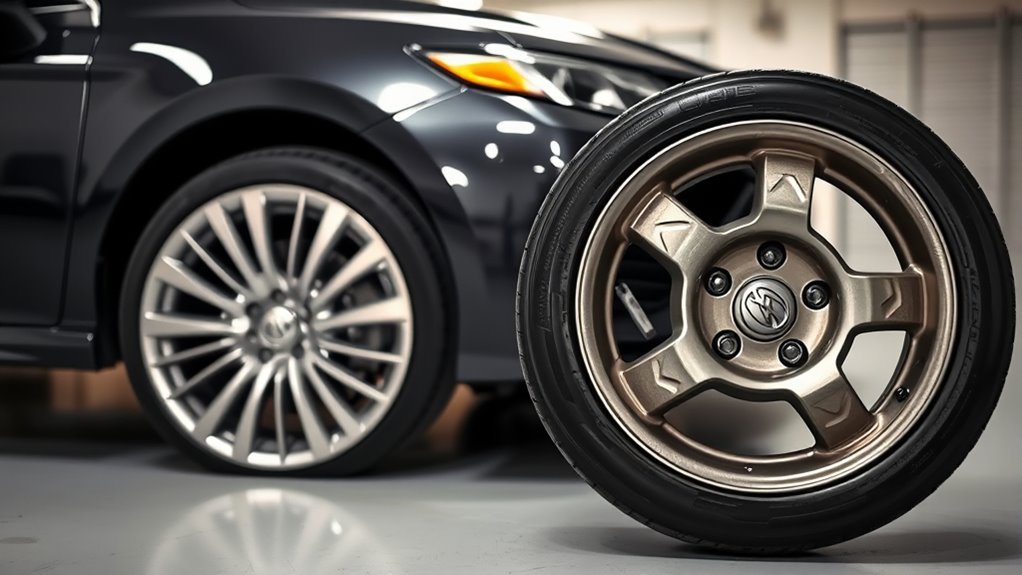
For most Camry owners, a correctly sized factory or high-quality aftermarket alloy wheel is the most balanced choice. It preserves the car’s intended appearance, is widely available in model-specific sizes, and may reduce weight when compared with a similar steel wheel.
Steel wheels are a reasonable choice when you want a basic, lower-cost second set for winter tires and a verified steel fitment exists for your exact Camry. They are not automatically safer, more corrosion-resistant, or better in snow. The tire and fitment remain more important than the rim material.
- Choose alloy for factory-style appearance, more design choices, and the possibility of lower assembly weight.
- Choose steel for a simple budget wheel when an approved size, load rating, brake clearance, and hardware package are available.
- Choose a smaller approved diameter when ride comfort, winter-tire availability, or pothole protection matters.
- Keep the original setup when you are unsure about offset, load rating, TPMS, or brake clearance.
[Products Worth Considering]

Upgrade your Toyota tire setup with these corrosion-resistant, leak-proof valve stem caps designed to help protect the valve core from water, snow, and road grime. The caps feature a snug rubber seal and durable copper alloy construction to resist rust and oxidation while maintaining stable tire pressure. Ideal for replacing worn original caps and keeping your wheels looking clean and stylish.

Monitor tire tread wear with a smart, color-coded depth gauge that shows clear condition ranges at a glance. The bar is range marked for fast, easy readings, helping you maintain safer traction and performance. Each gauge is portable with a pocket clip, and the set includes 20 units for daily use and sharing.

These universal tire valve stem caps help protect your valve core from dust, debris, moisture, and corrosion, supporting more stable tire pressure. The aluminum alloy design resists long-term wear, while the sealing construction helps help prevent air leakage. They twist on easily for quick installation and help safeguard driving safety across cars, SUVs, trucks, and motorcycles.
Frequently Asked Questions
What are Toyota Camry rims made of?
Camry wheels may be steel or aluminum alloy depending on model year, trim, market, and equipment. Current models should be checked individually; Toyota lists alloy wheels even on the 2026 Camry LE.
Are Toyota wheels steel or aluminum?
Toyota uses both materials across its vehicle range. For a Camry, verify the wheel fitted to your exact year and trim rather than assuming the base trim is steel or the higher trim is alloy.
Can I put steel wheels on a Camry that came with alloy wheels?
Possibly, but only when the steel wheel has the correct diameter, width, offset, bolt pattern, center fit, load capacity, brake clearance, lug-seat design, and compatible tire size. Confirm the setup for your VIN and model year with Toyota documentation or a qualified installer.
Do steel wheels improve traction in snow?
No meaningful traction advantage comes from the steel itself. Winter traction is controlled mainly by the tire compound, tread design, tread depth, pressure, temperature, and road surface. A steel wheel may simply be a less expensive platform for a dedicated winter tire.
Will larger alloy wheels improve Camry handling?
They may sharpen steering response when paired with lower-profile tires, but they can also increase ride harshness, noise, weight, and pothole-damage risk. Larger is not automatically better; use only an approved size and compare the complete assembly.
Should a bent or cracked Camry wheel be repaired?
A qualified wheel specialist should inspect it first. Cosmetic refinishing is different from structural repair. Cracks, severe deformation, damaged lug holes, bead-seat damage, heavy corrosion, repeated air loss, or excessive runout may make replacement the safer choice.
Conclusion
Choosing between Camry alloy and steel wheels comes down to the complete setup, not a simple material winner. Alloy wheels are usually the strongest all-around choice for daily use and appearance. Steel wheels can be useful for a budget winter package when a verified fit exists. In every case, prioritize approved dimensions, load capacity, brake clearance, correct hardware, TPMS compatibility, and the right tires for your driving conditions.
Sources
- Toyota — 2026 Camry model and wheel information — verifies current U.S. trim-specific alloy-wheel equipment.
- Toyota Owners — Manuals and warranties — provides model-year-specific wheel, tire, pressure, and service guidance.
- National Highway Traffic Safety Administration — TireWise — supports tire sizing, placard pressure, winter-tire, tread, balancing, and rolling-resistance guidance.
- National Highway Traffic Safety Administration — Winter weather driving tips — supports cold-pressure checks and winter tire considerations.
- Materials and Corrosion — Aluminum alloy in deicing salt — supports the statement that aluminum alloys can corrode or pit in deicing-salt environments.