
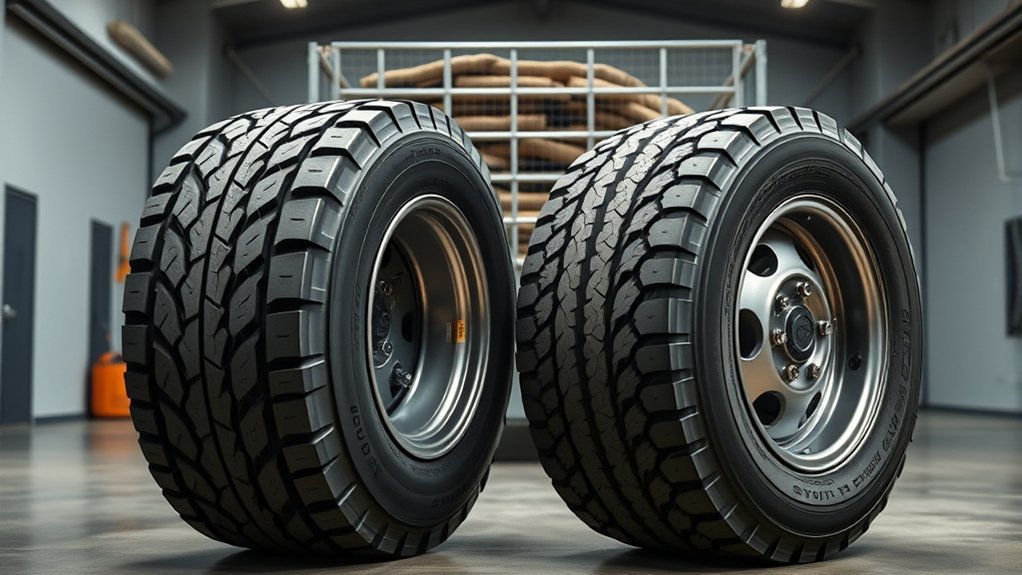
When you compare 14-ply vs 16-ply tires, the numbers do not usually describe the actual number of layers inside a modern radial tire. They are strength classifications tied to load range. In the common commercial-truck convention, a 14-ply rating corresponds to Load Range G, while a 16-ply rating corresponds to Load Range H. The right choice depends on the tire size, load index, required cold inflation pressure, axle load, wheel rating, and the vehicle manufacturer’s limits.
Quick Answer
A 16-ply-rated tire, commonly Load Range H, can have a higher maximum load-and-pressure capability than a 14-ply-rated Load Range G tire of the same size. However, there is no universal weight difference, and a higher rating does not increase your vehicle’s GAWR or GVWR. Compare the exact load index, load/inflation table, wheel limits, and axle weight.
Key Takeaways
- 14-ply rating commonly equals Load Range G, while 16-ply rating commonly equals Load Range H in commercial truck tire terminology.
- Ply rating is a strength classification, not a literal count of the physical plies in a modern radial tire.
- A Load Range H tire may offer a higher maximum load capacity, but the exact difference depends on tire size, load index, construction, and required inflation pressure.
- Do not assume a 16-ply tire carries more than a 14-ply tire at the same PSI; use the manufacturer’s load/inflation table.
- A higher-capacity tire does not increase the vehicle’s GVWR, GAWR, suspension capacity, hitch rating, wheel rating, or legal payload limit.
- Load range alone does not guarantee better puncture resistance, fuel economy, tread life, or ride comfort.
What Does Ply Rating Mean?
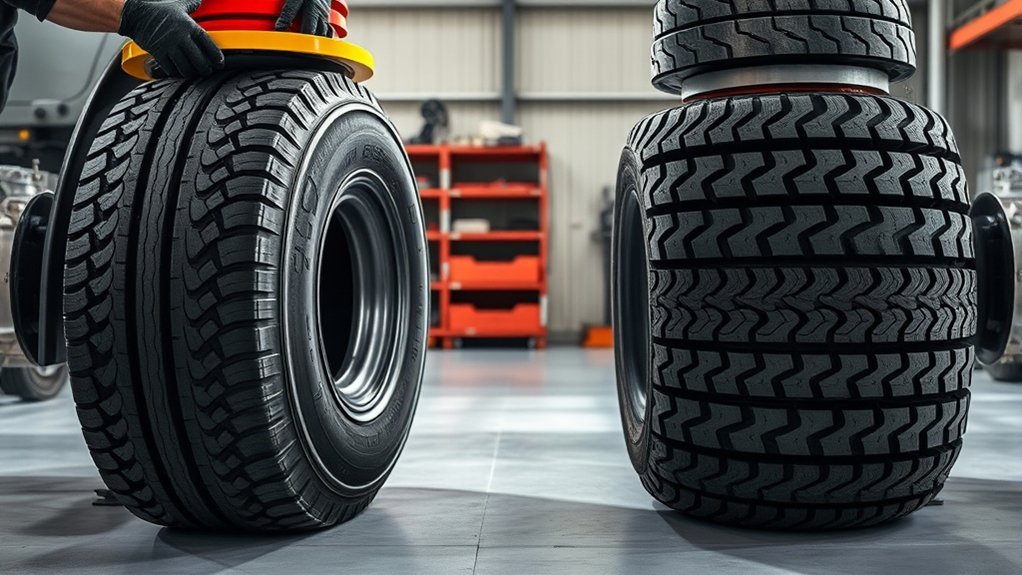
Ply rating tells you a tire’s relative strength and load/inflation classification. It does not necessarily tell you how many physical fabric or steel layers are inside the tire.
Modern radial truck tires can use strong steel cords, belt packages, rubber compounds, and other reinforcements that provide the required strength with far fewer physical body plies than an old-style ply rating suggests.
In the common commercial-truck system, the typical relationship is:
- Load Range F: 12-ply rating
- Load Range G: 14-ply rating
- Load Range H: 16-ply rating
- Load Range J: 18-ply rating
The important number is not how many layers you imagine are inside the tire. It is how much load that specific tire is rated to carry at a specified cold inflation pressure.
Two tires with the same nominal ply rating can still differ in size, load index, speed rating, tread design, casing construction, approved rim width, maximum pressure, and actual maximum load. Always read the complete sidewall and the tire manufacturer’s technical data.
How to Read the Sidewall Before Choosing
Before comparing 14-ply and 16-ply tires, identify the specifications that actually control the fitment.
- Tire size: Compare the complete size designation, such as 295/75R22.5. A different size can have a very different load capacity even when the load range is the same.
- Load range: Look for a letter such as G or H. This identifies the tire’s load-and-inflation capability category.
- Load index: A service description such as 144/141L uses the first load index for single service and the second for dual service, followed by the speed symbol.
- Maximum load and cold pressure: Applicable truck tires show the maximum single and/or dual load together with the cold inflation pressure corresponding to that maximum.
- Actual ply composition: The sidewall can separately state the physical ply materials and counts used in the tread and sidewall.
Note: The pressure printed beside the tire’s maximum load is not automatically the correct everyday pressure for every vehicle and load. Follow the vehicle manufacturer’s requirements and, where applicable, the tire manufacturer’s load/inflation table for the actual load carried.
14 Ply Vs 16 Ply Tires at a Glance
The biggest practical difference is that a 16-ply-rated tire normally belongs to a higher load range than a comparable 14-ply-rated tire. That can provide a higher maximum load-and-pressure envelope, but it does not make every Load Range H tire superior in every other performance category.
| Typical designation | 14-ply rating commonly corresponds to Load Range G; 16-ply rating commonly corresponds to Load Range H. |
| Physical plies | Neither rating means the tire literally contains 14 or 16 body plies. |
| Maximum capacity | Load Range H can provide a higher maximum capacity in the same tire size, but the exact difference comes from the load index and manufacturer specifications. |
| Inflation capability | The higher load range may allow a higher cold pressure to support its maximum rated load. The tire, rim, wheel, and valve system must all be suitable for that pressure. |
| Ride quality | A higher operating pressure can feel firmer, but load range alone does not determine ride comfort. |
| Puncture resistance | Not guaranteed by the ply rating. Tread, belts, sidewall protection, casing design, and compounds matter. |
| Vehicle payload | A higher-rated tire does not increase the vehicle’s certified GVWR or GAWR. |
[Products Worth Considering]

Keep your tires properly inflated with this analog VONDIOR tire pressure gauge, designed for fast, easy readings without batteries. The swiveling, two-axis hose and large glow dial help you measure at any tire angle with instant visibility. Built with a protective rubber shield, it supports durable, low-maintenance use for cars and trucks.

A concentrated tire and tube mounting compound designed to help simplify mounting rubber tires and tubes on passenger, semi truck, construction, and OTR applications. Its ultra-thick formula packs beads effectively and includes rust inhibitors to help protect against corrosion during use.

TP-M13W combination repair unit kit includes wrapped stems with matching patches for fast, reliable tire repairs. It’s suitable for both radial and bias ply tires and is designed for chemical or heat vulcanization. Gray vulcanizing gum with blue backing helps create a strong bond, with the stem portion wrapped for added effectiveness.
How Much Weight Can 14 Ply Tires Carry?
There is no universal pound rating for every 14-ply tire. A 14-ply-rated tire is commonly a Load Range G tire, but its actual maximum load depends on the tire size, load index, single or dual application, inflation pressure, and manufacturer specifications.
For example, industry guidance uses a 295/75R22.5 Load Range G tire with a 144/141 service description to illustrate a maximum of 6,175 pounds in single service and 5,675 pounds per tire in dual service at 110 psi cold. Those numbers belong to that specification; they should not be copied to every Load Range G tire.
The single-versus-dual distinction is important. A tire can have a lower per-tire rating when used as one tire in a dual pair. A dual-equipped axle still gains total capacity because four tires are carrying the axle load instead of two.
Pro Tip: Weigh the vehicle in its normal loaded condition and use the actual axle load with the correct single or dual load/inflation table. Do not choose a tire from the empty vehicle weight alone.
How Much More Weight Can 16 Ply Tires Carry?
There is no fixed answer such as “500 pounds more” or “700 pounds more.” A 16-ply-rated tire commonly falls in Load Range H, but the extra maximum capacity varies with size, model, load index, inflation capability, and whether the tire is used singly or in a dual assembly.
A useful apples-to-apples example comes from a current 2026 commercial-truck data guide. For one 295/75R22.5 tire model, the Load Range G version is rated at 6,175 pounds single and 5,675 pounds dual at its stated maximum pressure, while the Load Range H version of the same size is rated higher at 7,160 pounds single and 6,610 pounds dual at a higher stated maximum pressure.
In that specific example, the maximum difference is 985 pounds in single service and 935 pounds per tire in dual service. Those figures demonstrate the principle, but they are not universal G-versus-H numbers.
Load Capacity Difference
The useful advantage of Load Range H is its ability to support a higher rated maximum load in applications where the tire size, pressure capability, and vehicle requirements allow it.
Do not interpret that to mean an H tire automatically carries more than a G tire at the exact same pressure. The load supported at a particular PSI must come from the applicable manufacturer load/inflation table.
| Comparison | Correct interpretation |
|---|---|
| 14-ply vs 16-ply label | Typical Load Range G versus Load Range H classification. |
| Maximum load | H can be higher, depending on the specific tire size and load index. |
| Same PSI | Do not assume H carries more; check the manufacturer’s load/inflation table. |
| Vehicle payload | Still limited by the vehicle, axle, wheel, suspension, hitch, and applicable legal ratings. |
Real-World Carrying Limits
Tire capacity is only one part of the load equation. The vehicle must remain within every applicable limit, including the Gross Axle Weight Rating (GAWR), Gross Vehicle Weight Rating (GVWR), wheel/rim rating, hitch or coupling rating, suspension limits, and any applicable legal weight limits.
Warning: Installing a higher-capacity 16-ply/Load Range H tire does not raise the vehicle’s certified GAWR or GVWR. Never use a tire upgrade as permission to load the vehicle beyond its manufacturer ratings.
If a Load Range G tire already provides the required capacity for the fully loaded axle at an approved pressure, moving to Load Range H may provide no usable increase in legal vehicle payload.
Which Tire Rating Fits Your Use Case?
Choose between 14-ply and 16-ply tires by starting with the load the tire actually has to support, not by assuming the higher number is automatically better.
Choose the tire from actual axle load, approved size, load index, inflation requirements, wheel limits, speed capability, and service conditions—not from ply rating alone.
A 14-ply-rated Load Range G tire can be appropriate when its stated capacity safely satisfies the required axle load and the vehicle manufacturer approves the specification.
A 16-ply-rated Load Range H tire makes sense when the application requires a higher load capacity or pressure capability that the comparable Load Range G tire cannot provide, and the wheel/rim assembly and vehicle specification support the change.
- Check the vehicle certification label, tire placard, and owner or service manual.
- Identify the required tire size, GAWR, GVWR, load index, and speed capability.
- Weigh the vehicle in its normal loaded condition.
- Use the tire manufacturer’s load/inflation table for that exact tire and axle application.
- Verify the rim/wheel load and pressure rating before using a higher-pressure tire.
[Products Worth Considering]
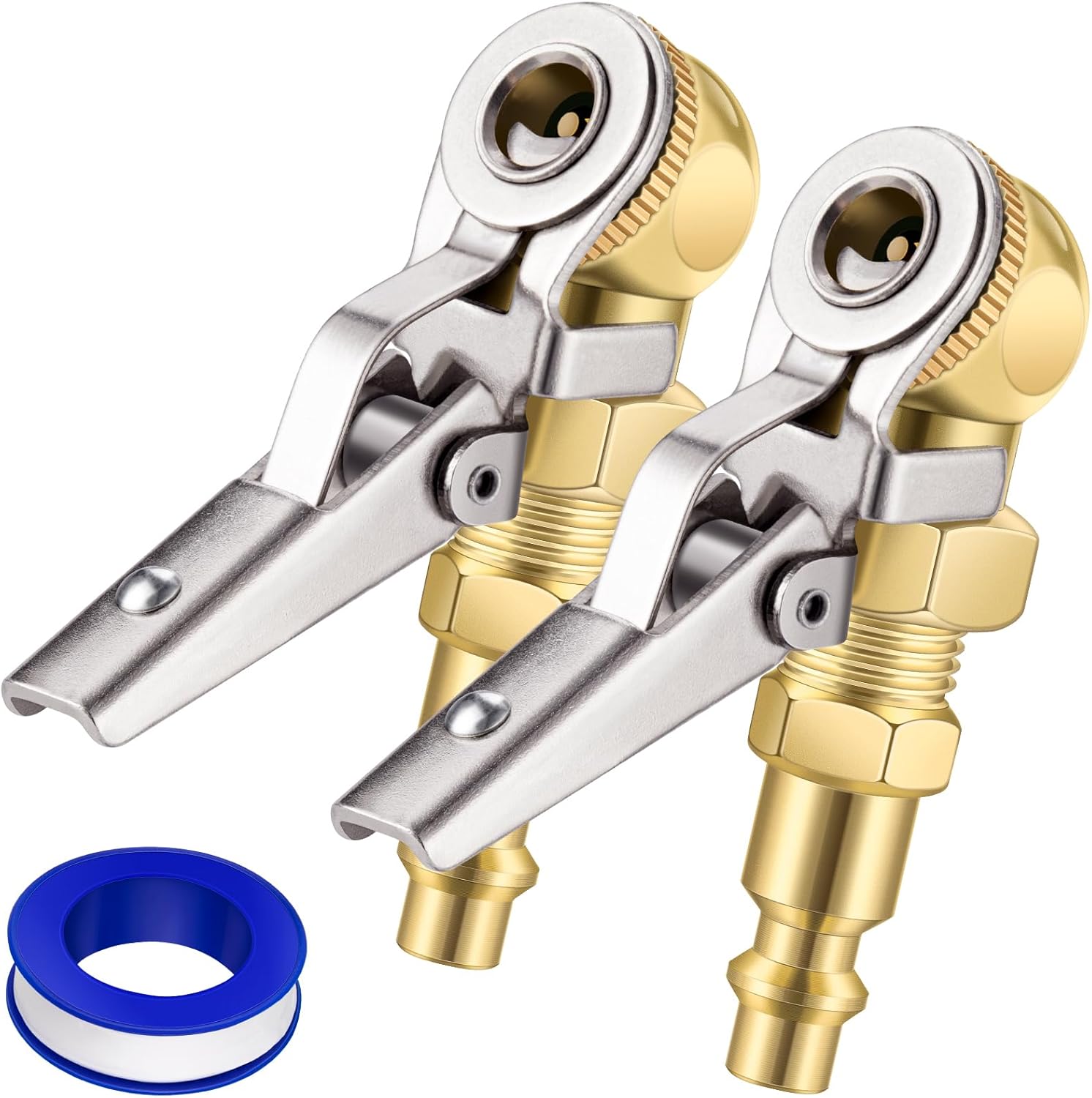
EVOULTES 2-pack closed ball tire chucks lock onto Schrader valves to help you inflate tires hands-free. The set includes both chucks with quick plug compatibility and a 2-way connection approach for easy setup to your air line or compressor. Durable metal construction supports reliable use for cars, trucks, RVs, bikes, and other Schrader-valve tires up to 250 PSI.

Malco tire mounting and demounting lubricant is a ready-to-use tire lube formulated to reduce friction during tire installation for passenger cars, light trucks, farm tires, and heavy-duty equipment. It provides rust-inhibiting protection to help reduce corrosion on rims and wheels, and helps support proper tire bead seating during inflation to reduce air leakage. The silicone-free, soap-free formula is whitewall safe to help prevent discoloration on whitewall tires and sensitive sidewall markings.

ETENWOLF T300 is a calibrated digital tire pressure gauge for accurate readings from 3 to 200 PSI across light and heavy-duty vehicles. It includes thermal compensation for reliable performance in extreme cold or heat, with an auto shut-off to extend battery life and an LED for easier reading. The sturdy design supports rugged everyday use, making it ideal for pickups, RVs, and industrial applications.
When Are 16 Ply Tires Worth It?
A 16-ply-rated tire is worth considering when its higher load-range capability solves a real requirement. That may include a heavier axle load, a fleet specification, or an application in which the Load Range G version cannot meet the required load at an approved operating pressure.
It is not automatically worth upgrading merely because the vehicle tows, travels off road, or operates commercially.
[Products Worth Considering]
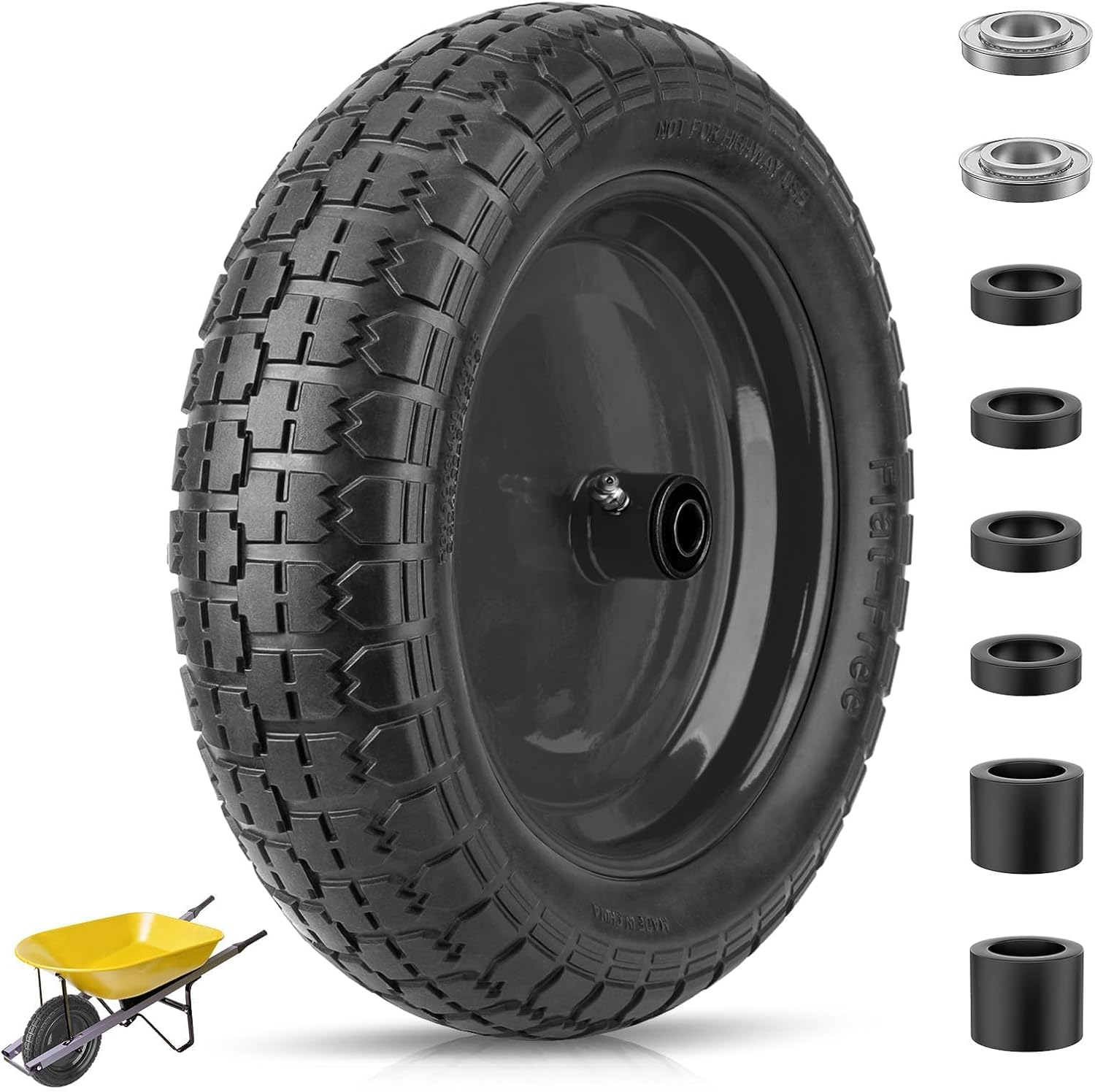
This flat-free TICONN wheelbarrow tire features durable polyurethane foam construction that never needs inflation, helping prevent punctures and reducing maintenance on rough outdoor terrain. With a 300 lb max load capacity and stable steel rim design, it supports safer transport for yard work and hauling tasks. An adapter kit with ball bearings and nylon spacers is included for easier fit and customization across common wheelbarrow and cart axle setups.

These pre-assembled 15x6.00-6 front tire and wheel assemblies are designed for quick replacement on riding lawn mowers and lawn tractors. Built with natural rubber pneumatic tires and turf-friendly tread for solid traction and improved shock absorption. A thickened welded rim and 3/4" sintered iron bushing help provide stable, heavy-duty support for everyday mowing use.

Measure tire tread depth quickly and accurately with this LUMITECO dial gauge that reads in 1/32" increments up to 14/32". The color-coded green/yellow/red zones make it easy to judge tire wear and know when replacement is needed. A rugged, compact design with a protective pouch helps keep the gauge ready for use on cars, trucks, motorcycles, and more.
Heavy-Duty Payloads
Load Range H becomes relevant when a properly loaded vehicle requires more tire capacity than the available Load Range G tire provides.
For a commercial truck, trailer, or RV operating near its allowed axle weight, compare the actual loaded axle weight with the combined tire capacity at the intended cold inflation pressure. The tires still must leave the vehicle within its certified axle and gross-weight ratings.
A higher load range may also offer additional pressure capability, but that pressure can only be used when the tire, rim, wheel, valve components, and vehicle application are approved for it.
Tough Terrain Use
Do not select a 16-ply tire solely because you expect sharp rocks, gravel, construction debris, or off-road impacts. Load Range H is a load/inflation classification, not a standardized puncture-resistance score.
For severe terrain, compare product-specific features such as casing construction, belt package, tread compound, sidewall protection, stone ejectors, chip-and-cut resistance, tread depth, and the manufacturer’s recommended service application.
A purpose-built Load Range G mixed-service tire may be more suitable for rough terrain than a highway-oriented Load Range H tire, even though the H tire has the higher load range.
Fleet Duty Cycles
Fleet operators should base the decision on measured axle loads, route conditions, tire operating temperatures, inflation maintenance, casing performance, downtime records, and cost per mile.
Load Range H can be appropriate where the fleet genuinely needs its load or pressure capability. It should not be treated as an automatic solution for curb damage, punctures, irregular wear, or poor tire life because those problems can also come from incorrect pressure, alignment, loading, tire selection, or maintenance.
Tradeoffs Between 14 Ply and 16 Ply Tires
The real tradeoff is not simply “strength versus comfort.” A Load Range H tire normally provides a higher load-and-pressure capability than a comparable Load Range G tire, but other characteristics depend on the specific products being compared.
Load range tells you about load and inflation capability. It does not, by itself, tell you which tire will ride better, use less fuel, last longer, or resist punctures better.
A higher operating pressure can make a tire feel firmer, especially on a lightly loaded vehicle, but you should not deliberately lower or raise pressure merely to change ride quality without following the vehicle and tire manufacturer’s specifications.
Tire weight can also vary between G and H versions, but the heavier tire is not automatically the one with higher rolling resistance. Rubber compounds, tread pattern, casing design, pressure, alignment, load, speed, and road conditions all affect energy loss.
Cost is likewise product-specific. Load Range H versions can cost more, but brand, size, supply, warranty, casing value, retreadability, and application often have a larger effect on the final operating cost.
How Do You Choose the Right Tire Load Rating?
Start with the vehicle, then the axle load, and finally the exact tire specification.
- Read the vehicle ratings. Confirm GVWR, front and rear GAWR, original tire size, wheel size, and recommended inflation information.
- Weigh the loaded vehicle. Measure axle weights with the cargo, passengers, equipment, trailer tongue or pin load, and fluids normally carried.
- Determine the required tire capacity. Compare the loaded axle with the correct number of tires on that axle and use single or dual ratings as applicable.
- Check the exact tire’s load index and table. Use the manufacturer’s load/inflation data instead of relying on “14-ply” or “16-ply” alone.
- Verify pressure compatibility. Make sure the rim, wheel, valve components, and vehicle application can safely handle the required cold pressure.
- Check speed and application. The tire must have the appropriate speed capability and be approved for its intended steer, drive, trailer, highway, mixed-service, or other use.
- Match tires correctly. Tires on the same axle should follow the vehicle and tire manufacturer’s matching requirements. Dual tires require correct size, construction, diameter matching, spacing, and inflation.
- Maintain cold inflation. Underinflation reduces the tire’s ability to carry its intended load and can create excessive heat and internal damage.
Note: On many commercial applications, the tire pressure required for the actual load may be below the maximum pressure printed on the sidewall. Use the approved load/inflation information rather than treating maximum PSI as a universal target.
Warning: Large commercial truck and bus tire servicing involves stored-energy hazards. Mounting, demounting, or inflating commercial rim-wheel assemblies should follow the tire/wheel manufacturer’s procedures and applicable workplace safety requirements. Do not attempt high-pressure commercial tire service without the proper equipment and training.
Frequently Asked Questions
Do 14 Ply and 16 Ply Tires Affect Fuel Economy Differently?
Not in a predictable way from load range alone. Rolling resistance depends on the specific tread compound, casing design, inflation pressure, load, alignment, speed, road surface, and other factors. Compare fuel-efficiency or rolling-resistance information for the exact tire models rather than assuming every 16-ply tire uses more fuel.
Which Tire Rating Offers a Smoother Ride on Rough Roads?
A Load Range G tire can sometimes feel more compliant than a comparable Load Range H tire, especially if the H tire is operated at a higher pressure. However, ride quality is not determined by ply rating alone. Tire size, pressure, casing design, tread, vehicle load, and suspension all affect how harsh or soft the ride feels.
Are 16 Ply Tires More Expensive to Replace?
They can be, but there is no fixed price relationship. Brand, tire size, tread design, casing type, warranty, market availability, and application can affect price as much as load range. Compare the actual G and H versions available for your required size.
Can I Use 14 Ply Tires on a Lifted Truck?
Yes, if the tire size, load capacity, speed capability, rim fitment, inflation requirement, clearance, and other specifications meet the vehicle and tire manufacturer’s requirements. A suspension lift by itself does not determine whether you need a Load Range G or H tire.
Do Higher Ply Tires Improve Puncture Resistance?
Not automatically. A higher ply rating indicates a higher load-range classification, not a standardized puncture-resistance rating. Resistance to cuts, impacts, and penetrations depends on the tire’s belts, casing, tread compound, sidewall protection, tread design, and intended service.
Is a 16 Ply Tire Always Better Than a 14 Ply Tire?
No. A Load Range H tire is useful when its additional load or pressure capability is required. If a Load Range G tire already meets the vehicle’s load, pressure, speed, and service requirements, the higher rating may provide no practical benefit.
Do I Have to Inflate a 16 Ply Tire to Its Maximum PSI?
Not automatically. The maximum load-and-pressure marking tells you the pressure associated with the tire’s maximum stated load. The correct operating pressure depends on the vehicle manufacturer’s requirements and, for applications that use load-based inflation, the tire manufacturer’s load/inflation table. Never exceed tire or wheel limits.
Will 16 Ply Tires Increase My Truck or Trailer Payload Rating?
No. Higher-capacity tires can prevent the tires from being the limiting component, but they do not increase the manufacturer’s GVWR or GAWR. The axle, frame, suspension, wheels, brakes, hitch or coupling, and other components still retain their original limits.
Can I Mix 14 Ply and 16 Ply Tires on the Same Axle?
Do not assume that mixing them is acceptable. Follow the vehicle and tire manufacturer’s fitment instructions and keep tires on an axle matched for the required size, construction, application, and operating characteristics. Dual pairs also need compatible diameter, tread design, spacing, and inflation so one tire is not forced to carry more than its share.
Conclusion
Choose between 14-ply and 16-ply tires by looking past the ply number. A 14-ply-rated tire commonly corresponds to Load Range G, while a 16-ply-rated tire commonly corresponds to Load Range H. The H tire can offer a higher maximum load-and-pressure capability when the application requires it, but the exact advantage depends on the tire size, load index, inflation table, and manufacturer specifications.
If a Load Range G tire already meets the loaded axle requirement, moving to Load Range H does not automatically improve fuel economy, puncture resistance, tread life, ride, or vehicle payload. Confirm the vehicle’s GAWR and GVWR, weigh the loaded axle, check the tire’s single or dual rating, verify the rim/wheel pressure limit, and use the correct cold inflation pressure.
Sources
- U.S. Tire Manufacturers Association — Care and Service of Commercial Truck and Bus Tires. Supports the Load Range G/14-ply and H/16-ply relationship, load-index interpretation, single/dual ratings, inflation guidance, wheel limits, tire matching, and GVWR/GAWR cautions.
- Electronic Code of Federal Regulations — 49 CFR §571.119. Supports federal requirements for applicable tire markings, including tire size, maximum load and corresponding cold pressure, actual ply composition, and load range.
- Continental — 2026 Truck Tire Data Guide. Supports the current manufacturer example showing different maximum load-and-pressure ratings for Load Range G and H tires of the same nominal size.
- Michelin — Truck Tire Service Manual and Truck Tire Data Book. Supports the use of manufacturer load/inflation tables and the requirement to remain within wheel load and inflation limits.
- Occupational Safety and Health Administration — 29 CFR 1910.177. Supports commercial rim-wheel servicing and inflation safety guidance for covered workplaces and equipment.

