
12 Ply Vs 14 Ply Tires: What’s the Difference?
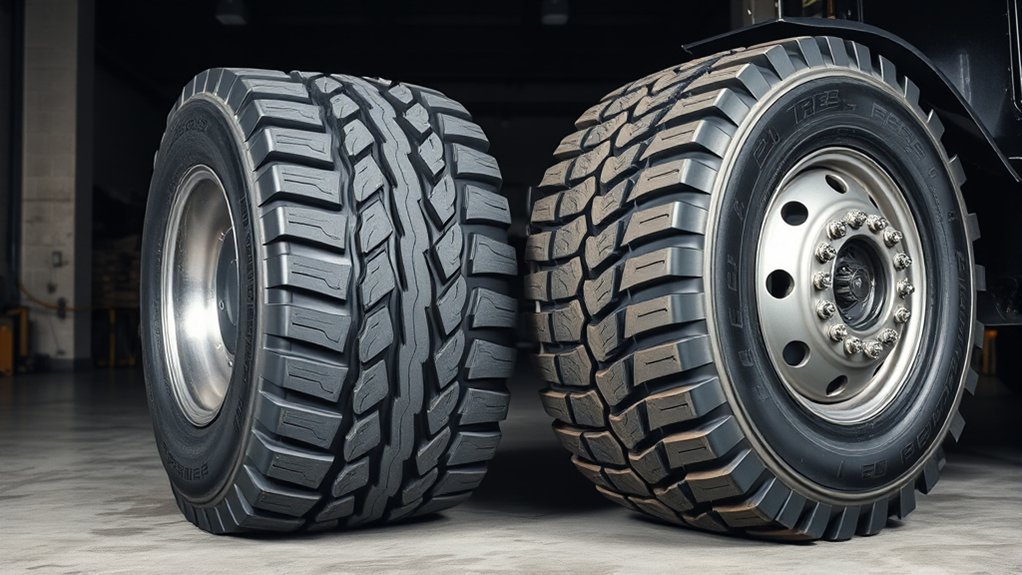
12-ply and 14-ply tires are both heavy-duty tire classifications, but the numbers do not literally tell you how many fabric layers are inside the tire. In common truck-tire terminology, a 12-ply rating typically corresponds to Load Range F, while a 14-ply rating corresponds to Load Range G. A 14-ply/G tire generally offers a higher load-and-inflation capability within comparable applications, but that does not automatically make it better for every truck, trailer, or driving condition. The correct choice depends on the exact tire size, load index, actual axle load, inflation requirements, wheel limits, and vehicle specifications.
Quick Answer
A 12-ply rating commonly corresponds to Load Range F, while 14-ply commonly corresponds to Load Range G. The 14-ply/G class generally allows a higher load-and-inflation envelope, but it is not automatically better. Choose by tire size, load index, actual axle load, manufacturer load-inflation data, and wheel limits—not ply rating alone.
Key Takeaways
- Ply rating is a strength/load-class designation, not a literal count of the tire’s physical plies.
- In common truck-tire terminology, 12-ply is associated with Load Range F and 14-ply with Load Range G.
- A higher load range can provide more load and inflation capability, but the exact tire’s load index and load-inflation data determine usable capacity.
- A 14-ply tire is not automatically more puncture-resistant, longer-lasting, more fuel-efficient, or safer than a 12-ply tire.
- Never exceed the tire, wheel, axle, or vehicle weight limits, and do not use the sidewall maximum pressure as an automatic everyday inflation target.
What Ply Ratings Actually Mean
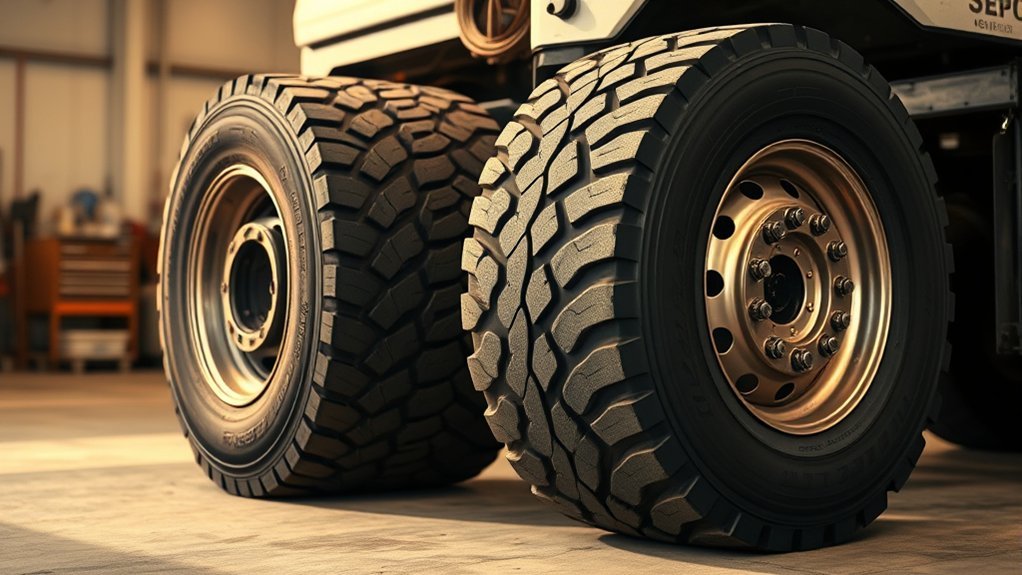
Ply ratings originally related more directly to the number of cotton fabric layers used in older tire construction. Modern tires use stronger materials and very different casing designs, so the rating is now better understood as a relative strength and load-class designation.
The U.S. Tire Manufacturers Association explains that ply ratings do not necessarily identify the actual number of plies in a modern tire. Its commercial-truck guidance lists Load Range F as the traditional equivalent of a 12-ply rating and Load Range G as the equivalent of a 14-ply rating.
| Traditional Ply Rating | Common Load Range Equivalent | What It Tells You |
|---|---|---|
| 12-ply | Load Range F | Relative load and inflation capability for that tire class |
| 14-ply | Load Range G | A higher load/inflation class in comparable truck-tire applications |
The number on a ply rating is not a physical layer count. For real load capacity, read the tire’s load index, maximum-load marking, size, and manufacturer load-inflation data.
That distinction matters because two tires carrying the same traditional ply rating can still have different dimensions, load indexes, speed ratings, tread designs, casing constructions, and intended applications.
[Products Worth Considering]

These M14x1.5 closed-end chrome lug nuts are a one-piece replacement designed for secure fitment on compatible GM, Ford, and select Chrysler/Dodge models. Featuring a 60-degree conical seat and anti-rust chrome plating, they help resist corrosion and maintain a bright look for everyday driving. Built for long-term durability, they include OEM-style part references and are backed by 12 months of support.
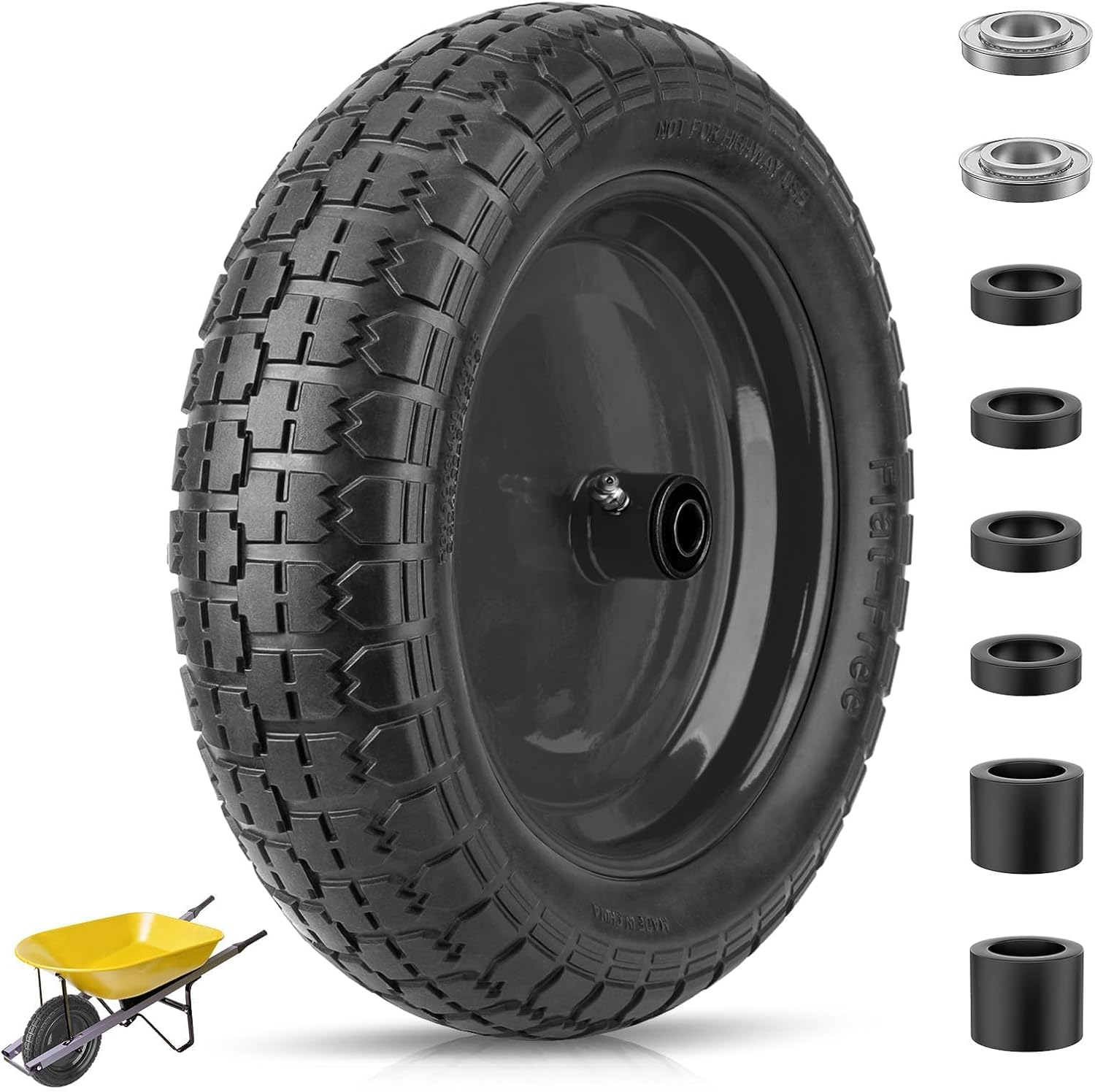
This flat-free TICONN wheelbarrow tire features durable polyurethane foam construction that never needs inflation, helping prevent punctures and reducing maintenance on rough outdoor terrain. With a 300 lb max load capacity and stable steel rim design, it supports safer transport for yard work and hauling tasks. An adapter kit with ball bearings and nylon spacers is included for easier fit and customization across common wheelbarrow and cart axle setups.

Check tire pressure with the Milton S-925 pencil gauge built for trucks, RVs, and bicycles. It features a single-head chuck with a built-in deflator valve, and it displays readings in both PSI and kPa for convenient use. The gauge is designed for accurate, repeatable pressure checks within its working range.
How 12 Ply and 14 Ply Tires Differ
The most dependable distinction between 12-ply and 14-ply tires is their load-range classification. A Load Range G/14-ply-rated tire is designed for a higher load-and-inflation class than a Load Range F/12-ply-rated tire within the traditional rating system.
That does not mean every 14-ply tire carries more weight than every 12-ply tire. Tire size matters. So do the load index, whether the tire is used in a single or dual configuration, and the pressure at which its load rating is specified.
12 Ply vs 14 Ply Tires at a Glance
| Factor | 12-Ply / Load Range F | 14-Ply / Load Range G |
|---|---|---|
| Load class | Lower of the two | Higher of the two |
| Actual load capacity | Depends on size, load index and inflation | Depends on size, load index and inflation |
| Permitted pressure range | Generally lower than an equivalent G-rated application | Generally offers a higher pressure/load envelope |
| Ride feel | May feel more compliant in comparable designs | May feel firmer, especially when construction or operating pressure differs |
| Towing/hauling | Suitable when its rated capacity meets the load | Useful when the application genuinely requires the additional capacity |
| Puncture resistance | Depends on actual construction and tread/sidewall design | Not guaranteed solely by the higher ply rating |
| Tread life | Product- and use-dependent | Product- and use-dependent |
| Fuel economy | Depends on rolling resistance, pressure, weight and tread | Depends on rolling resistance, pressure, weight and tread |
Which Tire Handles Heavier Loads Better
If you compare appropriate tires of the same general size and application, a Load Range G/14-ply-rated tire normally provides a higher load-and-inflation capability than a Load Range F/12-ply-rated tire. That is why G-rated tires are common in heavier commercial, trailer, and load-intensive applications.
However, the traditional ply rating should not be used as the final load-capacity number. USTMA identifies the load index as the numerical code associated with the maximum load a tire can carry under specified service conditions. The tire’s sidewall also provides its maximum-load information.
When selecting a tire, compare:
- The complete tire size.
- The load range.
- The load index or single/dual load indexes.
- The maximum load shown on the sidewall.
- The pressure required to support the actual load.
- The manufacturer’s load/inflation table.
- The vehicle or trailer’s axle ratings.
Warning: Installing tires with a higher load range does not increase your vehicle’s GAWR, GVWR, payload rating, hitch rating, or axle capacity. Never load a truck or trailer beyond the limits assigned by its manufacturer.
Load Range vs Load Index: Know the Difference
Load range describes a tire’s load-and-inflation class. Load index is the numerical code used to identify the tire’s maximum carrying capacity under specified conditions. These two specifications work together but are not interchangeable.
For example, seeing “Load Range G” tells you the tire belongs to a higher traditional load class than Load Range F. It does not give you the exact pounds that one tire can carry. You need the tire’s load index, sidewall maximum-load marking, and applicable load/inflation table for that.
This is especially important when comparing different tire sizes. A larger Load Range F tire can have different load capability from a smaller Load Range G tire, so comparing only the F/G or 12/14 designation can produce the wrong answer.
How 12 Ply and 14 Ply Tires Ride
A 12-ply/Load Range F tire may feel more compliant than a comparable 14-ply/Load Range G tire, but ride quality is not controlled by ply rating alone.
The final ride depends on several factors:
- Actual casing and sidewall construction.
- Tire size and aspect ratio.
- Operating inflation pressure.
- Tire weight.
- Tread design.
- Vehicle suspension.
- Payload and trailer tongue or pin weight.
A tire built for a higher load/inflation range can feel firmer when its construction and pressure reduce casing movement. A 12-ply tire may therefore feel more forgiving in some otherwise comparable applications. However, you should not assume that every Load Range G tire will ride harder than every Load Range F tire.
Note: Inflation pressure can change ride quality dramatically. Do not lower pressure below the amount required for the tire’s actual load merely to make a heavy-duty tire feel softer.
Best Uses for 12 Ply and 14 Ply Tires
12-ply/Load Range F tires can be a good fit for trucks, trailers, and work vehicles when their published load capacity comfortably covers the actual load. They may also be attractive when a higher load range provides no practical benefit for the application.
14-ply/Load Range G tires are useful where the vehicle or trailer genuinely needs the additional load-and-inflation capability available from that tire specification. Examples can include certain heavily loaded trailers, commercial vehicles, and other applications specifically designed around G-rated tires.
Neither rating should be chosen solely because the route includes gravel, dirt, rocks, or job sites. For those conditions, look closely at the tire’s intended service, tread pattern, sidewall protection, casing design, and manufacturer recommendations.
Highway and Long-Distance Use
A higher ply rating does not automatically mean longer highway tread life. Tread compound, tread depth, alignment, pressure, load, speed, rotation practices, road temperature, and vehicle condition all affect wear.
For frequent loaded highway travel, the priority is a tire with sufficient load capacity at the correct inflation pressure and an appropriate speed rating for the application.
Off-Road and Job-Site Use
Do not assume a 14-ply designation automatically provides better puncture resistance. Modern ply ratings are not literal ply counts, and actual puncture resistance depends on construction details such as sidewall reinforcement, tread protection, casing materials, and the type and location of an impact.
For gravel, construction sites, rocks, or rough access roads, choose a tire specifically designed for that environment rather than selecting by ply rating alone.
How to Choose Between 12 Ply and 14 Ply Tires
Start with the specifications required by your vehicle or trailer, then calculate how much load the tires must actually carry. A higher load range is useful only when the rest of the vehicle, wheel, and tire system can safely use it.
[Products Worth Considering]

This professional wheel and rim cleaning brush set lifts brake dust, grime, and dirt with soft, scratch-free microfiber and synthetic wool fibers. The rim brush bends up to 360 degrees for easy access to hard-to-reach areas around spokes, lips, and faces. Ideal for thorough cleaning of car, truck, motorcycle, bicycle, RV, and more wheel and tire surfaces.

This professional wheel and tire cleaning brush kit helps you scrub rims, hubs, spokes, and tires with scratch-free, ultra-fine bristles. The brushes can bend 360 degrees for deep reach into crevices, bolts, and intricate wheel details, while the kit supports both wet washing with cleaners and dry dust removal. Easy to rinse, quick to air-dry, and designed for convenient maintenance with hanging holes.

Measure tire tread depth quickly and accurately with this LUMITECO dial gauge that reads in 1/32" increments up to 14/32". The color-coded green/yellow/red zones make it easy to judge tire wear and know when replacement is needed. A rugged, compact design with a protective pouch helps keep the gauge ready for use on cars, trucks, motorcycles, and more.
Load Capacity Needs
Load capacity should be the first comparison. Check the vehicle certification label, tire-information placard, owner’s manual, trailer data plate, and the specifications printed on the tire itself.
For loaded trucks, RVs, and trailers, actual scale weights are particularly useful. Compare the measured load on each axle with the vehicle’s gross axle weight rating (GAWR), then make sure the tires have sufficient capacity at the intended inflation pressure.
- Check the load rating for the exact tire size.
- Use the tire manufacturer’s load/inflation data when required.
- Base the calculation on realistic peak loaded weight, not an empty vehicle.
- Do not exceed GAWR or GVWR.
- Allow reasonable reserve capacity without assuming more is always better.
Pro Tip: If you regularly tow or haul near your vehicle’s limits, weigh the loaded setup on a certified scale. Real axle weights are more useful than estimating cargo when selecting tire capacity and inflation.
Terrain And Usage
Match the tire’s tread and construction to where you actually drive. Highway tires, all-terrain tires, commercial tires, and trailer tires can have very different designs even when their load ranges are similar.
For pavement-focused use, prioritize load capacity, speed rating, wet performance, noise, and rolling resistance. For rough surfaces, examine tread depth, casing construction, stone-ejection features, cut/chip resistance, and sidewall protection.
A higher load range by itself is not a substitute for an off-road-specific construction.
Ride Comfort Tradeoffs
If both Load Range F and Load Range G tires safely meet your requirements, ride comfort can become part of the decision. A heavier-duty tire may feel firmer, particularly if its construction or required operating pressure differs from the lower-range option.
However, do not choose a lower load range merely for comfort if it cannot support the required load. The tire must first meet the vehicle’s size, load, inflation, speed, and application requirements.
Inflation Pressure Matters More Than Ply Rating Alone
A Load Range G/14-ply tire may be capable of operating at a higher inflation pressure than a comparable Load Range F/12-ply tire, but its maximum pressure is not automatically the pressure you should use.
For original-equipment tire sizes, the National Highway Traffic Safety Administration advises drivers to use the vehicle manufacturer’s recommended cold inflation pressure shown on the tire-information placard or certification label.
For replacement sizes, commercial applications, trailers, or other configurations where the original placard no longer directly answers the question, use the tire manufacturer’s approved load/inflation information and qualified fitment guidance.
Underinflation can cause excessive flex and heat buildup. Excessive pressure can reduce compliance and expose the tire and wheel to greater impact loads. The correct pressure is the pressure appropriate for the tire, load, vehicle, wheel, and application.
Check the Wheel and Rim Before Moving to 14 Ply
A tire is only one part of the load-carrying system. Before changing to a higher load range or substantially different operating pressure, verify that the wheel/rim is approved for the tire’s size, load, and required pressure.
Toyo Tires’ safety guidance specifically advises checking that a wheel has adequate load and inflation-pressure capacity when tire size or fitment changes.
Valve stems and other inflation hardware must also be appropriate for the pressure and application. If the existing wheel or valve system cannot safely support the required specification, installing a higher-rated tire does not solve the problem.
Replacement Tire Compatibility
When replacing original tires, do not choose a tire with less load-carrying capability than the vehicle requires. USTMA’s replacement-tire guidance recommends using the size, load index, and speed-rating designation specified by the vehicle or tire manufacturer and warns against using a replacement with lower load-carrying capability than the original specification.
Also verify:
- Correct rim diameter and approved rim width.
- Overall diameter and vehicle clearance.
- Load index.
- Speed rating.
- Load range.
- Required inflation pressure.
- Wheel load and pressure rating.
- Manufacturer approval for the application.
Changing from one tire type to another—for example, from a passenger-type tire to an LT tire—can also change the pressure needed to carry the same vehicle load. That is another reason not to choose solely by the words “12 ply” or “14 ply.”
Does 14 Ply Improve Fuel Economy, Durability, or Puncture Resistance?
Not automatically. Ply rating tells you primarily about a tire’s traditional strength/load classification. It does not by itself establish rolling resistance, tread life, cut resistance, or puncture resistance.
Fuel consumption can be affected by rolling resistance, tread design, tire mass, inflation pressure, vehicle speed, alignment, aerodynamic drag, and load. Tread life also depends on compound, alignment, rotation, heat, road surface, driving habits, and maintenance.
Similarly, off-road puncture resistance depends on the tire’s actual casing, tread and sidewall design. A purpose-built Load Range F all-terrain tire may be more suitable for a particular rough-road environment than an unrelated Load Range G highway tire.
Simple 12 Ply vs 14 Ply Selection Checklist
- Confirm the correct tire type and size. Start with the vehicle placard, owner’s manual, trailer data plate, or manufacturer’s approved fitment information.
- Check actual load requirements. Use loaded axle weights when towing or hauling heavily.
- Compare load index and published capacity. Do not stop at the ply-rating number.
- Determine the required cold inflation pressure. Follow the vehicle recommendation for the OE setup or an approved load/inflation table where applicable.
- Check the wheel and valve limits. They must support the required load and pressure.
- Check the speed rating and intended service. Load range does not replace these specifications.
- Then consider comfort, tread type, noise, weight, price, and operating environment.
Frequently Asked Questions
Are 12 Ply Tires More Fuel Efficient Than 14 Ply Tires?
Not necessarily. Ply rating alone does not determine rolling resistance or fuel economy. Tire weight, tread compound, tread pattern, inflation pressure, size, alignment, load, and vehicle speed can all affect fuel use. Compare the actual tire models rather than assuming every 12-ply tire will use less fuel than a 14-ply tire.
Do 14 Ply Tires Require Higher Air Pressure?
A 14-ply/Load Range G tire generally has a higher load-and-inflation capability than a 12-ply/Load Range F tire, but you should not automatically inflate it to a higher pressure or to the sidewall maximum. Use the vehicle’s recommended cold pressure for an approved original-equipment setup or the appropriate manufacturer load/inflation data for the actual tire and load.
Which Tire Type Lasts Longer on Highways?
Neither rating automatically lasts longer. Highway tread life depends on the specific tire design, compound, operating pressure, load, alignment, rotation, road temperature, vehicle condition, and driving habits. Choose a tire designed for your highway service and keep it correctly loaded and inflated.
Can I Use 12 Ply Tires on a Lifted Truck?
Yes, if the exact tire size, load capacity, speed rating, wheel fitment, clearance, and inflation requirements are appropriate for the truck. A lift does not by itself require a 14-ply tire. Modified wheel offset, suspension geometry, tire diameter, rubbing clearance, and alignment should also be checked.
Are 14 Ply Tires Better for Off-Road Puncture Resistance?
Not automatically. A 14-ply rating is a load-class designation, not a literal count of sidewall layers. Puncture and cut resistance depend on the tire’s actual casing materials, tread and sidewall construction, protective features, inflation pressure, and the type of terrain.
Is a 14 Ply Tire Always Better Than a 12 Ply Tire?
No. A 14-ply/Load Range G tire is useful when you need its additional load-and-inflation capability. If a properly specified Load Range F tire already provides adequate capacity, moving to G may add cost, weight, or firmness without increasing the vehicle’s legal or mechanical payload limits.
Can I Replace a 12 Ply Tire With a 14 Ply Tire?
Potentially, but verify the complete fitment first. The replacement must have the correct tire size or an approved alternative, sufficient load capacity, suitable speed rating, proper wheel compatibility, adequate clearance, and an appropriate inflation requirement. A higher load range does not override the vehicle, axle, wheel, or trailer manufacturer’s limits.
Conclusion
Choosing between 12-ply and 14-ply tires is mainly a question of required load and inflation capability, not simply which number is higher. A 12-ply/Load Range F tire can be completely appropriate when it meets the vehicle’s load, size, speed, and pressure requirements. A 14-ply/Load Range G tire makes sense when the application genuinely requires the additional capacity available from that specification.
Use the tire’s exact load index, maximum-load information, manufacturer load/inflation data, actual axle weight, GAWR/GVWR, wheel limits, and vehicle recommendations to make the final choice. Do not assume that a higher ply rating automatically delivers a smoother or rougher ride, better fuel economy, longer tread life, or greater puncture resistance.
Sources
- U.S. Tire Manufacturers Association — Care and Service of Commercial Truck and Bus Tires — load range, ply-rating equivalents, load index, maximum load, and inflation guidance.
- U.S. Tire Manufacturers Association — Replacing Tires — replacement size, load index, speed rating, and load-capacity guidance.
- National Highway Traffic Safety Administration — TireWise — vehicle placard and recommended cold tire inflation guidance.
- Toyo Tires — Safety Information — replacement tire load capacity, vehicle loading, rim compatibility, and inflation safety guidance.
[Products Worth Considering]

Monitor tire tread wear with a smart, color-coded depth gauge that shows clear condition ranges at a glance. The bar is range marked for fast, easy readings, helping you maintain safer traction and performance. Each gauge is portable with a pocket clip, and the set includes 20 units for daily use and sharing.

Accurately measure tire tread depth with a calibrated gauge marked from 0 to 1 inch in 1/32 inch increments. The color-coded bar helps you quickly identify tread condition ranges, supporting safe driving for trucks, motorcycles, automobiles, and passenger vehicles.

This 12-inch LUMITECO dual head tire pressure gauge features an integrated straight-on chuck and a 30° reverse chuck to reach hard-to-access dual wheel valves. Its 10–150 PSI / 1–10 BAR range with a clear, two-sided scale helps you quickly check tire pressure for safer, smoother driving. Heavy-duty construction and a simple no-battery design make it a reliable tool for trucks, cars, RVs, and motorcycles.

Related Articles
265 Vs 285 Tires: Key Differences Explained
Why choose 265 vs 285 tires when the tradeoffs could change your ride, grip, and fitment more than you expect?
Read More
How to Choose Tires for 20×10 Wheels
Just how wide should your tires be for 20x10 wheels, and which size best balances fitment, grip, and clearance?
Read More
Q vs T Speed Rating: Which Do You Need?
How do Q vs T speed ratings affect safety and performance, and which one is right for your vehicle?
Read More