
Quick Answer
A 10-ply-rated tire usually offers more load capacity and pressure capability than a 4-ply-rated tire of a comparable type. Choose it when your vehicle or load demands that extra capacity. For normal driving, do not upgrade by ply number alone; match the vehicle placard, load index, tire type, and approved inflation requirements.
Key Takeaways
- Modern ply rating is a strength classification, not necessarily the number of physical plies inside the tire.
- In the traditional load-range table, 4-ply rating corresponds to Load Range B and 10-ply rating to Load Range E.
- Load range alone does not tell you the exact pounds a tire can carry; size, load index, and inflation data do.
- A higher tire load rating does not increase the vehicle manufacturer’s payload, axle, or towing limits.
- Use the vehicle placard and approved load/inflation guidance, not the tire sidewall maximum, to set operating pressure.
4 Ply vs 10 Ply Tires: What the Ratings Mean
A ply rating is an old strength scale that remains useful for describing some truck, trailer, and commercial tires. It does not mean a modern 10-ply-rated radial necessarily contains ten body plies.
Toyo’s tire data book defines ply rating as an index of tire strength and says it does not necessarily represent the number of cord plies. Its traditional correspondence table pairs a 4-ply rating with Load Range B and a 10-ply rating with Load Range E.
A higher ply rating describes a higher strength class; the sidewall markings and load data tell you the tire’s actual capability.
| Factor | 4-ply-rated tire | 10-ply-rated tire |
|---|---|---|
| Traditional load-range equivalent | B | E |
| Modern meaning | Lower strength class | Higher strength class |
| Load potential | Lower for a comparable tire | Higher for a comparable tire |
| Pressure capability | Lower | Higher |
| Typical reason to choose it | Light-duty use when vehicle specs allow | Higher loads, towing, or work use when specs require it |
Do not treat that historical B-versus-E mapping as a universal buying rule. Many passenger tires use Standard Load (SL) or Extra Load (XL) markings instead, while light-truck tires often use load-range letters. Compare the complete tire designation, not just a “4 ply” or “10 ply” description.
How Ply Rating Changes Load Capacity
A higher ply rating generally allows a tire of a comparable size and type to operate at a higher load range. But the ply number alone does not give you the tire’s maximum pounds per tire.
The exact answer comes from the tire’s load index, sidewall maximum-load marking, and the manufacturer’s load/inflation table. Michelin’s load-rating guidance also notes that a replacement tire’s load rating should meet or exceed the vehicle manufacturer’s specification.
Ply Count and Strength
Modern tire construction can achieve a higher strength rating without adding the same number of physical cord layers used decades ago. That is why “10-ply-rated” should be read as a strength classification, not a cutaway description.
Actual sidewall feel, impact resistance, weight, and heat behavior can still vary between tire models with the same load range. Materials, belt design, sidewall construction, tread, and intended service all matter.
Load Range Differences
Load range tells you more about a tire’s load-and-pressure capability than the old ply wording does, but tire size still matters. Two Load Range E tires can have different load indexes and different maximum loads.
A useful real-world example comes from a Michelin technical bulletin. It lists P225/75R16 Standard Load at 900 kg and 240 kPa, while LT225/75R16 Load Range E is listed at 1,215/1,120 kg for single/dual use at 550 kPa. The nominal dimensions look similar, yet the tire types and capacities are not interchangeable.
That example is also why you should not compare “4 ply” and “10 ply” without confirming whether you are looking at passenger, LT-metric, trailer, or another tire type.
Pressure and Capacity
Inflation pressure and load capacity work together. For a specific tire, carrying more load can require more pressure within the manufacturer’s approved load/inflation range, but you should never assume that a higher-load-range tire should be inflated to its sidewall maximum.
Warning: The pressure molded on the tire sidewall is a tire limit, not automatically the correct operating pressure for your vehicle. Use the vehicle placard for the specified setup, and get an approved pressure recommendation when changing tire type or size.
Michelin’s tire-pressure guidance says the vehicle placard provides the recommended pressure and the tire sidewall shows the maximum the tire can handle. Underinflation reduces load-carrying margin and increases flex and heat; overinflation can also change ride and contact behavior.
4 Ply Tire Load Ratings Explained
A 4-ply rating is a lower historical strength class than a 10-ply rating. In the traditional table, it corresponds to Load Range B, but that does not mean every modern passenger tire described as “4 ply” should be treated as an LR-B truck tire.
Ply Rating Meaning
The useful part of a 4-ply rating is what it says about the tire’s intended strength class. The number does not, by itself, tell you the exact load, the exact operating pressure, or whether the tire is appropriate for your vehicle.
- Check the full tire size and tire type.
- Read the load index or maximum-load marking.
- Match or exceed the vehicle’s required load capacity.
- Use the correct cold inflation pressure for that application.
Load Capacity Basics
Load index is the better tool for comparing actual capacity. It is a numerical code tied to the maximum load one tire can support under specified conditions.
For replacement tires, USTMA’s replacement-tire guidance says not to choose a tire with less load-carrying capacity than originally specified. It also recommends matching the size, load index, and speed rating specified by the vehicle or tire manufacturer.
That means a lower ply rating can be perfectly suitable when it still satisfies the vehicle specification. A higher number is not automatically safer for every vehicle.
10 Ply Tire Load Ratings Explained
A 10-ply rating is traditionally associated with Load Range E. It indicates a higher strength class and usually a higher pressure and load capability than a comparable lower-load-range tire, but it still does not tell you the exact load without the rest of the sidewall data.
Load Range E is often seen on LT tires used for pickups, vans, towing, and work service. However, do not assume every E-rated tire has the same maximum pressure. In Michelin’s bulletin, the LT225/75R16 E example is rated at 550 kPa, while a European commercial 225/75R16C Load Range E example is rated at 575 kPa.
The tire’s own markings and load table therefore matter more than a rule such as “10 ply always means 80 PSI.”
4 Ply vs 10 Ply Tires for Daily Driving
For daily driving, choose the tire that meets the vehicle’s load requirement without adding unneeded capacity. A lighter-duty tire may feel more compliant, while an LT Load Range E tire can feel firmer or heavier, especially on an unloaded light-duty truck.
Ride quality is not controlled by ply rating alone. Tread design, tire weight, wheel size, sidewall construction, inflation pressure, vehicle weight, and suspension tuning all affect how the vehicle feels.
The same caution applies to fuel economy. A heavier tire or a tire with greater rolling resistance can increase energy use, but there is no reliable fuel-economy percentage you can assign to “10 ply” as a category. Compare the actual tire models if efficiency matters.
[Products Worth Considering]

The Tymate TM12 RV TPMS delivers real-time tire pressure and temperature monitoring with a stable 433Hz display for safer long-distance driving. It supports simultaneous monitoring across vehicle and trailer zones, includes six alarm modes for pressure, temperature, leakage, battery, and signal loss, and features easy DIY installation with auto calibration. Power is supplied via USB-C charging or solar recharging, with a wide 0–144 PSI range and up to 50 ft signal coverage for RVs and towable trailers.

Keep your tires properly inflated with this analog VONDIOR tire pressure gauge, designed for fast, easy readings without batteries. The swiveling, two-axis hose and large glow dial help you measure at any tire angle with instant visibility. Built with a protective rubber shield, it supports durable, low-maintenance use for cars and trucks.
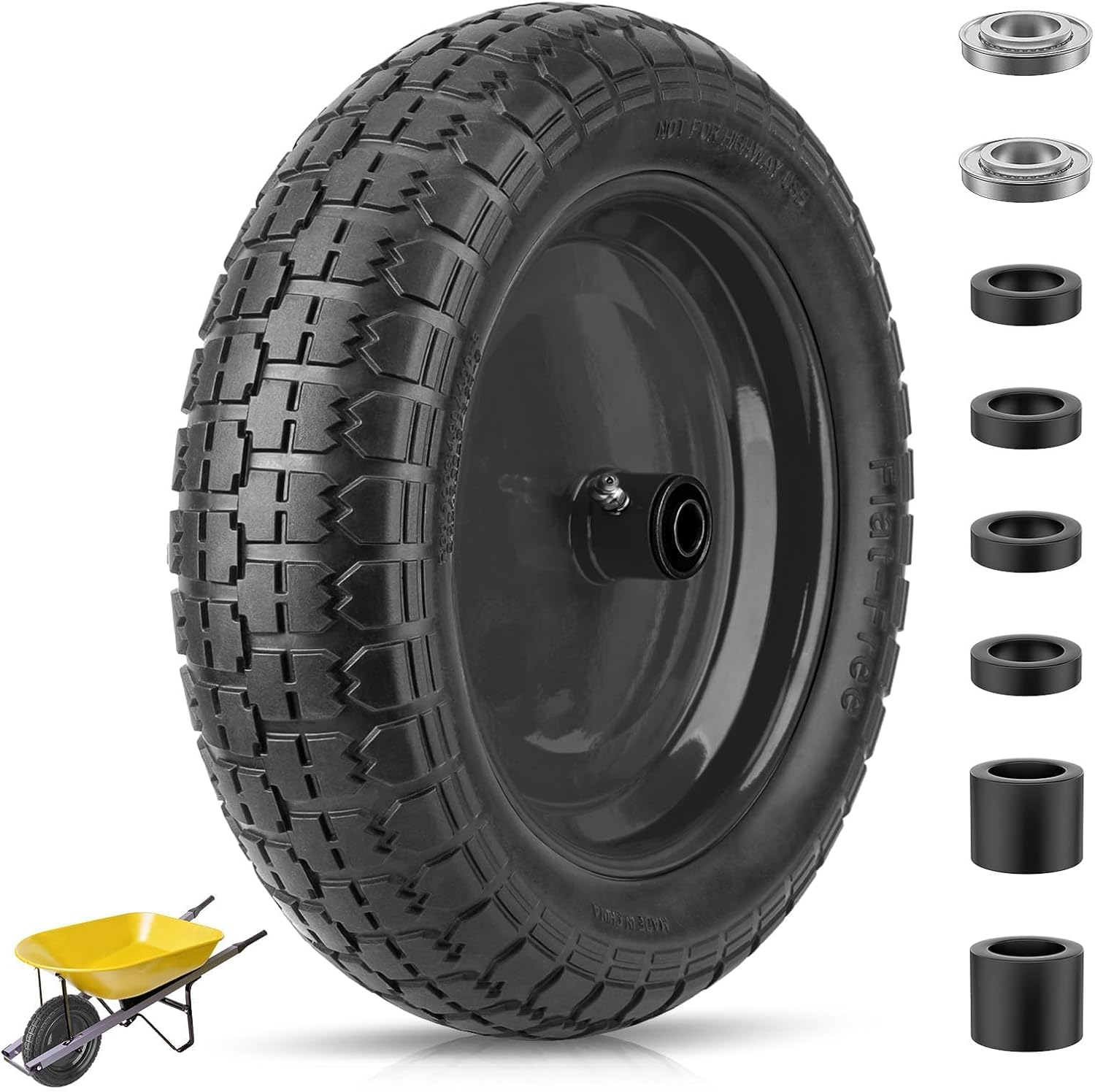
This flat-free TICONN wheelbarrow tire features durable polyurethane foam construction that never needs inflation, helping prevent punctures and reducing maintenance on rough outdoor terrain. With a 300 lb max load capacity and stable steel rim design, it supports safer transport for yard work and hauling tasks. An adapter kit with ball bearings and nylon spacers is included for easier fit and customization across common wheelbarrow and cart axle setups.
When 10 Ply Tires Make More Sense
A 10-ply-rated or Load Range E tire makes more sense when your vehicle needs that load capacity for towing, hauling, commercial work, or another approved application. The deciding factor should be the required capacity, not the idea that more ply rating is always better.
- Your current specification calls for Load Range E or an equivalent capacity.
- Your loaded axle weights require a higher load index within the vehicle’s rated limits.
- You tow or haul often enough that the extra tire capacity is part of the correct setup.
- You need a specific LT tire construction for the vehicle and service conditions.
A higher tire load rating does not raise the truck’s payload, gross axle weight rating, or manufacturer-approved towing limit. Michelin states that installing a tire with a higher load rating does not increase the vehicle’s maximum allowable load.
For off-road use, do not assume a 10-ply label alone means better puncture resistance. Actual sidewall and tread construction determine cut and puncture protection, while the load range primarily describes load-and-pressure capability.
[Products Worth Considering]

TP-M13W combination repair unit kit includes wrapped stems with matching patches for fast, reliable tire repairs. It’s suitable for both radial and bias ply tires and is designed for chemical or heat vulcanization. Gray vulcanizing gum with blue backing helps create a strong bond, with the stem portion wrapped for added effectiveness.
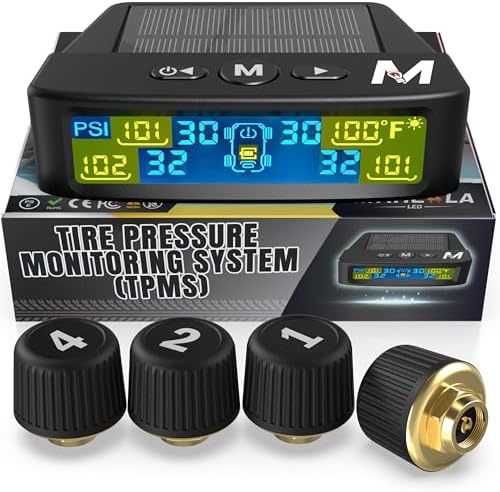
Marcala’s TPMS set of four sensors helps you monitor tire pressure and temperature in real time while driving, with updates every second. The bright color LCD uses auto-dimming for easy viewing, powered by dual solar and USB charging, and offers six alarm modes. Built for trailers, RVs, campers, trucks, and towing setups, the sensors support monitoring 1-4 wheels up to 98 PSI with IP67 waterproof protection.

Secure your vehicle during transport with this 4-pack of heavy-duty tire tie down straps designed for trailers and hauling. The ratchet system with flat hooks and D-rings helps you tension the straps quickly, while the wheel-friendly design protects tires. With high break strength and corrosion-resistant hardware, these straps provide reliable, confidence-inspiring tie-down security for cars, trucks, and UTVs.
How to Read Tire Load Index and PSI
Read the vehicle placard first, then the tire sidewall. The placard gives the manufacturer’s tire-size and cold-pressure requirements, while the sidewall gives the tire’s own service description and limits.
NHTSA’s tire-safety guidance explains that vehicle labels include recommended tire size, inflation pressure, vehicle capacity weight, and front/rear gross axle weight ratings. It also warns that underinflated tires and overloaded vehicles are major causes of tire failure.
- Find the vehicle tire placard. Use its size and cold-pressure information as the baseline for the original setup.
- Read the service description. The load index is the number before the speed-rating letter in a typical tire code.
- Confirm the tire type. P-metric, LT-metric, C-type commercial, and trailer tires can use different load rules.
- Check the tire’s maximum load and pressure. These are limits, not an instruction to run the tire at maximum pressure.
- Verify replacement compatibility. If you change size, type, or load range, use manufacturer-approved load/inflation guidance.
This matters because two tires with similar dimensions can carry very different loads. The safest comparison is always size + tire type + load index + approved pressure, not ply rating alone.
Which Ply Rating Fits Your Vehicle?
The right ply rating is the one that supports your vehicle’s actual use while meeting every manufacturer requirement. Start with the original tire specification, then move to a higher load range only when the replacement is approved and useful for your load.
- Match the approved tire size. Use the door placard, owner’s manual, or vehicle manufacturer’s approved alternatives.
- Meet the required load index. Never choose a replacement with less load-carrying capacity than specified.
- Respect vehicle limits. Tire capacity does not override GVWR, GAWR, payload, or towing limits.
- Use the correct pressure. Do not copy the tire’s sidewall maximum into the vehicle placard value.
- Check the wheel too. The wheel must be suitable for the tire size, load, and required inflation pressure.
Note: If you are switching between passenger and LT tires, changing size, or setting up a vehicle for heavy towing, confirm the combination with the vehicle manufacturer, tire manufacturer, or a qualified tire professional before relying on a new pressure or load target.
As a practical rule, use 10-ply-rated tires when you genuinely need Load Range E capacity and the fitment is approved. If your vehicle’s original specification can be met by a lighter-duty tire, extra load range may add weight and firmness without increasing what the vehicle is allowed to carry.
[Products Worth Considering]

The 22800 wheel stud installer makes replacing wheel studs quick and secure, saving time and effort during tire service. It uses a ratchet or impact wrench to pull new studs firmly into place, helping when existing studs are too long. Compatible with most automotive wheels and light-duty truck wheel studs, it’s designed for easy, tool-assisted installation.

The Tymate TM2 RV tire pressure monitoring system keeps you informed with a color LCD display, automatic backlight, and solar charging for dependable operation. It supports up to 10 tire positions with four pre-paired sensors, while offering multiple alarm modes for fast leak detection, pressure extremes, temperature alerts, and low-signal warnings. Built-in monitoring uses accurate readings and reliable 433.92MHz communication to help protect your RV, trailer, truck, or SUV.
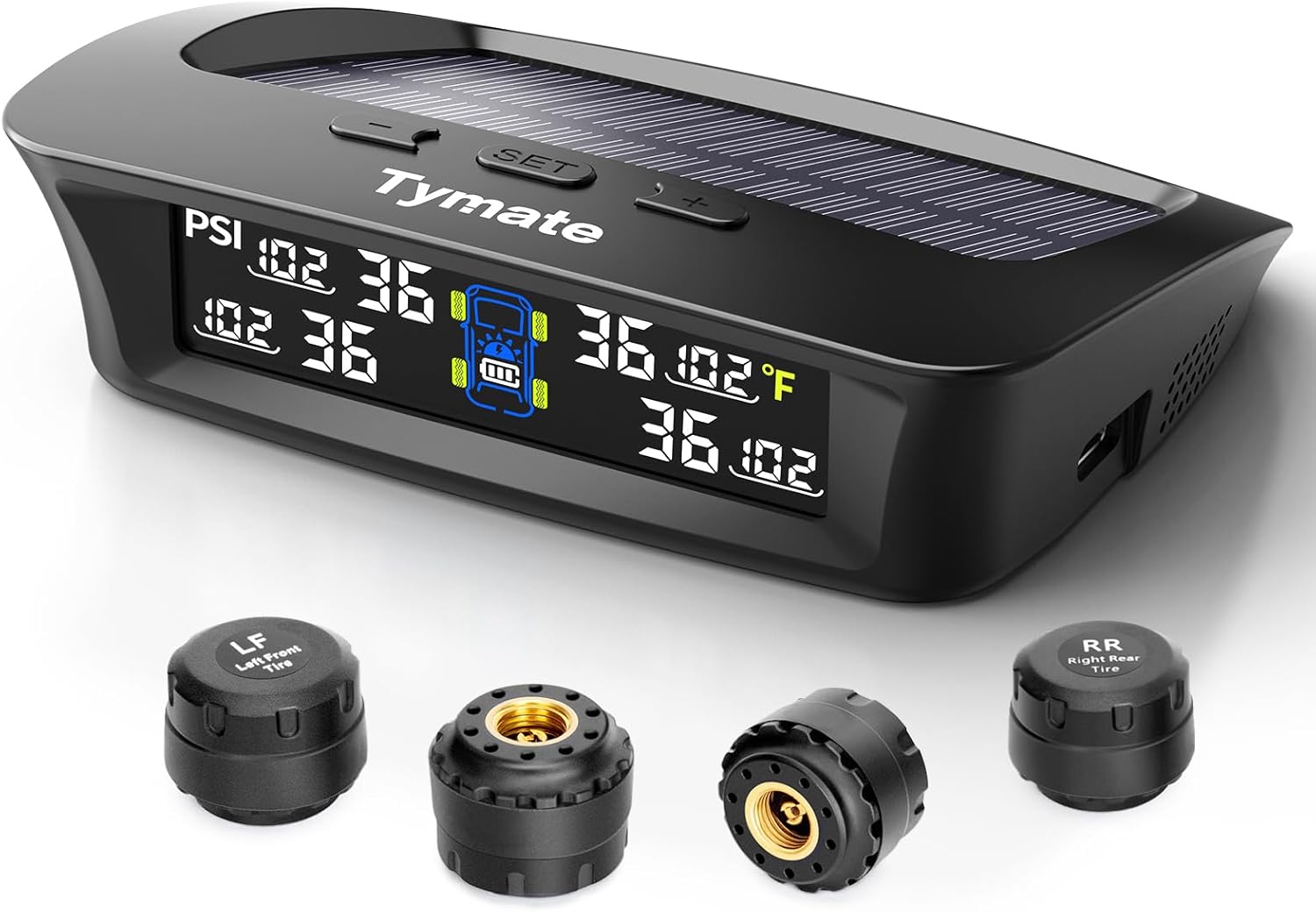
The Tymate TM3 RV TPMS delivers real-time tire pressure monitoring from 0 to 144 PSI with accurate readings and dependable wireless communication. It includes four external sensors with pre-pairing, six alarm modes for rapid leak, pressure extremes, temperature, and signal loss, plus an easy-reference setup for alert thresholds. Solar and USB-C charging help keep the display powered, while the color LCD and adaptive backlight improve visibility for safer driving and towing.
Frequently Asked Questions
Can I mix 4-ply and 10-ply tires on one vehicle?
You generally should not mix tire specifications casually. Replacement tires should meet the vehicle maker’s size, load index, and speed-rating requirements, and USTMA recommends matching tire construction and specifications across the vehicle when possible. If a manufacturer allows a mixed setup, follow its axle placement and pressure instructions exactly.
Do 10-ply tires always ride rougher than 4-ply tires?
No. A 10-ply-rated LT tire often feels firmer than a lighter-duty tire, especially on an unloaded truck, but ride quality depends on much more than ply rating. Tire model, sidewall design, tread, pressure, wheel size, suspension, and vehicle weight can change the result.
Are 10-ply tires more puncture-resistant off-road?
Not automatically. A higher load range indicates greater load-and-pressure capability, but puncture resistance depends on the tire’s actual sidewall, belt, tread, and compound design. Compare the manufacturer’s construction and intended service instead of assuming every 10-ply-rated tire is tougher against rocks or debris.
Do heavier 10-ply tires reduce fuel economy?
They can, but there is no fixed penalty for the whole category. Extra tire mass and rolling resistance can increase energy use, while tread compound, size, pressure, and vehicle setup also matter. Compare the actual tires rather than using ply rating as a fuel-economy score.
Can I use 10-ply tires on a light-duty truck?
Yes, if the tire size, load rating, speed rating, wheel, clearance, and inflation requirements are compatible with the truck. A higher load rating may be useful for approved towing or hauling, but it does not increase the truck’s rated payload or axle limits and may change ride feel.
Does 10-ply always mean 80 PSI?
No. Load Range E is the traditional 10-ply-rating equivalent, and many LT tires reach their rated load at 80 PSI, but that is not universal across every tire standard and size. Read the tire’s sidewall and manufacturer load table, then use the approved operating pressure for your vehicle.
Conclusion
Choose 4-ply vs 10-ply tires by verified load requirements, not by assuming the larger ply number is always better. A 10-ply-rated Load Range E tire can provide more capacity for approved heavy-duty use, while a lighter-duty tire may better suit normal driving when it fully meets the vehicle specification. Check the load index, tire type, placard pressure, and vehicle limits before you buy.
Sources
- Toyo Tires Commercial Truck Tires Product Data Book: ply-rating definition and traditional ply-rating/load-range correspondence.
- Michelin Tire Load Rating & Speed Rating Guide: load-index meaning and replacement load-rating guidance.
- Michelin Technical Bulletin PM 18-01: example load capacities and rated pressures for P-metric, LT-metric, and C-type tires.
- Michelin Tire Pressure Guide: vehicle placard pressure versus tire sidewall maximum pressure.
- U.S. Tire Manufacturers Association Replacement Guidance: replacement size, load-index, speed-rating, and load-capacity recommendations.
- NHTSA Tire Safety Guide: vehicle placard information, load limits, and inflation safety.

