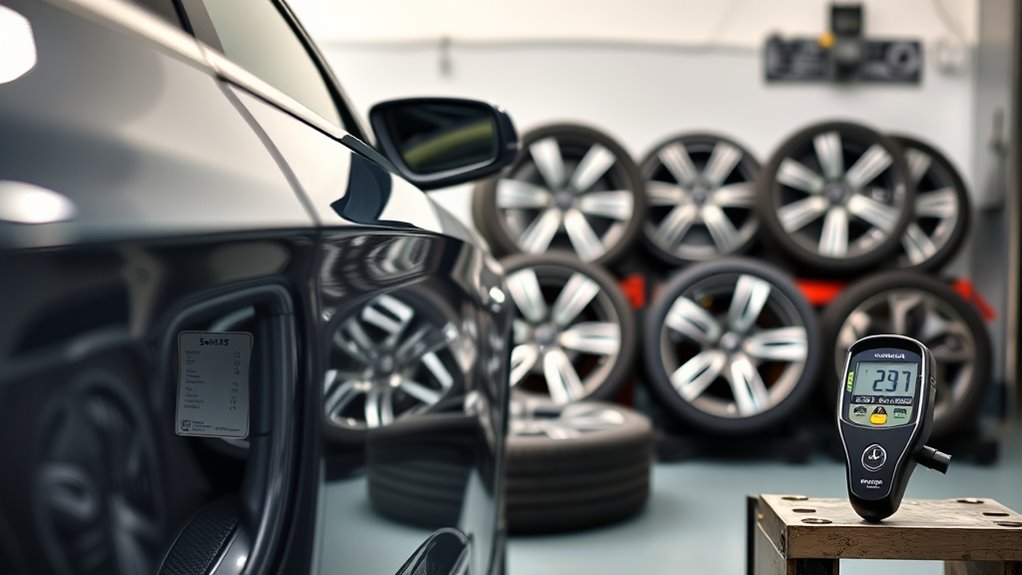
Your Hyundai Sonata’s correct tire pressure is the cold PSI printed on your car’s Tire and Loading Information Label, usually on the driver’s door jamb. Do not set pressure from the tire sidewall number, because that number shows the tire’s maximum pressure, not Hyundai’s recommended pressure for your Sonata. Many Sonata trims sit in the low-30 PSI range, but the exact target can change by model year, trim, wheel package, tire size, and load.
Last updated: July 7, 2026 · Reviewed against NHTSA tire-safety guidance and federal TPMS wording.
Quick Answer
Inflate your Hyundai Sonata tires to the cold PSI listed on the driver’s door jamb placard or owner’s manual. Check pressure when the tires are cold, meaning the car has not been driven for at least three hours. Recheck all four tires at least monthly, before long trips, after major temperature swings, and whenever the TPMS light turns on.
Key Takeaways
- Use the PSI on your Sonata’s door jamb placard as the main source.
- Check tire pressure when the tires are cold for the most useful reading.
- Do not use the sidewall PSI as your normal inflation target.
- Recheck pressure monthly and before long trips or heavy loads.
- Ask a technician to inspect any tire that vibrates, pulls, leaks, or looks damaged.
Hyundai Sonata Tire Pressure: Quick Reference
When you check tire pressure on a Hyundai Sonata, start with the manufacturer’s recommended values on the vehicle label. A generic year-and-trim chart can help you estimate, but it cannot replace the placard on your car.
| Where to look | What it tells you | How to use it |
|---|---|---|
| Driver’s door jamb placard | Recommended cold PSI, tire size, and load information | Use this as the main pressure target |
| Owner’s manual | Pressure guidance, load limits, and TPMS notes | Use it to confirm special load or spare-tire instructions |
| Tire sidewall | Maximum tire pressure and tire rating information | Do not use it as the normal Sonata PSI target |
| TPMS display or warning light | A warning that pressure may be low or the system may need service | Check with a gauge and reset or service as needed |
Many Sonata trims use a cold pressure near 32 PSI, but your placard may list a different value. Wheel size, tire size, drivetrain, load rating, and market can change the recommended number.
Set the pressure when the tires are cold, before you drive or after the car has been parked for several hours. Temperature affects pressure, so a tire that looked correct in warm weather can read low after a cold night.
Safety source: NHTSA tire-safety guidance says to use the vehicle label or owner’s manual, check pressure monthly when cold, and treat TPMS as a backup rather than a substitute for routine checks.
Where Do You Find Your Sonata’s Exact PSI?
To find your Sonata’s exact PSI, check the driver’s side door jamb sticker first. The placard lists the recommended cold PSI for the original tire size and load rating.
Your owner’s manual also explains tire-pressure checks, load limits, TPMS warnings, and spare-tire guidance. Use it when you carry heavy cargo, change tire size, or see a warning light after inflation.
A Hyundai dealer can use your vehicle identification number (VIN) to confirm factory wheel and tire equipment if the placard is missing, damaged, or hard to read. Still, use the tire placard on your car when you set pressure.
Note: The PSI printed on a tire sidewall shows maximum pressure, not the recommended pressure for your Sonata.
How Tire Size & Load Affect the Recommended PSI
Tire size affects the contact patch, sidewall flex, steering response, ride comfort, and tread wear. If you install larger, wider, or non-original tires, ask a tire professional how the change affects safe pressure.
Load capacity also affects inflation needs. Extra passengers, luggage, or cargo can make a tire flex more, which increases heat and wear.
Check the door jamb sticker or owner’s manual for the exact PSI for your Sonata’s tire size and load limits. Don’t raise pressure beyond the safe range without professional guidance.
Tire Size Impact
If you change wheel size on a Sonata, you also change how the tire carries weight. Different diameters and widths affect the contact patch, sidewall flex, steering feel, and tread wear.
Compare tire size, load index, and speed rating before you adjust pressure. Check pressure weekly while testing a new setup, then return to monthly checks once wear looks even.
Under-inflation can cause heat buildup, poor handling, and tire failure. Over-inflation can cause center wear, a harsher ride, and weaker grip on rough roads.
Load Capacity Influence
Load capacity changes how recommended PSI supports the vehicle. Heavy cargo or frequent highway trips can increase tire heat, so you need closer checks before you drive.
Match PSI to the tire placard, the tire load rating, and your driving conditions. A tire shop can help if you use aftermarket wheels, different tire sizes, or heavier loads than usual.
- Check the load rating before changing tire size.
- Follow the placard before using a general PSI range.
- Inspect tread wear after carrying heavy loads.
- Reduce risk by fixing low pressure early.
- Keep control by checking pressure on a set schedule.
Should You Add or Subtract PSI for Load or Weather?
Temperature and load change how your tires behave. As temperature drops, tire pressure usually drops too, and warm weather can raise pressure.
Do not chase hot tire readings after a drive. Reset the tires to the placard PSI when they are cold, then recheck after large temperature swings.
For heavy loads, follow the owner’s manual rather than guessing. If the manual allows a higher pressure for load, adjust within that stated range.
| Condition | What to do |
|---|---|
| Cold weather | Check cold PSI and inflate back to placard value |
| Warm weather | Check cold PSI and release air only if above the safe target |
| Heavy load | Follow the owner’s manual load-pressure guidance |
| Snow or ice | Use placard PSI unless your manual gives a different instruction |
Warning: Don’t lower tire pressure for snow unless your owner’s manual or a tire professional tells you to do it.
How to Check and Set Tire Pressure: Step-by-Step Routine & Tools
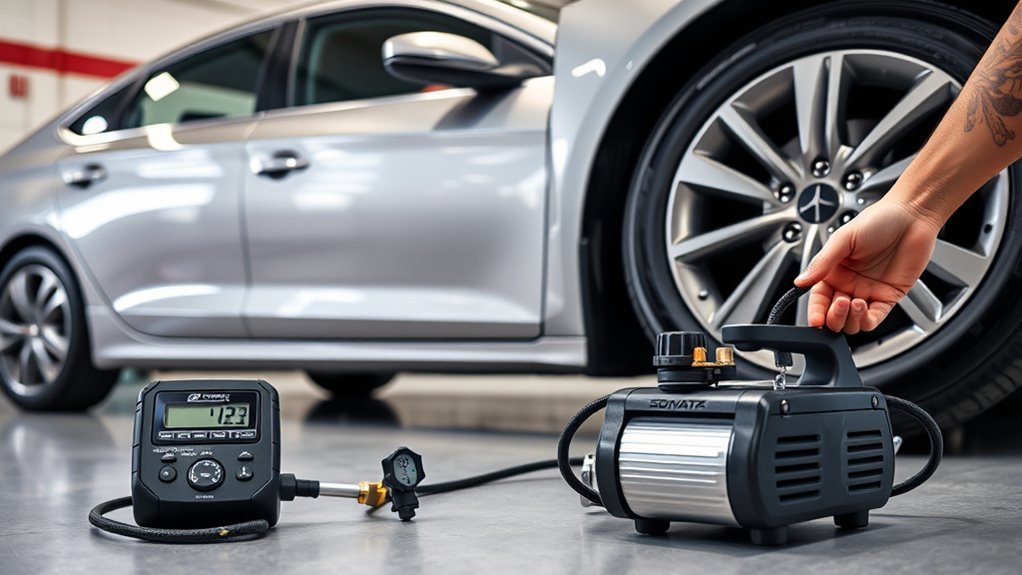
You only need a reliable tire pressure gauge, access to air, and the PSI from your Sonata’s placard. Check the tires before driving or after the car has sat for at least three hours.
- Park your Sonata on level ground and let the tires cool.
- Remove the valve cap from one tire.
- Press the gauge firmly onto the valve stem until the hiss stops.
- Compare the reading with the PSI on the door jamb placard.
- Add air in short bursts if the reading sits below the target.
- Release small amounts of air if the reading sits above the target.
- Recheck the pressure and replace the valve cap.
- Repeat the process for all four tires and the spare if your Sonata has one.
Make this part of your monthly routine. Check again before long trips, after sharp temperature changes, and when the tire pressure monitoring system (TPMS) light turns on.
[Products Worth Considering]

ETENWOLF’s calibrated digital tire pressure gauges deliver accurate readings across a wide pressure range, from below 12 PSI to above 140 PSI. The built-in thermal compensation helps maintain performance in extreme cold and hot conditions, while the LED light improves visibility for quick checks. Includes replaceable AAA batteries for long-lasting use and convenience for everyday tire monitoring.
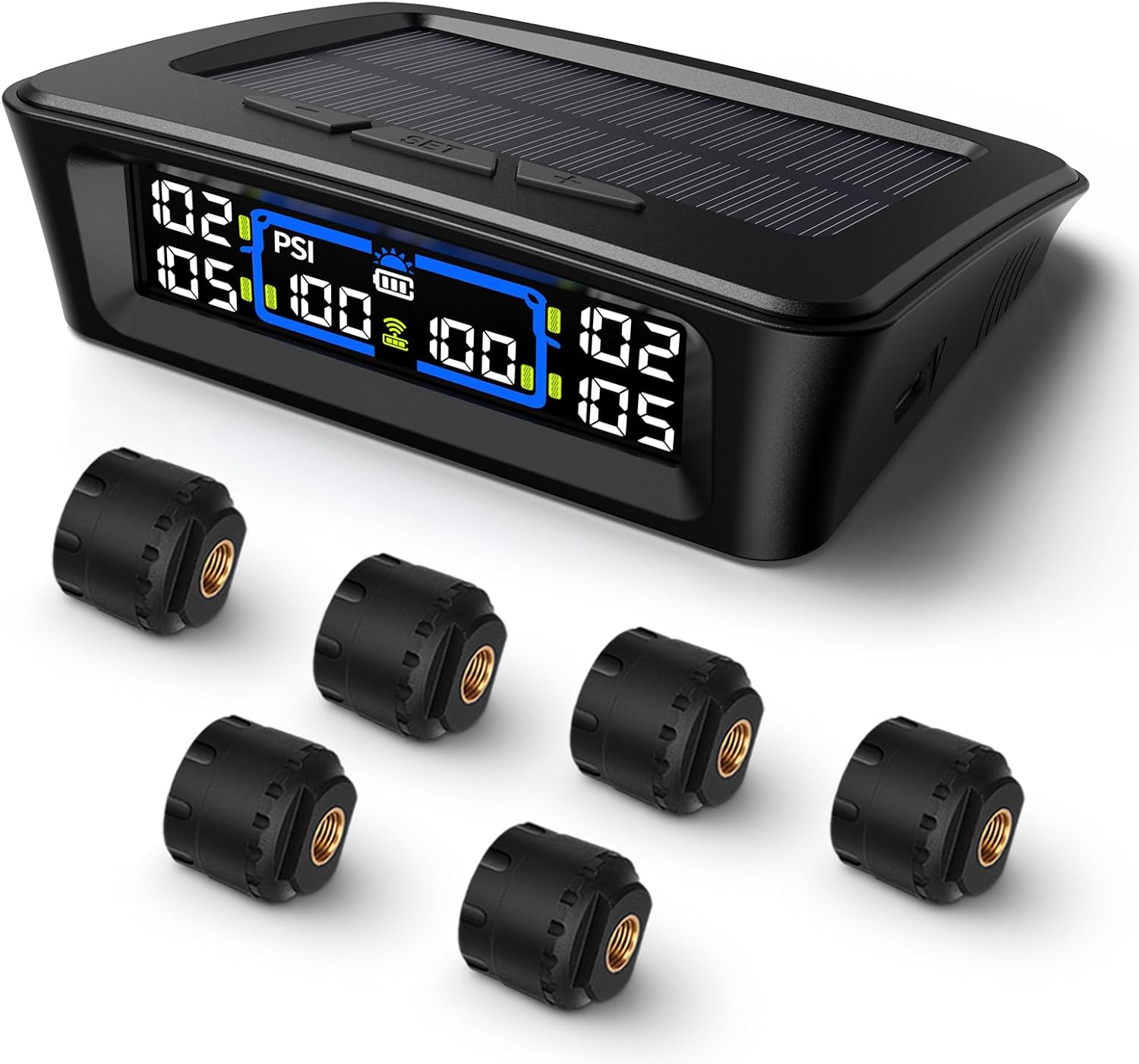
The Tymate TM12 RV TPMS delivers real-time tire pressure and temperature monitoring with a stable 433Hz display for safer long-distance driving. It supports simultaneous monitoring across vehicle and trailer zones, includes six alarm modes for pressure, temperature, leakage, battery, and signal loss, and features easy DIY installation with auto calibration. Power is supplied via USB-C charging or solar recharging, with a wide 0–144 PSI range and up to 50 ft signal coverage for RVs and towable trailers.

Replace your worn or missing TPMS sensors with pre-programmed, direct-fit sensors for compatible Ford, Lincoln, and select Mazda models. Each sensor comes ready to activate with a scan tool, helping restore accurate tire pressure monitoring and trouble-free installation. Built with a long-life CR2032 battery and tested before factory release, this set provides dependable performance with a one-year warranty.
What Should You Do When the TPMS Light Turns On?
The tire pressure monitoring system (TPMS) warns you when one or more tires may sit below the safe range. Stop in a safe place and check each tire with a gauge.
Federal TPMS rules require the warning to activate when pressure is significantly below the vehicle manufacturer’s recommended cold tire pressure. That means the light is not a replacement for monthly gauge checks.
Inflate the tires to the placard PSI while they are cold. If the light stays on after you drive for a short distance, your Sonata may have a slow leak, sensor issue, damaged tire, or incompatible replacement wheel or tire.
Don’t ignore a TPMS light that returns after inflation. A technician can inspect the tire, valve stem, wheel, and sensor.
TPMS note: Federal wording in 49 CFR 571.138 says TPMS is not a substitute for proper tire maintenance.
[Products Worth Considering]

Monitor tire tread wear with a smart, color-coded depth gauge that shows clear condition ranges at a glance. The bar is range marked for fast, easy readings, helping you maintain safer traction and performance. Each gauge is portable with a pocket clip, and the set includes 20 units for daily use and sharing.

Get precise tire readings with the ETENWOLF T300 Plus digital gauge, calibrated to ANSI B40.7 Grade 2A for reliable accuracy. It measures across a wide 3–200 PSI range and includes thermal compensation for dependable performance from extreme cold to heat. The bright LED display, LED illumination, and replaceable AAA batteries make it easy to check pressures quickly, even in low light.
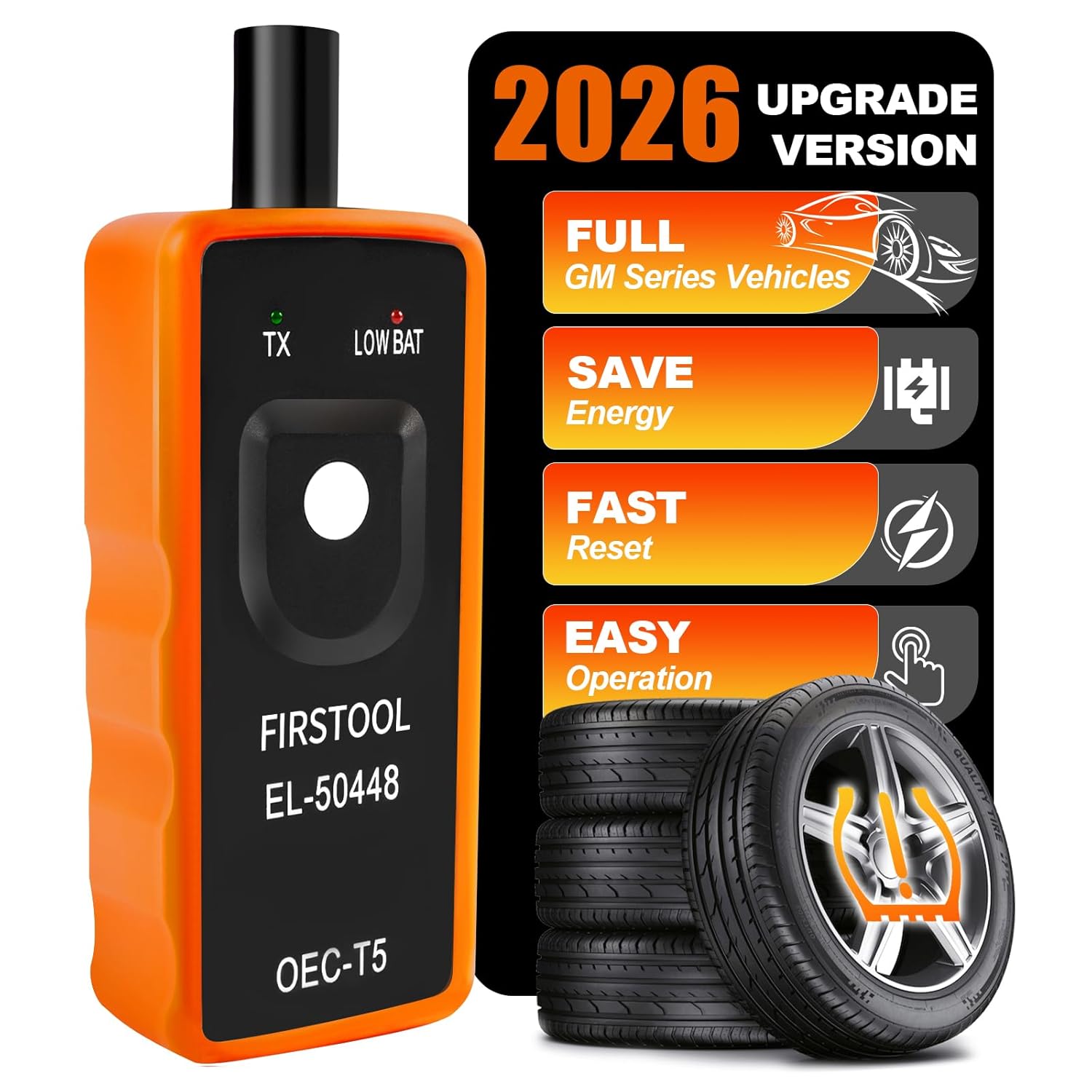
This TPMS relearn tool helps you quickly activate, match, and reset GM tire pressure sensors to keep the vehicle monitoring system working properly. It clears tire pressure alarms and dashboard warning lights after sensor replacement or tire rotation, and supports learning for common 315/433 MHz TPMS sensors. Designed for simple one-button operation, it can help you avoid unnecessary trips to repair shops.
Tire Wear, Safety Signs, and When to See a Technician
Inspect your tires regularly for uneven wear, bulges, cracks, punctures, or low tread. These signs can point to pressure problems, alignment issues, overloading, or internal tire damage.
Outer-edge wear often points to under-inflation, while center wear can point to over-inflation. Vibrations, pulling, or sudden pressure loss need quick attention.
Replace tires when tread reaches 2/32 inch or when damage affects the sidewall or tire structure. Don’t drive on a tire with a bulge, exposed cord, or fast leak.
| Symptom | Likely Cause | Action |
|---|---|---|
| Outer-edge wear | Underinflation | Inflate to spec and inspect |
| Center wear | Overinflation | Adjust PSI and monitor |
| Bulge or crack | Structural failure | Replace immediately |
| Vibration or pull | Misalignment or tire damage | Get an alignment or inspection |
| Sudden pressure drop | Puncture, valve leak, or wheel leak | Repair or replace |
Use these warning signs to protect handling, braking, and tire life. Quick action can prevent a small leak from becoming a roadside problem.
[Products Worth Considering]

CKAuto valve stem caps help protect tire valve stems with a corrosion-resistant design that combines plastic inner protection with a stylish anodized aluminum exterior. They feature a rotating thread for quick installation and removal and a universal fit for most cars, trucks, SUVs, RVs, motorcycles, bicycles, and other motor vehicles. The anodized and powder-coated finish is built for durability while keeping the cap color bright.

Replace worn or malfunctioning GM TPMS sensors with this 433MHz pre-programmed sensor set designed for compatibility with many Chevrolet, Buick, GMC, and Cadillac models. It includes guidance for proper OBDII relearning/pairing after installation and supports reliable long-term operation with a high-performance CR2032 battery. Quality tested for durability and performance to help restore accurate tire pressure monitoring.

The ETENWOLF T500 digital tire pressure gauge with inflator delivers accurate readings across a wide 0–250 PSI range, calibrated to ANSI B40.7 Grade 2A. An all-in-one tool combines gauge, air chuck, hose, inflating and controlled bleed for checking, inflating, and deflating tires on many vehicle types. It’s built for reliable use in extreme temperatures and features an illuminated backlit display with replaceable AAA batteries for convenient operation.
Frequently Asked Questions
What PSI Should My Hyundai Sonata Tires Be At?
Set your Hyundai Sonata tires to the cold PSI listed on the driver’s door jamb placard. Many models use a low-30 PSI target, but your trim, tire size, and load may require a different value.
Where Is the Tire Pressure Sticker on a Hyundai Sonata?
Look on the driver’s side door jamb or door edge for the Tire and Loading Information Label. If the label is missing or damaged, check the owner’s manual or ask a Hyundai dealer to confirm the factory tire information from your VIN.
Is 34 PSI Too Much?
34 PSI may be fine for some Sonata trims, but it may be too high for others. Check your placard first, then adjust only within the listed range for your car and load.
Should I Use the PSI on the Tire Sidewall?
No. The number on the sidewall shows the tire’s maximum cold pressure, not your Sonata’s recommended pressure. Use the door jamb placard or owner’s manual instead.
How Often Should I Check Sonata Tire Pressure?
Check tire pressure at least once a month and before long trips. Check sooner after major temperature changes, heavy loading, or a TPMS warning light.
Why Does My Tire Pressure Drop in Cold Weather?
Cold air lowers tire pressure, so your TPMS light may appear after a cold night. Check cold pressure and inflate the tires back to the placard PSI.
Why Is My TPMS Light Still On After Adding Air?
The tire may still be below the placard PSI, or the system may need a short drive to update. If the light returns, check for a puncture, valve leak, damaged wheel, failed sensor, or incompatible replacement tire.
Conclusion
The safest tire pressure for your Sonata is the cold PSI on the vehicle placard, not a guess or a sidewall number. Check pressure monthly, adjust it when tires are cold, and inspect tread while you work.
If you see uneven wear, a bulge, a leak, vibration, or a TPMS light that returns, schedule a tire inspection. A few minutes of routine care helps your Sonata steer, brake, and ride the way it should.