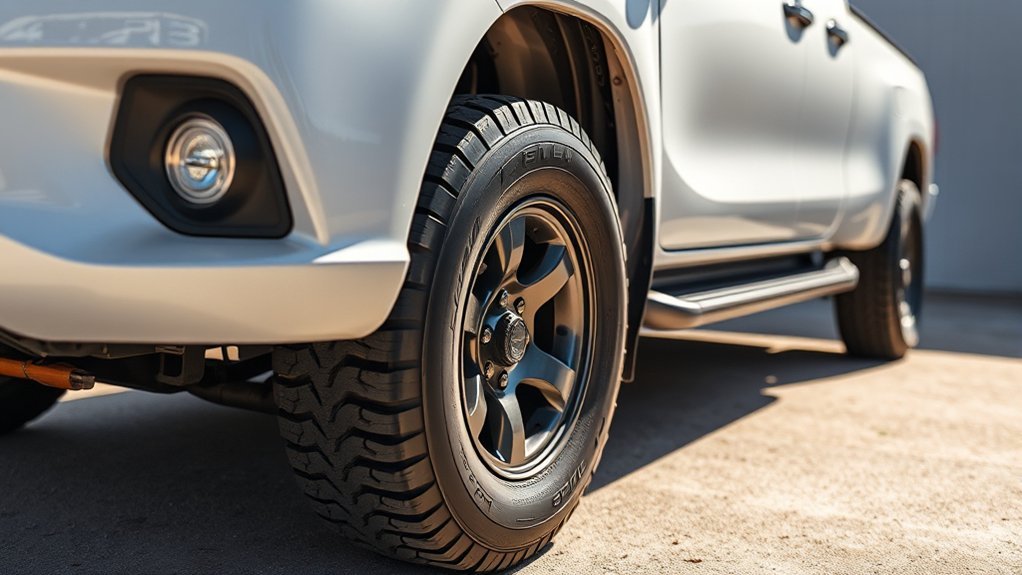
Your Toyota Hilux Single Cab does not have one universal tire size or pressure. The correct specification depends on its model year, market, grade, drivetrain, original wheel package, and operating load. Before buying tires or adding air, check the tire placard on the vehicle and compare it with the owner’s manual.
Quick Answer
Use the tire size, load rating, and cold inflation pressure printed on your Hilux tire placard. Single Cab fitments differ between 2WD, Hi-Rider, and 4WD models. Official Toyota examples include 215/65R16C and 225/70R17C, but you should not copy these specifications without confirming your exact vehicle.
Key Takeaways
- Confirm the model year, market, grade, drivetrain, tire placard, and current wheel size before ordering tires.
- Measure pressure when the tires are cold and use the vehicle placard, not the maximum pressure molded into the tire sidewall.
- Match or exceed Toyota’s required tire load index, speed rating, and commercial or light-truck construction.
- Use only the specified jack points and wheel-nut torque when changing a wheel.
- Replace tires with bulges, exposed cords, serious cuts, repeated air loss, or tread at the wear indicators.
At a Glance
| Time Required | About 25 to 45 minutes for a roadside wheel change in safe conditions |
| Difficulty | Moderate; the wheel and spare can be heavy |
| Tools Needed | Correct spare, wheel chock, factory jack, jack handle, wheel-nut wrench, pressure gauge, gloves, and ideally a torque wrench |
| Cost | No parts cost when a usable spare and factory tools are present; repair, replacement, or roadside-service costs vary |
Warning: Do not change a wheel beside moving traffic or on soft, sloped, or unstable ground. Never place any part of your body under a Hilux supported only by its emergency jack. Move to a safer location or call roadside assistance when conditions are unsafe.
How to Change Tires on Your Hilux
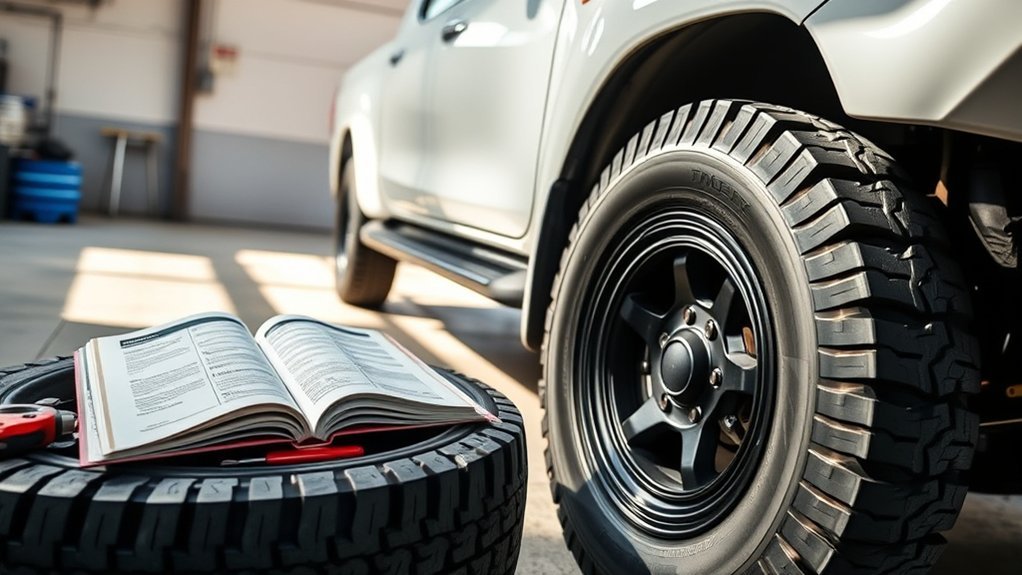
Use the procedure in your own Hilux manual because jack locations, spare-tire carriers, wheel nuts, and tightening specifications can differ. The following sequence reflects the main safety steps in Toyota’s current Hilux wheel-changing guidance.
- Stop in a safe location. Park on firm, level ground away from traffic. Turn on the hazard lights, apply the parking brake, switch off the engine, and place an automatic transmission in Park or a manual transmission in first or reverse gear.
- Chock the opposite wheel. Place a wheel chock diagonally opposite the flat tire. For example, if the left-front tire is flat, chock the right-rear wheel.
- Remove the spare and tools. Confirm that the spare has enough pressure, has no serious damage, and is approved for your Hilux.
- Loosen the wheel nuts. While the tire remains on the ground, loosen each nut about one turn. Do not remove the nuts yet.
- Position the jack correctly. Use only the lifting point shown in your owner’s manual. A jack placed under bodywork, a suspension arm, or an incorrect crossmember can slip or damage the vehicle.
- Raise the vehicle. Lift only until the tire clears the ground. Keep passengers outside the vehicle and do not start or move it while it is raised.
- Remove the wheel. Remove the loosened nuts and lift off the damaged wheel. Lay it flat with the finished face upward to reduce damage.
- Clean the mounting surface. Remove dirt, rust flakes, and debris from the wheel-to-hub contact area. A contaminated mounting face can reduce clamping force.
- Install the spare. Position the wheel and hand-tighten the correct nuts with their proper seating faces against the wheel.
- Lower and tighten in sequence. Lower the vehicle, then tighten the nuts progressively in a crisscross pattern over two or three passes. Use the exact torque in your manual. Toyota’s cited May 2026 Hilux specification lists 105 N·m, but another model year or market may differ.
- Stow everything securely. Secure the damaged wheel, jack, handle, and tools before driving.
- Complete the repair. Check the installed tire pressure, follow any tire-pressure monitoring reset instructions, and have the damaged tire inspected promptly. Verify wheel-nut torque as directed by Toyota or a qualified technician.
Pro Tip: Photograph the tire placard, jack-point diagram, spare-tire instructions, and wheel-nut torque page before a long trip. You can then view the information even when mobile service is unavailable.
[Products Worth Considering]

Monitor tire tread wear with a smart, color-coded depth gauge that shows clear condition ranges at a glance. The bar is range marked for fast, easy readings, helping you maintain safer traction and performance. Each gauge is portable with a pocket clip, and the set includes 20 units for daily use and sharing.

Steelman white tire marking crayons provide high-contrast, semi-permanent marks for repairing and inspecting tires and equipment. They write on wet or dry, smooth or coarse surfaces including rubber, metal, glass, and wood, making them ideal for puncture location and damage outlining. The lead- and zinc-free crayons resist weather and fading yet wipe away when you no longer need the marks.

These M14x1.5 closed-end chrome lug nuts are a one-piece replacement designed for secure fitment on compatible GM, Ford, and select Chrysler/Dodge models. Featuring a 60-degree conical seat and anti-rust chrome plating, they help resist corrosion and maintain a bright look for everyday driving. Built for long-term durability, they include OEM-style part references and are backed by 12 months of support.
Understanding Toyota Hilux Tire Sizes
Toyota has sold the Hilux in many countries, generations, cab styles, and drivetrain combinations. A tire specification found on another Hilux may therefore be wrong for your Single Cab, even when both trucks look similar.
Common Tire Sizes
The following official Toyota examples show why you must identify the exact configuration before buying. They are reference examples, not a universal replacement list.
| Official Toyota example | Listed tire size | What it demonstrates |
|---|---|---|
| Australian 4×2 WorkMate configuration | 215/65R16C | Some work-focused Single Cab models use a commercial 16-inch fitment. |
| Australian Hi-Rider and 4×4 WorkMate or SR Single Cab configurations | 225/70R17C | A 4WD or Hi-Rider Single Cab can use a different size and construction from a lower 4×2 model. |
| May 2026 Japan-spec Hilux example | 265/60R18 110H | A size used on one current regional Hilux specification should not be assumed to fit every Single Cab. |
Confirm your original specification using these sources, in this order:
- The tire placard on the driver’s door opening, pillar, or another location identified in the manual.
- The tire and wheel section of the owner’s manual.
- The markings on the current factory-size tires.
- A Toyota dealer or qualified tire professional using the VIN and full vehicle configuration.
How to Read a Hilux Tire Code
A code such as 225/70R17C contains several separate specifications:
- 225: Approximate tire section width in millimeters.
- 70: Sidewall height as a percentage of the tire width.
- R: Radial construction.
- 17: Required wheel diameter in inches.
- C: Commercial-vehicle construction in this example. It does not mean the same thing as the traction grade shown on some passenger tires.
A complete tire marking also includes a load index and speed symbol. Replacement tires should meet or exceed the requirements Toyota specifies for the vehicle and its intended load.
Recommended Tire Pressures
Do not choose pressure from tire size alone. Use the Hilux placard because Toyota may specify different pressures for the front and rear axles or for loaded and unloaded operation.
For example, the May 2026 Japan-spec Hilux maintenance data lists the following cold pressures for its specified 265/60R18 110H tires:
| Load condition | Front | Rear |
|---|---|---|
| Unloaded | 220 kPa, 2.2 bar, approximately 32 psi | 220 kPa, 2.2 bar, approximately 32 psi |
| Loaded | 230 kPa, 2.3 bar, approximately 33 psi | 250 kPa, 2.5 bar, approximately 36 psi |
These figures apply only to the cited specification. Your Single Cab placard may show different values.
Tire Selection Tips
Use more than the printed tire size when comparing replacements. Check all of the following:
- Load index: The tire must support the required axle and vehicle loads.
- Speed rating: Match or exceed Toyota’s approved specification unless the manual and local law allow an exception.
- Construction: Commercial or LT tires may be required on work-focused configurations.
- Overall diameter: A large change can affect clearance, gearing, speedometer readings, braking, and stability systems.
- Wheel width: The tire must be approved for the rim width.
- Operating surface: Choose highway, all-terrain, mud-terrain, or winter performance according to actual use.
- Climate: Consider heat, rain, snow, ice, and seasonal temperature.
- Load use: A lightly used personal truck and a fully loaded work vehicle may need different priorities.
The Right Tire Pressure for Your Hilux
Check pressure when the tires are cold, preferably before driving or after the vehicle has been parked for about three hours. Driving heats the tires and raises the measured pressure.
The National Highway Traffic Safety Administration recommends using the vehicle manufacturer’s placard pressure rather than the maximum pressure molded into the tire sidewall. The sidewall figure is a tire limit, not your Hilux’s normal operating recommendation.
Follow this routine:
- Read the required cold pressure from the vehicle placard.
- Check all road tires with a reliable gauge.
- Check the spare, including an under-bed spare that is easy to overlook.
- Adjust front and rear tires separately if the placard lists different values.
- Use the loaded setting when the vehicle’s instructions require it.
- Reinstall each valve cap and inspect the valve for leakage or damage.
Note: A tire-pressure warning system does not replace manual checks. It may not warn you until a tire is already significantly underinflated, and some Hilux versions may use different monitoring systems or no system at all.
Underinflation can increase heat, shoulder wear, steering response, and rolling resistance. Overinflation can reduce the contact patch and promote center wear or impact damage. A slow pressure loss may indicate a puncture, leaking valve, damaged bead, cracked wheel, or mounting problem.
[Products Worth Considering]

Yieokei Tesla jack pads are molded rubber lifting pucks designed for 2016-2026 Model 3/Y/S/X, including Juniper, to fit securely in the jack hole. They cushion the underframe and help position the jack precisely at the factory jack points to reduce risk of battery, paint, or chassis damage. The set also includes a tire repair tool kit for emergency roadside fixes and comes with a portable storage case to keep everything organized.

Upgrade your wheels with MIKKUPPA closed-end lug nuts designed for reliable fit and corrosion resistance. The one-piece, cold-forged and heat-treated steel construction helps resist rust and stripping, while the integrated finish delivers a durable black appearance. Built to OEM standards with a conical 60-degree seat, these nuts provide a secure solution for compatible Ford, Honda, Jeep, and Chevrolet models.

These aluminum alloy tire valve stem caps with an O-ring seal help protect valve stems from corrosion while adding a clean, stylish look to your vehicle. The universal fit works across cars, trucks, motorcycles, bicycles, and more, making them an easy upgrade for everyday driving and off-road use. Installation is quick, and the included four-pack keeps all your tires dressed and protected.
Selecting the Best Tires for Your Hilux’s Driving Conditions

Choose a tire that matches where the Hilux spends most of its time rather than selecting the most aggressive tread available.
[Products Worth Considering]

Secure your parked vehicle quickly with AFA Tooling 4T rubber wheel chocks in a 4-pack for two dual-wheel sets. The ribbed design and textured base grip fast without pounding, so you can chock tires on trailers, RVs, ATVs, and work vehicles with confidence. EZ rustproof handles with rope ties keep the pair together for easy placement and removal, while nylon-reinforced rubber stands up to dirt, ice, salt, and harsh weather.
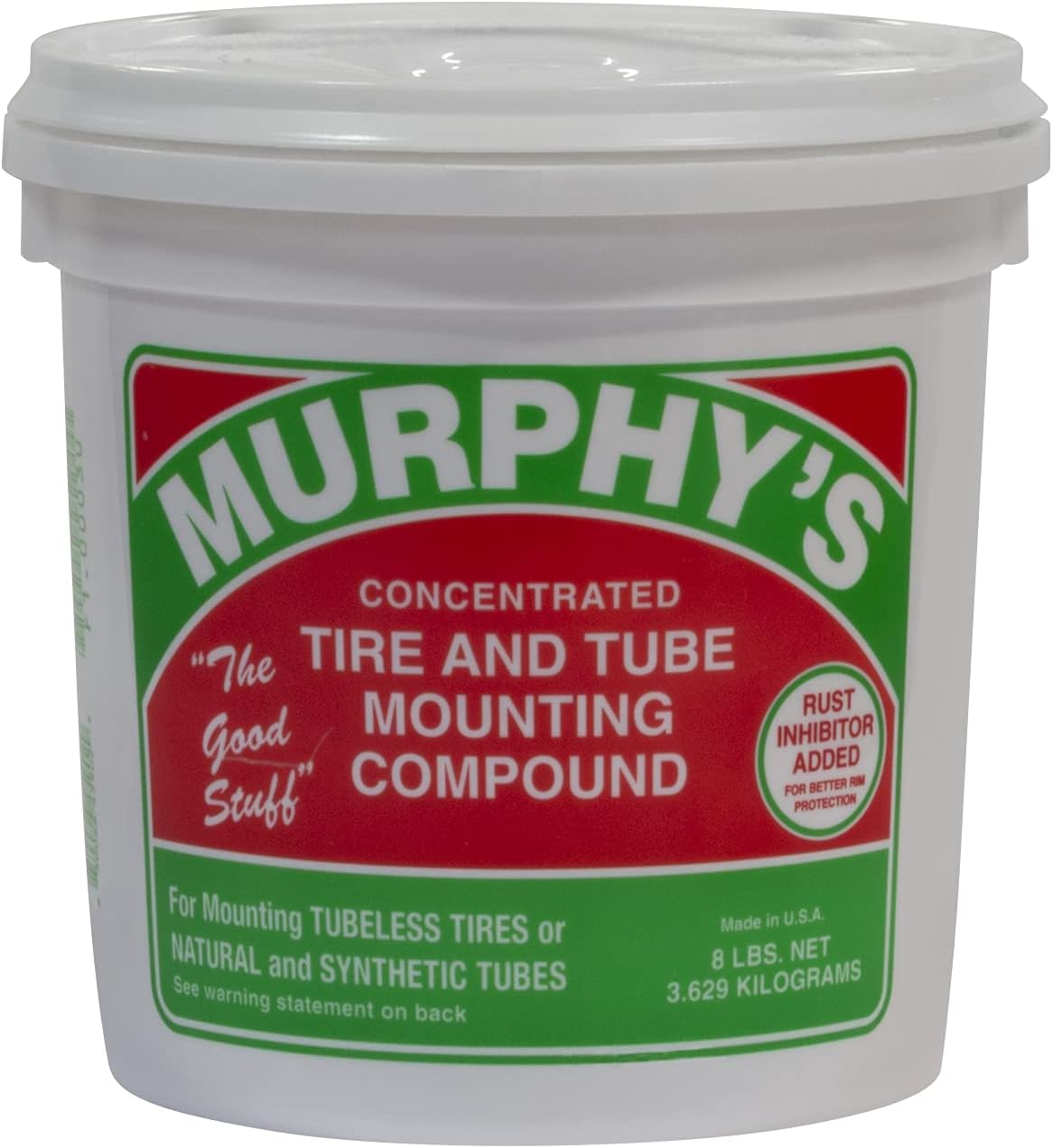
A concentrated tire and tube mounting compound designed to help simplify mounting rubber tires and tubes on passenger, semi truck, construction, and OTR applications. Its ultra-thick formula packs beads effectively and includes rust inhibitors to help protect against corrosion during use.

ETENWOLF T300 is a calibrated digital tire pressure gauge for accurate readings from 3 to 200 PSI across light and heavy-duty vehicles. It includes thermal compensation for reliable performance in extreme cold or heat, with an auto shut-off to extend battery life and an LED for easier reading. The sturdy design supports rugged everyday use, making it ideal for pickups, RVs, and industrial applications.
Highway and Worksite Driving
A highway-terrain or commercial road tire usually provides quieter running, predictable wet-road handling, and lower rolling resistance. Confirm that its casing and load rating suit tools, cargo, towing equipment, and repeated worksite use.
Mixed Road and Off-Road Driving
An all-terrain tire can provide a practical balance for gravel, dirt roads, farms, construction areas, and regular pavement. Compare wet braking, noise, stone retention, sidewall protection, and load capability rather than judging the tire only by tread appearance.
Mud, Sand, and Rough Terrain
Mud-terrain tires can improve self-cleaning and loose-surface traction, but they may add road noise, weight, vibration, and wet-pavement compromises. Lower off-road pressure should only be used with appropriate equipment, terrain knowledge, speed control, and a plan to reinflate before returning to normal road speeds.
Replacement Wheel Fitment
A matching stud pattern does not prove that a wheel fits safely. Confirm all of these points:
- Stud pattern and stud or nut thread
- Center bore and hub location
- Wheel width and diameter
- Offset and inner suspension clearance
- Brake-caliper clearance
- Correct wheel-nut seat design
- Wheel and tire load rating
- Fender, liner, chassis, and mud-flap clearance
- Full steering-lock clearance
- Clearance through suspension compression and axle articulation
- Compatibility with tire-pressure sensors where fitted
- Local inspection, insurance, and modification requirements
Have uncertain aftermarket fitments checked by a qualified wheel and tire specialist before installation.
Signs You Need to Replace Your Hilux Tires
Do not judge a tire only by whether it still holds air. Tread condition, casing damage, age, repeated repairs, vibration, and uneven wear can all justify replacement.
Visible Tread Wear
Inspect the main tread grooves across the full width of every tire. Replace a tire when the tread reaches its built-in wear indicators or the applicable legal minimum in your location. The commonly cited 1.6 mm or 2/32-inch threshold applies in some jurisdictions, but wet-road and loose-surface performance can decline before the tire reaches that point.
Also look for:
- Bald shoulders or center wear
- Flat spots
- Feathered tread edges
- One-sided wear
- Chunks missing from off-road use
- Different wear rates between tires on the same axle
Sidewall Damage Signs
Stop using a tire and obtain professional advice if you find a bulge, exposed cord, deep cut, major crack, or impact deformation. Sidewall damage can affect the tire’s supporting structure and is generally not treated like a simple repairable tread puncture.
Frequent pressure loss, a damaged bead, or repeated punctures also require inspection. Do not continue driving on a visibly deflated tire because a short distance can damage the casing and wheel.
Uneven Tyre Wear
Uneven wear can indicate incorrect pressure, alignment errors, worn suspension parts, wheel imbalance, overloading, or a bent component. Replacing the tire without correcting the cause can quickly damage the replacement.
Arrange an inspection when you notice:
- The vehicle pulling to one side
- Steering-wheel vibration
- Cupped or scalloped tread
- Rapid inner- or outer-edge wear
- A new vibration after an impact
- Different tread depths across the axle
Tire Age and Date Code
Find the tire identification marking and date code on the sidewall. Age alone does not describe the tire’s full condition, but heat, sunlight, storage, load, pressure history, and impact damage can age a casing even when tread remains.
Follow the inspection and replacement guidance from Toyota and the tire manufacturer. Ask a professional to inspect older tires, tires with uncertain history, and spares that have spent years under the vehicle.
Maintaining Your Tires for Longevity and Safety
A consistent inspection routine helps you detect small problems before they cause rapid wear, a roadside failure, or damage to the wheel.
- Check cold pressure monthly. Include the spare and check again before long trips, heavy loading, or towing.
- Follow the Toyota rotation schedule. Use the interval and pattern in your manual. The cited May 2026 Japan-spec Hilux manual specifies rotation every 10,000 km for that vehicle, but your model may differ.
- Inspect tread and sidewalls. Check for cuts, stones, nails, cracks, bulges, exposed material, and uneven wear.
- Check after off-road driving. Remove packed mud and inspect the inner sidewalls, valve stems, wheels, and spare carrier.
- Correct alignment and balance problems. Investigate pulling, vibration, steering shake, or unusual wear rather than rotating the symptom to another position.
- Respect load limits. Do not exceed the tire, axle, or vehicle ratings. Adjust pressure only according to Toyota’s loaded-operation instructions.
- Keep matching tires on each axle. Avoid major differences in size, construction, tread type, and wear unless Toyota specifically permits them.
- Inspect the spare system. Confirm that the spare lowers correctly and that the carrier, retaining mechanism, jack, and tools remain secure.
The correct Hilux tire specification is the one assigned to your exact vehicle, not the most common size found in an online list.
Frequently Asked Questions
What is the tire specification for a Hilux Single Cab?
It depends on the model year, market, drivetrain, grade, and wheel package. Official Toyota examples include 215/65R16C for some 4×2 work configurations and 225/70R17C for some Hi-Rider and 4×4 Single Cab configurations. Confirm the exact size, load index, speed rating, and pressure on your vehicle’s tire placard.
What size tires can I put on my Hilux?
The safest choice is the original size or another size approved by Toyota for your exact vehicle. An alternative must have suitable load capacity, wheel width, overall diameter, brake clearance, offset, steering clearance, and legal approval. Do not choose a tire only because its rim diameter or stud pattern appears to match.
What tire pressure should I use in a Hilux Single Cab?
Use the cold pressure on the vehicle placard. It may differ between the front and rear axles and between unloaded and loaded operation. Do not use the maximum pressure molded into the tire sidewall as the vehicle’s normal setting.
Can you fit 33-inch tires on a Hilux?
Some Hilux configurations can accept approximately 33-inch tires after careful wheel, suspension, body-clearance, speedometer, load, gearing, and legal checks. Others may rub or exceed permitted limits. A suspension lift alone does not guarantee safe clearance. Have the proposed setup measured through full steering lock and suspension movement before use.
What other wheels will fit a Toyota Hilux?
A replacement wheel must match the required stud arrangement, center bore, offset, diameter, width, brake clearance, nut-seat design, and load rating. Hilux wheels from another year or grade are not automatically interchangeable. Verify compatibility with the VIN, Toyota parts data, and a qualified wheel specialist.
What is the Toyota Hilux wheel-nut torque?
Use the specification in your own owner’s manual. The cited May 2026 Japan-spec Hilux manual lists 105 N·m, but Toyota specifications can differ by model year, market, and wheel design. Use a calibrated torque wrench and the correct wheel nuts.
How often should Hilux tires be rotated?
Follow the interval and rotation pattern in your model’s manual. Toyota’s cited May 2026 Hilux manual specifies 10,000 km for that version. Rotate sooner when the manual permits it and abnormal wear appears, but first diagnose pressure, alignment, balance, load, or suspension problems.
Conclusion
The correct Toyota Hilux Single Cab tire setup starts with the vehicle, not a generic online size. Check the tire placard and owner’s manual for the approved size, cold pressure, load rating, and wheel-nut torque. Inspect the tires monthly, adjust for loads only as Toyota directs, and investigate damage or uneven wear promptly. When changing a wheel, use the approved jack points, chock the opposite wheel, and tighten the nuts to the exact model-specific torque.
Sources
- Toyota Hilux Owner’s Manual Portal – current and previous Hilux manual listings by production period.
- Toyota Hilux May 2026 Tire Guidance – pressure checks, tire inspection, rotation, and tire-pressure monitoring information.
- Toyota Hilux May 2026 Flat-Tire Procedure – wheel chocking, jack locations, wheel installation, and tightening procedure.
- Toyota Australia HiLux Wheel and Tire Information – official examples showing different tire sizes across 4×2, Hi-Rider, Single Cab, Extra Cab, and Double Cab configurations.
- Toyota Australia 2026 HiLux Range Update – current-generation and configuration context.
- NHTSA TireWise – tire pressure, tread, damage, replacement, labeling, and maintenance guidance.