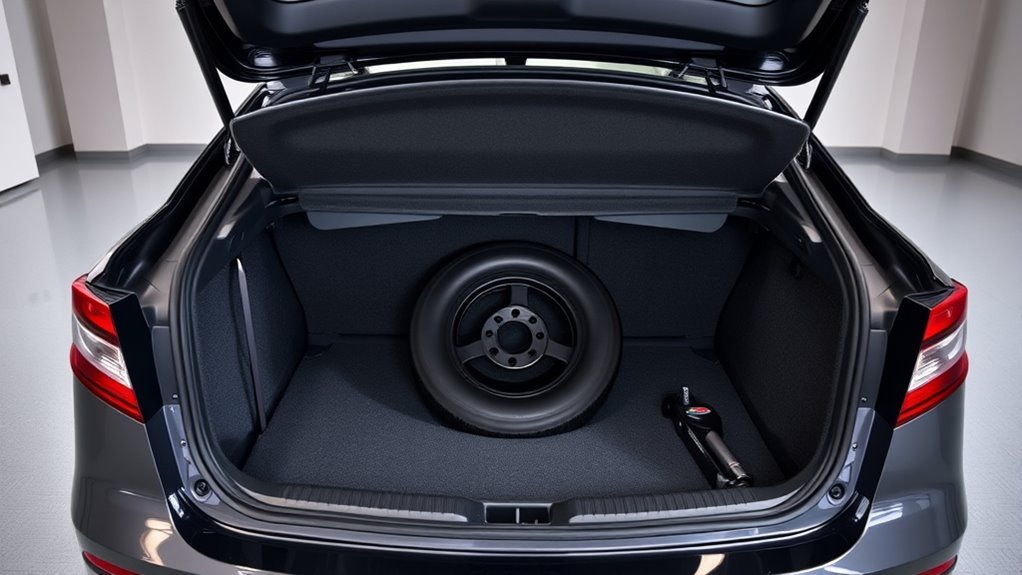
You’ll usually find a Tire Mobility Kit, not a traditional spare tire, in a Hyundai Sonata N Line. That kit normally includes sealant and a small compressor for short-term puncture repair, but it is not a replacement for a compact spare or full-size spare. If you want stronger flat-tire backup, you can buy a compatible spare kit, but fitment must be confirmed for your exact model year, trim, brake package, and VIN.
Quick Answer
Most Hyundai Sonata N Line models do not include a traditional spare tire from the factory. They usually come with a Tire Mobility Kit for minor tread punctures. A compact spare kit can be added, but you should confirm wheel size, brake clearance, trunk fit, and jack/tool inclusion before buying.
Key Takeaways
- The Sonata N Line commonly uses a sealant-and-compressor Tire Mobility Kit instead of a spare tire.
- The Tire Mobility Kit is only for certain small tread punctures; it is not useful for major tire damage, sidewall damage, or a blowout.
- The Sonata N Line trim began as a 2021 model, so avoid parts guides that loosely say “2020 and later N Line.”
- A compact spare kit is the most practical upgrade for many owners, but N Line brake clearance, tire diameter, load rating, and trunk storage must be checked.
- A full-size spare gives the best backup, but it costs more, uses more trunk space, and may not fit neatly under the trunk floor.
At a Glance
| Time Required | 5–10 minutes to check the trunk; 20–30 minutes to verify kit fitment before buying |
| Difficulty | Easy for checking equipment; moderate for installing and test-fitting a spare kit |
| Tools Needed | Owner’s manual, VIN, tire placard, flashlight, tire pressure gauge, and dealer or parts fitment lookup |
| Cost | Usually $0 if using the included kit; several hundred dollars for a compact spare package, depending on year, seller, wheel, jack, and tools |
Does the Sonata N Line Come With a Spare Tire?
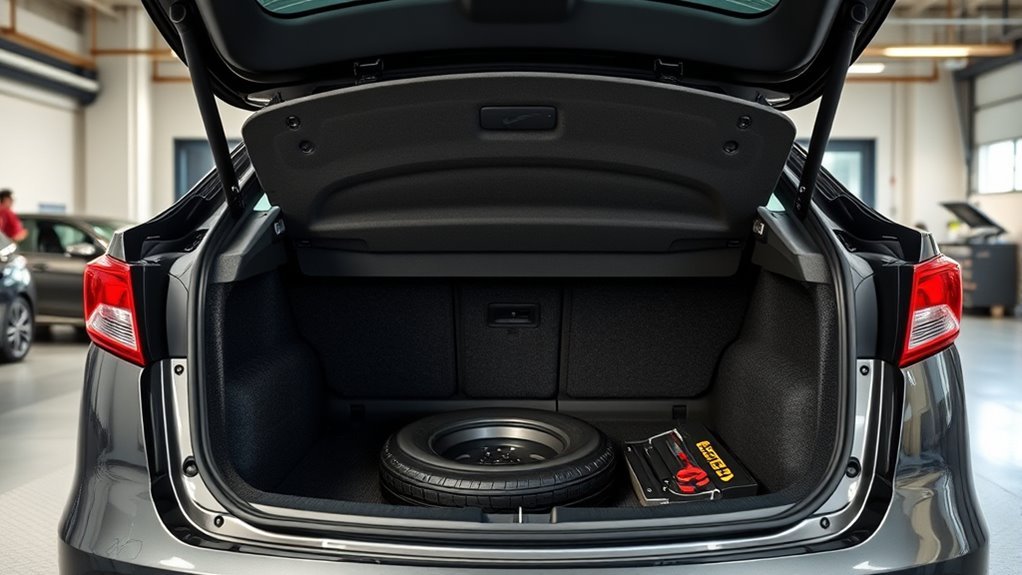
In most cases, the Hyundai Sonata N Line does not come with a traditional spare tire. Instead, it commonly has a Tire Mobility Kit stored under the trunk floor. This kit is a short-term emergency tool, not a permanent tire repair and not a substitute for a real spare wheel.
The safest answer is still to check your exact car. Open the trunk floor and look for a compact spare, jack, lug wrench, and hold-down hardware. If you only see a compressor and sealant bottle, the car is equipped with a repair kit. You can also check the window sticker, owner’s manual, or ask a Hyundai parts department to look up your VIN in the parts catalog.
Note: Factory equipment can vary by market, model year, production date, and previous-owner changes. A used Sonata N Line may have an added spare kit, a missing repair kit, or replacement tools, so inspect the trunk instead of relying only on online trim descriptions.
How to Confirm What Your Exact Sonata N Line Has
Before buying parts, confirm the equipment in your exact car. This prevents ordering a spare that does not clear the brakes, does not match the tire diameter closely enough, or does not store securely in the trunk.
- Lift the trunk floor. Look for a spare wheel, jack, lug wrench, compressor, sealant bottle, towing eye, and foam storage tray.
- Read the tire placard. Check the driver-side door jamb for original tire size and recommended cold tire pressure.
- Check the owner’s manual. Use Hyundai’s official manual lookup for your model year and region, especially if your vehicle is not a U.S. model.
- Use the VIN at a Hyundai dealer or parts counter. Ask them to confirm the correct spare wheel, tire size, jack, lug wrench, hold-down, foam tray, and trunk fit.
- Ask specifically about N Line brake clearance. The N Line’s wheel and brake package may create fitment differences from lower trims.
Pro Tip: If you buy a compact spare, test-fit it at home before you need it on the shoulder of a road. Confirm that it seats flat on the hub, clears the brake caliper, and can be tightened with the correct lug nuts and torque specification.
Why Hyundai Often Fits a Repair Kit Instead of a Spare
Hyundai and many other automakers use repair kits because they reduce weight, free up trunk space, and simplify packaging. A spare wheel, tire, jack, lug wrench, hold-down hardware, and foam tray all take space and add mass. A small compressor and sealant bottle are easier to store under the trunk floor.
Weight and Fuel Economy
A repair kit is lighter than a spare wheel and tool set. Less weight can help efficiency and packaging, but the exact fuel-economy difference depends on the spare type, wheel material, tire size, tool kit, and driving conditions. Because the exact savings vary, it is better to treat the repair kit as a packaging and weight-saving choice rather than a guaranteed mpg upgrade.
| Setup | Main Benefit | Main Trade-Off |
|---|---|---|
| Tire Mobility Kit | Lightest and easiest to store | Only works on certain minor punctures |
| Compact spare | Lets you replace a damaged tire temporarily | Speed, distance, and handling limits |
| Full-size spare | Best backup for long trips | Uses the most trunk space and weight |
Space and Cost Savings
The repair kit also gives the trunk a cleaner, flatter storage area. That matters in a sedan because underfloor space is limited. For drivers who mostly commute near tire shops or roadside assistance coverage, the repair kit may be acceptable. For drivers who take long trips, travel at night, or drive through rural areas, a spare can be worth the extra cost and space.
- A slim compressor and sealant bottle can fit under the trunk floor.
- A compact spare kit needs a wheel, tire, jack, lug wrench, and hold-down hardware.
- A full-size spare may not fit cleanly in the factory underfloor storage area.
- Any added spare must be secured so it cannot move during braking or a crash.
Which N Line Years and Trims Usually Lack a Spare?
The Sonata N Line was introduced as a 2021 model. That matters because some generic parts listings and forum posts loosely describe “2020 and later Sonata” fitment, but a 2020 Sonata N Line is not the right reference point for the N Line trim.
For 2021 and newer Sonata N Line models, especially late DN8-generation cars, expect a Tire Mobility Kit unless your exact car has been equipped with an added spare kit. Still, do not assume all years, countries, or used cars are identical. Verify the trunk equipment and use your VIN when ordering parts.
Warning: Do not buy a spare kit based only on “Sonata” fitment. The N Line may have different wheel, brake, or storage requirements than other Sonata trims. Confirm brake clearance, tire diameter, bolt pattern, load rating, and jack/tool compatibility before driving on the spare.
Hyundai OEM Spare and Repair-Kit Options for the N Line
Hyundai-related parts channels and dealer parts departments may offer compact spare options for Sonata models, including 2024–2026 listings. However, availability and fitment can vary. Some kits include the wheel and tire but not the jack; others bundle the scissor jack and tool kit. Read the product notes carefully and confirm the VIN with a dealer.
[Products Worth Considering]

This ecocstm ratchet wrench is designed to make emergency and routine tire changes faster with a 360° rotating head and quick forward/reverse switching. The extended handle provides extra leverage to reduce effort and hand fatigue, while the adapter helps fit many scissor jacks on cars, SUVs, trucks, and vans. Built for reliable performance with durable construction, it’s a practical travel essential for on-the-road preparedness.

This spare tire tool kit is designed for the 2004 to 2018 Ford F-150 to help you loosen and tighten wheel lug nuts and manage the spare tire and provided jack functions from underneath the vehicle. It includes the lug nut wrench and extension pieces plus a convenient storage carrying case for organized transport. The jack itself is not included.

The Dr.Roc spare tire tool kit helps you release, lower, or raise your spare tire with reliable extension tools and a lug nut wrench. It is made from rustproof automotive-grade steel and includes an organized carry case for convenient storage. Designed for compatibility with select GM models from the late 1990s through 2019, it uses upgraded extension components to install and remove spare tires with less hassle.
OEM Spare Kit Availability
A proper spare setup should include more than a wheel. At minimum, confirm whether the package includes:
- Compact spare wheel and temporary spare tire
- Scissor jack rated for the vehicle
- Lug wrench that fits the Sonata’s lug nuts
- Valve stem and, if needed, TPMS-related parts
- Foam tray or storage system
- Hold-down bolt or fastener to secure the spare
- Instructions and any model-specific warnings
Prices change often, and older Sonata spare kits may not match newer N Line models. Current 2024–2026 Sonata compact spare kits sold through Hyundai-focused parts retailers can cost several hundred dollars, especially when a jack and tools are included.
Repair Kit Versus Spare
The factory-style Tire Mobility Kit is useful for a small tread puncture when the tire still holds enough pressure to be made temporarily roadworthy. It is not useful for every flat. A compact spare gives you a physical wheel to install after removing the damaged one, which is better for many roadside situations.
Warning: Hyundai’s Tire Mobility Kit instructions say not to continue driving if the tire cannot be inflated to safe pressure. The kit may not work on damage larger than about 0.16 inch / 4 mm, and it will not fix serious sidewall damage or a shredded tire. In those cases, call roadside assistance or towing.
Aftermarket Spare Kits That Fit the N Line
Aftermarket spare kits can be a good solution when you want a physical backup but do not want to piece together every part separately. The key is fitment. A spare that fits a base Sonata may not automatically be right for the N Line.
Before buying, verify these details:
- Bolt pattern: Confirm the wheel bolt pattern for your exact model year.
- Center bore and lug seat: The wheel must sit correctly on the hub and work with the correct lug style.
- Brake clearance: The compact wheel must clear the N Line brake calipers.
- Overall tire diameter: The temporary spare should be close enough to the original tire diameter for safe short-term use.
- Load rating: The spare must support the vehicle safely.
- Speed rating and warning label: Follow the rating printed on the temporary spare.
- Tool kit: Make sure the kit includes a jack, lug wrench, and storage hardware if you do not already have them.
- Trunk storage: Confirm whether the spare fits under the trunk floor or must be stored in a bag or carrier.
Choose a kit with documented Sonata N Line compatibility, clear return terms, and support from the seller if fitment is wrong.
[Products Worth Considering]

Rhino USA’s 86-piece tire repair kit provides everything you need for quick, emergency flat repairs, including a reamer and plug insertion tool plus 60 reusable tire plugs. The heavy-duty, metal-handled design helps you fix punctures from nails and screws on tubeless tires for cars, trucks, motorcycles, ATVs, UTVs, and more. A high-visibility compact case stores easily for on-the-go use, with illustrated instructions to help you complete repairs with confidence.

Keep your tires properly inflated with this analog VONDIOR tire pressure gauge, designed for fast, easy readings without batteries. The swiveling, two-axis hose and large glow dial help you measure at any tire angle with instant visibility. Built with a protective rubber shield, it supports durable, low-maintenance use for cars and trucks.

The Trivd Frol 1/2" air impact wrench delivers high performance torque up to 1500 ft-lbs with a twin hammer impact mechanism for strong, balanced blows. It features an ergonomic grip, compact lightweight design, and quick-stop control with 3 forward speeds up to 8000 RPM plus a reverse speed. Built for demanding automotive repair and tire shop work, the rear exhaust helps keep debris away from the surface.
Full-Size vs. Compact “Donut” vs. Repair Kit: Pros and Cons
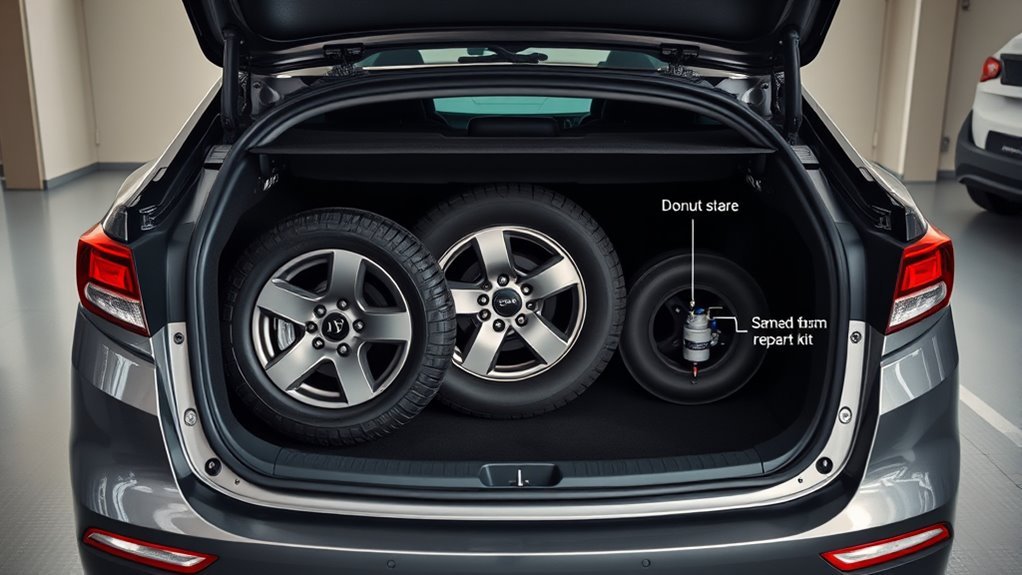
Each flat-tire solution has a different purpose. The best choice depends on where you drive, how far you travel, and how much trunk space you are willing to give up.
| Option | Best For | Pros | Cons |
|---|---|---|---|
| Tire Mobility Kit | Urban driving and small punctures | Light, compact, already included in many cars | Does not help with many severe flats |
| Compact donut spare | Short emergency drives to a repair shop | More useful than sealant for many flats; stores smaller than full-size spare | Temporary use only; speed and distance limits |
| Full-size spare | Long trips, remote roads, and maximum backup | Best driving backup if tire, wheel, and TPMS match correctly | Most expensive and takes the most trunk space |
A compact spare usually has strict speed and distance limits, often printed directly on the spare. Do not treat it like a regular tire. Drive slowly, avoid hard braking or aggressive cornering, and go directly to a tire shop.
Tire readiness is a safety issue, not just a convenience issue. NHTSA’s TireWise guidance reminds drivers that tires are the only part of the vehicle touching the road.
[Products Worth Considering]
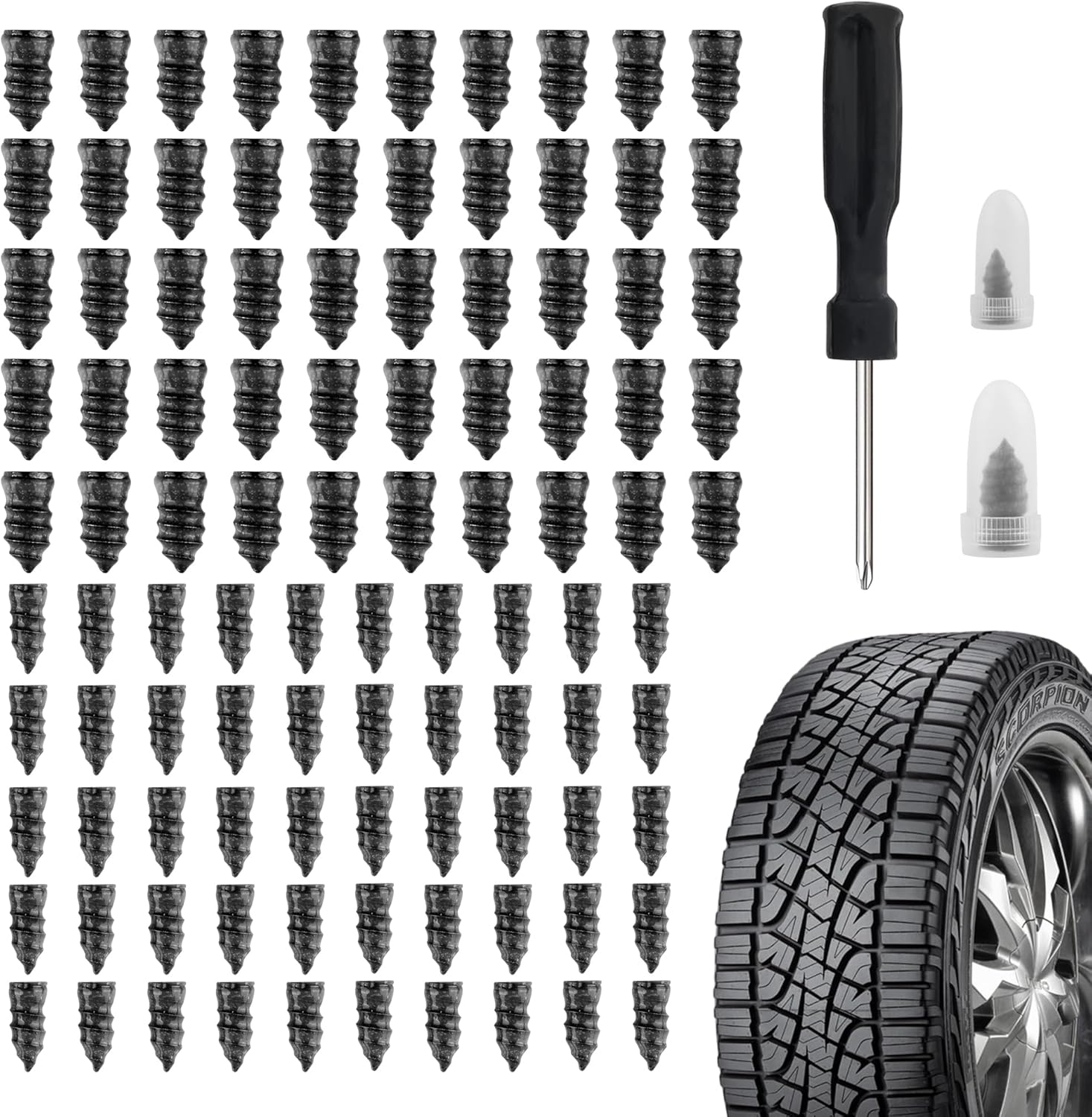
Salior’s tire plug kit provides a fast, reliable self-service fix for punctured or leaking tires without the need for flaring tools. Choose the correct plug size, then screw the nail into the puncture using the included screwdriver for an enhanced seal. The set is durable and convenient for on-the-go maintenance across multiple vehicle types.

Secure a full-size spare on your trailer with this powder-coated steel spare tire mount bracket. It fits most 4-, 5-, and 6-lug wheel bolt patterns and mounts to trailer tongues up to 4 in wide and 5 in tall. Built for reliable carry with a max 150 lb load rating and includes zinc-plated hardware for straightforward installation.

This roadside assistance kit helps drivers and passengers in urgent situations after an accident or breakdown, providing practical support while waiting for help. It includes a lightweight, compact tire inflator for fast inflation of standard vehicle tires, plus reinforced jumper cable protection for safer handling. Ideal for winter weather, road trips, camping, and travel, with everything stowed neatly in a trunk bag.
How to Install and Store a Spare or Repair Kit Safely in the Trunk
Lift the trunk floor and make sure every part is secured in its designed storage point. Loose tools or an unsecured spare can move around, damage the trunk, or become dangerous in a sudden stop.
- A compact jack should sit securely in its foam cradle or storage location.
- The spare tire should be held down with the correct center fastener or storage hardware.
- The lug wrench should be nested tightly so it does not rattle.
- The sealant bottle and compressor should be clipped or strapped into their storage area.
If you install a spare on the road, park on a firm, level surface away from traffic, turn on the hazard lights, set the parking brake, and follow the owner’s manual. Loosen the lug nuts before lifting the car, lift only at the approved jack point, install the spare with the wheel seated flat, tighten the lug nuts in a star pattern, and recheck torque as the manual instructs.
Hyundai’s Tire Mobility Kit guidance also includes important limits: drive 4–6 miles after applying sealant to distribute it, do not exceed 50 mph while using the kit, and have the tire and TPMS area inspected after sealant use.
What to Buy: Choosing a Spare Based on Driving Habits and Trip Length
Your best choice depends on your risk tolerance and driving habits. If you drive mostly in town, have roadside assistance, and rarely travel far from tire shops, the included Tire Mobility Kit may be enough. If you travel long distances, drive at night, commute through rural areas, or cannot afford a tow delay, a compact spare kit is a smart upgrade.
Choose a compact spare kit if you want the best balance of trunk space and emergency coverage. Choose a full-size spare only if you have enough trunk room and want the strongest backup for long trips. Choose the Tire Mobility Kit only if you accept its limits and understand that some flats will still require towing.
Note: Hyundai roadside assistance coverage may treat flat-tire help differently when a vehicle is supplied with a Tire Mobility Kit instead of a spare tire. Check your warranty booklet and roadside assistance terms for your exact model year.
Frequently Asked Questions
Can a spare tire affect my Sonata N Line’s warranty?
A spare tire or aftermarket part does not automatically void your warranty. The safer way to think about it is this: if the spare, jack, wheel, or installation is defective or wrong for the car and causes damage, that related repair could be denied. Use compatible parts, follow the owner’s manual, and keep receipts.
Will a roof-mounted spare interfere with aerodynamics or fuel economy?
Yes. A roof-mounted spare adds weight high on the car and increases aerodynamic drag, especially at highway speed. It is usually a poor solution for a Sonata sedan unless you have a specific, properly rated roof system and understand the handling and fuel-use penalty.
Can TPMS sensors be transferred between a spare and the original wheels?
Sometimes, but it depends on the wheel, sensor type, and whether the spare is temporary or full-size. Many compact spares do not use a TPMS sensor like the regular wheels. If tire sealant is used, Hyundai says the sealant should be removed from the wheel and pressure sensor area when the tire is replaced, and the sensors should be inspected.
Are there legal requirements for carrying a spare tire in my state or country?
There is no single universal rule for every state or country. Passenger-car requirements, inspection rules, and commercial-vehicle rules can differ. Check your local transport authority or inspection rules if you drive outside your home area or operate the vehicle for business use.
Can carrying a spare impact trunk weight distribution and handling?
A properly secured compact spare in the trunk should have only a small effect in normal driving, but it still adds weight behind the rear seats. A loose or poorly positioned spare is the bigger problem. Secure it with the correct hold-down hardware and avoid placing heavy loose cargo around it.
Is the Tire Mobility Kit enough for a long road trip?
It can be enough for a small tread puncture near service, but it is not ideal for long remote trips. A compact spare or full-size spare gives you more control if the tire has a sidewall cut, large puncture, or blowout.
Conclusion
Most Hyundai Sonata N Line models are equipped with a Tire Mobility Kit rather than a traditional spare tire. That is fine for some minor punctures, but it does not replace the security of a physical spare. If you drive long distances, commute through rural areas, or want better roadside independence, choose a compact spare kit that is confirmed for your exact Sonata N Line by VIN, wheel size, brake clearance, load rating, and trunk storage. Keep the repair kit or spare inspected, secured, and ready before you need it.
Sources
- Hyundai Owner’s Manual — Using the Tire Mobility Kit — backs up Tire Mobility Kit speed, pressure, sealant, TPMS, and damage-limit guidance.
- Hyundai Official Owner’s Manual Lookup — helps owners confirm instructions for the exact year, region, and vehicle.
- Hyundai Motor Company — 2021 Sonata N Line Launch — confirms the Sonata N Line launch timing and N Line powertrain context.
- Hyundai Shop — 2024–2026 Sonata Spare Tire Kit — backs up current spare-kit availability, fitment notes, and jack-package differences.
- NHTSA TireWise — supports tire safety, maintenance, inflation, and tire-readiness guidance.
- FTC Consumer Alert — Auto Warranties, Routine Maintenance, and Repairs — supports the warranty explanation for aftermarket and non-dealer parts.