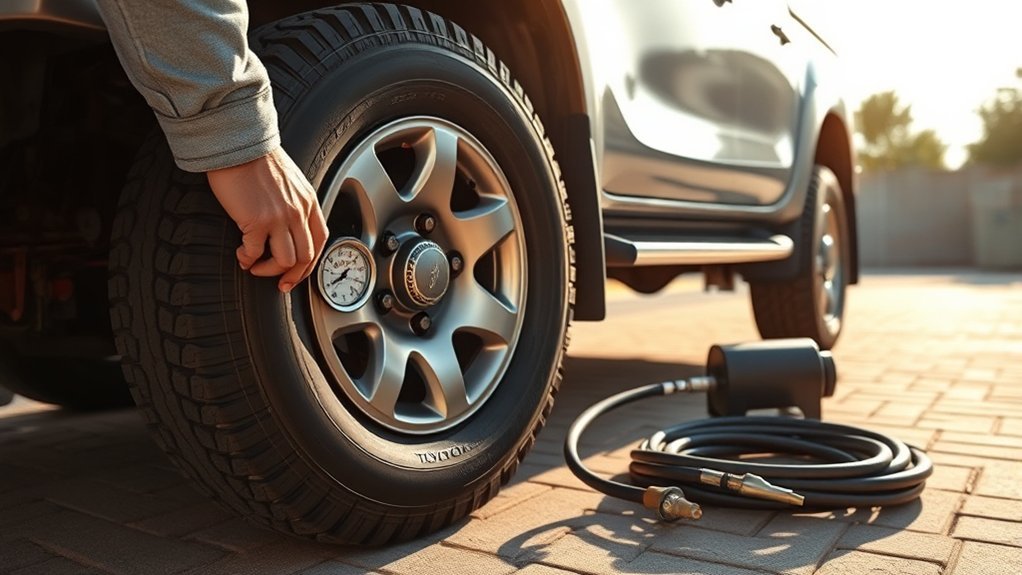
Properly inflating your Toyota Hilux tires starts with one rule: use the cold tire pressure listed on your vehicle’s tire placard or in the owner’s manual, not the number printed on the tire sidewall. Many Hilux models sit somewhere around the low-30 PSI range when unloaded, but the correct pressure can change by tire size, load, market, and towing use.
Quick Answer
To inflate Toyota Hilux tires correctly, check the tire placard in the driver-side door area or your owner’s manual, measure pressure when the tires are cold, add air in short bursts, and recheck with a reliable gauge. Do not use the tire sidewall maximum as your target pressure.
Key Takeaways
- The correct Toyota Hilux tire pressure is the cold PSI/kPa shown on your vehicle’s placard or owner’s manual.
- Check pressure when tires are cold: parked for at least three hours or driven only a short distance.
- Hilux pressure values vary by tire size, load, and towing, so avoid one-size-fits-all PSI advice.
- TPMS is helpful, but it is not a replacement for regular gauge checks.
- If one tire keeps losing air, have it inspected for a puncture, valve leak, rim damage, or bead leak.
At a Glance
| Time Required | 5–10 minutes |
| Difficulty | Easy |
| Tools Needed | Tire pressure gauge, air compressor, valve caps, and optional tread depth gauge |
| Cost | Usually free at many service stations; a basic gauge or inflator may cost extra |
Understanding the Importance of Recommended Tire Pressure for Toyota Hilux
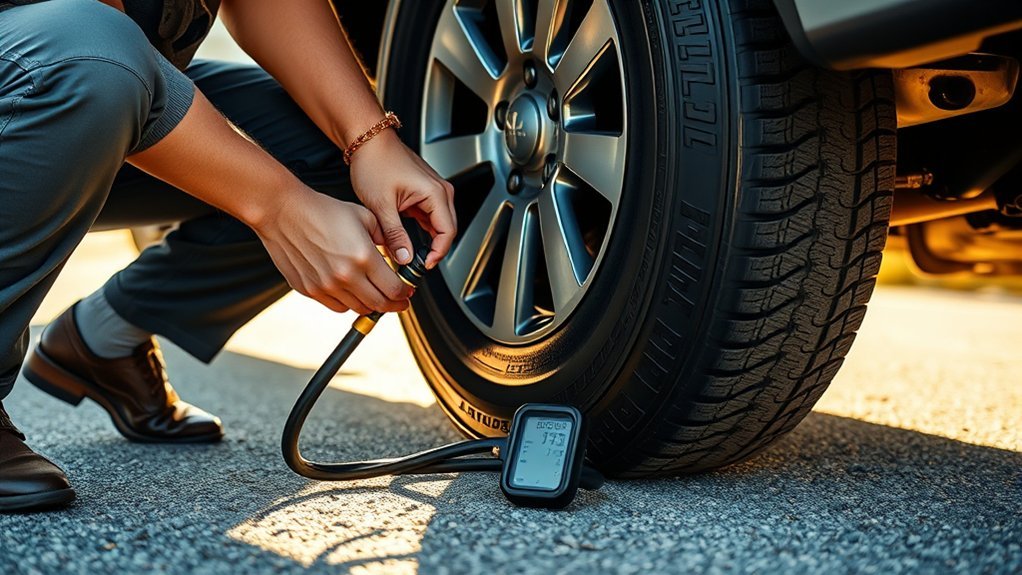
Correct tire pressure helps your Toyota Hilux carry weight safely, steer predictably, brake properly, and avoid unnecessary tire wear. Underinflated tires flex too much, build heat, wear unevenly, and can reduce fuel economy. Overinflated tires can ride harshly, reduce the contact patch, and increase the chance of damage from potholes or sharp impacts.
The most accurate source is your Hilux tire placard, usually found in the driver-side door area, or the tire pressure table in your owner’s manual. Toyota UK notes that Toyota tire pressures are listed in the vehicle handbook and driver-side door recess, while NHTSA also advises using the vehicle manufacturer’s recommended pressure, not the maximum pressure on the tire sidewall.
Warning: Never inflate a tire beyond the maximum pressure printed on the tire sidewall. That number is a safety limit for the tire, not the recommended pressure for your Hilux.
Correct Toyota Hilux Tire Pressure: Why the Placard Matters
There is no single PSI number that fits every Toyota Hilux. A light-use double cab, a work-focused single cab, a different tire size, a regional model code, or a full-load rear axle can all require different pressures.
For example, a 2021 Toyota Hilux owner’s manual copy lists different cold tire inflation pressures by tire size and load. Some examples include 205R16C tires at 270 kPa / 39 PSI front and rear when unladen, with the rear rising to 340 kPa / 49 PSI at full load. Other 17-inch and 18-inch examples show lower unloaded values, such as 200 kPa / 29 PSI, and higher full-load rear values, such as 250 kPa / 36 PSI. This is why the placard and manual always win over generic advice.
| Hilux tire/load example | Example cold pressure |
| Some 265/60 R18 placards | Around 220 kPa / 32 PSI |
| 2021 manual example: 17-inch type A, unladen | 240 kPa / 35 PSI front and rear |
| 2021 manual example: 17-inch or 18-inch type B, unladen in some markets | 200 kPa / 29 PSI front and rear |
| 2021 manual example: 205R16C rear full load | 340 kPa / 49 PSI rear |
Note: The table above is only an example of how much Hilux pressures can vary. Use the exact placard or owner’s manual for your model, tire size, and load.
Essential Tools for Checking Tire Pressure
You do not need many tools to inflate Toyota Hilux tires correctly, but accuracy matters. Keep these items available:
- Tire pressure gauge: A digital, dial, or pencil gauge is fine as long as it is accurate and easy to read.
- Air compressor: Use a home inflator, workshop compressor, or service-station air pump.
- Valve caps: Replace missing caps because dirt and moisture can enter the valve and cause leaks.
- Tread depth gauge: Optional, but useful for checking wear while you are already inspecting the tires.
- Owner’s manual or door placard: This confirms the correct cold PSI/kPa for your specific Hilux.
Regular air is fine for normal use. Nitrogen-filled tires still need pressure checks because they can lose pressure over time through punctures, valve issues, or slow leaks.
[Products Worth Considering]

Keep your tires properly inflated with this analog VONDIOR tire pressure gauge, designed for fast, easy readings without batteries. The swiveling, two-axis hose and large glow dial help you measure at any tire angle with instant visibility. Built with a protective rubber shield, it supports durable, low-maintenance use for cars and trucks.
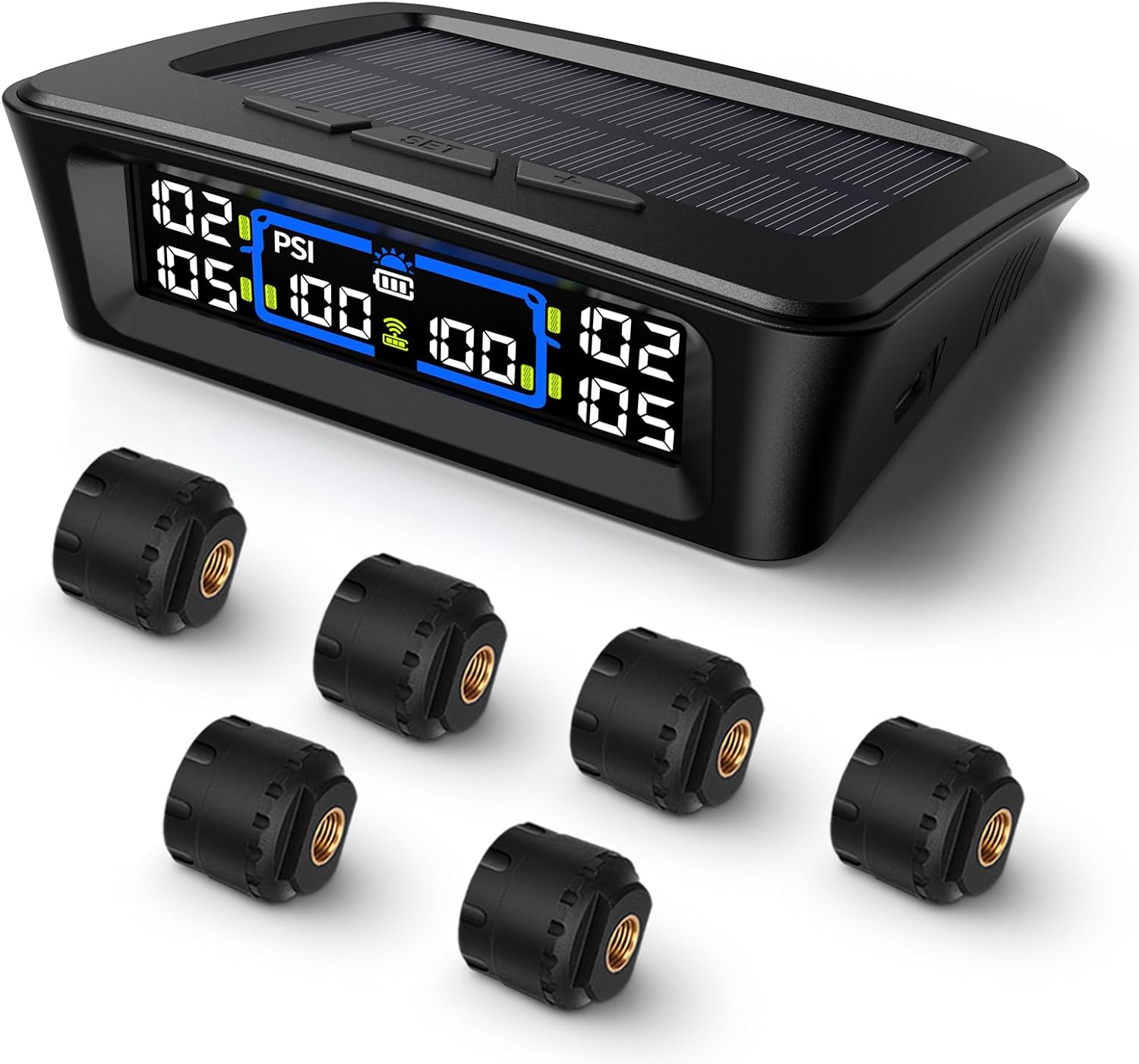
The Tymate TM12 RV TPMS delivers real-time tire pressure and temperature monitoring with a stable 433Hz display for safer long-distance driving. It supports simultaneous monitoring across vehicle and trailer zones, includes six alarm modes for pressure, temperature, leakage, battery, and signal loss, and features easy DIY installation with auto calibration. Power is supplied via USB-C charging or solar recharging, with a wide 0–144 PSI range and up to 50 ft signal coverage for RVs and towable trailers.

The SAFELIFE dial tire tread depth gauge measures tread depth in 1/32 inch increments with clear, easy-to-read 2-inch dial face. Color zones using a traffic light system help you quickly judge whether tread is low, marginal, or ample for safer driving. Built with a durable zinc cast body and a metal detect probe for precise, comfortable use across cars, motorcycles, trucks, and buses.
Measuring Tire Pressure: A Step-by-Step Guide
Check your Hilux tire pressure when the tires are cold. A cold tire reading means the vehicle has been parked for at least three hours or has only been driven a very short distance. Driving heats the tires and temporarily raises pressure, so a hot reading can mislead you.
- Find the correct pressure. Read the tire placard in the driver-side door area or the owner’s manual. Confirm whether the pressure changes for front/rear tires, full load, towing, or tire size.
- Remove the valve cap. Keep it somewhere safe so it does not roll away.
- Press the gauge straight onto the valve stem. A brief hiss is normal, but a long hiss usually means the gauge is not seated correctly.
- Read the PSI, kPa, or bar. Compare it with the recommended cold pressure.
- Repeat for all tires. Check the spare tire too, especially before a long trip.
Pro Tip: Write down each tire’s reading before adding air. If the same tire is always lower than the others, it may have a slow leak.
[Products Worth Considering]

Measure tire tread depth quickly and accurately with this LUMITECO dial gauge that reads in 1/32" increments up to 14/32". The color-coded green/yellow/red zones make it easy to judge tire wear and know when replacement is needed. A rugged, compact design with a protective pouch helps keep the gauge ready for use on cars, trucks, motorcycles, and more.

This tire inflator with pressure gauge delivers long-lasting performance with a durable rubber-protected gauge and sturdy build. The longer hose and 360 swivel air chuck help you seal the valve securely and keep your hands free while measuring, inflating, or deflating. It’s battery-free for reliable use and provides ±2 PSI accuracy in the mid-range for most typical tires, with universal compatibility for 1/4 NPT compressor outputs.

Get precise tire readings with the ETENWOLF T300 Plus digital gauge, calibrated to ANSI B40.7 Grade 2A for reliable accuracy. It measures across a wide 3–200 PSI range and includes thermal compensation for dependable performance from extreme cold to heat. The bright LED display, LED illumination, and replaceable AAA batteries make it easy to check pressures quickly, even in low light.
How to Measure and Inflate Tires Correctly
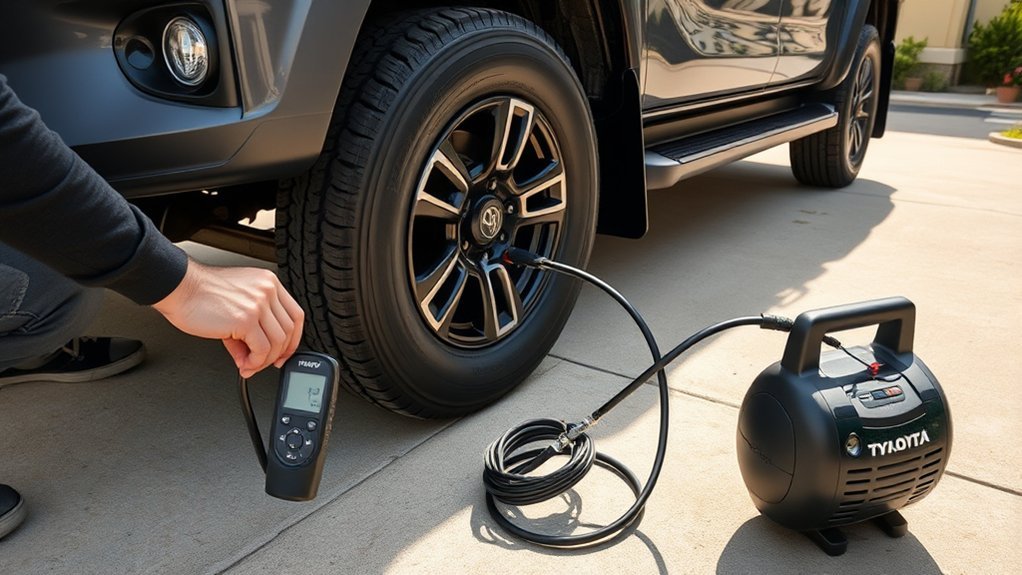
Once you know the correct cold pressure, inflate slowly and recheck often. Adding too much air is common when using a powerful compressor, especially at service stations.
[Products Worth Considering]
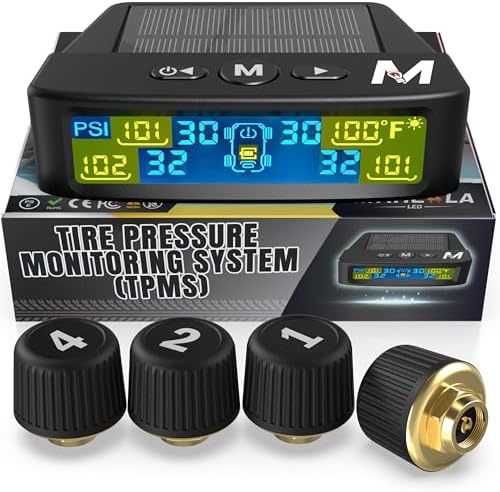
Marcala’s TPMS set of four sensors helps you monitor tire pressure and temperature in real time while driving, with updates every second. The bright color LCD uses auto-dimming for easy viewing, powered by dual solar and USB charging, and offers six alarm modes. Built for trailers, RVs, campers, trucks, and towing setups, the sensors support monitoring 1-4 wheels up to 98 PSI with IP67 waterproof protection.

These aluminum alloy tire valve stem caps with an O-ring seal help protect valve stems from corrosion while adding a clean, stylish look to your vehicle. The universal fit works across cars, trucks, motorcycles, bicycles, and more, making them an easy upgrade for everyday driving and off-road use. Installation is quick, and the included four-pack keeps all your tires dressed and protected.

Monitor tire tread wear with a smart, color-coded depth gauge that shows clear condition ranges at a glance. The bar is range marked for fast, easy readings, helping you maintain safer traction and performance. Each gauge is portable with a pocket clip, and the set includes 20 units for daily use and sharing.
Steps for Proper Inflation
- Set the compressor if it has a target-pressure feature. Enter the placard value, not the sidewall maximum.
- Add air in short bursts. If the tire is only 1–3 PSI low, a short fill may be enough.
- Recheck with your own gauge. Service-station gauges can be inaccurate or worn.
- Release air if the pressure is too high. Press the valve pin briefly with the gauge tip or a small tool, then recheck.
- Refit the valve cap. Make sure it is snug, but do not overtighten.
- Repeat on every tire, including the spare. Front and rear pressures may differ on some Hilux models or load conditions.
Warning: If a tire is visibly damaged, cracked, bulging, punctured, or very low, do not simply inflate it and keep driving. Have it inspected by a qualified tire technician.
When to Adjust for Load or Towing
A Hilux used as a work truck, tow vehicle, or heavy-load vehicle may need different pressures than a lightly loaded daily driver. Some Hilux manuals list separate unladen and full-load pressures, and some towing instructions add a small pressure increase when towing with a hitch.
Before carrying heavy cargo or towing, check:
- front and rear pressure values on the placard or manual;
- gross vehicle mass and axle-load limits;
- trailer tire pressure from the trailer manufacturer;
- speed limits and towing instructions in the owner’s manual.
After unloading, return the tires to the normal cold pressure listed for your driving condition. Driving unloaded for long periods on heavy-load pressures can make the ride harsher and may affect wear.
Recognizing Common Tire Pressure Warning Signs
Your Toyota Hilux may show several signs when pressure is wrong. Do not rely on appearance alone because underinflated tires can look normal.
- TPMS warning light: If equipped, the warning means at least one tire may be significantly underinflated or the system may need attention.
- Uneven tread wear: Edge wear can suggest underinflation; center wear can suggest overinflation.
- Pulling to one side: A low tire, alignment issue, or tire damage may cause the vehicle to drift.
- Harsh ride: Overinflation can make the ride feel stiff and bouncy.
- Lower fuel economy: Underinflation increases rolling resistance and can reduce efficiency.
- Repeated pressure loss: A tire that needs frequent air may have a puncture, valve leak, bead leak, or wheel damage.
According to FuelEconomy.gov, keeping tires properly inflated can improve gas mileage by 0.6% on average and up to 3% in some cases, while underinflated tires can lower gas mileage by about 0.2% for every 1 PSI drop in the average pressure of all tires.
Understanding the Impact of Temperature on Tire Pressure
Tire pressure changes with outside temperature. As a general rule, tire pressure may rise or fall by about 1–2 PSI for every 10°F change in temperature. This is why a Hilux tire that was correct in warm weather may read low after a cold night.
The best practice is simple: check pressures cold, check more often during seasonal temperature swings, and adjust back to the placard value. Do not bleed air from a hot tire just because the reading is higher after driving; heat naturally raises pressure during use.
A tire pressure gauge gives a more reliable answer than the tire’s appearance, especially on pickup tires with strong sidewalls.
Best Practices for Regular Tire Maintenance and Monitoring
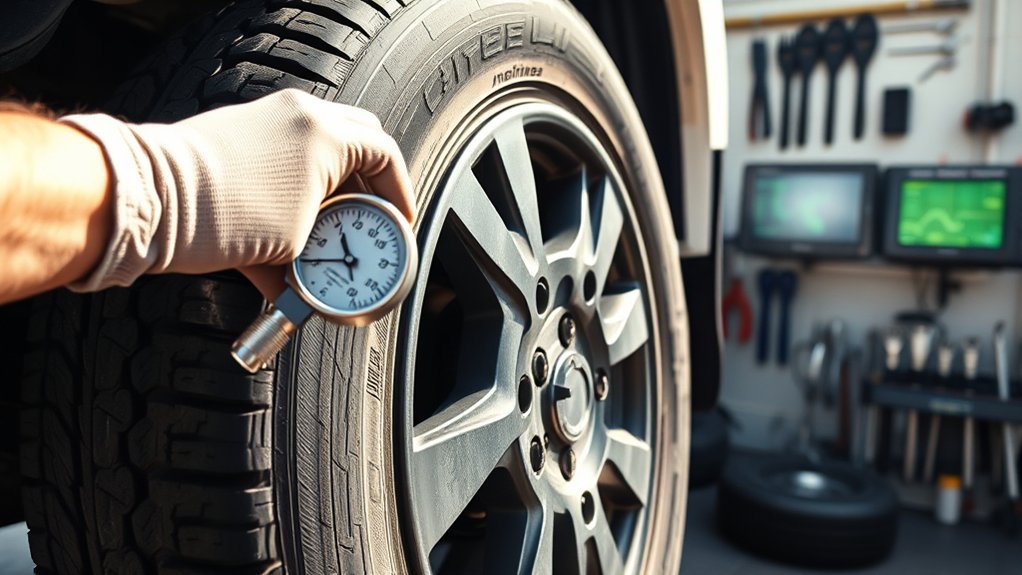
Tire pressure is only one part of Hilux tire care. A simple routine helps your tires last longer and keeps the truck safer on the road.
- Check pressure at least monthly. Toyota recommends regular checks, and NHTSA recommends checking all tires, including the spare, at least once a month when cold.
- Check before long trips. Do this before highway travel, off-road driving, heavy loading, or towing.
- Inspect tread and sidewalls. Look for cuts, cracks, bulges, embedded objects, and uneven wear.
- Watch tread depth. Tires should be replaced when tread is worn to 2/32 inch or when treadwear indicators are showing.
- Rotate tires on schedule. Follow your Hilux owner’s manual. If no interval is listed, many tire-safety organizations suggest roughly every 5,000–8,000 miles.
- Check the spare. A flat spare is useless in an emergency, and spares age even when they are rarely used.
- Keep valve caps installed. They help keep dirt and moisture out of the valve stem.
What to Do If the TPMS Light Comes On
If your Hilux has a tire pressure monitoring system and the TPMS light comes on, slow down when safe, avoid hard cornering or heavy braking, and check the tire pressures with a gauge as soon as possible.
- Check all tires, including the spare if your system monitors it.
- Inflate each tire to the correct cold placard value.
- Inspect for nails, cuts, bulges, or visible damage.
- Drive normally for a short period if your owner’s manual says the system updates while driving.
- If the light flashes or stays on after correct inflation, follow the Hilux manual’s reset procedure or have the system inspected.
Note: TPMS is a warning system, not a maintenance plan. It may not warn you until pressure is already significantly low.
Troubleshooting Common Inflation Problems
| Problem | Likely cause | What to do |
| One tire keeps losing air | Puncture, valve leak, bead leak, or wheel damage | Have the tire inspected and repaired properly |
| All tires read low after a cold night | Temperature drop | Adjust to the correct cold pressure |
| Pressure is higher after driving | Normal tire heat buildup | Do not bleed hot tires; recheck cold later |
| TPMS stays on after inflation | System needs reset, sensor issue, or tire still low | Recheck with a gauge, follow manual reset steps, or inspect system |
Frequently Asked Questions
What is the correct PSI for a Toyota Hilux?
The correct PSI depends on your Hilux model, tire size, load, and market. Check the tire placard in the driver-side door area or the owner’s manual. Many Hilux examples fall around the low-30 PSI range when unloaded, but some manual examples are lower or much higher depending on tire and load.
How do you put air in Toyota Hilux tires?
Find the recommended cold pressure, remove the valve cap, press the air hose onto the valve stem, add air in short bursts, and recheck with a tire pressure gauge. Stop when the tire matches the placard value, then reinstall the valve cap.
Is 40 PSI too high for a 4WD Hilux?
Not automatically. It may be too high for an unloaded Hilux with a lower placard value, but some Hilux load or commercial-tire conditions can call for pressures around or above 40 PSI. Compare 40 PSI with your placard, owner’s manual, load condition, and tire sidewall maximum.
Should I inflate my Hilux tires to the number on the tire sidewall?
No. The sidewall number is usually the maximum tire pressure limit, not the recommended pressure for your vehicle. Use the Toyota tire placard or owner’s manual instead.
How often should I check Toyota Hilux tire pressure?
Check at least once a month, before long trips, before towing, and whenever temperatures change sharply. If your Hilux is used for work loads or off-road driving, check more often.
Conclusion
Inflating Toyota Hilux tires correctly is not about guessing a universal PSI. The right pressure is the cold pressure shown on your Hilux placard or owner’s manual for your tire size, load, and driving condition. Check pressure cold, use a reliable gauge, inflate in small steps, recheck every tire, and never ignore repeated pressure loss or visible tire damage. This simple routine improves safety, tire life, handling, and fuel economy.
Sources
- Toyota Hilux 2021 Owner’s Manual copy — Hilux tire pressure examples, cold-check instructions, towing pressure note, and tire safety warnings
- Toyota UK Tyre Pressure and Size Guide — where to find Toyota tire pressure information
- NHTSA TireWise Tire Safety — cold pressure checks, TPMS limitations, tread depth, spare tire checks, and safety guidance
- FuelEconomy.gov Vehicle Maintenance — fuel economy impact of proper tire inflation
- U.S. Tire Manufacturers Association Tire Care Essentials — monthly checks, temperature effects, TPMS, tread, and rotation guidance
- CarsGuide Toyota HiLux Tyre Pressure — example Hilux placard value and reminder to consult the owner’s manual