
Last updated: August 18, 2026
[VERIFY: Add the real author/byline and relevant tire-maintenance credentials or reviewer attribution in the CMS.]
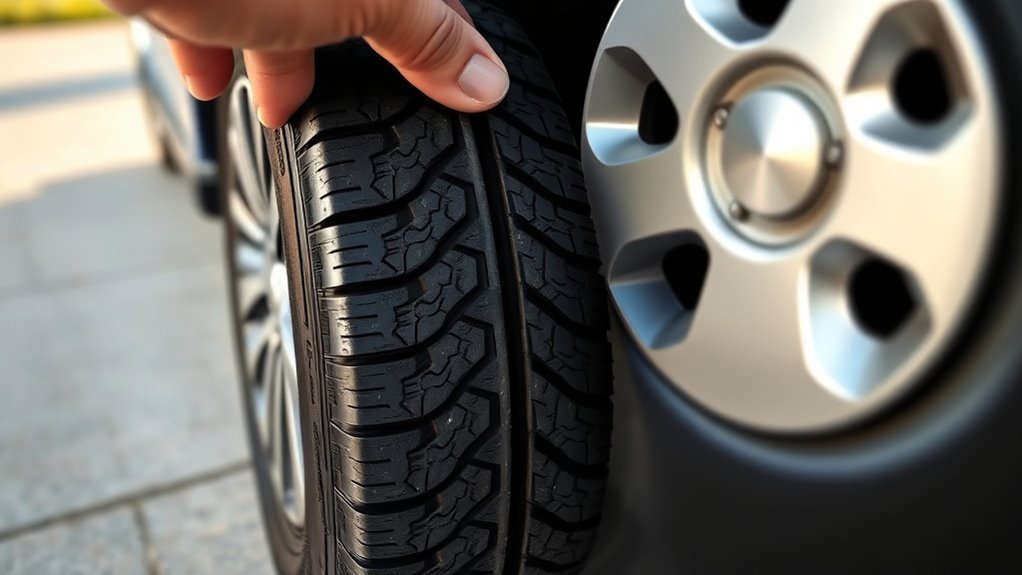
To check tire tread depth on your Toyota RAV4, measure the inner, center, and outer main grooves on all four tires and use the lowest reading you find. A tread depth gauge gives the clearest measurement. For a quick check, insert a penny with Lincoln’s head facing down into the tread. If you can see the top of his head, the tread is at or near 2/32 of an inch, the point at which NHTSA says a tire is worn out and should be replaced. Also inspect for uneven wear, bulges, deep cracks, cuts, or exposed cords because tread depth alone does not determine whether a tire is safe.
Quick Answer: How to Check RAV4 Tire Tread Depth
- Best method: Use a tread depth gauge in the inner, center, and outer main grooves of each tire.
- Quick method: Insert a penny with Lincoln’s head upside down. If the top of his head is visible, the tread is around 2/32 inch or less.
- Built-in check: Look for tread wear indicator bars. If the surrounding tread is level with the bars, the tire has reached the replacement point.
- Check all four tires: Do not judge the set from one easy-to-reach groove. Uneven wear can leave one part of a tire much shallower than another.
Understanding the Importance of Tire Tread Depth
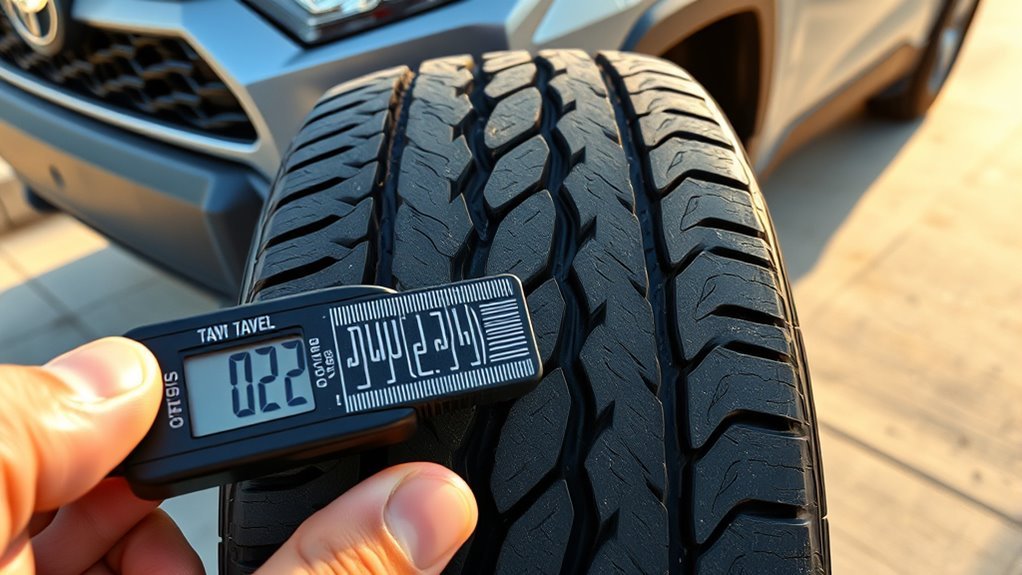
Tire tread helps your RAV4 maintain contact with the road and gives water channels through which to escape in wet conditions. As tread wears down, those grooves become shallower and the tire has less capacity to manage standing water.
The National Highway Traffic Safety Administration says tires are worn out when tread reaches 2/32 of an inch. That is a replacement threshold, not a target for ideal wet-weather performance. Drivers who regularly face heavy rain may choose to plan replacement earlier rather than waiting for the tread to reach the wear bars.
At a Glance: What Your Tire-Tread Check Means
| Check | What It Shows | Recommended Action |
|---|---|---|
| Tread depth gauge | Actual tread depth in 32nds of an inch or millimeters | Use the lowest reading from several main grooves on each tire |
| Penny test | Whether tread is around the 2/32-inch replacement point | If all of Lincoln’s head is visible, replace the worn tire |
| Quarter test | A quick indication of whether tread is around the 4/32-inch range | Use it as an earlier wet-weather planning check, then confirm with a gauge |
| Tread wear bars | Whether tread has worn to the molded replacement indicators | If the tread is flush with the bars, replace the tire |
| Bulge, exposed cord, deep crack, cut, or tread separation | Possible physical or structural tire damage | Have the tire professionally inspected and do not rely on tread depth alone |
Identifying Signs of Tread Wear
Do more than check the deepest-looking groove. Look across the full tread width of every RAV4 tire for uneven tread wear, physical damage, and differences between the four tires.
Most passenger tires have molded tread wear indicator bars across their main grooves. Federal requirements place these indicators at the 2/32-inch level. When the surrounding tread becomes level with an indicator bar, that groove has reached the worn-out point.
| Wear Pattern | Possible Cause | What to Check |
|---|---|---|
| Both outer shoulders wearing faster | Low inflation pressure or operating conditions | Check cold tire pressure against the RAV4 tire-information placard |
| Center wearing faster | Excessive inflation pressure or other tire/setup factors | Verify cold pressure against the placard |
| One edge wearing faster | Alignment or suspension geometry issue | Have alignment and suspension inspected |
| Patchy or cupped wear | Balance, suspension, alignment, or rotation-related issue | Have the tire and suspension inspected |
Also look for bulges, deep cracks, cuts, exposed cords, repeated loss of air, vibration, or tread separation. A tire showing physical damage can require replacement even when its tread measures deeper than 2/32 inch.
Tire age matters as well. The last four digits of the DOT Tire Identification Number show the week and year of manufacture. NHTSA notes that some vehicle and tire manufacturers recommend replacing tires when they reach roughly six to ten years of age regardless of remaining tread, so follow the guidance for your specific tire and RAV4.
How to Check Tire Tread Depth on Your Toyota RAV4
A complete RAV4 tread check means measuring more than one spot. Use a 12-point approach: check the inner, center, and outer main grooves on each of the four tires.
- Park safely. Stop on a flat surface, shift into Park, set the parking brake, and make sure you can safely reach each tire.
- Start with one tire. Inspect the tread surface for cuts, bulges, exposed cords, or obvious uneven wear before measuring.
- Measure the inner groove. Place the tread-depth gauge probe into a main circumferential groove and keep the gauge base flat on the tread blocks.
- Measure the center groove. Record the reading.
- Measure the outer groove. Record that reading as well.
- Use the lowest reading. The shallowest major groove is more important than the best-looking part of the tire.
- Repeat on all four tires. Compare front to rear and left to right so unusual wear is easier to spot.
If one part of a tire reaches 2/32 inch even though another groove is deeper, treat the worn area seriously. Uneven wear may point to an inflation, alignment, balance, suspension, or rotation issue that should be corrected rather than simply ignored.
[Products Worth Considering]

This 100-piece set of snap-in tubeless tire valve stems is designed for standard 0.453 in (11.5 mm) rim holes and helps maintain reliable, steady tire pressure. Made with ozone-resistant rubber and brass cores, the valves are built for durability and long-term use. Easy to install by hand, they support safe driving and are suitable for cars, light trucks, trailers, and more.

Monitor tire tread wear with a smart, color-coded depth gauge that shows clear condition ranges at a glance. The bar is range marked for fast, easy readings, helping you maintain safer traction and performance. Each gauge is portable with a pocket clip, and the set includes 20 units for daily use and sharing.

Measure tire tread depth quickly and accurately with this LUMITECO dial gauge that reads in 1/32" increments up to 14/32". The color-coded green/yellow/red zones make it easy to judge tire wear and know when replacement is needed. A rugged, compact design with a protective pouch helps keep the gauge ready for use on cars, trucks, motorcycles, and more.
Easy Ways to Measure Tire Tread Depth
[Products Worth Considering]

The SAFELIFE dial tire tread depth gauge measures tread depth in 1/32 inch increments with clear, easy-to-read 2-inch dial face. Color zones using a traffic light system help you quickly judge whether tread is low, marginal, or ample for safer driving. Built with a durable zinc cast body and a metal detect probe for precise, comfortable use across cars, motorcycles, trucks, and buses.

Accurately measure tire tread depth with a calibrated gauge marked from 0 to 1 inch in 1/32 inch increments. The color-coded bar helps you quickly identify tread condition ranges, supporting safe driving for trucks, motorcycles, automobiles, and passenger vehicles.

Measure tyre tread depth precisely with a digital gauge that reads in both MM and inches, helping you monitor safe driving conditions. The large LCD screen is easy to operate, and the compact tool fits for cars, trucks, and motorcycles. It provides high accuracy with a 0-25.4mm range and includes a 1-year warranty for added peace of mind.
1. Tread Depth Gauge
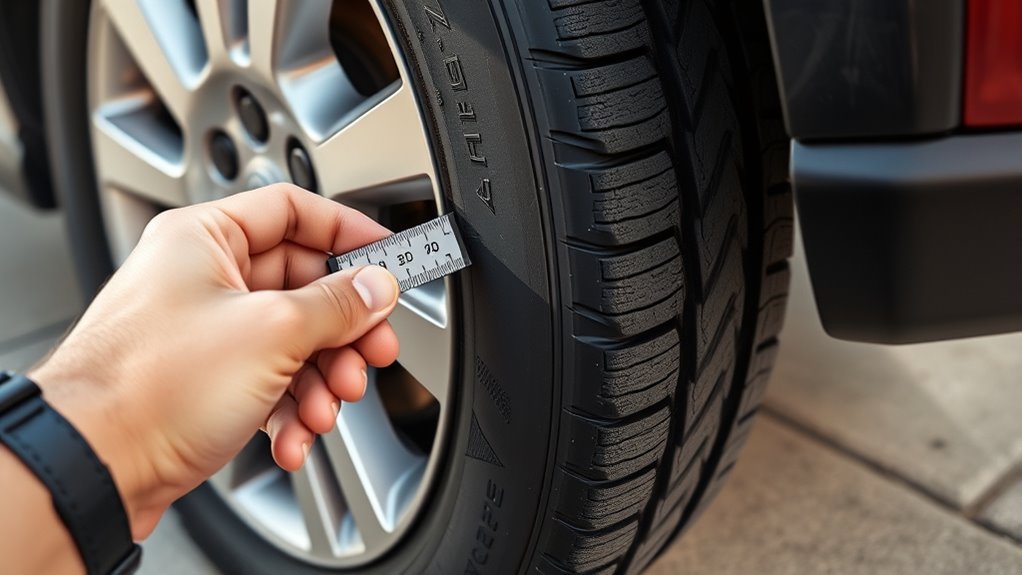
A tread depth gauge is the best choice when you want an actual measurement rather than a pass/fail coin test. Place the probe at the bottom of a main groove, push the gauge base flat against the surrounding tread blocks, and read the result. Repeat the measurement across several grooves because a tire can wear unevenly.
2. Penny Test
Insert a penny into a main tread groove with Lincoln’s head facing down. If the tread covers part of his head, that spot is above the approximate 2/32-inch check point. If you can see all of his head, the tread is around 2/32 inch or less and the tire should be replaced.
The penny test is useful as a quick warning, but it does not tell you whether a tire has 3/32, 4/32, or 5/32 inch remaining. Use a gauge when you want to track wear over time.
3. Quarter Test for Earlier Wet-Weather Planning
A quarter provides an earlier reference point. Insert it with Washington’s head facing down. If the tread covers part of his head, the groove is approximately 4/32 inch or deeper. If his full head is visible, confirm the tread with a gauge and consider your wet-weather needs when planning replacement.
This does not change NHTSA’s 2/32-inch worn-out threshold. It simply gives you an earlier point at which to evaluate wet-road performance. For a broader explanation of all three methods, see the complete tire tread depth measurement guide.
4. Tread Wear Indicator Bars
Look inside the main grooves for small molded rubber bars running across the groove. When the surrounding tread surface is level with those bars, the tire has reached approximately 2/32 inch of remaining tread and should be replaced.
Best Practices for Maintaining Tire Tread Depth and Longevity
You cannot prevent tread from wearing, but you can reduce avoidable uneven wear by keeping inflation, rotation, alignment, and inspection on schedule.
- Check pressure when the tires are cold. Use the pressure listed on your RAV4’s tire-information placard rather than the maximum pressure molded onto the tire sidewall. See the RAV4 tire pressure guide for more detail.
- Rotate tires on schedule. Follow the maintenance schedule for your RAV4 model year and the instructions supplied with your tires. Toyota’s general maintenance guidance recommends regular tire rotation because front and rear tires can wear differently.
- Investigate unusual wear. One-sided, cupped, or rapidly developing wear should trigger an alignment, balance, suspension, and inflation check.
- Measure consistently. Using the same gauge and the same inner-center-outer measurement pattern makes changes easier to track.
- Inspect before long trips. Pay extra attention when a tire is already close to its replacement point or you expect heavy rain.
If your RAV4 has AWD and one tire becomes damaged while the others still have substantial tread, do not assume that replacing a single tire is automatically acceptable. Tire diameter and tread differences can matter on AWD vehicles. Follow your specific RAV4 owner’s information and tire-manufacturer guidance. See the RAV4 AWD tire replacement guide for the factors to compare.
[Products Worth Considering]

This universal wheel alignment tool helps you accurately restore tire tilt angles after tire or suspension repairs using an adjustable camber gauge. It features a powerful magnetic base that firmly attaches to brake rotors for stationary, slip-free readings, improving consistency during measurement. Built from durable PC plastic, it resists wear and corrosion and is compact enough for car, truck, RV, and motorcycle alignment tasks.

Milton S-921 pencil tire pressure gauge helps you maintain optimal tire pressure for passenger cars with accurate readings in PSI and kPa. It features a built-in deflator valve for convenient pressure adjustments, plus a single chuck head and nylon indicator bar for easy use on the go. Built from durable plated brass and designed for reliable performance, it’s a practical road trip and cold-weather maintenance tool.

These aluminum alloy tire valve stem caps with an O-ring seal help protect valve stems from corrosion while adding a clean, stylish look to your vehicle. The universal fit works across cars, trucks, motorcycles, bicycles, and more, making them an easy upgrade for everyday driving and off-road use. Installation is quick, and the included four-pack keeps all your tires dressed and protected.
Frequently Asked Questions
How Many Miles Is a 700 Treadwear Tire Good For?
A 700 UTQG treadwear rating does not mean 70,000 miles. NHTSA describes treadwear as a comparative rating based on wear under standardized test conditions. A higher number indicates a slower relative wear rate, but actual mileage can vary with tire design, driving habits, inflation pressure, alignment, service practices, road conditions, and climate. Use the tire manufacturer’s mileage warranty, if one applies, rather than converting the UTQG number directly into miles.
What Does a 2/32 Tread Look Like?
At about 2/32 inch, the tread is very shallow and the molded tread wear bars will be close to level with the surrounding tread. During a penny test, you will be able to see all of Lincoln’s head when it is inserted head-first into the groove. NHTSA considers a tire worn out at this depth.
Is 4/32 Tire Tread Still Usable on a RAV4?
Four thirty-seconds of an inch is above NHTSA’s 2/32-inch worn-out threshold, but remaining tread should be considered together with rain, snow, tire condition, age, and wear pattern. A quarter test provides a quick reference around the 4/32-inch range, while a tread gauge gives a more useful exact measurement.
How Often Should I Check My RAV4 Tire Tread?
Make tread inspection part of your regular tire-pressure and maintenance routine. Check sooner before a long trip, after a hard pothole or curb impact, when you notice vibration or pulling, or when a tire starts wearing differently from the other three.
Is the Penny Test Accurate Enough for a Toyota RAV4?
The penny test is accurate enough to act as a quick warning near the 2/32-inch replacement point, but it does not provide an exact tread measurement. A tread depth gauge is better for monitoring wear, comparing all four RAV4 tires, and identifying differences between the inner, center, and outer grooves.
Conclusion
To check your Toyota RAV4’s tire tread correctly, measure the inner, center, and outer main grooves on all four tires and use the lowest result. A tread depth gauge gives the best measurement, while the penny test and built-in wear bars provide quick checks near the 2/32-inch replacement point.
Do not judge tire condition from tread depth alone. Uneven wear, bulges, deep cracks, exposed cords, repeated air loss, or unusual vibration deserve attention even when plenty of tread remains. Keep the tires at the RAV4’s specified cold pressure, follow the correct rotation schedule, and have abnormal wear professionally inspected before it becomes more severe.
