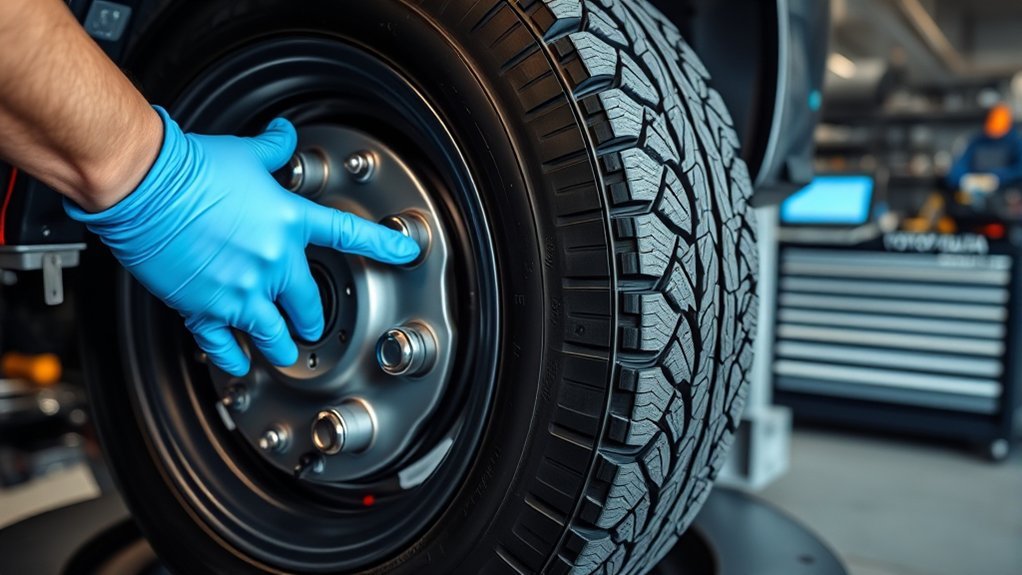
Balancing your Toyota Hilux tires helps the wheel-and-tire assemblies rotate smoothly instead of wobbling at speed. For a truck that may carry loads, tow, hit rough roads, or spend time off-road, good tire balance can make highway driving quieter, reduce steering-wheel shake, and help prevent abnormal tread wear.
Quick Answer
Balance your Toyota Hilux tires when you install new tires, feel vibration at highway speeds, notice uneven tread wear, hit a pothole or curb hard, or rotate the tires and want the balance checked at the same visit. If balancing does not fix the vibration, ask for an alignment and suspension inspection.
Key Takeaways
- The most common signs of unbalanced Hilux tires are steering-wheel vibration, seat or floor vibration, uneven tread wear, and thumping at speed.
- New tires should be balanced when installed, and balance should be checked any time a vibration appears.
- Tire balancing is not the same as wheel alignment or tire-pressure maintenance; all three affect ride quality and tire life.
- Road Force balancing can help diagnose stubborn vibration that a standard spin balance does not solve.
- If the truck shakes after balancing, have the shop check wheel damage, tire runout, alignment, shocks, steering, and suspension parts.
At a Glance
| Time Required | About 30–60 minutes for all four wheels at most tire shops, depending on workload and whether Road Force testing is needed. |
| Difficulty | Not a driveway DIY job unless you have a professional wheel balancer. Most owners should use a qualified tire shop. |
| Tools Needed | Computerized wheel balancer, wheel weights, correct centering adapters, tire-pressure gauge, torque wrench, and optional Road Force balancer. |
| Cost | Varies by region and tire size. Many shops charge per wheel, and Road Force balancing usually costs more than standard balancing. |
Why Tire Balancing Is Crucial for Your Toyota Hilux
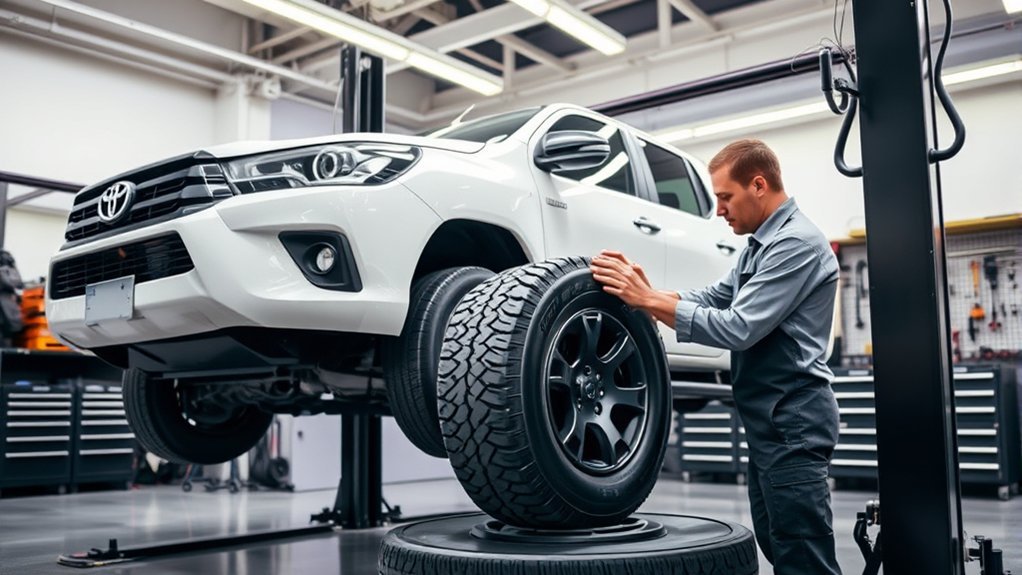
Tire balancing corrects uneven weight distribution in the wheel-and-tire assembly. When one area is heavier than the rest, the tire can hop, shake, or vibrate as speed increases. That vibration can make your Hilux feel rough on the highway and may contribute to irregular tread wear over time.
The National Highway Traffic Safety Administration says tire balancing helps wheels rotate properly and helps prevent vehicle shake or vibration. NHTSA also recommends balancing new tires when they are installed.
For a Toyota Hilux, balance matters even more if you drive on rough roads, carry heavy cargo, tow, or use all-terrain tires. Larger truck tires can hide imbalance at low speeds, then become obvious once you reach highway speed.
Warning: Do not ignore strong vibration, sudden shaking, bulges, exposed cords, or a tire that repeatedly loses air. Stop driving when safe and have the tire, wheel, steering, and suspension checked before continuing.
How to Tell If Your Tires Need Balancing
The clearest sign of tire imbalance is vibration that gets worse as speed increases. Depending on which wheel is affected, you may feel the shake through the steering wheel, seat, floor, or body of the truck.
| Indicator | What You May Notice | What To Do |
|---|---|---|
| Steering-wheel vibration | Shake that appears around highway speeds and may fade at lower speeds. | Have the front tires balanced and inspected. |
| Seat or floor vibration | A buzzing or pulsing feel through the cabin, often from the rear tires. | Ask the shop to balance all four wheels. |
| Uneven tread wear | Patchy, cupped, or irregular tread blocks. | Check balance, alignment, shocks, and tire pressure. |
| Thumping or rhythmic noise | A repeating sound that changes with road speed. | Inspect for imbalance, tire damage, or a bent wheel. |
| Vibration after new tires | The truck was smooth before the new tires but now shakes. | Return to the shop for a recheck and possible Road Force balance. |
According to Michelin, vibration can come from tires that are out of balance, but it can also point to steering, suspension, or alignment problems. If balancing does not solve the shake, do not keep paying for repeated balancing only; ask for a broader inspection.
Balancing vs. Alignment vs. Tire Pressure
Many tire problems feel similar from the driver’s seat, but the fixes are different.
- Tire balancing corrects uneven weight around the wheel-and-tire assembly. It mainly fixes vibration and helps reduce abnormal tread wear.
- Wheel alignment adjusts the angles of the wheels so the tires contact the road correctly. It helps with pulling, crooked steering, and edge wear.
- Tire pressure affects safety, handling, fuel use, load carrying, and tread life. Check pressure when the tires are cold and use the pressure listed on your Hilux tire placard or owner’s manual, not the maximum number printed on the tire sidewall.
Note: If your Hilux pulls to one side, wears one tire edge quickly, or has a crooked steering wheel, balancing alone is unlikely to fix it. Ask for an alignment check.
[Products Worth Considering]

The Trivd Frol 1/2" air impact wrench delivers high performance torque up to 1500 ft-lbs with a twin hammer impact mechanism for strong, balanced blows. It features an ergonomic grip, compact lightweight design, and quick-stop control with 3 forward speeds up to 8000 RPM plus a reverse speed. Built for demanding automotive repair and tire shop work, the rear exhaust helps keep debris away from the surface.

These aluminum alloy tire valve stem caps with an O-ring seal help protect valve stems from corrosion while adding a clean, stylish look to your vehicle. The universal fit works across cars, trucks, motorcycles, bicycles, and more, making them an easy upgrade for everyday driving and off-road use. Installation is quick, and the included four-pack keeps all your tires dressed and protected.

The 22800 wheel stud installer makes replacing wheel studs quick and secure, saving time and effort during tire service. It uses a ratchet or impact wrench to pull new studs firmly into place, helping when existing studs are too long. Compatible with most automotive wheels and light-duty truck wheel studs, it’s designed for easy, tool-assisted installation.
The Tire Balancing Process: What to Expect
A tire shop removes each wheel, mounts it on a balancing machine, spins it, and measures where the assembly is heavy or light. The technician then adds small weights to the rim so the assembly rotates more evenly.
[Products Worth Considering]

This universal wheel alignment tool helps you accurately restore tire tilt angles after tire or suspension repairs using an adjustable camber gauge. It features a powerful magnetic base that firmly attaches to brake rotors for stationary, slip-free readings, improving consistency during measurement. Built from durable PC plastic, it resists wear and corrosion and is compact enough for car, truck, RV, and motorcycle alignment tasks.

Steelman white tire marking crayons provide high-contrast, semi-permanent marks for repairing and inspecting tires and equipment. They write on wet or dry, smooth or coarse surfaces including rubber, metal, glass, and wood, making them ideal for puncture location and damage outlining. The lead- and zinc-free crayons resist weather and fading yet wipe away when you no longer need the marks.

A concentrated tire and tube mounting compound designed to help simplify mounting rubber tires and tubes on passenger, semi truck, construction, and OTR applications. Its ultra-thick formula packs beads effectively and includes rust inhibitors to help protect against corrosion during use.
Essential Equipment Needed
For standard balancing, a computerized wheel balancer, correct centering adapters, wheel weights, and a torque wrench are the basics. A quality shop should also check tire pressure, inspect the tread, and look for obvious wheel damage before balancing.
For stubborn Hilux vibration, a Road Force balancer can help. Hunter Engineering’s Road Force equipment uses a diagnostic load roller to help identify vibration problems that a normal spin balance may miss.
Balancing Techniques Explained
Most passenger vehicles and light trucks use dynamic balancing. This corrects imbalance across the inner and outer planes of the wheel, which is important for wider truck tires and alloy wheels.
| Step | What It Means |
|---|---|
| 1. Inspect | Check the tire, rim, valve stem, tread wear, and pressure before spinning the wheel. |
| 2. Mount correctly | Use the right adapters so the wheel is centered on the machine. |
| 3. Spin and measure | The balancer identifies where weight is needed. |
| 4. Add weights | Clip-on or adhesive weights are placed where the machine recommends. |
| 5. Recheck | The technician spins the wheel again to confirm the balance is within spec. |
Pro Tip: Ask the shop to record the road-force or runout readings if the truck has a vibration that keeps coming back. A printout helps you avoid guessing whether the issue is balance, tire construction, wheel damage, or suspension wear.
Common Challenges Faced
Some vibration problems are not caused by simple imbalance. A tire can be balanced on the machine but still feel rough on the road if the tire has excessive road force variation, the wheel is bent, the tire is not seated evenly, or suspension parts are worn.
The U.S. Tire Manufacturers Association notes that out-of-balance tire and wheel assemblies can cause abnormal tread wear due to vibration and irregular road contact. It also identifies other causes of abnormal wear, including misalignment, damaged wheels, worn shocks or struts, and loose steering or suspension parts.
When to Balance Your Hilux Tires for Best Results
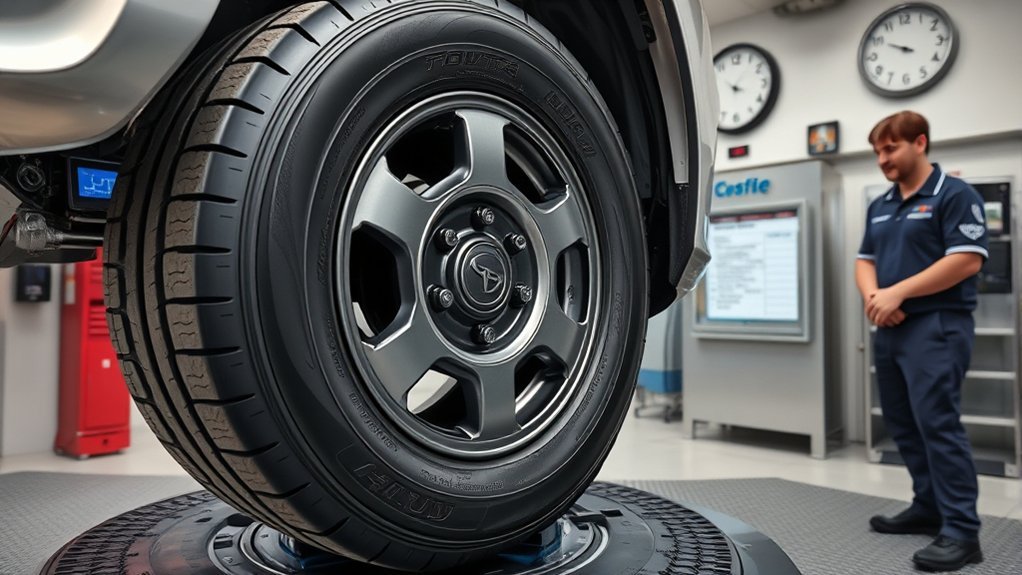
Balance should be checked whenever symptoms appear, not only on a fixed mileage schedule. That said, many owners combine balance checks with tire rotation, especially if the Hilux is used for long highway trips, towing, construction sites, or rough roads.
Signs Of Imbalance
Book a balance check if you notice any of these problems:
- Steering-wheel vibration at highway speeds
- Vibration through the seat, floor, or body
- Uneven, patchy, or cupped tread wear
- New noise or thumping after tire installation
- Shake after hitting a pothole, curb, rock, or deep rut
- Vibration after tire repair or wheel replacement
Recommended Mileage Intervals
Check your owner’s manual for your Hilux model year and market. Some Toyota Hilux owner manuals list tire rotation at about 10,000 km or 6,000 miles, while NHTSA gives a general rotation range of 5,000 to 8,000 miles when recommended by the vehicle manufacturer. Balance does not always need to be performed at every rotation, but it should be checked if there is vibration or uneven wear.
| Situation | Best Action |
|---|---|
| New tire installation | Balance every new tire before driving. |
| Routine tire rotation | Ask for a balance check if vibration or uneven wear is present. |
| After pothole, curb, or off-road impact | Inspect the tire and wheel; rebalance if needed. |
| After puncture repair | Rebalance if the tire was removed from the wheel or a weight was disturbed. |
| Persistent vibration after standard balancing | Request Road Force balancing and a suspension/alignment inspection. |
After New Tire Installation
New tires should be balanced when installed. After the first drive, pay attention to vibration, pulling, or new noise. If the truck shakes, return to the tire shop promptly so the balance, seating, tire pressure, and wheel mounting can be checked.
If you installed larger all-terrain or mud-terrain tires, ask the shop whether the tires need more careful Road Force matching. Heavier and more aggressive tread patterns can make small balance errors easier to feel.
The Consequences of Neglecting Tire Balancing
Neglecting tire balance can make your Hilux less comfortable and may shorten tire life by encouraging irregular tread wear. It can also make vibration harder to diagnose later because the tires, wheels, shocks, and suspension may all begin to show wear at the same time.
Balanced tires do not just feel smoother. They help the tire maintain more consistent road contact, which supports safer handling and more even tread wear.
- Uneven tire wear: Imbalance can contribute to cupping, patchy wear, and shortened tire life.
- High-speed vibration: A shake that starts on the highway can reduce comfort and make long drives tiring.
- Extra stress on components: Ongoing vibration may add stress to shocks, struts, steering, and suspension parts.
- Harder troubleshooting: If imbalance is ignored, it becomes harder to separate tire issues from alignment, wheel, or suspension problems.
Finding a Reliable Tire Shop for Your Tire Balancing Needs
A reliable tire shop should do more than add weights and send you away. Look for a shop that inspects the tire, checks pressure, uses the correct centering method, torques wheel nuts properly, and is willing to explain the results.
Before paying for the service, ask these questions:
- Will you balance all four wheels or only the wheel I feel vibrating?
- Do you check tire pressure before balancing?
- Do you inspect for bent wheels, tire damage, and uneven tread wear?
- Can you perform Road Force balancing if the vibration continues?
- Can you provide a printout of balance, road-force, or runout readings?
- Will you torque the wheel nuts to Toyota’s specification for my Hilux model?
Note: If your Hilux has aftermarket wheels, spacers, lift-kit changes, or oversized tires, tell the shop before the work starts. Those changes can affect centering, alignment, tire clearance, and vibration diagnosis.
[Products Worth Considering]

Malco tire mounting and demounting lubricant is a ready-to-use tire lube formulated to reduce friction during tire installation for passenger cars, light trucks, farm tires, and heavy-duty equipment. It provides rust-inhibiting protection to help reduce corrosion on rims and wheels, and helps support proper tire bead seating during inflation to reduce air leakage. The silicone-free, soap-free formula is whitewall safe to help prevent discoloration on whitewall tires and sensitive sidewall markings.

Milton S-921 pencil tire pressure gauge helps you maintain optimal tire pressure for passenger cars with accurate readings in PSI and kPa. It features a built-in deflator valve for convenient pressure adjustments, plus a single chuck head and nylon indicator bar for easy use on the go. Built from durable plated brass and designed for reliable performance, it’s a practical road trip and cold-weather maintenance tool.

Upgrade your Toyota’s wheels with durable aluminum alloy valve stem caps that help protect valve cores from corrosion and direct exposure to road grime, clay, water, and snow. Rubber rings improve sealing to help prevent air leakage and maintain stable tire pressure for safer driving. These caps are easy to install or remove without tools and add a unique, stylish look to your car.
Post-Balancing Test Drive Checklist
After balancing, take the Hilux on a safe road where you can gradually reach the speed range where the vibration used to appear. Do not test at unsafe speeds or on rough pavement that can hide the result.
- Check whether the steering wheel is smooth at highway speed.
- Listen for thumping or rhythmic tire noise.
- Notice whether the seat or floor still vibrates.
- Confirm the truck does not pull to one side.
- Recheck tire pressure when the tires are cold.
- If vibration remains, ask for Road Force balancing, alignment, and suspension checks.
Frequently Asked Questions
Is it worth getting your Toyota Hilux tires balanced?
Yes. Balancing is worth it when you install new tires, feel vibration, notice uneven tread wear, or hit a pothole or curb. It improves ride comfort and helps prevent abnormal tire wear.
How often should Hilux tires be balanced?
There is no single interval for every Hilux. Balance new tires when installed and check balance whenever vibration or uneven wear appears. Many owners ask for a balance check during tire rotation, especially if the truck sees towing, highway use, or rough roads.
Can unbalanced tires damage my Hilux?
Unbalanced tires can cause vibration and abnormal tread wear. If ignored, ongoing vibration may also add stress to shocks, steering, and suspension parts. Have the tires checked early instead of waiting for the vibration to get worse.
Is Road Force balancing necessary for a Toyota Hilux?
Not always. Standard dynamic balancing is enough for many Hilux tires. Road Force balancing is most useful when a vibration remains after normal balancing, when the truck has larger all-terrain tires, or when the shop suspects tire or wheel runout.
Can tire balancing fix pulling to one side?
Usually not. Pulling to one side is more often related to alignment, tire pressure, tire conicity, brake drag, or suspension issues. Balancing mainly fixes vibration, not steering pull.
Conclusion
Balancing your Toyota Hilux tires is a small maintenance step that can make a big difference in ride comfort, tire wear, and highway confidence. Balance new tires when they are installed, check balance when vibration appears, and do not overlook tire pressure, alignment, wheel condition, and suspension health. If a standard balance does not solve the shake, ask for Road Force balancing and a full inspection before the problem becomes more expensive.
Sources
- NHTSA TireWise — tire pressure, rotation, balance, alignment, and safety guidance.
- Toyota UK Owner’s Manual Lookup — official place to confirm model-specific Hilux tire information.
- Michelin: Symptom Vibration or Shimmy — vibration diagnosis and balance-related tire wear guidance.
- U.S. Tire Manufacturers Association: Care and Service of Passenger and Light Truck Tires — abnormal wear, imbalance, alignment, and tire service guidance.
- Hunter Engineering Road Force Wheel Balancer — Road Force balancing and vibration-diagnostic equipment information.