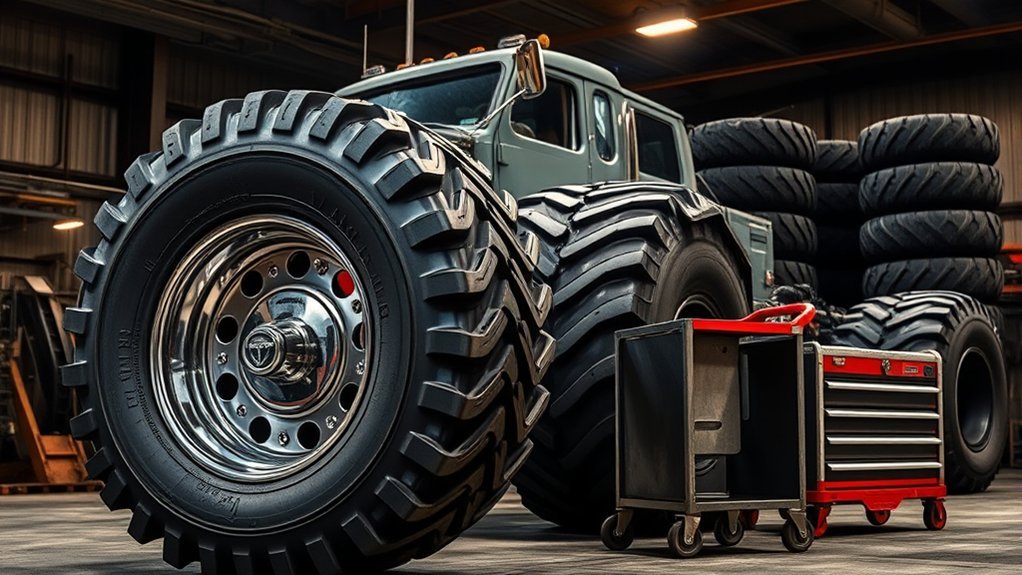
A full-size monster truck tire can cost several thousand dollars, but there is no single official retail price that applies to every truck. A long-cited Monster Jam benchmark is about $2,500 per tire, while current retail examples of similarly sized 66-inch BKT off-highway tires can approach $5,000 each before freight. Your real cost depends on the exact tire, condition, wheel setup, shipping, and installation.
Quick Answer
For budgeting, expect a full-size monster truck tire to cost roughly $2,500 to $5,000 or more, with four tires potentially reaching $10,000 to $20,000+ before freight and mounting. Exact Monster Jam competition-tire pricing is not publicly listed, so get a current quote for your exact application.
Key Takeaways
- A practical planning figure for a full-size monster truck tire is about $2,500 to $5,000+, but the exact competition tire may be quote-only.
- Four tires can therefore represent roughly $10,000 to $20,000+ before oversized freight, wheels, mounting, and other service.
- Official Monster Jam BKT tires measure 66 inches in diameter and 43 inches wide; Monster Jam lists each tire-and-wheel assembly at 645 pounds.
- A 66×43 agricultural or flotation tire is not automatically the same product as a dedicated Monster Jam competition tire, even when the nominal dimensions match.
- Used tires can cost less, but condition, bead integrity, previous repairs, age, and prior competition use matter more than an advertised percentage discount.
What Do Monster Truck Tires Cost?
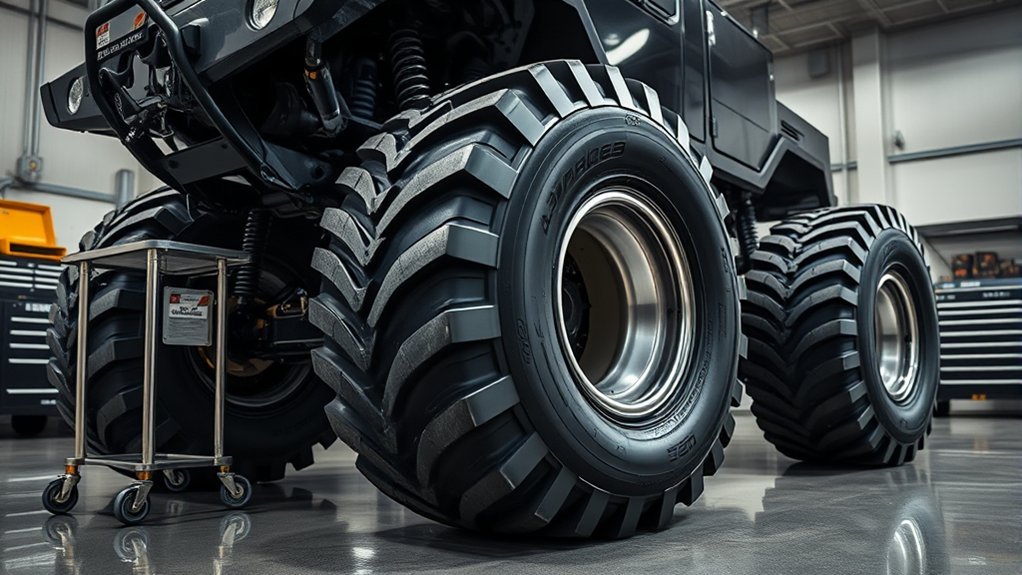
There is no universal current list price for a competition monster truck tire. Published pricing depends on what you mean by “monster truck tire”: an official competition tire, a giant agricultural-style flotation tire used on an independent build, a used takeoff tire, or a complete tire-and-wheel assembly.
Older reporting about Monster Jam put the price of a tire at about $2,500 each. That remains a useful historical benchmark, but it should not be treated as a guaranteed 2026 purchase price.
At the other end of the comparison, current retail listings for some 66×43-inch BKT off-highway flotation tires are around the $5,000 mark before shipping. Those products demonstrate how expensive a new tire of this physical scale can be, but they are not automatically the same specification as the tire BKT builds for Monster Jam.
Note: Do not compare prices by diameter alone. Two tires marked around 66 inches tall may have different bead sizes, construction, tread designs, load specifications, compounds, intended uses, and wheel requirements.
2026 Monster Truck Tire Price Snapshot
| Type | Useful Budget Figure | What to Know |
|---|---|---|
| Historical Monster Jam benchmark | About $2,500 per tire | Frequently cited in earlier reporting; not an official current BKT retail quote. |
| Current 66×43 BKT off-highway retail examples | Around $5,000 per tire | Useful as a size-based market comparison, but not necessarily the dedicated Monster Jam competition tire. |
| Four full-size tires | Roughly $10,000 to $20,000+ | Before freight, wheels, hardware, mounting, and other service. |
| Used or takeoff tires | Individually priced | Value depends heavily on condition, history, repairs, tread, bead damage, and age. |
If you are buying for an actual competition truck, request a quote using the exact tire size, wheel size, intended event use, vehicle weight, and required construction. Ask whether the number you receive is for the tire only or a mounted assembly.
Why Monster Truck Tires Cost So Much
Monster truck tires are expensive first because they are enormous. A full-size tire contains far more rubber and reinforcement than a passenger or light-truck tire, and moving a tire of this scale through manufacturing, warehousing, and freight requires specialized equipment.
The requirements are also unusual. Monster Jam says its BKT tires are specifically used on approximately 12,000-pound competition trucks that perform racing, jumps, donuts, and freestyle maneuvers. The tire must provide a large footprint while also working with the truck’s long-travel suspension.
Monster Jam’s current specifications list its BKT tires at 66 inches in diameter and 43 inches wide. The organization says each tire and wheel together weighs about 645 pounds.
Monster Jam lists its BKT tire-and-wheel assemblies at 66 inches tall, 43 inches wide, 645 pounds each, and 23 psi.
Supply is another factor. These are specialized off-highway products rather than high-volume passenger tires sold by the millions. Oversized freight can also become a significant part of your final cost, especially if the tire must travel by less-than-truckload freight or requires special delivery arrangements.
What Affects Monster Truck Tire Prices?
The biggest price variables are the exact tire specification, physical size, intended application, condition, availability, freight requirements, and whether the wheel or other hardware is included.
Monster truck tire prices are easier to compare when you match the exact size, application, condition, and included hardware rather than comparing diameter alone.
Construction matters because tires intended for different loads and operating environments are not interchangeable simply because their outside dimensions look similar. The bead diameter, carcass design, tread configuration, sidewall construction, and manufacturer’s intended use all need to match the vehicle.
Availability can also change the quote. A tire already in a regional warehouse may cost much less to deliver than a specialty tire that must move across several states. Residential delivery can also carry extra freight charges for products this large.
Custom tread cutting, wheel preparation, tubes where applicable, valve hardware, and mounting can raise the total further. Ask sellers to itemize these costs so you can compare the landed and installed price, not just the advertised tire price.
Pro Tip: Ask every seller for the same five numbers: tire price, wheel price if applicable, freight, mounting/service charge, and total delivered cost. That makes seemingly cheap quotes much easier to compare.
How New and Used Tires Compare
New tires cost more upfront, but they give you a known starting condition and eliminate much of the uncertainty that comes with a previously used casing.
Used or takeoff monster truck tires may cost less, but there is no reliable rule that says they should be 30%, 50%, or 60% cheaper. A lightly used tire with a documented history may command a very different price from one that has suffered hard landings, sidewall damage, repairs, weather exposure, or bead abuse.
Before buying used, inspect or have a qualified tire professional inspect:
- Bead areas for cuts, distortion, tearing, or mounting damage.
- Sidewalls for deep cuts, bulges, cracking, exposed reinforcement, or impact damage.
- Tread for separation, chunking, severe uneven wear, and previous repairs.
- The casing for evidence of prolonged underinflation or excessive flexing.
- Available manufacturing or identification markings and the tire’s documented history.
- Whether the seller can confirm how the tire was stored and what type of vehicle used it.
If you need the tire for competition, the purchase decision should be based on structural condition and suitability for the truck, not simply the amount of tread remaining.
[Products Worth Considering]
These Monster Jam car crushing cupcake rings feature bright, vivid monster truck designs that instantly elevate birthdays and celebrations. The food-safe molded plastic toppers are ready to use on cupcakes, muffins, donuts, or baked treats and are made to stand steady. With 24 rings in the pack, they’re ideal for creating a full themed dessert display.
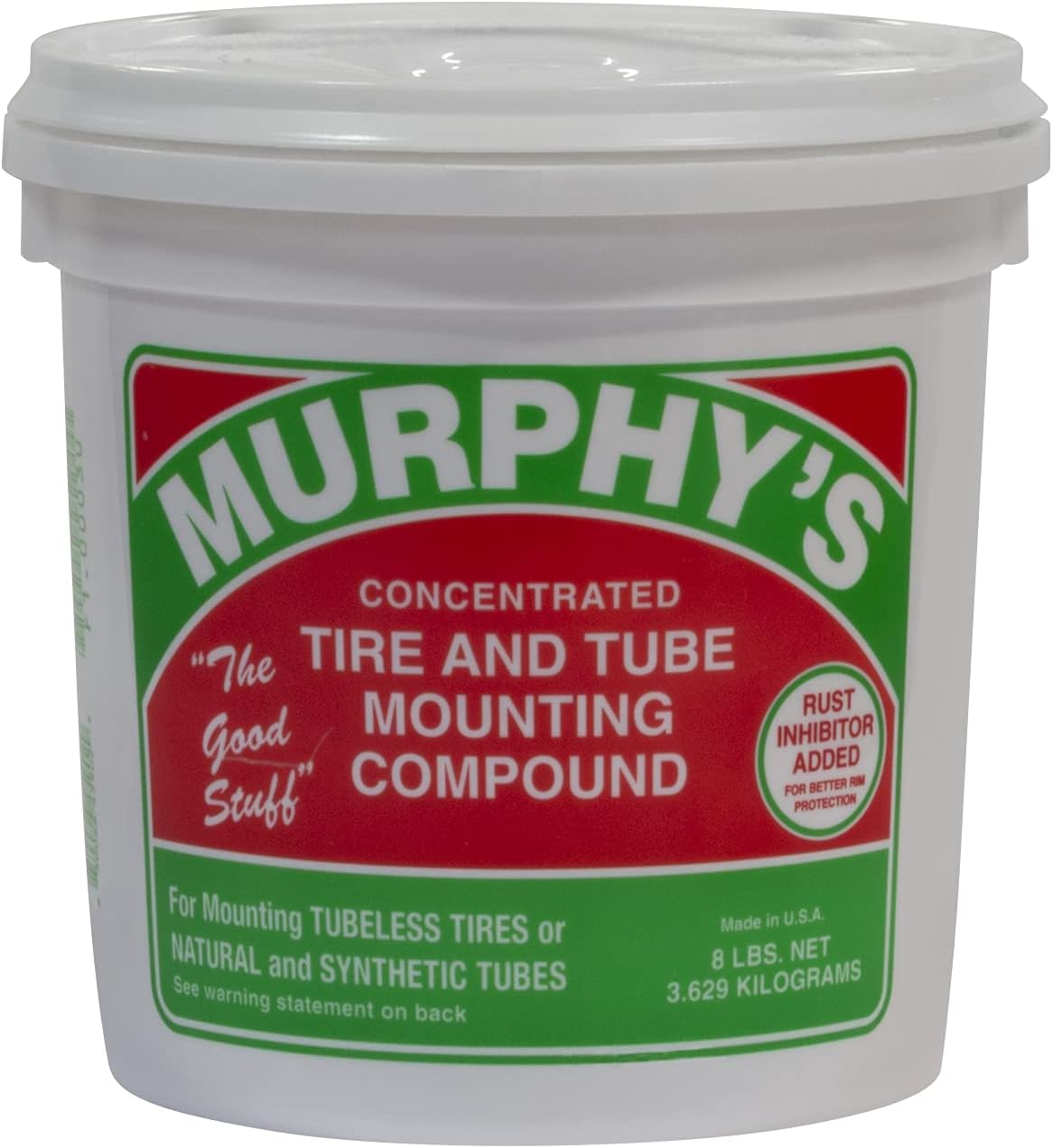
A concentrated tire and tube mounting compound designed to help simplify mounting rubber tires and tubes on passenger, semi truck, construction, and OTR applications. Its ultra-thick formula packs beads effectively and includes rust inhibitors to help protect against corrosion during use.

Malco tire mounting and demounting lubricant is a ready-to-use tire lube formulated to reduce friction during tire installation for passenger cars, light trucks, farm tires, and heavy-duty equipment. It provides rust-inhibiting protection to help reduce corrosion on rims and wheels, and helps support proper tire bead seating during inflation to reduce air leakage. The silicone-free, soap-free formula is whitewall safe to help prevent discoloration on whitewall tires and sensitive sidewall markings.
How Monster Truck Tire Size Changes Price
Larger tires generally require more material and are harder to manufacture, handle, store, and ship. However, size alone does not determine price.
This distinction is especially important with Monster Jam because the series uses a standardized tire size. The current official specification is 66 inches tall and 43 inches wide, so teams are not simply choosing progressively larger Monster Jam tires based on budget.
Independent monster trucks, exhibition vehicles, mud trucks, and custom off-highway builds may use different giant tire sizes, so their costs can vary much more widely.
Tire Diameter Matters
Diameter affects material volume, vehicle gearing, ground clearance, wheel requirements, and overall fitment. A larger-diameter tire can therefore cost more, but you should never assume that one giant tire can replace another solely because the outside diameter appears close.
Bead diameter is especially important. Monster Jam’s 66-inch BKT tires are used with a 25-inch wheel according to published technical reporting, while other giant flotation tires may have their own wheel and application requirements.
When comparing quotes, use the complete tire designation rather than asking only for a “66-inch monster truck tire.”
Width And Material
Width affects the amount of material in the tire as well as its footprint, wheel compatibility, and vehicle clearance. Monster Jam’s official tire width is 43 inches.
Construction and compound also matter, but buyers rarely need to guess which rubber formulation is “best.” Instead, buy a tire designed and rated for the exact application. A tire intended for agricultural flotation, for example, should not automatically be treated as a competition tire simply because it looks similar.
This is one reason exact part numbers and manufacturer application guidance are more useful than broad descriptions such as “premium material” or “heavy-duty rubber.”
How Brands and Materials Affect Price
Brand matters less than choosing a tire that is actually designed for your truck and use. Within Monster Jam specifically, BKT has been a central part of the tire program for years.
Monster Jam states that BKT became its official and exclusive tire sponsor in 2014, and the partnership was extended in 2022.
That makes generic brand-to-brand price tables misleading for readers specifically researching Monster Jam. An independent monster truck may use a different type of giant off-highway tire, but that does not make every agricultural or flotation tire a direct substitute for the BKT competition tire.
For a competition build, exact application approval is more important than choosing a tire because one brand happens to be cheaper.
When requesting a quote, compare the complete specification, intended application, warranty or service terms where offered, and availability. Competition use may also affect what warranty coverage, if any, applies.
What It Costs to Mount Monster Truck Tires
There is no dependable nationwide “$300 per tire” mounting price for monster truck tires. The cost depends on the tire and wheel design, assembly weight, shop equipment, labor time, location, and whether a mobile or specialty off-highway service provider is required.
A Monster Jam tire-and-wheel assembly weighs about 645 pounds according to Monster Jam, so handling one is far beyond ordinary passenger-tire service.
Warning: Mounting and inflating extremely large off-highway rim-wheel assemblies can cause severe injury if a tire, bead, wheel, or rim component fails. Use a trained commercial/off-highway tire service provider. OSHA’s 29 CFR 1910.177 requires specific training, equipment, compatible components, and inflation safety procedures for covered large rim wheels.
Depending on the wheel type, professional service can involve lifting equipment, remote inflation equipment, restraining devices or barriers, specialized mounting tools, and procedures that keep technicians outside the potential trajectory of the assembly during inflation.
Ask the shop whether its quote includes:
- Demounting the old tire.
- Inspection of the wheel and bead surfaces.
- Mounting the replacement tire.
- Tube or valve hardware where applicable.
- Inflation and leak checks.
- Wheel installation on the truck.
- Disposal or handling of the old tire.
- Mobile-service or travel charges.
A written itemized quote is far more useful than assuming a fixed per-tire installation charge.
Where to Buy Monster Truck Tires
You can source giant tires through off-highway tire dealers, specialty distributors, competition contacts, used-equipment sellers, and online marketplaces. The right source depends on whether you need an actual competition specification or simply a giant tire for a custom build.
Before ordering, compare the total delivered price and confirm that the tire’s application, bead size, dimensions, and construction match your wheel and vehicle.
[Products Worth Considering]

The SAFELIFE dial tire tread depth gauge measures tread depth in 1/32 inch increments with clear, easy-to-read 2-inch dial face. Color zones using a traffic light system help you quickly judge whether tread is low, marginal, or ample for safer driving. Built with a durable zinc cast body and a metal detect probe for precise, comfortable use across cars, motorcycles, trucks, and buses.
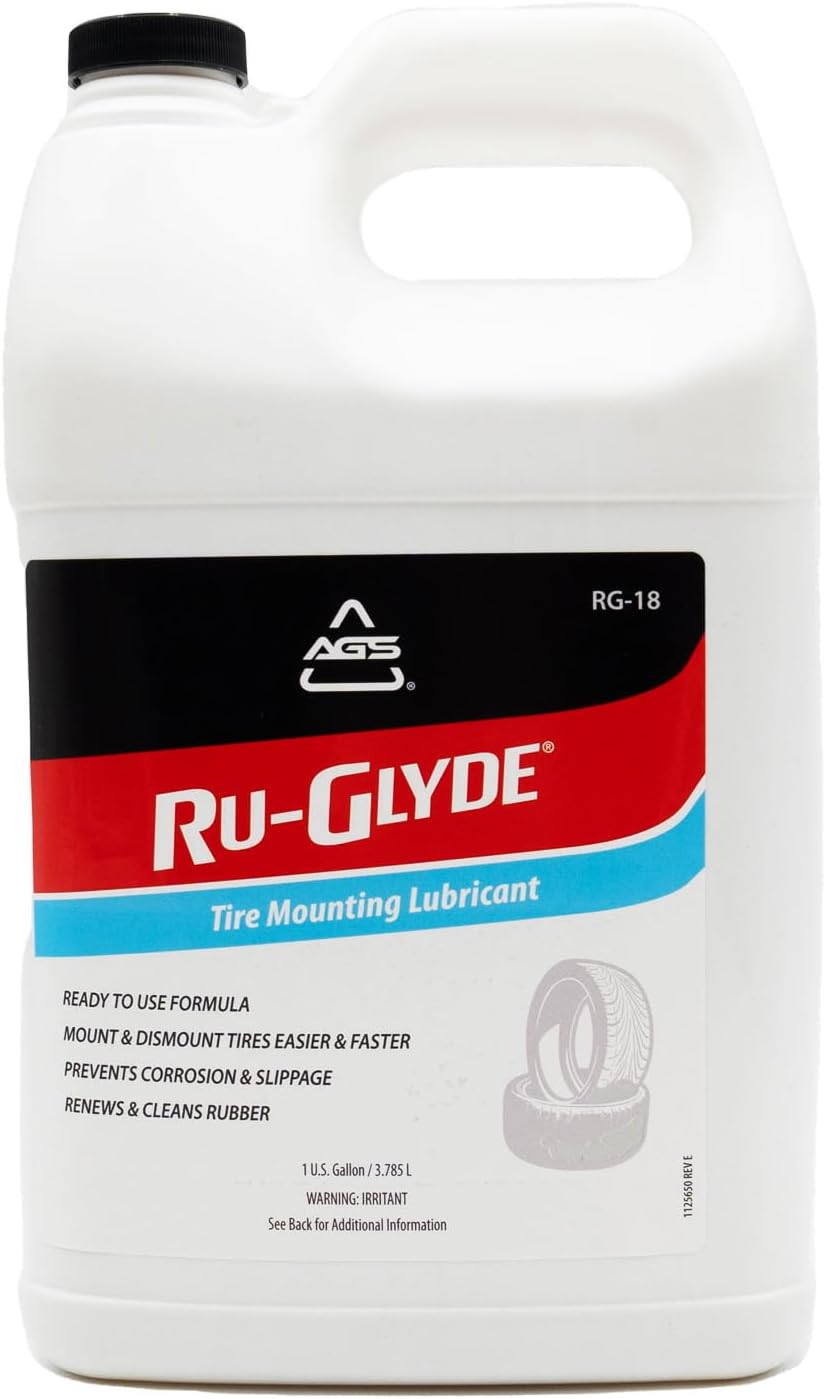
Ru-Glyde tire mounting lubricant from AGS seats tire beads smoothly on the first try with a thick, stay-put formula. It is ready to use with no mixing or dilution, helps prevent rim rust, and dries completely without causing bead slip residue. The water-based formula also conditions aged rubber, making it useful for sidewalls, gaskets, and door seals while remaining safe for tire, wheel, and technicians.

Monitor tire tread wear with a smart, color-coded depth gauge that shows clear condition ranges at a glance. The bar is range marked for fast, easy readings, helping you maintain safer traction and performance. Each gauge is portable with a pocket clip, and the set includes 20 units for daily use and sharing.
Authorized Tire Dealers
A knowledgeable off-highway or manufacturer-authorized dealer is often the safest starting point because the dealer can help confirm the tire specification rather than relying on appearance or diameter alone.
| Factor | Dealer Advantage | Why It Matters |
|---|---|---|
| Inventory | Traceable product information | Reduces mismatch risk |
| Specifications | Application guidance | Helps confirm fitment |
| Condition | New inventory documentation | Provides a known starting point |
| Support | Commercial tire experience | Helps with mounting and service planning |
| Pricing | Itemized quotes | Makes freight and service costs visible |
Ask the dealer to confirm the complete tire designation, intended application, whether a wheel or tube is included, stock status, lead time, freight class, and available installation options.
Online Marketplace Options
Online marketplaces can uncover used tires and specialty inventory, but the listing needs more scrutiny than a normal passenger-tire purchase.
Confirm that the seller provides the exact size and product markings rather than simply calling the item a “monster truck tire.” Request clear current photographs of the tread, both sidewalls, beads, identification markings, and any repaired areas.
For a used tire, ask about:
- Previous vehicle and application.
- Known repairs or punctures.
- Sidewall or bead damage.
- Storage conditions.
- Whether the wheel is included.
- Return terms if the tire does not match the listing.
Also calculate freight before judging the deal. Oversized shipping can erase much of the savings from a lower advertised tire price.
How to Save Money on Monster Truck Tires
The safest way to reduce your monster truck tire cost is to avoid buying the wrong tire. A bargain is expensive if the bead diameter, construction, wheel, or application does not fit your truck.
Start by getting several itemized quotes for the exact same specification. Compare tire price, freight, wheel cost, mounting, hardware, and delivery surcharges.
Used or takeoff tires can reduce the purchase price when their condition is properly documented. However, never choose a questionable casing for competition simply because it has deep tread. Impact damage, bead damage, separation, or structural fatigue can matter far more than tread depth.
Storage also affects long-term condition. The U.S. Tire Manufacturers Association notes that temperature, storage, inflation pressure, loads, impacts, and other service conditions all affect tire performance and service life.
For tires that will sit between events, store them in a cool, dry location protected from direct sunlight, excessive heat, petroleum products, and ozone-producing equipment when practical.
If you operate more than one compatible truck, standardizing wheel and tire specifications may also reduce the number of unique spares you need to keep on hand.
[Products Worth Considering]

The 22800 wheel stud installer makes replacing wheel studs quick and secure, saving time and effort during tire service. It uses a ratchet or impact wrench to pull new studs firmly into place, helping when existing studs are too long. Compatible with most automotive wheels and light-duty truck wheel studs, it’s designed for easy, tool-assisted installation.

Steelman white tire marking crayons provide high-contrast, semi-permanent marks for repairing and inspecting tires and equipment. They write on wet or dry, smooth or coarse surfaces including rubber, metal, glass, and wood, making them ideal for puncture location and damage outlining. The lead- and zinc-free crayons resist weather and fading yet wipe away when you no longer need the marks.

Measure tire tread depth quickly and accurately with this LUMITECO dial gauge that reads in 1/32" increments up to 14/32". The color-coded green/yellow/red zones make it easy to judge tire wear and know when replacement is needed. A rugged, compact design with a protective pouch helps keep the gauge ready for use on cars, trucks, motorcycles, and more.
Frequently Asked Questions
How Long Do Monster Truck Tires Usually Last?
There is no dependable mileage figure for competition monster truck tires. Their usable life depends on impacts, event surfaces, inflation pressure, cuts, bead condition, heat, storage, and driving style. Inspect them before and after hard use and remove a tire from service when its condition makes continued use unsafe.
Do Monster Truck Tires Need Special Storage Conditions?
They should be stored carefully. Keep tires in a cool, dry, reasonably ventilated location and protect them from prolonged sunlight, excessive heat, petroleum products, and ozone sources such as some electric motors and generators. Poor storage can accelerate deterioration.
Can Monster Truck Tires Be Retreaded Safely?
Do not assume a giant tire is suitable for retreading or competition simply because the casing looks reusable. A qualified retreader must evaluate the casing, and the finished tire must be appropriate for the intended application. For extreme competition use, follow the tire manufacturer’s, wheel manufacturer’s, sanctioning body’s, and team’s requirements rather than relying on a generic retread rule.
Are Monster Truck Tires Legal for Street Use?
Do not assume dedicated competition tires are legal or suitable for highway driving. In the United States, new tires designed for highway use are subject to applicable federal safety requirements and use DOT certification markings. Vehicle width, tire coverage, lighting, suspension, and other rules can also vary by state, so check the tire markings and local requirements before operating a modified monster truck on public roads.
How Often Should Monster Truck Tires Be Inspected?
For competition or exhibition use, inspect tires before each operating session and again after hard impacts or visible damage. Check pressure, tread, sidewalls, beads, cuts, bulges, separation, leaks, and wheel condition. Any sudden air loss, vibration, distortion, or new damage deserves immediate attention.
What Size Tires Does Monster Jam Use?
Monster Jam currently lists its BKT tires at 66 inches in diameter and 43 inches wide. The organization says each tire-and-wheel assembly weighs about 645 pounds.
What Tire Pressure Does Monster Jam Use?
Monster Jam currently publishes a figure of 23 psi for its BKT tires. Do not copy that pressure onto a different monster truck or off-highway tire; use the specifications and setup requirements for your exact tire, wheel, truck, and application.
Does a Monster Truck Tire Price Include the Wheel?
Not necessarily. Some listings are tire-only, while others may include a wheel, tube, valve hardware, or mounting. Because the difference can be thousands of dollars across a four-tire purchase, always ask exactly what the quoted price includes.
Sources
- Monster Jam 101 — official Monster Jam truck dimensions, BKT tire size, tire-and-wheel weight, and published inflation pressure.
- Monster Jam and BKT Extend Partnership — confirms BKT’s official Monster Jam tire partnership.
- OSHA 29 CFR 1910.177 — safety requirements for servicing covered large single-piece and multi-piece rim wheels.
- NHTSA Tire Safety — tire aging, inspection, maintenance, and storage considerations.
- U.S. Tire Manufacturers Association Tire Facts — tire service-life factors, identification, use, and storage guidance.
- NHTSA Tire Certification Interpretation — explains DOT certification for highway-use tires and the role of state requirements.
Conclusion
Monster truck tires are expensive, but a single fixed price can be misleading. For planning purposes, roughly $2,500 to $5,000 or more per full-size tire is a more useful starting point than treating one number as universal. Four tires can therefore represent $10,000 to $20,000+ before freight, wheels, mounting, and service.
If you are buying for a real competition truck, verify the exact specification rather than shopping by diameter alone. Official Monster Jam BKT tires are 66 inches tall and 43 inches wide, but a similarly sized agricultural or flotation tire is not automatically the same product. Compare complete delivered quotes, use professional large-tire service, and give used tires a careful structural inspection before putting them under a high-impact monster truck.