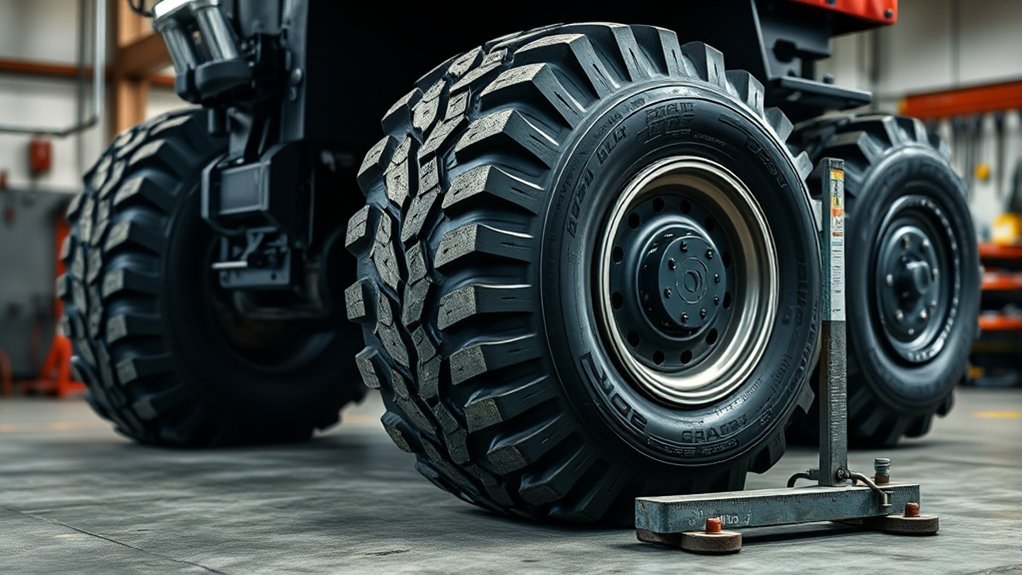
For a current Monster Jam truck, the BKT competition tire weighs about 211 kg (465 pounds) by itself, while the mounted tire-and-wheel assembly weighs 645 pounds. Monster Jam also lists the tire at 66 inches in diameter, 43 inches wide, and 23 psi. These are current Monster Jam figures; older trucks, independent series, and agricultural-style flotation tires can use different weights and pressures.
By: TubeTyre | Last updated: August 18, 2026. Current Monster Jam and BKT/Feld specifications and the retail comparison price were rechecked for this update.
Quick Answer
A current Monster Jam BKT tire weighs about 465 pounds by itself, while Monster Jam lists the complete tire-and-wheel assembly at 645 pounds. If you see 800- to 900-pound figures, check the truck, tire model, year, and whether the source is weighing the tire alone or a mounted assembly; those numbers do not match the current Monster Jam BKT specifications.
Key Takeaways
- Current Monster Jam BKT tires are 66 inches in diameter and 43 inches wide.
- Monster Jam lists each mounted BKT tire-and-wheel assembly at 645 pounds and 23 psi.
- Feld/BKT list the tire itself at about 211 kg, or roughly 465 pounds.
- Four mounted tire-and-wheel assemblies total about 2,580 pounds, or about 21.5% of a 12,000-pound Monster Jam truck.
- The famous 10-foot-tall Bigfoot 5 tires are a special exhibition case, not the normal race-tire size.
How Much Do Monster Truck Tires Weigh?
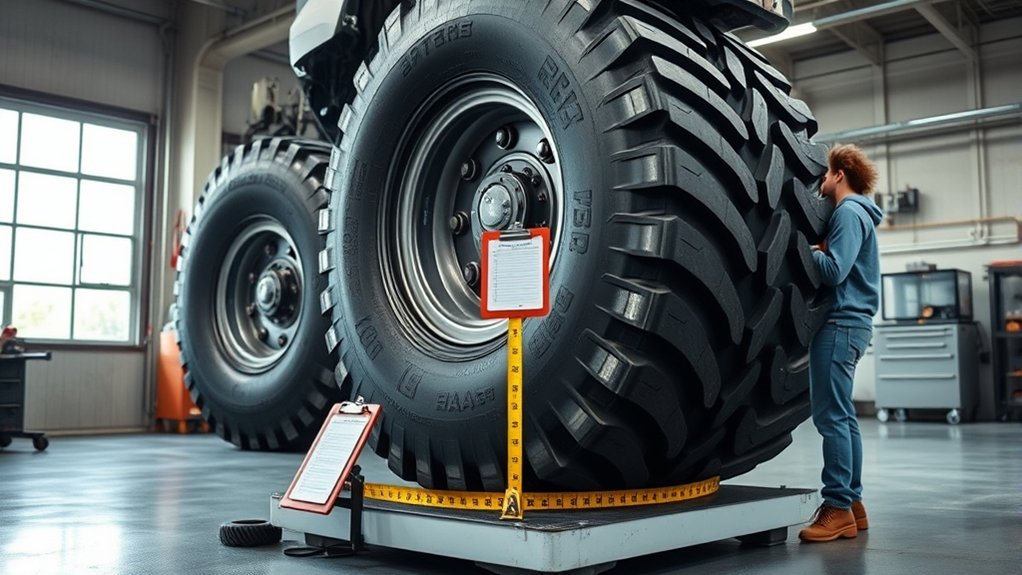
For a current Monster Jam truck, the best answer is about 465 pounds for the tire alone and 645 pounds for the mounted tire-and-wheel assembly. Monster Jam’s current truck specifications list BKT tires at 66 inches in diameter, 43 inches wide, 23 psi, and 645 pounds each with the wheel. Feld Entertainment’s BKT technical update lists the tire itself at 211 kg, which converts to about 465 pounds.
That distinction matters. The difference between the two published figures is roughly 180 pounds, which shows how much the answer changes when the mounted assembly is counted. Do not treat that 180-pound difference as an official bare-wheel specification, because Monster Jam and Feld publish the assembly weight and tire-only weight separately and do not provide a component-by-component breakdown on these pages.
| Tire or assembly | Approximate weight | Best use of the number |
| Current Monster Jam BKT tire only | About 211 kg / 465 lb | Rubber tire weight before the full wheel assembly is counted |
| Current Monster Jam BKT tire with wheel | 645 lb | Best number for transport, handling, and total truck-weight math |
| Titan 66×44.00-25 Tundra-Grip LF examples | 529 to 725 lb, depending on ply rating | Manufacturer comparison showing why same-size-family flotation tires can be much heavier |
| Firestone 66×43.00-25 Flotation 23 retail comparison | 692.6 lb net weight | Same nominal size as a useful market comparison, but not the official Monster Jam BKT competition tire |
| Bigfoot 5 exhibition tires | About 2,400 lb each | Special 10-foot-tall exhibition tires, not normal competition tires |
Using Monster Jam’s 645-pound mounted assembly number, four tire-and-wheel assemblies weigh about 2,580 pounds. Compared with Monster Jam’s published 12,000-pound truck weight, that is about 21.5% of the truck’s total weight. This is a calculated comparison, not a published Monster Jam percentage.
For current Monster Jam trucks, use about 465 pounds for the BKT tire itself or 645 pounds for the mounted tire-and-wheel assembly. Older 800- to 900-pound figures describe different configurations and should not be presented as today’s Monster Jam specification.
Why Monster Truck Tires Are So Heavy
Monster truck tires are heavy because their size and reinforced construction must survive extreme loads, impacts, and repeated deformation. Monster Jam lists its trucks at about 12,000 pounds and 1,500 horsepower, while BKT describes the current tire around impact resistance, tread optimization, and reinforced structure. The tire must flex during landings without losing the shape and durability needed for racing and stunts.
The size, pressure, and flexible casing help the truck work; extra tire weight is mainly a consequence and tradeoff of that construction. At the current 23 psi Monster Jam specification, the large casing can deform during impacts and create a broad footprint for traction. The downside is rotating and unsprung mass: more mass takes more energy to accelerate and slow and gives the suspension and steering more weight to control.
Note: Tire weight is not automatically “better.” Teams need enough strength and footprint for durability, but too much unsprung and rotating mass can slow response and increase drivetrain stress.
Monster Truck Tire Size and Dimensions
Current Monster Jam BKT tires are about 66 inches tall and 43 inches wide. That size gives the truck ground clearance, a huge contact patch, and enough sidewall to absorb impacts. It also makes the tire one of the most visible parts of the truck.
Current Competition Tire Size
The current Monster Jam dimensions to remember are 66 inches in diameter by 43 inches wide. Monster Jam lists tire pressure at 23 psi, while Feld’s BKT technical information gives about 1.6 bar. Those figures agree closely and apply to the current Monster Jam BKT setup, not automatically to every monster truck series.
For a quick explanation of inch-based flotation-size notation and why similarly sized tires can still differ in construction, see our metric vs flotation tire sizing guide and tire ply rating guide.
Why Some Tires Are Listed As 10 Feet Tall
Some fans see “10-foot monster truck tires” and assume that is the standard size. It is not. The famous Bigfoot 5 used massive Firestone 120-inch-tall tires that were originally tied to an Alaskan land train. Bigfoot lists those tires at about 2,400 pounds each. That makes Bigfoot 5 an important monster truck history example, but not a normal modern competition tire.
Tire Fit And Clearance
Because the tire is 43 inches wide and flexes under load, fit and clearance are engineering issues, not just installation checks. Teams need enough room around the body, suspension, shocks, and steering parts so the tire does not hit the truck when it lands, turns, or rebounds.
BKT and Feld have said the current FL 354 design reduced tire width by about 60 mm to help avoid contact with vehicle parts during landings. That small change matters because monster truck tires deflect heavily when thousands of pounds hit the ground at once.
What Monster Truck Tires Are Made Of
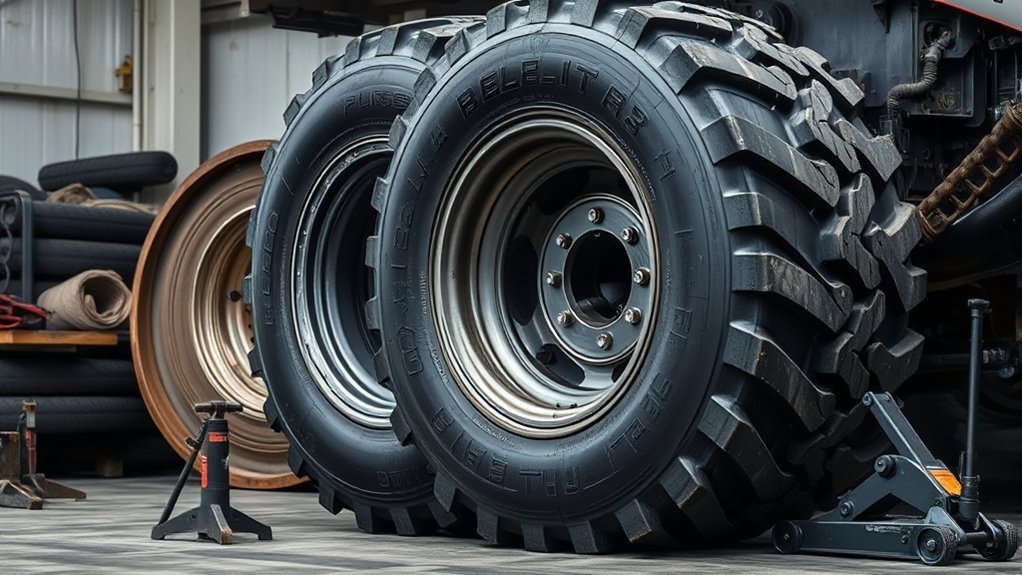
Monster truck tires are made from heavy-duty rubber compounds and reinforced tire structures. They are not ordinary pickup tires scaled up. The rubber must resist cuts, abrasion, and impact, while the casing must hold its shape during landings, donuts, two-wheel tricks, and hard turns.
BKT’s development overview emphasizes impact and wear resistance, optimized tread design, and reinforced structure. Feld’s FL 354 update adds the design details: a more rounded shape, deeper center tread for traction and durability, reduced shoulder tread to limit sinking during cornering, and extra support-zone blocks to improve traction after angled landings.
- Rubber compound: resists impact, abrasion, and cuts from crushed obstacles.
- Reinforced structure: helps the tire keep its shape during hard landings.
- Large sidewall: adds flex and shock absorption.
- Wide tread: increases the contact patch and traction.
- Special tread blocks: help the truck grip when turning, landing, or driving on uneven dirt.
How Tire Weight Affects Performance
Tire weight affects nearly every part of monster truck performance. The tire is part of the rotating mass, part of the unsprung weight, and part of the truck’s landing system. That means tire weight changes how quickly the truck accelerates, how the suspension reacts, and how stable the truck feels when it lands.
Traction And Stability
The large footprint helps the truck find traction and stay stable. The wide casing, low pressure, and tread design let a large area of rubber work against the surface during launches, turns, and obstacle hits. The 66-inch diameter also gives the truck the clearance and rollover geometry needed for dirt ramps and uneven arena surfaces.
Suspension And Landing
Monster Jam trucks use large suspension systems with nitrogen-charged shocks and about 30 inches of travel. The tires help that system by flexing at impact. A properly inflated tire can absorb part of the landing force before the shocks do the rest.
Speed And Wear
The downside is rotating mass. A heavier tire-and-wheel assembly takes more energy to spin, more braking force to slow, and more stress to steer. It can also add wear to steering, suspension, axle, and drivetrain parts. That is why teams inspect tire condition, pressure, and mounting hardware carefully.
Warning: At 645 pounds for a current Monster Jam mounted assembly, this is not a normal manual-lifting task. Follow the team’s approved handling procedure and use equipment rated for the load.
How Much Do Monster Truck Tires Cost?
Monster Jam and Feld publish current tire specifications, but the cited public specification pages do not list a retail price for the Monster Jam BKT competition tire. A same-size retail flotation tire can still provide a useful comparison, as long as it is clearly labeled as a different product.
As checked on August 18, 2026, Dawson Tire lists a 66×43.00-25 Firestone Flotation 23 at $3,316.50 each, with a net weight of 692.6 pounds; the listing was marked out of stock. Price and availability can change. This is a same-size market comparison, not the official price or weight of the Monster Jam BKT competition tire.
| Cost factor | Why it changes the price |
| Tire model and compound | Different tire models, compounds, and constructions can carry different manufacturing and market prices. |
| Wheel and hardware | A complete mounted assembly adds wheel and mounting-related costs beyond the tire alone. |
| Tread cutting | Independent teams may add labor for hand-shaving or grooving where their setup uses it. |
| Freight and handling | Large, heavy tires may require freight and equipment-assisted handling, which can add logistics cost. |
[Products Worth Considering]

Measure tire tread depth quickly and accurately with this LUMITECO dial gauge that reads in 1/32" increments up to 14/32". The color-coded green/yellow/red zones make it easy to judge tire wear and know when replacement is needed. A rugged, compact design with a protective pouch helps keep the gauge ready for use on cars, trucks, motorcycles, and more.
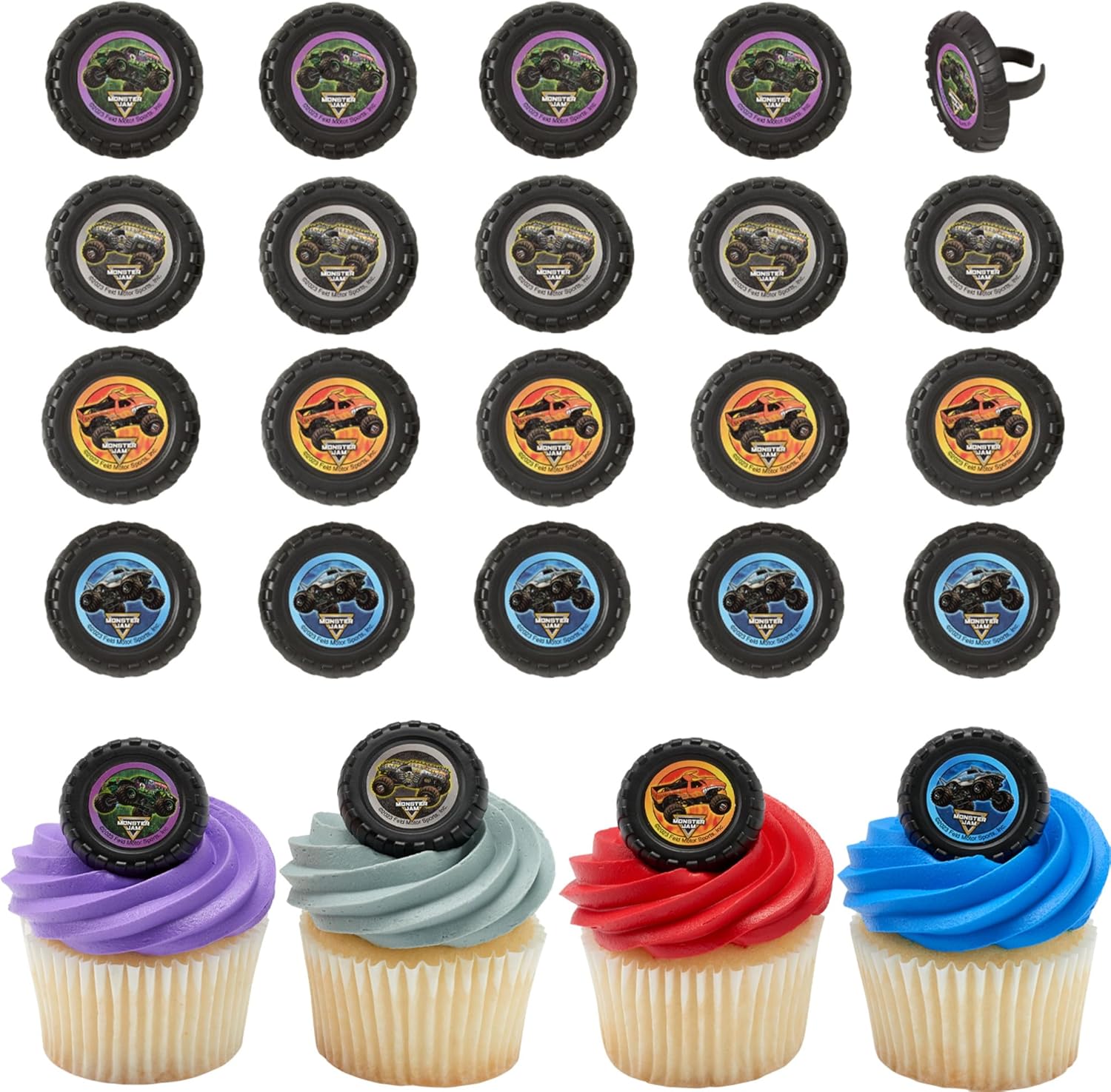
These Monster Jam car crushing cupcake rings feature bright, vivid monster truck designs that instantly elevate birthdays and celebrations. The food-safe molded plastic toppers are ready to use on cupcakes, muffins, donuts, or baked treats and are made to stand steady. With 24 rings in the pack, they’re ideal for creating a full themed dessert display.

The SAFELIFE dial tire tread depth gauge measures tread depth in 1/32 inch increments with clear, easy-to-read 2-inch dial face. Color zones using a traffic light system help you quickly judge whether tread is low, marginal, or ample for safer driving. Built with a durable zinc cast body and a metal detect probe for precise, comfortable use across cars, motorcycles, trucks, and buses.
Monster Truck Tire Tread Types
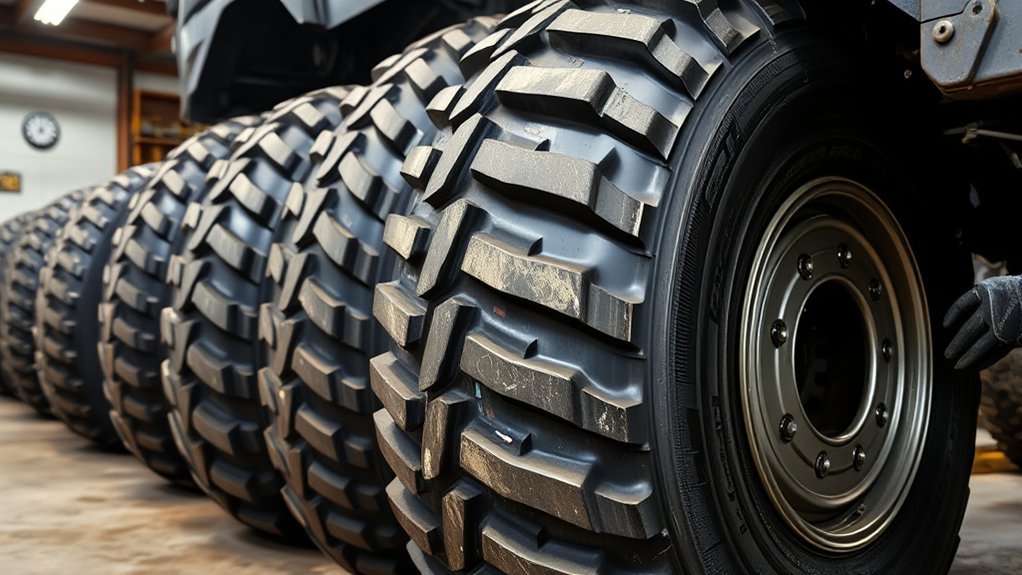
Monster truck tread has to balance traction with predictable cornering and landing behavior. For the current Monster Jam FL 354, the strongest published details are not generic “mud tire” rules but specific BKT/Feld changes to center tread depth, shoulder tread depth, support-zone blocks, and tire shape.
[Products Worth Considering]

Accurately measure tire tread depth with a calibrated gauge marked from 0 to 1 inch in 1/32 inch increments. The color-coded bar helps you quickly identify tread condition ranges, supporting safe driving for trucks, motorcycles, automobiles, and passenger vehicles.

Monitor tire tread wear with a smart, color-coded depth gauge that shows clear condition ranges at a glance. The bar is range marked for fast, easy readings, helping you maintain safer traction and performance. Each gauge is portable with a pocket clip, and the set includes 20 units for daily use and sharing.

This ALL-TOP auto-stop tire deflator valve kit lets you air down off-road tires quickly without watching pressure, automatically stopping when your preset PSI is reached. Each valve is individually calibrated for reliable performance with an acceptable +/- 2 PSI tolerance. The adjustable deflator range covers 10 to 30 PSI and includes four valves plus valve caps and a zipper pouch for easy setup on trucks, SUVs, RVs, UTVs, and powersports.
What the Current BKT FL 354 Tread Changes Do
Feld says the current FL 354 uses a deeper center tread to improve traction and durability, less shoulder tread to reduce sinking during cornering, and added blocks in the support area below the shoulder to improve traction after a tilted or two-wheel landing. The tire was also made more rounded for smoother rolling while keeping the same overall diameter.
- Deeper center tread: targets traction and longer tread life.
- Reduced shoulder tread depth: is intended to limit sinking during cornering.
- Support-zone blocks: add traction when the truck lands tilted or on two wheels.
- More rounded tire shape: is intended to improve rolling while preserving overall diameter.
Cutting For Performance
Some independent monster-truck teams do hand-shave or groove tires. For example, 2X Monster Trucks describes shaving tread to reduce weight and change tire flex and traction. That is useful evidence for the broader sport, but it should not be presented as an official Monster Jam setup unless Monster Jam or BKT documents the same practice.
Hybrid And Custom Treads
Outside Monster Jam, tire construction, pressure, tread cutting, and setup can vary by team and promoter. That is why a generic “monster truck tire” number can conflict with the current Monster Jam figures. For this article’s main answer, Monster Jam and Feld/BKT specifications should remain the controlling reference.
How Monster Truck Tires Get Transported
Transport is a major logistics issue because one current Monster Jam mounted tire-and-wheel assembly weighs 645 pounds and four total about 2,580 pounds. Monster Jam uses specially prepared trailers to move trucks, parts, tires, wheels, shocks, tools, and body panels between events.
Monster Jam says each truck is transported in a specially prepared trailer that can include spare parts and as many as two trucks. If four current mounted tire-and-wheel assemblies are being handled as a set, their published weights add up to about 2,580 pounds before any other spares or equipment are counted.
Pro Tip: When comparing tire weights online, check whether the source is talking about the tire only, the tire with the wheel, or a special exhibition tire. Those three numbers can be hundreds or thousands of pounds apart.
Monster Truck Tire Safety Risks
The most obvious handling risk is mass. A current Monster Jam mounted tire-and-wheel assembly is 645 pounds, so service procedures have to account for the possibility of a heavy assembly rolling, shifting, or falling. The published 23 psi figure is a Monster Jam specification; other teams and tire models can use different pressures.
Monster Jam also builds safety into the truck and venue. Its current safety information describes the driver safety structure, a Remote Ignition Interrupter, a secondary shutoff switch, and a venue “safety hold” that keeps rows nearest the show floor clear during a performance. Tire handling is one part of that larger system.
- Treat a current Monster Jam mounted assembly as a 645-pound load.
- Use the team or tire manufacturer’s approved handling and service procedure.
- Do not apply Monster Jam’s 23 psi specification to a different tire or series without verification.
- Keep non-crew personnel clear while a mounted assembly is being moved or serviced.
- Use handling equipment that is rated for the load and task.
BKT’s Monster Truck Tire Upgrades
BKT’s Monster Jam tires have changed over time through feedback from Feld Entertainment, Monster Jam drivers, and tire engineers. Feld describes the FL 354 as the fourth generation of BKT tire specifically designed for Monster Jam.
Important changes include a narrower profile by about 60 mm, a more rounded shape, deeper center tread for traction and durability, reduced shoulder tread to limit sinking during cornering, and support-zone blocks that help the truck recover after angled landings. These updates are meant to balance strength, traction, stability, and safety.
BKT and Feld also extended their Monster Jam partnership to 2031, which means the tire development work is expected to continue. For fans, that matters because the tire is not just a visual trademark of a monster truck. It is one of the parts that makes the truck land, turn, and perform safely.
[Products Worth Considering]

The Big Rig Defense Tire Thumper is a truck tire pressure checker that lets you quickly check multiple tires by giving them a firm whack. Listen for a reassuring thump and feel the stick bounce when a tire is fully inflated, helping you get back on the road safely. It features a comfortable, glove-friendly handle and a secure wrist strap for confident use on busy routes.

Replace or upgrade your zero-turn lawn mower tires with a universal fit flat-free tire and wheel assembly in a convenient 2-pack. Smooth tread front-caster style helps turning with reduced turf damage, while flat-free design eliminates the maintenance and downtime of air-filled flats. The included adapter kit supports 5/8-inch axles and hub lengths from 3.4 to 5 inches for compatibility across most ZTR mowers.

The Tymate TM2 RV tire pressure monitoring system keeps you informed with a color LCD display, automatic backlight, and solar charging for dependable operation. It supports up to 10 tire positions with four pre-paired sensors, while offering multiple alarm modes for fast leak detection, pressure extremes, temperature alerts, and low-signal warnings. Built-in monitoring uses accurate readings and reliable 433.92MHz communication to help protect your RV, trailer, truck, or SUV.
Frequently Asked Questions
How much does one Monster Jam tire weigh?
A current Monster Jam BKT tire weighs about 211 kg, or roughly 465 pounds, by itself. Monster Jam lists the complete tire-and-wheel assembly at 645 pounds.
Why do some sources say monster truck tires weigh 800 to 900 pounds?
Older articles and independent monster-truck sources can describe different tires, pressures, or mounted configurations. Those figures may be valid for other builds, but they do not match the current Monster Jam specification of about 465 pounds for the BKT tire alone and 645 pounds with the wheel.
How big are current Monster Jam tires?
Monster Jam lists its current BKT tires at 66 inches in diameter and 43 inches wide. The published inflation pressure is 23 psi.
How much do four Monster Jam tire-and-wheel assemblies weigh?
Four assemblies at 645 pounds each total about 2,580 pounds. Compared with Monster Jam’s published 12,000-pound truck weight, that is about 21.5% of the truck’s total weight.
How much does a monster truck tire cost?
There is no retail price on the cited Monster Jam and Feld specification pages for the current BKT competition tire. As a same-size comparison, Dawson Tire listed a 66×43.00-25 Firestone Flotation 23 at $3,316.50 on August 18, 2026, but it was out of stock and is not the official Monster Jam tire.
Are Monster Jam tires filled with air?
Yes. Current Monster Jam BKT tires are pneumatic and listed at 23 psi. Feld gives the corresponding pressure as about 1.6 bar.
Do all monster truck tires weigh the same?
No. Tire weight varies by tire model, construction, ply rating, tread preparation, and whether the wheel is included. Current Monster Jam BKT numbers should not be used as a universal specification for every monster truck.
Conclusion
The correct weight depends on exactly what is being measured. For current Monster Jam trucks, use about 465 pounds for the BKT tire itself or 645 pounds for the mounted tire-and-wheel assembly. Older 800- to 900-pound claims can describe other tires or setups, but they are not the current Monster Jam specification.
When you compare any monster truck tire number, check four things: the series or team, the tire model, the year, and whether the wheel is included. That simple check separates today’s Monster Jam figures from older competition tires, agricultural-style flotation tires, and exhibition examples such as Bigfoot 5.
Sources
- Monster Jam 101 — current Monster Jam truck specs, tire size, pressure, mounted tire-and-wheel weight, suspension, safety, and transport details.
- Feld Entertainment: BKT and Feld Motor Sports Extend Partnership to 2031 — BKT FL 354 development details, 211 kg tire weight, 1.6 bar pressure, and 2031 partnership extension.
- BKT: Behind the Scenes of BKT Tires for Monster Jam — tire compound, tread, reinforced structure, and performance development details.
- Titan TundraGrip-LF specifications — comparison weights for 66×44 flotation tires in similar size families.
- Dawson Tire & Wheel: 66×43.00-25 Firestone Flotation 23 — public retail comparison for same-size flotation tire price, dimensions, and net weight.
- Bigfoot 4×4: Bigfoot 5 — 10-foot Firestone exhibition tire dimensions and approximate 2,400-pound tire weight.
- 2X Monster Trucks: Monster Truck vs. Regular Truck — current independent-team context for hand-shaved tread and why non-Monster Jam tire weights and pressures can differ.