

There is no single number of hours that makes continuous driving safe for everyone. Your car may be able to run for many hours, but your alertness can decline much sooner. For long trips, a sensible plan is to take a break about every two hours and to stop sooner whenever you feel sleepy, lose focus, or notice your driving getting less precise.
Quick Answer
There is no universal maximum for how long you can drive a car continuously. For safer long-distance travel, plan a break about every two hours and stop sooner if you become sleepy. A well-maintained car can usually operate far longer than its driver can safely stay alert.
Key Takeaways
Key Takeaways
- There is no universal 3-, 4-, or 10-hour safety limit for ordinary private drivers.
- A useful preventive rule is to stop for a break about every two hours, even if you still feel reasonably alert.
- Stop sooner if you develop heavy eyelids, repeated yawning, lane drift, poor concentration, or memory gaps.
- Sleep is the real solution to serious fatigue; caffeine, fresh air, and music cannot reliably replace adequate rest.
- A healthy, properly maintained car can normally operate for long stretches without needing a time-based “rest,” but tires, fluids, coolant, fuel, warning lights, and maintenance still matter.
How Long Can You Drive a Car Continuously?

How long you can drive continuously depends more on the driver than on the car. Sleep, time of day, health, medication, road conditions, traffic, temperature, and how monotonous the route is can all affect how quickly fatigue develops.
Rather than treating three or four hours as a guaranteed safe window, build breaks into the trip before you become tired. The UK Highway Code recommends a minimum 15-minute break after every two hours of driving. AAA also advises drivers on long trips to stop about every two hours or 100 miles.
A planned two-hour break interval is a useful road-trip benchmark, but your own signs of drowsiness always take priority. If you become sleepy sooner, stop sooner.
Distance alone is a poor way to judge fatigue. Driving 150 miles on an empty interstate can feel very different from spending the same amount of time in heavy traffic, rain, mountain roads, or darkness. Use elapsed driving time as your main planning tool and your condition as the final decision-maker.
What Really Limits Your Driving Time?
For most road trips, the important limit is driver alertness, not how long the engine has been running. Modern passenger vehicles in good condition are designed for sustained operation, but human concentration does not remain constant indefinitely.
The National Highway Traffic Safety Administration recommends getting adequate sleep before a long trip and avoiding driving during periods when sleepiness is naturally more likely, particularly between midnight and 6 a.m. and during the late afternoon.
Fatigue may build faster if you:
- started the trip after insufficient sleep;
- have been awake for many consecutive hours;
- are driving late at night or early in the morning;
- are taking medicine that causes drowsiness;
- have consumed alcohol;
- are driving alone on a dark, rural, or monotonous road;
- have a sleep disorder or persistent daytime sleepiness; or
- are dealing with difficult weather or demanding traffic.
Note: Commercial-driver hours-of-service rules should not be treated as safe-driving limits for ordinary motorists. Federal rules set specific work and driving limits for covered commercial drivers, but they do not mean a private driver is automatically safe for the same number of hours.
There is also no universal “10 hours per day” rule for a private road trip. If reaching your destination requires an extremely long day, consider sharing the driving or dividing the trip across two days rather than pushing into a period when you would normally be sleeping.
How Does Fatigue Affect Safe Driving?
Fatigue can slow reactions, weaken judgment, reduce awareness, and make it harder to hold a steady lane position. The CDC’s National Institute for Occupational Safety and Health also lists lane drifting, poor decisions, tunnel vision, microsleeps, and forgetting the last few miles driven as possible effects of driver fatigue.
Studies have sometimes compared severe sleep loss with alcohol impairment, but those comparisons need context. Research has found that prolonged wakefulness can produce performance impairment similar to certain blood-alcohol levels on some tests. That does not mean every tired driver is automatically equivalent to a driver at 0.08% BAC.
| Indicator | What It Can Mean | Response |
|---|---|---|
| Repeated yawning | Alertness is falling | Find a safe place to stop |
| Heavy eyelids | High risk of nodding off | Stop driving |
| Poor focus | Attention is deteriorating | Take a real rest |
| Lane drift | Driving control is already affected | Pull off at a safe location |
| Memory gaps | Possible severe fatigue or microsleep | Do not continue until rested |
NHTSA reports that 644 people died in drowsy-driving-related crashes in 2024. The agency also warns that the true scale is difficult to measure because crash investigators cannot always determine whether drowsiness contributed to a collision.
Warning: Do not use open windows, loud music, cold air, or willpower as proof that you are safe to continue. If you are fighting to stay awake, leave traffic and stop somewhere safe.
Will Long Drives Hurt Your Engine?
Long drives do not automatically harm a properly maintained engine. Once the engine reaches normal operating temperature, steady highway operation is usually less demanding in some respects than repeated cold starts and very short trips.
That does not mean you can ignore the vehicle. Long-distance travel can expose an existing problem with tires, the cooling system, oil level, belts, hoses, wheel bearings, or other components.
Watch the instrument panel and stop if you see an overheating warning, low-oil-pressure warning, charging-system warning, tire-pressure warning, or another alert that indicates the vehicle may not be safe to continue.
Engine Wear Myths
Continuous highway driving does not inherently damage a modern engine simply because several hours have passed. There is no universal rule saying a passenger car must be switched off after 8, 10, or 12 hours.
Your practical vehicle limits are more likely to involve fuel range, tire condition, coolant temperature, fluid levels, weather, towing or cargo load, and the maintenance requirements in your owner’s manual.
Keep up with oil changes and other scheduled maintenance, and investigate any overheating, unusual vibration, fluid loss, burning smell, abnormal noise, or warning light rather than trying to reach an arbitrary number of hours.
Driver Fatigue Risks
The driver normally needs a break long before a healthy car needs a time-based rest. That is why a long-trip schedule should be built around people rather than engine endurance.
If you become drowsy, do not aim for another 250 or 500 kilometers before stopping. Leave the road at the next safe opportunity.
NHTSA recommends that a driver who becomes sleepy pull over at a safe location. As a short-term measure, one to two cups of coffee followed by a short nap of about 20 minutes may temporarily improve alertness. However, caffeine is not a substitute for adequate sleep.
Pro Tip: If two qualified, rested drivers are traveling together, switch drivers before either person becomes exhausted. On very long trips, an overnight stop is safer than trying to finish simply because the vehicle can keep running.
How Often Should You Stop On Long Trips?
For a long trip, planning a stop about every two hours is a useful baseline. A break of roughly 15–20 minutes gives you a chance to get out of the seat, stretch, use the restroom, drink water, and honestly assess your alertness.
| Situation | Recommended Action |
|---|---|
| About 2 hours of driving | Take a planned break |
| You feel sleepy before 2 hours | Stop sooner |
| Long overnight drive | Consider postponing or stopping overnight |
| Another rested driver is available | Share driving duties |
| You are fighting to stay awake | Stop driving immediately at a safe location |
Do not treat a planned break interval as permission to continue when symptoms appear. A driver who starts the trip sleep-deprived may become unsafe well before two hours.
Also avoid measuring fatigue only in kilometers or miles. A time-based schedule is easier to apply across traffic, weather, speed limits, and different types of roads.
[Products Worth Considering]

Monitor tire tread wear with a smart, color-coded depth gauge that shows clear condition ranges at a glance. The bar is range marked for fast, easy readings, helping you maintain safer traction and performance. Each gauge is portable with a pocket clip, and the set includes 20 units for daily use and sharing.

Milton S-921 pencil tire pressure gauge helps you maintain optimal tire pressure for passenger cars with accurate readings in PSI and kPa. It features a built-in deflator valve for convenient pressure adjustments, plus a single chuck head and nylon indicator bar for easy use on the go. Built from durable plated brass and designed for reliable performance, it’s a practical road trip and cold-weather maintenance tool.

This roadside assistance kit helps drivers and passengers in urgent situations after an accident or breakdown, providing practical support while waiting for help. It includes a lightweight, compact tire inflator for fast inflation of standard vehicle tires, plus reinforced jumper cable protection for safer handling. Ideal for winter weather, road trips, camping, and travel, with everything stowed neatly in a trunk bag.
What Signs Mean You Should Pull Over?
Pull over when you notice signs that alertness or vehicle control is deteriorating. Early symptoms include repeated yawning, heavy eyelids, frequent blinking, difficulty concentrating, irritability, and struggling to remember the last few miles.
More serious warning signs include:
- drifting toward another lane or the shoulder;
- hitting a rumble strip;
- missing an exit or road sign;
- varying your speed without intending to;
- briefly nodding off;
- having trouble keeping your head up;
- making unusually poor or delayed decisions; or
- realizing you cannot remember part of the drive.
Physical discomfort such as neck stiffness, back soreness, or headache can also reduce concentration, although discomfort alone is not the same thing as sleepiness.
If your eyes are closing or you are drifting out of your lane, your performance has already deteriorated. Do not keep driving in the hope that the feeling will pass.
Exit traffic and park in a safe, legal place such as a designated rest area or other suitable parking location. If you remain sleepy after a short rest, arrange another driver, get proper sleep, or delay the trip.
[Products Worth Considering]

This car emergency kit keeps essential roadside tools organized in a durable, portable bag so you can respond quickly during common driving emergencies. It includes battery jumper cables, a bright LED headlight, first aid supplies, a tire pressure gauge, and safety essentials like gloves and an emergency poncho. Designed for trunk or storage use, it helps you be prepared for dead batteries, minor malfunctions, and unexpected roadside issues.

Keep your tires properly inflated with this analog VONDIOR tire pressure gauge, designed for fast, easy readings without batteries. The swiveling, two-axis hose and large glow dial help you measure at any tire angle with instant visibility. Built with a protective rubber shield, it supports durable, low-maintenance use for cars and trucks.
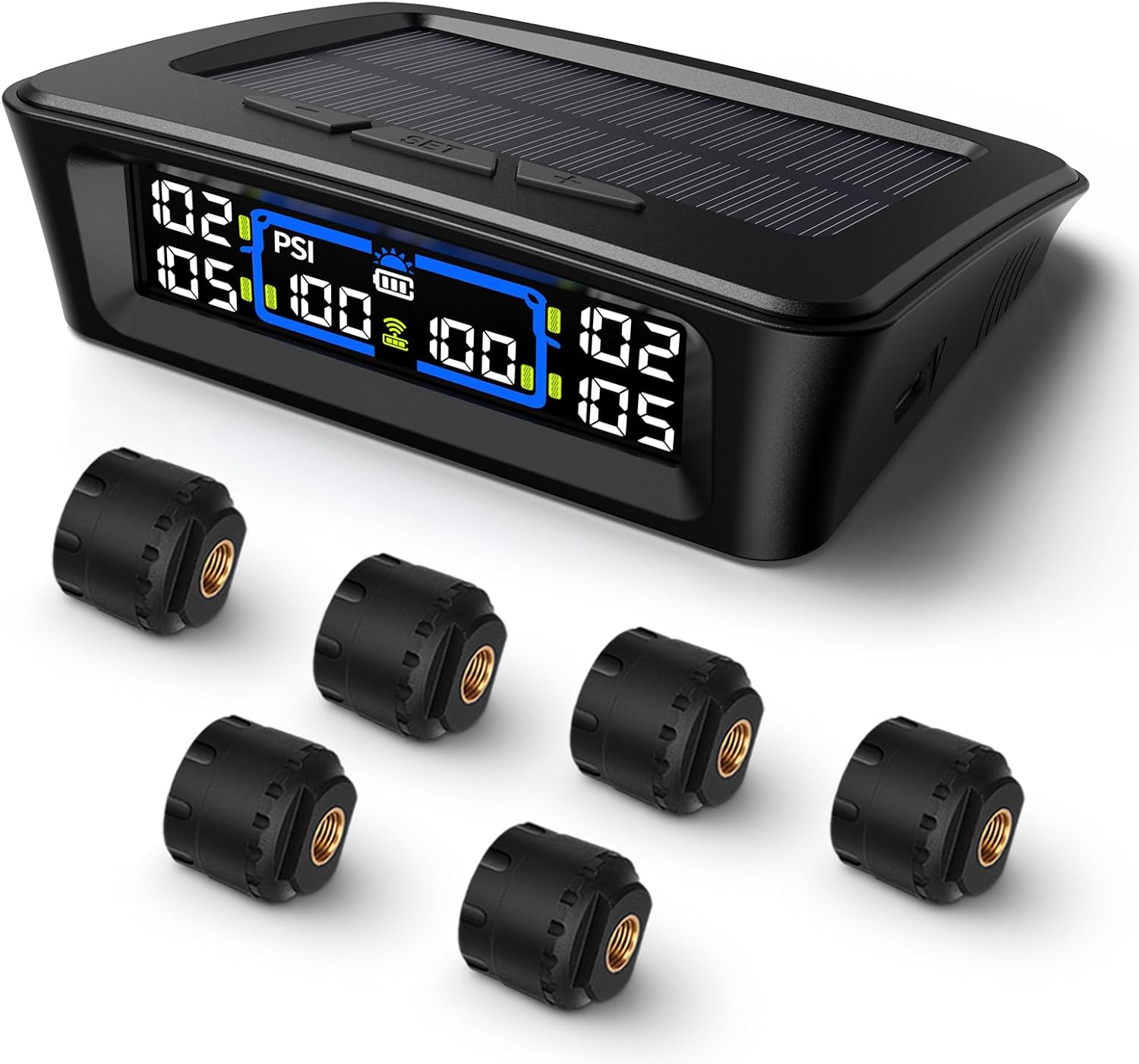
The Tymate TM12 RV TPMS delivers real-time tire pressure and temperature monitoring with a stable 433Hz display for safer long-distance driving. It supports simultaneous monitoring across vehicle and trailer zones, includes six alarm modes for pressure, temperature, leakage, battery, and signal loss, and features easy DIY installation with auto calibration. Power is supplied via USB-C charging or solar recharging, with a wide 0–144 PSI range and up to 50 ft signal coverage for RVs and towable trailers.
What Should You Check Before a Long Drive?
A pre-trip vehicle inspection reduces the chance that an existing problem will become a roadside breakdown. The NHTSA road-trip checklist recommends checking tires, the cooling system, fluids, recalls, and emergency supplies before travel.
Start with tire pressure. Use the vehicle manufacturer’s recommended PSI shown on the driver’s-door placard or in the owner’s manual. For the most useful reading, check pressure when the tires are cold. Inspect the tread and sidewalls for cuts, cracks, bulges, punctures, or other damage, and check the spare if your vehicle has one.
Next, inspect applicable fluid levels, including engine oil, coolant, brake fluid, transmission or clutch fluid, power-steering fluid where applicable, and windshield-washer fluid. Follow the owner’s manual because procedures differ between vehicles.
Before a long trip, tire condition, correct cold inflation pressure, coolant, oil, other required fluids, lights, recalls, and emergency equipment matter more than how many hours you expect the engine to run.
Check the cooling system for obvious leaks or damaged hoses. Confirm that headlights, brake lights, turn signals, and other required exterior lights work correctly.
Also check for open safety recalls using NHTSA’s recall tools, and carry a basic roadside kit. Useful items can include a phone charger, flashlight, first-aid supplies, tire-pressure gauge, drinking water, jumper cables, and the correct jack and tools if the vehicle is equipped with a spare tire.
If the brake pedal feels unusual, the vehicle is leaking fluid, a tire is damaged, or a critical warning light is on, resolve the problem before starting a long trip.
[Products Worth Considering]

The TYAMATE TM8 solar-powered wireless TPMS delivers real-time tire pressure and temperature monitoring with six alarm modes for safer driving. A vibrant color LCD display shows readings clearly while windshield mounting keeps it hands-free and easy to read. With a wide 0–87 PSI range, strong 433.92 MHz signal transmission, and quick sensor pairing, it’s ideal for RV, sedan, SUV, MPV, and truck use.

The Big Rig Defense Tire Thumper is a truck tire pressure checker that lets you quickly check multiple tires by giving them a firm whack. Listen for a reassuring thump and feel the stick bounce when a tire is fully inflated, helping you get back on the road safely. It features a comfortable, glove-friendly handle and a secure wrist strap for confident use on busy routes.

The SAFELIFE dial tire tread depth gauge measures tread depth in 1/32 inch increments with clear, easy-to-read 2-inch dial face. Color zones using a traffic light system help you quickly judge whether tread is low, marginal, or ample for safer driving. Built with a durable zinc cast body and a metal detect probe for precise, comfortable use across cars, motorcycles, trucks, and buses.
Frequently Asked Questions
How Long Can a Car Drive Without Stopping?
A properly maintained car does not have a universal 8-, 10-, or 12-hour operating limit. It may run continuously as long as fuel, cooling, lubrication, tires, and other systems remain within normal operating conditions. The driver will normally need breaks much sooner than the vehicle does.
How Long Is Too Long for a Car to Be Driven?
There is no single hour count that is too long for every driver or every car. For the driver, plan preventive breaks about every two hours and stop sooner if fatigue appears. For the vehicle, warning lights, overheating, tire problems, fluid loss, or other abnormal symptoms are reasons to stop regardless of elapsed time.
Can You Drive 600 Miles in a Day?
Some drivers can cover 600 miles in one day, but that does not mean it is safe for everyone. The trip may require many hours once fuel, food, traffic, and rest stops are included. Start well rested, schedule frequent breaks, share driving when possible, and split the trip overnight if fatigue develops.
Does Driving Long Distances Damage Your Car?
Long-distance driving does not normally damage a properly maintained car simply because the engine runs for several hours. Check tires, oil, coolant, other required fluids, belts, hoses, and warning lights, and follow the vehicle manufacturer’s maintenance schedule.
Is It Safe to Drive Four Hours Without a Break?
It is better not to use four hours as a routine nonstop target. Road-safety guidance commonly recommends planning a break about every two hours. If you feel drowsy, distracted, stiff, or unable to concentrate before then, stop earlier.
What Should You Do If You Get Sleepy While Driving?
Leave traffic and stop at a safe, legal location. A short nap can temporarily restore alertness, and caffeine may provide a short-term benefit, but neither replaces adequate sleep. Do not continue if you still feel drowsy after resting.
Conclusion
So, how long can you drive nonstop? There is no universal number that guarantees safety. Your car may be able to operate far longer than you can safely remain focused behind the wheel.
For a long trip, plan a break about every two hours, but let your condition override the schedule. Heavy eyelids, repeated yawning, lane drift, poor concentration, or memory gaps mean it is time to stop now, not after the next 100 miles.
Keep the vehicle ready as well. Correct tire pressure, healthy fluids, a working cooling system, functioning lights, and attention to warning signs help the car handle long-distance operation. The safest road-trip plan protects both sides of the equation: a mechanically sound vehicle and a rested, alert driver.
Sources
- National Highway Traffic Safety Administration — Drowsy Driving — drowsy-driving fatalities, risk periods, prevention, and short-term countermeasures.
- CDC/NIOSH — Driver Fatigue on the Job — causes, warning signs, microsleeps, lane drift, and fatigue-response guidance.
- UK Highway Code — Rule 91 — recommendation for at least a 15-minute break after every two hours of driving.
- NHTSA — Summer Driving and Road Trip Tips — tire, coolant, fluid, recall, and emergency-kit checks before long trips.
- Federal Motor Carrier Safety Administration — Hours of Service — commercial-driver driving limits and rest requirements.

![[2026NEW] 5000A Jump Starter with Air Compressor (150PSI)](https://m.media-amazon.com/images/I/71oG4PFNsmL._AC_SL1500_.jpg)