
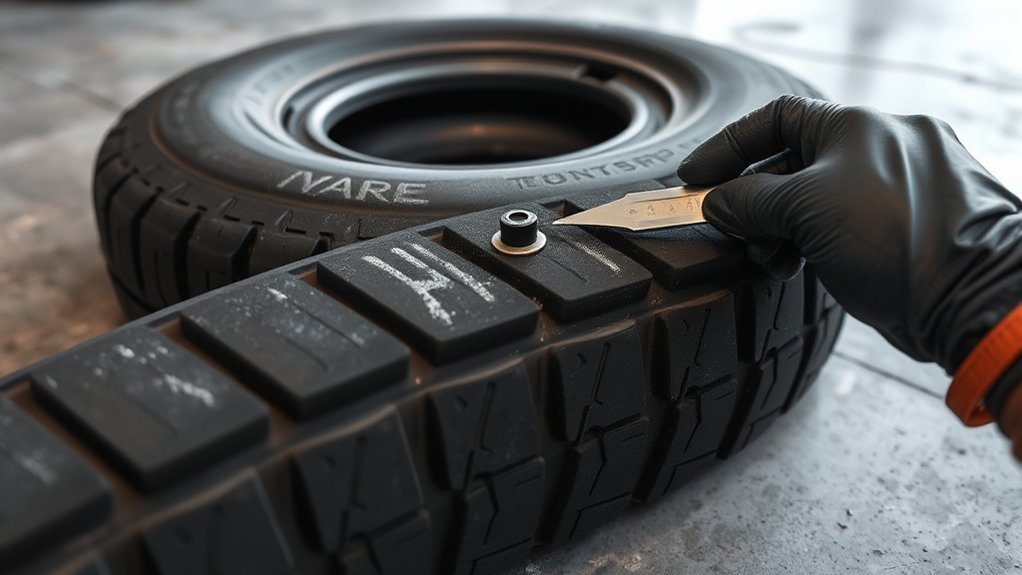
A tire puncture near the sidewall is not judged by one universal distance measurement. For passenger and light-truck tires, the important question is whether the injury is completely inside the approved tread repair area and does not extend into the shoulder, belt-edge, or sidewall area. The puncture must also meet size and condition requirements before a professional repair is considered safe.
Quick Answer
There is no universal USTMA rule saying a tire puncture must be exactly 1/2 inch from the sidewall. A repair is generally considered only when the injury stays completely within the approved tread repair area, does not reach the shoulder or belt edge, and is no larger than 1/4 inch (6 mm) in diameter.
Key Takeaways
- Do not rely on a universal 1/2-inch measurement from the sidewall; the approved tread repair zone is what matters.
- A puncture that reaches the shoulder, belt-edge area, or sidewall should not receive a standard passenger-tire puncture repair.
- The widely cited 1/4-inch (6 mm) limit refers to the diameter of the puncture, not its distance from the sidewall.
- A proper permanent repair requires the tire to be removed from the wheel and inspected internally.
- Industry procedures require the puncture channel to be filled and the inner liner to be sealed with a patch; a plug-only or patch-only repair is not the recommended permanent repair.
- If the tire has been driven flat, has overlapping or improper repairs, is badly worn, or has structural damage, replacement may be necessary even when the puncture appears to be in the tread.
At a Glance
| Time Required | Varies by shop and damage; proper evaluation requires removing the tire from the wheel. |
| Difficulty | Professional tire service recommended. |
| Tools Needed | Tire demounting equipment, inspection tools, and an approved puncture-repair system. |
| Cost | Varies by shop and tire; replacement is required when the tire falls outside approved repair limits. |
How Close Is Too Close for a Tire Patch?
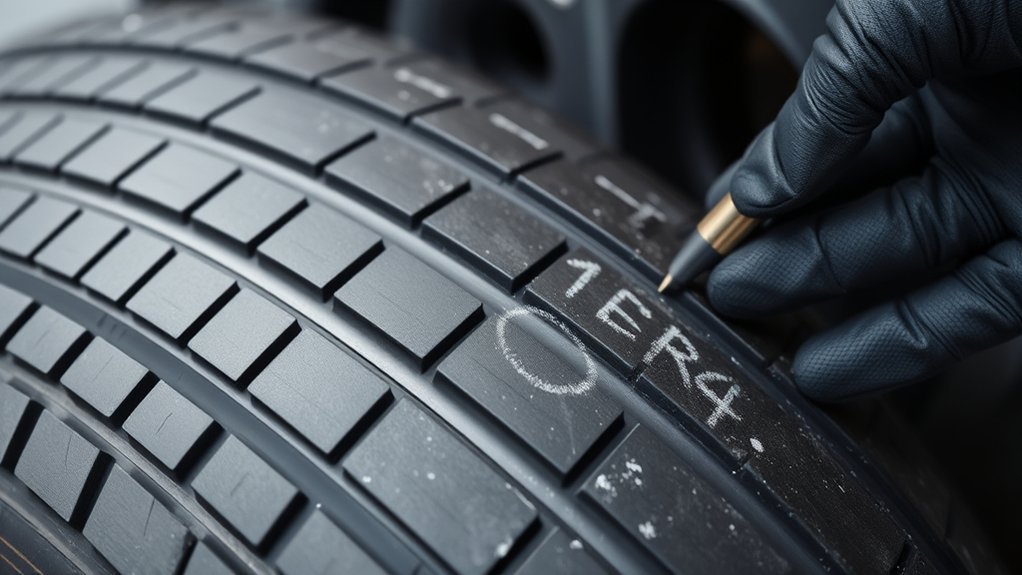
The safest way to judge a puncture near the sidewall is to look at the repairable tread area, not to rely on a fixed number of inches from the tire’s outer edge.
The U.S. Tire Manufacturers Association (USTMA) limits passenger and light-truck puncture repairs to the tread area shown in its repair-zone guidance. It specifically says not to repair an injury when the damage extends into the shoulder or belt-edge area, including an angled puncture that reaches that area.
This means a puncture can look as though it is still on a tread block but nevertheless be too far toward the shoulder for an approved repair. The exact construction of the tire and the path of the puncturing object also matter.
Note: The common 1/4-inch measurement is a puncture-size limit. It means the injury generally must be no larger than 1/4 inch (6 mm) in diameter. It is not a universal rule saying the puncture must be 1/4 inch from the sidewall.
For passenger and light-truck tires, the key boundary is the approved tread repair area—not an assumed fixed distance from the sidewall.
How to Tell if a Tire Puncture Is Repairable
Location is only one part of the decision. A technician should check the whole tire before approving a repair.
| Condition | Typical Decision |
| Puncture entirely inside the approved tread repair area and no larger than 1/4 inch (6 mm) | May be repairable after internal inspection. |
| Puncture reaches the shoulder or belt-edge area | Replace the tire rather than performing a standard puncture repair. |
| Sidewall puncture, cut, bulge, or exposed structural material | Replacement is required. |
| Puncture larger than 1/4 inch (6 mm) | Outside standard passenger/light-truck puncture repair limits. |
| Repair would overlap another repair | Do not repair under USTMA procedures. |
| Tire has an existing improper repair | Do not perform another standard puncture repair. |
| Tread is worn to the treadwear indicators or about 2/32 inch remaining | Replacement is appropriate rather than puncture repair. |
The Tire Industry Association also recommends removing the tire from the wheel before repair so the inside can be inspected for damage that may not be visible externally.
When Tire Damage Is Too Close to the Sidewall
A puncture is too close to the sidewall when it falls outside the approved tread repair area or when the injury extends into the shoulder or belt-edge area. You should not decide this solely by placing a ruler against the visible sidewall.
The puncture’s angle matters too. A nail may enter through the tread but travel toward the shoulder internally. USTMA guidance says a tire should be taken out of service when there is doubt about whether the injury reaches the shoulder or belt-edge area.
- Locate the puncture and determine whether it is clearly within the tread repair area.
- Check whether the visible injury is 1/4 inch (6 mm) or smaller in diameter.
- Have the tire removed from the wheel for a complete internal inspection.
- Check for evidence of run-flat damage, damaged cords, separation, or another improper repair.
- Follow the tire manufacturer’s repair policy before returning the tire to service.
Warning: Do not use a ruler-based 1/2-inch rule to justify repairing a puncture that reaches the shoulder or belt-edge area. If the location is questionable, have a trained tire technician inspect the tire and replace it when it falls outside the approved repair zone.
Why Sidewall Damage Can’t Be Patched Safely
Sidewall punctures and cuts are not included in the standard repair area for passenger and light-truck tire punctures. The sidewall continually flexes as the tire carries the vehicle’s load, and damage there can involve structural components that an ordinary puncture repair cannot reliably restore.
Current guidance from Cooper Tire states that puncture repairs are limited to the tread area between the outside shoulder grooves and should not be performed in the sidewall or shoulder area.
Visible sidewall cuts, punctures, bulges, exposed cords, or other structural damage therefore call for professional evaluation and usually tire replacement rather than patching.
This is also why a puncture that appears close to the sidewall should not be judged from the outside alone. Damage to the inner liner, belts, or casing can remain hidden until the tire is removed from the wheel.
Patch, Plug, or Replace the Tire
A proper permanent tire repair is more involved than inserting a plug from outside or placing a patch over the inner liner.
USTMA procedures require the puncture channel to be filled with a suitable rubber stem or vulcanizing material and the inner liner to be sealed with a patch. A one-piece combination repair unit can perform both functions when appropriate.
- Patch only: Not an approved complete repair because it seals the inner liner without properly filling the puncture channel.
- Plug or stem only: Not an approved permanent repair because it does not properly seal the inner liner.
- Patch plus stem/plug: The industry-recommended approach for an eligible tread puncture after the tire has been removed and inspected.
- Replace the tire: Required when the injury falls outside the repairable area or the tire otherwise fails inspection.
Pro Tip: Before authorizing a repair, ask whether the shop will remove the tire from the wheel, inspect the inside, fill the puncture channel, and seal the inner liner. Those steps distinguish a proper permanent repair from a quick outside-in plug.
[Products Worth Considering]

Rhino USA’s 86-piece tire repair kit provides everything you need for quick, emergency flat repairs, including a reamer and plug insertion tool plus 60 reusable tire plugs. The heavy-duty, metal-handled design helps you fix punctures from nails and screws on tubeless tires for cars, trucks, motorcycles, ATVs, UTVs, and more. A high-visibility compact case stores easily for on-the-go use, with illustrated instructions to help you complete repairs with confidence.
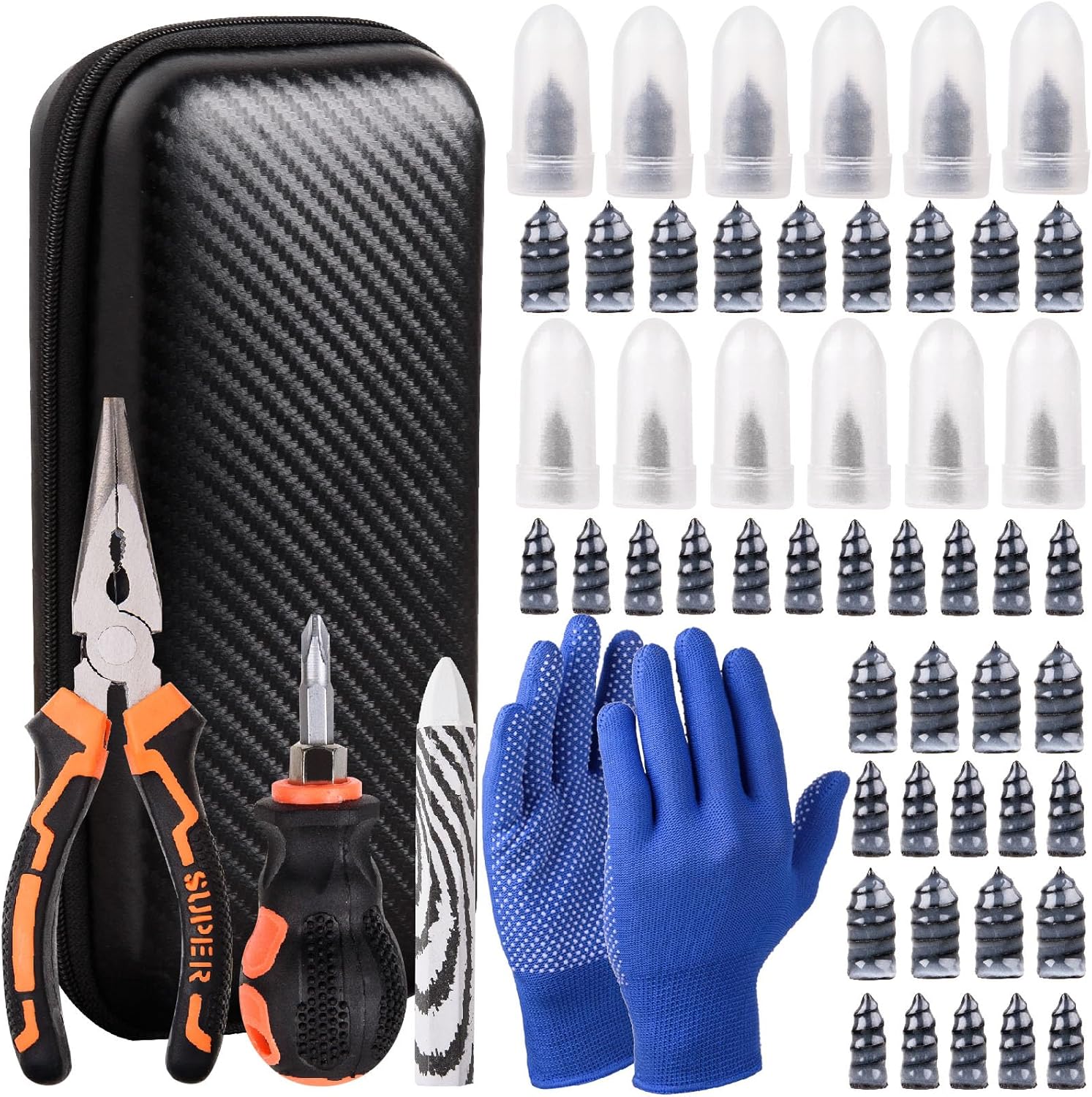
This tire sidewall puncture repair kit fixes flats fast without removing the tire, helping you get back on the road in minutes. It includes self-tapping repair nails, essential tools, gloves, and a portable storage bag for convenient roadside use. Designed for tubeless tires, it helps create a tight, leak-resistant seal for cars, motorcycles, trucks, SUVs, and ATVs.

TP-M13W combination repair unit kit includes wrapped stems with matching patches for fast, reliable tire repairs. It’s suitable for both radial and bias ply tires and is designed for chemical or heat vulcanization. Gray vulcanizing gum with blue backing helps create a strong bond, with the stem portion wrapped for added effectiveness.
What Tire Shops Will Refuse to Repair
A reputable tire shop may refuse a repair even when a nail looks small from the outside. The final decision depends on the tire’s construction, damage, service history, and the manufacturer’s repair policy.
Common reasons for refusal include:
- A puncture in the shoulder or sidewall.
- An injury that extends into the shoulder or belt-edge area.
- A passenger/light-truck tire puncture larger than 1/4 inch (6 mm).
- Damage that would require a new repair to overlap an existing repair.
- An existing improper repair.
- Internal damage from being driven while flat or seriously underinflated.
- Bulges, exposed cords, separation, or other structural damage.
- Tread worn to the treadwear indicators or about 2/32 inch remaining.
- A tire manufacturer’s policy that prohibits the proposed repair.
Michelin’s current repair guidance, for example, requires an eligible puncture to remain in the tread area, be no larger than 1/4 inch (6 mm), and be evaluated with the tire removed from the wheel.
[Products Worth Considering]

Vigorder rubber cement glue delivers superior adhesion and cures quickly within about 30 seconds for seamless rubber bonding. Once cured, it helps provide a strong, durable, waterproof seal that holds up to vehicle weight, pressure, and heat. Suitable for cars, motorcycles, trucks, bicycles, and off-road tires, it’s designed for emergency patch and maintenance repairs.

Mosconly tire repair glue and nail kit delivers an elastic, waterproof bond for quick sidewall puncture repairs. The adhesive cures securely to help prevent peeling, flaking, and tearing, while the included nails support a strong, seamless repair. Designed for easy roadside use, it works on car, motorcycle, bike, and other tire types, with full curing within 24 hours.

AUTOWN’s 68-piece tire repair kit helps you fix punctures and plug flats quickly and effectively. It includes a T-handle and spiral probe tool for easy insertion, while the steel patch and plug materials are designed for strong adhesion and long-lasting airtight performance. The compact case makes it convenient for roadside repairs across a wide range of vehicles.
What to Do if a Nail Is Near the Sidewall
If you find a nail or screw near the outer tread, avoid assuming that an inexpensive plug will solve the problem.
- Check the tire’s pressure. A rapidly losing or flat tire should not be driven normally.
- Use the spare or roadside assistance when necessary. Continued driving on a flat or severely underinflated tire can create additional internal damage.
- Have a tire professional inspect it. The tire should be removed from the wheel so the inner liner and casing can be checked.
- Confirm the repair zone. The injury must remain fully within the approved tread repair area.
- Measure the injury itself. For standard passenger/light-truck puncture repair, the puncture cannot exceed 1/4 inch (6 mm) in diameter.
- Check manufacturer restrictions. Run-flat, speed-rated, and other specialized tires can have additional repair limitations.
USTMA specifically notes that some run-flat tires and other tire types have manufacturer-specific repair restrictions. Speed-rated tires can also have individual policies governing whether the original speed rating is retained after repair.
[Products Worth Considering]
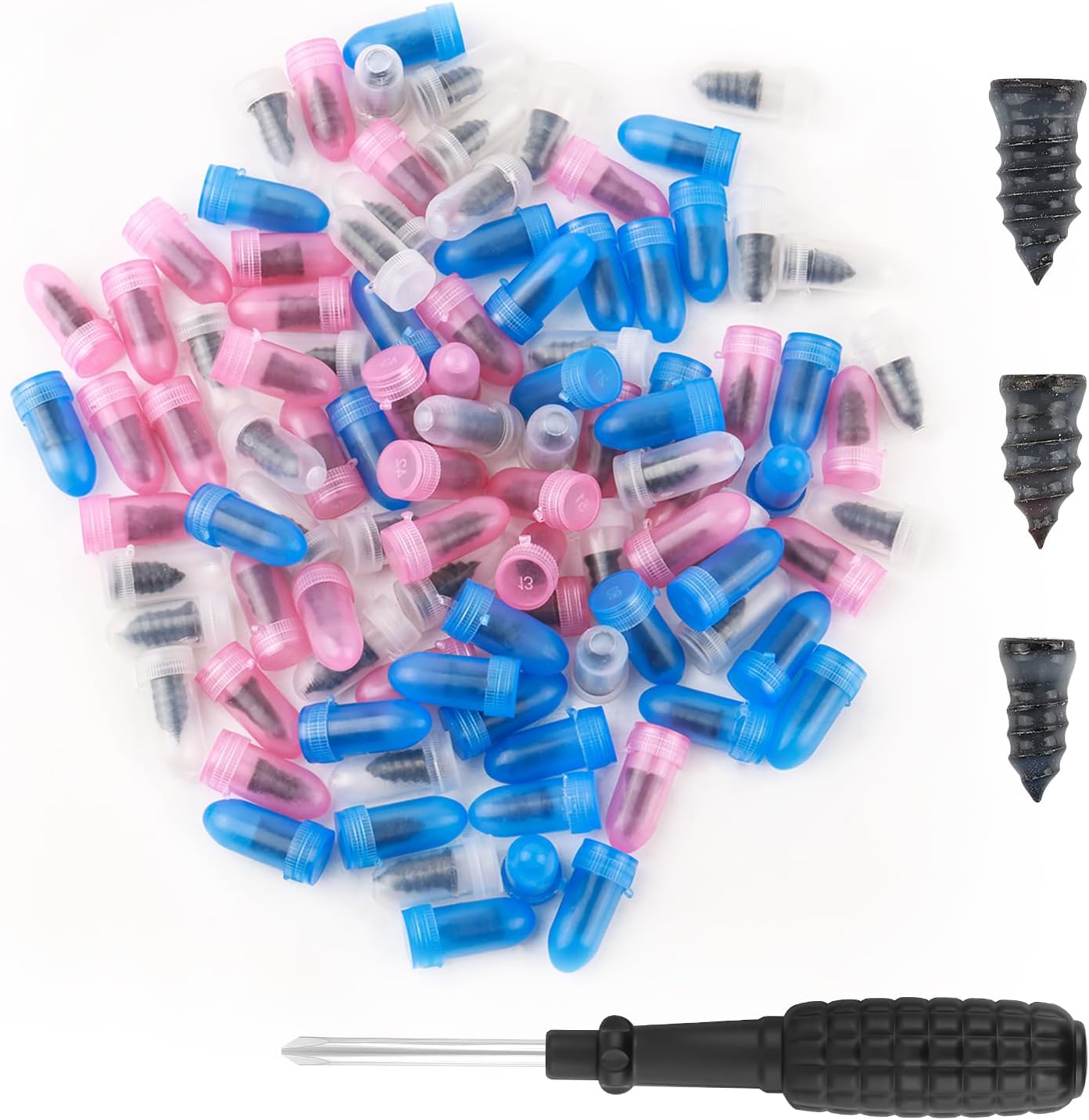
This 100-piece tire repair screw plug kit provides a fast, self-service solution for punctures on the road. Choose the correct plug size, insert it into the break, and screw it in to help seal the puncture and temporarily restore tire pressure. Thickened threads and rubber-wrapped plugs improve bite and sealing while remaining compact and easy to carry.

Wykodra tire plugs provide quick vulcanizing repairs for tubeless tires, helping you seal punctures and get back on the road. The industrial-strength rubber creates a long-lasting, leak-resistant bond and is designed for emergency fixes without removing the tire. Choose between two standard plug sizes with color-matched options for small to larger damage across many vehicles and off-road uses.

This tire repair kit provides fast emergency puncture repair without removing the tire from the rim, helping you get back on the road quickly. Its screw plug system is designed for punctures in both tread and sidewall and includes a complete patch plug tool set with essential accessories. A portable storage bag makes it easy to carry for cars, trucks, SUVs, motorcycles, and heavy-duty applications.
Frequently Asked Questions
How Close Can a Patch Be to the Sidewall?
There is no universal USTMA rule requiring an exact 1/2-inch distance from the sidewall. The puncture must stay fully within the approved tread repair area and must not extend into the shoulder, belt-edge, or sidewall area. A professional should inspect questionable locations.
Can You Patch a Tire With a Nail Close to the Sidewall?
Only if the injury is completely inside the approved tread repair area and the tire meets every other repair requirement. If the puncture reaches the shoulder, belt edge, or sidewall, the tire should be replaced rather than repaired.
How Do You Know if a Nail Is Too Close to the Sidewall?
Do not judge only by measuring from the visible sidewall. A technician should determine whether the puncture remains inside the tire’s approved tread repair zone and whether its internal path reaches the shoulder or belt-edge area.
How Far From the Sidewall Should a Puncture Repair Be?
Industry guidance is better expressed as a repair zone than as one fixed distance. The puncture must be confined to the repairable tread area and cannot extend into the shoulder or belt-edge area.
Does the 1/4-Inch Rule Mean 1/4 Inch From the Sidewall?
No. The 1/4-inch (6 mm) figure in USTMA passenger and light-truck repair guidance refers to the maximum diameter of the puncture injury. Location is a separate requirement: the injury must remain inside the approved tread repair area.
Can a Tire Be Repaired After Driving on It Flat?
Possibly, but repair cannot be assumed. Driving while flat or seriously underinflated can damage the tire internally. The tire must be removed from the wheel and inspected, and hidden casing or sidewall damage can make replacement necessary.
Conclusion
When a puncture is near the sidewall, do not make the repair decision from a 1/2-inch rule alone. Check whether the injury stays completely inside the approved tread repair area, confirm that the puncture is no larger than 1/4 inch (6 mm), and have the tire removed from the wheel for internal inspection. If the damage reaches the shoulder, belt-edge area, or sidewall, replacement is the safer and industry-supported choice.
Sources
- U.S. Tire Manufacturers Association — Tire Repair Basics — repairable tread area, 1/4-inch puncture-size limit, internal inspection, overlapping repairs, and proper repair method.
- Tire Industry Association — Tire Repair — professional inspection, repair-area restrictions, tread-depth limits, and plug/patch requirements.
- Michelin USA — Can My Tire Be Repaired? — tread-only repair criteria, 1/4-inch maximum puncture size, and inspection after tire removal.
- Cooper Tire — Proper Tire Puncture Repair — tread repair-zone boundaries, sidewall and shoulder exclusions, and proper permanent repair requirements.

