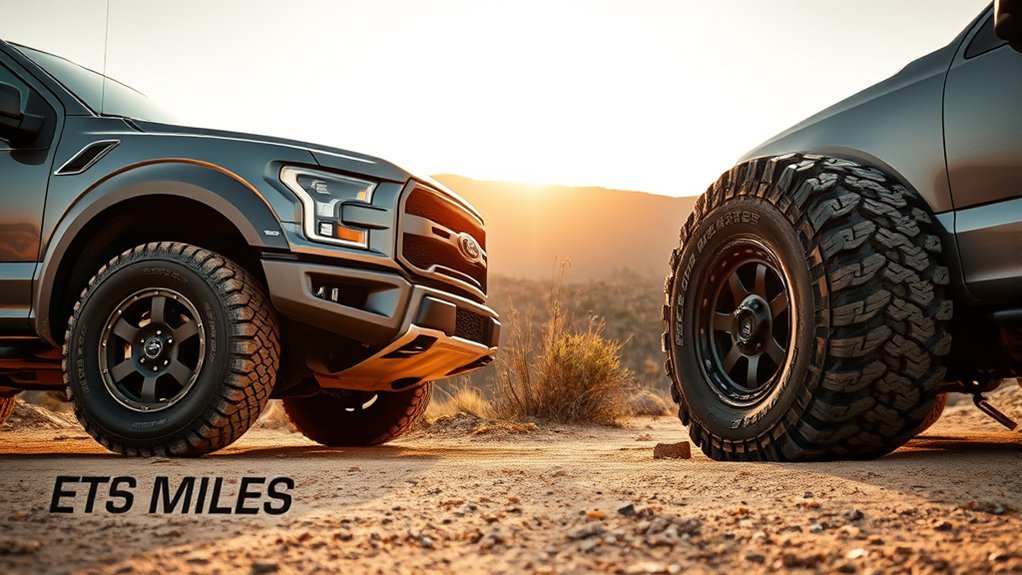
After 6,000 miles, HT and AT tires can start to feel different, but the mileage alone does not prove that one category will have a specific tread depth or fuel-economy advantage. Highway-terrain (HT) tires are built mainly for paved-road comfort and efficiency, while all-terrain (AT) tires trade some refinement for more capability on dirt, gravel, and other loose surfaces. The best choice depends on the exact tire model, your vehicle, and where you drive.
Quick Answer
After 6,000 miles, HT tires often remain the better choice for mostly paved driving because they prioritize comfort, low noise, and efficiency, while AT tires prioritize mixed-surface traction and durability. However, there is no universal 8/32-versus-6/32 wear result or 2–3 MPG gap; actual results depend on the tire, vehicle, pressure, alignment, rotation, and terrain.
Key Takeaways
- HT tires generally prioritize quietness, ride comfort, pavement handling, and efficiency.
- AT tires generally provide more useful traction on dirt, gravel, mud, and other loose or uneven surfaces.
- A specific tread-depth result after 6,000 miles cannot be applied to every HT or AT tire because starting tread depth, vehicle setup, pressure, alignment, rotation, and use all affect wear.
- Fuel economy, wet grip, tread life, noise, and price should be compared by exact tire model and size rather than by category alone.
- For winter use, the 3PMSF symbol is more meaningful than an M+S marking when you are looking for a tire that meets an industry severe-snow traction standard.
Note: HT and AT describe broad tire categories, not guaranteed performance levels. Two tires from the same category can differ substantially in tread depth, compound, noise, wet braking, warranty, weight, and rolling resistance.
HT vs AT Tires: Side-by-Side
| Factor | HT Tires | AT Tires |
|---|---|---|
| Best use | Mostly highways, streets, commuting, towing on pavement | Mixed pavement, gravel, dirt, trails, job sites |
| Road noise | Usually designed with quiet pavement use as a priority | Can be louder, although newer road-focused AT models can be surprisingly quiet |
| Off-road traction | Limited compared with AT designs | Usually stronger on loose and uneven terrain |
| Fuel efficiency | Often efficiency-focused, but model dependent | May use more energy if the tire is heavier or has higher rolling resistance |
| Wet roads | Can perform very well; compare exact wet-braking results | Modern AT tires can also provide strong wet performance; model matters |
| Snow | Varies widely; check markings and test data | Many models offer 3PMSF qualification, but not every AT tire does |
| Tread life | Often strong for pavement use; check the specific warranty | Can also offer long warranties; rough off-road use may accelerate damage or wear |
[Products Worth Considering]
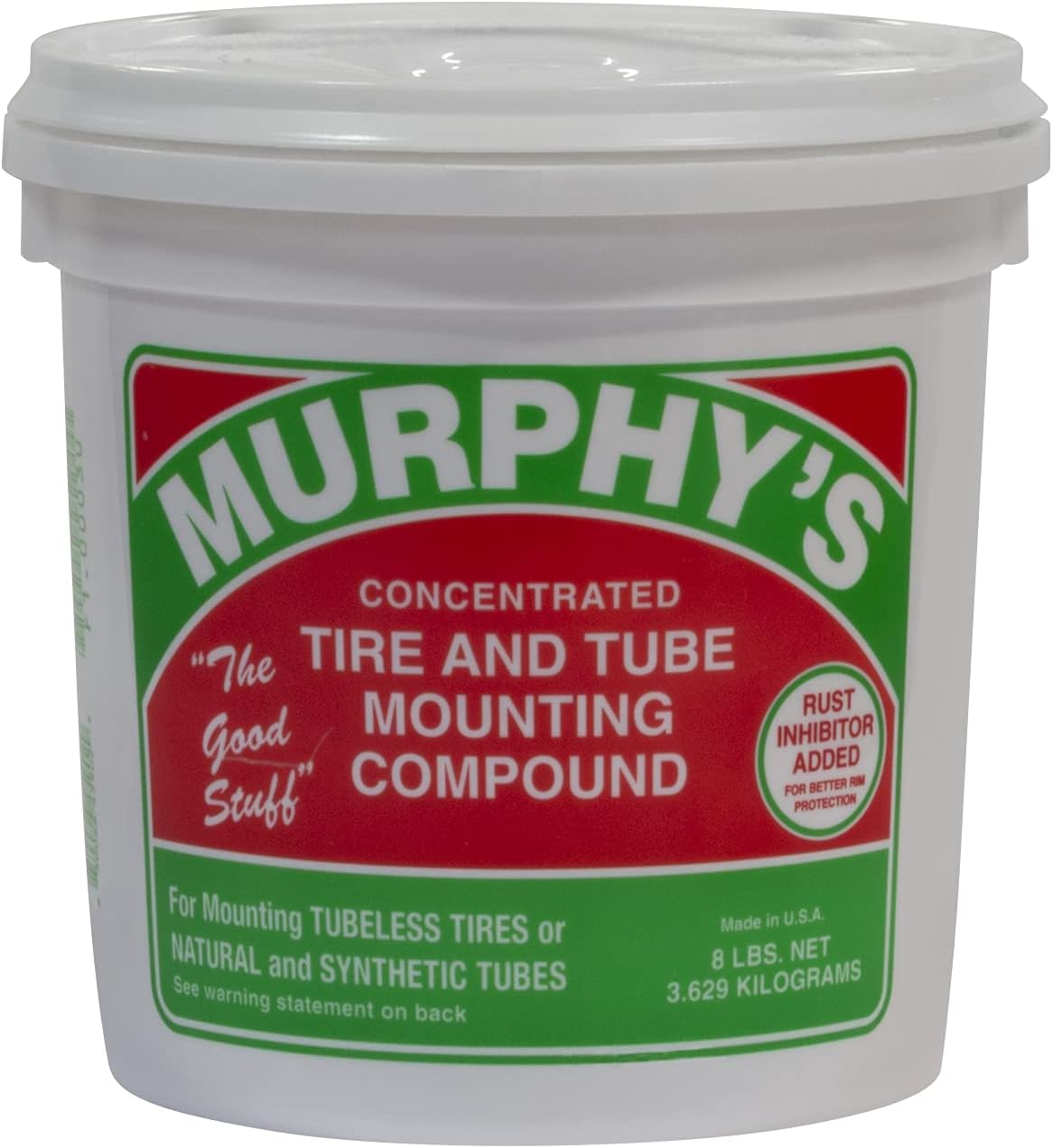
A concentrated tire and tube mounting compound designed to help simplify mounting rubber tires and tubes on passenger, semi truck, construction, and OTR applications. Its ultra-thick formula packs beads effectively and includes rust inhibitors to help protect against corrosion during use.

The SAFELIFE dial tire tread depth gauge measures tread depth in 1/32 inch increments with clear, easy-to-read 2-inch dial face. Color zones using a traffic light system help you quickly judge whether tread is low, marginal, or ample for safer driving. Built with a durable zinc cast body and a metal detect probe for precise, comfortable use across cars, motorcycles, trucks, and buses.

Monitor tire tread wear with a smart, color-coded depth gauge that shows clear condition ranges at a glance. The bar is range marked for fast, easy readings, helping you maintain safer traction and performance. Each gauge is portable with a pocket clip, and the set includes 20 units for daily use and sharing.
Why HT Tires Feel Better on Pavement
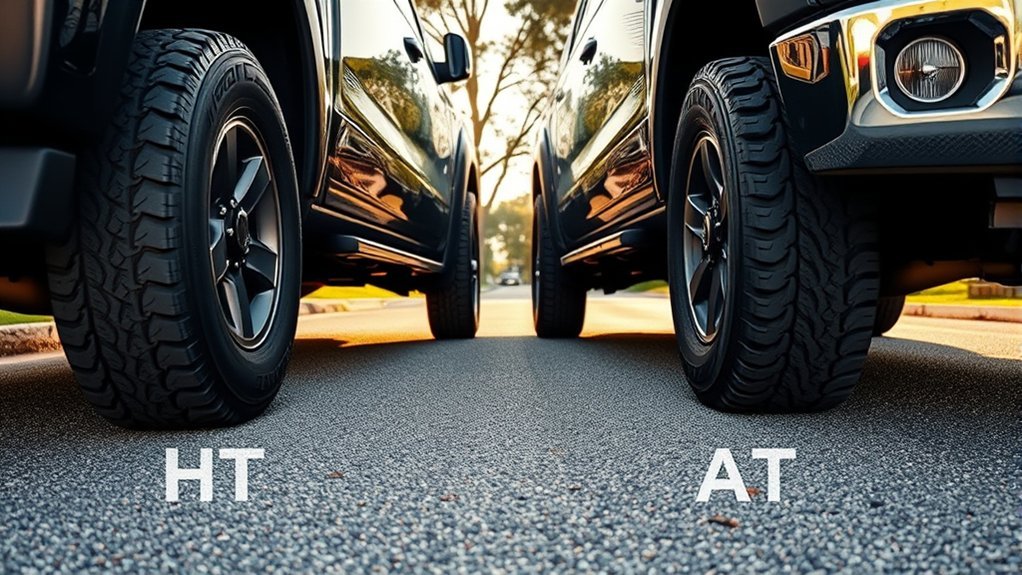
When you spend most of your time on paved roads, HT tires often feel more refined because their tread patterns are designed around stable road contact, predictable handling, low noise, and ride comfort.
On pavement, that road-focused design can produce calmer steering and less tread vibration than a more aggressive off-road pattern. HT tires are also commonly selected for daily commuting, highway travel, towing, and long-distance SUV or pickup use.
Efficiency can be another advantage, but it is safer to compare the rolling resistance of the exact tires you are considering rather than assume every HT tire will save a fixed number of MPG. Tire size, construction, inflation pressure, vehicle load, temperature, and driving speed all affect fuel use.
Current highway-terrain products also place strong emphasis on wet-road grip and tread life. For example, Continental describes its TerrainContact H/T as a highway-terrain tire focused on wet grip, durability, and quiet road performance.
If nearly all of your driving is on pavement, an HT tire is usually the more natural category to start with. You should still compare individual models because comfort, braking, warranty, and efficiency vary within the category.
Where AT Tires Outperform Off-Road
AT tires become more useful when the pavement ends because their tread patterns are designed to maintain traction on dirt, gravel, mud, grass, rocky access roads, and other loose or uneven surfaces.
Deeper voids and more open tread blocks can help the tire find grip where a road-focused pattern may struggle. The open spaces also help clear loose material from the tread so the tire can keep working on mixed surfaces.
AT tread patterns are designed to keep useful traction on loose terrain, but noise, wet grip, tread life, and durability still depend on the specific tire rather than the AT label alone.
Some AT models also use tougher shoulder or casing designs intended for rougher service. That can be valuable around rocks, ruts, construction areas, and unpaved roads, although you should check the actual construction and warranty instead of assuming every AT tire has the same puncture resistance.
Modern AT tires are also much more road-friendly than older stereotypes suggest. Continental, for example, describes its TerrainContact A/T as combining off-road capability with everyday road comfort and a 60,000-mile limited treadwear warranty.
If your driving regularly moves between pavement and unpaved surfaces, AT tires provide a broader operating range. The tradeoff is that more aggressive versions may add weight, tread movement, noise, or rolling resistance compared with a pavement-focused alternative.
How HT and AT Tires Wore After 6,000 Miles
Six thousand miles is enough for an early tread inspection, but it is not enough to establish a universal HT-versus-AT wear rate. A measured result such as 8/32 inch on one HT set and 6/32 inch on one AT set can describe those particular tires, but it does not mean every HT tire should have 8/32 inch remaining or every AT tire should have 6/32 inch remaining at the same mileage.
Starting tread depth matters first. If one tire began with deeper tread than another, comparing only the remaining depth can give a misleading picture of actual wear. You also need to account for the vehicle, tire size, axle position, inflation pressure, alignment, rotation schedule, load, driving style, road surface, towing, and off-road use.
Edge rounding, heel-and-toe wear, cupping, chunking, or a large difference between the inside and outside shoulders can reveal more than a single center-groove measurement. Uneven wear may point to pressure, alignment, suspension, or rotation issues rather than an inherent HT-versus-AT difference.
The National Highway Traffic Safety Administration advises checking tire tread regularly and replacing tires when tread reaches 2/32 inch. NHTSA also recommends following the vehicle manufacturer’s rotation instructions and notes that, when recommended, a 5,000- to 8,000-mile rotation interval is common.
How to Make a Fair 6,000-Mile Comparison
- Record each tire’s tread depth before the comparison begins.
- Measure the same grooves and positions on every tire with the same tread-depth gauge.
- Keep pressure at the vehicle manufacturer’s recommended cold setting unless the vehicle or tire maker specifies otherwise.
- Document rotations, alignment work, towing, heavy loads, and off-road mileage.
- Compare tread lost, not just tread remaining. A tire that started deeper can still show more remaining tread after wearing faster.
Pro Tip: Around the 6,000-mile point, measure every tire in several places across the tread and write the readings down. That gives you a useful baseline for spotting abnormal wear during the next rotation interval.
Which Tire Saves More Fuel?
HT tires often have an efficiency advantage because highway-focused tread designs may use less energy on smooth pavement. However, there is no reliable rule that switching from AT to HT tires will automatically add 2 or 3 MPG.
The U.S. Department of Energy’s FuelEconomy.gov guidance explains that tire pressure and rolling resistance affect fuel economy. The actual change depends on the tire, vehicle, and operating conditions.
| Tires | Fuel-Economy Tendency |
|---|---|
| Highway tires | Often optimized for efficient pavement use, but the result is model-specific |
| All-terrain tires | May use more energy if heavier or higher in rolling resistance, but results vary by model |
You will get a fairer comparison when both tires are the same approved size and load specification. Larger replacement tires, heavier LT constructions, different wheel sizes, or major changes in overall diameter can influence fuel use independently of the HT or AT label.
Proper cold inflation, alignment, and rotation also matter. Those basics reduce wasted energy and uneven wear, although they do not make every tire equally efficient.
How HT and AT Tires Compare for Noise
When you compare road noise, HT tires generally start with an advantage because pavement comfort and quietness are core design priorities. More open AT tread blocks can create extra pattern noise as they contact the road.
That does not mean every AT tire is loud. Newer on-road and all-terrain designs use tread sequencing, block shapes, compounds, and other techniques to control sound while preserving mixed-surface traction.
For that reason, it is better to compare instrumented or professional test results for the exact tires you are considering than rely on a generic decibel figure for the whole category.
Road Noise Levels
There is no dependable category-wide rule that HT tires measure 68 to 70 decibels while AT tires measure 72 to 75 decibels. A valid noise number needs a defined vehicle, speed, pavement, measuring position, equipment, and test procedure.
What you can reasonably expect is that a pavement-focused HT tire will usually be engineered with lower tread-pattern noise as a higher priority than a strongly off-road-focused AT tire. Road-oriented AT models can narrow that gap considerably.
If quietness matters to you, compare professional road tests and owner feedback for the same tire size on a similar vehicle rather than using HT or AT alone as the deciding factor.
Cabin Quietness At Speed
The same principle applies inside the vehicle. Highway-focused tires often create a calmer cabin, especially during long periods on smooth pavement, but there is no universal 3- to 5-decibel cabin advantage.
- A highway-focused tread can reduce the steady hum you hear during interstate driving.
- A more aggressive AT pattern may create a more noticeable tread tone, particularly on smooth pavement.
- Vehicle insulation, pavement texture, tire pressure, tread wear, wheel-well design, and speed can change what you hear inside the cabin.
Which Tires Handle Rain and Snow Better?
Wet-road performance should be compared by exact tire rather than by assuming HT always beats AT. Highway tires can provide excellent wet braking and hydroplaning resistance, but modern AT tires are also engineered to deliver strong wet-road performance.
Tread grooves, compound, siping, tire width, remaining tread depth, temperature, and pressure all affect rain performance. That means a high-performing AT tire can outperform a weaker HT tire in the wet, and the reverse can also be true.
Snow requires a different comparison. Look for the Three-Peak Mountain Snowflake (3PMSF) symbol when severe-snow traction qualification matters. Michelin’s current winter tire guidance explains that 3PMSF means the tire meets an industry severe-snow traction standard.
An M+S marking is different. It is commonly found on all-season and all-terrain tires, but it does not represent the same severe-snow traction qualification as 3PMSF.
Many AT tires are available with 3PMSF certification, which can make them useful for drivers who need both mixed-terrain capability and stronger snow traction. However, winter braking, cornering, ice performance, and very cold-weather grip can still differ substantially between individual tires.
Note: Do not use the M+S marking alone as proof that a tire offers strong severe-winter performance. Check for 3PMSF where appropriate, review the exact tire’s winter test results, and follow local winter-tire laws.
[Products Worth Considering]

Upgrade your ride with a 2-pack set of 26x1.95 folding mountain bike tires built for dependable traction on mud, rocks, and trail surfaces. A reinforced puncture-resistant layer helps protect against sharp debris, while included butyl inner tubes provide strong sealing and shock absorption. Ready for fast swaps with included tire levers and universal sizing for most bikes.

Measure tire tread depth quickly and accurately with this LUMITECO dial gauge that reads in 1/32" increments up to 14/32". The color-coded green/yellow/red zones make it easy to judge tire wear and know when replacement is needed. A rugged, compact design with a protective pouch helps keep the gauge ready for use on cars, trucks, motorcycles, and more.

This tire inflator with pressure gauge delivers long-lasting performance with a durable rubber-protected gauge and sturdy build. The longer hose and 360 swivel air chuck help you seal the valve securely and keep your hands free while measuring, inflating, or deflating. It’s battery-free for reliable use and provides ±2 PSI accuracy in the mid-range for most typical tires, with universal compatibility for 1/4 NPT compressor outputs.
What You’ll Pay for HT vs AT Tires
There is no useful universal price range for HT and AT tires because cost changes dramatically with tire size, brand, load range, speed rating, construction, warranty, retailer, and installation charges.
In some same-brand comparisons, a highway-focused tire may cost less than a more heavily constructed AT tire. In other cases, a premium HT can cost more than an entry-level AT. Comparing the exact approved size for your vehicle gives you a much more meaningful answer than relying on a broad $100, $150, or $300 category estimate.
Long-term value also depends on how you use the tire. A cheaper HT tire is poor value if you regularly damage it on rough access roads, while an aggressive AT tire can be unnecessary expense if you spend virtually all of your time on smooth pavement.
[Products Worth Considering]

Accurately measure tire tread depth with a calibrated gauge marked from 0 to 1 inch in 1/32 inch increments. The color-coded bar helps you quickly identify tread condition ranges, supporting safe driving for trucks, motorcycles, automobiles, and passenger vehicles.

Keep your tires properly inflated with this analog VONDIOR tire pressure gauge, designed for fast, easy readings without batteries. The swiveling, two-axis hose and large glow dial help you measure at any tire angle with instant visibility. Built with a protective rubber shield, it supports durable, low-maintenance use for cars and trucks.
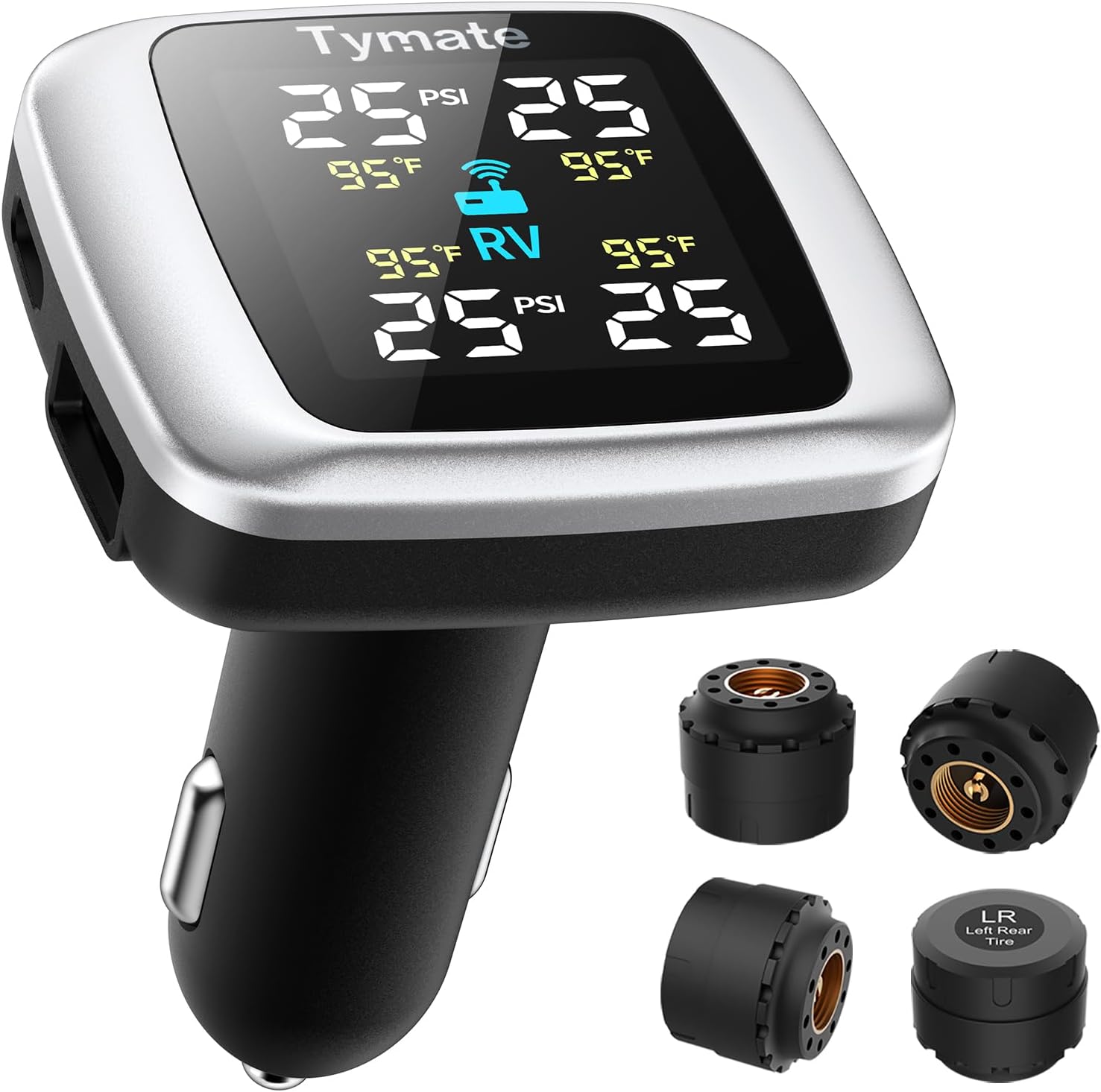
Tymate TM7 is a wireless tire pressure monitoring system that delivers real-time pressure and temperature readings for safer driving. It includes four external sensors, a bright color LCD display with adjustable backlight, and six alarm modes for high/low pressure, fast leakage, high temperature, and sensor signal or battery issues. The system covers a wide 0–144 PSI range and plugs into your vehicle’s cigarette lighter socket for quick DIY setup.
Upfront Tire Cost
When comparing upfront cost, price tires in the same approved size and load specification. Then include mounting, balancing, valve or TPMS service, disposal fees, taxes, and any alignment work needed.
- For a highway commute: prioritize pavement comfort, braking, tread warranty, and efficiency before paying for off-road features you will rarely use.
- For gravel or trail use: consider whether stronger mixed-surface capability justifies the extra purchase cost or weight.
- For the final garage bill: compare the installed price rather than the advertised tire-only price.
Do not choose a lower-priced tire if it fails to meet the vehicle manufacturer’s required size, load capacity, or other fitment specifications.
Long-Term Value
HT tires can deliver excellent long-term value for drivers who stay mainly on pavement because their design priorities match the way those drivers actually use the vehicle.
However, the claim that HT tires always last 60,000 to 80,000 miles while AT tires only last 40,000 to 60,000 miles is too broad. Current AT products can carry long treadwear warranties as well, and actual service life depends on the specific model, vehicle, maintenance, terrain, load, and driving habits.
When comparing long-term value, look at the exact mileage warranty, expected wet and snow performance, replacement cost, fuel efficiency, road-noise tolerance, and how often you genuinely drive off pavement.
The most economical tire is the one that meets your vehicle requirements and driving needs without forcing you to pay for performance you rarely use.
Maintenance And Wear
Both HT and AT tires need regular pressure checks, rotation, alignment monitoring, damage inspection, and tread-depth checks. HT tires do not automatically qualify for less-frequent maintenance simply because they are highway-focused.
NHTSA recommends checking tire pressure and tread regularly and following the vehicle manufacturer’s rotation instructions. If the manufacturer recommends rotation, a 5,000- to 8,000-mile interval is common, which makes 6,000 miles a sensible point for an inspection on many vehicles.
- Inspect tread: measure several grooves across each tire instead of looking at one spot.
- Check pressure: use the vehicle manufacturer’s recommended cold pressure rather than inflating to the maximum number molded on the tire sidewall.
- Watch wear patterns: feathering, shoulder wear, cupping, or large differences between tires can signal pressure, alignment, rotation, or suspension problems.
If the tread is approaching 2/32 inch, the tire is at the federal treadwear-indicator level referenced by NHTSA and should be replaced rather than treated as suitable for continued normal service.
Which Tire Fits Your Driving Style?
Which tire fits your driving style comes down to where you spend most of your time and which performance tradeoffs matter most.
If your daily route is almost entirely pavement, HT tires are usually the logical starting point. Their designs commonly emphasize low road noise, ride comfort, predictable highway handling, tread life, and efficiency.
If your driving routinely includes gravel, dirt, muddy access roads, job sites, trails, or other loose surfaces, AT tires give you a broader range of traction. Road-oriented AT tires can still be comfortable enough for everyday commuting, while more aggressive designs may trade additional noise or efficiency for stronger off-road performance.
If winter performance matters, do not choose solely by the letters HT or AT. Check the exact tire’s 3PMSF status, winter test results, and suitability for your local conditions.
Warning: Terrain preference comes after safe fitment. Start with the tire size and load requirements on your vehicle placard or owner’s manual and use an appropriate replacement specification. Michelin’s current tire-selection guidance likewise recommends beginning with the vehicle’s door-jamb placard and then considering your driving environment.
In short, choose HT tires when pavement comfort and efficiency dominate your driving. Choose AT tires when you regularly need useful traction beyond paved roads. Then compare the exact models because the category name alone cannot tell you which tire will be quieter, last longer, stop shorter in the wet, or cost less over its life.
Frequently Asked Questions
Do HT Tires Last Longer Than AT Tires?
HT tires often wear very well during pavement-focused use, but they do not automatically last longer than every AT tire. Current AT models can also carry long treadwear warranties. Compare the exact model’s warranty, starting tread depth, vehicle fitment, maintenance requirements, and expected use rather than relying only on the HT or AT label.
Are AT Tires Better Than HT Tires?
AT tires are better when you regularly need traction on dirt, gravel, mud, trails, or other mixed surfaces. HT tires are usually the better fit when your priorities are pavement comfort, low noise, efficiency, and highway use. Neither category is universally better.
Do HT Tires Get Better Mileage?
HT tires are often designed with pavement efficiency in mind and may use less energy than a heavier or more aggressive AT tire. However, there is no guaranteed 2- or 3-MPG difference. Rolling resistance, tire size, pressure, vehicle load, speed, temperature, and driving conditions all affect fuel economy.
Is 6,000 Miles on Tires a Lot?
No. For a healthy tire, 6,000 miles is normally an early-service checkpoint rather than a large share of its potential life. It is also close to common tire-rotation intervals, so it is a useful time to inspect pressure, tread depth, wear patterns, alignment symptoms, and damage.
Is a 3PMSF AT Tire the Same as a Dedicated Winter Tire?
Not necessarily. The 3PMSF symbol shows that the tire meets an industry severe-snow traction standard, which is more meaningful than an M+S marking alone. However, dedicated winter tires can still differ in very cold temperatures, snow braking, cornering, and ice performance. Compare the exact tire and follow local winter-tire requirements.
How Do You Compare HT and AT Tread Wear Fairly After 6,000 Miles?
Record the starting tread depth, measure the same grooves with the same gauge, maintain the correct cold pressure, document rotations and alignment, and account for vehicle load and off-road use. Compare how much tread each tire lost rather than comparing only the tread that remains.
Conclusion
After 6,000 miles, the main HT-versus-AT tradeoff is easier to understand than a simple tread-depth or MPG number suggests. HT tires are generally the better match for drivers who value quiet pavement performance, comfort, and efficiency, while AT tires provide more useful capability when gravel, dirt, mud, and uneven terrain are regular parts of the route.
Do not assume that every HT tire will have 8/32 inch remaining, every AT tire will have 6/32 inch remaining, or that switching categories will automatically change fuel economy by a fixed amount. Compare the exact tire models, measure wear from a known starting point, follow the vehicle’s fitment and pressure requirements, and choose the category that matches how you actually drive.
Sources
- National Highway Traffic Safety Administration — TireWise — tread-depth, tire-pressure, inspection, rotation, and tire-safety guidance.
- U.S. Department of Energy / FuelEconomy.gov — tire inflation, rolling resistance, and fuel-economy maintenance guidance.
- Michelin USA — How to Choose the Right Tires — vehicle placard, tire size, load requirements, and driving-environment guidance.
- Michelin USA — Winter Tire Buying Guide — M+S and 3PMSF winter-traction markings.
- Continental Tire — TerrainContact H/T — current example of highway-terrain wet-grip, durability, and quiet-road design priorities.
- Continental Tire — TerrainContact A/T — current example of an all-terrain tire combining mixed-surface capability, road comfort, and a long treadwear warranty.