
The center bore, also called the hub bore, is the round opening in the middle of a wheel that fits over your Honda Accord’s hub. Most modern Honda Accord fitment references list a 64.1 mm center bore, but you should still confirm the exact specification for your model year, trim, market, and wheel package before buying aftermarket wheels.
Quick Answer
Most modern Honda Accord wheels are commonly listed with a 64.1 mm center bore. A wheel with the same bore should sit hub-centric on the Accord hub. A wheel with a larger bore may fit only when paired with the correct hub-centric rings. A smaller bore will not fit without professional machining.
Key Takeaways
- The commonly listed Honda Accord hub bore is 64.1 mm, but exact wheel fitment should always be checked by year, trim, and market.
- Center bore is only one fitment point. Also confirm bolt pattern, offset, wheel width, load rating, lug seat, thread pitch, brake clearance, and TPMS compatibility.
- If the wheel center bore is larger than the Accord hub, use correctly sized hub-centric rings to help center the wheel and reduce vibration risk.
- If the wheel center bore is smaller than the hub, do not force the wheel on. Choose another wheel or ask a qualified wheel shop whether machining is safe.
- For recent Accord models, Honda lists wheel nut torque at 80 lbf-ft (108 N-m), but always verify the torque spec in your exact owner’s manual.
At a Glance
| Time Required | 10–20 minutes to measure; 30–60 minutes for a careful wheel test-fit |
| Difficulty | Easy for measuring; moderate for safe wheel installation |
| Tools Needed | Digital calipers, torque wrench, jack and jack stands, clean cloth, correct lug nuts, and hub-centric rings if needed |
| Cost | Usually $0 if you already have tools; about $10–$40 for hub-centric rings; more if professional machining or shop inspection is needed |
The Importance of Center Bore in Honda Accord Wheel Fitment
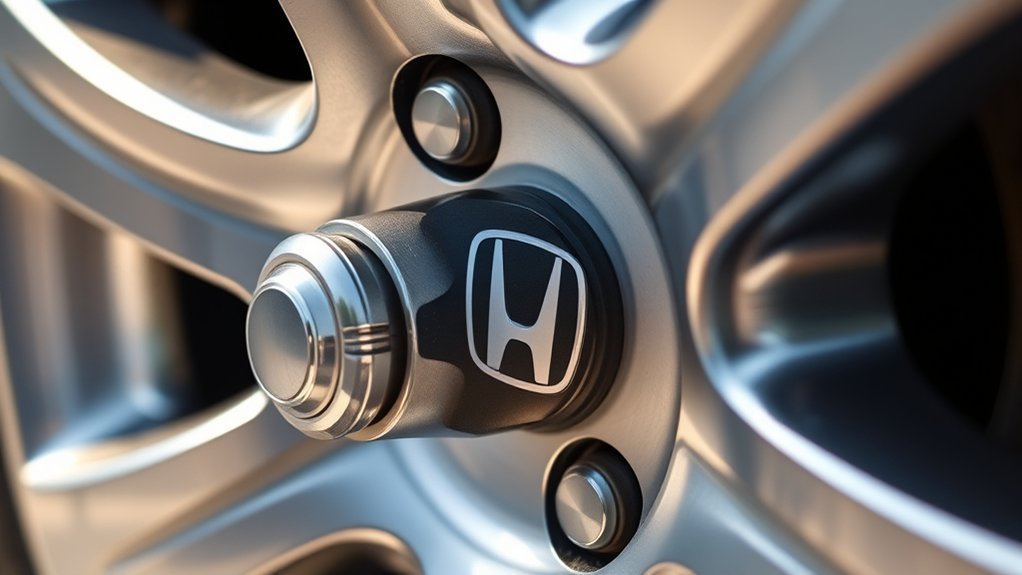
When it comes to wheel fitment on your Honda Accord, the center bore helps the wheel sit correctly on the hub before the lug nuts clamp it in place. A wheel that is not centered well can cause steering-wheel vibration, mounting difficulty, uneven clamping pressure, and an unsafe driving feel.
For many modern Accord applications, the center bore is commonly listed as 64.1 mm. That number matters because the wheel’s center opening should either match the hub directly or be adapted with a correctly sized hub-centric ring. A bore that is too small will not slide over the hub. A bore that is too large can leave a gap unless the wheel is designed to be lug-centric or uses the proper centering ring.
Center bore does not replace the lug nuts. The bore helps center the wheel; the lug nuts clamp the wheel to the hub.
Before buying aftermarket wheels, confirm all of these fitment points:
- Center bore / hub bore: commonly 64.1 mm on many modern Accord fitment references.
- Bolt pattern: many modern Accords use 5×114.3 mm, but verify your year.
- Wheel diameter and width: must clear the tire, fender, and suspension.
- Offset: incorrect offset can cause rubbing, poor steering feel, or excess bearing load.
- Load rating: each wheel must safely support the vehicle.
- Lug seat and thread pitch: the lug nut seat must match the wheel, and the thread must match the studs.
- Brake clearance: confirm spoke and barrel clearance, especially with larger brakes.
- TPMS compatibility: make sure the wheel accepts the correct tire-pressure sensors if your Accord uses them.
Warning: Do not buy wheels based on center bore alone. Honda warns that improper tire and wheel choices can affect handling and stability. Always verify the wheel specifications against your owner’s manual, door placard, wheel manufacturer data, or a qualified tire shop.
Measuring Your Center Bore for a Perfect Fit
To measure a wheel’s center bore, remove the wheel and place it face down on a clean, stable surface. Use digital calipers to measure the inside diameter of the center opening on the back of the wheel. Measure across the widest inside point and keep the calipers square, not angled.
| Measurement Check | Tool Used | What It Tells You |
|---|---|---|
| Wheel center bore | Digital calipers | Whether the wheel opening matches, exceeds, or is smaller than the Accord hub |
| Vehicle hub pilot | Digital calipers or trusted fitment reference | The hub size the wheel or hub-centric ring must fit over |
| Hub and wheel surface condition | Visual inspection and clean cloth | Rust, dirt, burrs, or damage that can prevent the wheel from seating flat |
If your Accord hub is 64.1 mm and the aftermarket wheel bore is also 64.1 mm, the wheel should be hub-centric if all other fitment specs match. If the wheel bore is larger, such as 73.1 mm, you would typically look for a hub-centric ring sized 73.1 mm outer diameter to 64.1 mm inner diameter.
Pro Tip: Measure the wheel bore from the back side of the wheel, not the decorative center-cap opening on the front. The rear hub pad is the part that actually fits over the vehicle hub.
Fitment Issues With Incorrect Center Bore
Installing wheels with an incorrect center bore can cause fitment and ride-quality problems. On a Honda Accord, the most common issue is an aftermarket wheel with a center bore larger than the hub. The wheel may physically bolt on, but without the correct hub-centric ring or correct lug-centric installation method, it may not sit perfectly centered.
Common symptoms of center-bore or hub-ring problems include:
- Steering-wheel vibration at highway speed
- A wheel that feels difficult to center while tightening the lugs
- Vibration that remains even after balancing
- A visible gap between the wheel bore and the hub pilot
- Hub-centric rings that are cracked, loose, melted, or the wrong size
A smaller center bore is a more serious fitment stop. If the bore is smaller than the Accord hub, the wheel will not seat against the hub face. Do not force it on with lug nuts. That can damage studs, distort the wheel mounting surface, or leave the wheel dangerously loose.
Note: Machining a wheel center bore should only be evaluated by a qualified wheel shop. Machining can affect wheel strength, finish, warranty, and safety if done incorrectly.
[Products Worth Considering]

These M14x1.5 closed-end chrome lug nuts are a one-piece replacement designed for secure fitment on compatible GM, Ford, and select Chrysler/Dodge models. Featuring a 60-degree conical seat and anti-rust chrome plating, they help resist corrosion and maintain a bright look for everyday driving. Built for long-term durability, they include OEM-style part references and are backed by 12 months of support.

Upgrade your wheels with MIKKUPPA closed-end lug nuts designed for reliable fit and corrosion resistance. The one-piece, cold-forged and heat-treated steel construction helps resist rust and stripping, while the integrated finish delivers a durable black appearance. Built to OEM standards with a conical 60-degree seat, these nuts provide a secure solution for compatible Ford, Honda, Jeep, and Chevrolet models.

The Trivd Frol 1/2" air impact wrench delivers high performance torque up to 1500 ft-lbs with a twin hammer impact mechanism for strong, balanced blows. It features an ergonomic grip, compact lightweight design, and quick-stop control with 3 forward speeds up to 8000 RPM plus a reverse speed. Built for demanding automotive repair and tire shop work, the rear exhaust helps keep debris away from the surface.
Understanding Hub-Centric vs. Lug-Centric Wheels

Hub-centric wheels have a center bore that closely matches the vehicle’s hub pilot. This design helps the wheel sit centered on the hub while the lug nuts clamp it down. Most original-equipment wheels are designed this way because they are made for a specific vehicle application.
Lug-centric wheels are centered mainly by the lug hardware instead of the hub bore. Many aftermarket wheels use a larger center bore so the same wheel design can fit several vehicles. A lug-centric wheel can be safe when the bolt pattern, offset, load rating, lug seat, and installation process are correct, but it demands more care during installation.
Hub-centric rings, also called hub rings or centering rings, fill the gap between a larger wheel bore and the smaller vehicle hub. For example, if an aftermarket wheel has a 73.1 mm bore and your Accord hub is 64.1 mm, the ring reduces the opening so the wheel centers more like an OE-style hub-centric wheel.
[Products Worth Considering]

The 22800 wheel stud installer makes replacing wheel studs quick and secure, saving time and effort during tire service. It uses a ratchet or impact wrench to pull new studs firmly into place, helping when existing studs are too long. Compatible with most automotive wheels and light-duty truck wheel studs, it’s designed for easy, tool-assisted installation.

Upgrade your wheels with MIKKUPPA M12x1.5 mag seat lug nuts built for secure, corrosion-resistant performance. These closed-end chrome lug nuts are a direct replacement for select Toyota models, including Camry, Corolla, RAV4, Sienna, Avalon, Highlander, Matrix, Venza, and Prius. Triple-chromium plating and cold-forged, heat-treated steel help deliver strength for daily driving and replacement needs.

The Big Rig Defense Tire Thumper is a truck tire pressure checker that lets you quickly check multiple tires by giving them a firm whack. Listen for a reassuring thump and feel the stick bounce when a tire is fully inflated, helping you get back on the road safely. It features a comfortable, glove-friendly handle and a secure wrist strap for confident use on busy routes.
How to Ensure a Secure and Vibration-Free Installation
Guaranteeing a secure and vibration-free installation starts before the wheel touches the car. Confirm the wheel’s center bore, bolt pattern, offset, width, lug seat, load rating, and brake clearance. Then use the right hub-centric rings if the bore is larger than the Accord hub.
- Confirm the specs. Match the wheel to your Accord’s year, trim, market, and brake package.
- Clean the hub face. Wipe rust, dirt, and debris from the hub and wheel mounting surfaces.
- Test-fit the ring. If using hub-centric rings, make sure the ring sits flat in the wheel bore and fits snugly over the hub.
- Mount the wheel by hand. The wheel should sit flat against the hub face without being pulled into place by the lug nuts.
- Hand-start every lug nut. Never use an impact wrench to start the nuts because cross-threading can damage the studs.
- Tighten in a star pattern. Bring the lugs down gradually in multiple passes so the wheel seats evenly.
- Torque to spec. For recent Accord manuals, Honda lists 80 lbf-ft (108 N-m), but verify your exact owner’s manual before final torque.
- Recheck after driving. After the first short drive, inspect for vibration, looseness, or ring movement. Many wheel shops also recommend a torque recheck after the initial break-in distance.
Warning: Never get under a vehicle supported only by a jack. Use the correct jacking points, level ground, and properly rated jack stands whenever a wheel is removed.
[Products Worth Considering]

This 1/2-inch drive breaker bar delivers powerful leverage for loosening and tightening stubborn lug nuts and automotive fasteners. The 180-degree flex head helps you reach tight spaces at the angle you need, making tire and brake jobs easier. A spring-loaded ball detent design holds 1/2-inch sockets securely while the chrome-moly head provides durable strength for everyday use.

The SEESII cordless impact wrench delivers high tightening and loosening power for fast wheel bolt and industrial bolt work. Its brushless motor and variable-speed 3 forward/2 reverse modes help you control precision installs and stubborn nut removal. A dual-battery system with rapid charging and an included storage case make it ready for home, car, and jobsite use.

This manual duck head tire changer kit makes tire installation and removal simpler by letting you embed the duck head into the tire with applied pressure. The integrated design and durable steel construction help reduce friction and improve efficiency and safety during use. Suitable for 16–21 inch wheels, it’s convenient for cars, trucks, SUVs, and ATV tires, with 24-hour after-sales support.
Troubleshooting Vibration After Changing Wheels
If your Accord vibrates after installing wheels, do not assume the center bore is the only cause. Work through the simple checks first:
- Vibration starts around highway speed: check wheel balance, hub-centric rings, bent wheels, and tire uniformity.
- Vibration appears right after installation: check for missing rings, wrong ring size, dirty hub faces, or incorrect lug seat.
- Clicking or clunking: stop driving and check lug torque, wheel seating, and stud condition immediately.
- Rubbing while turning: check offset, tire width, wheel width, and fender or suspension clearance.
- TPMS light: confirm the correct sensors were transferred, installed, or programmed.
If vibration remains after checking these items, have the wheel and tire assembly inspected by a professional. A road-force balance, wheel runout check, or fitment inspection can often find problems that a visual check misses.
Frequently Asked Questions
Does it matter if the center bore is too big?
Yes. A larger center bore can physically fit over the hub, but it may leave the wheel unsupported at the center. If the wheel is not designed to be lug-centric, use correctly sized hub-centric rings to fill the gap and help reduce vibration.
What happens if the center bore is too small?
A wheel with a center bore smaller than the Accord hub will not seat correctly. Do not force it on with lug nuts. Choose a wheel with the right bore or have a qualified wheel shop decide whether professional machining is safe.
What size hub-centric rings do I need for a Honda Accord?
Use a ring with an inner diameter that matches the Accord hub and an outer diameter that matches the wheel bore. For example, if your Accord hub is 64.1 mm and the wheel bore is 73.1 mm, you need 73.1 mm to 64.1 mm rings.
Is center bore the same as bolt pattern?
No. Center bore is the middle opening that fits over the hub. Bolt pattern is the number and spacing of the lug holes, such as 5×114.3 mm on many modern Accords. Both must be correct for safe fitment.
What size hub bore do Honda Fit wheels use?
Many Honda Fit references list a 56.1 mm hub bore and 4×100 mm bolt pattern, which is different from many modern Honda Accord applications. Because the bolt pattern and bore differ, Honda Fit wheels generally are not a direct fit for a Honda Accord.
Conclusion
The center bore is a small measurement with a big impact on Honda Accord wheel fitment. For many modern Accords, the commonly listed hub bore is 64.1 mm, but that number should be treated as one part of the full fitment check. Confirm the center bore, bolt pattern, offset, wheel size, load rating, lug hardware, brake clearance, and torque spec before driving on any new wheel setup.
If the aftermarket wheel bore is larger than the Accord hub, use the correct hub-centric rings. If it is smaller, do not force the wheel on. A careful measurement, clean hub surface, proper torque, and a final vibration check will give your Accord the safest chance at a smooth, stable ride.
Sources
- Honda 2024 Accord Owner’s Manual — Tire and Wheel Replacement — supports warnings about improper tires/wheels and matching wheel specifications.
- Honda 2025 Accord Owner’s Manual — Tire Rotation — supports recent Accord wheel nut torque guidance of 80 lbf-ft (108 N-m).
- Honda 2023 Accord Owner’s Manual — If a Tire Goes Flat — supports cleaning mounting surfaces and tightening wheel nuts in sequence.
- Tire Rack — What Is a Wheel Centerbore? — supports centerbore definition, hub centering, centering rings, and lug-centric installation notes.
- Discount Tire — Hub-Centric vs. Lug-Centric Wheels — supports hub-centric, lug-centric, and hub-ring explanations.
- NHTSA TireWise — supports tire-safety context for maintenance, tread, inflation, and safe tire purchasing.