Disclosure: As an Amazon Associate, we earn from qualifying purchases. If you click a link on this page and make a purchase, we may receive a small commission at no extra cost to you.
Choosing an affordable 20-inch tire is not only about finding the correct diameter. You also need the right load rating, speed rating, rim compatibility, weather capability, and construction for your vehicle. The Fullway HS266 275/55R20 117H XL is a budget-oriented, all-season performance tire designed mainly for paved-road driving. It offers useful load capacity and a directional tread, but it does not include a stated mileage warranty or severe-snow certification.
Quick Verdict
Rating: 7.3/10, recommended with caveats
Best For: Budget-focused SUV and light-duty truck owners who drive mainly on paved roads and have an approved 275/55R20 fitment.
Bottom Line: The HS266 combines a 117 load index, XL construction, directional tread, and accessible pricing. Its main tradeoffs are the lack of a stated mileage warranty, limited severe-winter capability, and less flexible rotation pattern.
Fullway HS266 Key Specifications
| Specification | Detail |
|---|---|
| Brand | Fullway |
| Model | HS266 |
| Product type | All-season performance tire for compatible SUVs and light-duty trucks |
| Listed size | 275/55R20 |
| Section width | 275 mm |
| Aspect ratio | 55 |
| Wheel diameter | 20 inches |
| Overall tire diameter | Approximately 31.9 inches |
| Approved rim-width range | 7.5 to 9.5 inches |
| Measured rim width | 8.5 inches |
| Load index | 117, up to 2,833 pounds per tire under its rated conditions |
| Load range | XL, extra load |
| Ply rating | 4-ply rated, 4-PR |
| Speed rating | H, rated up to 130 mph under controlled test conditions |
| Tread design | Directional performance tread with a continuous center rib |
| UTQG | 420AA |
| Sidewall | Black sidewall |
| Listed maximum pressure | 49 PSI, not the recommended operating pressure for every vehicle |
| Approximate tire weight | 34 pounds |
| Run-flat construction | No |
| Severe-snow rating | Not Three-Peak Mountain Snowflake rated |
| Tread-life warranty | No mileage warranty specified in the verified listing |
| Package contents | One tire only unless the selected listing clearly states a set |
Key Takeaways
- The Fullway HS266 reviewed here is a 275/55R20 tire with a 117H service description and XL load range.
- Its directional tread uses a continuous center rib, shoulder blocks, and water-channeling grooves for paved-road handling.
- The tire carries a UTQG grade of 420AA, but the manufacturer does not provide a verified mileage warranty for this fitment.
- It is not an LT tire, a run-flat tire, or a Three-Peak Mountain Snowflake-rated winter tire.
- Fitment must be checked against your door-jamb placard, owner’s manual, wheel width, and required load and speed ratings.
What Is the Fullway HS266?
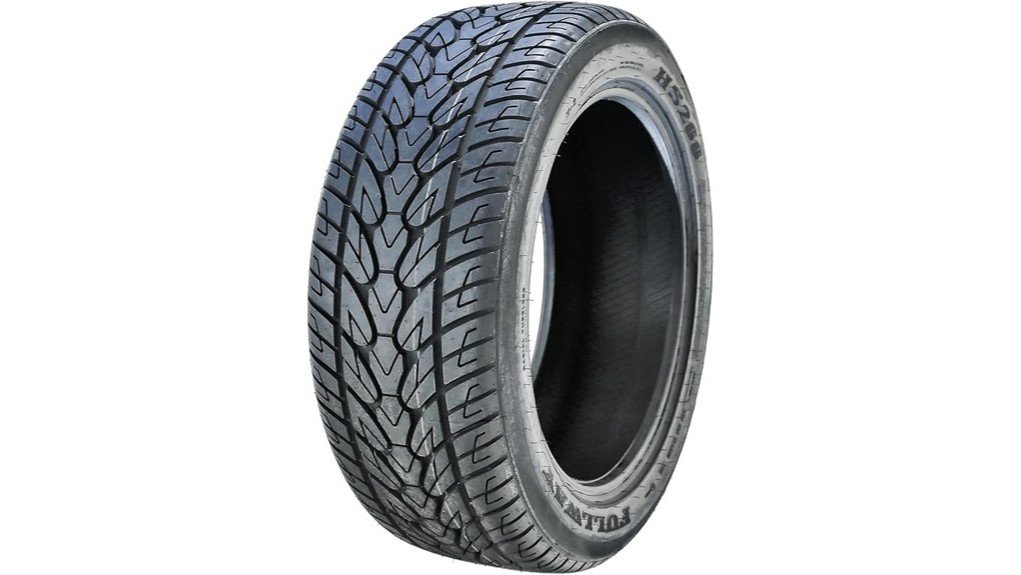
The Fullway HS266 is a road-focused, all-season performance tire offered in several sizes for passenger vehicles, SUVs, and light-duty trucks. This review covers the 275/55R20 117H XL version sold through the existing Amazon listing.
Its directional tread includes a continuous center rib for on-center stability, large shoulder blocks for cornering support, and circumferential and angled grooves intended to move water away from the contact patch. It is designed more for commuting, highway travel, and paved-road use than for mud, rock, or demanding commercial service.
The product is sold as a tire only. A wheel, TPMS sensor, valve stem, installation, balancing, and alignment service are not automatically included.
Who Should Buy It?
Best For
- You need an affordable 275/55R20 replacement with a 117 load index and H speed rating.
- Your SUV or light-duty truck spends most of its time on city streets and highways.
- You value responsive road manners more than off-road traction or severe-snow performance.
Skip If
- Your vehicle requires an LT tire, a higher load rating, or a different size or speed rating.
- You regularly drive through deep snow, packed snow, or ice and need a 3PMSF-rated tire.
- You want a manufacturer-backed mileage warranty or premium touring refinement.
Before You Buy: A 275/55R20 tire is not automatically correct because it fits a 20-inch wheel. Confirm the complete tire size, load index, speed rating, approved wheel width, and inflation requirements on your vehicle’s placard or in the owner’s manual.
Fit and Compatibility
The HS266 measures about 31.9 inches in overall diameter and is approved for wheels from 7.5 to 9.5 inches wide, with an 8.5-inch measuring rim. Those dimensions can fit many SUVs and light-duty pickups, but they do not establish vehicle compatibility by themselves.
Your replacement tire should meet or exceed the vehicle manufacturer’s required load capacity and should normally match the original size unless the manufacturer approves another fitment. Changing tire diameter can affect speedometer readings, ground clearance, gearing, stability-control behavior, and fender clearance.
The 117 load index represents a maximum rated load of 2,833 pounds per tire under the specified test and inflation conditions. You still must stay within the vehicle’s Gross Vehicle Weight Rating, Gross Axle Weight Ratings, wheel ratings, payload limit, and towing instructions.
Directional Tread and Handling
The HS266 uses a directional tread, so it has a required direction of rotation. When mounted correctly, the tread’s center rib and angled channels are positioned to support straight-line response and move water through the tread.
The continuous center rib maintains a consistent strip of road contact. This design can make steering inputs feel more direct during normal highway driving. Larger shoulder blocks add contact area near the tire’s outer edges, helping the tire remain composed during lane changes and moderate cornering.
This is still a value-priced tire rather than a track tire. Its H speed rating describes its tested speed capability when properly loaded, inflated, and maintained. It is not a recommendation to drive at high speed or exceed posted limits.
Wet and Dry Grip
On dry pavement, the wide footprint and center rib are designed to provide stable road contact. The shoulder pattern adds biting edges and helps distribute cornering forces across the tread.
For wet conditions, circumferential and angled lateral grooves give water paths out of the contact patch. This design can reduce hydroplaning risk compared with a tread that cannot clear water effectively, but no tire prevents hydroplaning when speed, standing water, wear, or low pressure becomes excessive.
The UTQG 420AA marking indicates a treadwear grade of 420, an A traction grade, and an A temperature grade. UTQG is useful for comparing tires under standardized conditions, but it does not guarantee a specific number of miles or equal real-world results across different brands.
Ride Comfort and Road Noise
The HS266 is designed to control noise through its tread-block arrangement and consistent road contact. On smooth pavement, you can reasonably expect road manners suited to everyday commuting and highway travel.
Noise and ride quality still depend on the vehicle, wheel width, road texture, tire pressure, alignment, suspension condition, and tread wear. A large SUV with worn suspension parts may not feel quiet or smooth simply because new tires were installed.
Compared with aggressive all-terrain or mud-terrain tires, the road-focused tread should create less tread squirm and fewer large-block vibrations. Buyers moving from a premium touring tire, however, may notice less refinement as the tires age.
Winter and All-Season Performance
The HS266 uses an all-season compound and has tread edges that can provide basic traction in cool weather and light wintry conditions. It is not marked with the Three-Peak Mountain Snowflake symbol, so it has not demonstrated the severe-snow traction performance associated with that designation.
For occasional light snow on treated roads, careful driving and adequate tread depth may make it usable. For regular travel through deep snow, mountain passes, packed snow, or ice, a dedicated winter tire or a suitable 3PMSF-rated all-weather tire is the safer comparison.
All-season does not mean equal performance in every season. Cold temperatures, ice, reduced tread depth, and low inflation can substantially reduce available grip.
How It Performs in Real Use
For Daily Commuting
The HS266 makes the most sense in routine paved-road use. Its center rib supports steady tracking, while the XL rating gives this size added load capacity compared with a standard-load version. It should suit drivers who want a straightforward replacement without paying premium-touring prices.
For Highway Trips
The directional tread and approximately 31.9-inch diameter suit the highway-oriented role of many vehicles using this size. Before a long trip, check cold pressure, tread condition, sidewalls, and the vehicle’s load distribution. Do not use the tire’s 49 PSI maximum as a universal pressure target.
For Rainy Conditions
The wide and angled grooves are intended to clear water as the tire rolls. You should still reduce speed in standing water, maintain adequate tread depth, and avoid abrupt steering or braking when traction is limited.
For Towing or Loaded Travel
The 117 load index can be useful on compatible vehicles, but it does not automatically make the tire appropriate for every trailer or payload. Confirm that the vehicle manufacturer permits a P-metric XL tire, then calculate the fully loaded axle weights and stay within all vehicle, wheel, and tire ratings.
Installation, Rotation, and Safety
Professional installation is recommended. A tire technician can confirm wheel compatibility, inspect the wheel, replace the valve stem or service the TPMS hardware when necessary, mount the directional tread correctly, and balance the assembly.
Follow the vehicle’s cold-pressure specification on the driver-door placard or certification label. The listed 49 PSI figure is the tire’s maximum inflation value, not the correct everyday pressure for every truck or SUV.
Because the HS266 is directional, normal rotation is generally front-to-rear on the same side. Crossing the tires to the opposite side requires removing them from the wheels and remounting them so the rotation arrows still point forward. Check your owner’s manual because staggered wheel sizes and some vehicle designs may limit rotation.
Pro Tip: Ask the installer to show you the directional arrow on each sidewall before you leave. All four arrows should point in the vehicle’s forward direction when viewed at the top of the tire.
Inspect pressure at least monthly and before long trips. Rotate the tires at the interval listed in your owner’s manual, monitor tread wear, and arrange an alignment check if you notice pulling, feathering, one-sided wear, or a steering wheel that is no longer centered.
On an all-wheel-drive vehicle, large differences in tread depth or tire circumference can stress the drivetrain. Follow the vehicle manufacturer’s limits when replacing fewer than four tires.
Pros and Cons
Pros
- 117 load index supports up to 2,833 pounds per tire under rated conditions.
- XL construction suits compatible SUVs and light-duty trucks that require extra-load tires.
- Directional grooves help move water away from the contact patch.
- Continuous center rib supports straight-line stability and steering response.
- Budget positioning can reduce the initial cost of replacing a set of 20-inch tires.
Cons
- No manufacturer mileage warranty is specified for the verified fitment.
- No Three-Peak Mountain Snowflake rating for severe winter use.
- Directional construction limits simple cross-rotation unless the tires are remounted.
Is It Worth the Price?
The Fullway HS266 belongs in the budget tire category. Its value comes from providing a 275/55R20 size, 117H service description, XL load range, directional performance tread, and UTQG 420AA grade without the usual cost of a premium-brand highway tire.
It is worth considering when your priorities are correct fitment, paved-road performance, and lower initial purchase cost. The value is less convincing if you place a high priority on a mileage warranty, severe-snow traction, premium noise control, or extensive independent testing.
Check exactly what the selected offer includes before ordering. This listing is for one tire unless the offer explicitly states otherwise, and seller return terms can change. Mounted or driven-on tires may have different return restrictions than unused tires.
How It Compares to Alternatives
The Armstrong Tru-Trac HT is worth comparing if you prefer a more traditional highway-terrain design in the same 275/55R20 117H XL service description. The Michelin Defender LTX M/S2 is a higher-priced alternative for buyers who prioritize tread life, manufacturer support, and highway refinement.
An all-terrain tire may be a better match if you frequently use gravel roads, job sites, trails, or loose surfaces. The Fullway HS266 makes the most sense when low initial cost and paved-road handling matter more than off-road bite or premium long-term coverage.
Frequently Asked Questions
Will the Fullway HS266 275/55R20 fit my truck or SUV?
It fits only vehicles approved for its complete size and ratings. Check your door-jamb placard, owner’s manual, wheel width, required load index, and required speed rating before ordering.
Does the Amazon listing include one tire or a complete set?
The reviewed offer is listed as one tire only. Verify the quantity shown in your cart because separate two-tire and four-tire offers may use different listings.
Is the Fullway HS266 a directional tire?
Yes. Each tire must be installed with its sidewall rotation arrow pointing forward at the top of the tire, and routine rotation is normally front-to-rear on the same side.
Is it suitable for snow and ice?
It is an all-season tire that may handle occasional light snow, but it is not Three-Peak Mountain Snowflake rated. Choose a winter or suitable 3PMSF-rated tire for regular driving in deep snow, packed snow, or ice.
Can I use this tire for towing?
Only when your vehicle manufacturer approves this P-metric XL size and its ratings for the intended load. The tire’s 2,833-pound maximum rating does not override the vehicle’s payload, axle, wheel, or towing limits.
What pressure should I use in the Fullway HS266?
Use the vehicle manufacturer’s recommended cold pressure from the door placard or owner’s manual. Do not automatically inflate the tire to its listed 49 PSI maximum.
Does the HS266 include a tread-life or road-hazard warranty?
A manufacturer mileage warranty and included road-hazard warranty are not specified in the verified product information. Optional protection plans and seller return policies should be reviewed separately before purchase.
Can I install it on a lifted or modified vehicle?
Possibly, but wheel offset, suspension travel, fender clearance, load ratings, alignment, and speedometer calibration must all be checked. A qualified tire or suspension shop should inspect modified vehicles before installation.
The Bottom Line
The Fullway HS266 275/55R20 is a sensible budget choice for compatible SUVs and light-duty trucks used mainly on paved roads. Its directional tread, 117 load index, and XL construction are practical strengths, while the lack of a stated mileage warranty and severe-snow rating are the main reasons to compare alternatives.
Buy it when verified fitment and lower initial cost are your priorities. Skip it when you need an LT tire, premium warranty coverage, aggressive off-road traction, or dependable severe-winter performance.
Ready to Buy?
Check the latest seller terms, quantity, price, and product details before you decide.