
Disclosure: As an Amazon Associate, we earn from qualifying purchases. If you click a link on this page and make a purchase, we may receive a small commission at no extra cost to you.
A leaking tire valve can turn a healthy tire into a recurring low-pressure problem, but replacing a rubber snap-in stem usually means breaking the tire bead. The FullMayPro 38PCS Tire Valve Stem Tool Kit is designed to pull out and install compatible snap-in stems through the wheel opening while the tire remains mounted. It includes several common stem sizes, valve cores, caps, hand tools, gloves, and printed instructions. The main tradeoff is compatibility: this kit is intended for standard .453-inch rubber snap-in stems and should not be used on TPMS-equipped or 5/8-inch valve applications.
Quick Verdict
Quick Verdict
Rating: 8/10, recommended with compatibility caveats
Best For: DIY owners servicing standard .453-inch rubber snap-in valve stems on non-TPMS wheels
Bottom Line: The kit provides the main tools and replacement parts needed for occasional valve-stem repairs without removing the tire from the wheel. Its value drops sharply if your vehicle uses TPMS, a metal clamp-in stem, a 5/8-inch stem, or a damaged wheel opening that needs professional inspection.
FullMayPro 38PCS Valve Stem Tool Kit
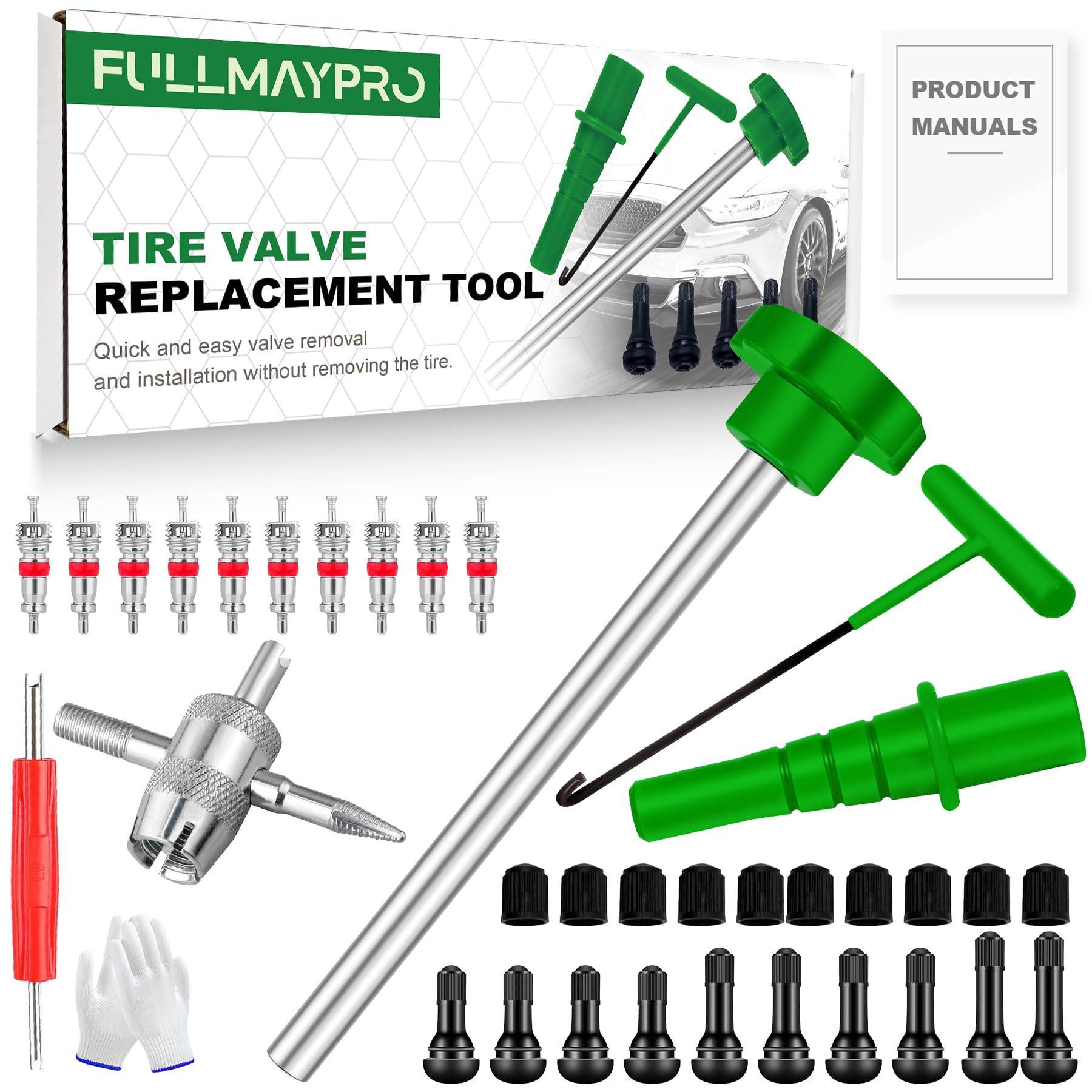
The kit combines a push rod, tapered guide, T-hook, valve tools, replacement rubber stems, cores, caps, gloves, and printed instructions. It is designed for standard .453-inch non-TPMS snap-in stems, so verify the wheel and stem type before ordering.
View Product on Amazon →Key Specifications
| Specification | Detail |
|---|---|
| Brand | FullMayPro |
| Product type | Quick-change rubber tire valve stem tool kit |
| Package count | 38 pieces, as listed by the seller |
| Stem types included | 4 TR413, 4 TR414, and 2 TR418 rubber snap-in stems |
| Wheel-hole fit | Standard .453-inch valve-stem holes |
| Not compatible with | 5/8-inch stems, metal clamp-in stems, and wheels with valve-mounted TPMS sensors |
| Main tool materials | 304 stainless steel and plastic, according to the product listing |
| Included accessories | Push rod, tapered positioning tube, T-hook, four-way valve tool, dual-head removal tool, 10 valve cores, 10 caps, gloves, and instructions |
| Package dimensions | About 9.02 x 3.82 x 1.93 inches |
| Listed weight | 15.1 ounces |
| Best use | Occasional garage, trailer, lawn-equipment, motorcycle, or ATV valve-stem service after fit is confirmed |
Before You Buy: TR413, TR414, and TR418 identify complete rubber snap-in valve stems, not just the small removable valve cores. Confirm that your wheel uses a standard .453-inch rubber stem and does not have a valve-mounted TPMS sensor before using this kit.
What Is the FullMayPro 38PCS Valve Stem Tool Kit?
This is a compact service kit for replacing common rubber snap-in tire valve stems without fully demounting the tire from the wheel. The method uses a hook to remove the old rubber stem, a tapered tube to guide the replacement, and a push rod to seat the new stem through the wheel opening.
The package also includes loose valve cores and caps, but those are separate parts. A valve core is the small threaded component inside a stem that controls airflow. The TR413, TR414, and TR418 parts are complete snap-in stems with different lengths, so you still need to choose the stem that matches the original application.
The kit is aimed at owners who handle occasional repairs on cars, light trucks, small trailers, lawn equipment, motorcycles, and ATVs. It is not a universal substitute for tire-shop equipment, and it does not address cracked wheels, damaged valve holes, bead leaks, punctures, or TPMS sensor faults.
Who Should Buy It?
Best For
- DIY owners who have confirmed a standard .453-inch rubber snap-in stem
- People maintaining non-TPMS trailer, lawn-equipment, motorcycle, or ATV wheels
- Buyers who want a compact assortment for occasional garage or field repairs
Skip If
- Your vehicle has a valve-mounted TPMS sensor or metal clamp-in stem
- Your wheel uses a 5/8-inch valve opening or a specialty high-pressure stem
- You need professional-grade tools for frequent commercial tire service
[Products Worth Considering]
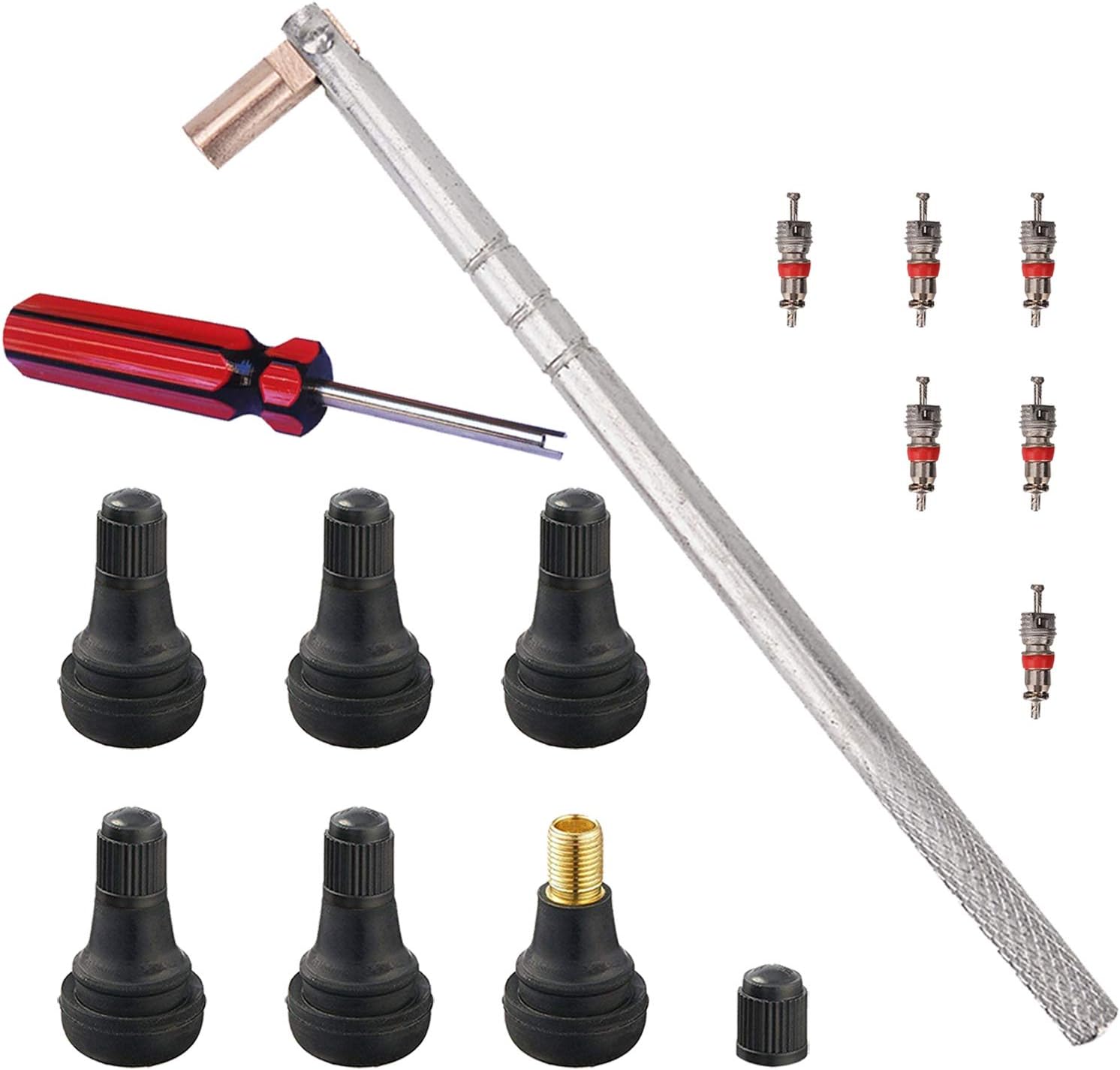
This FEBRYTOLD tire valve stem tool set makes it easy to remove and install standard 0.453 inch snap-in valve stems for tubeless tires. It includes valve stem cores and a single-head valve core remover/installer tool to help you complete repairs quickly. Designed to help avoid scratching wheels and damaging valve stems during service.
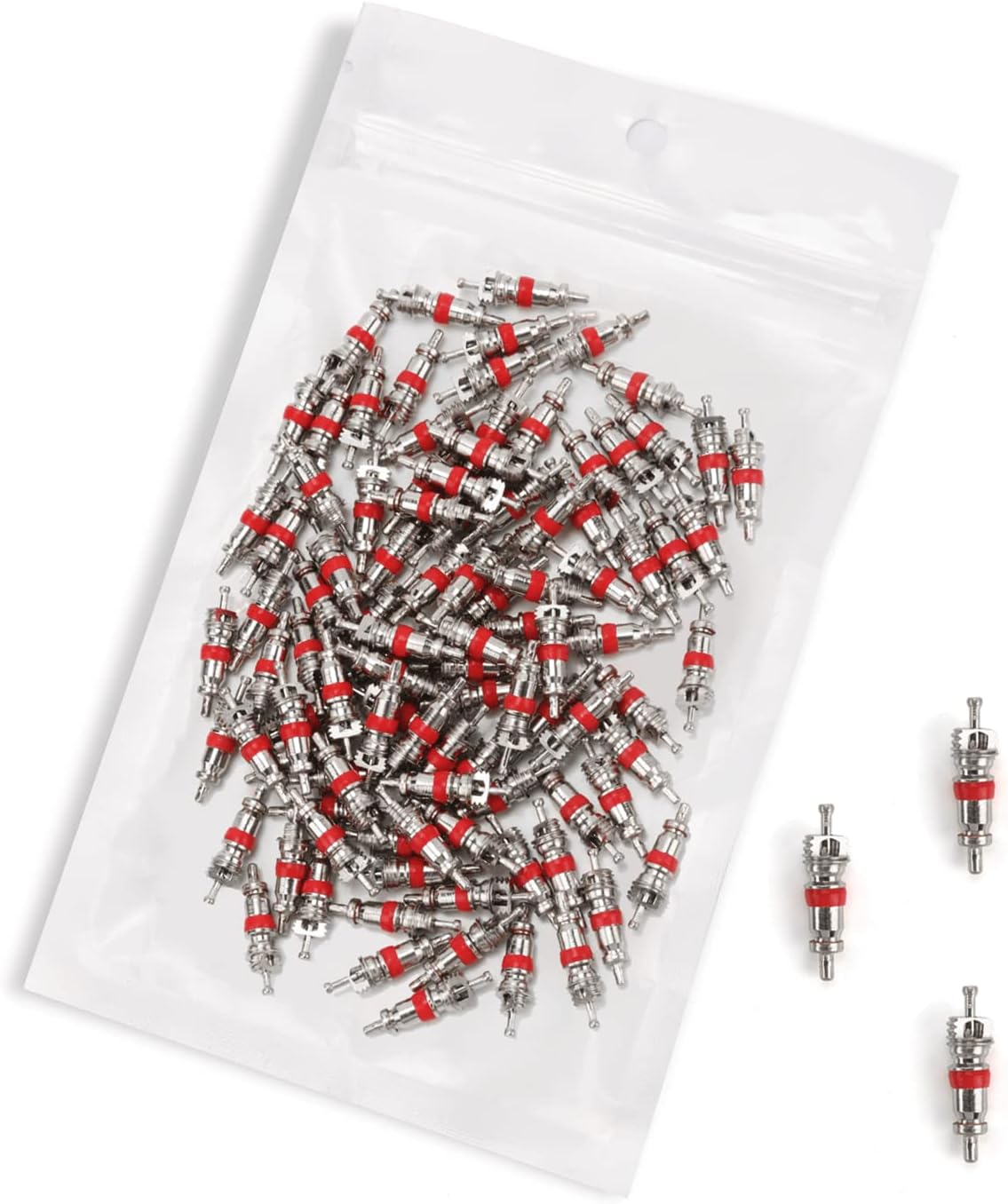
Replace worn Schrader valve cores with durable, nickel-plated replacements designed to resist rust and corrosion for a longer service life. Each core is 100% leakage tested and rated for up to 300 PSI, helping maintain a safe, reliable tire pressure system. Universal fit makes them suitable for cars, RVs, ATVs, motorcycles, bicycles, and many refrigeration/air conditioning applications.

This multi-function tire valve stem removal tool set makes it fast to remove, install, bleed, and clean valve cores for easier tire maintenance. It includes valve core removers, a 4-way spool tool, replacement valve caps, and spare cores to handle replacements and repairs with confidence. Universal compatibility suits cars, trucks, motorcycles, bicycles, and more for roadside convenience.
Fit and Compatibility
Compatibility is the most important buying factor. The listing identifies this kit for .453-inch valve-stem holes and explicitly excludes 5/8-inch stems and TPMS-equipped tires. Many passenger-car and light-equipment wheels use .453-inch snap-in stems, but appearance alone is not enough to confirm fit.
Check the original stem type, wheel-hole size, tire pressure requirements, and vehicle service information before removal. A metal clamp-in stem, a stem attached to an internal sensor, or a specialty high-pressure application needs a different service process and properly matched parts.
The included TR413, TR414, and TR418 stems differ mainly in overall length. Match the replacement to the original stem or a verified application guide so the cap remains accessible without leaving an unnecessarily long stem exposed to impact.
Materials and Build Quality
The product listing describes the main metal parts as 304 stainless steel and pairs them with a plastic tapered positioning tube. That combination keeps the kit light and resistant to normal workshop moisture, while the molded guide helps direct the replacement stem through the wheel opening.
The tradeoff is that the plastic guide is not as forgiving as a heavy commercial tool. User comments summarized in the original article mention care around the tapered tube and hook. Avoid excessive force, improvised reinforcement, hammering, or altered tools, because a damaged guide can misalign the stem or leave you without a seal.
Installation and Ease of Use
The basic process is simple, but it is not risk-free. You must fully deflate the tire before removing the existing stem. The hook is inserted beside the old rubber stem, the stem is pulled through the wheel opening, and the lubricated replacement is guided into place with the tube and push rod.
The included paper instructions are useful because the tool sequence is less familiar than using a standard pull-through valve tool on a bare wheel. Expect the first repair to take longer while you learn how the hook, guide, and push rod align. Stop if the stem tears, the guide deforms, or the replacement does not seat evenly.
Pro Tip: Before removing anything, spray a soapy-water solution around the valve core, stem base, tread, and bead. Bubbles help confirm the leak source so you do not replace a sound stem while missing a puncture or wheel leak.
How It Performs in Real Use
For a Slow Leak at the Stem Base
This is the use case that best matches the kit. After confirming that air escapes where the rubber stem enters the wheel, you can replace the complete snap-in stem without taking the tire off the rim. Success depends on correct stem size, full deflation, lubrication, and an undamaged valve hole.
For a Leaking Valve Core
You may not need the quick-change stem tools at all. The kit includes loose valve cores and a four-way tool, so a leaking core can often be removed and replaced through the existing stem. Test with soapy water after installation and tighten only enough to seal, because overtightening can damage the core or stem.
For Trailers and Seasonal Equipment
The assortment can be useful for non-TPMS utility trailers, lawn equipment, motorcycles, and ATVs that sit for long periods and develop weathered rubber stems. Confirm the wheel-hole size and required pressure rating, then keep the remaining caps, cores, and tools together for later maintenance.
For Roadside Emergencies
The compact package is easy to store, but it is not a complete roadside inflation system. You still need a safe work area, a way to verify the leak, a pressure gauge, and an inflator capable of returning the tire to the vehicle placard pressure. Do not drive on an underinflated tire or continue if the new stem will not seal.
How to Use It Correctly
- Confirm compatibility. Verify a .453-inch rubber snap-in stem, no valve-mounted TPMS sensor, and a suitable TR413, TR414, or TR418 replacement.
- Secure the vehicle or equipment. Park on a firm, level surface, set the parking brake, and use wheel chocks where appropriate.
- Find the actual leak. Use soapy water on the core, stem base, bead, and tread. Replace only the part that is leaking.
- Deflate the tire completely. Remove the valve core and confirm that pressure is released before using the extraction hook.
- Remove the old snap-in stem. Follow the included instructions and keep the tool aligned to reduce the chance of scratching the wheel or tearing rubber into the tire.
- Lubricate the replacement stem. Use a tire-mounting lubricant suitable for rubber valve stems, then guide the stem through the wheel opening with the supplied tube and push rod.
- Check seating and sealing. Make sure the rubber shoulder is evenly seated, reinstall the core and cap, inflate to the vehicle or equipment specification, and test again with soapy water.
Compatibility and Safety
Do not use this kit on a valve-mounted TPMS assembly. A TPMS stem may be attached to an electronic sensor inside the tire, and pulling it through the wheel can damage the sensor or its fastener. TPMS service also requires application-specific parts and may require programming or relearning after repair.
Never work on a pressurized stem with the extraction tool. Fully release tire pressure first, keep your face and hands away from the valve path, and wear eye protection. If the wheel opening is corroded, enlarged, cracked, or sharply damaged, have the wheel inspected rather than forcing in a new stem.
After the repair, inflate only to the pressure specified for the vehicle, tire, trailer, or equipment. A replacement stem does not make an unsuitable tire safe, and it will not fix internal tire damage caused by driving while flat.
Pros and Cons
Pros
- Designed to replace compatible snap-in stems without fully demounting the tire
- Includes TR413, TR414, and TR418 stem options for common .453-inch applications
- Provides cores, caps, hand tools, gloves, and printed instructions in one kit
- Compact enough for a garage cabinet, trailer box, or equipment toolbox
- Useful for both full-stem replacement and simpler valve-core service
Cons
- Not compatible with valve-mounted TPMS, metal clamp-in stems, or 5/8-inch applications
- The plastic tapered guide needs careful handling and may not suit repeated shop use
- No dedicated tire inflator or rubber-safe mounting lubricant is listed as included
What People Say
Feedback summarized in the original article is mixed but generally practical. Buyers tend to value the all-in-one assortment and the ability to service a rubber stem without fully removing the tire. The most common cautions involve using lubricant, learning the push-and-pull technique, and handling the tapered guide carefully.
Overall Sentiment: Neutral to positive, with compatibility and technique affecting results.

Situational Benefits
|
Situation |
How It Helps |
|---|---|
|
Confirmed stem-base leak |
Lets you replace a compatible rubber snap-in stem while the tire remains mounted on the wheel. |
|
Leaking valve core |
Includes replacement cores and a four-way tool for a simpler repair when the complete stem is still sound. |
|
Seasonal equipment |
Keeps several common stem lengths, caps, and cores together for non-TPMS trailer, ATV, motorcycle, or lawn-equipment service. |
Why Customers Choose It
The main appeal is convenience. Instead of buying a hook, guide, push rod, stems, cores, and caps separately, you get them in one compact package. That makes the kit easy to keep for occasional repairs, provided you verify the stem type before starting.
Is It Worth the Price?
The FullMayPro kit sits in the budget DIY category. It offers strong value for the price when one compatible stem replacement would otherwise require a tire-shop visit, and the extra cores, caps, and stem sizes make the package more useful for owners who maintain several pieces of non-TPMS equipment.
It is less compelling for modern passenger vehicles with direct TPMS, specialty stems, or high-pressure commercial applications. Professional technicians may also prefer a heavier-duty system with application charts, replacement guides, and shop-grade components.
[Products Worth Considering]

This Dr.Roc tire valve stem puller tools set helps install or remove snap-in tubeless valve stems safely and efficiently. It includes ozone-resistant EPDM snap-in valve stems, a valve stem installer, and a valve core remover for quick core removal or installation during tire service. Designed for reliable tubeless tire repair on motorcycles, ATVs, lawn equipment, cars, and trucks.

This 100-piece set of snap-in tubeless tire valve stems is designed for standard 0.453 in (11.5 mm) rim holes and helps maintain reliable, steady tire pressure. Made with ozone-resistant rubber and brass cores, the valves are built for durability and long-term use. Easy to install by hand, they support safe driving and are suitable for cars, light trucks, trailers, and more.

Keep your tires performing with these valve core removal tools designed to quickly disassemble and reinstall standard valve cores. The compact, portable design makes it easy to carry for bicycle, motorcycle, car, or truck repairs. Durable stainless steel construction helps you handle routine tire maintenance with less hassle.
How It Compares to Alternatives
A basic valve-core tool and a pack of cores cost less when the leak is only at the threaded core. A conventional pull-through valve-stem tool is simpler and more robust when the tire has already been removed from the wheel. The FullMayPro kit makes the most sense when you have confirmed a compatible rubber stem, want to leave the tire mounted, and value a broader assortment of replacement parts.
[Products Worth Considering]

Get back on the road fast with this compact tire plug repair kit for tubeless tires. It includes self-vulcanizing rubber plugs, T-handle rasp and insert tools, and a storage box that fits in your glove compartment for easy access. Also included are a 4-way valve steam tool set with valve cores and caps for added roadside convenience.

This 39-piece AC valve core accessories kit helps technicians efficiently remove and install Schrader valve cores for R12 and R134a automotive air conditioning and HVAC systems. It includes multiple single and dual-head removal tools for versatile service, plus replacement valve cores and seal caps to maintain a reliable seal and reduce leakage. Built for durable, secure handling, the kit is suitable for home and commercial maintenance and repair.

Protect tire valves from water, dust, and sand to help prevent leaks and support safe driving. These universal stem caps install quickly by hand and feature durable aluminum alloy construction with an inner sealing ring for better air retention. Compatible with cars, SUVs, trucks, motorcycles, and bicycles for everyday convenience.
Frequently Asked Questions
Does this kit replace a valve core or the whole valve stem?
It can service both, but the quick-change hook, guide, and push rod are meant for the complete rubber snap-in stem. The package also includes loose threaded valve cores and a four-way tool for core-only leaks.
Can I use it on a vehicle with TPMS?
No. The product listing excludes tires with valve-mounted TPMS sensors. Pulling a TPMS stem through the wheel can damage the sensor, so use application-specific service parts and qualified TPMS procedures.
What wheel-hole size does the kit fit?
It is listed for standard .453-inch snap-in valve-stem holes. It is not intended for 5/8-inch openings, metal clamp-in stems, or specialty applications.
How do I choose between TR413, TR414, and TR418?
These are different lengths of rubber snap-in stem. Match the original stem or use a verified application guide so the replacement fits the wheel and remains easy to reach without being overly exposed.
Do I need lubricant and an air compressor?
Yes. Use a rubber-safe tire-mounting lubricant to reduce damage during insertion, and have a suitable inflator and pressure gauge available. Lubricant and an inflator are not listed among the included parts.
Can this repair every slow tire leak?
No. A slow leak may come from the valve core, stem base, bead, wheel, or a tread puncture. Test the tire first and seek professional service for wheel damage, internal tire damage, bead leaks, or an uncertain leak source.
Who should skip this kit?
Skip it if you cannot confirm the valve type, if the wheel has TPMS or a clamp-in stem, or if you lack a safe way to deflate and reinflate the tire. It is also a poor fit for frequent commercial service where heavier tools are more appropriate.
The Bottom Line
The FullMayPro 38PCS Tire Valve Stem Tool Kit is a practical choice for occasional DIY repairs on confirmed .453-inch, non-TPMS rubber snap-in stems. Its broad parts assortment and on-wheel installation method are the main strengths, while limited compatibility and a plastic guide make it less suitable for modern TPMS vehicles or heavy shop use. Buy it only after checking the wheel, stem type, and pressure application.
Ready to Buy?
Check the current product details and confirm compatibility before you decide.