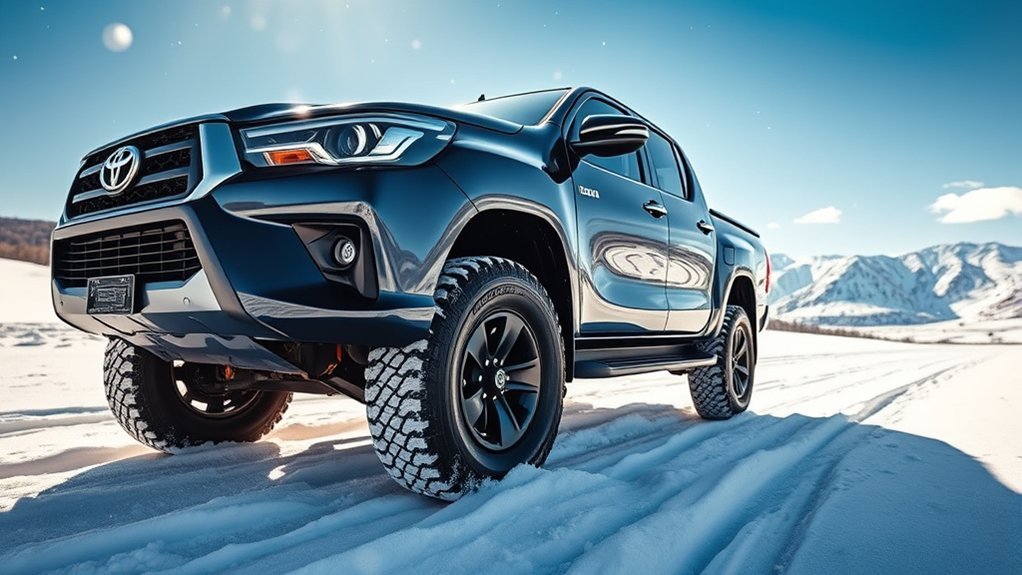
If you drive a Toyota Hilux through snow, slush, freezing rain, mountain passes, or icy work sites, the right winter tires can make a major difference in braking, steering, and control. The key is not just buying an aggressive-looking tread. You need the correct Hilux tire size, the right load rating, a winter-appropriate compound, and a tire marked for severe snow use when winter conditions demand it.
Quick Answer
For a Toyota Hilux, choose winter tires that match the tire size and load rating on your door placard or owner’s manual, carry the Three-Peak Mountain Snowflake symbol for severe snow use, and are installed as a matching set of four. For mixed off-road use, a 3PMSF all-terrain can work, but dedicated winter tires are better on ice.
Key Takeaways
- Use the Hilux tire placard or owner’s manual first; do not assume a forum-recommended size will fit your model, trim, suspension, or load needs.
- Look for the Three-Peak Mountain Snowflake symbol if you regularly drive in snow or severe winter conditions.
- Dedicated winter tires give the best ice and packed-snow control, while 3PMSF all-terrain tires are a compromise for drivers who also need gravel, farm, job-site, or trail durability.
- Check pressure monthly when the tires are cold, monitor tread depth, and inspect tire age, cracks, bulges, and uneven wear before winter starts.
At a Glance
| Time Required | 30–60 minutes to check size, load rating, and options; professional mounting and balancing typically takes longer depending on the shop. |
| Difficulty | Easy for research and inspection; professional fitting is recommended for mounting, balancing, TPMS service, and any size change. |
| Tools Needed | Owner’s manual or tire placard, tire pressure gauge, tread depth gauge, flashlight, and your current tire size/load rating. |
| Cost | Varies by market, wheel size, LT/load rating, and brand; budget for four tires plus mounting, balancing, valve stems or TPMS service, and seasonal storage if needed. |
Why Winter Tires Are Essential for Your Toyota Hilux
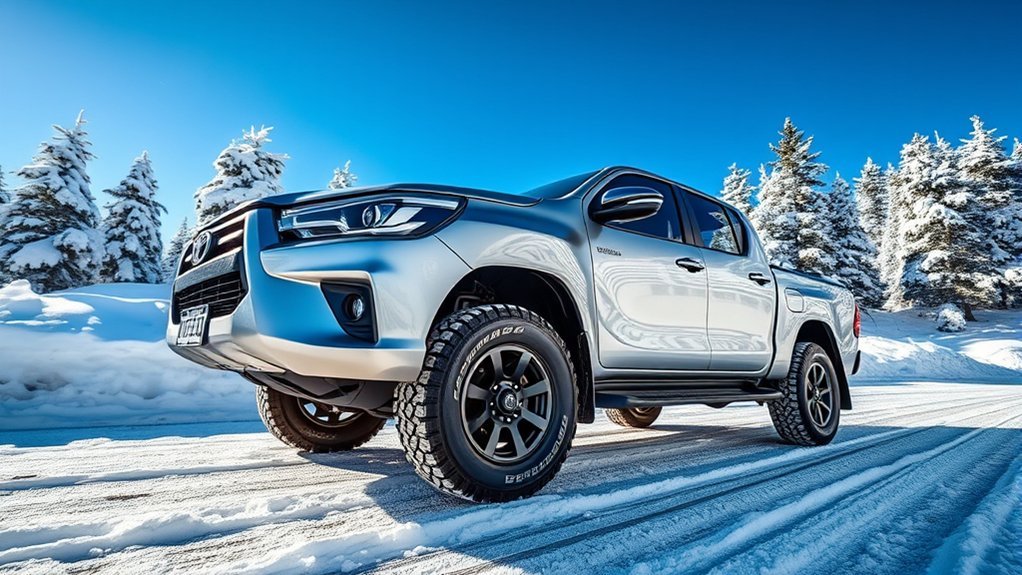
When winter weather hits, equipping your Toyota Hilux with the right winter tires helps maintain control on icy, snowy, and slushy roads. Winter tires use rubber compounds designed to stay more flexible in cold conditions, while their tread blocks, grooves, and sipes help bite into snow and move water or slush away from the contact patch.
The benefit is most obvious during braking, cornering, and hill starts. A Hilux is capable, but four-wheel drive does not shorten braking distance on ice. Tires are still the only parts touching the road, so grip matters more than engine power or drivetrain badge.
A practical rule is to install winter tires when daily temperatures are consistently around 7°C / 45°F or lower, especially if snow, freezing rain, or early-morning ice is common where you drive. In mild climates, high-quality all-weather tires may be enough, but in mountain, northern, or rural conditions, true winter tires are the safer choice.
Warning: Do not install only two winter tires on a Hilux. Use four matching winter tires with the same size, construction type, and comparable tread depth so the truck remains balanced when braking and cornering.
How to Choose the Right Winter Tire Size for Optimal Performance
Start with the tire placard on your Hilux door jamb and the owner’s manual. The correct size is usually written in a format such as 265/65R17 or 265/60R18, but the exact fitment depends on model year, trim, market, wheel size, suspension, and whether your truck is a single cab, extra cab, double cab, 4×2, 4×4, or modified setup.
Do not choose a winter tire only because another Hilux owner uses it. A larger tire such as 265/70R17 may fit some setups, but it can also rub the wheel arch, change speedometer accuracy, affect gearing, reduce clearance at full steering lock, or create problems with chains. If you want to change size, confirm the overall diameter, wheel width, offset, brake clearance, and suspension clearance with a tire professional.
Also check the load index and speed rating. A Hilux used for towing, tools, roof tents, livestock work, mining roads, or heavy payloads may need an LT-rated or higher-load tire. The replacement tire should meet or exceed the load requirement listed for your truck.
Note: The pressure printed on the tire sidewall is not the recommended Hilux pressure. Use the vehicle placard or owner’s manual, then adjust only as recommended for load, towing, or off-road use.
[Products Worth Considering]

The SAFELIFE dial tire tread depth gauge measures tread depth in 1/32 inch increments with clear, easy-to-read 2-inch dial face. Color zones using a traffic light system help you quickly judge whether tread is low, marginal, or ample for safer driving. Built with a durable zinc cast body and a metal detect probe for precise, comfortable use across cars, motorcycles, trucks, and buses.

Measure tire tread depth quickly and accurately with this LUMITECO dial gauge that reads in 1/32" increments up to 14/32". The color-coded green/yellow/red zones make it easy to judge tire wear and know when replacement is needed. A rugged, compact design with a protective pouch helps keep the gauge ready for use on cars, trucks, motorcycles, and more.

Monitor tire tread wear with a smart, color-coded depth gauge that shows clear condition ranges at a glance. The bar is range marked for fast, easy readings, helping you maintain safer traction and performance. Each gauge is portable with a pocket clip, and the set includes 20 units for daily use and sharing.
Look for 3PMSF, Not Just Aggressive Tread
The most important winter marking is the Three-Peak Mountain Snowflake symbol, often shortened to 3PMSF. This mark shows the tire has met a severe-snow performance requirement. By contrast, M+S or M/S can appear on many all-season and all-terrain tires and does not always mean the tire is strong on ice or packed snow.
For a Hilux, you will usually be choosing between three winter-capable tire categories:
| Tire Type | Best For | Tradeoff |
|---|---|---|
| Dedicated winter tire | Ice, packed snow, cold highway driving, mountain passes, and daily winter commuting. | Wears faster in warm weather and is less suited to rocky off-road abuse. |
| 3PMSF all-terrain tire | Mixed winter roads, gravel, farm tracks, job sites, and light trails. | Usually not as strong as a dedicated winter tire on ice. |
| Mud-terrain or rugged-terrain tire | Mud, rocks, and off-road traction where snow and ice are not the main risk. | Can be noisy, heavy, and poor on ice unless specifically winter-rated. |
[Products Worth Considering]

This tire inflator with pressure gauge delivers long-lasting performance with a durable rubber-protected gauge and sturdy build. The longer hose and 360 swivel air chuck help you seal the valve securely and keep your hands free while measuring, inflating, or deflating. It’s battery-free for reliable use and provides ±2 PSI accuracy in the mid-range for most typical tires, with universal compatibility for 1/4 NPT compressor outputs.

These universal tire valve stem caps help protect valve cores from dust, debris, and moisture while helping maintain stable tire pressure. The corrosion-resistant metal construction and sealed design provide reliable protection in road grime, mud, and winter conditions. Twist-on installation makes them quick to fit on cars, SUVs, trucks, and motorcycles.

Accurately measure tire tread depth with a calibrated gauge marked from 0 to 1 inch in 1/32 inch increments. The color-coded bar helps you quickly identify tread condition ranges, supporting safe driving for trucks, motorcycles, automobiles, and passenger vehicles.
Best Winter Tire Types and Brands for the Hilux: A Comparison
There is no single “number one” winter tire for every Toyota Hilux. The best choice depends on your tire size, local winter conditions, load needs, budget, and how much time you spend off-road. Instead of shopping by brand name alone, choose by use case:
- Mostly icy roads and highways: choose a dedicated winter tire in the correct Hilux size and load rating. This is the best option for braking and steering on ice and packed snow.
- Snow plus gravel, farms, trails, or job sites: choose a 3PMSF-rated all-terrain tire. Examples in this category may include models from Falken, Toyo, BFGoodrich, Nokian, General, Cooper, or other truck-tire makers, depending on size availability.
- Deep snow and rugged terrain: consider a more open all-terrain pattern, but confirm the tire has the 3PMSF mark if winter-road performance matters.
- Heavy loads or towing: prioritize load index, sidewall strength, and pressure requirements before tread appearance.
The original Falken Wildpeak A/T3W, Toyo Open Country R/T Trail, and Nitto Ridge Grappler are often discussed by truck owners, but they are not interchangeable winter tires. Always confirm the exact model, size, load range, and 3PMSF marking before buying. A tire may have different ratings depending on size and specification.
Pro Tip: If you drive mostly on ice, choose a dedicated winter tire over a rugged all-terrain. If you drive mostly on snowy gravel or work tracks, a 3PMSF all-terrain may be the better year-round compromise.
[Products Worth Considering]

Milton S-921 pencil tire pressure gauge helps you maintain optimal tire pressure for passenger cars with accurate readings in PSI and kPa. It features a built-in deflator valve for convenient pressure adjustments, plus a single chuck head and nylon indicator bar for easy use on the go. Built from durable plated brass and designed for reliable performance, it’s a practical road trip and cold-weather maintenance tool.
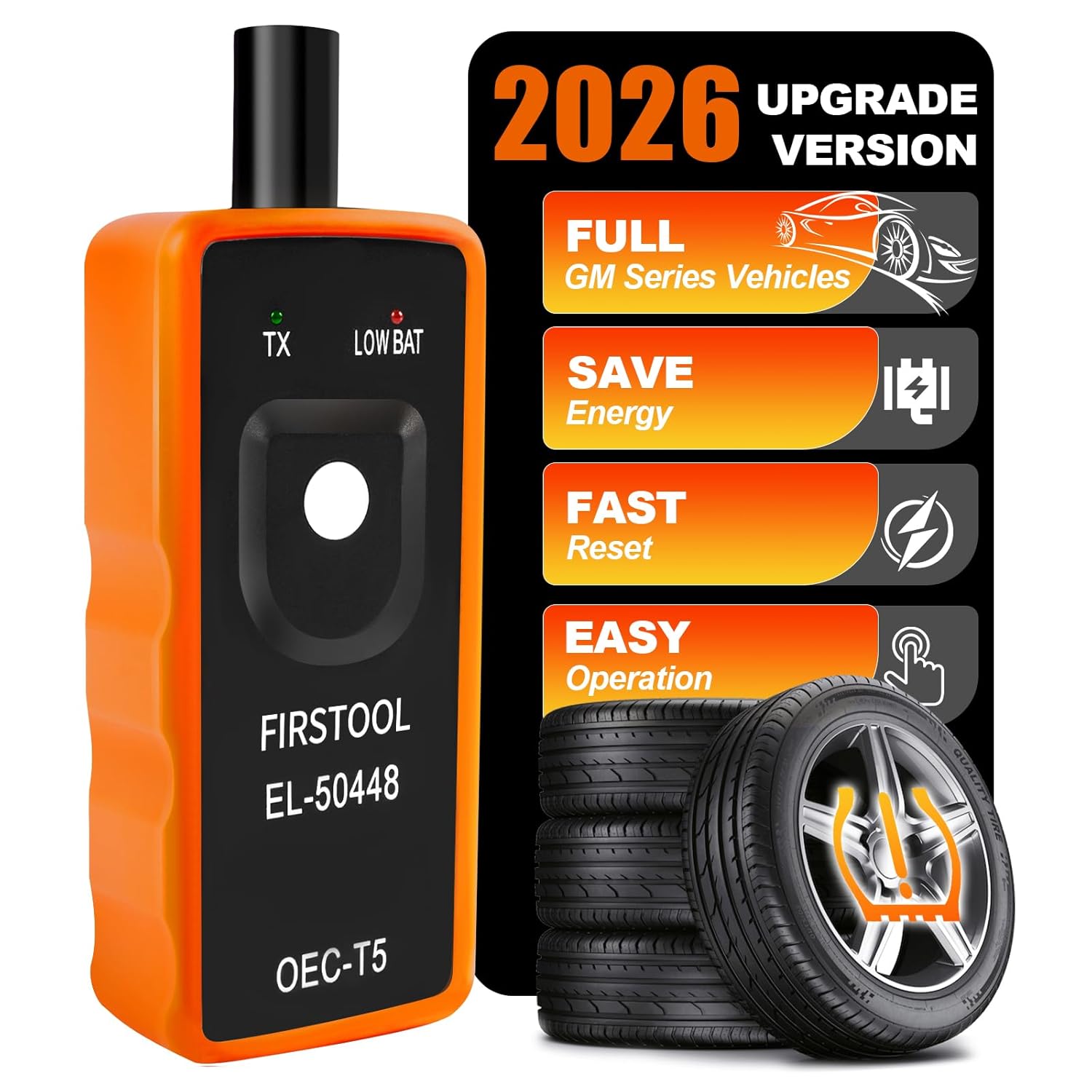
This TPMS relearn tool helps you quickly activate, match, and reset GM tire pressure sensors to keep the vehicle monitoring system working properly. It clears tire pressure alarms and dashboard warning lights after sensor replacement or tire rotation, and supports learning for common 315/433 MHz TPMS sensors. Designed for simple one-button operation, it can help you avoid unnecessary trips to repair shops.

The 22800 wheel stud installer makes replacing wheel studs quick and secure, saving time and effort during tire service. It uses a ratchet or impact wrench to pull new studs firmly into place, helping when existing studs are too long. Compatible with most automotive wheels and light-duty truck wheel studs, it’s designed for easy, tool-assisted installation.
Why Tread Patterns Matter for Winter Tires
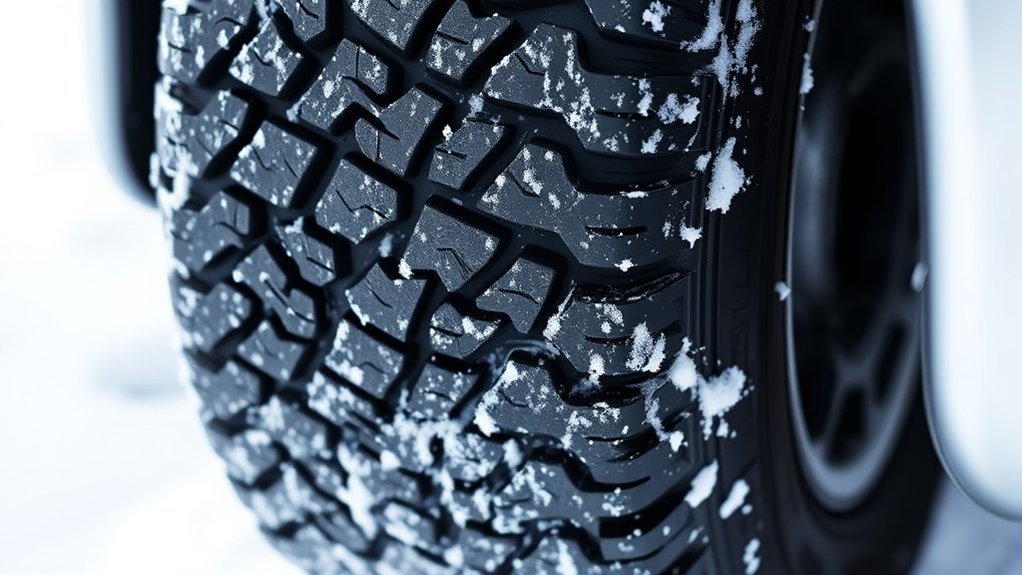
The tread pattern on winter tires affects how your Hilux grips snow, clears slush, and stays stable under braking. Deep circumferential grooves help move slush and water away. Lateral grooves and biting edges help the tire hold snow. Fine sipes create extra edges that improve grip on packed snow and ice.
Directional V-shaped patterns can be effective at clearing slush, while blockier all-terrain patterns can help in deeper snow, dirt, and loose surfaces. The right choice depends on where you drive most. A tire built for quiet highway use may not be the best for deep snow, and a tire built for rugged trails may not be the best on black ice.
Tread depth matters too. Do not wait until a winter tire is nearly bald. For general road legality, many places use a much lower minimum, but winter traction drops noticeably before that point. For snow-season confidence, plan replacement when tread approaches about 4–5 mm, or sooner if braking, steering, or hill-start grip has declined.
When’s the Right Time to Put on Winter Tires?
Install winter tires before the first serious storm, not after. A good rule is to book the changeover when temperatures are consistently near 7°C / 45°F or lower, especially if you leave early in the morning, drive mountain passes, or park outdoors overnight.
Remove winter tires once temperatures are consistently warmer and winter conditions have passed. Using winter tires for long periods on warm dry roads can accelerate wear, soften handling, and reduce tread life. If your climate swings between cold mornings and warm afternoons, watch the forecast and choose the safer period for your actual driving schedule.
In some regions, winter tire and chain rules are date-based or route-based. Mountain highways, ski access roads, and commercial routes may require winter tires, chains, or a minimum tread depth during posted seasons. Check local rules before traveling.
Signs Your Winter Tires Need Replacement
Recognizing when your winter tires need replacement is essential for maintaining safety and performance. Replace or professionally inspect your tires if you notice any of these signs:
- Low tread depth: winter traction can fade before the tire reaches the legal minimum. Use a tread depth gauge for an accurate reading.
- Longer braking distances: if the Hilux slides more than usual on familiar roads, the compound or tread may be past its best.
- Cracks, cuts, or bulges: sidewall damage is a safety warning, not a cosmetic issue.
- Uneven wear: cupping, shoulder wear, or one-sided wear may point to pressure, alignment, suspension, or rotation problems.
- Old tire age: check the DOT or date code. Many tire and vehicle makers recommend replacement around six to 10 years regardless of remaining tread.
- Missing or shallow winter features: some winter tires lose their most effective biting edges as they wear down.
Tips for Maintaining Your Winter Tires Throughout the Season
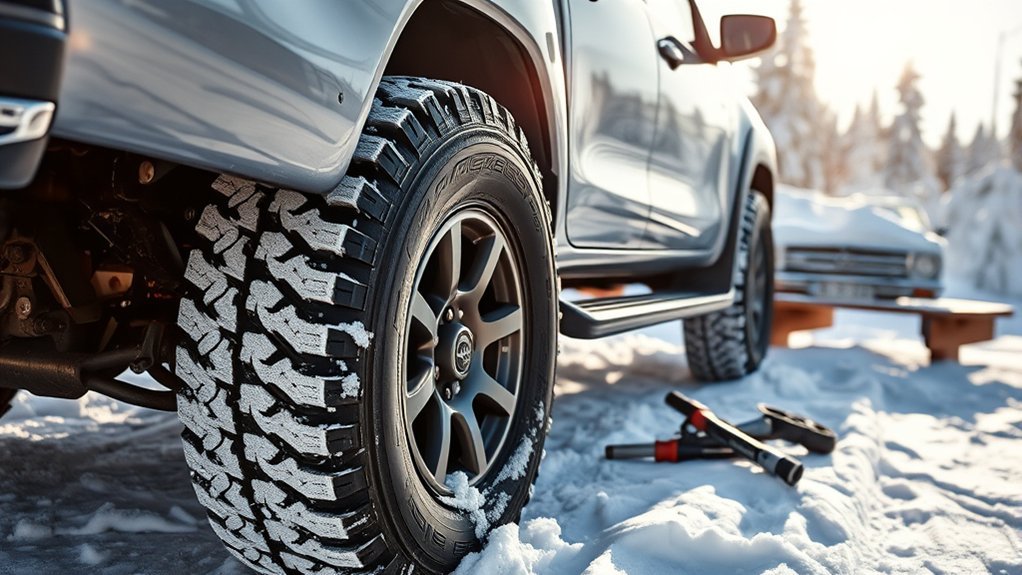
Good winter tires still need regular maintenance. Cold weather, heavy payloads, rough roads, and potholes can all affect pressure, wear, and handling.
Regular Pressure Checks
Check tire pressure at least once a month and before long winter trips. Measure pressure when the tires are cold, meaning the Hilux has been parked for at least several hours and the tires have not warmed from driving. Use the pressure listed on the Hilux tire placard or owner’s manual, not the maximum pressure printed on the tire sidewall.
Do not rely only on the TPMS warning light. A TPMS alert usually means a tire is already significantly underinflated. A manual pressure gauge is still the best routine check.
| Tire Condition | Recommended Action |
|---|---|
| Under-inflated tires | Inflate to the Hilux placard pressure when cold |
| Over-inflated tires | Deflate carefully to the recommended cold pressure |
| Cold weather impact | Check more frequently during temperature drops |
| Heavy load or towing | Follow Toyota and tire-maker pressure guidance for load |
| Uneven wear | Check pressure, alignment, balance, and rotation history |
Tread Depth Monitoring
Inspect tread depth monthly during winter. A tread depth gauge is better than a coin test because it gives an exact measurement across the inner, center, and outer tread. Check several points on each tire because Hilux tires can wear unevenly if pressure, alignment, or suspension settings are off.
- Measure the shallowest groove: record the lowest tread depth, not the best-looking section.
- Compare all four tires: big tread-depth differences can affect stability and drivetrain behavior.
- Watch for wear bars: if the tread is level with the built-in wear indicators, replace the tire.
- Replace before winter performance disappears: if traction is poor even with visible tread remaining, the compound may be aged or hardened.
Rotation, Storage, and Seasonal Care
Rotate winter tires according to the Hilux owner’s manual or your tire shop’s guidance. Rotation helps even out shoulder wear, especially on a truck that carries weight, tows, or drives gravel roads.
When winter ends, wash off salt and grit, dry the tires, and store them in a cool, dark, dry place away from direct sunlight, electric motors, solvents, and heat. If the tires are mounted on wheels, store them stacked or hung. If they are unmounted, store them upright and rotate their position occasionally.
Chains, Studs, and Local Winter Tire Laws
Winter tire rules vary by country, province, state, and road. Some mountain routes require winter tires, chains, or both during posted months. Studded tires may be legal only during certain dates, and some places restrict them because they can damage road surfaces.
Before fitting chains, confirm that your Hilux tire size has enough clearance around the wheel well, brake lines, suspension components, and mud flaps. Oversized tires can reduce chain clearance. If your Hilux has aftermarket wheels, a lift, a bull bar, or suspension changes, check fitment before you are stuck in snow.
Tire safety is not just a winter upgrade. The National Highway Traffic Safety Administration reported 511 tire-related crash fatalities in 2024, and routine pressure, tread, and aging checks are part of safer driving.
Frequently Asked Questions
What are the number 1 rated snow tires for a Toyota Hilux?
There is no single number 1 tire for every Hilux because size, load rating, climate, road type, and budget all matter. For icy highways, choose a dedicated winter tire in the correct Hilux size. For snow plus gravel or off-road work, choose a 3PMSF-rated all-terrain that still meets your load requirement.
Can I use all-terrain tires instead of winter tires?
Yes, if the all-terrain tire carries the Three-Peak Mountain Snowflake symbol and your conditions are mixed snow, gravel, and dirt. However, a dedicated winter tire is usually better on ice, packed snow, and cold wet pavement.
Should I fit winter tires to all four wheels?
Yes. Fit four matching winter tires. Installing only two can make the Hilux unstable because one axle may grip much better than the other during braking, steering, or downhill driving.
What tread depth should Hilux winter tires have?
Use a tread depth gauge and check several spots on every tire. Many drivers replace winter tires before they reach the legal minimum because snow traction drops as grooves and sipes wear down. For winter confidence, plan replacement around 4–5 mm or sooner if grip has noticeably declined.
Do I need LT-rated winter tires for a Hilux?
Not always. The tire must meet the size, load index, and pressure requirements for your specific Hilux. If you tow, carry heavy tools, drive rough roads, or use the truck commercially, an LT-rated or higher-load tire may be appropriate. Confirm with the placard, owner’s manual, and tire professional.
Are tire chains safe on a Toyota Hilux?
They can be, but only if the chain size matches your tires and there is enough clearance around the wheel well, suspension, brakes, and mud flaps. Practice fitting chains before winter travel and follow local chain-control signs and speed limits.
Conclusion
In the icy grip of winter, your Toyota Hilux deserves tires chosen for real winter performance, not just aggressive looks. Start with the factory tire size and load rating, look for the Three-Peak Mountain Snowflake symbol, choose the right tire type for your driving, and maintain pressure and tread throughout the season. With the right setup, your Hilux can handle winter roads with far more confidence and control.
Sources
- NHTSA TireWise — tire size, pressure, tread, aging, TPMS, and maintenance guidance.
- Toyota Australia HiLux — current Hilux model and specification reference; exact tire fitment still depends on the vehicle placard and market.
- U.S. Tire Manufacturers Association — tire safety and industry standards background, including severe-snow tire marking context.
- British Columbia winter tire and chain requirements — example of route-specific winter tire and chain rules.
- SAAQ winter tire guidance — example of jurisdiction-specific winter tire rules and seasonal requirements.