
How Many Miles Do All Terrain Tires Last on a Toyota Tacoma
All-terrain tires on a Toyota Tacoma usually last about 40,000 to 60,000 miles, but that range depends on the tire model, tire construction, road surface, load, pressure, rotation schedule, and how often you tow or drive off-road. A careful Tacoma owner can often reach the upper end of the range, while heavy off-road use, underinflation, overloading, or missed rotations can wear the tread much faster.
Quick Answer
Most all-terrain tires on a Toyota Tacoma last 40,000 to 60,000 miles. Premium highway-friendly A/T tires may last longer, while LT-rated, aggressive, heavily loaded, or frequently off-road tires may wear sooner. Rotate them every 5,000 miles or six months, keep them properly inflated, and replace them at 2/32 inch tread depth or sooner if damaged.
Key Takeaways
- A realistic Tacoma all-terrain tire lifespan is 40,000–60,000 miles, with some tire warranties reaching 65,000 miles depending on model and size.
- LT tires can be tougher for towing and off-road use, but they may ride firmer and often carry shorter treadwear warranties than P-metric versions.
- Toyota’s Tacoma maintenance schedule uses a 5,000-mile or six-month service rhythm, and tire rotation appears at every 5,000-mile interval in the maintenance chart.
- Replace tires immediately if tread reaches 2/32 inch, the wear bars are flush, cords show, sidewalls crack or bulge, or vibration/noise changes suddenly.
At a Glance
| Time Required | 10–15 minutes for a monthly tire check; 30–60 minutes for a professional rotation. |
| Difficulty | Easy for pressure and tread checks; moderate if rotating tires at home. |
| Tools Needed | Tire pressure gauge, tread depth gauge or penny, flashlight, and a torque wrench/jack only if rotating at home. |
| Cost | $0–$15 for basic DIY checks; many shops charge about $20–$80 for rotation unless it is included with tire purchase or service. |
How Long Do All-Terrain Tires Last on a Tacoma?
For most Toyota Tacoma owners, a good all-terrain tire lasts 40,000 to 60,000 miles. That is a realistic working range, not a promise. The actual lifespan depends on the tire’s tread compound, size, load rating, maintenance, and use.
Current manufacturer warranties show why the range varies. The BFGoodrich All-Terrain T/A KO3 lists a 50,000-mile mileage warranty. The Falken Wildpeak A/T4W lists up to 65,000 miles for non-LT sizes and 60,000 miles for LT sizes. The Toyo Open Country A/T III lists up to 65,000 miles for P/Euro-metric sizes and 50,000 miles for LT and flotation sizes.
A treadwear warranty is a useful comparison point, but it is not a guarantee. A Tacoma that tows, hauls, runs LT tires, or spends weekends on rocky trails can wear tires faster than a mostly highway-driven truck.
Here is a practical way to think about tire life on a Tacoma:
| Use Case | Typical Lifespan | Why It Varies |
|---|---|---|
| Mostly highway driving | 50,000–65,000 miles | Less tread chunking, smoother surfaces, steadier speeds. |
| Mixed daily driving and light trails | 40,000–60,000 miles | Most Tacoma owners fall here if tires are rotated and inflated correctly. |
| Frequent towing, hauling, gravel, or rocky trails | 30,000–50,000 miles | More heat, more load, and more cuts or chips in the tread. |
| Aggressive mud-terrain-style A/T use | 25,000–45,000 miles | Deeper voids, heavier construction, and rough use can trade tread life for traction. |
Note: Use the tire size, load rating, and pressure shown on your Tacoma’s Tire and Loading Information Label or in the owner’s manual. Do not use the maximum PSI printed on the tire sidewall as your everyday pressure setting.
[Products Worth Considering]

EVOULTES heavy duty tire inflator with an integrated gauge delivers accurate pressure readings from 10–120 PSI, helping you inflate, deflate, and check tires in one tool. The 16.5-inch extended dual-head air chuck with swivel base reaches hard-to-access dual wheel valves on trucks and RVs. A brass trigger core and side-mounted air release valve make operation smooth, with standard 1/4" NPT threading and quick-connect compatibility for easy setup.

This VEVOR tire bead breaker uses a slide-hammer impact and wedge tip to separate tire beads from rims quickly and efficiently without damaging hub surfaces. The long handle and sturdy steel construction help reduce user strain while providing reliable, portable tire changing for cars, trucks, and more. Ideal for home mechanics and repair shops handling multiple vehicle tire sizes.

The JACO FlowPro Tire Inflator measures, inflates, and airs down tires up to 100 PSI with battery-free operation and ±2% accuracy after calibration. It features a glowing pressure dial for night visibility, a heavy-duty steel build with a hybrid hose, and a precision push-to-inflate thumb trigger. The patented Lightning Air Chuck locks on for a secure seal, and the kit includes quick-connect hardware for easy inline use with your air compressor.
What Affects Tire Longevity for Your Tacoma?
Several factors decide whether your Tacoma’s all-terrain tires wear evenly or disappear early. The biggest ones are tire pressure, rotation, alignment, load, terrain, tire construction, and driving style.
| Factor | Impact on Longevity | What to Do |
|---|---|---|
| Tire pressure | Underinflation builds heat and wears the outer shoulders; overinflation can wear the center. | Check cold pressure monthly and before long trips. |
| Rotation schedule | Uneven front/rear wear shortens useful tread life. | Rotate every 5,000 miles or six months on Tacoma maintenance intervals. |
| Alignment and balance | Bad alignment causes edge wear, feathering, cupping, or vibration. | Check alignment after suspension work, hard impacts, or uneven wear. |
| Load and towing | More weight creates more heat and tread stress. | Stay within Tacoma payload/towing limits and use the right load-rated tire. |
| Terrain | Rocks, gravel, washboard roads, and sharp trail edges can chip or cut tread blocks. | Inspect tread and sidewalls after off-road trips. |
| Tire construction | LT tires are tougher but can be heavier and may carry shorter treadwear warranties. | Choose P-metric for comfort and mileage; choose LT when load, towing, or trail durability matters more. |
The National Highway Traffic Safety Administration says proper tire pressure affects safety, durability, and fuel use, and recommends checking all tires, including the spare, at least once a month when cold. NHTSA also notes that rotation, balance, and alignment can help tires last longer.
How to Extend Your Tire’s Life
Extending all-terrain tire life on a Toyota Tacoma is mostly about staying consistent. A few minutes each month can prevent uneven wear, poor traction, and early replacement.
- Check tire pressure monthly. Measure pressure when the tires are cold, ideally before driving or after the truck has been parked for several hours.
- Rotate tires every 5,000 miles or six months. Toyota’s current Tacoma maintenance guide recommends scheduled maintenance every 5,000 miles or six months, whichever comes first, and the maintenance chart includes tire rotation at 5,000-mile intervals.
- Use the correct rotation pattern. Follow the tire maker and Toyota guidance. Directional tires, different front/rear sizes, and five-tire rotations with a full-size spare can require different patterns.
- Inspect tread depth. Use a tread depth gauge for the best reading. A penny test can also help, but a gauge is more precise.
- Watch for uneven wear. Center wear often points to overinflation. Both-edge wear can point to underinflation. One-edge wear, feathering, or cupping can point to alignment, balance, or suspension issues.
- Recheck after towing or off-roading. Look for cuts, missing tread chunks, embedded stones, punctures, and sidewall scuffs.
- Keep the truck within its limits. Overloading the bed or towing beyond the truck’s rating adds heat and stress to the tires.
Pro Tip: Keep a small tire kit in the Tacoma: a quality pressure gauge, tread depth gauge, valve caps, a flashlight, and a note with your normal cold PSI. It makes monthly checks quick and repeatable.
What Are the Signs Your All-Terrain Tires Need Replacement?
Replace or professionally inspect your all-terrain tires when you see clear signs of wear, age, or damage. Do not wait for every tire to look bald.
Warning: Replace a tire immediately if the tread reaches 2/32 inch, the treadwear indicators are flush with the tread, cords are visible, the sidewall has a bulge, or the tire develops sudden vibration, pressure loss, or deep cracking.
- Tread is at 2/32 inch: NHTSA says tires are not safe and should be replaced when the tread is worn to 2/32 inch.
- Wear bars are flush: Built-in treadwear indicators are raised bars inside the grooves. When the tread is level with them, the tire is done.
- Cracks or dry rot appear: Aging, sun, heat, and poor storage can weaken rubber even if tread remains.
- Bulges, cuts, or cords show: These can signal structural damage and should be checked immediately.
- Uneven wear develops: Cupping, feathering, or one-edge wear often means alignment, balance, or suspension trouble.
- Traction drops: If wet braking, gravel grip, or off-road traction feels worse, the tire may be past its useful life even before it reaches the legal minimum.
- Noise or vibration changes suddenly: New vibration, thumping, or roaring can point to internal tire damage or balance issues.
Age also matters. NHTSA says tire aging happens as rubber and other tire components change over time, and some vehicle and tire manufacturers recommend replacing tires at six to 10 years regardless of treadwear. Check the DOT Tire Identification Number on the sidewall to find the tire’s manufacture week and year.
[Products Worth Considering]

This cordless portable tire inflator delivers fast, safe inflation with an automatic shutoff when the target pressure is reached, helping prevent overinflation. The built-in LED lighting and real-time digital display make it easier to check pressure and handle roadside tire changes at night. It includes multiple nozzles for use on cars, motorcycles, bicycles, and inflatables like balls and swimming rings.
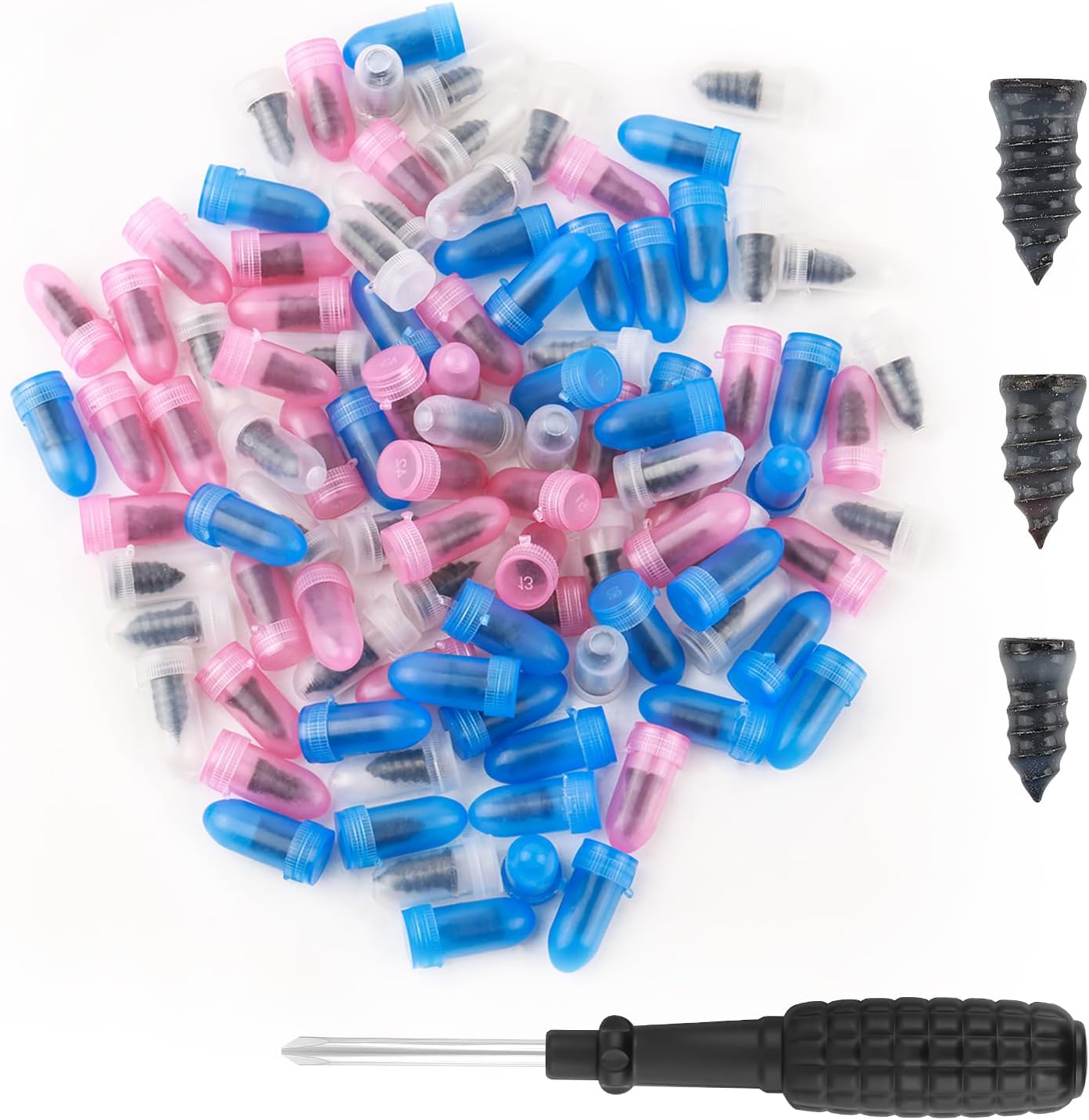
This 100-piece tire repair screw plug kit provides a fast, self-service solution for punctures on the road. Choose the correct plug size, insert it into the break, and screw it in to help seal the puncture and temporarily restore tire pressure. Thickened threads and rubber-wrapped plugs improve bite and sealing while remaining compact and easy to carry.
Comparing All-Terrain Tire Options for Your Tacoma
Choosing the right all-terrain tires for your Toyota Tacoma depends on how you drive. A daily-driver Tacoma needs a different tire than a truck that regularly tows, crawls rocky trails, or spends most weekends on gravel roads.
Before buying, check five things:
- Correct size: Match the Tire and Loading Information Label or a tire professional’s verified fitment.
- Load rating: Do not choose a tire with too little load capacity for your Tacoma, gear, passengers, and towing use.
- P-metric vs LT: P-metric tires often ride smoother and may have longer warranties; LT tires are built tougher for load and trail abuse.
- Snow rating: If you drive in winter conditions, look for the Three-Peak Mountain Snowflake symbol instead of relying only on “M+S.”
- Noise and weight: More aggressive tread can mean more road noise, more weight, and lower fuel economy.
| Tire Model | Published Treadwear Warranty | Best Fit for a Tacoma |
|---|---|---|
| BFGoodrich All-Terrain T/A KO3 | 50,000 miles | Drivers who want a proven, rugged A/T tire with strong trail credibility. |
| Falken Wildpeak A/T4W | Up to 65,000 miles; 60,000 miles for LT sizes | Daily drivers that also need snow rating, towing confidence, and off-road durability. |
| Toyo Open Country A/T III | Up to 65,000 miles for P/Euro-metric sizes; 50,000 miles for LT/flotation sizes | Tacoma owners who want a balanced road/trail tire with multiple construction choices. |
| Budget all-terrain tire | Often lower or no mileage warranty | Occasional use, lower annual mileage, or short-term ownership, as long as safety ratings and load capacity match. |
The best tire is not always the one with the longest warranty. For a Tacoma that mostly commutes, prioritize even wear, wet traction, low noise, and a warranty that fits your size. For a Tacoma that tows, hauls, or runs rough trails, prioritize load rating, sidewall strength, puncture resistance, and predictable handling.
Frequently Asked Questions
How often should I replace the tires on my Toyota Tacoma?
Replace Tacoma tires when the tread reaches 2/32 inch, when the wear bars are flush, when there is sidewall damage, when traction becomes poor, or when the tire reaches the age limit recommended by the tire manufacturer. Many all-terrain tires last 40,000–60,000 miles, but age, damage, and tread depth matter more than mileage alone.
How often should I rotate all-terrain tires on a Tacoma?
A strong Tacoma rule is every 5,000 miles or six months, whichever comes first. Toyota’s Tacoma maintenance guide uses that service rhythm, and regular rotation helps reduce irregular wear. Rotate sooner if you see uneven tread wear.
Do LT all-terrain tires last longer on a Tacoma?
Not always. LT tires are built for heavier loads and tougher use, but they are often heavier, firmer, and may carry shorter treadwear warranties than P-metric versions of the same tire. Choose LT tires when you need towing, hauling, or trail durability more than maximum treadwear mileage.
What tire pressure should I run in Tacoma all-terrain tires?
Use the cold tire pressure listed on your Tacoma’s Tire and Loading Information Label or in the owner’s manual for the tire size and load setup you are using. Do not use the maximum pressure molded on the tire sidewall as your normal street pressure.
Are all-terrain tires good in snow on a Tacoma?
Some all-terrain tires are good in light to moderate snow, especially if they carry the Three-Peak Mountain Snowflake symbol. However, all-terrain tires are not automatically winter tires. For regular ice, deep snow, or mountain winter driving, a dedicated winter tire may still be the safer choice.
Conclusion
All-terrain tires on a Toyota Tacoma usually last 40,000 to 60,000 miles, but the number depends on how the truck is used and maintained. A Tacoma that is rotated every 5,000 miles, kept at the correct cold tire pressure, aligned properly, and inspected after off-road use has the best chance of reaching the high end of that range. Replace tires when tread reaches 2/32 inch, when the wear bars are flush, when damage appears, or when age and performance make them unsafe.
Sources
- NHTSA TireWise — tire pressure, tread depth, treadwear indicators, rotation guidance, tire age, and replacement safety.
- Toyota 2026 Tacoma Warranty & Maintenance Guide — Tacoma scheduled maintenance interval and tire rotation schedule.
- BFGoodrich All-Terrain T/A KO3 — published mileage warranty and product positioning.
- Falken Wildpeak A/T4W — published tread life warranty, LT-size warranty, and severe-snow information.
- Toyo Open Country A/T III — published treadwear warranty by P/Euro-metric and LT/flotation sizes.

Related Articles
How Tire Weight Affects Toyota Tacoma Performance
How does tire weight influence your Toyota Tacoma's performance and efficiency? Discover the surprising effects that could change your driving experience.
Read More
Tire Noise Levels by Tire Type on a Toyota Tacoma
A comprehensive look at how tire types affect noise levels in your Toyota Tacoma reveals surprising insights that could enhance your driving experience.
Read More
How To Choose Tires for a Dual Use Toyota Tacoma
Unlock the secrets to selecting the perfect tires for your dual-use Toyota Tacoma, ensuring optimal performance and comfort on every adventure. Discover more inside!
Read More