
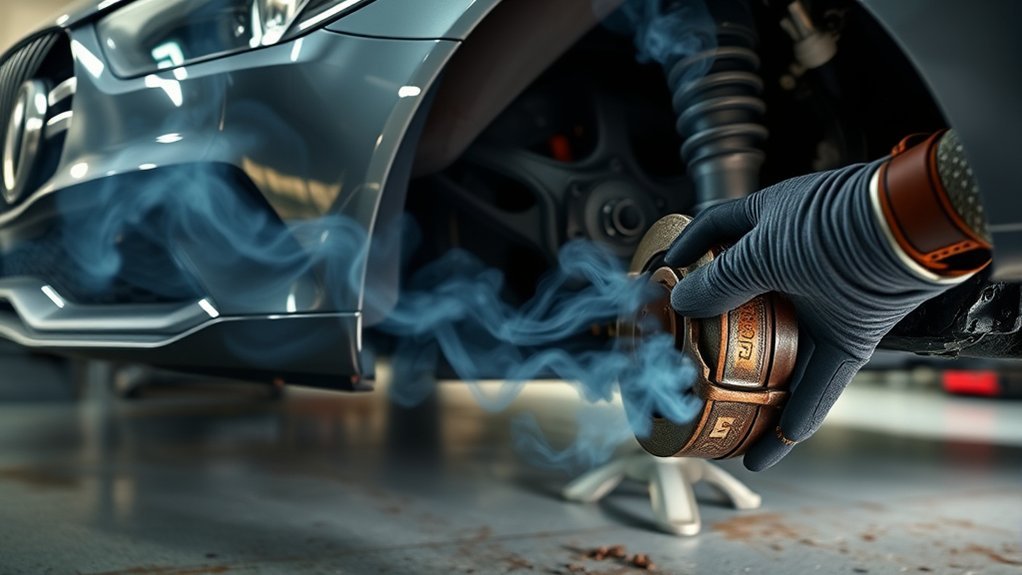
If your car smells like burning rubber, something is usually getting hotter than it should. Common causes include a slipping serpentine belt, overheated or dragging brakes, a fluid leak reaching a hot surface, a slipping clutch on a manual-transmission car, tire or plastic contact, or an electrical fault. The timing and location of the smell are the fastest clues.
Quick Answer
A burning rubber smell from a car often points to a slipping belt, hot brakes, a leaking fluid on a hot part, clutch overheating, tire rubbing, or melting plastic. Pull over if the smell is strong or worsening. If you see smoke, suspect a fire, or notice brake or steering problems, stop driving and get help.
Key Takeaways
- A burning-rubber odor is a symptom, not a diagnosis; match it to when it happens, where it is strongest, and what the car is doing.
- A squeal plus an under-hood smell can point to the serpentine belt, tensioner, pulley, or a belt-driven accessory.
- A smell that appears during braking can come from overheated brakes or a dragging caliper, especially if one wheel is much hotter or the car pulls.
- A burning smell during shifting or hill starts on a manual car can indicate clutch overheating or wear.
- Oil or other fluids can burn on hot engine or exhaust parts, while electrical faults often smell more like hot plastic or insulation.
- Smoke, flames, a strong electrical smell, weak brakes, rising engine temperature, or rapidly worsening odor are reasons to stop driving.
At a Glance
| Time Required | About 5–10 minutes for a basic visual check after the vehicle is safely parked and cool |
| Difficulty | Easy for observation; brake, electrical, belt-drive, clutch, and leak repairs may require a professional |
| Tools Needed | Flashlight, gloves, and the vehicle owner’s manual |
| Cost | A basic visual check costs nothing; repair cost depends on the failed component and vehicle |
Warning: If you see flames or heavy smoke, think the vehicle may be on fire, or smell a strong electrical burn, pull over safely, shut the vehicle off, get everyone out, and move well away from traffic. Do not open the hood if you suspect an under-hood fire; opening it can feed the fire with oxygen. Call emergency services.
Why Does My Car Smell Like Burning Rubber?
A burning rubber smell does not always mean a rubber hose or belt is literally burning. Drivers often describe overheated brake friction material, a slipping clutch, hot oil, electrical insulation, or melting plastic in similar ways. That is why the most useful clues are when the smell starts, where it is strongest, and which other symptoms appear with it.
A slipping serpentine belt can create heat and a sharp odor, especially if the belt is loose, contaminated, misaligned, or being dragged by a failing tensioner, pulley, or accessory. Overheated brakes can also produce an acrid smell, particularly after long downhill braking or when a caliper does not release fully. An oil or fluid leak can smell strong when it reaches a hot exhaust component.
| When or where you notice it | Possible cause to investigate |
|---|---|
| Under the hood with squealing or chirping | Serpentine belt, tensioner, pulley, or belt-driven accessory |
| After braking or near one wheel | Overheated brakes or a dragging caliper |
| During gear changes or hill starts in a manual car | Overheated or slipping clutch |
| After the A/C is switched on | A/C compressor, clutch, pulley, or belt-drive problem |
| Near a wheel while turning or after body/suspension damage | Tire rubbing a liner, splash shield, or body part |
| Under the car after driving over road debris | Plastic or debris touching the exhaust |
| With flickering lights, failed accessories, or a hot-plastic odor | Electrical fault, overheated connector, wiring, or charging-system problem |
| After parking, with oily residue or spots below the engine | Oil or another fluid leaking onto a hot surface |
Pro Tip: Write down exactly when the odor appears—during acceleration, braking, shifting, A/C use, turning, or just after parking. That timing often narrows the diagnosis faster than the smell description alone.
Check the Serpentine Belt and Hoses
With the engine off and cool enough to inspect safely, look at the serpentine belt, visible pulleys, tensioner area, and nearby hoses. Do not place your hands near a belt or pulley while the engine is running.
[Products Worth Considering]

Steelman white tire marking crayons provide high-contrast, semi-permanent marks for repairing and inspecting tires and equipment. They write on wet or dry, smooth or coarse surfaces including rubber, metal, glass, and wood, making them ideal for puncture location and damage outlining. The lead- and zinc-free crayons resist weather and fading yet wipe away when you no longer need the marks.

This car emergency kit keeps essential roadside tools organized in a durable, portable bag so you can respond quickly during common driving emergencies. It includes battery jumper cables, a bright LED headlight, first aid supplies, a tire pressure gauge, and safety essentials like gloves and an emergency poncho. Designed for trunk or storage use, it helps you be prepared for dead batteries, minor malfunctions, and unexpected roadside issues.

Yieokei Tesla jack pads are molded rubber lifting pucks designed for 2016-2026 Model 3/Y/S/X, including Juniper, to fit securely in the jack hole. They cushion the underframe and help position the jack precisely at the factory jack points to reduce risk of battery, paint, or chassis damage. The set also includes a tire repair tool kit for emergency roadside fixes and comes with a portable storage case to keep everything organized.
Serpentine Belt Wear
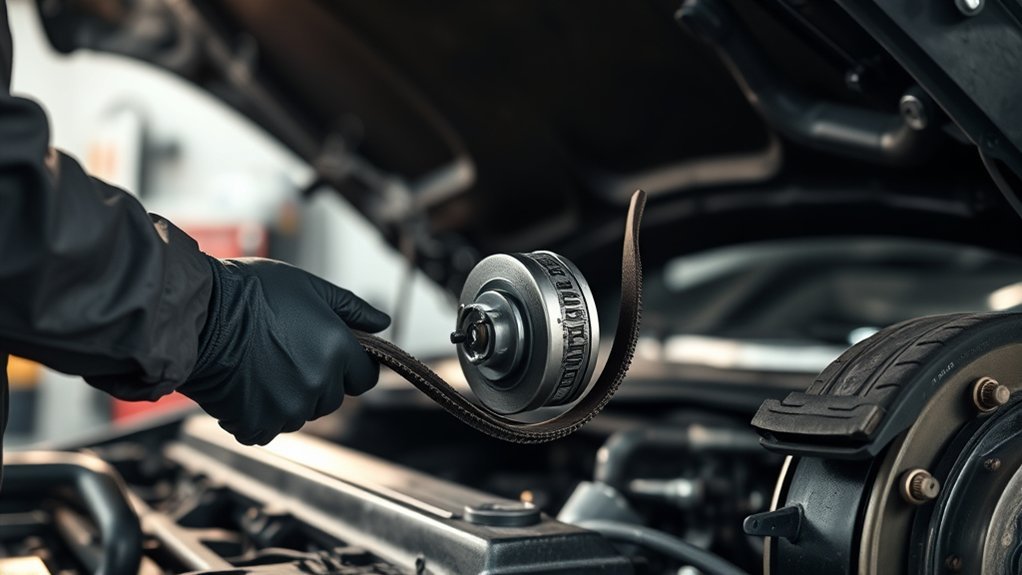
A worn or slipping serpentine belt can create friction and heat. Depending on the vehicle, the belt may drive accessories such as the alternator, A/C compressor, a mechanical water pump, or a hydraulic power-steering pump. If the belt slips badly or breaks, affected accessories can stop working.
Look for frayed edges, missing rib material, glazing, contamination, obvious misalignment, or rubber dust around the pulleys. Cracks can matter on some older belt materials, but cracks alone are not a reliable wear gauge for many modern EPDM belts. Gates notes that EPDM belts can lose rib material without obvious cracking and recommends evaluating the whole belt-drive system.
| What you see or hear | What it may suggest |
|---|---|
| Frayed edge or belt tracking off-center | Pulley alignment, tensioner, or bearing problem |
| Glazed or shiny belt surface | Heat, slipping, or contamination |
| Missing rib material | Advanced belt wear; replacement and system inspection are needed |
| Squeal or chirp with the odor | Belt slip, misalignment, tension problem, or a pulley/accessory fault |
Do not rely on a universal 30,000- or 60,000-mile replacement rule. Service intervals vary by vehicle and belt design. Gates recommends beginning closer inspection around 60,000 miles for many serpentine systems, while some EPDM belts can show little visible cracking even at much higher mileage. Follow your owner’s manual and replace a belt based on the manufacturer’s schedule and its actual condition.
Note: Replacing only the belt may not solve the smell if a weak tensioner, seized pulley, failing bearing, or accessory is making the belt slip. The belt-drive system should be checked as a unit.
Pulley, Tensioner, and Accessory Problems
A healthy belt can overheat if another part stops rotating freely. A failing idler pulley, tensioner bearing, alternator bearing, A/C compressor, or other belt-driven accessory can increase drag and make the belt slip. If the smell appears when a particular accessory is switched on, such as the air conditioner, that clue is worth reporting to the technician.
With the engine off, you can look for a belt that sits crooked on a pulley, excessive rubber dust, or obvious damage. Diagnosing bearing drag or tensioner force usually requires more than a visual check, so persistent squealing, belt dust, or repeated belt failure calls for professional inspection.
Hose Cracks and Leaks
Cracked or aging hoses can contribute to burning odors if they leak fluid onto hot parts or sag into contact with a hot surface. Inspect visible hoses for wet fittings, splits, swelling, brittleness, softened areas, or dried residue near connections.
Do not assume every hose leak will smell like rubber. Coolant often smells sweet, oil smells smoky or acrid when hot, and power-steering or transmission fluid can have their own odors. What matters is whether fluid is reaching a component hot enough to smoke or burn.
Heat Damage Signs
Heat damage can affect both belts and hoses. Look for melted edges, hardened or blistered rubber, darkened areas, fresh fluid residue, or a part sitting too close to the exhaust. Replace compromised parts and correct the reason they overheated or moved out of position.
| Component | Useful warning signs |
|---|---|
| Serpentine belt | Fraying, glazing, missing rib material, edge damage, rubber dust |
| Hoses | Cracks, swelling, brittleness, wet fittings, leaks, heat discoloration |
| Pulleys/tensioner area | Crooked belt tracking, wobble, rubber dust, repeated squeal |
Look for Brake Problems and Sticking Calipers
A burning smell that gets stronger during or after braking can come from overheated brakes. Long downhill braking, repeated hard stops, a parking brake that is not fully released, or a dragging caliper can all create excess heat. AAA notes that a burning smell can occur with overheated brakes or a frozen caliper, and recommends letting overheated brakes cool rather than pouring water on them. AAA’s brake guidance also flags pulling, weak brake feel, and leaking brake fluid as reasons for prompt service.
Watch for a car that pulls during braking, reduced braking performance, a soft or spongy pedal, smoke near a wheel, or one wheel area that seems much hotter than the others. Do not touch a wheel, rotor, or caliper to test its temperature; overheated brake parts can cause severe burns.
A burning smell after hard braking may be temporary, but a smell during normal driving—especially with pulling, smoke, or weak brakes—needs inspection before you keep driving.
Worn brake pads are one possible contributor, but the odor by itself does not prove the pads are worn. A technician should inspect pad thickness, rotor condition, caliper movement, brake hoses, and parking-brake operation before parts are replaced.
[Products Worth Considering]

Rubber Care delivers a beautiful dark black satin/matte finish on tires and other rubber or plastic surfaces, drying to the touch without oily shine. Its ceramic aircraft-grade formula helps repel dirt and brake dust residue, keeping surfaces cleaner longer. Triple nano ceramic polymer technology provides best-in-industry UV protection, restoring and protecting rubber while also working on weather stripping and de-ice boot care.

This roadside assistance kit helps drivers and passengers in urgent situations after an accident or breakdown, providing practical support while waiting for help. It includes a lightweight, compact tire inflator for fast inflation of standard vehicle tires, plus reinforced jumper cable protection for safer handling. Ideal for winter weather, road trips, camping, and travel, with everything stowed neatly in a trunk bag.

The SAFELIFE dial tire tread depth gauge measures tread depth in 1/32 inch increments with clear, easy-to-read 2-inch dial face. Color zones using a traffic light system help you quickly judge whether tread is low, marginal, or ample for safer driving. Built with a durable zinc cast body and a metal detect probe for precise, comfortable use across cars, motorcycles, trucks, and buses.
Check the Clutch and Transmission
If the smell appears while shifting, pulling away from a stop, backing up a hill, or holding a manual-transmission vehicle on an incline, the clutch may be overheating. Riding the clutch or a worn clutch that slips under load creates friction and can produce an acrid burning odor. Hyundai lists a burning smell and difficulty shifting among signs that a manual transmission or clutch system needs attention. Hyundai also advises avoiding prolonged half-clutch operation.
For an automatic transmission, rough shifting plus a burning smell should not be blamed on the serpentine belt. It can point to a transmission, fluid, electrical, or other driveline problem that needs diagnosis. If the transmission begins slipping, hesitating, refusing gears, or showing a warning message, stop driving if continuing would be unsafe and arrange service.
[Products Worth Considering]

Upgrade your 2024-2026 Tesla Model 3 Highland with REEVAA all-weather mud flaps designed for seamless fit along the original body lines. The set of four delivers strong splash protection against mud, gravel, and road debris while using OEM-grade durable materials. Installation is non-destructive with original hole positions and snap-in clips, and the aerodynamic design helps minimize impact on efficiency.

This universal wheel alignment tool helps you accurately restore tire tilt angles after tire or suspension repairs using an adjustable camber gauge. It features a powerful magnetic base that firmly attaches to brake rotors for stationary, slip-free readings, improving consistency during measurement. Built from durable PC plastic, it resists wear and corrosion and is compact enough for car, truck, RV, and motorcycle alignment tasks.

The Ziopetru adjustable magnetic wheel alignment tool helps you check and restore camber and caster positioning after removing and reinstalling undercarriage components. With a clear leveling/bubble measurement system and an easy zeroing adjustment knob, it supports precise horizontal angle checking. The strong magnetic base mounts to metal surfaces for convenient use at home on cars, motorcycles, trucks, vans, and SUVs.
Check for Tire Rubbing or Road Debris
A tire can smell like burning rubber if it is rubbing against a loose fender liner, splash shield, damaged body panel, or suspension component. This is more likely after a collision, suspension repair, wheel or tire-size change, or if the smell appears during sharp turns. Look for shiny rub marks, shaved rubber, or a loose liner around the wheel well.
Road debris can create a similar smell. A plastic bag or other material caught on the exhaust can melt once the exhaust heats up. Firestone lists plastic debris near the exhaust and non-rotating components that create excess friction among possible causes of burning odors. Its guidance recommends stopping if the smell is strong, continuous, or accompanied by smoke or warning lights.
Only inspect underneath the vehicle after it is safely parked and fully cooled. Never crawl under a vehicle supported only by a jack.
Check for Electrical Shorts
If the smell is sharp, acrid, or more like burning plastic than rubber—and especially if it comes with flickering lights, failing accessories, blown fuses, smoke, or a charging warning—treat an electrical fault as a serious possibility. Melted insulation, overheated connectors, a failing motor, or a short circuit can escalate quickly.
With the vehicle off, a safe visual check may reveal melted connectors, scorched insulation, pinched wiring, or heat discoloration. Do not probe damaged circuits or bypass fuses to keep the car running. AAA includes electrical shorts among recognized causes of burning odors and notes that flickering lights, malfunctioning accessories, or a dead battery can accompany them. AAA’s overview also identifies belts, brakes, oil leaks, hoses, and electrical faults as common sources to investigate.
Warning: Hybrid and electric vehicles contain high-voltage components. Do not touch orange high-voltage cables, battery components, or damaged high-voltage hardware. Follow the vehicle manufacturer’s emergency guidance and use a qualified technician.
Inspect for Oil Leaks Under the Hood
Leaking oil can drip or seep onto hot engine or exhaust parts and create a smoky burning odor that drivers sometimes describe as burning rubber. AAA specifically notes that engine oil reaching hot exhaust components can produce this type of smell.
Once the engine is off and cool, inspect visible areas around the valve cover, oil filter, oil pan area, and accessible hoses or lines for fresh wetness, burned-on residue, or stains. Check the parking spot for dark spots beneath the engine. Verify the engine-oil level using the procedure in your owner’s manual.
If the oil level is low, the leak is active, smoke is present, or oil is reaching the exhaust, have the source repaired. Do not assume that a small external leak is harmless: oil loss can reduce lubrication, and oil on sufficiently hot components can increase smoke and fire risk.
When to Stop Driving
A mild, one-time smell after unusually hard braking may clear after the brakes cool, but a strong, repeated, worsening, or unexplained burning smell deserves prompt attention. Stop driving sooner if the smell is accompanied by smoke, warning lights, loss of power, weak brakes, steering changes, rising coolant temperature, or unusual mechanical noise.
Pull Over Safely
Signal, move out of traffic, park on a stable surface, set the parking brake when appropriate, and shut the vehicle off. Note what happened immediately before the smell started: braking, accelerating, shifting, turning, switching on the A/C, or hitting road debris.
- Stop in a safe location away from moving traffic.
- Turn the vehicle off if the smell is strong, worsening, or accompanied by another warning sign.
- Get occupants out if there is smoke, suspected fire, or a strong electrical-burning odor.
- Do not restart the vehicle if the smell remains strong or the source is unknown and potentially unsafe.
- Arrange roadside assistance or a professional inspection when the vehicle cannot be driven safely.
Check for Fire Risk
If you see flames or heavy smoke, or believe the vehicle is on fire, do not open the hood or trunk. The U.S. Fire Administration says opening a compartment with a suspected fire can make the fire grow. Its vehicle-fire guidance says to shut the engine off, get everyone out, move at least 100 feet from the vehicle and away from traffic, and call 911. See the U.S. Fire Administration’s vehicle fire safety guidance.
Do not try to continue driving to “burn off” a strong odor. A slipping belt, dragging brake, electrical fault, fluid leak, or overheated clutch can worsen under continued load.
Call for Inspection
Arrange a professional inspection if the odor comes back after the vehicle cools, if you cannot identify a harmless external cause, or if the smell is paired with a performance or safety problem.
- Tell the technician where the smell seemed strongest.
- Explain exactly when it occurred and whether the A/C, brakes, steering, or shifting behavior changed.
- Mention any warning lights, recent repairs, road impacts, leaks, squealing, smoke, or pulling.
- Avoid repeated test drives when the symptom could involve brakes, wiring, a failing belt drive, or a fluid leak on hot parts.
Frequently Asked Questions
Should I drive my car if it smells like burning rubber?
Not if the smell is strong, worsening, repeated, or accompanied by smoke, warning lights, weak brakes, steering changes, overheating, or electrical symptoms. Pull over safely and arrange help. A faint one-time odor after unusually hard braking may clear as the brakes cool, but it should be checked if it returns.
How do I fix a burning rubber smell from a car?
Fix the actual heat source rather than the smell itself. Inspect for belt-drive problems, dragging brakes, clutch slip, fluid leaks, tire rubbing, debris on the exhaust, and damaged wiring. Replace or repair the failed component and correct the cause of overheating, misalignment, leakage, or friction before returning the vehicle to normal use.
Can I fix the burning rubber smell myself?
You can safely do basic observation with the vehicle off and cool, such as looking for a loose liner, obvious road debris, fluid residue, or visible belt damage. Brake repairs, electrical faults, belt-drive diagnosis, clutch work, and hybrid/EV high-voltage problems are better handled by a qualified technician unless you have the proper training and equipment.
Why does my car smell like burnt rubber and not shift smoothly?
On a manual-transmission car, a burning smell plus poor shifting can point to an overheated or worn clutch or another transmission problem. On an automatic, rough shifting and a burning odor need transmission or driveline diagnosis. A serpentine belt, brake problem, or hose leak can create a burning smell, but it does not normally explain rough shifting by itself.
Can a plastic bag on the exhaust cause a burning rubber smell?
Yes. Road debris such as a plastic bag can stick to a hot exhaust component and create a strong melting or burning odor. If there is no fire risk, inspect only after the exhaust has fully cooled. Persistent smoke or odor still needs professional attention.
Why is the smell strongest after braking?
Brakes turn motion into heat through friction. Heavy or prolonged braking can make pads and rotors very hot, while a sticking caliper can keep one brake applied even when you are not pressing the pedal. If the smell happens during normal driving, one wheel seems unusually hot, or the car pulls, have the brakes inspected.
Conclusion
If your car smells like burning rubber, do not ignore the pattern behind the odor. A slipping belt drive, overheated brakes, clutch slip, tire rubbing, road debris, an electrical fault, or a fluid leak can all create a similar smell. Start with a safe visual check only after the vehicle is parked and cool. Stop driving if the smell grows stronger, smoke appears, warning lights come on, or braking, steering, shifting, or engine temperature changes. Finding the source early can prevent a breakdown and reduce the risk of more serious damage or fire.
Sources
- U.S. Fire Administration — Vehicle Fire Safety — safe actions if a vehicle catches fire, including not opening the hood when an under-hood fire is suspected.
- Gates — Belt Inspection Changes, Tech Tip TT002-15 — EPDM belt wear, rib material loss, and inspection guidance.
- AAA Club Alliance — Why Does My Car Smell Like Burning Rubber? — common causes including brakes, oil leaks, belts, hoses, and electrical faults.
- AAA Via — Signs Your Brakes Need Service — burning brake odor, frozen calipers, pulling, and brake-fluid concerns.
- Hyundai — Complete Guide to Driving with a Manual Transmission — burning smell, shifting difficulty, and clutch-use guidance.
- Firestone Complete Auto Care — Why Does My Car Smell Like Burning? — debris on the exhaust, clutch odor, belt-drive faults, leaks, and dragging brakes.

