
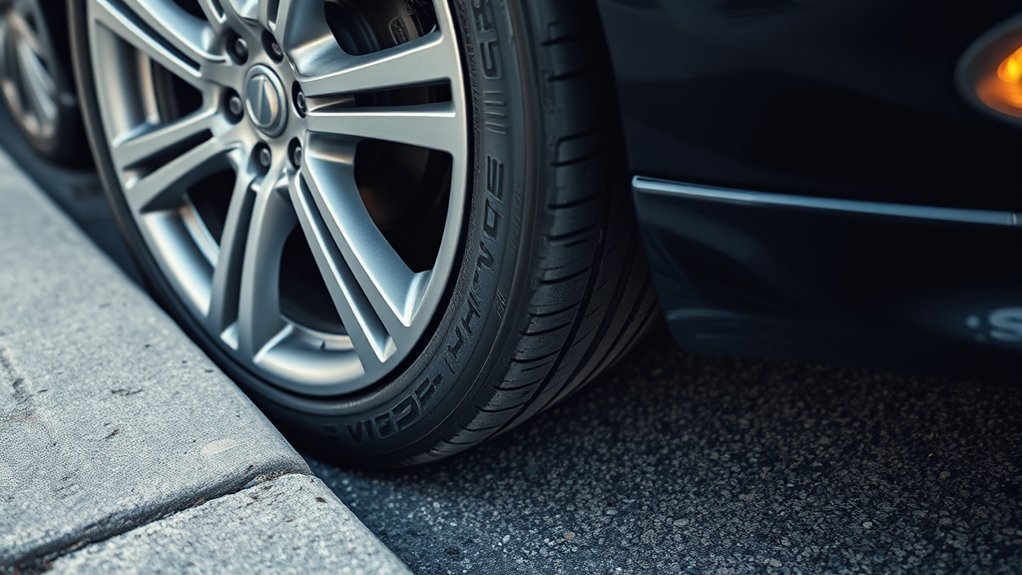
Yes, hitting a curb can damage both your tire and wheel, even at parking-lot speed. The impact can scuff or cut a sidewall, damage internal cords, unseat or injure the bead, bend or crack a wheel, and disturb alignment or suspension parts. Check the tire, wheel, pressure, steering feel, and vibration before returning to normal driving.
Quick Answer
A curb strike can damage a tire, wheel, alignment, or suspension. Stop driving if you see a sidewall bulge, exposed cords, a deep cut, rapid air loss, a cracked or badly bent wheel, or severe wobble. If no obvious damage appears, check cold tire pressure and watch for vibration, pulling, or new noise.
Key Takeaways
- A curb impact can damage the tire, wheel, alignment, steering, or suspension even when the outside looks mostly normal.
- A sidewall bulge, exposed cord, deep sidewall cut, rapid pressure loss, cracked wheel, or severe wobble is a stop-driving warning sign.
- Check tire pressure against the vehicle manufacturer’s specification when the tires are cold; do not compare a warm reading directly with the cold placard value.
- Sidewall and shoulder damage is generally not repairable; proper puncture repair is limited to qualifying damage in the tread area.
- Cosmetic curb rash is different from structural wheel damage. Bent or cracked wheels need professional evaluation, and repairability depends on the wheel and manufacturer guidance.
At a Glance
| Time Required | About 5–10 minutes for an initial visual and pressure check |
| Difficulty | Easy for the initial check; professional inspection is needed for suspected internal, wheel, alignment, or suspension damage |
| Tools Needed | Tire-pressure gauge, flashlight, and the vehicle’s tire-information placard or owner’s manual |
| Cost | The basic check costs nothing if you already have a gauge; professional diagnosis and repair vary by vehicle, wheel, tire, and damage |
Can Hitting a Curb Damage Your Tire or Rim?

Yes. A curb strike can damage both the tire and the wheel. The tire may suffer a sidewall cut, impact break, damaged cords, or bead-area injury. The wheel can be scraped, bent, or cracked, and the impact can also affect wheel alignment or suspension parts.
Damage severity depends on speed, impact angle, curb shape, tire profile, wheel design, vehicle load, and inflation pressure. Underinflation allows extra sidewall deflection and can leave less protection between the obstacle and wheel. Overinflation is not a solution; tires should be kept at the vehicle manufacturer’s specified cold pressure.
The National Highway Traffic Safety Administration recommends checking tires for cuts, punctures, bulges, scrapes, cracks, and pressure problems. Michelin also notes that a sidewall bulge or bubble can indicate cord damage after a severe impact.
Even when the tire still holds air, some impact damage can be hidden. A tire professional may need to remove the tire from the wheel to inspect the inner liner and bead area.
Warning: Do not continue normal driving on a tire with a sidewall bulge, exposed cords, a deep cut, rapid air loss, or severe vibration. Install the correct spare if available and safe to do so, or arrange roadside assistance.
Is It Safe to Drive After Hitting a Curb?
Whether it is safe to drive depends on what the curb strike damaged. Before moving farther, inspect the tire and wheel where it is safe to stop. Look for cuts, bulges, exposed cords, a visibly displaced bead, a cracked wheel, a severe bend, or obvious air loss.
If you find any of those conditions, do not drive normally. If no obvious damage appears and the tire is holding pressure, move cautiously and pay attention to steering, vibration, wobble, scraping, or new noises. When the impact was hard enough to concern you, a professional inspection is still a sensible next step even if the car seems normal.
Visible Tire Damage
Check the full visible sidewall and tread edge in good light. A shallow surface scuff can be cosmetic, but a bulge, blister, deep cut, exposed cord, split, or damaged bead can indicate structural injury.
A confirmed sidewall bulge should be treated seriously. Michelin states that a bulge or bubble generally indicates damaged cords and recommends replacement rather than repair. The Michelin sidewall-damage guidance explains why impact-related bulges require prompt attention.
Do not attempt to judge internal condition by pressing the sidewall or by assuming that a tire is safe because it still holds air. Hidden inner-liner or cord damage may require the tire to be demounted and inspected by a trained technician.
Wheel, Alignment, and Suspension Issues
A curb strike can bend a wheel or change suspension alignment. Common clues include a steering wheel that is suddenly off-center, the vehicle pulling to one side, new vibration, a wheel that appears to wobble, or fresh uneven clearance around the tire.
Alignment and wheel balance are different services. Alignment measures and adjusts suspension geometry such as toe and camber where the vehicle design allows it. Balancing corrects mass imbalance in the tire-and-wheel assembly. Neither service repairs a cracked wheel or a damaged tire.
If symptoms started immediately after the impact, ask the shop to inspect the tire, wheel runout, wheel bearing area, steering and suspension components, and alignment before simply adding balance weights.
Driving Safety Risks
Stop driving and use a spare or roadside assistance if you notice a sidewall bulge, exposed cords, rapid pressure loss, a visibly cracked or badly bent wheel, strong steering pull, severe vibration, scraping, grinding, or wheel wobble.
If the vehicle remains stable and no obvious damage is present, avoid high speed and long-distance driving until you are confident the tire is holding pressure and the wheel and steering feel normal. A hard strike can cause damage that is not immediately obvious.
- Check the tire and wheel visually before driving farther.
- Check tire pressure with a gauge; if possible, compare the cold reading with the door-jamb placard or owner’s manual.
- Watch for steering pull, vibration, wobble, air loss, or new noise.
- Get a professional inspection if the strike was hard or any symptom appears.
Visible Signs of Tire and Rim Damage
A curb strike can leave clues you can see immediately. Inspect the outer sidewall, tread shoulder, wheel lip, spokes, valve area, and any visible part of the inner wheel. If safe and practical, compare the affected wheel with the wheel on the opposite side.
| Area | What to Look For | Why It Matters |
|---|---|---|
| Tire sidewall | Bulge, deep cut, exposed cord, split, fresh abrasion | May indicate structural or impact damage |
| Wheel | Crack, bend, flat spot, deep gouge, distorted bead-seat area | Can affect strength, runout, balance, or air sealing |
| Tire pressure | Pressure loss or repeated need to add air | Can point to tire, bead, valve, or wheel leakage |
| Driving feel | Pulling, vibration, wobble, off-center steering | Can indicate wheel, tire, alignment, steering, or suspension damage |
Clean dirt from the wheel before judging a mark. A fresh cosmetic scrape is not the same as a crack or deformation. If the wheel looks warped, the tire loses pressure, or driving feel changes, stop normal use and have the assembly inspected.
Tire Sidewall Damage to Watch For
After a curb strike, treat a sidewall bulge, exposed cord, split, deep cut, or obvious separation as a serious warning sign. Impact can damage the tire carcass even when the outside initially looks minor.
A sidewall bulge after an impact can indicate broken internal cords, not just cosmetic rubber damage.
Check the area in good light and inspect as much of both the outer and inner sidewall as you can safely see without crawling under an unsupported vehicle.
- Look for cuts, gashes, bulges, exposed cords, or rubber separation.
- Inspect the bead area where the tire meets the wheel for pinching, tearing, or an uneven seat.
- Check cold tire pressure and monitor for repeated pressure loss.
Do not patch or plug sidewall damage. The U.S. Tire Manufacturers Association tire-repair guidance limits proper puncture repair to qualifying injuries in the tread area and requires the tire to be removed from the wheel for a complete inspection.
Rim Damage Signs to Check For
Rim damage can be just as serious as tire damage after a curb strike. Inspect the wheel for bends, cracks, flat spots, deep gouges, and damage around the bead seat. Fresh curb rash may be cosmetic, but deformation or cracking can affect air sealing, wheel runout, and structural integrity.
Look along the outer lip and spokes, then inspect the visible inner barrel with a flashlight if you can do so safely. If the wheel no longer appears round, the tire repeatedly loses air, or the vehicle develops vibration or wobble, have the wheel professionally inspected.
Cosmetic refinishing and structural wheel repair are not the same thing. Some manufacturers place strict limits on welding, reshaping, or refinishing damaged wheels. For example, a GM wheel-refinishing bulletin hosted by NHTSA states that cracked wheels must not be refinished and prohibits welding, hammering, or reforming in that procedure. Follow the guidance for your specific vehicle and wheel rather than assuming every bend is safely repairable.
How to Check for Hidden Damage
Some curb-impact damage is not visible from the outside. A careful home check can identify warning signs, but it cannot rule out internal tire damage or subtle wheel and suspension problems.
- Park safely and inspect the tire and wheel. Look for cuts, bulges, exposed cords, a damaged bead, wheel cracks, bends, and fresh impact marks.
- Check tire pressure correctly. Use a gauge and compare the reading with the vehicle placard when the tire is cold. If you must check after driving, remember that tire pressure rises with temperature, so do not treat a warm reading as directly comparable with the cold specification.
- Look for leakage. Repeated pressure loss can come from tire damage, bead leakage, a damaged valve, or wheel damage. A shop can identify the source safely.
- Watch the driving symptoms. New vibration, pulling, an off-center steering wheel, wobble, scraping, or noise after the strike warrants inspection.
- Have the tire demounted when impact damage is suspected. A technician can inspect the inner liner, bead, and internal damage that cannot be confirmed from the outside.
Note: A TPMS warning light is useful, but no warning does not prove the tire is undamaged. NHTSA notes that TPMS typically warns only after a tire is significantly underinflated, so a gauge and visual inspection still matter.
[Products Worth Considering]

Measure tire tread depth quickly and accurately with this LUMITECO dial gauge that reads in 1/32" increments up to 14/32". The color-coded green/yellow/red zones make it easy to judge tire wear and know when replacement is needed. A rugged, compact design with a protective pouch helps keep the gauge ready for use on cars, trucks, motorcycles, and more.

The Tymate TM12 RV TPMS delivers real-time tire pressure and temperature monitoring with a stable 433Hz display for safer long-distance driving. It supports simultaneous monitoring across vehicle and trailer zones, includes six alarm modes for pressure, temperature, leakage, battery, and signal loss, and features easy DIY installation with auto calibration. Power is supplied via USB-C charging or solar recharging, with a wide 0–144 PSI range and up to 50 ft signal coverage for RVs and towable trailers.

This universal wheel alignment tool helps you accurately restore tire tilt angles after tire or suspension repairs using an adjustable camber gauge. It features a powerful magnetic base that firmly attaches to brake rotors for stationary, slip-free readings, improving consistency during measurement. Built from durable PC plastic, it resists wear and corrosion and is compact enough for car, truck, RV, and motorcycle alignment tasks.
Should You Repair or Replace It?
The answer depends on which part is damaged and where the damage is located. A tire with a sidewall bulge, exposed cords, a deep sidewall cut, or other structural damage should be removed from service rather than patched.
Replace a structurally damaged tire; do not rely on a sidewall patch or plug to restore its strength.
A small tread puncture may be repairable when it meets industry criteria. USTMA says repairs should be limited to the tread area, generally for puncture injuries no larger than 1/4 inch (6 mm), and the tire must be removed from the wheel so the inside can be inspected.
For wheels, light curb rash may only need cosmetic refinishing. Bends, cracks, bead-seat damage, or loss of air require professional evaluation. Whether a wheel can be straightened or refinished safely depends on wheel material, damage location and severity, and the vehicle or wheel manufacturer’s repair restrictions.
Do not make the decision only on price. Ask the shop to explain whether the tire or wheel remains structurally sound, whether it seals correctly, and whether the proposed repair is permitted by the applicable manufacturer guidance.
Pro Tip: If the curb impact caused both a visible wheel mark and a new steering or vibration symptom, ask for one inspection that covers the tire, wheel runout, balance, alignment, steering, and suspension. Treating only the cosmetic scrape can miss the actual problem.
[Products Worth Considering]

Steelman white tire marking crayons provide high-contrast, semi-permanent marks for repairing and inspecting tires and equipment. They write on wet or dry, smooth or coarse surfaces including rubber, metal, glass, and wood, making them ideal for puncture location and damage outlining. The lead- and zinc-free crayons resist weather and fading yet wipe away when you no longer need the marks.

This TPMS relearn tool helps you quickly activate, match, and reset GM tire pressure sensors to keep the vehicle monitoring system working properly. It clears tire pressure alarms and dashboard warning lights after sensor replacement or tire rotation, and supports learning for common 315/433 MHz TPMS sensors. Designed for simple one-button operation, it can help you avoid unnecessary trips to repair shops.
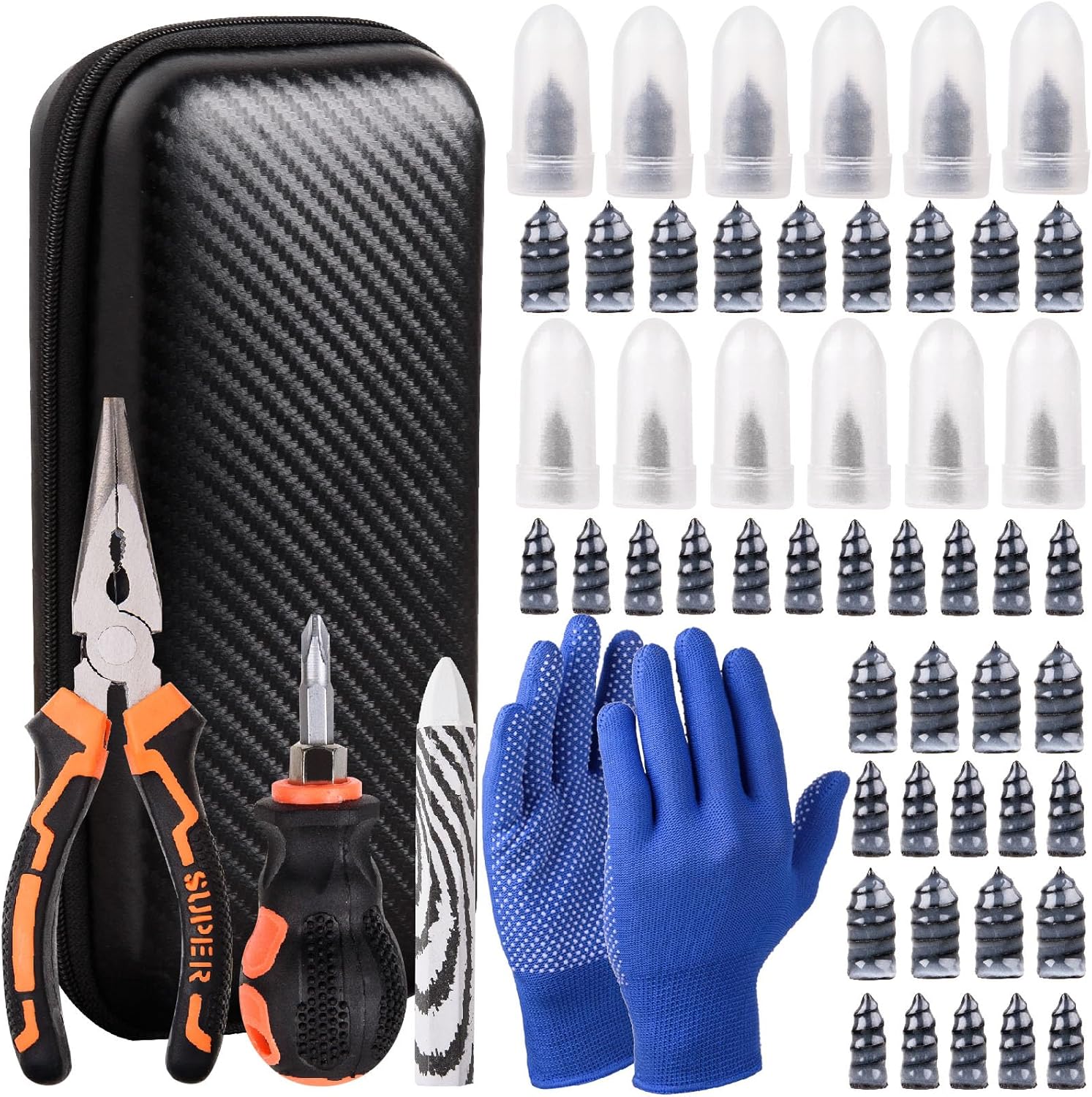
This tire sidewall puncture repair kit fixes flats fast without removing the tire, helping you get back on the road in minutes. It includes self-tapping repair nails, essential tools, gloves, and a portable storage bag for convenient roadside use. Designed for tubeless tires, it helps create a tight, leak-resistant seal for cars, motorcycles, trucks, SUVs, and ATVs.
How to Prevent Curb Damage Next Time
You can reduce curb contact by slowing down, leaving more lateral space, and watching both the front and rear wheel paths during tight turns. Rear wheels track inside the path of the front wheels, so a turn that clears at the front can still bring a rear tire into the curb.
Use mirrors and any factory parking cameras or sensors as aids, but do not rely on them alone. Stop and reset the maneuver when spacing becomes hard to judge.
[Products Worth Considering]

This 3-piece wheel and tire brush set makes it easy to clean light, medium, and heavy dirt from wheels, rims, tires, and exterior surfaces. It includes both soft and stiff bristle options for gentle scrubbing and tough grime removal, helping lift brake dust and road buildup. The long-handle design supports comfortable cleaning across cars, trucks, SUVs, RVs, motorcycles, and more, with simple care instructions to restore brush shape.

This professional wheel and rim cleaning brush set lifts brake dust, grime, and dirt with soft, scratch-free microfiber and synthetic wool fibers. The rim brush bends up to 360 degrees for easy access to hard-to-reach areas around spokes, lips, and faces. Ideal for thorough cleaning of car, truck, motorcycle, bicycle, RV, and more wheel and tire surfaces.

This 15-inch tire spoons kit makes tire removal and installation easier with added leverage, reducing time and effort for everyday repairs. It includes tire spoons, rim protectors, a valve tool, and valve cores/caps, helping protect rims and streamline deflation and re-sealing. Built with durable hardened steel and a non-slip ergonomic grip for confident use on motorcycles, dirt bikes, ATVs, and lawn equipment.
Use Slow Parking Speed
Parking slowly gives you more time to correct steering and reduces impact energy if contact occurs. Keep the vehicle at a controlled crawl and use smooth steering rather than a sudden correction.
- Control speed with gentle braking.
- Turn the wheel gradually while checking the vehicle’s path.
- Stop if a tire approaches the curb more closely than expected.
Practice judging your vehicle’s corners and wheel path in an open, safe space so the reference points become familiar.
Leave Extra Turn Space
Leave enough lateral space before beginning a tight turn so the vehicle can follow a wider arc. Pay special attention to rear-wheel cut-in: the rear tire can pass closer to the curb than the front tire during a turn.
If the lane or parking area is narrow, slow down and use a multi-step maneuver rather than forcing one sharp turn. A controlled reset is safer for the tire and wheel than a late steering correction.
Check Wheel Position
Before moving, note where the front wheels are pointed and how much room you have around the curb. Use the mirrors to track the side of the vehicle, and check the front and rear corners as the turn develops.
- Scan the mirrors and the direction of travel before moving.
- Re-center or adjust the steering if the vehicle drifts too close.
- Stop and reset if visibility or spacing becomes uncertain.
This habit lowers the chance of sidewall scuffing, wheel damage, and alignment or suspension impacts. When parking, also leave enough practical clearance for a clean exit path and safe door opening where applicable.
Frequently Asked Questions
Does curb impact affect wheel alignment?
Yes. A hard curb impact can change alignment or damage steering and suspension parts. New pulling, an off-center steering wheel, or abnormal tire wear are reasons to have the alignment and related components inspected.
Can curb damage cause a slow air leak?
Yes. A curb strike can damage the tire, bead, valve area, or wheel and cause gradual pressure loss. Check cold pressure with a gauge and have repeated air loss inspected rather than repeatedly topping off the tire.
Will insurance cover curb-related tire or wheel damage?
It can, depending on the policy and cause. Collision coverage may help pay for vehicle damage from striking a curb, subject to the deductible and policy terms. Routine wear or an unexplained flat is usually treated differently. Review your policy and compare the repair cost with your deductible before filing a claim.
How much does rim repair usually cost?
There is no reliable universal price. Cost varies by wheel material, diameter, finish, damage location, severity, local labor rates, and whether the job is cosmetic refinishing or structural work. Get a written quote and compare it with the price of an approved replacement wheel.
Can a bent rim be safely straightened?
Sometimes repair shops offer straightening, but it is not automatically safe or approved for every wheel. Repairability depends on the wheel material, bend location and severity, cracks, prior repairs, and manufacturer rules. If the wheel is cracked or the manufacturer prohibits reshaping, replacement is the safer path.
Can a curb hit damage suspension even if the tire looks fine?
Yes. A strong side impact can affect tie rods, control arms, steering parts, bearings, or alignment without leaving dramatic tire damage. Pulling, an off-center steering wheel, clunks, rubbing, or changed handling after the strike should be inspected.
Does a normal TPMS reading mean the tire is safe?
No. TPMS monitors inflation pressure; it does not inspect the tire’s cords, bead, wheel, alignment, or suspension. NHTSA notes that the warning generally appears only after a tire is significantly underinflated, so visual inspection and a pressure gauge are still important.
Is cosmetic curb rash safe to drive on?
A shallow finish scrape can be cosmetic, but you should first rule out a bend, crack, bead-seat damage, air loss, or new vibration. If the mark is deep, the wheel is deformed, or symptoms appeared after the impact, have the wheel inspected.
Conclusion
Hitting a curb can cause more than a cosmetic scuff. It can damage the tire sidewall or bead, bend or crack the wheel, or affect alignment, steering, and suspension parts. Check for bulges, cuts, exposed cords, air loss, vibration, pulling, wobble, or new noise. If any safety warning appears, stop normal driving and have the vehicle inspected before the damage turns into a larger failure.
Sources
- NHTSA — Tire Safety Ratings and Awareness — tire pressure, TPMS limits, damage inspection, and replacement guidance.
- U.S. Tire Manufacturers Association — Tire Repair Basics — repairable tread-area punctures, inspection, and repair limits.
- Michelin — Sidewall Bulge or Bubble — impact-related cord damage and replacement guidance.
- Progressive — Does Car Insurance Cover Hitting a Curb? — collision-coverage basics for curb-impact damage.
- GM Service Bulletin 99-08-51-007G via NHTSA — limits on refinishing and structural repair of damaged aluminum wheels.

