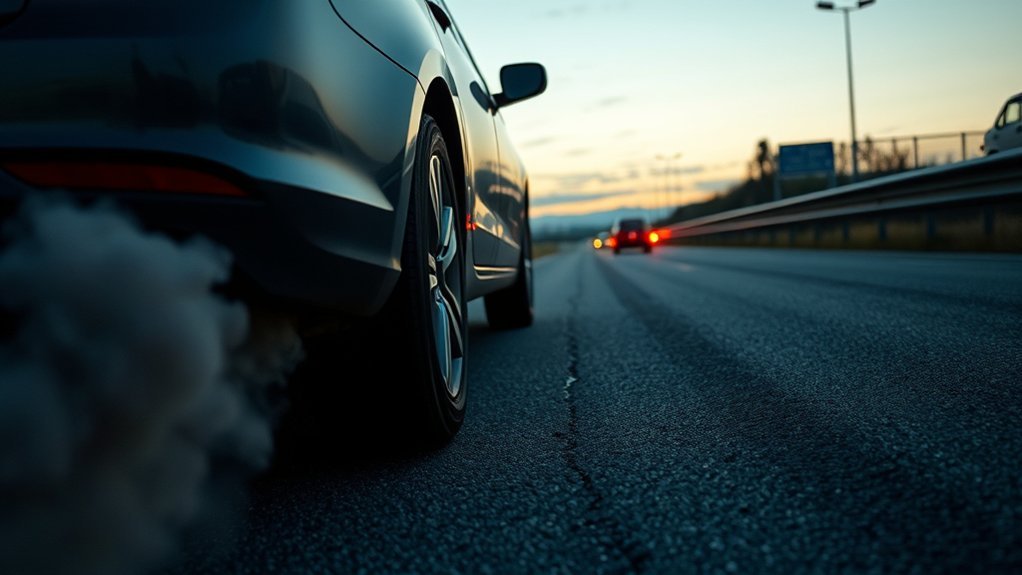
A smoking tire is a serious warning, not a normal driving smell. Heat, friction, leaking fluid, or brake drag may be building around one wheel. Pull over as soon as you can do it safely, shut off the engine, keep clear of hot parts, and inspect only after the area cools.
Quick Answer
A tire usually smokes because the wheel area is overheating. Common causes include a stuck brake caliper, dragging brakes, tire rubbing, underinflation, tire damage, or fluid dripping onto hot parts. Stop driving, let everything cool, and call roadside assistance if smoke continues or you suspect brake failure or fire.
Key Takeaways
- A smoking tire most often points to excess heat from brakes, rubbing, underinflation, damage, or leaking fluid.
- Do not keep driving if smoke, burning odor, vibration, pulling, or abnormal heat continues.
- A stuck brake caliper can drag the brake pad against the rotor and overheat that wheel fast.
- Sidewall damage, bulges, heat blisters, and severe tread wear usually mean the tire must be replaced.
- Prevent repeat smoke by checking tire pressure, tread, brakes, alignment, clearance, and leaks during routine maintenance.
At a Glance
| Time Required | 5 to 10 minutes for a safe visual check after cooling; repairs may require towing or shop time. |
| Difficulty | Basic for visual inspection; professional repair recommended for brakes, leaks, bearings, and heat-damaged tires. |
| Tools Needed | Hazard lights, phone, flashlight, gloves, tire pressure gauge, and jack stands only if you can work safely on level ground. |
| Cost | Visual checks cost nothing, but towing, brake repair, tire replacement, or leak repair varies by vehicle and damage. |
Warning: If you see flames, heavy smoke, or smoke that keeps growing, treat it as a possible vehicle fire. Pull over when safe, turn off the engine, get everyone out, move well away from traffic, and call emergency services.
Why Is My Tire Smoking?
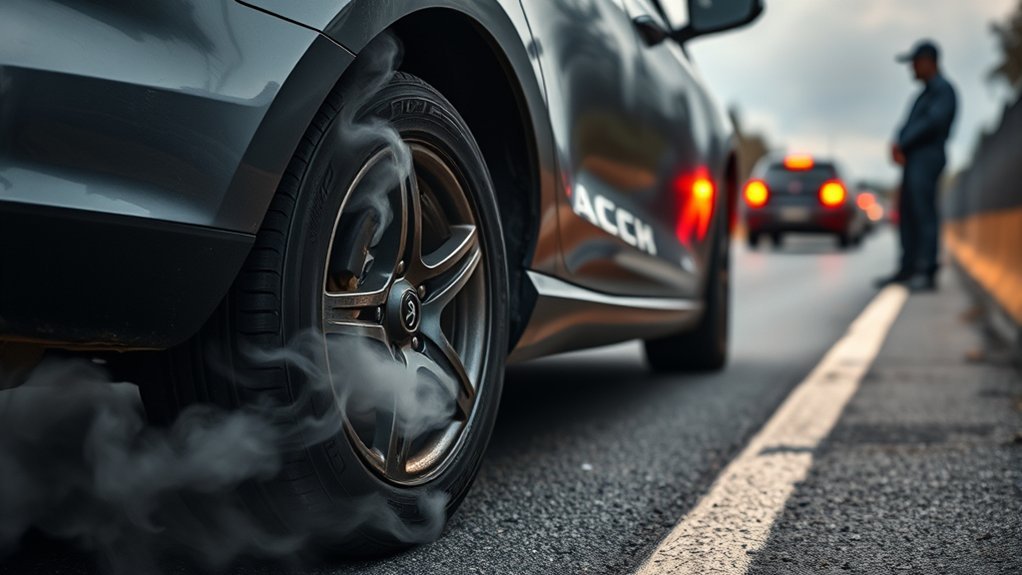
Your tire may be smoking because something near that wheel is creating too much heat. The source may be the tire itself, but it may also be the brakes, wheel bearing, suspension, or a leaking fluid.
The most common causes include a stuck brake caliper, dragging brake pads, an underinflated tire, tire rubbing, wrong tire size, a damaged tire, or fluid burning off hot brake parts. A wheel that is much hotter than the others often points to brake drag or bearing trouble.
Do not keep driving to “see if it clears.” Heat can damage brake pads, rotors, brake fluid, tire structure, and nearby rubber parts. NHTSA notes that poor tire maintenance, including low pressure and failure to rotate tires, can contribute to flats, blowouts, or tread separation. NHTSA TireWise also says the correct tire pressure comes from the vehicle placard or owner’s manual, not the number molded on the tire sidewall.
NHTSA reports that 511 people died in tire-related crashes in 2024, which is why smoke, heat, vibration, and pressure warnings deserve immediate attention.
What Causes a Tire to Smoke While Driving?
A tire smokes while driving when heat builds faster than the wheel area can release it. The cause usually falls into one of five groups: brakes, tires, fitment, bearings, or leaks.
| Possible Cause | What You May Notice | Why It Matters |
|---|---|---|
| Stuck brake caliper or dragging brake pad | Hot wheel, burning brake smell, pulling, weak braking | Brake drag can overheat pads, rotors, and brake fluid. |
| Underinflated or overloaded tire | Soft tire, TPMS light, heat, sidewall flex, vibration | Excess flex can overheat the tire casing and lead to failure. |
| Tire rubbing | Scraping, rubber dust, scuffed sidewall, smoke during turns | Rubber rubbing metal or plastic can create fast heat buildup. |
| Damaged tire | Bulge, blister, cut, puncture, uneven tread, vibration | Structural damage can lead to a blowout. |
| Fluid leak near hot parts | Oily smell, sharp odor, smoke near brakes or undercarriage | Leaking fluids can smoke on hot parts and may increase fire risk. |
Note: Overinflation can create its own handling and wear problems, but underinflation is the pressure issue most linked to excessive sidewall flex and heat. Always check pressure when tires are cold.
Is It a Brake Caliper Problem?
Yes, a smoking wheel can come from a brake caliper problem. If a caliper sticks, the brake pad may stay pressed against the rotor after you release the pedal. That constant drag creates heat, odor, and smoke around one wheel.
Common signs include one wheel that smells hotter than the others, a burning brake odor, pulling while driving, reduced braking performance, lower fuel economy, or a wheel that feels extremely hot near the rim. Do not touch the rotor, caliper, or wheel hardware with bare hands.
A NHTSA brake-caliper recall document explains that brake drag can overheat the brake pads, rotor, and brake fluid, which may reduce front brake system performance. That recall repair involved replacing front brake calipers, front rubber brake lines, and bleeding the brakes on affected vehicles.
If you suspect a stuck caliper, do not assume a spare tire will solve the problem. A spare does not fix brake drag. Have the vehicle towed or inspected by a qualified technician before driving again.
Can Tire Rubbing Cause Smoke?

Tire rubbing can create smoke if the tire contacts the wheel well, fender liner, suspension, or body. This often happens after installing oversized tires, changing wheel offset, lowering the vehicle, lifting the vehicle, or driving with worn suspension parts.
Look for fresh scuffs, shredded plastic, rubber dust, shiny rub marks, or a scraped sidewall. Rubbing may get worse during turns, braking, bumps, or when the vehicle carries passengers or cargo.
- Inspect the wheel well, fender liner, suspension area, and tire sidewall for fresh contact marks.
- Check the tire size, wheel offset, ride height, and load rating against the vehicle placard and owner’s manual.
- Stop driving until the rubbing is corrected if the tire sidewall or shoulder shows damage.
NHTSA advises choosing tires that match the original size or another size recommended by the vehicle manufacturer. If you have any doubt about tire size, a tire dealer can help confirm the correct fitment.
Can a Damaged Tire Overheat?
Yes, a damaged tire can overheat. Punctures, cuts, bulges, broken belts, tread separation, severe wear, and underinflation can all create heat and instability while you drive.
Do not rely on smell alone. A tire may be damaged before it smokes. Warning signs include vibration, thumping, pulling, a TPMS light, visible cords, uneven tread, a sidewall bubble, or a tire that keeps losing pressure.
Damage Causes Heat Buildup
A healthy tire flexes in a controlled way. When the casing is damaged or the pressure is low, the tire can flex more than designed and generate heat inside the structure. That heat can weaken the rubber, belts, and tread bond.
- Air loss increases sidewall flex and heat.
- Uneven wear can create hot spots and vibration.
- Bulges, blisters, exposed cords, and sidewall cuts mean the tire is no longer safe.
NHTSA recommends monthly inspections for proper tire inflation, treadwear, tire damage, rotation, balancing, and alignment. NHTSA also says tires are not safe and should be replaced when tread reaches 2/32 inch.
Warning Signs Of Overheating
If a tire is damaged or underinflated, the warning signs may appear quickly. Watch for a burning rubber smell, visible smoke, vibration, thumping, steering pull, a hot wheel area, or a sudden change in handling.
If any of these signs appear, pull over safely and stop. Let the tire and wheel area cool before you inspect them. Do not crawl under the vehicle unless it is parked on level ground, properly lifted, and supported with jack stands.
Pro Tip: A TPMS light does not replace a pressure gauge. NHTSA says TPMS warnings usually appear only when a tire is significantly underinflated, so monthly cold-pressure checks still matter.
Can Brake or Fluid Leaks Cause Smoke?
Brake or fluid leaks can cause smoke when fluid contacts hot components near the wheel or undercarriage. Oil, brake fluid, power steering fluid, transmission fluid, or grease may create a sharp, oily, or chemical smell.
- Brake fluid leaks: These can reduce hydraulic pressure and make braking unsafe.
- Oil or transmission leaks: These can smoke on hot parts and may create a fire risk if ignored.
- Grease from a bearing or axle seal: This can sling onto hot brakes and create odor, smoke, or brake contamination.
If smoke comes with a soft brake pedal, brake warning light, fluid puddle, or oily residue near the wheel, do not drive the vehicle. Call for towing or roadside help.
What Smoke, Smell, and Color Can Tell You
Smoke clues can help you describe the problem, but they do not replace inspection. Use these signs to report the issue to roadside assistance or a mechanic.
| Clue | Possible Meaning |
|---|---|
| Burning rubber smell | Tire rubbing, overheated tire, belt damage, or rubber near hot parts |
| Hot brake smell | Dragging brake pad, stuck caliper, downhill overheating, or seized hardware |
| Oily smoke | Oil, grease, brake fluid, or transmission fluid on hot parts |
| Smoke during turns | Tire rubbing under steering angle or suspension compression |
| Smoke after braking | Brake drag, overheated brakes, or contaminated brake components |
What to Do When a Tire Starts Smoking
If you notice a tire smoking, your first goal is to stop safely and prevent more heat, fire risk, or loss of control. Avoid sudden steering or panic braking unless you must stop immediately.
[Products Worth Considering]

The SAFELIFE dial tire tread depth gauge measures tread depth in 1/32 inch increments with clear, easy-to-read 2-inch dial face. Color zones using a traffic light system help you quickly judge whether tread is low, marginal, or ample for safer driving. Built with a durable zinc cast body and a metal detect probe for precise, comfortable use across cars, motorcycles, trucks, and buses.

Monitor tire tread wear with a smart, color-coded depth gauge that shows clear condition ranges at a glance. The bar is range marked for fast, easy readings, helping you maintain safer traction and performance. Each gauge is portable with a pocket clip, and the set includes 20 units for daily use and sharing.

Accurately measure tire tread depth with a calibrated gauge marked from 0 to 1 inch in 1/32 inch increments. The color-coded bar helps you quickly identify tread condition ranges, supporting safe driving for trucks, motorcycles, automobiles, and passenger vehicles.
Pull Over Safely
Signal, reduce speed smoothly, and move to a safe shoulder, parking lot, or side street. Turn on your hazard lights. Once stopped, shift to park, set the parking brake only if it does not worsen the smoking wheel, and shut off the engine.
- Keep passengers away from traffic.
- Let the smoking wheel cool before inspection.
- Do not touch the tire, rim, rotor, caliper, or nearby metal parts.
If you think the vehicle may be on fire, follow U.S. Fire Administration guidance: turn off the engine, get everyone out, move away from the vehicle, and call 911. USFA vehicle fire safety guidance also warns not to return to a burning vehicle.
Check For Smoke Source
After the wheel area cools, inspect the smoking corner from a safe distance first. Look for a flat tire, bulge, shredded rubber, rubbing marks, fluid, smoke from the brake area, or a wheel that sits at an odd angle.
Check the wheel well for fresh scuffs. Look through the wheel opening for signs of an overheated rotor or caliper. Do not remove the wheel on the roadside unless you are far from traffic, on level ground, and have the right tools and support.
Call For Assistance
Call roadside assistance, a tow service, or a mechanic if the smoke continues, the tire is damaged, the wheel is extremely hot, the brake pedal feels soft, or the vehicle pulls strongly. Share what you saw, smelled, and heard.
- Use a spare tire only if the tire is the only problem and the brakes, hub, and wheel area appear safe.
- Do not use a spare to keep driving if you suspect brake drag, bearing failure, a leak, or fire risk.
- Do not drive on a heat-damaged tire, a sidewall bulge, or exposed cords.
What Not to Do With a Smoking Tire
A smoking tire can make you rush, but the wrong reaction can create more damage or injury. Avoid these common mistakes.
- Do not keep driving. Continued heat can turn a repair into a blowout, brake failure, or fire.
- Do not touch hot parts. Rotors, calipers, wheels, and exhaust parts can burn skin.
- Do not pour water on hot brakes. Sudden cooling can damage parts and may spread contamination.
- Do not crawl under a vehicle held only by a jack. Use jack stands on level ground or wait for professional help.
- Do not rely on sealant for structural damage. Sealant cannot fix sidewall cuts, bulges, belt damage, or heat blisters.
How to Inspect a Smoking Tire Safely
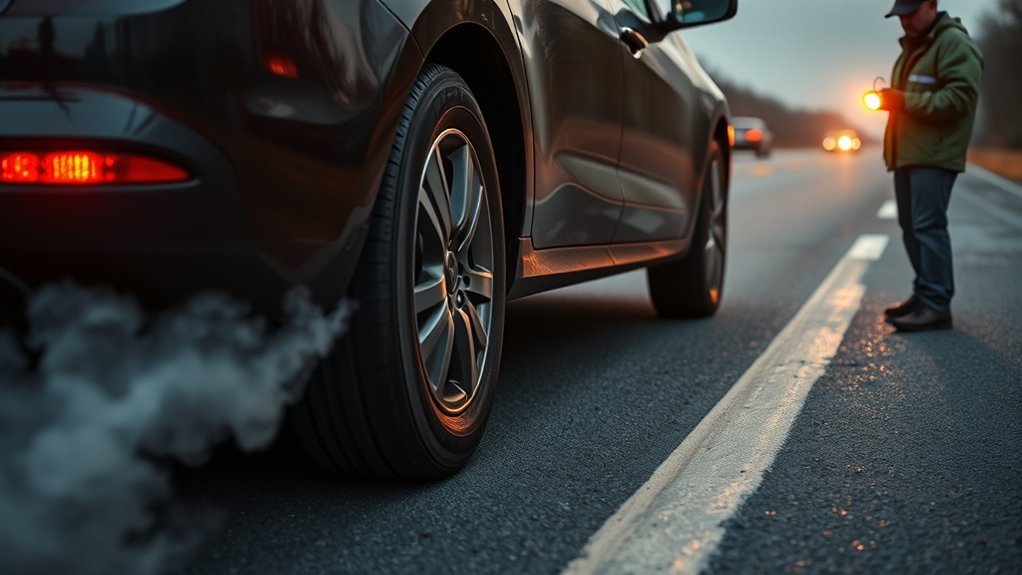
If your tire starts smoking, move the vehicle to a flat, stable area away from traffic before you inspect it. Keep your hazard lights on. Wear gloves, use a flashlight, and keep your face and hands away from the wheel area until it cools.
| Check | What You’re Looking For | Risk |
|---|---|---|
| Tire surface | Bulges, punctures, blisters, exposed cords, uneven wear | Blowout or tread separation |
| Sidewall | Cuts, cracks, bubbles, scrape marks | Structural failure |
| Wheel well | Fresh rubbing, shredded liner, rubber dust | Continued friction and heat |
| Brake area | Hot smell, discoloration, smoke, stuck hardware | Brake drag or brake fade |
| Fluid or grease | Wet residue, oily odor, drips, stains | Brake contamination or fire risk |
Check tire pressure only after the tire has cooled enough to handle safely. NHTSA recommends checking tire pressure at least once a month when tires are cold, which means the vehicle has been parked for at least three hours.
[Products Worth Considering]

This tire repair screw set includes self-tapping plugs and a screwdriver to help you quickly complete tubeless tire repairs for many vehicle types. The set provides two rubber screw diameters for different puncture needs and uses a sealant-coated screw tip to help prevent air leakage and water entry. It’s designed for secure fixing with wear-resistant metal-and-rubber construction.

Keep your tires properly inflated with this analog VONDIOR tire pressure gauge, designed for fast, easy readings without batteries. The swiveling, two-axis hose and large glow dial help you measure at any tire angle with instant visibility. Built with a protective rubber shield, it supports durable, low-maintenance use for cars and trucks.

Yieokei Tesla jack pads are molded rubber lifting pucks designed for 2016-2026 Model 3/Y/S/X, including Juniper, to fit securely in the jack hole. They cushion the underframe and help position the jack precisely at the factory jack points to reduce risk of battery, paint, or chassis damage. The set also includes a tire repair tool kit for emergency roadside fixes and comes with a portable storage case to keep everything organized.
What Repairs Fix a Smoking Tire?
The right repair depends on the smoke source. Do not replace a tire and ignore the brake, bearing, leak, or fitment problem that overheated it.
[Products Worth Considering]

Measure tire tread depth quickly and accurately with this LUMITECO dial gauge that reads in 1/32" increments up to 14/32". The color-coded green/yellow/red zones make it easy to judge tire wear and know when replacement is needed. A rugged, compact design with a protective pouch helps keep the gauge ready for use on cars, trucks, motorcycles, and more.

The Gurduenon scissor car jack tire changing kit is designed for quick flat-tire replacement with a lifting capacity of 2.5 tons and a scissor-lift range sized for many vehicles. The complete emergency set includes a ratchet wrench, lug wrench, gloves, a pencil tire pressure gauge, and a storage bag for convenient trunk or garage use. Universal compatibility makes it suitable for cars, SUVs, and other vehicles roadside assistance needs.
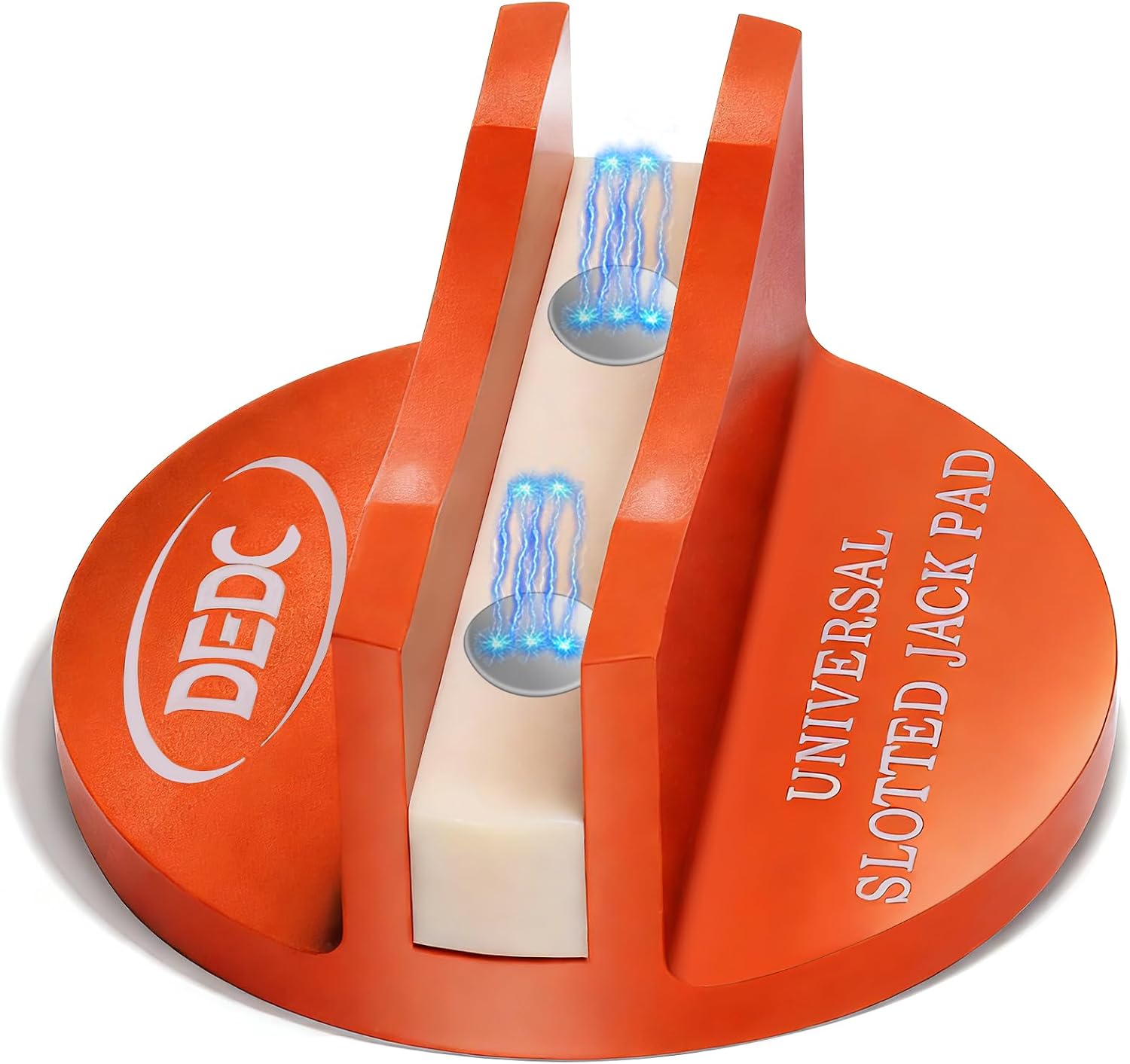
This universal magnetic jack pad is designed to protect pinch welds when lifting vehicles, helping prevent seam damage or warping. Crafted from solid aluminum with a nylon pad insert, it provides reinforced structural support and a secure fit for most single-vehicle pinch welds. Slotted for strong magnet holding, it supports safe jacking for cars, SUVs, trucks, and more.
Brake Caliper Repair
If a stuck brake caliper caused the smoke, a technician may clean and lubricate caliper slides, replace caliper hardware, replace the caliper, replace the brake hose, install new pads, resurface or replace the rotor, and bleed the brake system.
- Inspect the caliper, slides, piston, pads, rotor, and brake hose.
- Replace heat-damaged brake parts instead of reusing unsafe components.
- Road-test only after the wheel spins freely and the brake pedal feels normal.
Tire Replacement Needs
Replace the tire if it has a sidewall puncture, bulge, blister, exposed cords, severe tread separation, heat damage, or tread worn to 2/32 inch. Do not patch a structurally damaged tire.
| Condition | Safe Action |
|---|---|
| Sidewall or shoulder puncture | Replace tire |
| Bulge, blister, or exposed cords | Replace tire |
| Tread puncture within repairable area | Have the tire removed and repaired from inside with a proper plug-patch method |
| Tread at 2/32 inch | Replace tire |
The Tire Industry Association says puncture repairs are limited to the center tread area and that sidewall or shoulder damage is not repairable. The U.S. Tire Manufacturers Association also states that a plug alone is not an acceptable repair; a proper repair uses both a plug/stem and an inner-liner patch after internal inspection.
Leak And Alignment Fixes
If the smoke came from a leak, the repair may involve replacing a brake hose, caliper seal, axle seal, wheel bearing, transmission line, power steering hose, or other leaking component. If the smoke came from tire scrub, you may need an alignment, suspension repair, correct-size tires, or wheels with the correct offset.
- Repair leaks before they contaminate brakes or drip onto hot parts again.
- Correct alignment and worn suspension parts before installing new tires.
- Verify tire size, load rating, pressure, and clearance before returning to normal driving.
How to Prevent Tire Smoking Again?
Prevent tire smoking by reducing heat, friction, and neglected wear. Start with tire pressure. Use the pressure listed on the driver-side placard or in the owner’s manual, and check all tires when cold.
- Check tire pressure monthly and before long trips.
- Inspect tread, sidewalls, and valve stems for damage.
- Replace tires at 2/32 inch tread depth or sooner if damaged.
- Fix brake pulling, burning smells, squeals, or heat at one wheel quickly.
- Rotate, balance, and align tires according to your owner’s manual.
- Confirm clearance after installing different tire sizes, wheels, lift kits, or lowering parts.
- Repair fluid leaks before they reach hot brakes, exhaust, or wheel components.
Routine maintenance helps you catch the small signs before they become a roadside emergency. If the same wheel smokes twice, stop driving and have that corner inspected for brake drag, bearing trouble, tire damage, and fluid leaks.
Frequently Asked Questions
Why is one wheel smoking?
One wheel usually smokes because the problem is limited to that corner. Common causes include a stuck brake caliper, dragging brake pad, seized wheel bearing, tire rubbing, damaged tire, or fluid leak near that wheel. Stop driving and let the area cool before inspection.
Is it safe to drive my car if it smells like burning rubber?
No. A burning rubber smell can mean tire rubbing, tire overheating, brake drag, or a fluid leak near hot parts. Pull over safely, shut off the engine, and inspect only after the area cools. If the smell returns, call roadside assistance or a mechanic.
Can I still drive if my car is smoking?
You should not keep driving while your car is smoking. Smoke can point to tire failure, brake failure, leaking fluid, or fire risk. Pull over when safe, turn off the engine, move passengers away from traffic, and call for help if the source is not clearly minor and fixed.
Can a smoking tire catch fire?
Yes, a smoking wheel area can become a fire risk if heat keeps building or leaking fluid reaches hot components. If smoke grows, flames appear, or you smell strong chemical or oily smoke, exit the vehicle, move away, and call emergency services.
Should I pour water on a smoking tire or hot brakes?
Do not pour water on hot brakes or wheel parts unless emergency responders instruct you to do so. Sudden cooling can damage hot metal parts and may spread contamination. If you suspect fire, move away and call emergency services.
Can I put on the spare tire and keep driving?
Only use the spare if the tire itself is the clear problem and the brakes, wheel bearing, and wheel area are safe. Do not use a spare to bypass a stuck caliper, fluid leak, bearing noise, fire risk, or smoke from the brake area.
Conclusion
If your tire starts smoking, stop driving, cool the wheel area, and find the source before you move again. Brake drag, rubbing, tire damage, underinflation, and leaks can all create enough heat to become dangerous. Act early, use roadside help when needed, and repair the real cause so the same wheel does not overheat again.
Sources
- NHTSA TireWise — tire pressure, tread depth, TPMS limits, tire size, blowout guidance, and tire crash context.
- NHTSA Safety Recall V98, Front Brake Calipers — brake drag, overheating brake pads, rotors, brake fluid, and reduced brake performance.
- U.S. Fire Administration Vehicle Fire Safety — what to do if a vehicle catches fire.
- Tire Industry Association Tire Repair — repairable tread area and non-repairable sidewall or shoulder damage.
- U.S. Tire Manufacturers Association Tire Repair Basics — internal inspection and proper plug-patch repair requirements.