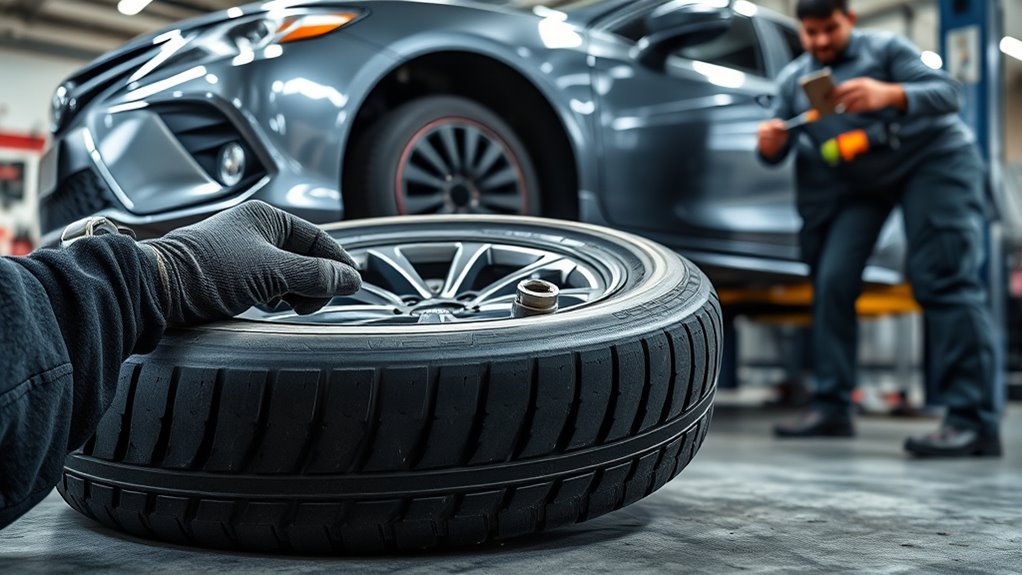
Yes, a run-flat tire on a Toyota Camry can sometimes be repaired, but only after the tire is removed from the wheel and inspected inside and out by a trained tire technician. The safe answer depends on the tire brand, puncture size, puncture location, how far it was driven with low pressure, and whether the inner liner or sidewall shows hidden damage.
Quick Answer
A Toyota Camry run-flat tire may be repairable if the puncture is small, located in the repairable tread area, and the tire has no internal, sidewall, heat, or run-low damage. It should be replaced if the puncture reaches the shoulder or sidewall, exceeds 1/4 inch, overlaps another repair, or the tire maker says not to repair it.
Key Takeaways
- Do not judge a run-flat tire from the outside only; it must be demounted so the inner liner, sidewalls, bead, and tread area can be inspected.
- A plug-only, string-plug, or on-the-wheel repair is not a proper permanent repair for a run-flat tire.
- Industry repair guidance limits passenger tire puncture repairs to the tread area and to punctures no larger than 1/4 inch, or 6 mm.
- Run-flat tire policies vary by brand. Some tire makers allow repair after inspection; others recommend replacement for punctured run-flat models.
- If you drove a long distance after the TPMS warning or with little air pressure, replacement is often the safer choice even when the outside looks fine.
At a Glance
| Time Required | Usually one shop visit after the tire is removed and inspected |
| Difficulty | Professional service only; not a driveway repair |
| Tools Needed | Tire machine, internal inspection, repair materials approved for the tire, balancing equipment, and TPMS-safe handling |
| Cost | Varies by shop, tire size, brand policy, TPMS work, and whether repair or replacement is required |
Can Run-Flat Tires on a Toyota Camry Be Repaired?
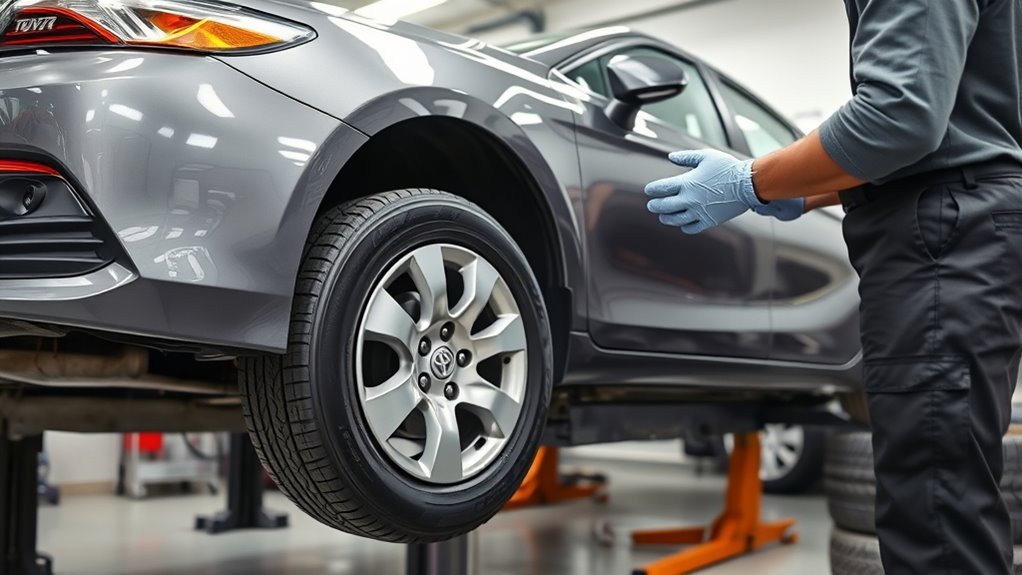
A Camry run-flat tire can be repaired only in limited cases. The puncture must be in the repairable tread area, the injury must be small enough, and the tire must pass an internal inspection after it is removed from the wheel. The U.S. Tire Manufacturers Association says passenger tire repairs require demounting the tire, inspecting all possible damage, filling the puncture injury with a plug or stem, and sealing the inner liner with a patch.
That inspection matters even more with run-flat tires. Their reinforced sidewalls let you keep driving for a limited distance after pressure loss, but that same ability can hide heat damage, sidewall flexing, liner abrasion, and separation. A tire can look acceptable from the outside and still be unsafe inside.
Manufacturer policy also matters. Some run-flat tires may be repairable after inspection, while other tire makers recommend replacement for punctured run-flat models. For example, Bridgestone says DriveGuard repairability depends on damage, pressure loss, and vehicle operating conditions, while Continental states that it does not recommend repair or reuse of punctured SSR run-flat tires. Always follow the policy for the exact tire installed on your Camry.
Warning: Do not treat a string plug or outside plug as a permanent repair. A proper repair requires the tire to be removed from the wheel, inspected internally, filled through the injury channel, and sealed at the inner liner.
How to Confirm Your Camry Has Run-Flat Tires
Do not assume your Toyota Camry has run-flat tires just because it has a tire pressure monitoring system or no obvious spare tire. Check the sidewall of the damaged tire for wording or markings such as Run Flat, RFT, ROF, ZP, SSR, or the tire maker’s run-flat branding. If you are unsure, ask the tire shop to identify the exact tire model before discussing repair.
Your Camry’s TPMS is still important. Toyota explains that when the tire pressure warning stays on, you should check all tires and refill, repair, or replace any tire that is below the proper pressure. With a run-flat tire, the warning may be the only clear sign that the tire lost air, because the sidewall may continue supporting the vehicle for a short distance.
Why Camry Run-Flats Are Hard to Patch
Run-flat tires are harder to repair than standard tires because they are built to support the vehicle after air pressure drops. That reinforced construction can make internal damage harder to see, especially if the tire was driven while underinflated. Heat and sidewall flex can weaken the casing even when the tread puncture looks small.
The repair decision is not only about the nail hole. A technician has to answer several questions: Was the tire driven with little or no air? Did the inner liner rub, wrinkle, separate, or show heat marks? Is the sidewall still structurally sound? Does the tire maker allow repair for this run-flat model? If the answer is unclear, replacement is usually the safer call.
Note: Run-flat mobility is temporary. Many run-flat tires are designed to help you reach a safe service location, not to keep driving normally after pressure loss.
How Do Technicians Inspect Run-Flat Damage?
A proper inspection starts by removing the tire from the wheel. The technician checks the outside tread area, then inspects the inside of the casing and inner liner for damage that is impossible to confirm while the tire is mounted.
| Inspection Point | What It Reveals |
|---|---|
| Tread puncture | Whether the injury is in the repairable tread area and small enough to repair |
| Inner liner | Abrasion, wrinkles, separations, prior improper repairs, or heat damage |
| Sidewalls | Run-low damage, cracking, bulges, cuts, or structural weakness |
| Bead area | Damage from impact, mounting, driving flat, or wheel contact |
| Tread depth and prior repairs | Whether the tire is too worn, already improperly repaired, or has overlapping injuries |
If the tire passes inspection and the tire maker permits repair, the shop may use a proper internal combination repair or patch-plug system. If the technician finds internal damage, sidewall damage, shoulder damage, excessive wear, or an improper previous repair, the tire should be replaced.
When Can a Run-Flat Tire Be Repaired?

A run-flat tire on a Toyota Camry may be repairable when all of these conditions are met:
- The puncture is in the repairable tread area, not the shoulder or sidewall.
- The puncture injury is no larger than 1/4 inch, or 6 mm.
- The puncture does not overlap another repair and is not directly across from another injury.
- The tire has enough remaining tread and is not worn to the treadwear indicators.
- The inner liner, sidewall, bead, and casing show no heat, separation, abrasion, or run-low damage.
- The tire was not driven beyond the run-flat tire maker’s distance and speed limits.
- The tire maker’s warranty or service policy allows repair for that specific model.
- The shop can perform a proper internal repair, not a plug-only repair.
If any one of those conditions fails, replacement is usually the safer option. A run-flat tire has to carry the weight of your Camry after air loss, so structural damage is not something to gamble with.
[Products Worth Considering]

Replace worn or malfunctioning GM TPMS sensors with this 433MHz pre-programmed sensor set designed for compatibility with many Chevrolet, Buick, GMC, and Cadillac models. It includes guidance for proper OBDII relearning/pairing after installation and supports reliable long-term operation with a high-performance CR2032 battery. Quality tested for durability and performance to help restore accurate tire pressure monitoring.

TP-M13W combination repair unit kit includes wrapped stems with matching patches for fast, reliable tire repairs. It’s suitable for both radial and bias ply tires and is designed for chemical or heat vulcanization. Gray vulcanizing gum with blue backing helps create a strong bond, with the stem portion wrapped for added effectiveness.
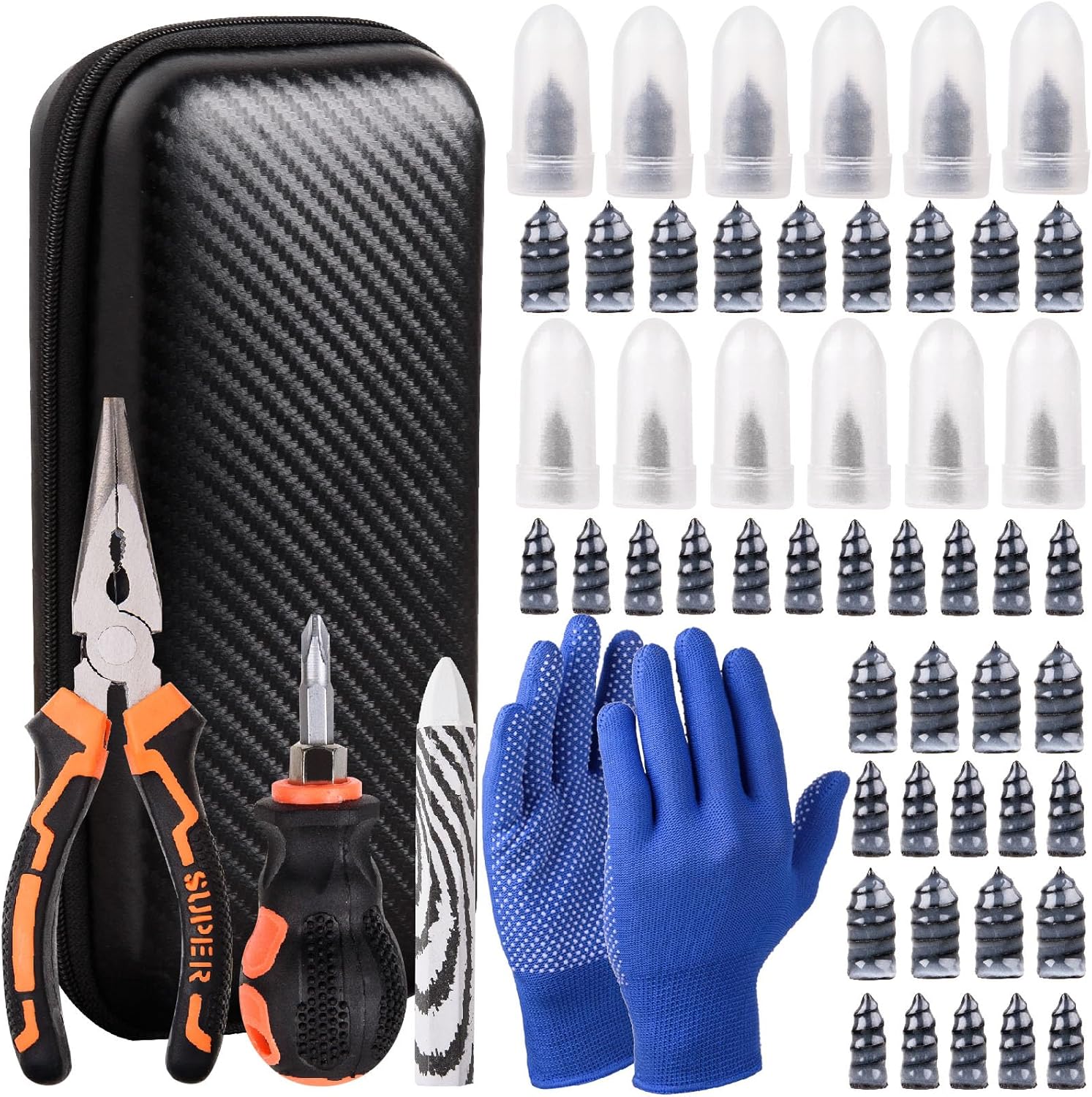
This tire sidewall puncture repair kit fixes flats fast without removing the tire, helping you get back on the road in minutes. It includes self-tapping repair nails, essential tools, gloves, and a portable storage bag for convenient roadside use. Designed for tubeless tires, it helps create a tight, leak-resistant seal for cars, motorcycles, trucks, SUVs, and ATVs.
When Is Replacement the Safer Choice?
Replacement is the safer choice when the tire cannot meet every repair condition. That includes sidewall cuts, shoulder punctures, large tears, visible bulges, internal liner damage, exposed cords, heat marks, or any sign that the tire was driven too long with low or no air pressure.
[Products Worth Considering]

The Trivd Frol 1/2" air impact wrench delivers high performance torque up to 1500 ft-lbs with a twin hammer impact mechanism for strong, balanced blows. It features an ergonomic grip, compact lightweight design, and quick-stop control with 3 forward speeds up to 8000 RPM plus a reverse speed. Built for demanding automotive repair and tire shop work, the rear exhaust helps keep debris away from the surface.

Steelman white tire marking crayons provide high-contrast, semi-permanent marks for repairing and inspecting tires and equipment. They write on wet or dry, smooth or coarse surfaces including rubber, metal, glass, and wood, making them ideal for puncture location and damage outlining. The lead- and zinc-free crayons resist weather and fading yet wipe away when you no longer need the marks.

Malco tire mounting and demounting lubricant is a ready-to-use tire lube formulated to reduce friction during tire installation for passenger cars, light trucks, farm tires, and heavy-duty equipment. It provides rust-inhibiting protection to help reduce corrosion on rims and wheels, and helps support proper tire bead seating during inflation to reduce air leakage. The silicone-free, soap-free formula is whitewall safe to help prevent discoloration on whitewall tires and sensitive sidewall markings.
Severe Puncture Damage
A severe puncture usually means the tire should come out of service. If the injury is larger than 1/4 inch, reaches the shoulder area, enters at an angle toward the belt edge, or damages the internal structure, a patch cannot restore the tire’s original strength.
| Damage Type | Recommended Action |
|---|---|
| Tread puncture larger than 1/4 inch | Replace |
| Shoulder or sidewall damage | Replace |
| Internal liner abrasion or heat damage | Replace |
| Driven beyond the tire maker’s run-flat limit | Replace or follow technician/tire-maker verdict |
| Tire maker does not allow run-flat repair | Replace |
Sidewall Damage Limits
Sidewall damage changes the repair decision immediately. A run-flat tire depends on its reinforced sidewall to carry the vehicle after pressure loss. If that sidewall is cut, torn, punctured, bulged, or heat-damaged, it cannot be restored with a simple patch. Replace the tire and protect the rest of the wheel, suspension, and steering system from a possible failure.
Why Run-Flat Tires Need Inside Repairs
Run-flat tires need inside repairs because the inner liner is what holds air, and the casing is what carries the load. A plug pushed in from the outside may slow the leak, but it does not prove the tire is safe. It also may not seal the inner liner properly or fill the injury channel correctly.
A proper repair fills the puncture path and seals the inner liner. The Tire Industry Association explains that a tire service technician should remove the tire from the rim, inspect the inside, remove damaged material, fill the void with rubber, and seal the inner liner with a repair unit. That process is the difference between a controlled repair and a temporary roadside stopgap.
What to Expect at the Shop
When you bring your Camry to a tire shop, the technician should not promise a repair before inspecting the tire internally. A safe shop process usually includes identifying the tire model, checking the sidewall for run-flat markings, asking how far and how fast you drove after the warning, demounting the tire, inspecting the inner liner and sidewalls, and confirming the tire maker’s repair policy.
Tire Removal Inspection
The tire should be removed carefully with equipment suitable for stiff run-flat sidewalls. The shop should check for bead damage, wheel damage, sidewall distortion, and TPMS sensor issues. If the Camry’s tire pressure warning was on, tell the technician when it appeared and how far you drove afterward. That history can change the repair decision.
Repair Or Replace Decision
After inspection, the shop should explain the decision clearly. Ask these questions before approving the work:
- Was the tire removed from the wheel and inspected inside?
- Is the puncture fully inside the repairable tread area?
- Is the puncture 1/4 inch, or 6 mm, or smaller?
- Is there any liner, sidewall, bead, heat, or run-low damage?
- Does this tire maker allow repair of this exact run-flat model?
- Will the repair use an internal patch-plug or combination repair unit?
- Will the tire be rebalanced and the TPMS checked afterward?
If the shop cannot answer those questions, get a second opinion from a tire service center that regularly works with run-flat tires.
Pro Tip: Take a photo of the TPMS warning and note your speed, distance, and road conditions after the warning appeared. That information helps the technician judge whether the tire was exposed to damaging run-low conditions.
How to Protect a Repairable Tire
If your Camry’s TPMS warning comes on or you suspect a puncture, slow down safely, avoid hard cornering, and drive only as far as needed to reach a safe service location. Do not keep driving just because the tire still feels stable. A run-flat tire can support the vehicle temporarily while still building heat inside the sidewall.
- Check tire pressure as soon as it is safe.
- Do not exceed the speed or distance limit listed by the tire maker.
- Avoid heavy loads, potholes, and aggressive steering after pressure loss.
- Do not add sealant unless the tire maker and shop confirm it is acceptable.
- Have the tire inspected before returning it to normal driving.
Good tire maintenance also helps. Keep your Camry’s tires inflated to the pressure listed on the driver-side door placard, rotate them on schedule, inspect for uneven wear, and replace worn tires before they reach the treadwear indicators.
Which Tire Option Makes Sense for Your Camry?
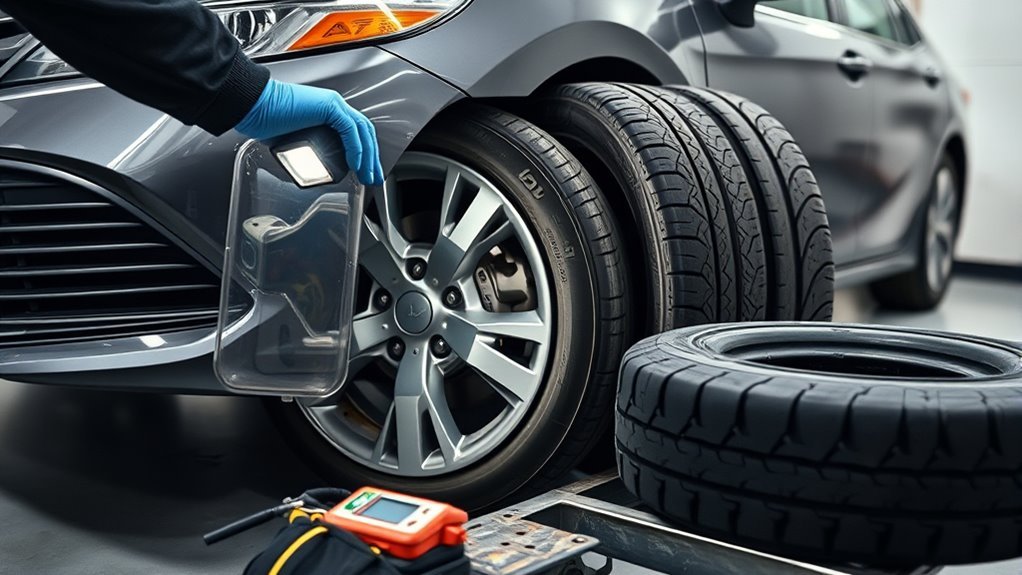
Repair makes sense only when the tire passes every inspection point and the tire maker allows it. Replacement makes sense when the tire has sidewall damage, shoulder damage, internal damage, severe tread damage, low tread depth, an improper previous repair, or unknown run-low history.
For many drivers, replacement is frustrating because run-flat tires often cost more than standard tires. Still, a compromised run-flat tire can fail under load or heat. If a technician shows you internal damage or the tire maker does not recommend repair for that model, replacement is the safer and cleaner decision.
You should also avoid mixing tire types carelessly. If your Camry has run-flat tires on one axle and standard tires on another, ask a qualified tire professional whether the setup is appropriate for your vehicle, driving conditions, and tire sizes. Matching tire construction, load rating, speed rating, and size helps preserve handling and braking behavior.
[Products Worth Considering]

Replace your worn or missing TPMS sensors with pre-programmed, direct-fit sensors for compatible Ford, Lincoln, and select Mazda models. Each sensor comes ready to activate with a scan tool, helping restore accurate tire pressure monitoring and trouble-free installation. Built with a long-life CR2032 battery and tested before factory release, this set provides dependable performance with a one-year warranty.
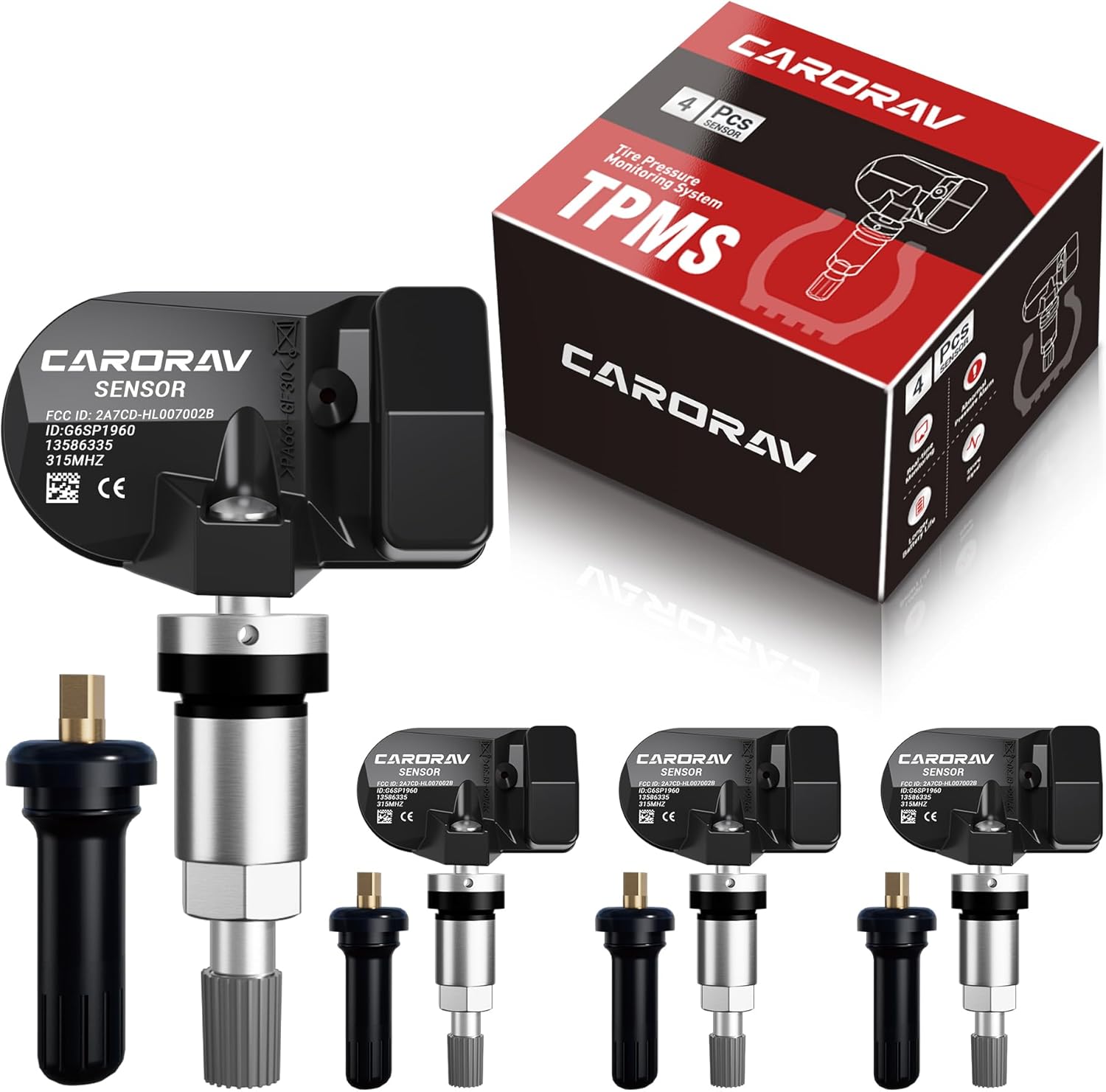
Replace worn or missing TPMS sensors with CARORAV pre-programmed GM-compatible sensors for a smoother installation experience. These 315MHz replacement sensors help monitor tire pressure in real time with long battery life, and they are designed to withstand harsh temperatures. Manual or OBDII relearn may be required to reset the system for proper recognition.
Ru-Glyde tire mounting lubricant from AGS seats tire beads smoothly on the first try with a thick, stay-put formula. It is ready to use with no mixing or dilution, helps prevent rim rust, and dries completely without causing bead slip residue. The water-based formula also conditions aged rubber, making it useful for sidewalls, gaskets, and door seals while remaining safe for tire, wheel, and technicians.
Frequently Asked Questions
Are you supposed to repair run-flat tires?
You should repair a run-flat tire only when the tire maker allows it and a trained technician confirms that the puncture is small, located in the repairable tread area, and has not caused internal or sidewall damage. If there is any doubt about the tire’s structure, replacement is safer.
How much does it cost to repair a run-flat tire?
There is no fixed price. A run-flat tire repair can cost more than a basic tire patch because the tire must be demounted, inspected internally, repaired correctly, remounted, balanced, and checked for TPMS issues. If the tire fails inspection, you will need replacement instead of repair.
Can I plug a Toyota Camry run-flat tire myself?
No. A plug-only repair is not a proper permanent repair, and it does not let you inspect the inside of the tire. Use a roadside plug only as an emergency temporary measure if the product instructions allow it, then have the tire professionally inspected as soon as possible.
How far can I drive on a punctured run-flat tire?
Follow the limit printed in the tire maker’s information for your exact tire. Many run-flat models are rated for temporary mobility of up to about 50 miles at up to 50 mph, but that is not permission to keep driving normally. Drive slowly, avoid extra load, and go directly to a safe service location.
Should I replace one run-flat tire or two?
It depends on tread depth, tire age, axle position, and your tire shop’s recommendation. If the opposite tire on the same axle is worn, replacing both may help keep braking and handling balanced. Always match the correct size, load rating, speed rating, and tire type.
Conclusion
A Toyota Camry run-flat tire can sometimes be repaired, but the safe repair window is narrow. The tire has to be removed from the wheel, inspected internally, and repaired with the right internal method only if the puncture is small and limited to the repairable tread area. Sidewall damage, shoulder damage, heat damage, long run-flat driving, low tread depth, prior improper repair, or a tire-maker no-repair policy all point to replacement. When the technician’s inspection and the tire maker’s policy disagree with your hopes, choose the safer road and replace the tire.
Sources
- U.S. Tire Manufacturers Association: Tire Repair Basics — supports repair-area limits, demounting, internal inspection, and plug-plus-patch repair requirements.
- Tire Industry Association: Tire Repair — supports trained technician inspection, no plug-only repairs, no shoulder/sidewall repairs, and tread-depth cautions.
- Bridgestone DriveGuard Plus Extended Mobility — supports the 50-mile/50-mph temporary mobility example and repairability depending on conditions.
- Continental Limited Warranty and Adjustment Policy — supports the point that some run-flat tire makers do not recommend repair or reuse of punctured SSR tires.
- Toyota Support: Tire Pressure Monitoring System — supports Camry TPMS warning guidance to check, refill, repair, or replace low tires.