
Biggest Tire With a 3 Inch Lift on a Toyota Tacoma
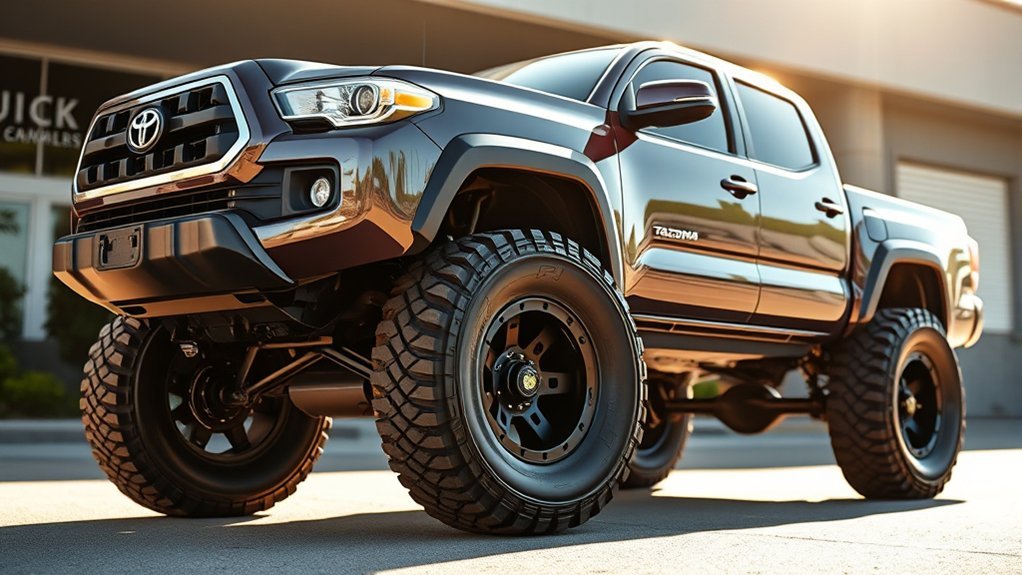
The biggest tire you can usually fit on a Toyota Tacoma with a 3-inch lift is a 285/75R17, but it is not a guaranteed no-rub size on every truck. Tacoma generation, wheel width, offset, caster, tire brand, tread design, mud flaps, bumper clearance, and whether the truck is used off-road all affect the final fit.
Quick Answer
For most 3-inch lifted Tacomas, 285/70R17 is the safer daily-driver size, while 285/75R17 is the largest practical choice for many builds. A 285/75R17 is about 33.8 inches tall, so expect possible trimming, alignment tuning, or cab/body mount clearance work depending on your wheel setup.
Key Takeaways
- Best all-around size: 285/70R17 for fewer rubbing problems and easier daily driving.
- Largest practical size: 285/75R17, but it may need trimming, proper caster, and careful wheel offset.
- Offset matters: 0 offset is common on many older builds, but some 2024+ kits call for positive offset such as +35.
- Do not assume 35s fit: 35×12.50R17 tires usually require more trimming and setup work than a basic 3-inch lift.
- Check safety basics: load rating, tire pressure, spare fitment, TPMS, alignment, and speedometer accuracy all matter.
At a Glance
| Time Required | 30–60 minutes to measure and test-fit; several hours if trimming, UCAs, or alignment work is needed. |
| Difficulty | Moderate for tire sizing; advanced for cab mount chop or structural trimming. |
| Tools Needed | Tape measure, floor jack, jack stands, torque wrench, tire-pressure gauge, alignment printout, and a shop inspection for trimming or welding. |
| Cost | Tires commonly cost $900–$1,800+ per set; alignment, trimming, UCAs, and professional labor can add several hundred to several thousand dollars. |
What Tire Sizes Fit a 3-Inch Lifted Tacoma?
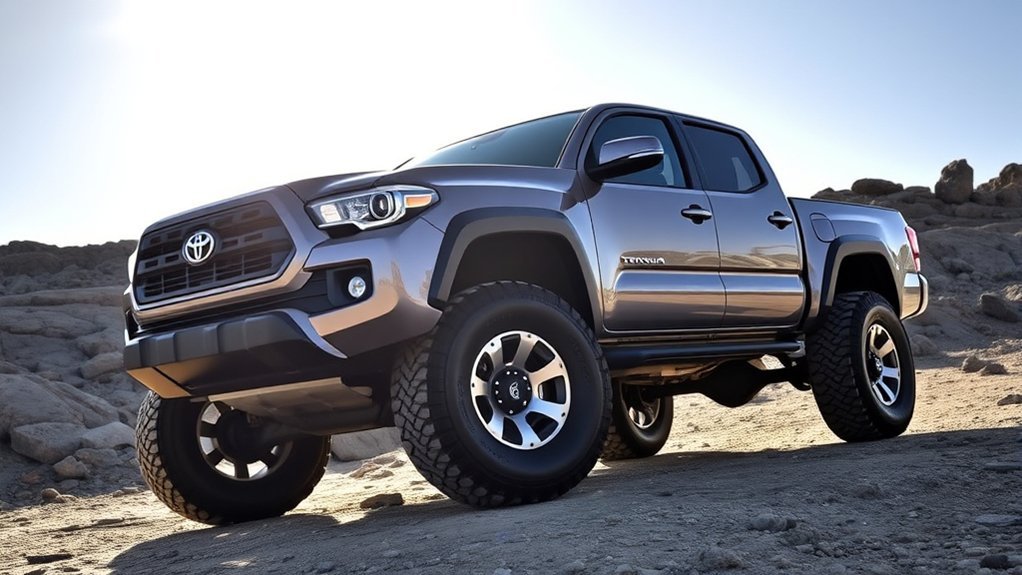
A 3-inch lift gives your Tacoma more tire clearance, but it does not make every 33-inch or 35-inch tire bolt on cleanly. The most common fitment range is from about 32 inches to just under 34 inches tall.
| Tire Size | Approx. Diameter | Fitment Notes |
|---|---|---|
| 265/70R17 | About 31.6 inches | Very easy fit on many Tacomas, but not much larger than factory on many trims. |
| 275/70R17 | About 32.2 inches | Good daily-driver upgrade with lower rubbing risk than wider/taller 285 sizes. |
| 285/70R17 | About 32.7 inches | Popular “33-inch” choice. May need small fender-liner, mud-flap, or caster adjustments. |
| 285/75R17 | About 33.8 inches | Largest practical size for many 3-inch lifted builds. Rubbing is possible without the right wheel and alignment setup. |
| 35×12.50R17 | About 34.5–35 inches | Usually requires more trimming, careful offset, and sometimes body/cab mount work. Not the easy choice for a basic 3-inch lift. |
The numbers above are approximate because tire manufacturers measure differently. An aggressive mud-terrain in the same size can run wider or taller than a mild all-terrain, and tread shoulder shape can make one 285/75R17 rub where another clears.
[Products Worth Considering]

The SAFELIFE dial tire tread depth gauge measures tread depth in 1/32 inch increments with clear, easy-to-read 2-inch dial face. Color zones using a traffic light system help you quickly judge whether tread is low, marginal, or ample for safer driving. Built with a durable zinc cast body and a metal detect probe for precise, comfortable use across cars, motorcycles, trucks, and buses.

These universal tire valve stem caps help protect valve cores from dust, debris, and moisture while helping maintain stable tire pressure. The corrosion-resistant metal construction and sealed design provide reliable protection in road grime, mud, and winter conditions. Twist-on installation makes them quick to fit on cars, SUVs, trucks, and motorcycles.

These aluminum alloy tire valve stem caps with an O-ring seal help protect valve stems from corrosion while adding a clean, stylish look to your vehicle. The universal fit works across cars, trucks, motorcycles, bicycles, and more, making them an easy upgrade for everyday driving and off-road use. Installation is quick, and the included four-pack keeps all your tires dressed and protected.
Best Tire Sizes for a Lifted Tacoma
The best tire size depends on how you use the truck. If you drive mostly on pavement and want fewer problems, choose a size that leaves room for steering, suspension movement, and real-world load changes. If you wheel hard and care more about clearance, you can push bigger, but you should plan for extra work.
[Products Worth Considering]

Yieokei Tesla jack pads are molded rubber lifting pucks designed for 2016-2026 Model 3/Y/S/X, including Juniper, to fit securely in the jack hole. They cushion the underframe and help position the jack precisely at the factory jack points to reduce risk of battery, paint, or chassis damage. The set also includes a tire repair tool kit for emergency roadside fixes and comes with a portable storage case to keep everything organized.

Upgrade your 2024-2026 Tesla Model 3 Highland with REEVAA all-weather mud flaps designed for seamless fit along the original body lines. The set of four delivers strong splash protection against mud, gravel, and road debris while using OEM-grade durable materials. Installation is non-destructive with original hole positions and snap-in clips, and the aerodynamic design helps minimize impact on efficiency.
Best Daily-Driver Size: 275/70R17 or 285/70R17
For a daily-driven Tacoma, 275/70R17 and 285/70R17 are the easiest recommendations. They give the truck a stronger stance and better ground clearance without jumping into the more difficult fitment problems of a taller 285/75R17.
Largest Practical Size: 285/75R17
A 285/75R17 is the common “biggest practical” answer for many 3-inch lifted Tacomas. It fills the wheel wells, improves ground clearance, and works well for overlanding and trail use. The tradeoff is that you may need trimming, aftermarket upper control arms, and a careful alignment to keep the tire away from the cab mount, fender liner, and bumper area.
Note: A “3-inch lift” is not always the same from one kit to another. Spacer lifts, coilovers, preload collar kits, and full suspension systems can all change ride height, suspension travel, and alignment differently.
Tacoma Generation Fitment Matters
Do not use one tire-size answer for every Tacoma. The 2005–2015, 2016–2023, and 2024+ trucks have different body shapes, factory wheel specs, suspension designs, and trim options.
- 2005–2015 Tacoma: Many lifted builds can run 285/70R17 with the right wheel setup. A 285/75R17 may need trimming and body mount clearance depending on offset and tire design.
- 2016–2023 Tacoma: 285/70R17 is a very common lifted size. A 285/75R17 often pushes into fender liner, mud flap, and cab mount territory.
- 2024+ Tacoma: The newer Tacoma platform has different suspension and trim packaging. Some 3-inch kits are designed around specific wheel specs. For example, ReadyLIFT lists 285/75R17 on a 17×8 +35 wheel as the maximum no-trim tire size for its 2024–2026 Tacoma 3-inch SST kit.
This is why the safest answer is: 285/70R17 for easy fitment, 285/75R17 for the biggest practical fit, and 35s only if you are ready for more modification.
How Wheel Offset Affects Tire Clearance
Wheel offset controls where the tire sits in the wheel well. A more negative offset pushes the tire outward. A more positive offset keeps the tire tucked inward. Both can create rubbing in different places.
- More negative offset: More poke and a wider stance, but higher risk of rubbing the fender liner, bumper, and cab/body mount.
- More positive offset: More tucked-in fit, but possible contact with the upper control arm or suspension components on wider tires.
- Zero offset: A common middle-ground choice on many older Tacoma builds, but not automatically correct for every generation or kit.
- Positive offset such as +25 to +35: Often useful on some 2024+ or kit-specific setups where the manufacturer designed the tire clearance around that wheel position.
Pro Tip: Pick the tire and wheel together. A 285/75R17 on one wheel may clear, while the same tire on a wider or lower-offset wheel may rub badly at full steering lock.
Essential Modifications to Prevent Tire Rubbing
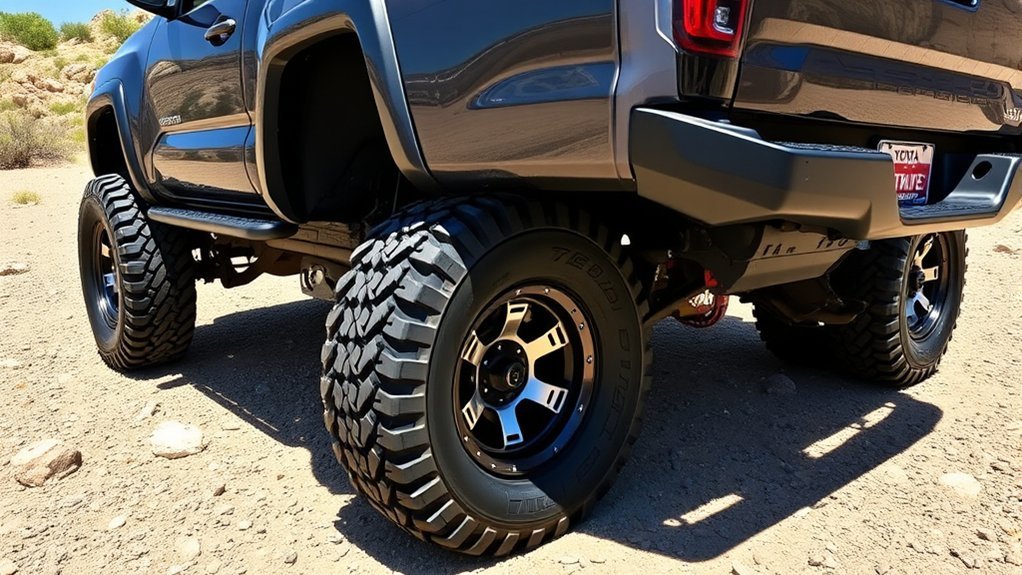
When larger tires rub on a Tacoma, the contact usually happens in predictable areas. Before cutting anything, inspect the truck at full steering lock in both directions and under suspension compression.
Proper Wheel Offset
The right wheel offset depends on your tire width, Tacoma generation, lift kit, and alignment. Avoid choosing wheels based on stance alone. A wheel that looks aggressive in photos may create rubbing on the trail.
For many lifted Tacoma setups, a 17×8 or 17×8.5 wheel is easier to fit than a very wide wheel. Wider wheels stretch the tire outward and can make the shoulder contact the fender liner or cab mount sooner.
Upgraded Control Arms
Aftermarket upper control arms can help a lifted Tacoma regain alignment range, especially caster. More positive caster can move the tire slightly forward in the wheel opening, which may help reduce cab mount rubbing. However, UCAs do not magically clear oversized tires by themselves.
Quality UCAs are most useful when paired with a proper alignment. Ask the alignment shop for before-and-after numbers, especially caster, camber, and toe.
Common Rubbing Points
- Front fender liner
- Mud flaps
- Front bumper tabs or lower valance
- Body mount or cab mount area
- Upper control arm clearance
- Sway bar area at full lock
Warning: A cab mount chop or body mount chop involves cutting and welding near a structural area. If you are not experienced with fabrication, have a qualified off-road shop do the work and inspect the repair before driving.
Test-Fit Checklist Before Buying Bigger Tires
Use this checklist before committing to 285/75R17 or 35-inch tires:
- Confirm your current wheel specs: diameter, width, offset, and backspacing.
- Measure current clearance: check the fender liner, cab mount, bumper, and UCA area.
- Check both steering directions: turn full lock left and right on flat ground.
- Simulate compression: inspect clearance with the suspension loaded, not only while parked level.
- Review alignment numbers: caster can make a major difference on Tacoma tire clearance.
- Compare tire models: check actual measured diameter, section width, tread width, and approved rim width.
- Plan for the spare: a larger spare may not fit in the factory location without changes.
- Budget for recalibration: larger tires can make the speedometer read slower than your actual road speed.
Advantages of Upgraded Suspension Components
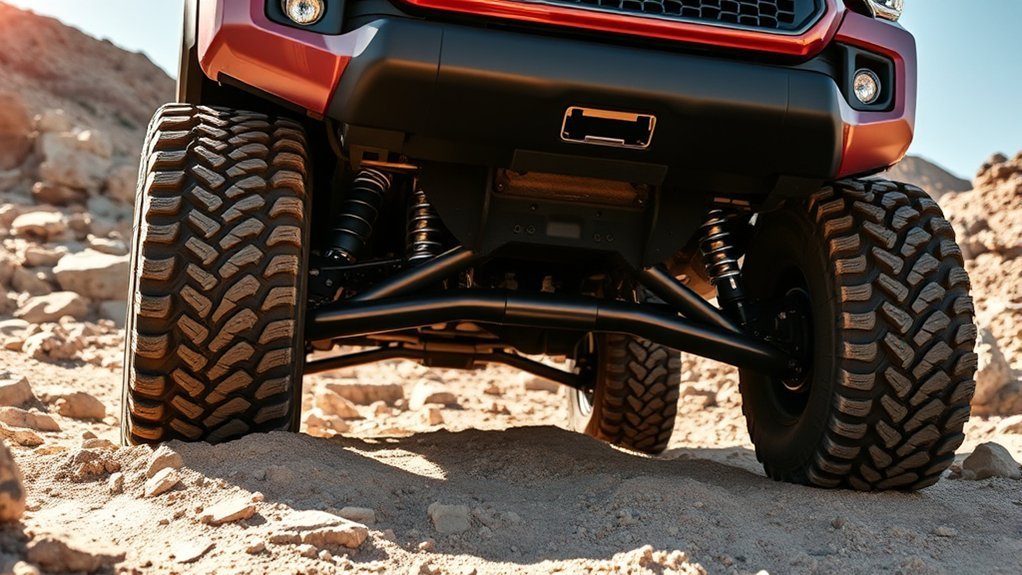
Upgraded suspension parts can make your Tacoma ride better, handle trail use more confidently, and keep alignment in a healthier range after a lift. They should not be treated as a shortcut around proper tire fitment, but they can make a larger tire setup work better.
Enhanced Off-Road Performance
A good suspension setup helps the tires stay in contact with the ground over uneven terrain. Better shocks, springs, and control arms can improve ride control, reduce harsh bottoming, and increase confidence on rough roads.
Parts such as BILSTEIN B8 5100 ride-height adjustable shocks are designed for leveling and lifted truck applications, but always confirm compatibility with your exact Tacoma year and configuration.
Improved Ride Comfort
Larger LT tires can be heavier and stiffer than factory tires. Better shocks and springs can help control that added weight, but tire pressure also matters. Overinflated LT tires can ride harshly, while underinflated tires can overheat and wear poorly.
For road use, start with the pressure guidance on the vehicle placard and work with a tire professional when changing tire type or load range. NHTSA advises checking tire pressure cold and using the vehicle manufacturer’s recommended cold inflation pressure as the baseline.
Better Load Support and Towing Stability
Heavy-duty leaf packs, rear springs, add-a-leaf kits, and air bags can help reduce rear sag when carrying gear or towing. That can improve stability and headlight aim, but it does not increase Toyota’s official payload or tow rating.
| Upgrade | What It Helps | What It Does Not Do |
|---|---|---|
| Upper control arms | Alignment range, caster, suspension geometry | Guarantee no-rub tire fitment |
| Quality shocks/coilovers | Ride control, damping, trail confidence | Make 35s fit without trimming |
| Rear springs or air bags | Rear sag and loaded stability | Raise the factory tow or payload rating |
Real-Life Experiences With Tacoma Tire Upgrades
Most Tacoma owners who are happy with larger tires choose a size that matches their real driving. A 285/70R17 is popular because it looks aggressive without creating as many headaches. A 285/75R17 looks better under a 3-inch lift and adds more clearance, but it is more likely to rub when the truck is loaded, flexed, or turned hard.
The biggest mistake is copying a photo without copying the full setup. Two Tacomas can both run 285/75R17 tires and have completely different results because of wheel offset, tire brand, alignment, bumper shape, mud flaps, lift height, and how much off-road articulation they see.
A 3-inch lift creates room, but tire clearance is still decided by the full package: tire size, wheel offset, caster, tread shape, and how the truck is used.
Preparing Your Tacoma for Off-Road Performance With Larger Tires
Before installing bigger tires, decide what kind of Tacoma you are building. A daily driver, overland truck, and rock-crawling setup do not need the same tire.
- Daily driver: Choose 275/70R17 or 285/70R17 for easier fitment and better road manners.
- Weekend trail truck: Choose 285/70R17 or 285/75R17 with good all-terrain tread and proper alignment.
- Overland build: Pay close attention to tire load rating, spare fitment, payload, and rear spring support.
- Aggressive off-road build: Plan for trimming, cab/body mount clearance, armor weight, and possible gearing changes.
Larger tires can improve ground clearance and trail capability, but they can also reduce acceleration, increase stopping distance, affect fuel economy, and make the speedometer inaccurate. Real-world performance depends on tire weight, tread pattern, gearing, and how much extra weight your Tacoma carries.
Frequently Asked Questions
What is the biggest tire for a Tacoma with a 3-inch lift?
The biggest practical tire for many 3-inch lifted Tacomas is 285/75R17, which is about 33.8 inches tall. It may still rub depending on wheel offset, tire model, alignment, and Tacoma generation.
Will 285/75R17 tires rub on a Tacoma with a 3-inch lift?
They can. Common rubbing points include the fender liner, mud flaps, bumper tabs, and cab/body mount area. Some setups clear with alignment and minor trimming, while others need more work.
Is 285/70R17 better than 285/75R17 for daily driving?
For most daily drivers, yes. A 285/70R17 is shorter than a 285/75R17, so it is usually easier to fit, lighter, and less likely to rub. It still gives the Tacoma a strong lifted stance.
Can I fit 35-inch tires with only a 3-inch Tacoma lift?
Sometimes, but it is not usually a simple bolt-on setup. Most 35-inch Tacoma builds require trimming, careful wheel specs, alignment work, and sometimes cab/body mount clearance.
What wheel offset is best for 285 tires on a lifted Tacoma?
There is no single best offset. Many older Tacoma builds use around 0 offset, but some newer or kit-specific setups may call for positive offset. Check your lift manufacturer’s tire-and-wheel guidance before buying wheels.
How much does it cost to put a 3-inch lift on a Tacoma?
A basic lift can start around the low thousands installed, while higher-quality suspension systems with UCAs, alignment, tires, and labor can cost several thousand dollars. The final price depends on parts quality, Tacoma generation, shop labor, and whether trimming or fabrication is needed.
Do bigger tires change my Tacoma’s speedometer?
Yes. A taller tire travels farther per rotation, so the speedometer may read slower than your actual speed. Recalibration may be needed after a major tire-size change.
Conclusion
For a Toyota Tacoma with a 3-inch lift, 285/70R17 is the smart, lower-risk tire size, while 285/75R17 is the biggest practical size for many owners who want a taller, more aggressive setup. If you want 35s, plan for extra trimming and more careful setup work.
The best result comes from matching the tire to your Tacoma generation, wheel offset, alignment, and driving style. Measure first, test-fit carefully, and do not ignore rubbing, load rating, tire pressure, or speedometer changes. Bigger tires look great, but a clean, safe fit is what makes the upgrade worth it.
Sources
- NHTSA TireWise — tire pressure and tire safety guidance.
- Toyota USA Newsroom: 2024 Tacoma — 2024 Tacoma redesign and platform context.
- ReadyLIFT 2024–2026 Tacoma 3-inch SST Lift Kit — kit-specific 285/75R17 fitment example.
- RealTruck Toyota Tacoma Tire Size Guide — tire sizing, offset, and performance tradeoff context.
- TireSize.com 285/75R17 Conversion — approximate 285/75R17 dimensions.
- BILSTEIN B8 5100 Ride Height Adjustable — suspension component reference.

Related Articles
Best Toyota Tacoma Tire Set Deals
You rely on your Tacoma for daily driving, work runs, and weekend adventures, so picking the right tire set matters more than you might…
Read More
Best Winter Tire Deals for Toyota Tacoma
Choosing the right winter tires for your Toyota Tacoma matters because it directly affects your safety, traction, and confidence when roads turn icy or…
Read More
Best Highway Tire Deals for Toyota Tacoma
You rely on your Tacoma for long drives, towing, and everyday hauling, so picking the right highway tire matters more than you might think.…
Read More