
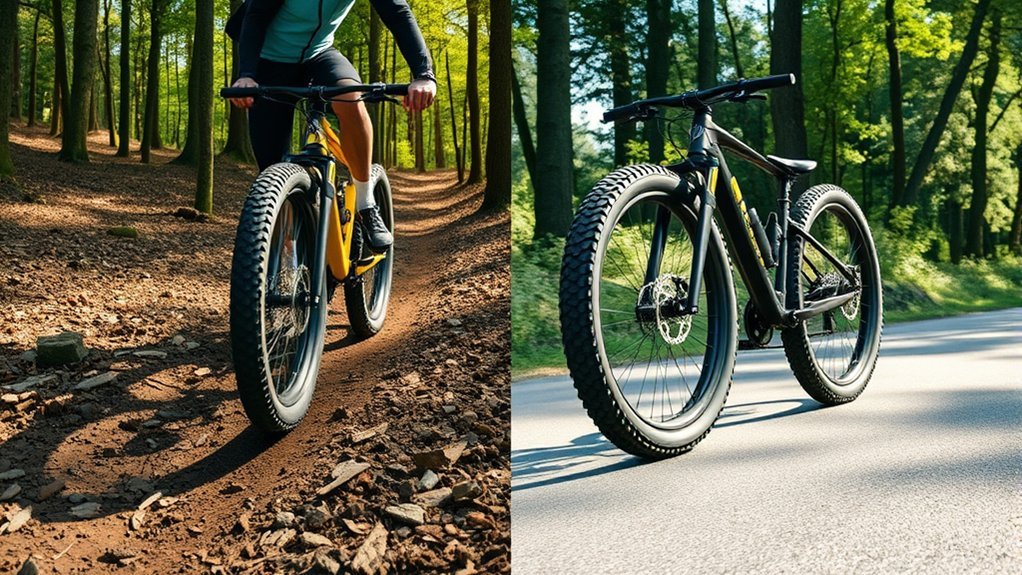
Fat tire bikes can feel harder to pedal on pavement, but that does not mean they are always difficult to ride. The real answer depends on where you ride, how much tire pressure you use, the tire tread, the bike weight, and whether the bike has electric assist.
On smooth roads, wide tires and extra weight can make a fat bike feel slower than a standard bike. On sand, snow, gravel, roots, and rough trails, those same wide tires can make riding feel easier because they add grip, comfort, and control.
Quick Answer
Fat tire bikes are harder to pedal on pavement because wide, low-pressure tires create more drag and the bike is usually heavier. On loose trails, snow, sand, and rough ground, they can feel easier because the tires float, grip, and absorb bumps better than narrow tires.
Key Takeaways
- Fat tire bikes usually feel slower on pavement because of rolling resistance, tire weight, tread drag, and slower acceleration.
- They often feel easier on loose or rough terrain because the wide tire contact patch improves grip and stability.
- Tire pressure makes a huge difference: lower pressure helps off-road traction, while higher pressure within safe limits helps pavement efficiency.
- A fat tire e-bike does not remove rolling resistance, but the motor can offset the added effort on hills, snow, sand, and longer rides.
- The easiest setup depends on your route, rider weight, tire width, tread pattern, gearing, and pressure gauge accuracy.
Are Fat Tire Bikes Hard to Pedal on Pavement?
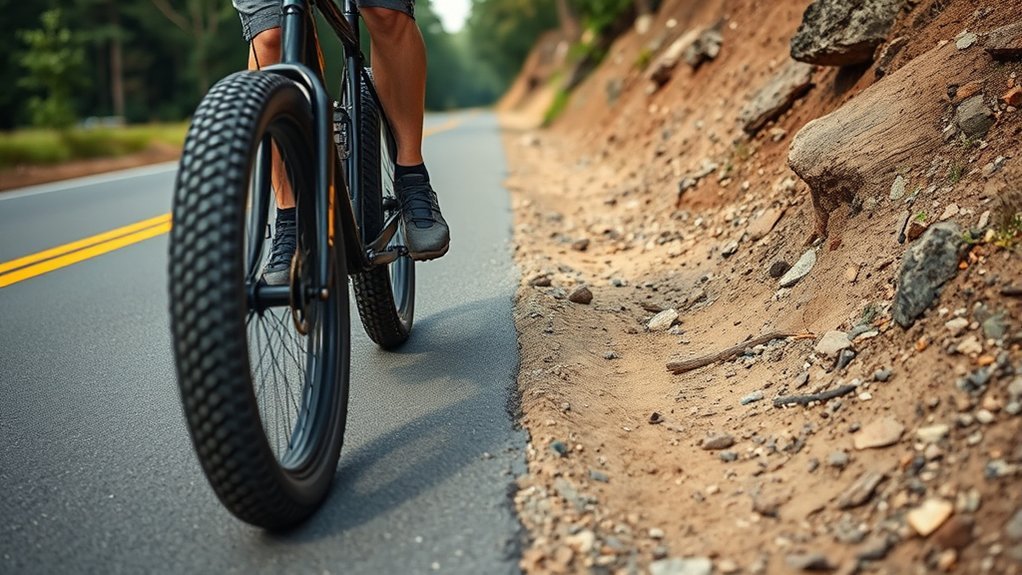
Yes, fat tire bikes are generally harder to pedal on pavement than standard road, hybrid, or mountain bikes. The main reason is that the large tires create more rolling resistance, especially when they are run at low pressure or have aggressive knobs.
Rolling resistance is the energy lost as the tire flexes against the ground. Tire pressure, load, tire construction, tread, surface roughness, and speed all affect that loss. Smooth pavement rewards lighter bikes, smoother tires, and a more aerodynamic riding position. A fat tire bike is usually built for control, not speed, so it can feel slower when the road is flat and clean.
That does not mean a fat bike cannot be used on pavement. It just means you should expect slower acceleration, more effort at higher speeds, and a heavier feel when starting from a stop. Raising tire pressure within the tire and rim limits, using a smoother tread, and choosing easier gears can make pavement riding much more manageable.
Pavement vs Trail: Where Fat Bikes Feel Hard or Easy
| Surface | How It Feels | Best Setup |
|---|---|---|
| Smooth pavement | Harder to accelerate and slower at cruising speed. | Higher safe pressure, smoother tread, steady cadence. |
| Hardpack dirt | Stable and comfortable, but not as quick as a light mountain bike. | Moderate pressure and a tire with smaller center knobs. |
| Loose gravel or roots | Easier to control because the tire grips and smooths chatter. | Lower pressure and strong side knobs. |
| Sand or snow | Much easier than narrow tires because the bike floats instead of sinking. | Very low pressure, wide tires, and smooth power. |
Why Fat Tire Bikes Feel Easier on Trails
On loose or rough trails, fat tire bikes can feel easier because their wide tires spread your weight over a larger contact patch. Instead of cutting into sand, snow, mud, or loose dirt, the tires float across the surface and hold traction.
The bigger contact patch also helps when you are climbing over roots, riding through ruts, or cornering on loose ground. You spend less energy correcting slips and more energy moving forward. Lower tire pressure adds natural shock absorption, so the bike feels calmer over rocks, washboard trails, and rough gravel.
A fat bike can feel slow on clean pavement but easier on messy terrain because traction and control reduce how much you fight the ground.
That is the tradeoff. On pavement, the big tires can feel like drag. On rough trails, they can feel like suspension and grip.
Why Fat Tire Bikes Take More Effort
Fat tire bikes take more effort in certain situations because they are built around stability and float, not top speed. You will feel the difference most on pavement, long climbs, stop-and-go riding, and fast group rides.
- Wide tires: A 3.8-inch to 5-inch tire has more rubber and air volume than a normal bike tire. That adds grip, but it also adds drag on hard surfaces.
- Low tire pressure: Soft tires deform more. That helps off-road comfort but can feel sluggish on pavement.
- Extra rotating weight: Large tires and wide rims take more effort to spin up from a stop.
- Knobby tread: Deep lugs help in snow, mud, and loose dirt, but they buzz and slow down on pavement.
- Upright riding position: Many fat bikes place you in a stable, upright stance, which can catch more wind at higher speeds.
- Lower gearing: Trail-friendly gears are great for crawling over rough ground, but they may feel slow on open roads.
Note: A fat bike is not automatically inefficient. A smooth fat tire at the right pressure can roll better than an underinflated, heavy, knobby tire. Tire choice matters as much as tire width.
How Tire Pressure Affects Pedaling
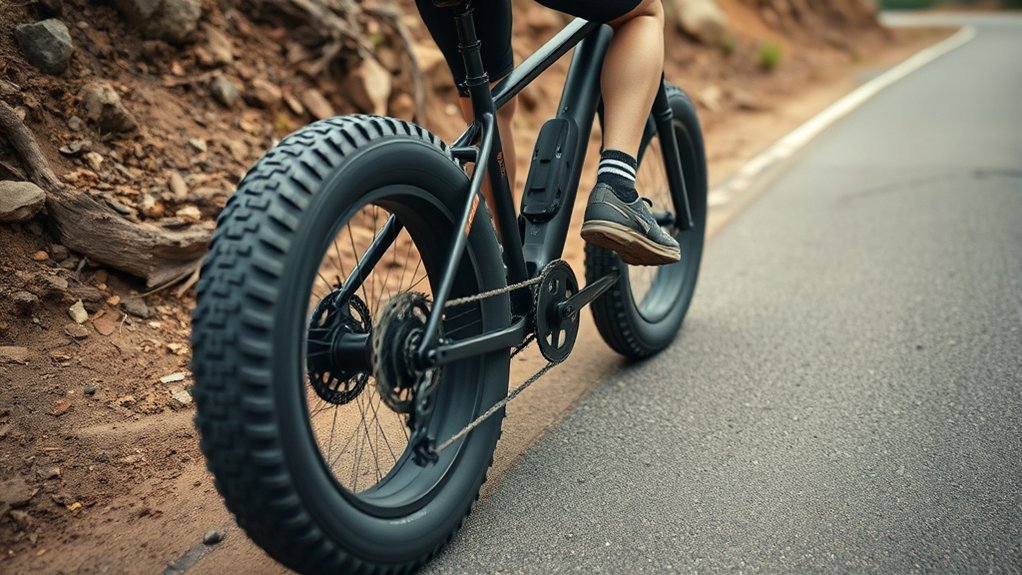
Tire pressure changes how hard your fat bike feels under your legs. The best pressure depends on tire size, rim width, rider weight, cargo weight, tubes or tubeless setup, temperature, and surface. Modern bike pressure advice also recommends using a reliable pressure gauge and checking the tire and rim limits before riding.
Warning: Never inflate above the lower maximum listed on your tire or rim. Do not run pressure so low that the tire folds, burps air, strikes the rim, or feels unstable in turns.
| Terrain | Starting Pressure Idea | Effect |
|---|---|---|
| Pavement | Higher within tire/rim limits | Less tire squirm and easier cruising. |
| Hardpack trail | Moderate pressure | Balanced grip, speed, and comfort. |
| Rocks, roots, loose dirt | Lower pressure | More grip and shock absorption. |
| Sand or snow | Very low pressure if safe for your setup | More float and less sinking. |
For pavement, add air until the bike stops feeling bouncy or sticky, but stay within the safe markings. For trails, lower pressure little by little until the bike grips well without folding in corners. For snow and sand, small pressure changes can make a big difference, so use a low-pressure gauge instead of guessing.
Pro Tip: Write down your favorite front and rear pressures for pavement, dirt, and snow. Fat bike tires use low pressure, so even 1 PSI can noticeably change the ride.
Do Fat Tire E-Bikes Make Riding Easier?
Yes, a fat tire e-bike can make riding much easier, especially on climbs, soft ground, headwinds, and long commutes. The motor does not lower the tire’s rolling resistance, but it offsets the extra effort needed to push wide tires, heavier wheels, and a heavier frame.
Pedal assist helps you keep a steady speed while still pedaling. A throttle, where legal and available, can help from a stop or through a short soft patch. This is why fat tire e-bikes are popular for beach paths, winter commuting, hunting access, utility riding, and mixed-terrain exploring.
There are tradeoffs. Fat tire e-bikes are heavier than non-electric fat bikes. They also need battery care, brake maintenance, and legal awareness. E-bike classes and trail access rules vary by location, so check local laws before riding on bike paths, park trails, or natural-surface routes.
[Products Worth Considering]
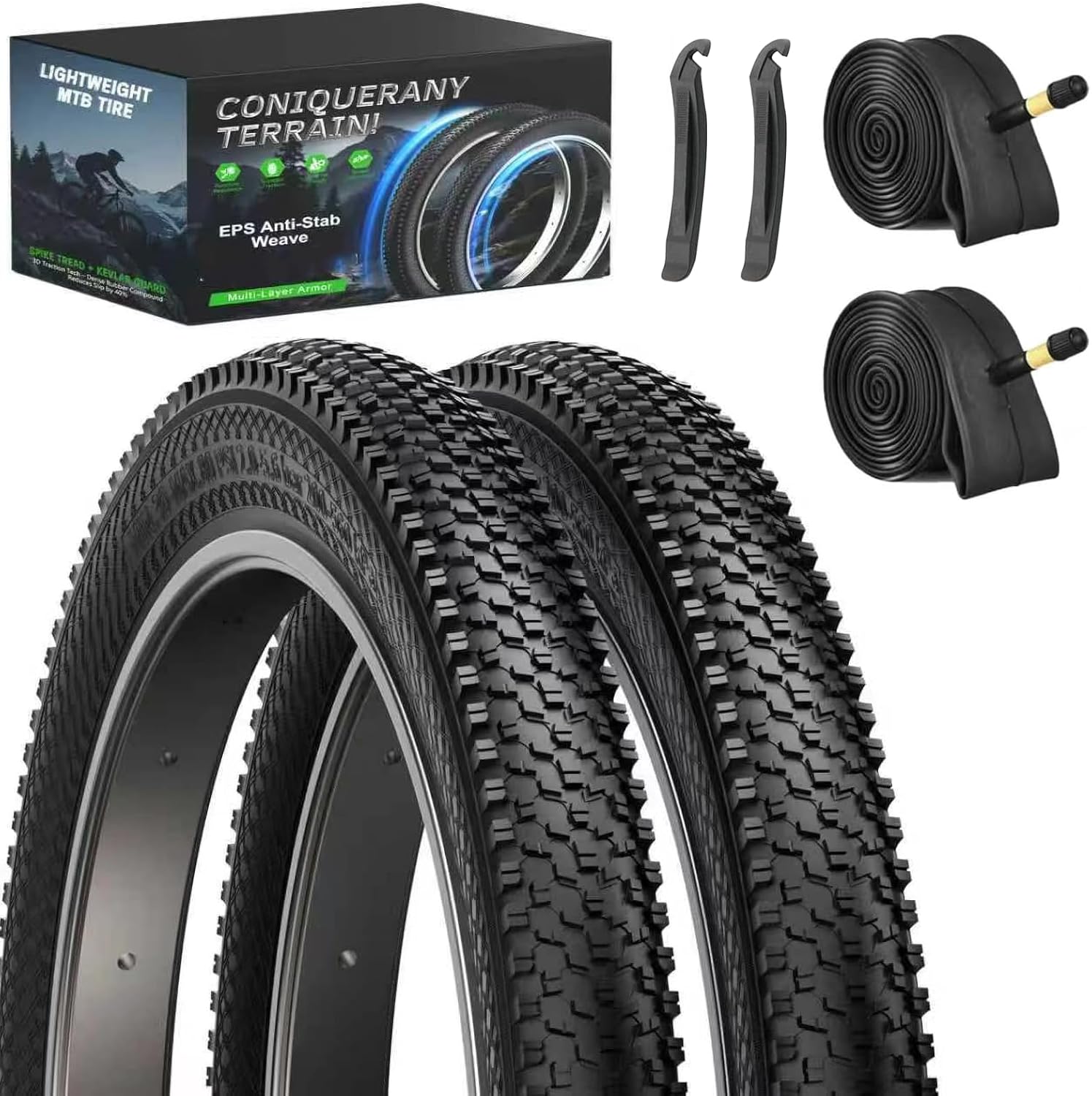
This 2-pack set includes two folding mountain bike tires, two inner tubes, and two tire levers for quick, budget-friendly replacements. The tires feature an anti-stab weave for added protection, plus strong grip and durable construction to help you stay stable across common trail and road conditions. Foldable design makes storage and travel convenient, while the included tubes provide a matched fit for smoother setup.

The TANX hitch bike rack securely fits any 2-inch receiver and carries up to two bikes, including heavy-duty e-bikes and fat tires up to 5 inches wide. Its foldable, smart tilting design lets you access your trunk or tailgate without removing the bikes. An anti-wobble hitch tightener and locking hitch pin help keep the ride stable, while padded, adjustable cradles and straps protect bike finishes during transport.

Upgrade your ride with a 2-pack set of 26x1.95 folding mountain bike tires built for dependable traction on mud, rocks, and trail surfaces. A reinforced puncture-resistant layer helps protect against sharp debris, while included butyl inner tubes provide strong sealing and shock absorption. Ready for fast swaps with included tire levers and universal sizing for most bikes.
How to Make a Fat Tire Bike Easier to Pedal
You can make a fat tire bike easier to pedal without replacing the whole bike. Start with the parts that affect rolling feel the most.
- Set tire pressure for the surface: Use higher safe pressure for pavement and lower pressure for loose trails, snow, or sand.
- Use the right tread: Choose smoother center tread for pavement and mixed use. Save deep knobs for mud, snow, and loose trails.
- Shift before climbs: Fat bikes reward a steady cadence. Shift early instead of grinding a hard gear.
- Check brake rub: A dragging disc brake can make any bike feel slow.
- Clean and lubricate the chain: Dirt and dry drivetrain parts waste effort.
- Set saddle height correctly: A saddle that is too low makes pedaling feel heavy and can tire your knees.
- Pack lighter: Frame bags, racks, locks, and batteries add weight that you will feel on climbs and starts.
[Products Worth Considering]
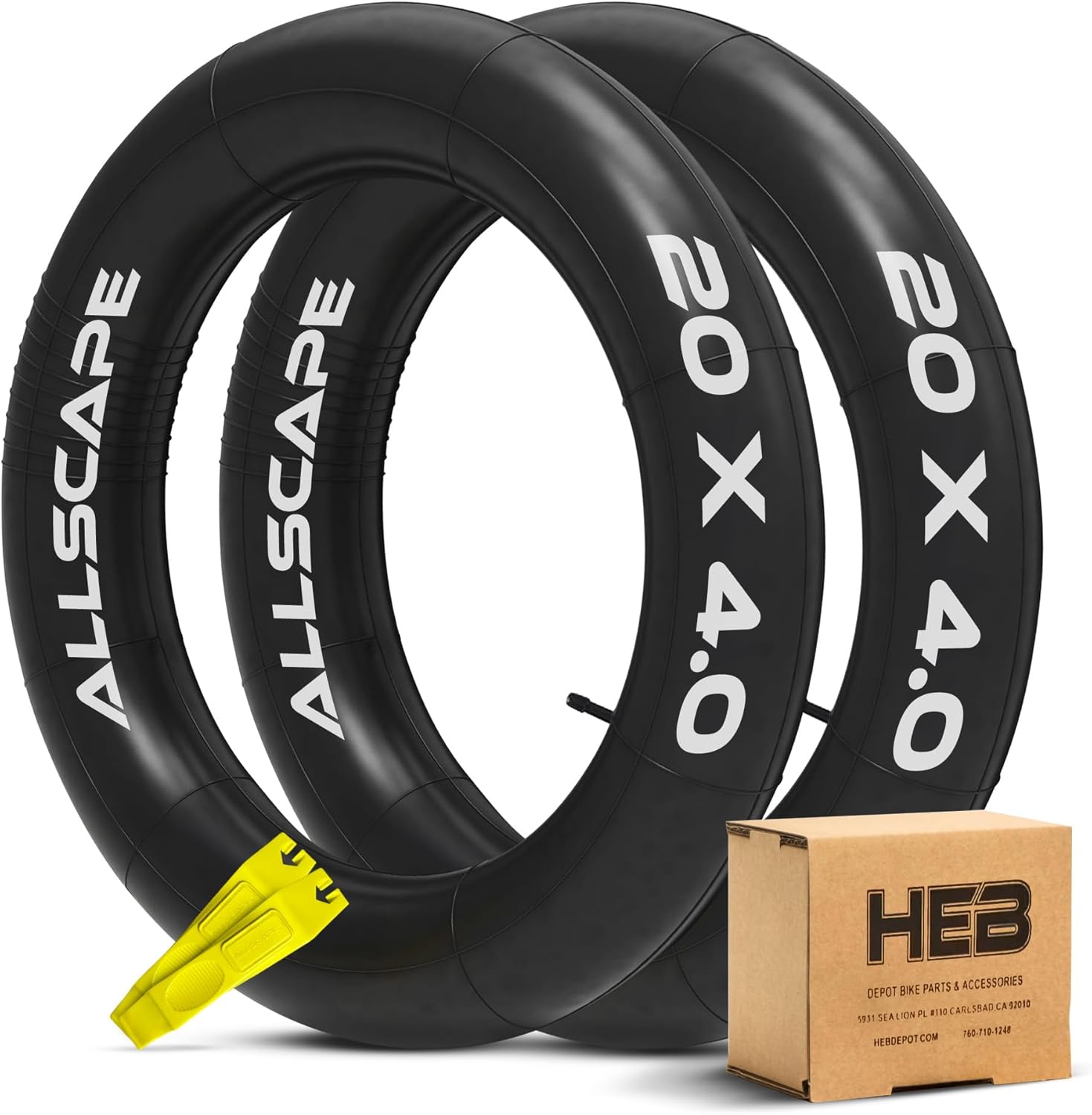
HEB heavy duty inner tubes deliver reliable puncture resistance for fat tire electric bikes and mountain bikes running 20x4 or 26x4 tires. Built for rugged backcountry trails, they help prevent flats from rocks and thorns while providing stability and traction. Choose a single tube or multi-packs for better value and keep your ride running smoothly in all seasons.

Upgrade your 20x4.0 fat tire ebike with these perfectly fitting inner tubes designed for 20-inch fat tires. The Schrader valve makes inflation easy and the premium butyl construction helps resist everyday wear. Each pack includes two tubes, making it simple to be ready for flats and keep your ride moving.

Ride with confidence using these fat tire inner tubes designed for 26-inch e-bikes and bikes. The butyl rubber construction delivers good airtightness, durability, and shock absorption for a smoother ride. Each tube fits 26x3.5 to 4.0 tires with an AV 32mm Schrader valve, and the kit includes tire levers for easier installation.
How to Choose the Right Fat Tire Bike
When you choose a fat tire bike, match the bike to where you ride most. A bike that is perfect for snow may feel slow for a city commute. A smoother, lighter fat bike may feel easier on pavement but less confident in deep sand or fresh snow.
[Products Worth Considering]

This heavy-duty fat bike inner tube is built for secure fit on 20-inch wheels with 3.5 to 4.0 inch wide tires, including e-bikes and mountain bikes. It uses thick butyl rubber for improved durability, air tightness, and a smoother, more comfortable ride. A standard Schrader valve makes inflation easy and helps keep pressure stable for safer rides, with tire levers included for simpler installation.

Protect your inner tube with this universal bike tire liner designed to block thorns, glass, nails, and sharp trail debris. It installs easily by measuring and trimming to fit, creating a durable barrier between tire and tube. Lightweight polyurethane construction helps reduce sudden flats for more confident rides.

This tire inflator with pressure gauge delivers long-lasting performance with a durable rubber-protected gauge and sturdy build. The longer hose and 360 swivel air chuck help you seal the valve securely and keep your hands free while measuring, inflating, or deflating. It’s battery-free for reliable use and provides ±2 PSI accuracy in the mid-range for most typical tires, with universal compatibility for 1/4 NPT compressor outputs.
Tire Width Matters
Most fat bike tires are roughly 3.8 inches wide or wider. Wider tires add float and stability, which helps on soft terrain. Narrower fat tires feel quicker and usually pedal easier on pavement and hardpack.
- 3.8-inch to 4.0-inch tires: Good for mixed terrain, packed snow, gravel, and easier pavement riding.
- 4.5-inch to 5.0-inch tires: Better for deep snow, loose sand, mud, and maximum float.
- Smoother tread: Better for commuting and firm surfaces.
- Open, aggressive tread: Better for snow, mud, and loose trails.
Match Terrain Needs
If most of your riding is on streets, rail trails, or paved paths, look for a lighter frame, smoother tires, and a gear range that lets you spin comfortably. If you ride beaches, winter trails, desert sand, or rough forest roads, choose wider tires, strong brakes, and stable handling.
For technical trails, suspension can help, but it also adds weight and cost. Many riders prefer a rigid fat bike because the tires already provide a lot of comfort at low pressure.
Choose the Right Build
The right build depends on how much effort you want to put in and how much terrain you want to cover.
- City and bike-path riding: Choose a lighter fat bike, smoother tires, and higher safe tire pressure.
- Trail riding: Choose stronger tires, lower gearing, hydraulic disc brakes, and confident handling.
- Snow and sand: Choose wider tires, enough frame clearance, and a low-pressure gauge.
- Long commutes or hills: Consider a fat tire e-bike if the extra weight and battery care fit your needs.
- Limited storage: A folding fat tire e-bike can help, but it may be heavier and less efficient than a non-folding frame.
Are Fat Tire Bikes Good for Beginners?
Fat tire bikes can be good for beginners because they feel stable, forgiving, and confidence-building on gravel, grass, dirt, and loose surfaces. The wide tires help new riders balance and stay in control when the ground is uneven.
The downside is weight. Beginners may find a fat bike harder to lift, carry upstairs, load onto a rack, or accelerate from a stop. A beginner who mostly rides pavement may be happier with a hybrid, comfort bike, or e-bike. A beginner who rides beaches, winter paths, farm roads, or rough trails may love the extra grip.
Note: Wear a properly fitted bicycle helmet, practice braking before riding fast, and avoid deep snow, sand, or steep trails until you know how the bike handles at low pressure.
Who Should Choose a Fat Tire Bike?
A fat tire bike makes the most sense if you want comfort, grip, and all-season terrain ability more than road-bike speed.
- Choose one if: you ride snow, sand, gravel, dirt roads, rough trails, beaches, or mixed surfaces.
- Think twice if: you mainly ride smooth pavement, care about speed, need to carry the bike often, or want a lightweight commuter.
- Consider an e-bike if: you like the traction of fat tires but want help with hills, wind, cargo, or long distances.
Frequently Asked Questions
How much harder is it to pedal a fat tire bike?
There is no single percentage that applies to every rider. A fat tire bike can feel noticeably harder on pavement because of tire drag, weight, tread, and wind resistance. On loose trails, snow, or sand, it may feel easier than a narrow-tire bike because it grips and floats better.
What are the disadvantages of a fat tire bike?
The main disadvantages are extra weight, slower acceleration, higher rolling resistance on pavement, more tire-pressure sensitivity, and wider replacement tires that can cost more. Some fat bikes also feel less nimble in tight turns than lighter mountain or hybrid bikes.
Are fat bike tires harder to pedal?
Fat bike tires are usually harder to pedal on smooth pavement, especially if they are soft, wide, and knobby. They are not always harder off-road. On sand, snow, gravel, and roots, the added traction can make the bike easier to control and keep moving.
Are fat tire bikes good for beginners?
Yes, fat tire bikes can be good for beginners who want stability and confidence on rough or loose ground. They are less ideal for beginners who mainly ride pavement and want a light, quick bike. For easy casual riding, tire pressure and bike weight matter more than tire width alone.
Can you ride a fat tire bike on pavement every day?
Yes, you can ride a fat tire bike on pavement every day, but it will usually be slower than a hybrid, gravel, road, or commuter bike. For daily pavement use, choose smoother tires, set safe higher pressure, keep the drivetrain clean, and consider electric assist if your route has hills.
What tire pressure makes a fat bike easier to pedal?
For pavement, a higher safe pressure usually makes a fat bike easier to pedal. For trails, sand, and snow, lower pressure can be easier because it improves grip and float. Always stay within the tire and rim limits and adjust in small steps.
Conclusion
So, are fat tire bikes hard to pedal? On pavement, they can be harder because the wide tires, low pressure, heavy wheels, and knobby tread create more drag. On trails, sand, snow, and rough ground, they can feel easier because they grip, float, and absorb bumps better than narrow tires.
The best way to make a fat bike easier to ride is to match it to your terrain. Use the right tire pressure, choose the right tread, shift early, keep the drivetrain clean, and consider electric assist if you want help with hills or longer rides. A fat tire bike is not the fastest choice for smooth roads, but it can be one of the most confident and comfortable choices for mixed terrain.
Sources
- Bicycling: How to Achieve the Perfect Bike Tire Pressure — supports tire-pressure setup, pressure checks, and manufacturer limit guidance.
- Bicycling: Rolling Resistance Myths Explained — supports the nuance that pressure, tire choice, and real-world surfaces affect speed and comfort.
- Fatbike reference overview — supports the general definition of fat bikes as oversized, low-pressure bikes for soft terrain.
- Cycling on Rough Roads: A Model for Resistance and Vibration — supports the role of roughness, vibration, and resistance on real surfaces.
- On Modelling Bicycle Power-Meter Measurements — supports the separation of air, rolling, drivetrain, elevation, and speed effects in cycling effort.
- Wired: What Are E-bike Classes? — supports the note that e-bike classes and access rules vary by location.
