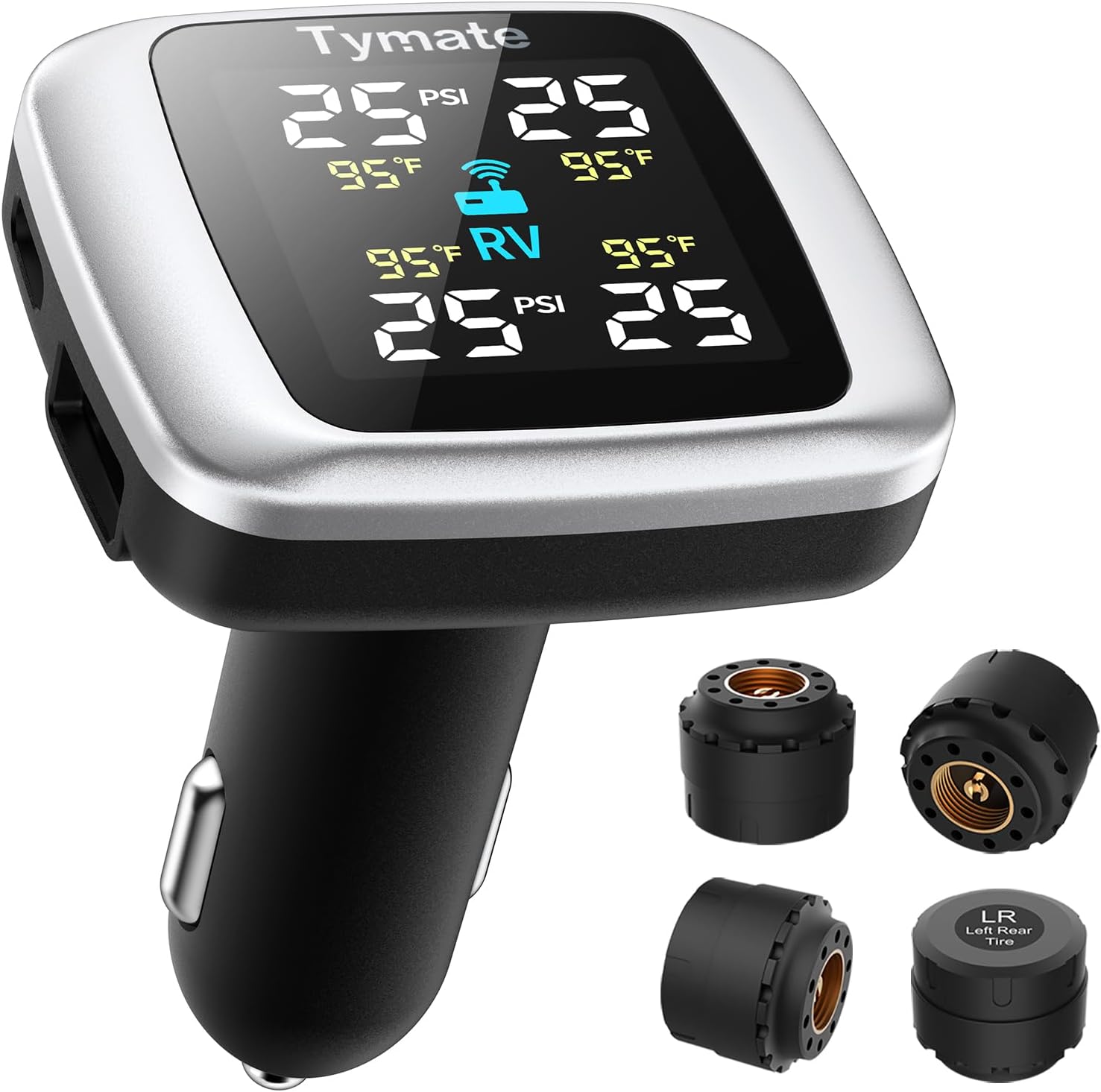
How Cold Weather Affects Toyota Tacoma Tire Pressure
Cold weather lowers your Toyota Tacoma’s tire pressure, dropping by 1–2 PSI for every 10°F decrease in temperature. This means a 40°F drop could result in a pressure loss of around 4 PSI. Low tire pressure affects traction, braking, and stability, making driving riskier in winter conditions. To guarantee safety, check your tires regularly and adjust to the recommended pressure. Want to know more about maintaining tire performance in winter? Keep going for essential tips!
Understanding Why Cold Weather Lowers Tire Pressure
When temperatures drop, you might notice your tire pressure warning light flickering on, and that’s not just a coincidence. Cold air is denser, which means tire density decreases, leading to a drop in pressure. For every 10°F decrease in temperature, your tires can lose about 1–2 PSI. So, if it’s a chilly 40°F drop, you’re looking at a pressure loss of around 4 PSI. This is vital because your Tire Pressure Monitoring System (TPMS) may trigger alerts even if there’s no leak, simply due to these normal fluctuations. Regularly checking your tire pressure during winter months becomes necessary. Understanding how temperature fluctuations impact your tires helps you maintain peak performance and extend their lifespan. Keeping your tires properly inflated not only enhances vehicle handling but also empowers you to drive with confidence, knowing you’re equipped for whatever the road throws at you.
Risks of Low Tire Pressure in Cold Weather
Cold weather’s impact on tire pressure isn’t just a minor inconvenience—it can pose serious risks to your safety on the road. When temperatures drop, tire pressure can decrease considerably, leading to various traction issues that compromise your vehicle’s handling. Here are some risks to evaluate:
- Reduced traction, making it harder to grip icy or slushy surfaces
- Compromised braking effectiveness, increasing stopping distances
- Decreased stability, especially during sharp turns
- Accelerated tire wear, costing you more in replacements
- Potential blowouts, which can be dangerous at high speeds
Regular tire checks are essential for maintaining tire safety throughout winter. If your Tire Pressure Monitoring System (TPMS) triggers an alert, don’t ignore it. By being proactive, you can avoid these serious risks and enjoy a safer driving experience during the colder months.
Optimal Tire Pressure for Winter Driving
Maintaining ideal tire pressure during winter is essential for ensuring your safety on slippery roads. For your Toyota Tacoma, the recommended tire pressure typically ranges from 30 to 35 PSI, depending on your tire type. It’s vital to check this when the tires are cold for accurate readings. Remember, for every 10°F drop in temperature, your tire pressure can decrease by 1 to 2 PSI. A significant drop of 40°F could lead to a loss of around 4 PSI, compromising traction and handling in winter conditions.
To stay safe, check your tire pressure every two to four weeks during the colder months. Overinflating tires by 5–10 PSI above the manufacturer’s recommendations can reduce grip and negatively affect your braking performance. Prioritizing the correct tire pressure will enhance your driving experience and keep you in control when maneuvering icy or slushy roads. Stay informed, and drive safely!
Effective Techniques for Checking and Maintaining Tire Pressure
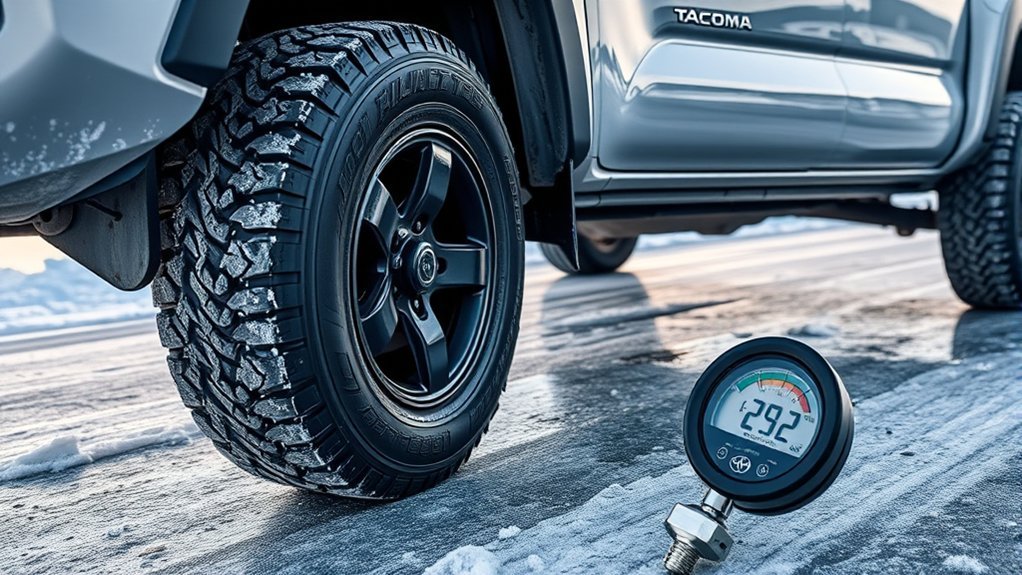
Proper tire pressure is key to guaranteeing safety and performance during winter driving, and checking it regularly is just as important. Here are some effective techniques for maintaining your Tacoma’s tire pressure:
- Check when cold: Always measure tire pressure after resting for several hours to avoid heat-induced inaccuracies.
- Use quality gauges: A reliable tire pressure gauge is essential; visual checks can mislead you.
- Follow manufacturer specs: Inflate tires to the PSI listed on your driver’s door jamb or owner’s manual for peak performance.
- Monitor regularly: Check your tire pressure every two to four weeks during cold weather, as temperatures can cause a 1-2 PSI drop per 10°F decrease.
- Adjust only when cold: Never release pressure from warm tires; wait until they cool down to guarantee proper inflation.
These simple steps can enhance your driving experience and keep you safe on the road.
Best Practices for Winter Tire Maintenance
As winter approaches, ensuring your tires are well-maintained becomes vital for safe driving. Start by checking your tire pressure regularly, as it can drop 1–2 PSI for every 10°F decrease in temperature. Always measure pressure when the tires are cold—ideally in the morning—after your vehicle has been stationary for several hours. Refer to the driver’s door jamb for the recommended pressure for your Toyota Tacoma, and avoid overinflating by more than 5–10 PSI, as this can reduce grip.
Don’t forget about tire rotation; regularly rotating your tires promotes even wear, extending their lifespan. Additionally, perform a thorough tread inspection to check for depth and visible damage. Adequate tread depth is essential for traction in winter conditions. Following these best practices not only enhances safety but can also improve fuel efficiency as you navigate through winter roads. Keep your vehicle ready for whatever the season throws your way!
Frequently Asked Questions
Is 35 PSI Too High for Tacoma?
No, 35 PSI isn’t too high for your Tacoma. In cold weather, tire pressure can drop, so maintaining that level guarantees peak performance and safety. Regular checks keep your tires in great shape, enhancing your driving experience.
Is 25 PSI Too Low in Winter?
Driving on 25 PSI is like steering a pirate ship through icy waters—dangerous! For winter safety, keep your tire pressure in the recommended range. Low PSI can compromise handling and increase wear, leading to potential hazards.
Conclusion
In cold weather, your Toyota Tacoma’s tire pressure drops, risking safety and performance. But by staying vigilant, you can maintain ideal pressure and guarantee a smooth ride. The chill may threaten your tires, yet with regular checks and proper maintenance, you can combat the cold. Embrace best practices, and your Tacoma will handle winter’s challenges with ease. Remember, a little effort goes a long way in keeping you safe on the road.

Related Articles
Toyota Tacoma Tires for Snow and Ice Driving
Tackle winter driving with the best tires for your Toyota Tacoma; discover essential options that ensure safety and performance in snowy conditions.
Read More
How Toyota Tacoma Tires Perform in Rain
Learn how tire design and maintenance affect your Toyota Tacoma's performance in rain—discover tips to enhance your safety on wet roads!
Read More
Do All Terrain Tires Work in Snow on a Toyota Tacoma
Just how effective are all-terrain tires in snowy conditions for your Toyota Tacoma? Discover the surprising truths and options that can enhance your winter driving.
Read More