Toyota Tacoma Tire Height Comparison Chart
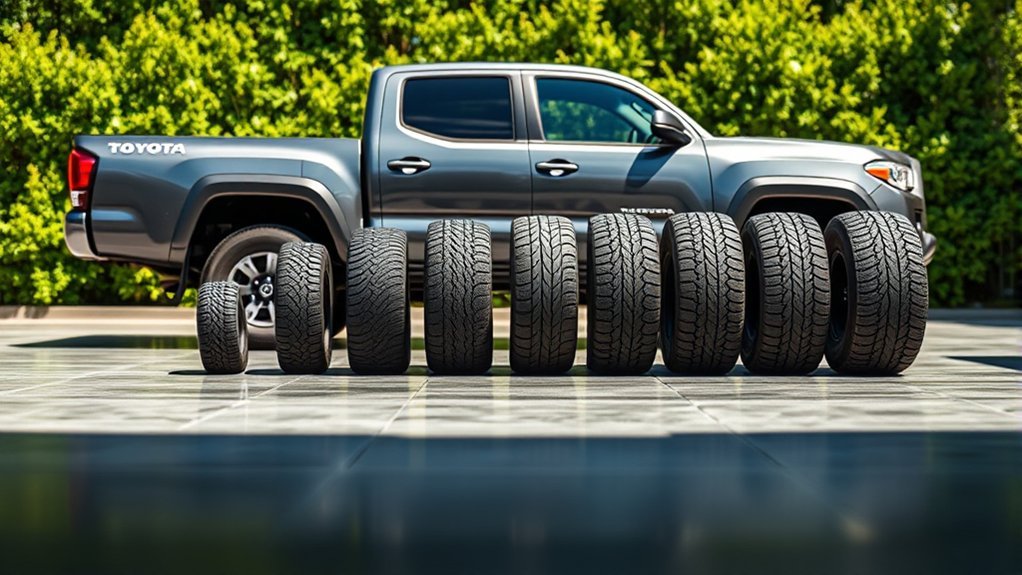
When it comes to comparing tire heights for different Toyota Tacoma models, understanding the evolution of tire sizes is key. From the 14″ options in older models to the current limits of 17″ and 18″, each generation’s tires cater to distinct performance needs. Larger tires enhance off-road capabilities, while maintaining accurate speedometer readings is essential after upgrades. Learn more about tire choices, maintenance tips, and how to optimize your Tacoma’s performance for both on and off-road adventures.
Understanding Tacoma Tire Sizes Across Generations
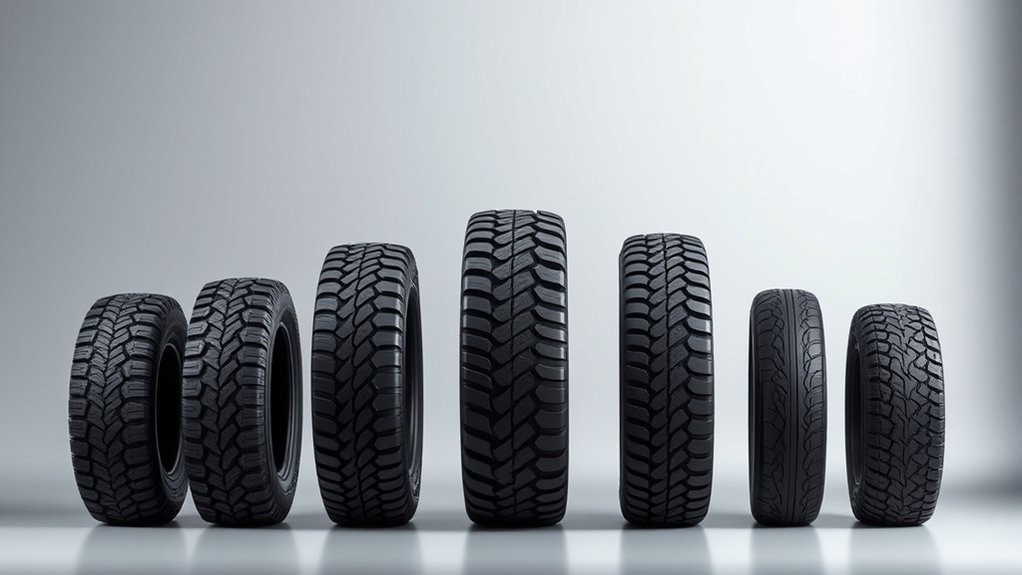
When you look at the evolution of tire sizes for the Toyota Tacoma, it’s clear that each generation has its own set of options tailored to specific driving needs. The 1995-2004 Tacoma (N100) offered 14″, 15″, and 16″ tires, providing flexibility for various terrains. With the 2004-2015 Tacoma (N200), the 14″ option disappeared, expanding to 15″ through 18″. By the 2016 Tacoma (N300), the options became even more streamlined, dropping the 15″ size and sticking to 16″ to 18″. The latest 2023-2026 Tacoma (N400) limits choices to just 17″ and 18″. These generation comparisons reveal a trend toward larger tires that enhance off-road performance, reflected in popular upgrades like 275/70R17. Understanding this tire size evolution is essential for ensuring fitment and maximizing your Tacoma’s capabilities, whether you’re tackling daily drives or off-road adventures.
Key Differences in Tire Sizes for Tacoma Models
While tire sizes for the Toyota Tacoma have evolved over the years, understanding the key differences between models can greatly impact your driving experience. The 1995-2004 models feature sizes from 14″ to 16″, while the 2004-2015 range shifts to 15″ to 18″, eliminating the smaller option. For 2016-2025, you’ll find only 16″ to 18″ tires, with the latest models using 17″ and 18″ exclusively.
Stock sizes like 265/65R17 balance tire wear and off-road performance, but many enthusiasts opt for 265/70R17 or 285/70R17 for better traction and aesthetics. Keep in mind that larger tires can affect load capacity, tire pressure, and noise levels. When considering seasonal tires, tread patterns matter too. Brand comparisons can guide you in choosing the right fit for your driving style, ensuring you make the most of your Tacoma’s capabilities.
When Should You Replace Tires for Your Tacoma?
Knowing when to replace the tires on your Toyota Tacoma is vital for maintaining safety and performance. Generally, tires should be replaced every five years, regardless of tread depth. While the tire lifespan is designed for normal use, your driving habits can affect this period. Regular tread inspection is important; look for signs like cracks, bulges, or uneven wear. If your tires reach the tread wear indicators at 2/32 of an inch, replace them immediately for maximum safety.
Even if your tires seem fine after five years, consider replacing them to avoid potential blowouts or handling issues. Seasonal changes can also impact performance factors, so be proactive in tire maintenance. Keep an eye on replacement signs to guarantee your Tacoma stays safe and reliable. Prioritizing tire health liberates you from the risks associated with compromised performance on the road.
How to Read Tire Markings on Tacoma Tires
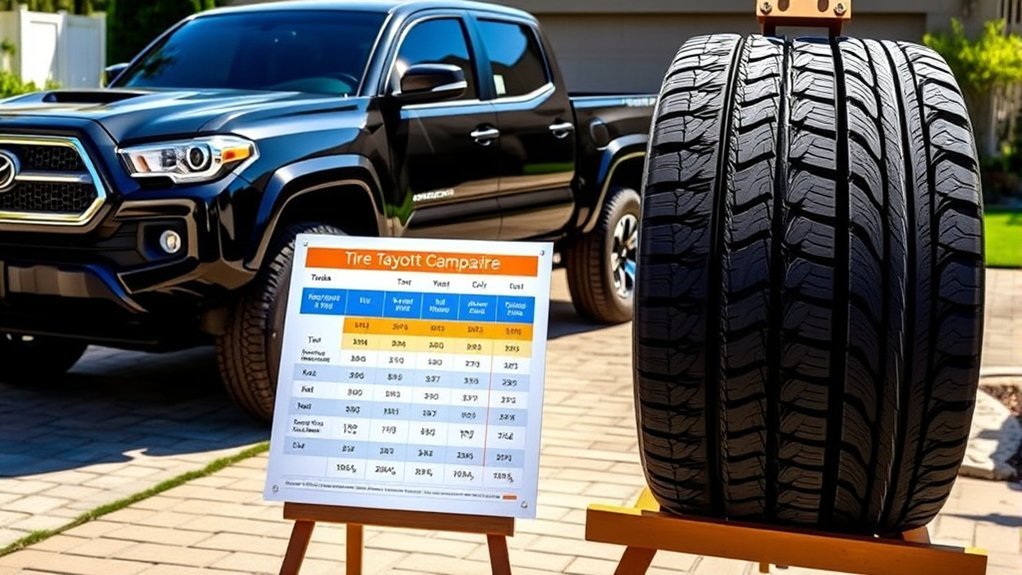
Replacing your tires at the right time is just one aspect of tire maintenance for your Toyota Tacoma. Understanding tire markings is essential for safety and performance. Here are some tire marking basics to keep in mind:
- Width: The first number indicates width in millimeters (e.g., 255).
- Aspect Ratio: The second number shows the height as a percentage of width (e.g., 70%).
- Rim Diameter: The last number denotes rim size in inches (e.g., 17).
- Load Index & Speed Rating: Found on the sidewall, these signify maximum weight and speed limits.
- UTQG Label: This provides insights into treadwear, traction, and temperature resistance.
Top Tire Choices by Tacoma Generation: What You Need to Know
When it comes to choosing the right tires for your Toyota Tacoma, understanding the differences between generations can make a considerable impact on your driving experience. The 1995-2004 models typically use tire sizes from 14″ to 16″, while the 2004-2015 generation shifts to 15″ to 18″. The latest 2016-2025 models narrow it down to 16″ to 18″, with 17″ and 18″ being the only options for 2023-2026.
For the 2nd and 3rd Gen Tacoma, stock sizes like 265/65R17 and 265/70R16 are perfect for daily driving and light off-roading. If you’re considering upgrades, sizes such as 275/70R17 and 285/70R17 enhance off-road traction considerably. Keep in mind how tire tread interacts with seasonal changes and the specific conditions you’ll encounter. Choosing wisely guarantees compatibility and peak performance, enhancing your Tacoma’s capabilities on and off the road.
Key Factors to Consider When Choosing Tires for Your Tacoma
When you’re choosing tires for your Tacoma, consider tire size compatibility, as it directly affects handling and performance. Think about the terrain you’ll be driving on—whether it’s daily commuting or off-road adventures—since this impacts the type of tread you’ll need. Don’t forget to check the load rating requirements to guarantee your tires can handle your truck’s weight and any additional gear.
Tire Size Compatibility
Choosing the right tire size for your Toyota Tacoma can greatly impact your vehicle’s performance and handling. Here are key factors to take into account:
- Stock tire sizes: Typically 265/65R17 to 265/70R16 for speedometer accuracy.
- Lift and suspension: Larger tires often need a lift kit for clearance and to avoid rubbing.
- Tire width and offset: Wider tires, like 285s, may require a negative offset to prevent contact.
- Overall diameter: Tacoma can fit tires up to 31.6 inches without modifications.
- Driving needs: Oversized tires can affect performance, fuel efficiency, and handling, particularly on highways.
Always check your tire pressure and tread patterns to guarantee peak performance on every adventure!
Terrain and Usage
Selecting the right tires for your Toyota Tacoma directly influences how well it handles various terrains. If you’re venturing off-road, consider tires designed for superior tire traction on unpaved surfaces. Off-road tires typically offer aggressive tread patterns that excel in mud and loose gravel, enhancing terrain adaptability. While larger tires (up to 33 inches) can greatly boost off-road performance, be mindful that they may require suspension modifications for a proper fit. For daily driving, stock sizes like 265/65R17 strike a balance between comfort and light off-road capability. Always maintain ideal tire pressure; it’s essential for handling, fuel economy, and preventing uneven wear, especially when switching between on-road and off-road conditions.
Load Rating Requirements
Understanding load ratings is essential for guaranteeing your Toyota Tacoma performs safely and efficiently, especially under varying loads. Selecting the right tires with appropriate load ratings not only enhances performance but also prioritizes tire safety. Here are key considerations:
- The load index for Tacoma tires typically ranges from 100 to 120.
- Overloading tires beyond their rated capacity can lead to premature wear.
- Always match replacement tire load ratings to the manufacturer’s specifications.
- Upgrading to larger tires? Verify their load ratings meet or exceed originals.
- Proper load ratings maintain vehicle stability and handling.
What Should You Know About Upgrading Tires?
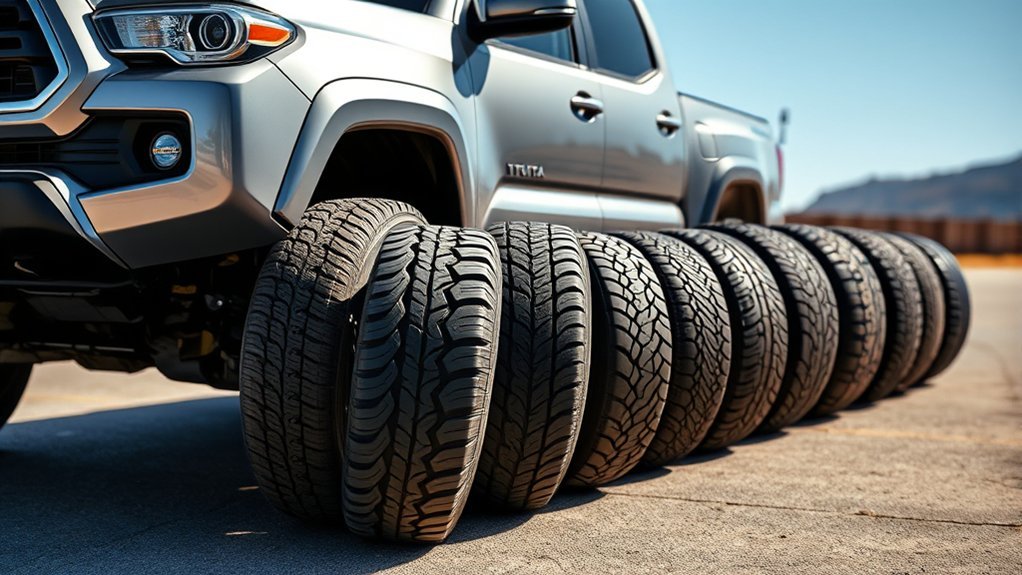
Upgrading your tires can greatly enhance your Toyota Tacoma’s off-road capabilities and overall look. Popular sizes like 275/70R17 or 285/70R17 strike a balance between performance and drivability. However, consider whether you need a lift kit for larger tires, as those over 33 inches may rub against suspension components. Staying within the stock limits—up to 31.6 inches—means you can avoid modifications, keeping your speedometer accurate and fuel economy intact.
Wider tires, like 285s, require careful attention to wheel offset to prevent rubbing on stock suspension. It’s also essential to monitor tread wear indicators; this helps maintain traction and performance. Finally, upgrading to larger tires might necessitate re-gearing your differential for peak torque. By following these tire maintenance tips and understanding the implications of your choices, you’ll guarantee your Tacoma performs at its best, whether on rugged trails or city streets.
Keeping Your Speedometer Accurate With New Tires
When you upgrade to larger tires, keeping your speedometer accurate is essential. Larger tires can markedly impact your speed readings, often causing them to underestimate your actual speed. To guarantee precision, you may need to recalibrate your speedometer or adjust gear ratios based on your new tire size.
Speedometer Calibration Importance
Have you ever considered how a change in tire size can throw off your speedometer readings? When you switch to larger tires, like moving from 265/70R16 to 285/70R17, your speedometer can become inaccurate by around 4% or more. This makes speedometer recalibration vital for accuracy maintenance.
Here are a few key points to keep in mind:
- Larger tires increase overall diameter, affecting speed readings.
- Odometer calculations can also be skewed.
- Understanding tire diameter helps predict changes.
- Regular speedometer checks enhance road safety.
- Recalibration guarantees compliance with speed limits.
Keeping your speedometer accurate is important for your safety and driving experience. Don’t overlook the significance of recalibrating after a tire change!
Tire Size Impact
Switching to larger tires can greatly impact your speedometer accuracy, making it crucial to understand how these changes affect your driving experience. When you upgrade, like moving from stock 265/70R16 tires to 275/70R17 tires, you increase diameter by about 5.2%. This change alters your wheel rotations per mile, leading to significant speedometer effects.
To keep your speedometer accurate, consider using a tire size calculator. Here’s a quick comparison:
| Tire Size | Diameter (inches) |
|---|---|
| 265/70R16 | 30.6 |
| 275/70R17 | 32.2 |
| Speedometer Error | Approx. 5.2% |
| Performance Impact | Varies |
Maintaining speedometer accuracy guarantees safe driving and avoids unwanted fines.
Adjusting Gear Ratios
Upgrading your tires can lead to improved performance, but it also brings the need to adjust your gear ratios to keep everything running smoothly. When you switch to larger tires, recalibrating your speedometer becomes essential. Here’s what you need to know:
- Larger tires increase overall diameter, affecting speed readings.
- For example, moving from 265/70R16 to 285/70R17 adds about 1.5 inches.
- Adjusting gear ratios helps maintain peak performance and fuel efficiency.
- Consider re-gearing your differential if you increase tire size by more than 3 inches.
- A tire size calculator can guide necessary gear ratio adjustments.
How to Choose Tires for Better Off-Roading
When tackling off-road adventures, choosing the right tires can make all the difference in your Toyota Tacoma’s performance. Start by selecting tires with aggressive tread patterns, like mud or all-terrain designs, to boost traction on loose surfaces. Larger tire sizes, such as 275/70R17 or 285/70R17, not only enhance ground clearance but also help you navigate obstacles without major modifications.
Wider tires, around 275 or 285 mm, improve stability and flotation over soft ground, giving you that extra edge. Don’t forget to take into account tire material; opting for reinforced sidewalls, like LT-rated tires, adds durability against sharp rocks and rugged terrains. Additionally, adjusting your tire pressure specifically for off-roading can maximize surface contact, preventing punctures and damage. With the right combination of tread pattern, size, and material, you’ll liberate your Tacoma’s potential on any trail.
Frequently Asked Questions
What Tire Is Taller, 65 or 70?
The 70 aspect ratio tire is taller than the 65. Tire specifications reveal that increased size impacts overall diameter, affecting your ride quality and handling. Opting for a 70 can enhance off-road capability and comfort.
Conclusion
To sum up, selecting the right tires for your Toyota Tacoma can greatly enhance your driving experience. Did you know that nearly 30% of Tacoma owners opt for larger tires to improve off-road performance? This choice not only boosts traction but also alters your vehicle’s handling and speedometer accuracy. By understanding tire sizes, markings, and your specific needs, you’ll make an informed decision that keeps your Tacoma performing at its best on any terrain.

Related Articles
Recommended Wheel Width for 285 Tires on a Toyota Tacoma
Knowing the ideal wheel width for 285 tires on a Toyota Tacoma can enhance performance, but what else should you consider for the perfect fit?
Read More
Toyota Tacoma Fender Clearance for Bigger Tires
Knowing how to maximize fender clearance for bigger tires on your Toyota Tacoma can transform your off-road experience—discover the best modifications today!
Read More
Toyota Tacoma Tire Clearance With Stock Suspension
Inevitably, upgrading your Toyota Tacoma's tire clearance with stock suspension can unlock thrilling off-road adventures—discover the best sizes and tips to enhance performance!
Read More