
Toyota Hilux Flat Tire: Safe Step-by-Step Guide

A flat tire can turn a normal drive into a roadside problem fast, especially if you don’t know where to start. On a Toyota Hilux, you can change the tire safely by parking on level ground, securing the vehicle, loosening the lug nuts, lifting the truck, and fitting the spare tire in the correct order. This guide shows you what to use, what to check, and how to avoid common safety mistakes.
Quick Answer
To install a spare tire on your Toyota Hilux, park on a flat surface, engage the parking brake, and loosen the lug nuts before lifting the vehicle. Jack up the Hilux at the correct jacking point, remove the flat tire, mount the spare, and tighten the lug nuts in a star pattern. Check the spare tire pressure before you drive.
Key Takeaways
- Park on firm, level ground and use the parking brake before you start.
- Loosen the lug nuts while the flat tire still touches the ground.
- Use your owner’s manual to confirm the correct jacking point for your Hilux.
- Tighten the lug nuts in a star pattern to seat the wheel evenly.
- Check the spare tire pressure before you drive away.
How to Safely Prepare for Changing Your Tire

Before you change the tire, choose a safe place to stop. Look for a solid, level surface away from traffic so the jack can support the vehicle without shifting.
Slow down with care, pull over fully, and turn on your hazard lights. Engage the parking brake and place wheel wedges behind the tires opposite the flat tire to help stop the Hilux from rolling.
Check your Toyota Hilux owner’s manual before you lift the vehicle. The manual shows the correct jacking points and any model-specific safety steps.
Warning: Never place any part of your body under a vehicle that only a jack supports.
[Products Worth Considering]

This spare tire tool kit is designed for the 2004 to 2018 Ford F-150 to help you loosen and tighten wheel lug nuts and manage the spare tire and provided jack functions from underneath the vehicle. It includes the lug nut wrench and extension pieces plus a convenient storage carrying case for organized transport. The jack itself is not included.

Universal magnetic jack pad with aluminum grooved design to protect vehicle pinch welds during lifting. Durable nylon pad inserts are upgraded and secured with screws to resist damage and keep in place. Designed to fit most single vehicle pinpoint welds for safer, stable jacking when changing tires, repairs, or performing oil changes.

Camco’s RV wheel chocks with an attached rope help keep your travel trailer securely in place for safer unhitching or parking. This 2-pack is compatible with wheels up to 26-inch diameter and features durable UV-resistant construction for reliable outdoor performance. The rope enables quick, safe removal so you can prepare for your next trip with less hassle.
What You Need to Change Your Tire on a Toyota Hilux
Gather your tools before you begin so you don’t need to search while the vehicle sits on the jack. Keep these items in your Hilux and check them during routine maintenance.
[Products Worth Considering]

Secure your trailer or RV tires with a scissor-style wheel chock stabilizer that applies opposing force to help prevent wheel shift. It fits tight wheel gaps from 3.5 inches up to 12 inches and works for travel trailers, campers, fifth wheels, toy haulers, and heavy-duty trucks. The surface uses new electrophoretic technology to help prevent rust for reliable travel use.
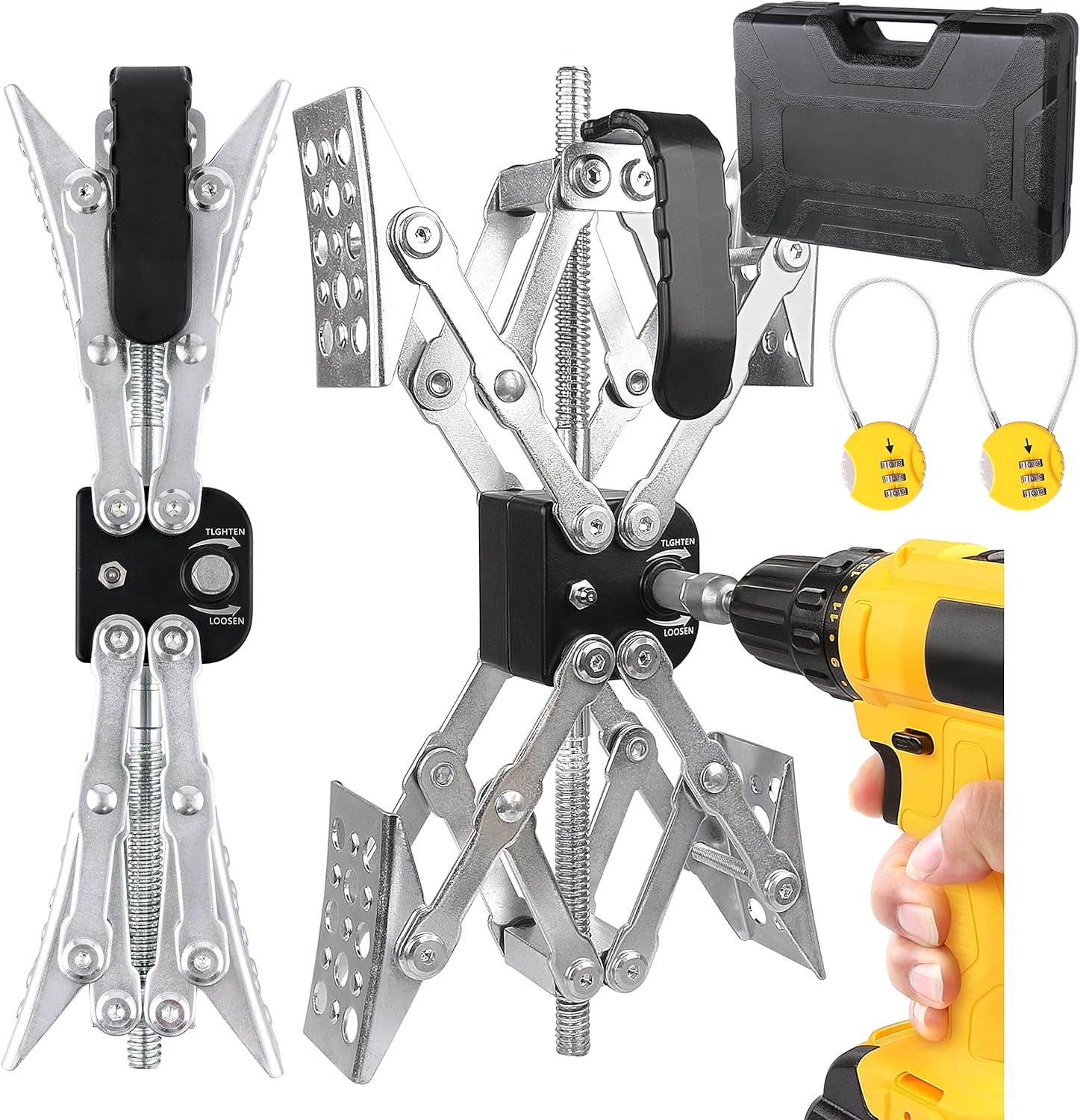
Lock the Maxchock X-style wheel stabilizers between tandem tires to reduce sway and keep your RV travel trailer secure while camping. The adjustable design fits a wide range of wheel gaps, and included hardware lets you install quickly with a power drill. Built from heavy-gauge steel with zinc plating, the chocks include locks and an organizer case for safer, more convenient use.
Essential Tools Required
You need a fully inflated spare tire that matches your vehicle’s specifications. You also need a lug wrench to loosen and tighten the lug nuts and a car jack to lift the vehicle safely.
Wheel wedges help stop the truck from moving while you work. Gloves protect your hands from sharp edges and dirt, and a flashlight helps when you change a tire at night.
Safety Precautions to Follow
Park on firm, level ground and keep well away from moving traffic. Use your hazard lights so other drivers can see that your vehicle has stopped.
Place wheel wedges behind the tires opposite the flat tire. Wear gloves if you have them, and keep passengers away from the roadside while you work.
Before you install the spare tire, confirm that it has enough air. A low spare can make the vehicle harder to control.
Spare Tire Specifications
Check that the spare tire matches your Toyota Hilux wheel size, bolt pattern, and tire type. Many Hilux models use a 6-lug wheel pattern, but you should confirm the exact fit in your owner’s manual or on the tire placard.
Check the spare tire pressure before you drive. Temporary spare tires often need a higher pressure than standard road tires, so use the pressure listed in your owner’s manual or on the tire label.
Inspect the tread and sidewall before fitting the spare. Don’t use a spare tire with cracks, exposed cords, severe damage, or unsafe tread depth.
Before You Begin: Estimated Time and Safety Check
Most drivers can change a Toyota Hilux tire in about 20 to 30 minutes with the right tools and safe conditions. Take more time if the ground, weather, or traffic makes the job harder.
Before you lift the vehicle, confirm that the jack sits on firm ground. If the jack leans, sinks, or slips, lower the vehicle and choose a safer spot.
Step-by-Step Guide to Removing the Flat Tire
Follow these steps in order so the wheel comes off safely:
- Park the Hilux on a solid, level surface and engage the parking brake.
- Place wheel wedges behind the tires opposite the flat tire.
- Loosen each lug nut about a quarter to half turn with the tire still on the ground.
- Position the jack under the correct jacking point near the flat tire.
- Raise the vehicle until the flat tire clears the ground.
- Remove the loosened lug nuts and place them somewhere clean and secure.
- Pull the flat tire straight off the wheel hub and set it aside safely.
Keep the lug nuts together so you don’t lose one on the roadside. Check the wheel hub for dirt or debris before you install the spare.
How to Change and Install Your Spare Tire
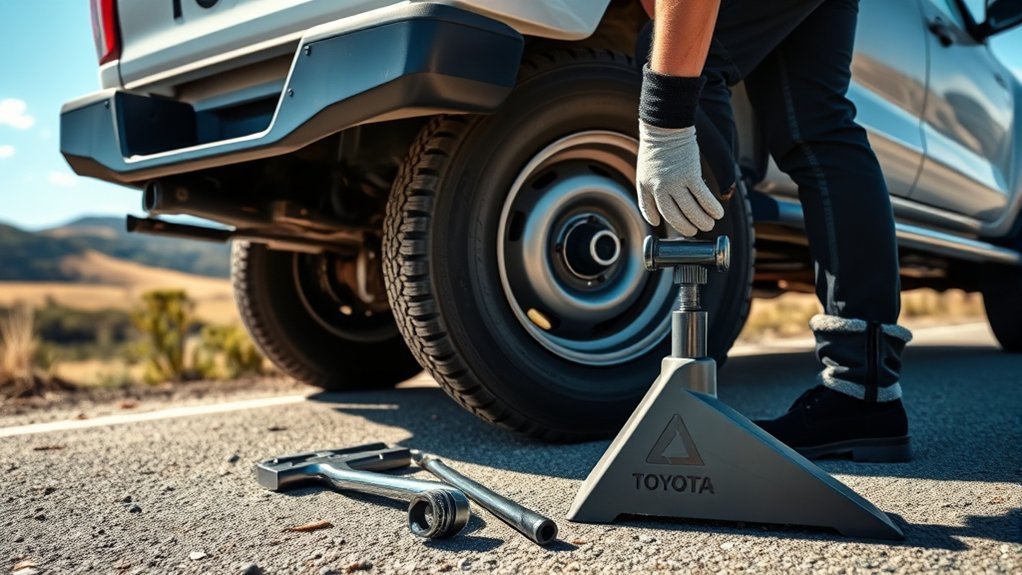
After you remove the flat tire, line up the spare tire with the wheel studs. Push the spare straight onto the hub until it sits flat against the mounting surface.
Safety Precautions First
Keep the vehicle steady while you install the spare. Don’t shake the truck, climb into it, or let anyone sit inside while it rests on the jack.
Use only the tools meant for your Hilux. If the jack or wrench looks damaged, call roadside help instead of forcing the job.
Tools Required for the Change
Use the lug wrench to start each lug nut by hand. This helps prevent cross-threading, which can damage the wheel studs.
Use the jack only to raise and lower the vehicle. Don’t rely on it as a long-term support.
Steps to Install the Tire
- Mount the spare tire onto the wheel studs and keep it flush against the hub.
- Install each lug nut by hand and turn it clockwise until it feels snug.
- Lower the vehicle until the spare tire touches the ground but still carries little weight.
- Tighten the lug nuts with the wrench in a star pattern.
- Lower the vehicle fully and remove the jack.
- Tighten the lug nuts again in the same star pattern.
- Check the spare tire pressure before you drive.
Pro tip: Keep a tire pressure gauge in your glove box so you can check the spare after installation.
How to Tighten Lug Nuts Properly
Hand-tighten each lug nut first so it seats correctly on the wheel. Then use the lug wrench to tighten the nuts in a crisscross or star pattern.
A star pattern spreads pressure evenly across the wheel. This helps the wheel sit flat against the hub and reduces the risk of uneven tightening.
Use a torque wrench when you have access to one. Check your Toyota Hilux owner’s manual for the correct torque value for your model and wheel type.
| Step | Action | Notes |
|---|---|---|
| 1 | Hand-tighten | Seat each nut correctly before using a wrench. |
| 2 | Tighten in a star pattern | Spread pressure evenly across the wheel. |
| 3 | Use a torque wrench | Follow your owner’s manual for the correct torque. |
| 4 | Recheck after lowering | Confirm every nut feels secure before driving. |
Why Checking Spare Tire Pressure Matters
A spare tire only helps if it has enough air to carry the vehicle safely. An under-inflated spare can reduce steering control, increase heat, and make the tire fail sooner.
Check the pressure with a tire gauge before you drive. Use the pressure listed in your owner’s manual, on the tire placard, or on the spare tire sidewall.
Don’t guess by looking at the tire. Some tires can look full even when they don’t have enough pressure.
What to Do After Changing Your Tire

After you install the spare, stow the flat tire, jack, wrench, and wheel wedges securely. Loose tools can move around the cabin or cargo area while you drive.
Drive slowly and avoid hard braking or sharp turns. Spare tires can have speed and distance limits, especially if your Hilux uses a temporary spare.
Visit a tire shop or service center as soon as you can. A technician can repair or replace the flat tire and confirm that the spare and lug nuts remain safe.
Common Mistakes to Avoid When Changing a Hilux Tire
A few small errors can make a tire change unsafe. Avoid rushing, and check each step before you move to the next one.
- Don’t loosen lug nuts after the vehicle leaves the ground.
- Don’t place the jack under plastic trim or weak suspension parts.
- Don’t install a spare tire that does not match the wheel studs.
- Don’t drive far on a spare without checking its pressure.
- Don’t ignore vibration, pulling, or noise after the tire change.
Preventing Flat Tires: Essential Maintenance Tips
Regular tire checks help you avoid many roadside tire problems. Add these checks to your normal vehicle care routine.
- Check tire pressure: Keep each tire at the pressure listed for your Hilux.
- Inspect tread wear: Look for uneven wear, bulges, cracks, or objects stuck in the tread.
- Rotate tires: Follow your service schedule to help the tires wear evenly.
- Respect load limits: Don’t exceed the load rating listed for your vehicle and tires.
- Check alignment: Book a service check if the truck pulls to one side or the steering wheel shakes.
Keep your spare tire in the same routine. A forgotten spare can leave you stranded when you need it most.
Frequently Asked Questions
How do you change a Toyota spare tire?
Park on level ground, engage the parking brake, and loosen the lug nuts while the tire still touches the ground. Lift the vehicle at the correct jacking point, remove the flat tire, install the spare, and tighten the lug nuts in a star pattern.
Can you drive normally on a spare tire?
You should drive with care after installing a spare tire. Check your owner’s manual for speed and distance limits, and visit a tire shop as soon as possible.
What if the lug nuts won’t loosen?
Make sure the wrench fits the lug nuts fully before you apply force. If the nuts still won’t move, call roadside assistance so you don’t damage the studs or hurt yourself.
Should you check the lug nuts after driving?
Yes, check the lug nuts again after a short drive if you can do so safely. A service shop can also confirm the correct torque with a torque wrench.
Conclusion
Changing a tire on your Toyota Hilux comes down to safe setup, correct jack placement, and steady lug nut tightening. Keep the right tools in your vehicle and check your spare tire before you need it. After you install the spare, drive carefully and get the flat tire repaired or replaced soon. With a little preparation, you can handle a roadside tire change with more confidence.

Related Articles

Toyota Hilux Run-Flat Tires: What You Need to Know
Take control of your safety with Toyota Hilux run-flat tires; discover their benefits and hidden costs that could change your driving experience forever.
Read More
Effects of Underinflated Tires on the Toyota Hilux
Inadequate tire pressure in your Toyota Hilux can lead to serious safety issues and costly repairs; discover how to avoid these pitfalls.
Read More
The Risks of Overinflating Toyota Hilux Tires
Overinflating your Toyota Hilux tires can lead to dangerous blowouts and uneven wear, but understanding the risks is crucial for your safety.
Read More