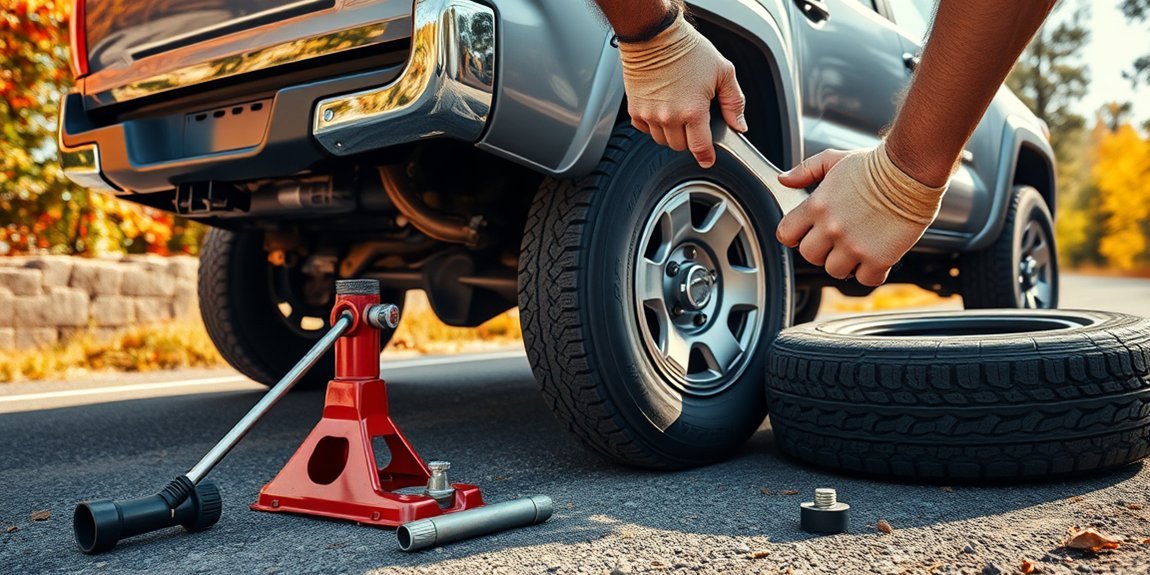
A flat tire can turn a normal drive into a stressful roadside stop fast. With your Toyota Tacoma parked safely and the right tools in reach, you can change the tire with less risk and less guesswork. This guide walks you through the tools, lift points, spare tire steps, safety checks, and common problems to watch for.
Quick Answer
To change a flat tire on your Toyota Tacoma, pull onto a safe, flat surface, turn on your hazard lights, and set the parking brake. Loosen the lug nuts before lifting the truck, jack it at the correct lift point, swap the flat tire for the spare, and tighten the lug nuts in a star pattern. Check the spare tire pressure before you drive.
Key Takeaways
- Park on a flat, stable surface before you start the tire change.
- Loosen the lug nuts before you lift your Tacoma with the jack.
- Use the lift points listed in your owner’s manual for safer jacking.
- Tighten the lug nuts in a star pattern so the wheel seats evenly.
- Check the spare tire pressure and condition before you drive far.
What’s in This Article
- Find a Safe Location to Change Your Tire
- Check Your Toyota Tacoma’s Owner’s Manual First
- What You’ll Need to Change a Flat Tire
- How Long Does It Take to Change a Tacoma Tire?
- Loosening Lug Nuts: A Step-by-Step Guide
- Using Your Car Jack Safely
- Removing the Flat Tire: What You Should Know
- Installing the Spare Tire: Aligning and Tightening
- Essential Safety Checks After Changing Your Tire
- How to Check Your Spare Tire’s Condition and Pressure?
- Tips for Preparing Your Tacoma for Emergencies
- Common Mistakes to Avoid When Changing a Tacoma Tire
- Frequently Asked Questions
- Conclusion
Find a Safe Location to Change Your Tire
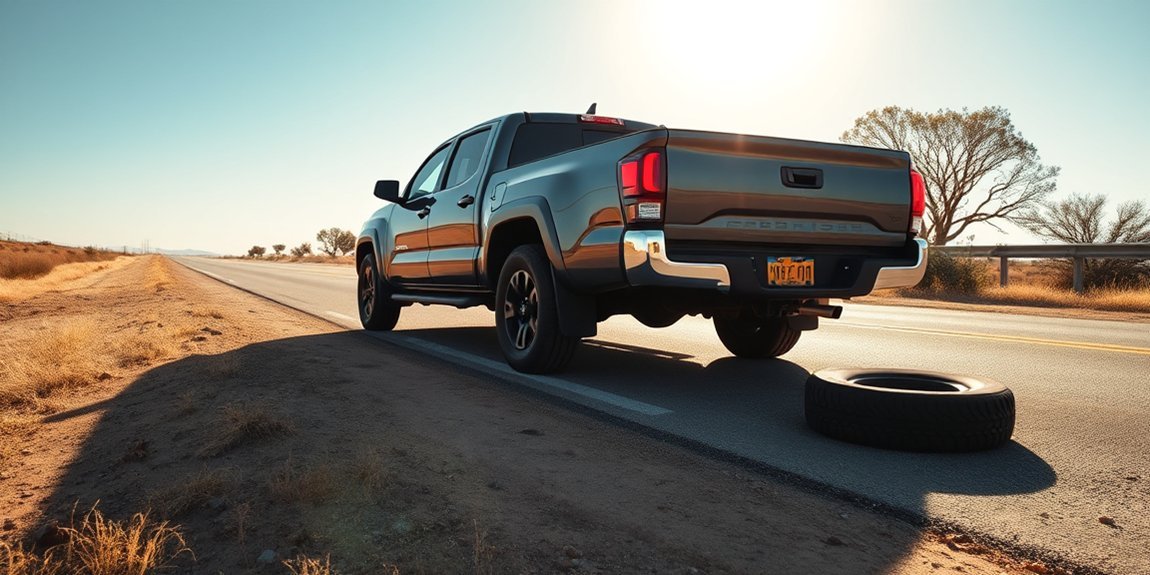
Finding a safe location to change your tire protects you and other drivers. Slow down gradually, turn on your hazard lights, and look for a wide shoulder, parking lot, or other flat space. Avoid hills, curves, soft ground, and narrow shoulders where traffic passes close to your Tacoma.
Stop where other drivers can see you from a safe distance. Keep several feet between your truck and moving traffic when you can. If the tire has severe damage, drive only as far as needed to reach a safer spot, and move slowly.
Warning: Don’t crawl under your Tacoma while it rests on the factory jack, because the jack supports tire changes only.
Check Your Toyota Tacoma’s Owner’s Manual First
Your Toyota Tacoma’s owner’s manual gives model-specific tire change instructions. Check it before you lift the truck, because lift points and spare tire access can vary by model year and trim. Keep the manual in your glove box so you can use it during an emergency.
Locate Tire Change Instructions
The owner’s manual shows the approved jack points and the correct way to use the jack. It also lists wheel and spare tire details that can help you avoid mistakes. Use those diagrams before you place the jack under the frame.
The manual may also list the correct lug nut torque for your Tacoma. After you install the spare, use a torque wrench as soon as you can. Proper torque helps keep the wheel secure without damaging studs or lug nuts.
Emergency Equipment Guidelines
Gather your emergency tools before you start. You need a spare tire, lug wrench, jack, and the tools that lower the spare tire from its storage point. You should also use the parking brake and wheel wedges to help keep the truck from moving.
Check the spare tire before you mount it. Look for low pressure, cracks, bulges, or damage around the sidewall. If the spare looks unsafe, call roadside assistance instead of driving on it.
What You’ll Need to Change a Flat Tire
Changing a flat tire on your Toyota Tacoma works best when your tools stay clean, complete, and easy to reach. Store them where you can find them without unloading the whole truck. Check the kit during routine maintenance so you don’t discover missing parts on the roadside.
- Vehicle owner’s manual: Use it to confirm jack points, spare access, and torque guidance.
- Spare tire: Keep it inflated and inspect it for damage before each trip.
- Lug wrench: Make sure it fits your Tacoma’s lug nuts.
- Car jack: Use the jack supplied with your Tacoma or one rated for the truck’s weight.
- Wheel wedges: Place them against the wheels that stay on the ground.
- Gloves and flashlight: Use them for grip, hand protection, and better visibility.
- 2×6 wood block: Use it only as a stable base under the jack on firm but uneven ground.
[Products Worth Considering]

This ecocstm ratchet wrench is designed to make emergency and routine tire changes faster with a 360° rotating head and quick forward/reverse switching. The extended handle provides extra leverage to reduce effort and hand fatigue, while the adapter helps fit many scissor jacks on cars, SUVs, trucks, and vans. Built for reliable performance with durable construction, it’s a practical travel essential for on-the-road preparedness.

This spare tire tool kit is designed for the 2004 to 2018 Ford F-150 to help you loosen and tighten wheel lug nuts and manage the spare tire and provided jack functions from underneath the vehicle. It includes the lug nut wrench and extension pieces plus a convenient storage carrying case for organized transport. The jack itself is not included.

This 1/2-inch drive breaker bar delivers powerful leverage for loosening and tightening stubborn lug nuts and automotive fasteners. The 180-degree flex head helps you reach tight spaces at the angle you need, making tire and brake jobs easier. A spring-loaded ball detent design holds 1/2-inch sockets securely while the chrome-moly head provides durable strength for everyday use.
How Long Does It Take to Change a Tacoma Tire?
A tire change often takes about 20 to 45 minutes, depending on your tools, weather, and roadside conditions. Rusted lug nuts, poor lighting, or a stuck wheel can slow you down. Take your time, because a safe tire change matters more than a fast one.
If you feel unsafe near traffic or can’t loosen the lug nuts, stop and call for help. Roadside assistance can handle the change with better tools and safer traffic protection.
Loosening Lug Nuts: A Step-by-Step Guide
Start with your Toyota Tacoma on a stable surface. Set the parking brake and place wheel wedges against the tires that stay on the ground. Use a lug wrench that fits the lug nuts snugly.
- Check that the truck sits steady before you touch the lug nuts.
- Place the lug wrench fully onto the first lug nut.
- Turn the lug nut counterclockwise about ¼ to ½ turn.
- Move to the next lug nut and repeat the same action.
- Use steady pressure or a breaker bar if a lug nut feels tight.
Do not remove the lug nuts yet. Loosen them only while the tire still touches the ground, because the ground helps keep the wheel from spinning.
Here’s a quick reference table for your lug nut loosening process:
| Step | Action | Notes |
|---|---|---|
| 1 | Check vehicle stability | Set the parking brake |
| 2 | Select the right lug wrench | Check for a tight fit |
| 3 | Turn lug nuts counterclockwise | Loosen ¼ to ½ turn |
| 4 | Use extra leverage if needed | Apply steady pressure |
Using Your Car Jack Safely
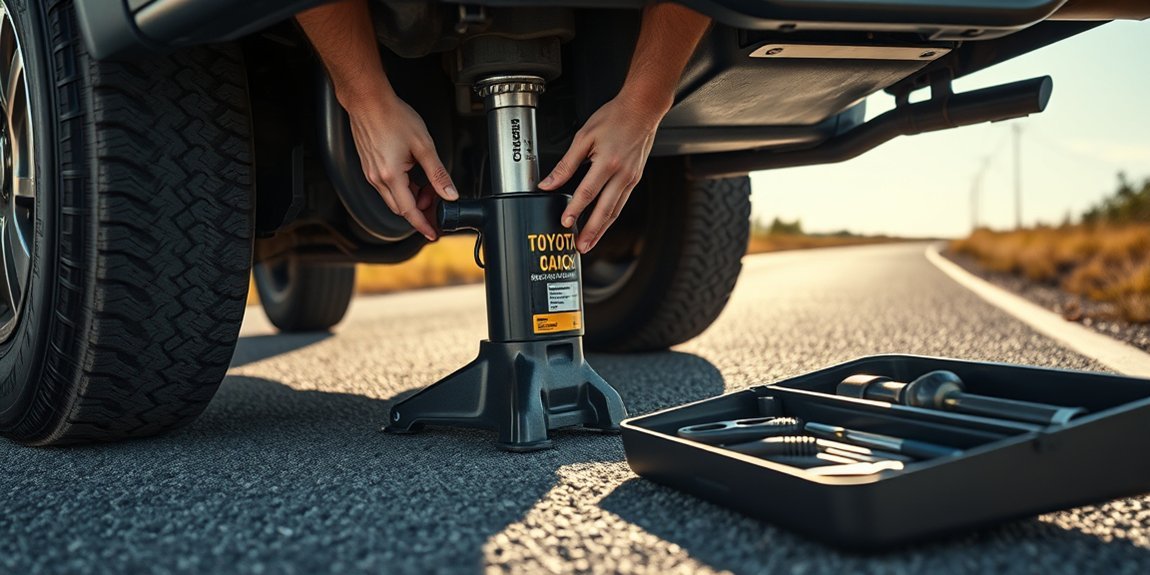
Use your car jack only on a stable, flat surface. Place it under the designated lift point listed in your owner’s manual. Set the parking brake and secure the truck with wheel wedges before you lift.
Raise the vehicle slowly until the flat tire clears the ground. You usually need only a few inches of clearance to remove the tire and install the spare. Keep your hands and feet away from pinch points while the truck rises.
[Products Worth Considering]

The Dr.Roc spare tire tool kit helps you release, lower, or raise your spare tire with reliable extension tools and a lug nut wrench. It is made from rustproof automotive-grade steel and includes an organized carry case for convenient storage. Designed for compatibility with select GM models from the late 1990s through 2019, it uses upgraded extension components to install and remove spare tires with less hassle.

This 2.5 ton scissor car jack kit is designed for quick emergency tire changes with a wide lift range from low sedans to higher SUVs. It includes the scissor jack, rubber pads, ratchet wrench, dual-size lug wrench, gloves, and a storage bag for convenient trunk or garage storage. The enlarged, cold-rolled steel base and non-slip pads help provide stable lifting while protecting the vehicle.

These aluminum alloy tire valve stem caps with an O-ring seal help protect valve stems from corrosion while adding a clean, stylish look to your vehicle. The universal fit works across cars, trucks, motorcycles, bicycles, and more, making them an easy upgrade for everyday driving and off-road use. Installation is quick, and the included four-pack keeps all your tires dressed and protected.
Proper Jack Placement
Place the jack under a strong metal part of the frame at the approved lift point. Do not place it under plastic trim, suspension parts, or body panels that cannot hold the truck’s weight. Check the owner’s manual if you feel unsure.
- Park on level ground so the truck stays steady.
- Set the parking brake and use wheel wedges.
- Place a small piece of 2×6” wood under the jack if firm ground needs a wider base.
- Check that the jack sits straight before you lift.
Safe Lifting Techniques
Lift your Tacoma slowly and watch the jack as it rises. Stop if the jack tilts, shifts, or sinks into the ground. Lower the truck, reset the jack, and start again only when the base looks stable.
Raise the truck no higher than needed. Extra height can make the truck less stable while you work. After you install the spare, lower the truck completely before you remove the jack.
Stability During Tire Change
Good stability helps prevent accidents during a tire change. Keep the truck centered over the jack and avoid pushing hard against the vehicle. If heavy traffic, poor weather, or uneven ground makes the work risky, call for help.
- Position the jack: Place it under the approved frame lift point.
- Use a base: Put wood under the jack only when it improves support on firm ground.
- Secure the vehicle: Set the parking brake and use wheel wedges.
- Lift only enough: Raise the flat tire just high enough to clear the ground.
Removing the Flat Tire: What You Should Know
Remove the hubcap or wheel cover if your Toyota Tacoma has one. This gives you direct access to the lug nuts. Keep the cover somewhere safe so it doesn’t roll away or get damaged.
After you lift the truck, remove the loosened lug nuts by hand. Place them in a pocket, tray, or clean spot near the truck. Avoid setting them in dirt, grass, or gravel where you might lose them.
Pull the flat tire straight toward you and off the hub. If it sticks, hold the tire on both sides and rock it gently. Check the hub area for dirt or debris before you mount the spare.
Installing the Spare Tire: Aligning and Tightening
Before you mount the spare tire, line up the wheel holes with the lug bolts. Push the spare straight onto the hub until it sits flat. A crooked wheel can make the lug nuts tighten unevenly.
- Hand-tighten the lug nuts in a star pattern.
- Lower the vehicle until the spare tire lightly touches the ground.
- Tighten the lug nuts with the lug wrench in the same star pattern.
- Lower the truck fully and remove the jack.
- Check each lug nut again in the star pattern.
Pro tip: After driving a short distance, recheck the lug nuts with a torque wrench or have a technician check them.
Essential Safety Checks After Changing Your Tire
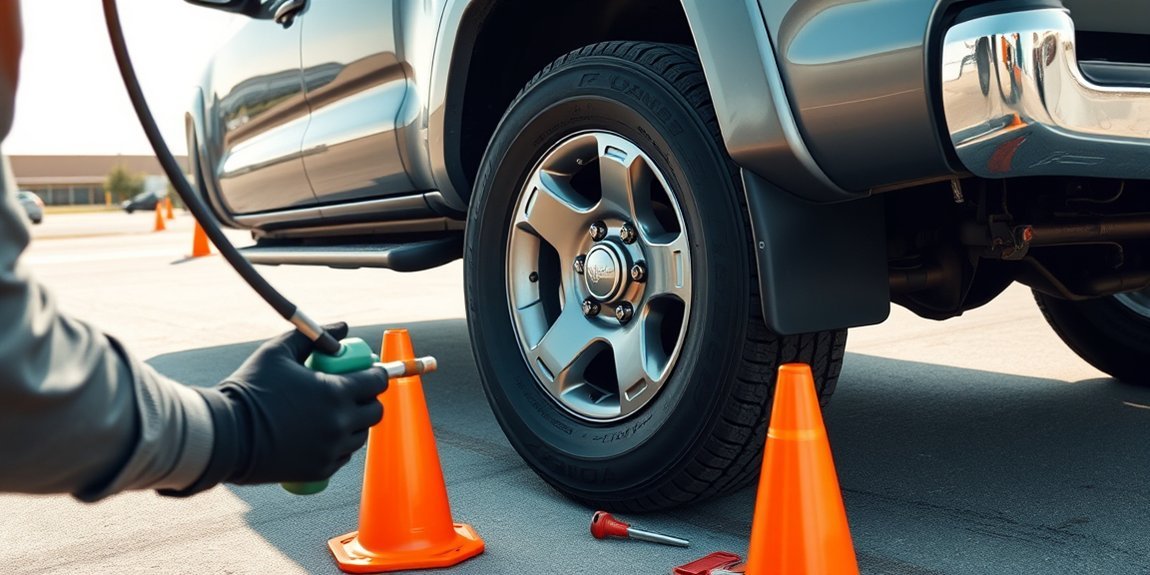
After changing your tire, check that every lug nut feels secure. Use the torque value listed in your owner’s manual when you have a torque wrench. If you don’t have one, drive carefully to the nearest tire shop or service center for a torque check.
Check the spare tire pressure with a gauge before you drive far. Look for cracks, bulges, punctures, or uneven wear. Replace the hubcap only if it fits the spare correctly.
Store the flat tire, jack, lug wrench, and tools before you leave. Loose tools can move around the cab or bed while you drive. Schedule a repair or replacement for the flat tire as soon as you can.
How to Check Your Spare Tire’s Condition and Pressure?
Your spare tire needs regular checks, even if you rarely use it. Heat, age, and low pressure can make a spare unsafe when you need it most. Add the spare to your normal tire maintenance routine.
- Check air pressure: Use a tire gauge and match the pressure listed in your owner’s manual or door jamb label.
- Inspect for damage: Look for cracks, bulges, punctures, and sidewall wear.
- Check tread depth: Make sure the spare has enough tread for safe traction.
- Store it correctly: Keep the spare area clean, dry, and free of road debris.
Many temporary spares have speed and distance limits. Read the sidewall and owner’s manual before you drive on one. Full-size spares may still need inspection before regular use.
Tips for Preparing Your Tacoma for Emergencies
Prepare your Tacoma before a flat tire happens. Keep your tire tools in their proper storage spots and check them often. A few minutes of planning can save you stress on the roadside.
[Products Worth Considering]

The Gurduenon scissor car jack tire changing kit is designed for quick flat-tire replacement with a lifting capacity of 2.5 tons and a scissor-lift range sized for many vehicles. The complete emergency set includes a ratchet wrench, lug wrench, gloves, a pencil tire pressure gauge, and a storage bag for convenient trunk or garage use. Universal compatibility makes it suitable for cars, SUVs, and other vehicles roadside assistance needs.

This 3-ton scissor car jack tire changing kit helps you lift cars and SUVs with a wide range to reach low sedans or higher vehicles. The set includes a ratchet wrench, multi-size lug wrench, gloves, a tire pressure gauge, and a storage bag for quick emergency repairs. Built for stable, secure lifting and universal compatibility, it’s ready for flat tires and roadside wheel changes.

This roadside assistance kit helps drivers and passengers in urgent situations after an accident or breakdown, providing practical support while waiting for help. It includes a lightweight, compact tire inflator for fast inflation of standard vehicle tires, plus reinforced jumper cable protection for safer handling. Ideal for winter weather, road trips, camping, and travel, with everything stowed neatly in a trunk bag.
Essential Emergency Gear
Stock your Tacoma with gear that helps you work safely and see clearly. Keep the items in a dry, easy-to-reach place. Replace damaged or missing gear right away.
- Fully inflated spare tire: Check pressure often and match the recommended pressure.
- Lug wrench and car jack: Keep both tools clean and accessible.
- Safety items: Carry wheel wedges, gloves, a flashlight, and a rain poncho.
- Stability support: Store a small piece of 2×6” wood for jack support when appropriate.
Regular Maintenance Checks
| Maintenance Task | Frequency |
|---|---|
| Spare Tire Air Pressure | Monthly |
| Lug Wrench Inspection | Monthly |
| Spare Tire Condition | Every 6 Months |
| Rotate Spare Tire | As Needed |
Keep wheel wedges, gloves, and a flashlight where you can reach them quickly. Check the jack and lug wrench for rust, damage, or missing parts. This routine helps you handle a flat tire with more control.
Common Mistakes to Avoid When Changing a Tacoma Tire
Several mistakes can make a tire change harder or less safe. Avoid placing the jack in the wrong spot, removing lug nuts before lifting, or tightening the spare in a circle instead of a star pattern. Each mistake can affect stability or wheel fit.
Don’t drive far on a damaged, low, or temporary spare. Check the spare tire label and owner’s manual for driving limits. Get the flat tire repaired or replaced before you rely on the spare for normal driving.
Note: A spare tire helps you reach service, but it may not match the speed, distance, or load limits of your regular tire.
Frequently Asked Questions
How to Change a Flat Tire Step by Step?
Park in a safe spot, turn on your hazard lights, set the parking brake, and loosen the lug nuts. Lift the Tacoma at the correct jack point, remove the flat tire, mount the spare, and tighten the lug nuts in a star pattern. Lower the truck and check the spare tire pressure before you drive.
Where to Put Jack on Tacoma to Change Tire?
Place the jack under the designated lift point shown in your Tacoma owner’s manual. The correct point depends on whether you lift the front or rear of the truck. Do not use plastic trim, suspension parts, or body panels as jack points.
How to Get Spare Tire Down From Toyota Tacoma?
Use the spare tire tools supplied with your Tacoma to access the lowering mechanism under the truck bed. Insert the tool through the access point and turn it until the spare lowers to the ground. Pull the tire out and remove the retainer before mounting it.
Why Won’t My Tacoma Tire Come Off?
Your Tacoma tire may stick because rust, dirt, or road debris has bonded the wheel to the hub. Confirm the truck sits securely on the jack, then rock the tire gently from side to side. If it still won’t move, call roadside assistance or a technician.
Can You Drive Normally on a Tacoma Spare Tire?
You should not assume every spare tire supports normal driving. Check the spare tire sidewall and your owner’s manual for speed, distance, and load limits. Drive carefully and repair or replace the flat tire as soon as possible.
Conclusion
Changing a flat tire on your Toyota Tacoma comes down to safe parking, correct jack placement, and careful lug nut tightening. Keep your spare tire, jack, lug wrench, and safety gear ready before you need them. After you install the spare, check the pressure and get the flat tire inspected soon. With a little preparation, you can handle a roadside tire change with more confidence and less stress.